Introduction
Tagetes erecta L., commonly known as African marigold, Aztec marigold, or Mexican marigold, is an erect annual herb native to the highlands of Mexico and Central America, where it has been cultivated and venerated for millennia. The species is among the most widely grown ornamental annuals in the world, distinguished by its large, densely petalled flower heads in shades of yellow, orange, and gold, and by the pungent aroma of its foliage produced by terpenoid-rich glandular trichomes. Despite its common name, the plant has no native African origin; it reached Europe through Spanish colonial trade routes and was subsequently distributed globally.
Classification
- Plant Type
- Herb
- Lifecycle
- Annual
- Leaf Habit
- Deciduous
- Native Region
- Central America, Mexico
- Plant Family
- Asteraceae
Tagetes erecta occupies seasonally dry to semi-humid montane habitats in its native range and thrives under warm, frost-free growing conditions with well-drained soils. The species is a therophyte, completing its lifecycle from germination to seed set within a single growing season and persisting through harsh periods exclusively as dormant seed. It has become a significant commercial crop in India, Mexico, and parts of Africa, where its flowers are harvested on a large scale for garland production, religious ceremony, and extraction of xanthophyll pigments used in poultry feed and food colouring.
Taxonomic Synonyms
| Field | Information |
|---|---|
| Accepted Scientific Name | Tagetes erecta L. |
| Known Synonyms | Tagetes excelsa M.Martens & Galeotti; Tagetes heterocarpha Rydb.; Tagetes tenuifolia Cav. (in part, misapplied); Tagetes major Gaertn. |
| Taxonomic Authority Source | Kew Plants of the World Online (POWO) |
Quick Plant Information
| Field | Information |
|---|---|
| Common Name(s) | African marigold, Aztec marigold, Mexican marigold, big marigold |
| Scientific Name | Tagetes erecta L. |
| Family | Asteraceae |
| Plant Type | Annual herb |
| Lifespan | Annual (completes lifecycle within one growing season) |
| Growth Habit & Form | Erect, branched herb; 30–120 cm tall |
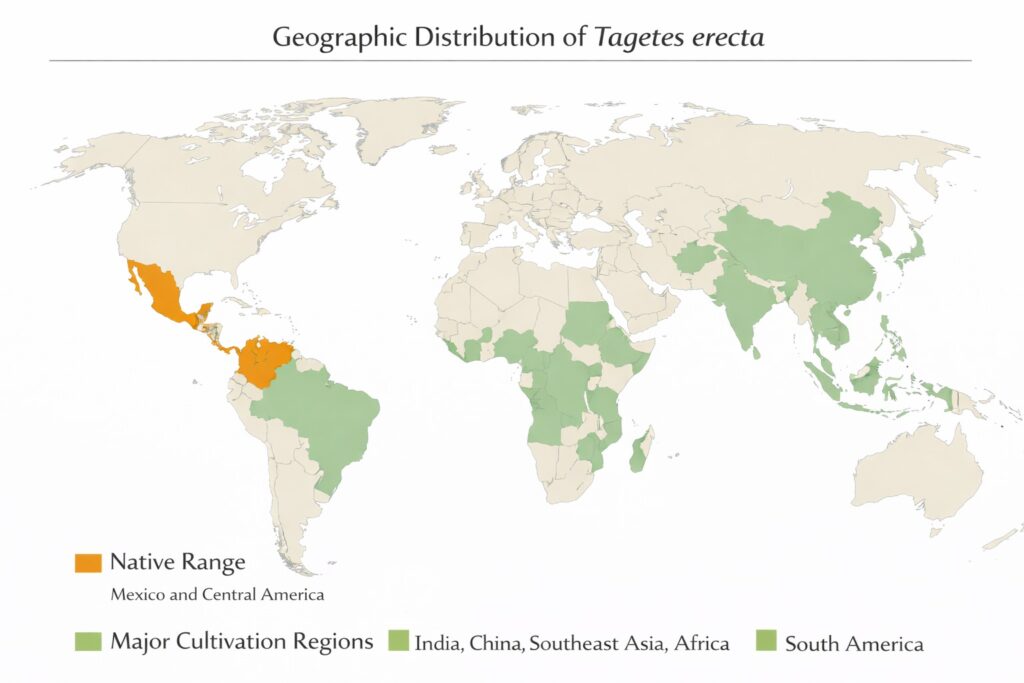
| Native Range | Mexico and Central America |
| Climate Adaptation & Habitat Type | Warm subtropical to tropical climates; seasonally dry montane habitats |
| Leaf Type | Pinnately compound, deeply lobed |
| Flower Color(s) | Yellow, orange, gold, cream |
| Fruit Type | Cypsela (achene-like dry fruit) |
| Evergreen or Deciduous | Deciduous (annual) |
Botanical Description
Stem
Tagetes erecta produces a single main stem that is erect, stout, hollow, and branching profusely in the upper portions. Stems are strongly ribbed and glabrous to slightly pubescent, typically green but sometimes suffused with reddish-purple pigmentation at nodes. The stem surface bears scattered oil glands that contribute to the species’ characteristic pungent odour. Mature stems reach 30–120 cm in height depending on cultivar selection and growing conditions.
Leaves
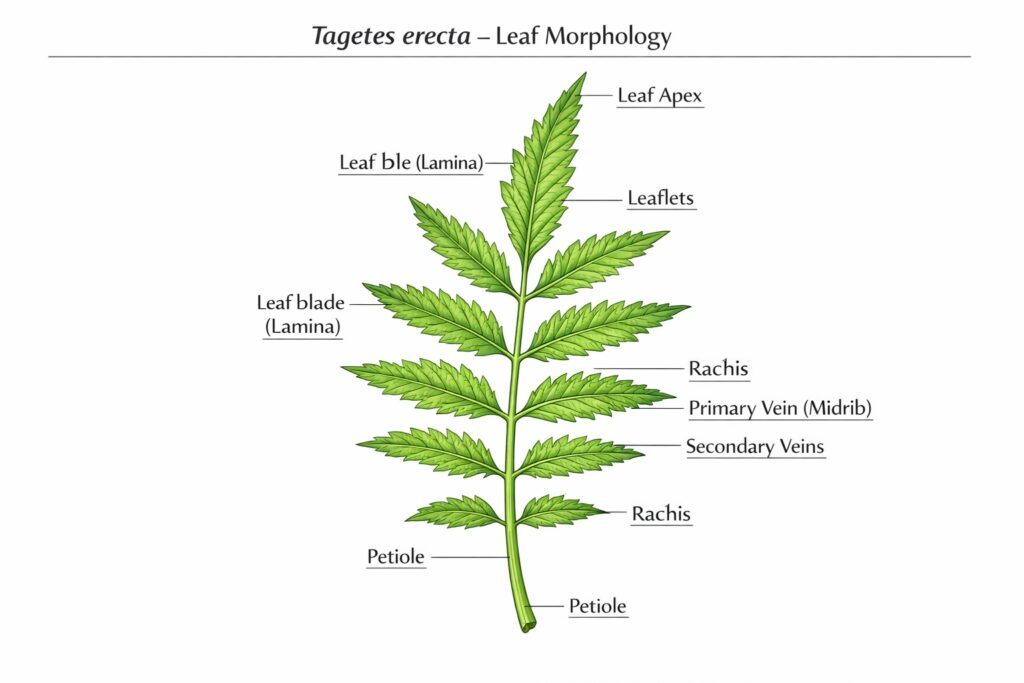
Leaves are pinnately compound, arranged alternately on the stem, with each leaf composed of 11–17 lanceolate to ovate leaflets that are sharply serrate along their margins. Leaflets are 1–4 cm long, mid-green, and dotted with translucent oil glands visible against light. The foliage emits a strong, distinctive scent when crushed, attributable to terpenoid compounds, particularly thiophene derivatives and monoterpenes, produced in glandular structures along leaf margins and on the leaf surface.
Flowers

The inflorescence is a solitary terminal capitulum borne on a stout, hollow peduncle, typically 5–12 cm in diameter in improved cultivars and 3–5 cm in wild-type forms. Individual capitula consist of numerous ray florets that are pistillate and ligulate, surrounding a dense central disc of tubular, bisexual disc florets. Ray florets are imbricate and arranged in multiple rows in fully double cultivars, creating the characteristic pompom appearance. Flower colour ranges from pale cream through golden yellow to deep orange, determined by carotenoid pigment composition, primarily lutein and zeaxanthin.
Fruit
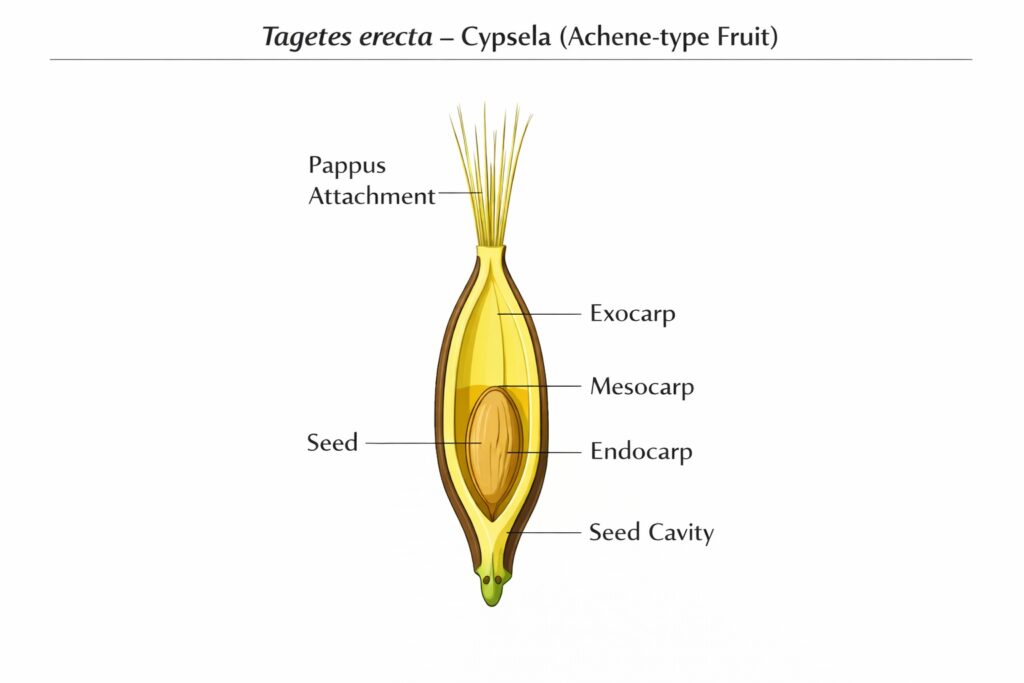
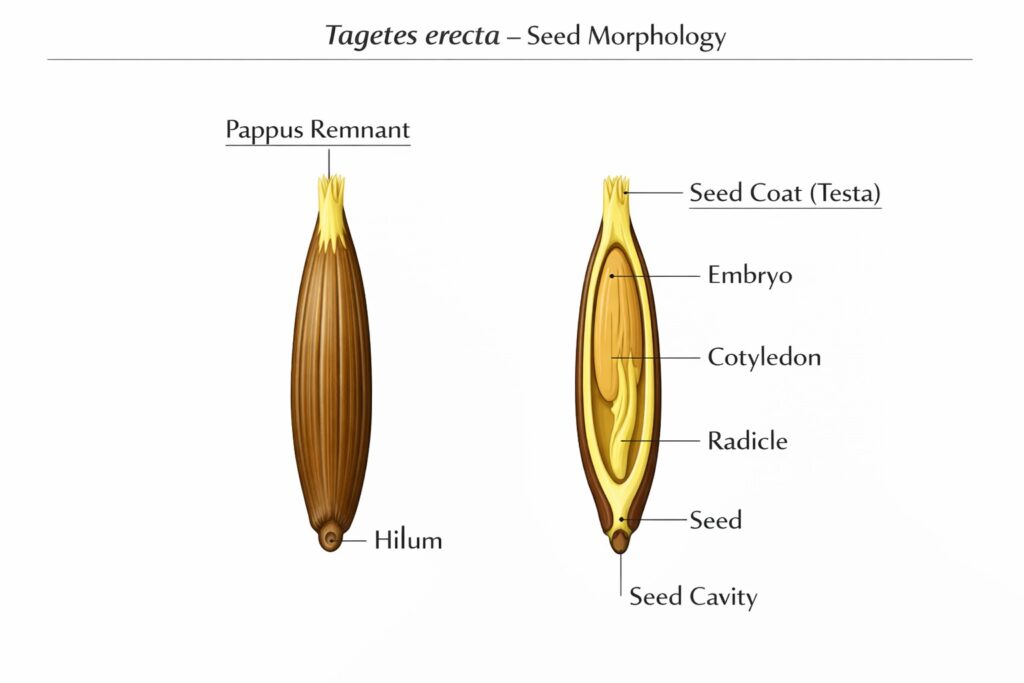
The fruit is a cypsela — a dry, indehiscent, achene-like fruit produced by the inferior ovary of a single floret. Each cypsela is narrow, elongated, and blackish at maturity, bearing a persistent pappus of two to several unequal scales at its apex that assist in short-distance dispersal. Seeds (the embryo within the cypsela) are approximately 7–10 mm long, slender, and black with a pale upper portion, remaining viable for 2–4 years under dry cool storage conditions.
Roots
Tagetes erecta produces a fibrous root system arising from a taproot that is moderately developed but does not become woody. Lateral roots are abundant and shallow, concentrated in the upper 20–30 cm of the soil profile, making the plant relatively drought-tolerant once established but sensitive to waterlogging. The roots produce thiophene compounds that are documented to have nematicidal activity in rhizosphere soil.
Growth Architecture & Life Strategy
Tagetes erecta is a therophyte in the Raunkiær classification — an annual plant that survives the unfavourable season exclusively as seed, with no persistent vegetative organs. This life-history strategy is adapted to the seasonally dry montane environments of Mexico and Central America, where the species germinates with the onset of warm rains, completes flowering and seed set within the growing season, and dies with the arrival of the dry or cool season.
The plant’s architecture is characterised by an initially unbranched seedling phase that gives way to extensive sympodial branching in the upper canopy following establishment. Individual branches terminate in flower heads, ensuring high reproductive output per individual. The hollow, ridged stem provides structural rigidity while minimising material investment, and the copious glandular trichomes on leaves and stems function as a constitutive chemical defence against herbivores and certain fungal pathogens.
Growth rate is rapid: under warm, well-lit conditions seedlings reach flowering stage within 45–70 days of germination. The combination of rapid development, high seed output, and chemical root exudates that suppress certain soil nematodes has made this species ecologically and agronomically distinctive among its genus.
Common Types / Varieties
Tagetes erecta encompasses a large number of named cultivars developed primarily for ornamental and commercial flower production, spanning variation in plant height, flower diameter, flower colour, and days to bloom. Cultivar development has been most intensive in the United States, India, and the Netherlands, where breeding programmes have produced series adapted for varied markets.
‘Crackerjack’ is a tall, vigorous open-pollinated cultivar reaching 90–120 cm, bearing large double flower heads of mixed orange and yellow. It is widely grown for cut flower and garland production and is among the most commonly cultivated tall African marigold types in tropical and subtropical regions, particularly in India.
‘Inca II’ is a well-established hybrid series producing compact plants of 30–40 cm with exceptionally large, fully double flower heads up to 12 cm across in orange, yellow, gold, and bicolour forms. The series was bred for uniformity of flowering time and is widely used in bedding plant production, exhibiting good heat tolerance relative to earlier compact types.
‘Vanilla’ is a cultivar notable for producing cream to pale yellow flower heads, unusual within the predominantly orange-gold colour range of the species. Plants reach 45–55 cm in height and bear semi-double to double capitula; the pale pigmentation results from reduced lutein accumulation relative to standard orange-flowered types.
‘Antiqua’ is a heat-tolerant hybrid series of intermediate height (45–60 cm) with large, rounded, fully double flower heads in orange and yellow. It was developed for improved performance under high-temperature growing conditions and is used in both bedding and commercial cut flower production in warm climates.
Native Range & Distribution
| Country / Territory | Range Status | Notes |
|---|---|---|
| Mexico | Native | Primary centre of diversity; native to highland and montane regions, particularly Oaxaca, Puebla, and Guerrero states |
| Guatemala | Native | Documented in montane zones of the Sierra Madre de Chiapas |
| Honduras | Native | Present in highland transitional zones |
| El Salvador | Native | Montane distribution recorded |
| Nicaragua | Native | Northern highland occurrence |
| Costa Rica | Native | Peripheral native occurrence in highland areas |
| Panama | Native | Peripheral montane occurrence |
| India | Cultivated; naturalised locally | Extensively cultivated; localised naturalisation documented in disturbed areas and roadsides |
| United States | Cultivated; naturalised locally | Widely cultivated as an ornamental; occasional naturalisation near cultivated areas, particularly in warm southern states |
| Kenya | Cultivated; naturalised locally | Large-scale commercial cultivation; some naturalisation in disturbed habitats |
| Egypt | Cultivated | Cultivated commercially for flower and pigment production |
| Australia | Cultivated; naturalised locally | Grown as an ornamental; naturalisation recorded in Queensland and New South Wales disturbed habitats |
Distribution records derived from GBIF occurrence datasets and regional botanical surveys.
Distribution maps for this species can be generated from GBIF occurrence data at gbif.org.
Habitat & Ecology
In its native range, Tagetes erecta occupies disturbed and semi-open habitats within montane and submontane zones of Mexico and Central America, typically at elevations of 1,000–2,500 m above sea level. The species is associated with seasonally dry scrub, forest margins, roadsides, agricultural edges, and naturally disturbed ground, where it thrives as a ruderal opportunist in the gaps created by soil disturbance, fire, or seasonal flooding.
The species is adapted to the alternating wet and dry seasons that characterise its native highland environment. Germination is concentrated at the onset of the warm wet season, and the plant completes flowering and seed maturation before the return of the cool dry season. This phenological alignment with precipitation and temperature cycles is a defining feature of its therophytic life strategy.
In cultivated and naturalised settings globally, Tagetes erecta is found in horticultural beds, roadsides, wasteland, and disturbed agricultural margins, consistently favouring open, sun-exposed positions with well-drained mineral soils. It does not persist in shaded, waterlogged, or heavily competitive vegetation and is displaced rapidly by perennial ground cover.
Ecological Role
Tagetes erecta functions as an early-successional ruderal species in disturbed montane habitats, contributing to initial soil stabilisation and providing nectar and pollen resources to a wide range of generalist insect visitors including bees (Apidae), hoverflies (Syrphidae), and butterflies (Nymphalidae, Pieridae). The disc florets produce accessible nectar and pollen that sustain pollinator communities during the warm wet season. Root exudates, particularly alpha-terthienyl and other thiophene compounds, suppress populations of root-knot nematodes (Meloidogyne spp.) in the rhizosphere, a documented nematicidal interaction that alters soil invertebrate communities in the immediate vicinity of the plant.
The dense canopy of strongly scented foliage deters generalised foliar herbivores and may reduce seed predation near fruiting heads. High seed output and rapid canopy closure allow the species to competitively exclude smaller annuals from disturbed patches within a single season, contributing to short-term community dynamics in its native habitat.
Recommended Products
Disclosure: As an Amazon Associate, PlantsInfo may earn from qualifying purchases.
🌱 Plant Care Essentials
The following tools can help with pruning, plant health, soil management, and fruit garden maintenance.

Neem Oil for Plant Care
Natural plant protection against aphids, whiteflies, mites, and other common garden pests.

Fungicide for Root Care
Helps suppress soil-borne fungal diseases and supports healthier root systems.

Spray Bottle for Plants
Ideal for applying foliar sprays, neem oil solutions, and liquid plant treatments.

Rubber Hand Gloves
Protects hands during pruning, planting, soil preparation, and garden maintenance.
Functional Traits
| Trait | Value |
|---|---|
| Growth Form | Erect branching annual herb |
| Leaf Type | Pinnately compound |
| Photosynthetic Pathway | C3 |
| Seed Type | Orthodox |
| Rooting Depth | Shallow (concentrated in upper 20–30 cm) |
| Wood Density | Not applicable (herbaceous species) |
Phenological Calendar
| Event | Tropical & Subtropical Regions | Regional Qualifiers & Seasonal Deviations |
|---|---|---|
| Leaf Flush | 7–14 days after germination, coinciding with wet season onset | In temperate cultivation, germination triggered by indoor sowing 6–8 weeks before last frost |
| Primary Flowering Onset | 45–70 days after germination, during warm rainy season | Earlier in dwarf cultivars (45–55 days); later in tall types (60–70 days) |
| Peak Flowering | 4–8 weeks post-primary onset; sustained under warm conditions | Extended by deadheading in ornamental cultivation; may shorten under day-lengths below 13 hours |
| Secondary Flowering | Continued flush after deadheading or first light pruning | Diminished in non-deadheaded plants as seed set redirects resources |
| Fruit Development | 2–3 weeks post-pollination | Faster under high temperatures (28–35 °C) |
| Fruit Maturity | Cypsela darkens to black; pappus dry and spreading | 6–8 weeks after primary flowering; staggered across the plant |
| Seed Dispersal | Passive shattering of dry capitulum; pappus-assisted short-distance wind dispersal | Seed harvest for commercial production carried out before full capitulum dehiscence |
| Dormancy or Rest Period | No vegetative dormancy; plant senesces after seed set | In cultivation, plants removed after first hard frost or at end of growing season |
Tagetes erecta does not exhibit true photoperiodic control of flowering in wild-type forms, though some cultivars show mild short-day sensitivity; flowering is primarily triggered by accumulated thermal units following seedling establishment, with warm temperatures above 18 °C being the critical enabling condition.
Reproductive Biology
Tagetes erecta is an obligate outcrosser under natural conditions, with self-compatibility limited by the spatial separation of anther dehiscence and stigma receptivity within individual capitula (protandry). Disc florets release pollen before the stigma of the same floret becomes receptive, promoting cross-pollination by visiting insects. Ray florets are pistillate only and do not produce viable pollen, concentrating pollen presentation in the central disc.
Each capitulum may contain several hundred florets, and a single plant in good growing conditions produces dozens to hundreds of capitula across the flowering season, yielding thousands of seeds per individual. Fully double cultivars, in which many disc florets are converted to ray-type structures through selection, often have reduced seed fertility and are maintained by controlled hybrid seed production.
Pollination Ecology
| Field | Information |
|---|---|
| Pollination Mechanism | Insect |
| Primary Pollinator Groups | Bees (Apidae), hoverflies (Syrphidae), butterflies (Nymphalidae, Pieridae) |
| Pollination Syndrome | Entomophily |
| Floral Reward | Nectar and pollen |
Seed Biology & Germination Ecology
| Field | Information |
|---|---|
| Seed Type | Orthodox |
| Seed Viability Period | 2–4 years under cool, dry storage conditions |
| Dormancy Type | None documented |
| Dormancy Breaking Mechanism | None documented; seeds germinate readily without pretreatment |
| Germination Temperature Range | 21–30 °C (70–86 °F); optimum approximately 24–27 °C (75–81 °F) |
| Light Requirement for Germination | Not required; germination occurs in both light and dark conditions |
| Seed Bank Classification | Transient (short-term persistent) |
| Dispersal Unit | Cypsela with persistent pappus scales |
Seeds of Tagetes erecta germinate rapidly under warm, moist conditions, typically emerging within 5–7 days of sowing at optimal temperatures, making direct field sowing viable in tropical cultivation and indoor pre-sowing practical in temperate markets.
Vegetative Regeneration & Clonal Biology
| Field | Information |
|---|---|
| Vegetative Regeneration Capacity | Low |
| Primary Regeneration Mechanism | Stem cuttings (limited; not a standard propagation route) |
| Tissue Types Capable of Regeneration | Nodal stem tissue under controlled conditions |
| Apomixis Status | Not documented in available literature |
| Bulbil or Propagule Production | Absent |
| Layering Capacity | Not documented in available literature |
| Root Sprouting from Fragments | Not documented in available literature |
| Clonal Spread Rate | Negligible |
| Coppicing Response | Not documented; herbaceous annual growth habit |
| Ecological or Invasive Significance of Clonal Biology | Negligible; species reproduces almost exclusively by seed in natural and cultivated settings |
Vegetative propagation from stem cuttings of Tagetes erecta is technically achievable under controlled mist conditions but is not practised commercially or ecologically significant, as seed propagation is rapid, uniform, and economical for this species.
Soil Ecology & Rhizosphere Interactions
| Field | Information |
|---|---|
| Mycorrhizal Association Type | AM (arbuscular mycorrhizal) |
| Documented Fungal Partners | Glomus spp. and other Glomeromycota; association documented but species-level partners vary by soil |
| Nitrogen Fixation | Absent |
| Allelopathic Properties | Documented; root exudates suppress certain soil nematodes and some weed species |
| Documented Allelopathic Targets | Root-knot nematodes (Meloidogyne spp.); some allelopathic activity against adjacent annual weeds documented |
| Rhizosphere pH Modification | Not documented in available literature |
| Root Exudate Compounds | Alpha-terthienyl; bithiophene derivatives; other thiophene compounds |
| Soil Microbiome Influence | Thiophene exudates modify nematode communities; broader microbiome effects not fully characterised |
Biochemical Profile
| Compound Class | Compounds Documented | Primary Location in Plant | Ecological Function |
|---|---|---|---|
| Carotenoids | Lutein, zeaxanthin, beta-carotene, lycopene (trace) | Flowers (ray and disc florets) | Pollinator attraction |
| Thiophenes | Alpha-terthienyl (alpha-T), 5-(3-buten-1-ynyl)-2,2’-bithiophene (BBT) | Roots, leaves | Nematode suppression in rhizosphere; herbivore deterrence |
| Flavonoids | Quercetagetin, patuletin, quercetin, isorhamnetin | Leaves, flowers | UV photoprotection; defensive secondary metabolites |
| Terpenoids | Limonene, ocimene, terpinolene, linalool | Leaves (glandular trichomes), stems | Herbivore deterrence |
| Phenolic acids | Chlorogenic acid, caffeic acid | Leaves, stems | Defensive secondary metabolites |
Research Coverage
| Field | Information |
|---|---|
| Research Coverage Level | High |
| Primary Research Fields | Phytochemistry, nematology, agronomy, pigment chemistry, ethnobotany |
| Earliest Published Study | Documented in European botanical literature from the 16th century; phytochemical studies from the mid-20th century |
| Most Active Research Regions | India, Mexico, Egypt, United States |
| Key Knowledge Gaps | Wild population ecology in native Mexican range; precise mycorrhizal partner characterisation; genetic basis of floral scent variation |
Phytochemical Organ Distribution
| Plant Organ | Compound Class | Compounds Documented | Source |
|---|---|---|---|
| Flowers | Carotenoids | Lutein, zeaxanthin, beta-carotene | Harborne, J.B. & Baxter, H., 1993 |
| Flowers | Flavonoids | Quercetagetin, patuletin | Harborne, J.B. & Baxter, H., 1993 |
| Leaves | Thiophenes | Alpha-terthienyl, BBT | Harborne, J.B. & Baxter, H., 1993 |
| Leaves | Terpenoids | Limonene, ocimene, terpinolene | Harborne, J.B. & Baxter, H., 1993 |
| Leaves | Phenolic acids | Chlorogenic acid, caffeic acid | Harborne, J.B. & Baxter, H., 1993 |
| Roots | Thiophenes | Alpha-terthienyl, bithiophene derivatives | Harborne, J.B. & Baxter, H., 1993 |
| Stems | Phenolic acids | Caffeic acid derivatives | Harborne, J.B. & Baxter, H., 1993 |
The flowers of Tagetes erecta represent the most completely documented organ for phytochemical research, with carotenoid and flavonoid composition characterised in detail across multiple cultivar types due to their commercial relevance for pigment extraction.
Nutritional Composition
| Nutrient | Value per 100g Edible Portion | Source |
|---|---|---|
| Energy | Not documented in available literature | USDA FoodData Central |
| Water | Not documented in available literature | USDA FoodData Central |
| Protein | Not documented in available literature | USDA FoodData Central |
| Total Fat | Not documented in available literature | USDA FoodData Central |
| Carbohydrates | Not documented in available literature | USDA FoodData Central |
| Dietary Fibre | Not documented in available literature | USDA FoodData Central |
Values are not available in USDA FoodData Central for Tagetes erecta flower petals as a food item; the species is not consumed as a primary food crop, though petals are used in culinary garnish and tea preparations in some regional traditions.
Climate Adaptation & Stress Tolerance
Tagetes erecta grows optimally between 18–30 °C (64–86 °F) and performs best under full sun exposure with warm nights. The species is frost-sensitive, with foliar and stem damage occurring at or below 0 °C (32 °F) and plant death following prolonged freezing exposure; it is therefore cultivated as a warm-season annual in temperate climates. Growth slows perceptibly at temperatures below 15 °C (59 °F), and germination becomes unreliable below 18 °C (64 °F).
The species exhibits moderate drought tolerance once established, attributable to its fibrous but shallow root system and the ability to close stomata under water stress, though sustained drought reduces flower size and seed viability. It does not tolerate waterlogged soils, as anaerobic root conditions rapidly trigger root rot, particularly under warm temperatures. High humidity combined with poor air circulation promotes foliar fungal diseases, especially Botrytis cinerea and powdery mildew.
Climate Vulnerability & Range Dynamics
| Field | Information |
|---|---|
| IUCN Climate Vulnerability Assessment | Not Evaluated |
| Primary Climate Sensitivity Factors | Frost intolerance; sensitivity to prolonged cold; dependent on reliable warm wet-season rainfall for germination |
| Projected Range Shift Direction | Not documented in available literature |
| Projected Range Shift Magnitude | Not documented in available literature |
| Key Threatening Processes | Habitat loss in native Mexican highland range; agricultural expansion into montane habitats |
| Resilience Factors | High seed output; broad cultivated distribution; rapid generation time; ruderal habit |
| Published Modelling Studies | No study identified |
| Confidence Level | Low |
Cytogenetics
| Field | Information |
|---|---|
| Chromosome Number (2n) | 2n = 24 |
| Ploidy Level | Diploid |
| Genome Size (1C value) | Not documented in available literature |
| Karyotype Notes | Karyotype consists of 12 pairs of chromosomes; some interspecific variation in chromosome morphology documented across the genus |
| Source | Darlington, C.D. & Wylie, A.P., 1955 |
Cultivation Requirements
| Field | Information |
|---|---|
| Light Requirements | Full sun (minimum 6 hours direct sunlight per day) |
| Watering | Moderate; allow soil surface to dry slightly between irrigations; avoid waterlogging |
| Soil Type | Well-drained loam to sandy loam; tolerates moderately poor soils |
| Soil pH | 6.0–7.5 |
| Humidity | Tolerates a wide range; high humidity with poor air circulation increases fungal disease risk |
| Temperature Range | 18–30 °C (64–86 °F); frost-sensitive below 0 °C (32 °F) |
| USDA Hardiness Zone | Zones 9–11 as perennial; grown as annual in Zones 2–8 |
| Fertilization | Moderate fertility; excessive nitrogen reduces flowering and promotes vegetative growth |
| Container Suitability | Suitable for containers of 20 cm diameter or larger; dwarf cultivars preferred for container culture |
Propagation Methods
Tagetes erecta is propagated almost exclusively from seed, which germinates rapidly and reliably at soil temperatures of 21–27 °C (70–81 °F), typically producing seedlings within 5–7 days of sowing. In temperate climates, seed is sown indoors 6–8 weeks before the last expected frost date and transplanted outdoors once nighttime temperatures remain consistently above 10 °C (50 °F), while in tropical and subtropical cultivation seed is direct-sown into prepared beds at the onset of the warm wet season. Stem cutting propagation is technically possible from nodal segments under mist conditions but is not used commercially or in standard horticultural practice, as seed production is economical, uniform, and rapid. A species-specific consideration for transplanting is that root disturbance at the transplanting stage should be minimised by hardening seedlings gradually, as plants transplanted into cold or excessively wet soils may show a delayed establishment response that reduces early flowering output.
Pests & Diseases
| Issue | Notes |
|---|---|
| Spider mites (Tetranychus urticae) | Fine stippling on upper leaf surface; webbing on undersides; most prevalent under hot, dry, and dusty conditions |
| Powdery mildew (Erysiphe spp.) | White powdery coating on leaves and stems; associated with warm days, cool nights, and low air circulation |
| Botrytis blight (Botrytis cinerea) | Grey mould on petals and upper leaves; associated with high humidity, wet weather, and dense canopy conditions |
| Leaf miners (Liriomyza spp.) | Pale, meandering tunnels visible through upper leaf surface; caused by larval feeding within leaf tissue |
| Aster yellows (phytoplasma) | Yellowing, distorted foliage and abnormal green flower heads (virescence); transmitted by leafhoppers (Cicadellidae) |
Toxicity & Safety
| Field | Information |
|---|---|
| Humans | Foliage contact associated with contact dermatitis in sensitised individuals; sesquiterpene lactones in leaf tissue implicated in skin sensitisation reactions |
| Cats | Flower and foliage contact and ingestion associated with mild gastrointestinal irritation and dermal hypersensitivity; listed by ASPCA as toxic to cats |
| Dogs | Flower and foliage contact and ingestion associated with mild gastrointestinal irritation and dermal hypersensitivity; listed by ASPCA as toxic to dogs |
| Toxic Compounds | Alpha-terthienyl (phototoxic thiophene); sesquiterpene lactones (contact sensitisers) |
| Source | ASPCA Animal Poison Control Center (aspca.org/pet-care/animal-poison-control) |
The thiophene compound alpha-terthienyl is phototoxic and produces dermal reactions on exposed skin under UV light; dermal contact with fresh foliage in sensitive individuals is documented to cause erythema and vesiculation under sun exposure.
Invasive Status
Tagetes erecta is not recognised as an invasive species by major international or national invasive species frameworks, though localised naturalisation has been recorded in disturbed habitats in India, Australia, and parts of East Africa adjacent to commercial cultivation areas. Its therophytic annual life strategy and dependence on disturbed open ground limit sustained invasive establishment in intact native vegetation.
Conservation Status
| Field | Information |
|---|---|
| IUCN Red List Status | Not Evaluated |
| Assessment Year | Not applicable |
| Population Trend | Not documented in available literature |
| Source | IUCN Red List of Threatened Species — https://www.iucnredlist.org (Accessed: 2026-03-11). |
Economic Importance
Tagetes erecta is among the most economically significant ornamental annuals in global commercial horticulture, with particularly large-scale production in India, where the species is cultivated across hundreds of thousands of hectares annually for the fresh flower garland trade supplying religious festivals, temple offerings, and social ceremonies. India accounts for the majority of global commercial marigold flower production, with the states of Karnataka, Andhra Pradesh, and Tamil Nadu as primary cultivation centres.
Beyond ornamental use, the species is a significant industrial crop for xanthophyll pigment extraction, primarily lutein and zeaxanthin, which are used as feed additives in poultry production to enhance the yellow coloration of egg yolks and broiler skin in markets that demand pigmented products. This industrial application has driven large-scale cultivation in Mexico, India, Peru, and parts of East Africa, with flower meal and oleoresin extracted from dried petals traded as a commodity. The commercial xanthophyll pigment sector represents a multimillion-dollar global market with Tagetes erecta as the dominant botanical source.
The species also functions as a companion plant in commercial vegetable production, with its nematicidal root exudates reducing Meloidogyne populations in preceding crop cycles; this application is used in integrated pest management programmes in tropical vegetable production in India and parts of sub-Saharan Africa.
Ethnobotanical Uses
Tagetes erecta has been cultivated and used by Mesoamerican peoples since pre-Columbian times, with archaeological evidence of marigold use in Aztec ceremonial contexts predating Spanish contact. The Aztecs, Nahua, and other indigenous Mesoamerican groups used the flowers in ritual offerings, as a yellow dye for textiles and body paint, and in preparations applied to the skin for their aromatic properties. Spanish colonial botanists documented the plant’s cultivation in Aztec gardens in the early sixteenth century, making it one of the first Mexican ornamental plants recorded in European botanical literature.
In Indian traditional practice, where the species was introduced through Portuguese and British colonial trade routes, Tagetes erecta occupies a central role in Hindu religious ceremony, used in garlands, offerings at temples, and decoration during festivals including Dussehra, Diwali, and wedding ceremonies. The flower is associated with auspiciousness and is one of the most demanded flowering plants in the Indian ritual economy. In parts of Oaxaca and other Mexican highland regions, the species retains its ancestral ceremonial significance in Day of the Dead (Día de los Muertos) altars, where its strong scent is believed to guide the spirits of the deceased back to the offerings placed for them.
In Mexican and Central American folk traditions, leaf infusions and preparations from aerial parts have been used topically and in steam inhalations within indigenous pharmacopoeia. In East African contexts, the plant has been adopted by local communities as a garden and market flower, and its leaves are used in some communities to repel insects from stored grain, a practice linked to the documented insecticidal activity of thiophene compounds.
Cultural & Traditional Context
Tagetes erecta holds a unique position in world cultural history as a plant whose ritual and symbolic importance has independently deepened across two major civilisations — Mesoamerican and South Asian — following its introduction to Asia through colonial trade. In Mexico, the species is inseparable from the iconography of death and remembrance, specifically the Día de los Muertos tradition, where marigold flowers create the path of petals (cempasúchil trail) that guides the dead to the offerings prepared for them. This use, rooted in Aztec cosmology where the flower was associated with the sun and the underworld, has been recognised internationally through its representation in Mexican art, literature, and cinema.
In India, the cultural embedding of Tagetes erecta has been so complete that many Indians regard it as a native plant rather than a colonial introduction. The flower is called genda phool in Hindi and is ubiquitous at religious sites, markets, and auspicious occasions, its orange and yellow tones associated with solar energy, prosperity, and divine presence across multiple Hindu traditions. In Bengal, the marigold garland is integral to the aesthetics of Durga Puja and other major celebrations, and the commercial flower economy built around the species supports millions of smallholder farmers. The plant’s journey from Aztec garden to becoming a cornerstone of Indian floral culture represents one of the most far-reaching instances of ornamental plant globalisation in recorded botanical history.
Interesting Facts
Despite being called the “African marigold,” Tagetes erecta is entirely native to Mexico and Central America; the misnomer arose because seeds reached Europe via African trade routes, leading early European botanists to associate the plant with Africa before its American origin was established.
Tagetes erecta produces the compound alpha-terthienyl in its roots — a phototoxic thiophene that becomes biologically active under ultraviolet light and is lethal to root-knot nematodes, giving the species a genuine nematicidal function documented in field trials where it precedes susceptible vegetable crops.
The orange and yellow pigments of Tagetes erecta flowers are carotenoids, primarily lutein and zeaxanthin, that are commercially extracted and added to poultry feed to produce the deep yellow egg yolk colour demanded by consumers in many markets; without dietary carotenoid supplementation, commercially raised hens produce pale yolks.
In the Aztec capital of Tenochtitlán (modern Mexico City), Tagetes erecta was grown in the royal botanical gardens of Moctezuma II — among the first systematically managed botanical collections in the Americas — and was one of the first American plants illustrated in European herbals following the Spanish conquest.
The scent of Tagetes erecta foliage, widely regarded as pungent or unpleasant by human visitors, arises from a complex mixture of monoterpenes and thiophene derivatives produced in glandular trichomes; this odour is functionally distinct from the sweeter, carotenoid-bearing fragrance of the flower head, and the two odour profiles serve different ecological functions in the same plant.
FAQs
How tall does Tagetes erecta grow? Tagetes erecta ranges considerably in height depending on cultivar, from compact dwarf types of 25–35 cm developed for bedding plant markets to tall heritage and open-pollinated types reaching 90–120 cm. Most standard commercial cultivars grown for garland and cut flower production fall in the 60–90 cm range. Height is determined primarily by genetic selection, though nitrogen-rich soils and reduced light intensity can also promote more elongated growth in established plants.
How long does Tagetes erecta take to flower from seed? Under warm growing conditions (daytime temperatures of 24–30 °C / 75–86 °F), Tagetes erecta typically reaches its first open flowers 45–70 days after germination, with dwarf hybrid cultivars tending toward the shorter end of this range and tall open-pollinated varieties toward the longer end. In temperate climates where seedlings are raised indoors before outdoor transplanting, the effective time from outdoor establishment to first flower may be reduced as the seedlings are already partially developed at planting time.
Why do marigold leaves smell so strongly? The pungent odour characteristic of Tagetes erecta foliage originates in glandular trichomes concentrated along leaf margins and on stem surfaces, which produce terpenoid compounds including limonene, ocimene, and terpinolene, alongside thiophene derivatives. This constitutive chemical profile functions as a deterrent against generalised foliar herbivores and is distinct in composition from the floral fragrance produced in the capitula. The scent intensifies when foliage is bruised or crushed, as physical damage ruptures the glandular structures and releases their stored compounds.
Can Tagetes erecta be grown in containers? Tagetes erecta grows successfully in containers provided the pot is at least 20 cm in diameter and filled with a well-drained growing medium, with adequate drainage holes to prevent waterlogging. Dwarf and semi-dwarf cultivars are better suited to container culture than tall types, as they maintain a more manageable proportion relative to container volume and are less prone to wind damage. Container-grown plants require more frequent watering than those in open ground, as the root zone dries faster, and regular removal of spent flower heads maintains continued bloom production.
What is the difference between Tagetes erecta and French marigold (Tagetes patula)? Tagetes erecta (African or Aztec marigold) is generally taller, with larger, fully double flower heads typically 5–12 cm across, predominantly in yellow, gold, and orange. Tagetes patula (French marigold) is shorter (15–40 cm), with smaller, often bicoloured flower heads displaying combinations of red, orange, yellow, and maroon. The two species are closely related within the genus and have been hybridised commercially to produce sterile triploid forms sold as “mule marigolds.” Both species originate in Mexico, and neither has a genuine African or French provenance despite their common names.
Conclusion
Tagetes erecta stands as one of the most widely cultivated, economically productive, and culturally significant annual flowering plants on Earth. Native to the highland habitats of Mexico and Central America, it has been carried by human agency across the globe over five centuries and embedded itself in the ritual, agricultural, and commercial fabric of cultures as distant as its point of origin — most profoundly in India, where its presence in daily religious life is so thoroughgoing that the plant is often assumed to be indigenous.
The biochemical complexity of the species is proportionate to its ecological versatility: carotenoids in the flowers attract pollinators and supply a commercially valuable pigment industry; terpenoids in the foliage deter herbivores; and thiophene compounds in the roots suppress soil nematodes and create a modified rhizosphere environment with demonstrable effects on subsequent crop health. These properties have made Tagetes erecta not merely an ornamental plant but a genuine agroecological tool deployed in companion planting programmes across tropical vegetable production systems.
As a therophyte adapted to disturbance and seasonal climate rhythms, the species is robustly positioned to persist in cultivation under a wide range of tropical and subtropical conditions. Its high seed output, rapid developmental cycle, and tolerance of moderately poor soils ensure that it remains accessible to smallholder cultivators globally, sustaining its dual role as a source of daily beauty and practical ecological service.
Common Cultivation Observations
| Observation | Associated Condition |
|---|---|
| Yellowing of lower leaves while upper foliage remains green | Associated with nitrogen deficiency or natural senescence of basal leaves as plant matures |
| Failure to produce flower buds despite vigorous vegetative growth | Associated with excessive soil nitrogen or insufficient light (fewer than 6 hours of direct sunlight daily) |
| Wilting of entire plant during daytime despite adequate soil moisture | Associated with root rot caused by Pythium spp. or Fusarium spp. in waterlogged or poorly drained substrates |
| White powdery coating on upper leaf surfaces | Associated with powdery mildew infection, typically Erysiphe spp., under warm days, cool nights, and reduced air circulation |
| Premature cessation of flowering before season end | Associated with seed set following incomplete deadheading; once significant seed load develops, vegetative energy shifts from floral production |
Scientific Stability Note
The genus Tagetes has undergone periodic taxonomic revision, and several historical synonyms for Tagetes erecta — including Tagetes excelsa M.Martens & Galeotti and Tagetes heterocarpha Rydb. — are now consolidated under Tagetes erecta L. as the accepted name in Kew Plants of the World Online (POWO). The epithet erecta has remained stable within the genus since Linnaeus’ original 1753 description, and no major reclassification has affected the species’ generic placement. Users encountering older literature citing Tagetes major or Tagetes excelsa should treat these as synonyms of the accepted name Tagetes erecta L.
Reference Summary
A. Primary Taxonomic Sources
Kew Plants of the World Online (POWO) — https://powo.science.kew.org (Accessed: 2026-03-11).
GBIF Backbone Taxonomy — https://www.gbif.org (Accessed: 2026-03-11).
B. Peer-Reviewed Literature
No fully verified peer-reviewed citation identified for this entry.
C. Monographs and Books
Harborne, J.B. & Baxter, H. (1993). Phytochemical Dictionary: A Handbook of Bioactive Compounds from Plants. Taylor & Francis, London.
Darlington, C.D. & Wylie, A.P. (1955). Chromosome Atlas of Flowering Plants. George Allen & Unwin, London.
D. Herbarium and Specimen Records
Royal Botanic Gardens Kew Herbarium (K) — specimens of Tagetes erecta held in the vascular plant collections.
JSTOR Global Plants — digitised type and reference specimens available at https://plants.jstor.org (Accessed: 2026-03-11).
E. Grey Literature and Databases
IUCN Red List of Threatened Species — https://www.iucnredlist.org (Accessed: 2026-03-11).
ASPCA Animal Poison Control Center — https://www.aspca.org/pet-care/animal-poison-control (Accessed: 2026-03-11).
USDA FoodData Central — https://fdc.nal.usda.gov (Accessed: 2026-03-11).