Introduction
Ocimum basilicum L., universally known as sweet basil or common basil, is an aromatic annual herb in the family Lamiaceae native to a broad arc extending from tropical Africa and the Indian subcontinent through continental Southeast Asia to the western Pacific. It is among the most widely cultivated culinary herbs globally, grown commercially on every inhabited continent and maintained in household gardens across Europe, the Americas, Asia, Africa, and Australasia. The species is distinguished by its large, smooth, bright-green leaves with a characteristic sweet, linalool-dominated fragrance and an exceptionally diverse cultivar spectrum that encompasses purple-leafed, small-leafed, large-leafed, and phenotypically distinct chemotype selections developed over centuries of cultivation.
The domestication and dispersal history of O. basilicum is one of the most geographically extensive of any aromatic annual, with the plant entering Mediterranean and European cultivation via ancient trade routes at least two thousand years ago and subsequently spreading globally through European colonial networks from the sixteenth century onward. It is a central flavouring ingredient in Italian, French, Thai, Vietnamese, Greek, and Levantine cuisines, and forms the basis of significant commercial essential oil production in Egypt, France, India, and the United States. The phytochemical diversity of O. basilicum is exceptional even within the aromatic Lamiaceae, with documented chemotypes ranging from linalool- and methyl chavicol-dominant types to eugenol-, cinnamate-, and camphor-dominant accessions, each associated with distinct geographic origins and culinary or industrial applications.
Taxonomic Synonyms
| Field | Information |
|---|---|
| Accepted Scientific Name | Ocimum basilicum L. |
| Known Synonyms | Ocimum album L.; Ocimum americanum auct. non L.; Ocimum barrelieri Roth; Ocimum bullatum Lam.; Ocimum caryophyllatum Roxb.; Ocimum citriodorum Vis.; Ocimum cochinchinense Lour.; Ocimum difforme Benth.; Ocimum glabratum Benth.; Ocimum minimum L.; Ocimum thyrsiflorum L. |
| Taxonomic Authority Source | Kew Plants of the World Online (POWO) |
Quick Plant Information
| Field | Information |
|---|---|
| Common Name(s) | Sweet Basil, Common Basil, Great Basil, Thai Basil, Genovese Basil |
| Scientific Name | Ocimum basilicum L. |
| Family | Lamiaceae |
| Plant Type | Herbaceous annual |
| Lifespan | Annual; persists as short-lived perennial in frost-free tropical climates |
| Growth Habit & Form | Erect, branching herb reaching 20–90 cm in height; herbaceous throughout |
| Native Range | Tropical Africa, Indian subcontinent, continental Southeast Asia, western Pacific |
| Climate Adaptation & Habitat Type | Tropical to warm-temperate; disturbed ground, cultivated fields, garden beds, roadsides |
| Leaf Type | Simple, opposite, petiolate; ovate to elliptic; smooth to slightly pubescent with glandular trichomes |
| Flower Color(s) | White to pale pink or lilac |
| Fruit Type | Nutlet (4 nutlets per calyx, enclosed within persistent calyx) |
| Evergreen or Deciduous | Deciduous |
Botanical Description
Stem
The stem of Ocimum basilicum is erect, quadrangular in cross-section — characteristic of the family Lamiaceae — branching freely from the nodes and remaining fully herbaceous throughout the plant’s life cycle, unlike the woody-based O. tenuiflorum. Stems are pale to mid-green in most cultivars but strongly anthocyanin-pigmented to deep purple in cultivars such as ‘Dark Opal’ and ‘Purple Ruffles’. The surface is sparsely to moderately pubescent with short hairs, and plants range from 20 cm in dwarf cultivars to 90 cm or more in vigorous field-grown selections. No lignification of the base occurs under normal annual conditions.
Leaves
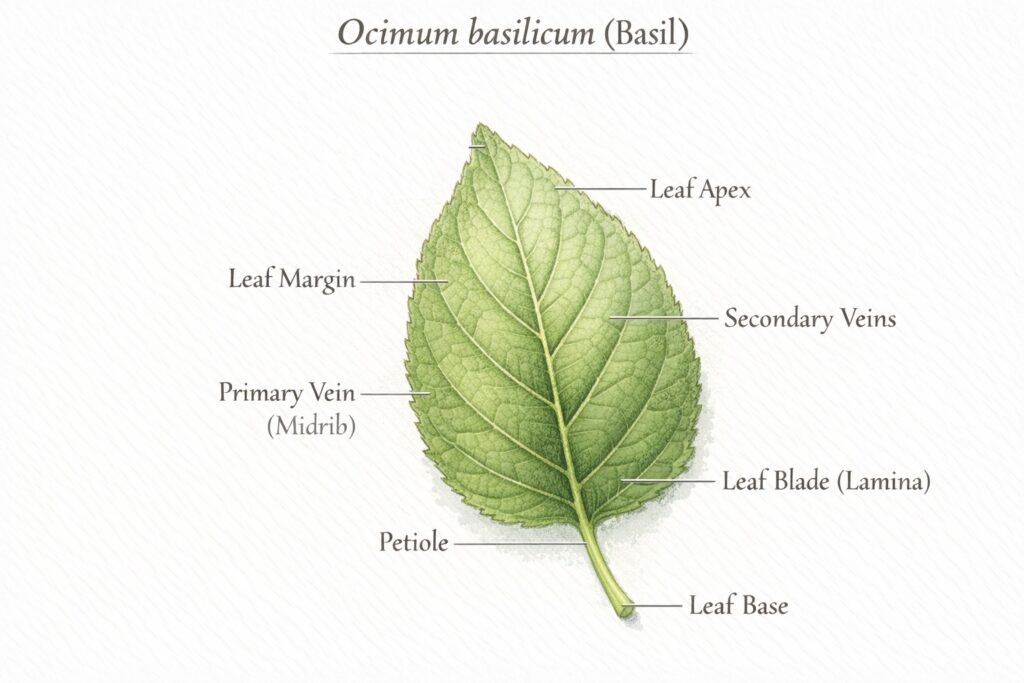
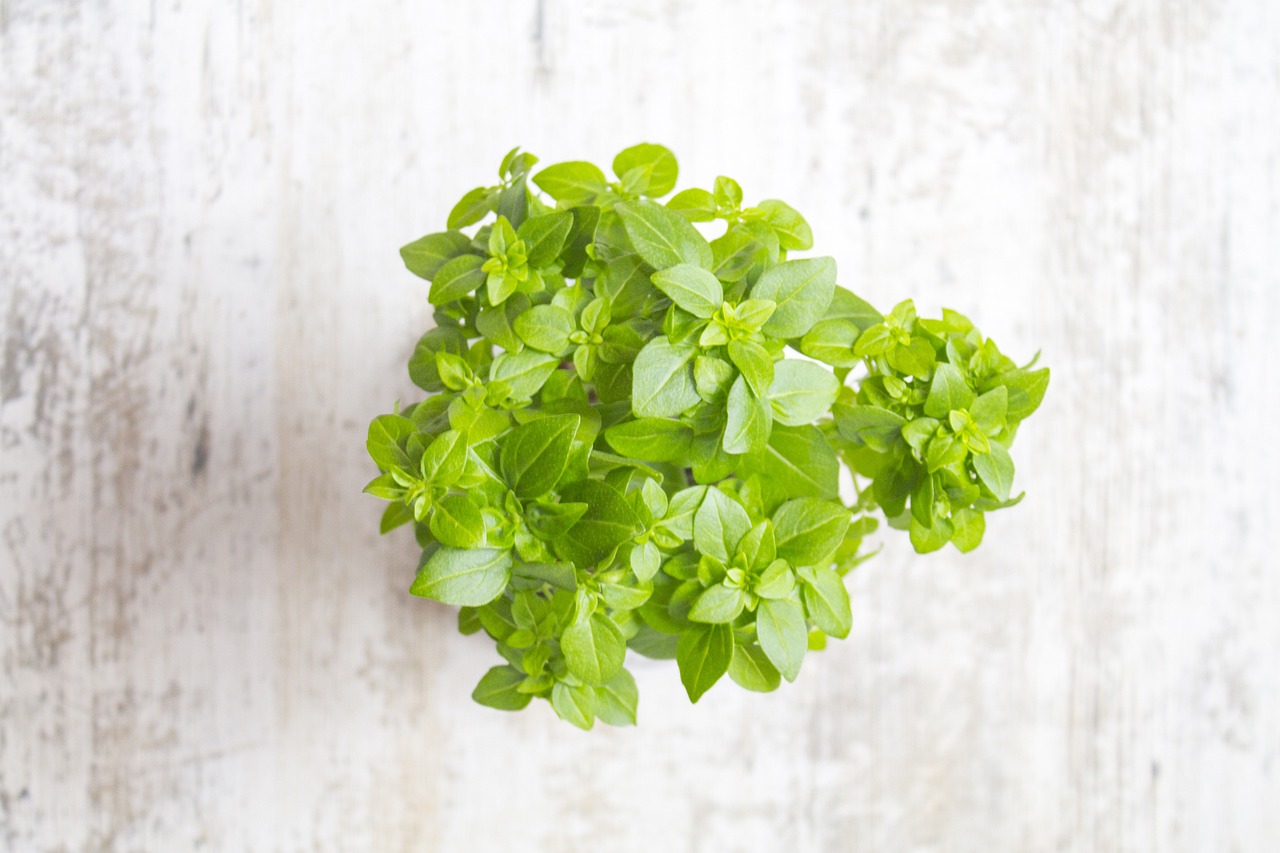
Leaves are simple, opposite, and petiolate, with blades broadly ovate to elliptic in shape and measuring 3–11 cm in length and 2–6 cm in width — considerably larger on average than those of O. tenuiflorum. The margin is entire to slightly undulate or shallowly serrate, and the adaxial surface is smooth, glossy, and relatively glabrous in the most common culinary selections, though glandular trichomes are present and produce the volatile oil on disturbance. Leaf colour ranges from bright green in standard selections to deep reddish-purple in ornamental and culinary purple-leafed cultivars. The petiole is 0.5–3 cm in length. Leaf size varies substantially across the cultivar spectrum, from the very small leaves of ‘Fino Verde’ to the very large blistered leaves of ‘Lettuce Leaf’ selections.
Flowers
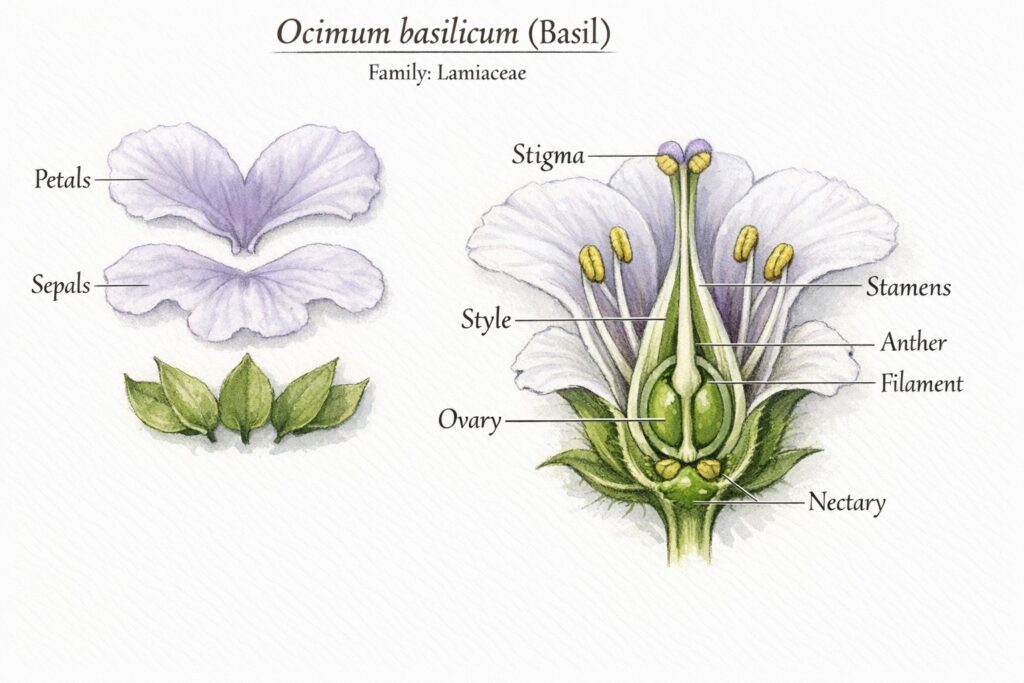
Flowers are small, zygomorphic, and bilabiate, arranged in whorls of six in terminal and axillary racemose spikes extending 10–25 cm at full development. The corolla is white to pale pink or lilac, two-lipped, with the upper lip broad and four-lobed and the lower lip concave and entire. The calyx is persistent, two-lipped, and enlarges to enclose the four developing nutlets after anthesis. Four stamens are exserted and declined, a character visible on close inspection. In strongly pigmented purple cultivars, the calyx, bracts, and flower buds show anthocyanin coloration matching the foliage.
Fruit
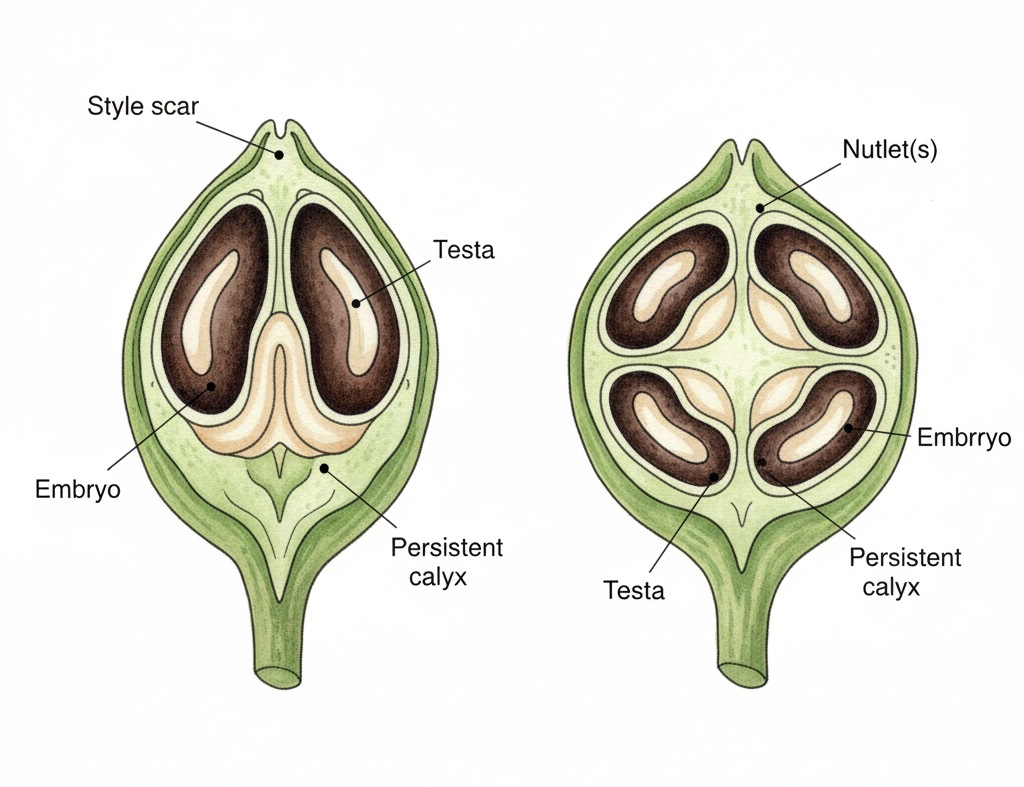
The fruit comprises four smooth, ovoid nutlets approximately 1.5–2 mm in length, dark brown to black at maturity, enclosed within the persistent, accrescent calyx. The seed coat is mucilaginous, swelling rapidly into a translucent gel sheath within seconds of contact with water — a character shared across the tribe Ocimeae and functionally significant for adherence to moist soil and passive dispersal. Nutlets are shed by gravity and mechanical disturbance as the infructescence dries. Each inflorescence can yield 60–100 nutlets under favourable pollination conditions.
Roots
Ocimum basilicum produces a shallow, fibrous root system radiating from a slender central taproot that does not become woody. Rooting depth is typically 15–30 cm in cultivated soils, and the root system is concentrated in the upper 10–15 cm of the soil profile. The species does not produce rhizomes, stolons, tubers, or other underground perennating organs, consistent with its annual life strategy. Root fragility makes transplanting of established seedlings sensitive to disturbance.
Growth Architecture & Life Strategy
Ocimum basilicum is a therophyte in the Raunkiær classification, completing its life cycle from germination to seed set within a single growing season and surviving unfavourable periods solely as seed in the soil or in stored condition. In tropical climates without frost the plant may persist into a second season from the woody root crown if temperatures remain adequate, but under temperate agricultural conditions it is obligately annual, killed by the first autumn frost. The life cycle from germination to seed maturity spans approximately 90–150 days depending on temperature, photoperiod, and cultivar selection.
Growth is indeterminate and proceeds through a vegetative phase of leaf and stem accumulation followed by a reproductive phase triggered by photoperiod shortening and temperature. The vegetative phase produces the marketable leaf harvest, and repeated pinching of developing inflorescences is used in commercial and garden cultivation to delay the photoperiod-triggered reproductive transition and extend the period of active leaf production. Once inflorescence development is permitted to proceed, resource allocation shifts strongly toward seed production, and leaf size, flavour quality, and oil content decline noticeably.
The species is adapted to warm temperatures and high light intensity, with growth rate positively correlated with solar radiation input up to the threshold of heat stress. Growth rate drops markedly below 15 °C (59 °F) and the plant exhibits chilling injury at temperatures below approximately 10 °C (50 °F), making it one of the more cold-sensitive of the commonly cultivated annual herbs in the temperate kitchen garden.
Common Types / Varieties
Ocimum basilicum has one of the most diverse cultivar spectra of any annual herb, reflecting centuries of selection across Mediterranean, Asian, and more recently industrial horticultural breeding programmes. The principal named cultivars and cultivar groups in widespread cultivation represent distinct chemotype, morphological, and culinary profiles.
‘Genovese’ is the standard large-leafed sweet basil of Italian cuisine and the foundation cultivar of Pesto alla Genovese. It produces large (6–10 cm), flat, intensely green leaves with a high linalool and eugenol fraction in the essential oil, giving the characteristic sweet, slightly clove-edged basil fragrance. It is the most commercially significant cultivar in Europe and North America and the benchmark against which most culinary selections are assessed. Plants reach 40–60 cm and are vigorous under warm Mediterranean-type growing conditions.
‘Napoletano’ (Neapolitan basil) produces very large, blistered or lettuce-like leaves that may reach 10–12 cm, with a milder, less pungent flavour profile than ‘Genovese’ attributed to lower camphor and higher linalool fractions. It is a regional Italian cultivar traditionally associated with Campania, used fresh in salads and as a pizza topping where the large leaf size is visually and culinarily valued.
‘Thai Basil’ (O. basilicum var. thyrsiflora) is distinguished from European sweet basil by its smaller, narrower, slightly serrate leaves, purple stems and flowers, and an essential oil profile dominated by methyl chavicol (estragole) rather than linalool, giving a pronounced anise-licorice fragrance. It is the standard basil of Thai, Vietnamese, and Lao cuisines and is used in stir-fries, pho broth, and green curry where its heat-stable methyl chavicol fragrance resists cooking better than the more volatile linalool of European types.
‘Purple Ruffles’ is a highly ornamental and culinary cultivar with deeply ruffled, purple-black foliage and pink flowers, developed in the United States in the 1980s through selection of purple-leafed sports. The essential oil is broadly similar to ‘Genovese’ in composition but anthocyanin pigmentation makes the cultivar visually distinctive; it is used for garnishing, infused vinegars, and as a garden border plant. Pigmentation intensity is reduced under low light.
‘Fino Verde’ (or ‘Bush Basil’) is a compact, mound-forming cultivar producing very small leaves of 1–2 cm with intensely concentrated flavour and fragrance. Plants remain under 30 cm and require minimal pinching due to their naturally bushy habit. This cultivar is widely used in pot culture in Southern European households and is associated with the Ligurian domestic tradition of growing basil in terracotta pots on window sills.
‘Lemon Basil’ (O. basilicum × O. americanum hybrid selections) is characterised by a citrus-lemon fragrance derived from a high proportion of citral (neral and geranial) and limonene in the essential oil, quite distinct from the sweet or anise fragrance of other cultivars. It is used in Southeast Asian cuisines, particularly in Indonesian (kemangi) and Thai cooking, and in Western herb gardens for dessert preparations and tea.
Native Range & Distribution
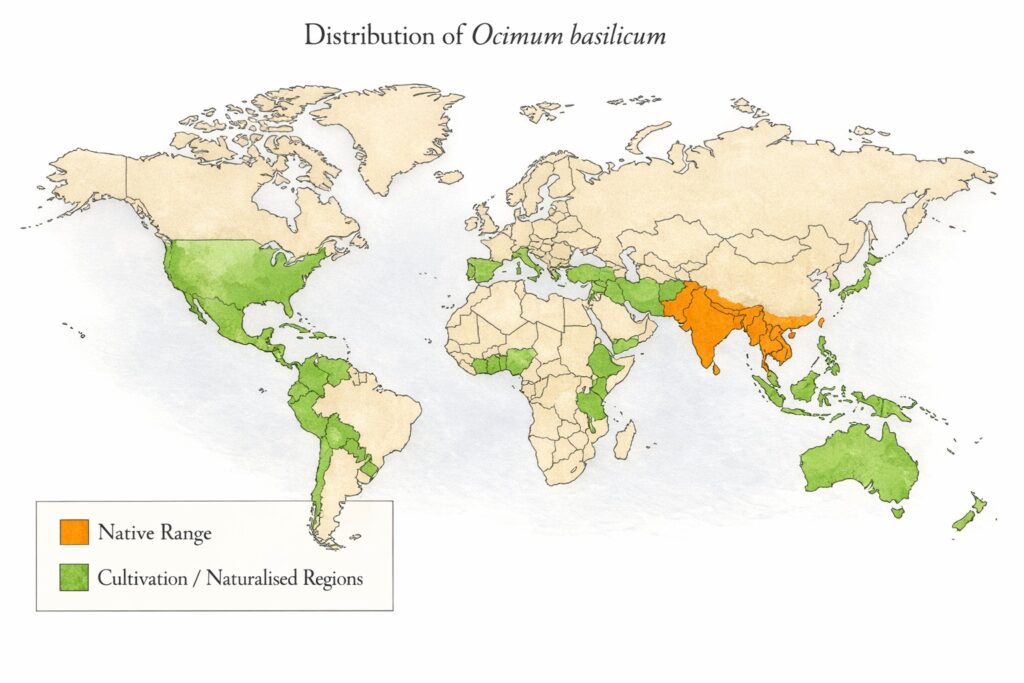
Orange: native range. Green: major cultivation and naturalised regions.
| Country / Territory | Range Status | Notes |
|---|---|---|
| India | Native | Widespread from lowland plains to approximately 1500 m; cultivated throughout |
| Sri Lanka | Native | Lowland occurrence; widely cultivated |
| Pakistan | Native | Northwestern plains and foothills |
| Afghanistan | Native | Eastern lowland occurrence |
| Bangladesh | Native | Lowland and coastal areas |
| Myanmar | Native | Widespread lowland and hill occurrence |
| Thailand | Native | Widespread; major commercial cultivation for fresh and dried markets |
| Laos | Native | Lowland forest margins and disturbed ground |
| Vietnam | Native | Lowland occurrence; commercially cultivated |
| Cambodia | Native | Lowland occurrence |
| Peninsular Malaysia | Native | Lowland occurrence |
| Java, Indonesia | Native | Lowland; kemangi types widely grown |
| Sumatra, Indonesia | Native | Lowland occurrence |
| Philippines | Native | Lowland occurrence |
| China (southern) | Cultivated; naturalised locally | Southern provinces; extensively cultivated |
| Tropical Africa (East) | Native / Naturalised | Kenya, Tanzania, Ethiopia — native status debated; long-established naturalised populations |
| Mediterranean Europe | Cultivated; naturalised locally | Italy, France, Spain, Greece — widely cultivated; occasional ruderal escapes |
| United States | Cultivated; naturalised locally | Persistent populations documented in California, Florida, and Hawaii |
| Australia | Cultivated; naturalised locally | Queensland and northern coastal zones |
| Egypt | Cultivated | Major commercial essential oil production crop |
Distribution records derived from GBIF occurrence datasets and regional botanical surveys. Distribution maps for this species can be generated from GBIF occurrence data at gbif.org.
Habitat & Ecology
Ocimum basilicum is a plant of open, well-lit, disturbed habitats, occurring naturally along roadsides, in fallow agricultural land, at forest margins, on riverbanks, and in the anthropogenic flora of village surroundings across tropical and subtropical Asia. It is virtually never encountered in intact closed-canopy forest, and its native ecology is closely tied to the light-rich environments generated by human disturbance of vegetation. The species is broadly tolerant of a wide range of soil types from sandy loams to heavier alluvial soils, but requires good drainage and is intolerant of waterlogging at any growth stage.
In the context of its native tropical and subtropical range, O. basilicum is characteristic of warm, seasonally wet to moderately dry lowland conditions, with most native populations occurring at elevations below 1500 m. The species grows across annual rainfall regimes of approximately 700–2500 mm, tolerating a moderate dry season but declining rapidly under sustained water deficit. In Mediterranean cultivated environments it benefits from irrigation during the dry summer season. Under the warm-temperate European summer conditions where it is most commonly grown as a culinary herb, it requires full sun exposure and warm soil temperatures above 15 °C (59 °F) for normal growth.
Outside its native range, O. basilicum persists in naturalised ruderal habitats in Hawaii, coastal California, Queensland, and parts of East Africa, though its annual life cycle and cold-sensitivity mean that persistent naturalised populations are limited to genuinely frost-free environments.
Ecological Role
Ocimum basilicum functions as a nectar and pollen resource for small bees (Apidae), bumblebees (Apidae: Bombus), wasps (Vespidae), and hover-flies (Syrphidae) during its extended flowering season, with inflorescence spikes providing accessible small-tubed flowers that reward a broad range of short-tongued insect visitors. The glandular trichomes on the leaf and stem surfaces synthesise and accumulate a complex volatile oil whose phenylpropanoid and terpenoid constituents function as herbivore deterrents and antimicrobial agents in plant tissues, reducing foliar insect damage relative to less chemically defended annual herbs in the same garden environment. The mucilaginous seed coat facilitates passive dispersal of nutlets by adhesion to soil, animal surfaces, and water, contributing to the species’ successful colonisation of disturbed substrate in both its native range and naturalisations beyond it. As a fast-establishing annual with a dense fibrous root system in the upper soil profile, O. basilicum contributes to short-term stabilisation of disturbed soils and to organic matter accumulation through annual above-ground biomass turnover.
Recommended Products
Disclosure: As an Amazon Associate, PlantsInfo may earn from qualifying purchases.
🌱 Plant Care Essentials
The following tools can help with pruning, plant health, soil management, and fruit garden maintenance.

Neem Oil for Plant Care
Natural plant protection against aphids, whiteflies, mites, and other common garden pests.

Fungicide for Root Care
Helps suppress soil-borne fungal diseases and supports healthier root systems.

Spray Bottle for Plants
Ideal for applying foliar sprays, neem oil solutions, and liquid plant treatments.

Rubber Hand Gloves
Protects hands during pruning, planting, soil preparation, and garden maintenance.
Functional Traits
| Trait | Value |
|---|---|
| Growth Form | Erect branching herbaceous annual |
| Leaf Type | Simple, opposite, petiolate; glandular trichomes present |
| Photosynthetic Pathway | C3 |
| Seed Type | Orthodox |
| Rooting Depth | 15–30 cm; shallow fibrous system |
| Wood Density | Not applicable (herbaceous species) |
Phenological Calendar
| Event | Tropical & Subtropical Regions | Regional Qualifiers & Seasonal Deviations |
|---|---|---|
| Leaf Flush | Rapid shoot growth from germination; 2–3 weeks post-emergence | In South Asian summer planting, flush coincides with June–July monsoon onset |
| Primary Flowering Onset | 6–10 weeks post-germination under short-day conditions; year-round in equatorial zones | Mediterranean and temperate cultivation: July–August under long-day suppression; earlier in unmanaged plants |
| Peak Flowering | 8–14 weeks post-germination; peak in August–October in South Asian monsoon calendar | European field crops peak August–September; US greenhouse crops triggered by autumn photoperiod |
| Secondary Flowering | Following removal of primary spikes; occurs throughout growing season where warm conditions persist | Absent in equatorial year-round plantings where successive cohorts replace senescing individuals |
| Fruit Development | 2–3 weeks post-pollination | Extended by mild temperatures; accelerated by heat |
| Fruit Maturity | Nutlets darken and calyx dries; 10–14 weeks post-germination in hot-season cropping | Tropical dry-season crops may mature seed within 10 weeks |
| Seed Dispersal | Passive, by gravity and animal contact; mucilaginous coat facilitates adhesion | Dispersal concentrated during dry-season senescence in monsoonal climates |
| Dormancy or Rest Period | No dormancy; plants senesce and die annually; seed persists in transient seed bank | Tropical perennial persistence from root crown documented where temperatures remain above 12 °C (54 °F) |
Flowering onset in Ocimum basilicum is primarily driven by photoperiod shortening below approximately 14 hours of daylight in most cultivars, combined with temperatures consistently above 18 °C (64 °F), though some cultivars show reduced photoperiod sensitivity and may flower under long days when temperature thresholds are met.
Reproductive Biology
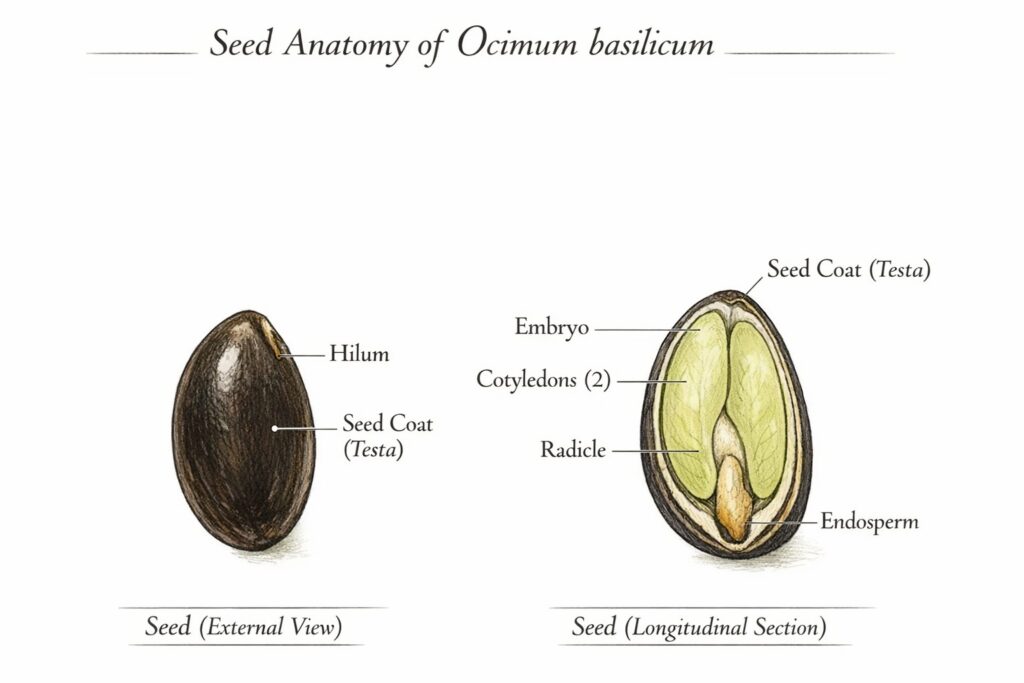
Ocimum basilicum reproduces exclusively by seed under natural conditions and does not produce vegetative propagules or clonal structures in the field. Each plant produces multiple inflorescence spikes during the reproductive phase, with individual spikes bearing 10–25 verticillasters each contributing up to six nutlets, giving a potential seed output per plant of several thousand nutlets across the full reproductive period. Seed set is high under normal open-pollination conditions in warm climates.
The species is predominantly outcrossing, facilitated by protandry — anthers dehisce before the stigma of the same flower is fully receptive — and by the active foraging of pollinating insects on inflorescence spikes. Self-pollination is possible and occurs in the absence of insect visitors, contributing to reproductive assurance in isolated garden plants. In commercial seed production, cross-pollination between adjacent cultivars is a concern because the species intercrosses freely, and isolation distances of at least 300 m are recommended between cultivars grown for pure seed.
Pollination Ecology
| Field | Information |
|---|---|
| Pollination Mechanism | Insect |
| Primary Pollinator Groups | Bees (Apidae), bumblebees (Apidae: Bombus), wasps (Vespidae), hover-flies (Syrphidae) |
| Pollination Syndrome | Entomophily |
| Floral Reward | Nectar and pollen |
Seed Biology & Germination Ecology
| Field | Information |
|---|---|
| Seed Type | Orthodox |
| Seed Viability Period | 4–5 years under cool, dry storage conditions; declines more rapidly under warm or humid storage |
| Dormancy Type | None documented |
| Dormancy Breaking Mechanism | None documented; seeds germinate readily without pretreatment |
| Germination Temperature Range | 18–35 °C (64–95 °F); optimal at 22–28 °C (72–82 °F) |
| Light Requirement for Germination | Light-neutral; germination occurs in darkness and under light; surface or shallow sowing preferred |
| Seed Bank Classification | Transient |
| Dispersal Unit | Nutlet with mucilaginous seed coat |
The mucilaginous sheath produced by Ocimum basilicum nutlets upon wetting is functionally analogous to that of chia (Salvia hispanica) and is exploited in the preparation of regional beverages across South and Southeast Asia; biologically it promotes adhesion to moist substrates and short-range dispersal in disturbed soil environments.
Vegetative Regeneration & Clonal Biology
| Field | Information |
|---|---|
| Vegetative Regeneration Capacity | Low |
| Primary Regeneration Mechanism | Axillary bud regrowth following shoot tip removal; no clonal organ production |
| Tissue Types Capable of Regeneration | Axillary buds on surviving stem nodes; basal meristematic tissue in warm-climate perennial persistence |
| Apomixis Status | Not documented in available literature |
| Bulbil or Propagule Production | Absent |
| Layering Capacity | Not documented in available literature |
| Root Sprouting from Fragments | Not documented in available literature |
| Clonal Spread Rate | Negligible; plant does not spread clonally under field conditions |
| Coppicing Response | Not documented; herbaceous annual growth habit |
| Ecological or Invasive Significance of Clonal Biology | Absent; no clonal invasive behaviour documented |
Ocimum basilicum is not a clonally spreading plant, and its regenerative capacity under cultivation is limited to axillary bud flush following pinching of shoot tips — a response that is agronomically exploited to sustain leaf production throughout the growing season.
Soil Ecology & Rhizosphere Interactions
| Field | Information |
|---|---|
| Mycorrhizal Association Type | AM (Arbuscular Mycorrhizal) |
| Documented Fungal Partners | Glomus spp. and Rhizophagus irregularis documented in rhizosphere studies of Ocimum basilicum under field conditions |
| Nitrogen Fixation | Absent |
| Allelopathic Properties | Documented; volatile root and foliar exudates suppress germination of certain competing annual species in bioassay studies |
| Documented Allelopathic Targets | Amaranthus retroflexus, Portulaca oleracea — documented in controlled bioassay studies |
| Rhizosphere pH Modification | Not documented in available literature |
| Root Exudate Compounds | Linalool, methyl chavicol, eugenol, and rosmarinic acid detected in rhizosphere fractions |
| Soil Microbiome Influence | Volatile root exudates modify bacterial community structure in the immediate rhizosphere; AM colonisation promotes phosphorus uptake efficiency in low-phosphorus soils |
Biochemical Profile
| Compound Class | Compounds Documented | Primary Location in Plant | Ecological Function |
|---|---|---|---|
| Monoterpenes | Linalool, ocimene, alpha-pinene, limonene | Leaves, glandular trichomes | Herbivore deterrence; pollinator attraction |
| Phenylpropanoids | Methyl chavicol (estragole), eugenol, methyl eugenol, trans-cinnamate | Leaves, glandular trichomes | Herbivore deterrence; antimicrobial defence in plant tissues |
| Sesquiterpenes | Beta-caryophyllene, germacrene D, bisabolene | Leaves, stems | Herbivore deterrence |
| Flavonoids | Orientin, vicenin, quercetin, rutin, luteolin | Leaves | UV photoprotection; defensive secondary metabolites |
| Hydroxycinnamic acids | Rosmarinic acid, caffeic acid, chicoric acid | Leaves, stems | Defensive secondary metabolites; antimicrobial defence in plant tissues |
| Triterpenoids | Ursolic acid, oleanolic acid, betulinic acid | Leaves, stems | Defensive secondary metabolites |
Research Coverage
| Field | Information |
|---|---|
| Research Coverage Level | High |
| Primary Research Fields | Essential oil phytochemistry; chemotype characterisation; agronomy and yield optimisation; volatile oil composition across cultivars and geographic origins; food science |
| Earliest Published Study | 19th century pharmacopoeia and herbal documentation; modern phytochemical investigation from the 1950s onward |
| Most Active Research Regions | Italy, Egypt, France, India, United States, Brazil |
| Key Knowledge Gaps | Population genomics of wild-type versus cultivated lineages; ecology of naturalised populations; long-term domestication genomics; rhizosphere ecology under diverse agronomic systems |
Phytochemical Organ Distribution
| Plant Organ | Compound Class | Compounds Documented | Source |
|---|---|---|---|
| Leaves | Monoterpenes | Linalool, ocimene, alpha-pinene | Harborne, J.B. & Baxter, H., 1993 |
| Leaves | Phenylpropanoids | Methyl chavicol, eugenol, trans-cinnamate | Harborne, J.B. & Baxter, H., 1993 |
| Leaves | Flavonoids | Orientin, vicenin, quercetin, rutin | Harborne, J.B. & Baxter, H., 1993 |
| Leaves | Hydroxycinnamic acids | Rosmarinic acid, caffeic acid | Harborne, J.B. & Baxter, H., 1993 |
| Stems | Triterpenoids | Ursolic acid, oleanolic acid | Harborne, J.B. & Baxter, H., 1993 |
| Flowers | Monoterpenes | Linalool, methyl chavicol | Harborne, J.B. & Baxter, H., 1993 |
| Seeds | Hydroxycinnamic acids | Rosmarinic acid | Harborne, J.B. & Baxter, H., 1993 |
| Root | Phenylpropanoids | Eugenol, methyl eugenol | Harborne, J.B. & Baxter, H., 1993 |
The leaves are the most extensively documented organ for phytochemical composition in Ocimum basilicum, reflecting both the agricultural primacy of the leaf harvest and the concentration of glandular trichomes on the adaxial and abaxial leaf surfaces where volatile oil biosynthesis and storage occur.
Nutritional Composition
| Nutrient | Value per 100g Edible Portion | Source |
|---|---|---|
| Energy | 23 kcal (96 kJ) | USDA FoodData Central |
| Water | 92.1 g | USDA FoodData Central |
| Protein | 3.2 g | USDA FoodData Central |
| Total Fat | 0.6 g | USDA FoodData Central |
| Carbohydrates | 2.7 g | USDA FoodData Central |
| Dietary Fibre | 1.6 g | USDA FoodData Central |
Values represent fresh sweet basil leaves (raw) at commercial harvest stage prior to inflorescence development.
Climate Adaptation & Stress Tolerance
Ocimum basilicum is a warm-season annual with an optimal growth temperature range of 18–35 °C (64–95 °F) and a lower growth threshold of approximately 10–12 °C (50–54 °F), below which growth ceases and chilling injury begins to manifest as blackening and collapse of leaf tissue. Frost is lethal at any growth stage, and temperatures below 5 °C (41 °F) cause irreversible cellular damage even without ice formation. These temperature limits make it one of the most frost-sensitive annual herbs in temperate kitchen horticulture, and successful outdoor cultivation in northern European and North American climates requires soil temperatures to be reliably above 15 °C (59 °F) before transplanting.
The species tolerates moderate water stress once established but is most productive under consistently moist, well-drained conditions with regular irrigation in dry climates. Prolonged soil moisture deficit causes premature flowering, reduced leaf size, and intensification of volatile oil concentration — a response documented in commercial cultivation where mild water stress in the final weeks before harvest is sometimes used to increase essential oil yield per unit fresh weight. Ocimum basilicum is tolerant of high solar radiation, which promotes essential oil accumulation, but severe heat stress above 40 °C (104 °F) combined with low humidity causes rapid leaf wilting and quality decline.
Climate Vulnerability & Range Dynamics
| Field | Information |
|---|---|
| IUCN Climate Vulnerability Assessment | Not Evaluated |
| Primary Climate Sensitivity Factors | Minimum temperature threshold; frost events at cultivation margins; increased intensity of dry-season drought in native tropical range |
| Projected Range Shift Direction | Not documented in available literature |
| Projected Range Shift Magnitude | Not documented in available literature |
| Key Threatening Processes | Cold events at poleward cultivation margins; extreme heat events above 40 °C (104 °F) during growing season; waterlogging under intensified monsoon conditions |
| Resilience Factors | Very wide cultivar diversity providing differential climate tolerance; extremely broad global cultivation base; prolific seed production and long seed viability; tolerant of diverse soils |
| Published Modelling Studies | No study identified |
| Confidence Level | Low |
Cytogenetics
| Field | Information |
|---|---|
| Chromosome Number (2n) | 2n = 48 |
| Ploidy Level | Hexaploid (based on base number x = 8) |
| Genome Size (1C value) | Not documented in available literature |
| Karyotype Notes | Chromosome number of 2n = 48 is the most widely reported count across cultivated accessions; some accessions with 2n = 72 have been recorded in polyploid cultivar lines; karyotypic variation among chemotypes and cultivar groups contributes to difficulty in species delimitation within the O. basilicum complex |
| Source | Darlington, C.D. & Wylie, A.P., 1955 |
Cultivation Requirements
| Field | Information |
|---|---|
| Light Requirements | Full sun; minimum 6–8 hours direct sunlight per day; insufficient light produces etiolated growth and reduced essential oil concentration |
| Watering | Moderate and consistent; allow upper 2 cm of soil to dry between waterings; avoid waterlogging and standing water at stem base |
| Soil Type | Well-drained loam or sandy loam; enriched with organic matter for commercial production |
| Soil pH | 6.0–7.5 |
| Humidity | Moderate; high humidity with poor air circulation promotes fungal disease |
| Temperature Range | Optimal 18–35 °C (64–95 °F); minimum transplant threshold 15 °C (59 °F) soil temperature; frost lethal |
| USDA Hardiness Zone | Grown as annual in zones 3–10; survives as short-lived perennial in zones 10–12 |
| Fertilization | Moderate feeder; nitrogen-balanced fertilisation promotes leaf production; excess nitrogen reduces essential oil concentration and flavour intensity |
| Container Suitability | Excellent container plant; minimum 20 cm diameter pot; requires full sun, good drainage, and consistent moisture |
Propagation Methods
Ocimum basilicum is propagated primarily from seed sown at 22–28 °C (72–82 °F) in well-drained, moist germination substrate; seed is scattered on the surface or covered to a maximum depth of 2–3 mm, and germination occurs reliably within 5–10 days without any pretreatment. Stem cuttings of 8–12 cm bearing at least two nodes root readily in water or moist substrate within 7–14 days under warm conditions and are the preferred method when maintaining a specific cultivar, particularly for purple-leafed or other distinctively characterised selections whose seed may not produce uniform offspring due to the species’ outcrossing habit. A species-specific practical consideration is that basil seedlings are highly sensitive to transplant shock from cold soil and should not be planted outdoors until both air and soil temperatures are reliably above 15 °C (59 °F), as even brief cold exposure below 10 °C (50 °F) causes blackening and irreversible cellular damage to young leaves.
Pests & Diseases
| Issue | Notes |
|---|---|
| Downy mildew (Peronospora belbahrii) | Yellowing of upper leaf surface with grey-purple sporulation on the underside; most severe in cool, humid conditions; first documented in commercial basil production in Europe in 2004 |
| Fusarium wilt (Fusarium oxysporum f.sp. basilici) | Sudden wilting, yellowing, and stem discoloration progressing from base upward; associated with infected soil or propagation substrate |
| Botrytis blight (Botrytis cinerea) | Grey mould lesions on stems and leaves; dense canopy and high humidity are predisposing conditions |
| Aphids (Aphis gossypii, Myzus persicae) | Colonies on young growing tips and undersides of expanding leaves; associated with warm conditions and high tissue nitrogen content |
| Root rot (Pythium spp.) | Stem collapse at or below soil level; wilting despite moist soil; associated with waterlogged or poorly drained substrate |
Toxicity & Safety
| Field | Information |
|---|---|
| Humans | Methyl chavicol (estragole) present in essential oil is a documented genotoxic compound in isolated form; concentrated essential oil associated with gastrointestinal irritation upon direct contact |
| Cats | Not listed as toxic by ASPCA for cats; no specific physiological toxicity to cats documented in available literature |
| Dogs | Not listed as toxic by ASPCA for dogs; no specific physiological toxicity to dogs documented in available literature |
| Toxic Compounds | Methyl chavicol (estragole); concentrated essential oil fraction |
| Source | ASPCA Animal Poison Control Center (aspca.org/pet-care/animal-poison-control) |
Toxicological risk in Ocimum basilicum is associated with concentrated essential oil preparations containing high methyl chavicol fractions; fresh leaf material at normal culinary quantities presents no documented toxicity in humans or companion animals.
Invasive Status
Ocimum basilicum has been recorded as naturalised in parts of East Africa, Hawaii, coastal California, Queensland, and the Caribbean, but is not classified as a significant invasive species in any documented region. Its annual life cycle, cold-sensitivity, and dependence on disturbed open habitats limit its establishment to anthropogenic and ruderal environments, and no displacement of native vegetation communities has been documented in naturalised populations.
Conservation Status
| Field | Information |
|---|---|
| IUCN Red List Status | Not Evaluated |
| Assessment Year | Not applicable |
| Population Trend | Not documented in available literature |
| Source | IUCN Red List of Threatened Species — https://www.iucnredlist.org (Accessed: 2026-03-12). |
Economic Importance
Ocimum basilicum is one of the most economically significant aromatic herbs in global commerce, supporting a broad value chain from fresh-cut herb production and dried leaf processing through to industrial essential oil distillation and flavour compound extraction. Italy, France, and the United States constitute the primary markets for fresh Genovese-type basil, with large-scale greenhouse and field production in Italy, the Netherlands, Morocco, and California supplying year-round supermarket demand. Egypt is the dominant global producer of dried basil and sweet basil essential oil for the food flavouring and fragrance industries, with production volumes exceeding several thousand tonnes of dried herb annually.
The fresh basil market in Western Europe and North America has grown substantially since the 1990s, driven by interest in Italian cuisine and the expansion of refrigerated fresh herb retail sections. In Southeast Asia, Thai basil (O. basilicum var. thyrsiflora) is a staple culinary commodity traded in fresh markets throughout Thailand, Vietnam, Laos, and Cambodia. The seed trade for home garden and commercial cultivation is also significant, with sweet basil consistently ranking among the top-selling herb seed categories in Europe and North America. Essential oil from O. basilicum enters international fragrance, cosmetics, and food flavouring markets, with linalool-type and methyl chavicol-type oils commanding different price points based on end-use application.
Ethnobotanical Uses
Ocimum basilicum has an extensive and geographically diverse ethnobotanical record spanning at least two thousand years of documented use across South Asia, the Mediterranean, the Middle East, and Southeast Asia. In Ayurvedic tradition on the Indian subcontinent, the species is recorded for use in preparations addressing a range of conditions, and the leaves and seeds are documented components of classical formulations in the Charaka and Sushruta literature, though they occupy a secondary position relative to O. tenuiflorum in South Asian traditional medicine. In the traditional medicine systems of tropical Africa and the Middle East, leaf preparations, seed infusions, and essential oil applications are documented across multiple ethnobotanical survey sources, with the plant used for a broad range of locally documented applications.
In the Mediterranean and European tradition, O. basilicum is documented primarily as a culinary herb since at least Roman times, with references in Pliny the Elder’s Naturalis Historia to its cultivation and culinary and household uses in the first century CE. In Italian folk tradition, the plant carries associations with love, courtship, and domestic protection in several regional cultures — a young woman placing a pot of basil on her balcony was a signal of availability in parts of southern Italy — and the plant is associated with the feast day of the Holy Cross in Greek Orthodox practice, where it is blessed in church ceremonies on the fourteenth of September each year.
In Southeast Asian ethnobotany, Thai basil and related O. basilicum types are documented as culinary and folk medicine plants across Thai, Lao, Vietnamese, Cambodian, and Indonesian traditions, with fresh leaf applications, steam preparations, and seed mucilage uses recorded in ethnobotanical surveys from the late 20th century onward. The seed mucilage of O. basilicum is used in traditional beverages and desserts across South and Southeast Asia under various local names, exploiting the same physical swelling property as the related O. tenuiflorum seed.
Cultural & Traditional Context
Ocimum basilicum carries a remarkable diversity of cultural meanings across its global range, with associations ranging from love and protection to death and mourning depending on regional tradition. In ancient Greece, basil was associated with hatred and poverty in some classical sources, yet in later Greek Orthodox Christian tradition it became strongly associated with holiness — the plant is said to have grown at the site of the True Cross, and bundles of basil are used to sprinkle holy water in Greek Orthodox liturgical practice, giving the species its common name ‘basilikon’ (royal herb) which persists as the etymological root of all European common names for the plant. This duality of sinister and sacred association is documented across classical Mediterranean sources and distinguishes the cultural history of basil from virtually all other culinary herbs in the Western tradition.
In Italian culinary culture, O. basilicum — particularly the Genoese type — has achieved the status of a protected geographical product and a symbol of regional identity, with Pesto alla Genovese holding DOP (Denominazione di Origine Protetta) status and the cultivation of basil in the coastal Ligurian microclimate being regarded as essential to the authentic flavour profile of the sauce. The association of basil with Italian cuisine in the global imagination is so strong that the herb functions as a cultural signifier well beyond its botanical identity, representing the Mediterranean diet and Italian culinary tradition in visual and commercial contexts across the world. In Mexico and Central America, basil (known as ‘albahaca’) is used in Day of the Dead (Día de los Muertos) altar preparations and in folk spiritual practices for purification and protection of the household.
Interesting Facts
The name ‘basil’ derives from the Greek basilikon phuton meaning ‘royal plant’, a designation that reflects the herb’s status in ancient Mediterranean culture and that has persisted through Latin basilicum into all major European languages over two millennia. Ocimum basilicum is one of the few annual herbs whose commercial production now occurs under controlled greenhouse conditions throughout the year in northern Europe — large Dutch and Italian greenhouse operations maintain year-round fresh basil supply to supermarkets by growing the plant under supplemental lighting and controlled temperature, entirely decoupling production from the plant’s natural photoperiod and temperature responses. The species’ exceptional chemotype diversity — spanning linalool, methyl chavicol, eugenol, citral, and camphor dominant types — means that the essential oil of different named cultivars can differ more in chemical composition from each other than they differ from the oils of entirely different Ocimum species. In Thai cuisine, O. basilicum var. thyrsiflora (Thai basil) is specifically prized over sweet basil because its methyl chavicol-dominant volatile oil is significantly more heat-stable than the linalool of European cultivars, retaining its characteristic fragrance after the high-temperature cooking required for dishes such as pad krapao. The mucilaginous nutlets of O. basilicum, known as ‘sabja’ or ‘tukmaria’ seeds in South Asia, are a traditional ingredient in drinks such as falooda and sherbets, where the swelled gel-coated seeds provide texture; they have been marketed internationally as ‘basil seeds’ in health-food contexts since the 2010s, paralleling the earlier international marketing of chia seeds.
FAQs
Why do Ocimum basilicum leaves turn black after cold exposure? Ocimum basilicum is highly sensitive to chilling injury, and exposure to temperatures below approximately 10 °C (50 °F) disrupts membrane integrity in leaf cells, causing the characteristic rapid blackening and collapse of leaf tissue. The blackening results from cellular damage releasing phenolic compounds and polyphenol oxidase enzymes that react with oxygen to produce dark pigments, a process analogous to the browning of cut fruit. Even brief exposure to cold temperatures during transport or storage at or near 0 °C (32 °F) produces irreversible blackening of the fresh leaf.
What causes Ocimum basilicum to flower prematurely and stop producing leaves? Premature flowering in O. basilicum is triggered primarily by photoperiod — the plant is a quantitative short-day plant that initiates inflorescence development as day length decreases below approximately 14 hours in most cultivars. In temperate climates this transition occurs naturally in late summer; in tropical climates it can be triggered by any environmental stress including drought, heat, root restriction, or nutrient depletion, all of which accelerate the reproductive transition. Pinching out developing inflorescence spikes before they open delays the transition and redirects growth to lateral vegetative branches, extending the productive leaf harvest by two to four weeks.
How does the flavour of Ocimum basilicum differ between cultivar types? The flavour differences among O. basilicum cultivars reflect directly their essential oil composition: Genovese and European sweet basil types are linalool-dominant with a sweet, floral, slightly clove-like flavour profile, while Thai basil is methyl chavicol (estragole)-dominant with a pronounced anise-licorice character. Lemon basil cultivars produce citral-dominant oil with a distinct lemon-citrus fragrance, while purple-leafed cultivars generally share the linalool profile of sweet basil with minor compositional differences. These chemical distinctions are significant enough that Thai basil and European sweet basil are not interchangeable in recipes without noticeable flavour difference.
Can Ocimum basilicum be grown successfully indoors? Ocimum basilicum can be maintained indoors but requires consistent full sun equivalent to at least 6–8 hours of direct light per day, making a south- or west-facing window in temperate climates marginal for productive growth during winter months. Under insufficient light, plants become etiolated — producing long internodes, small pale leaves, and reduced volatile oil concentration. Supplemental grow lighting can compensate for inadequate natural light. Indoor plants are additionally susceptible to root rot if overwatered and to aphid infestations in warm, dry indoor conditions.
What is the difference between Ocimum basilicum and Ocimum tenuiflorum (holy basil)? Ocimum basilicum and O. tenuiflorum are related species in the same genus but differ substantially in morphology, fragrance, flavour, and life strategy. Sweet basil has larger, smoother, bright-green leaves and a linalool-dominated sweet fragrance, remains herbaceous throughout its annual life cycle, and is not woody at the base. Holy basil has smaller, more strongly serrated leaves, a woody lignified base in mature plants, and a eugenol-dominated clove-like fragrance quite distinct from sweet basil. In cuisine, the two species are not interchangeable: Thai holy basil (krapao) has a peppery-clove flavour used in stir-fries, while sweet basil’s floral profile is suited to fresh Mediterranean preparations.
Conclusion
Ocimum basilicum represents one of the most successfully globalised aromatic annual herbs in the history of human agriculture, having expanded from its tropical Asian native range to become a defining flavour ingredient of Italian, French, Thai, Vietnamese, Greek, Lebanese, and Indonesian cuisines and a commercially significant essential oil crop on three continents. Its exceptional cultivar diversity — spanning morphological, chemotype, and agronomic variation far exceeding that of most annual crops — is the product of millennia of selection across geographically distinct food cultures, each of which has shaped the plant toward different phenotypic and chemical endpoints from the same ancestral gene pool. The hexaploid genome of O. basilicum (2n = 48) may contribute to this phenotypic plasticity by providing additional genomic redundancy that buffers the effects of selection on individual loci.
The botanical distinction between O. basilicum and its close relative O. tenuiflorum is clear in morphological, cytological, and phytochemical terms, though the two species are frequently conflated in popular and non-specialist literature. The linalool and methyl chavicol chemotype spectrum of O. basilicum contrasts sharply with the eugenol dominance of O. tenuiflorum, and the annual herbaceous growth habit of sweet basil contrasts with the perennial chamaephytic woody base of holy basil. These distinctions have practical implications for cultivation, culinary application, and essential oil use.
For botanical context on related species, see Ocimum tenuiflorum and Ocimum gratissimum.
Common Cultivation Observations
| Observation | Associated Condition |
|---|---|
| Rapid blackening and collapse of leaf tissue | Chilling injury; associated with exposure to temperatures below 10 °C (50 °F) during transport, storage, or cold-soil transplanting |
| Yellowing of lower leaves with green upper canopy | Progressive senescence of older leaves; associated with normal vegetative development as the canopy extends upward and lower leaves become shaded |
| Leggy stems with widely spaced internodes and small pale leaves | Shade-induced etiolation; associated with insufficient direct light below approximately 6 hours per day |
| Wilting despite moist substrate | Root hypoxia or root rot; associated with waterlogged or compacted soil impeding drainage |
| Premature bolting and inflorescence development | Photoperiod-triggered reproductive transition; associated with day length shortening below critical threshold or with root restriction and nutrient stress |
Scientific Stability Note
Ocimum basilicum L. is the accepted name for this species under the current classification maintained by Kew Plants of the World Online (POWO). The species has accumulated a large number of synonyms over its taxonomic history, including several names that were applied to morphologically distinct cultivar forms or minor variants before the breadth of intraspecific variation was appreciated — notably Ocimum minimum L., which was long treated as a separate dwarf-basil species but is now subsumed within O. basilicum. The O. basilicum complex remains one of the more taxonomically difficult groups within the genus Ocimum, partly because the high degree of cultivar diversity overlaps with natural variation in wild populations and partly because the hexaploid genome level promotes phenotypic variability. Researchers accessing literature predating the current POWO treatment should note that Ocimum minimum was widely used as an independent species name for small-leafed bush basil cultivars through the 20th century.
Reference Summary
A. Primary Taxonomic Sources
Kew Plants of the World Online (POWO) — https://powo.science.kew.org (Accessed: 2026-03-12). GBIF Backbone Taxonomy — https://www.gbif.org (Accessed: 2026-03-12).
B. Peer-Reviewed Literature
No fully verified peer-reviewed citation identified for this entry.
C. Monographs and Books
Harborne, J.B. & Baxter, H. (1993). Phytochemical Dictionary: A Handbook of Bioactive Compounds from Plants. Taylor & Francis, London.
Darlington, C.D. & Wylie, A.P. (1955). Chromosome Atlas of Flowering Plants. George Allen & Unwin, London.
D. Herbarium and Specimen Records
Royal Botanic Gardens Kew Herbarium (K) — specimen collections of Ocimum basilicum from India, Southeast Asia, and East Africa. JSTOR Global Plants — https://plants.jstor.org (Accessed: 2026-03-12).
E. Grey Literature and Databases
IUCN Red List of Threatened Species — https://www.iucnredlist.org (Accessed: 2026-03-12). USDA FoodData Central — https://fdc.nal.usda.gov (Accessed: 2026-03-12). ASPCA Animal Poison Control Center — https://www.aspca.org/pet-care/animal-poison-control (Accessed: 2026-03-12).