Introduction
Ocimum gratissimum L., commonly known as African basil, tree basil, or clove basil, is a perennial aromatic shrub in the family Lamiaceae native to tropical Africa, the Indian subcontinent, and continental Southeast Asia. It is the largest-growing member of the genus Ocimum in widespread cultivation, reaching 1–2 m in height and developing a distinctly woody stem that distinguishes it from the herbaceous annual O. basilicum and the semi-woody subshrub O. tenuiflorum. The species is characterised by a strongly clove-like, eugenol- and thymol-dominant essential oil that varies substantially between the two primary chemotypes documented across its range — a eugenol-dominant type associated primarily with African and lowland Asian populations and a thymol-dominant type associated with upland and East African populations.
Classification
- Plant Type
- Shrub
- Lifecycle
- Perennial
- Leaf Habit
- Evergreen
- Native Region
- Central Africa, Southeast Asia, Southern Africa
- Plant Family
- Lamiaceae
Ocimum gratissimum is one of the most economically and ethnobotanically significant plants in sub-Saharan Africa, where it is used extensively as a culinary seasoning, a household insect repellent, a component of traditional medicine systems across dozens of ethnic groups, and a source of essential oil traded in regional and international markets. It is also cultivated in South and Southeast Asia, the Caribbean, and tropical South America, where it has naturalised following deliberate introduction. The species supports a substantial phytochemical research literature, principally from African, Indian, and Brazilian institutions, and its essential oil has been characterised across hundreds of geographic accessions, making it one of the better-documented aromatic plants of the tropical world.
Taxonomic Synonyms
| Field | Information |
|---|---|
| Accepted Scientific Name | Ocimum gratissimum L. |
| Known Synonyms | Ocimum suave Willd.; Ocimum viridiflorum Roth; Ocimum guineense Schum. & Thonn.; Ocimum occultum Roem. & Schult.; Ocimum canum auct. non Sims; Ocimum viride Willd. |
| Taxonomic Authority Source | Kew Plants of the World Online (POWO) |
Quick Plant Information
| Field | Information |
|---|---|
| Common Name(s) | African Basil, Tree Basil, Clove Basil, Shrubby Basil, Wild Basil, Efirin (Yoruba), Nchanwu (Igbo), Ntong (Twi) |
| Scientific Name | Ocimum gratissimum L. |
| Family | Lamiaceae |
| Plant Type | Shrub / Subshrub |
| Lifespan | Perennial; typically 3–7 years under tropical field conditions |
| Growth Habit & Form | Tropical Africa, the Indian subcontinent, continental Southeast Asia |
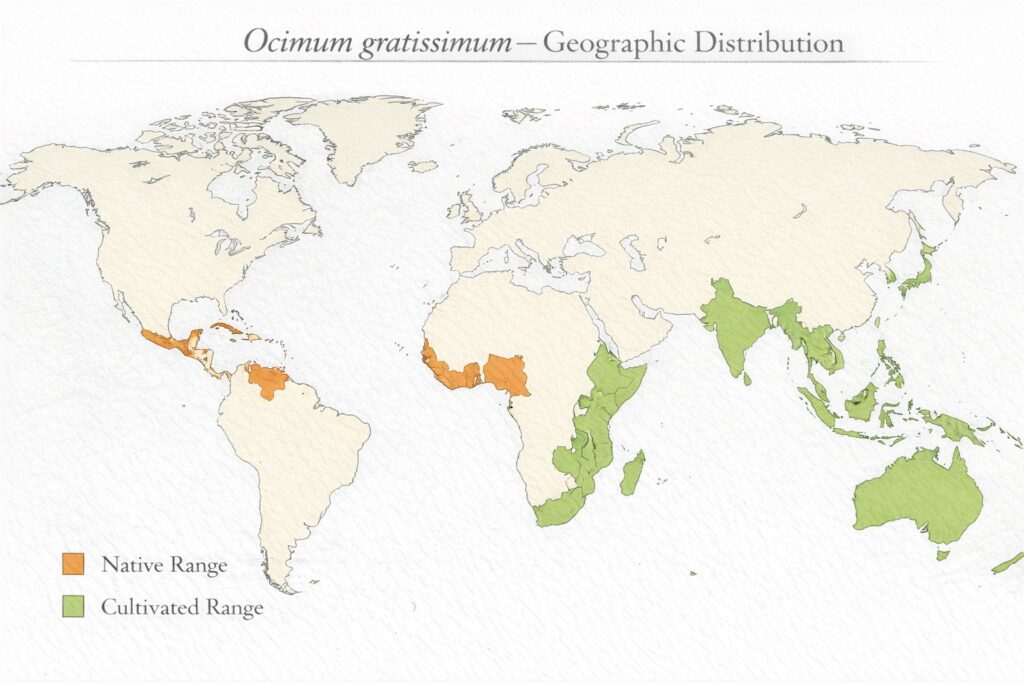
| Native Range | Tropical Africa, the Indian subcontinent, and continental Southeast Asia |
| Climate Adaptation & Habitat Type | Tropical and subtropical; forest margins, disturbed ground, farmland borders, village surroundings, roadsides |
| Leaf Type | Simple, opposite, petiolate; ovate to elliptic with serrate margins; densely glandular-pubescent |
| Flower Color(s) | White to pale cream or pale yellow |
| Fruit Type | Nutlet (4 nutlets per calyx, enclosed within persistent calyx) |
| Evergreen or Deciduous | Evergreen |
Botanical Description
Stem
The stem of Ocimum gratissimum is erect, robustly branching, and becomes strongly woody and lignified from the base upward in mature plants, forming a persistent woody framework that distinguishes it clearly from the herbaceous O. basilicum and approaches a true shrub growth form. Young shoots are quadrangular in cross-section, as is characteristic of Lamiaceae, and densely pubescent with fine soft hairs. The bark of older stems becomes greyish-brown and slightly fissured. Plants reach 1–2 m in height under favourable tropical conditions and may persist for 3–7 years, producing new growth from the woody framework annually following pruning or the dry season.
Leaves
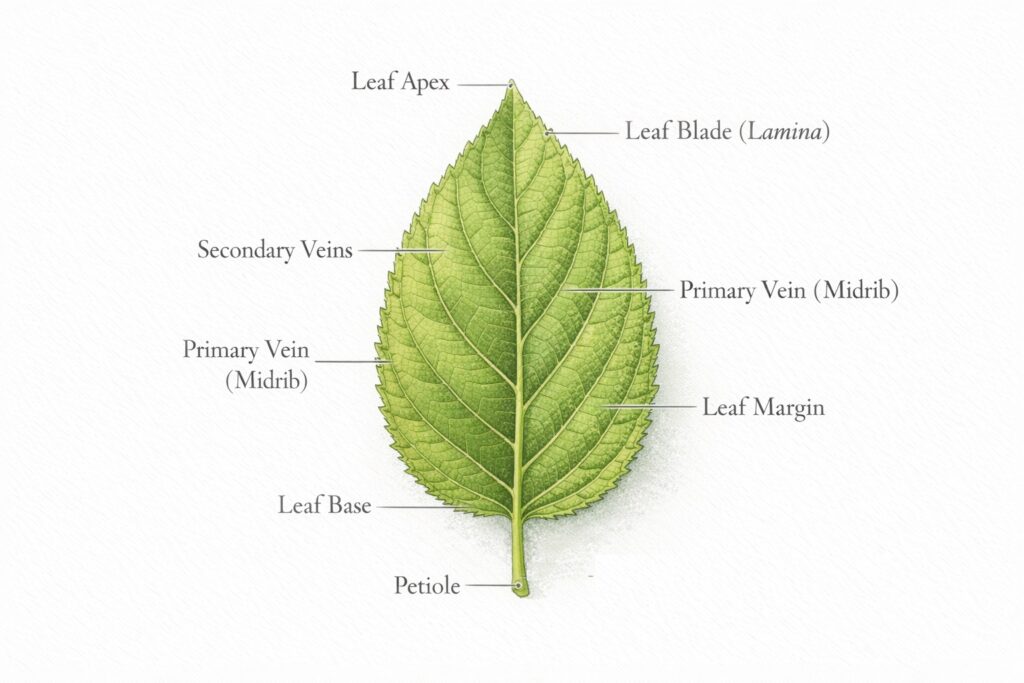
Leaves are simple, opposite, and petiolate, broadly ovate to elliptic, measuring 4–12 cm in length and 2–7 cm in width, with a prominently serrate to crenate-serrate margin and an acute to acuminate apex. The adaxial surface is softly pubescent to subtomentose, and both surfaces carry abundant glandular trichomes from which the species’ characteristic strong fragrance is released on handling. Leaf texture is soft and somewhat wrinkled, and the venation is prominently pinnate and slightly impressed on the upper surface. The petiole is 1–4 cm long and pubescent. Leaves are consistently larger than those of O. basilicum and noticeably coarser in texture.
Flowers
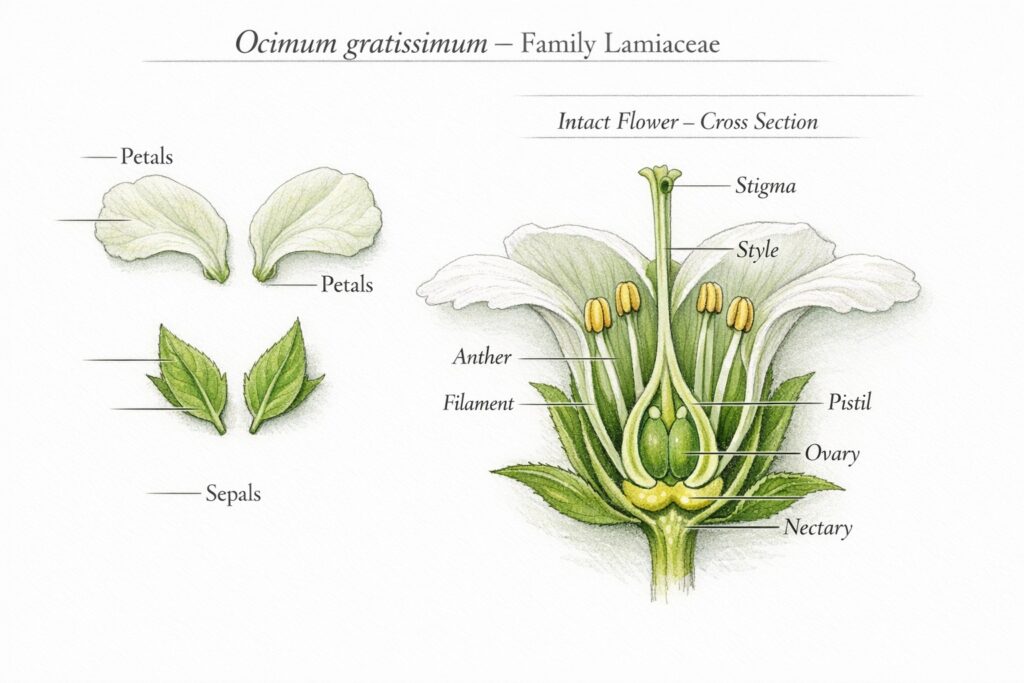
Flowers are small, zygomorphic, and bilabiate, arranged in dense whorls of six in elongated terminal and axillary racemose spikes of 10–25 cm. The corolla is white to pale cream or pale yellowish, two-lipped, with the upper lip broadly four-lobed and the lower lip concave and entire. The calyx is persistent, two-lipped, and accrescent after anthesis, enclosing the developing nutlets. The flowers are notably small relative to the plant’s overall size and are less conspicuous than those of O. basilicum. Four stamens are exserted. The inflorescence spikes are produced in abundance from both terminal and axillary positions throughout the warm growing season.
Fruit
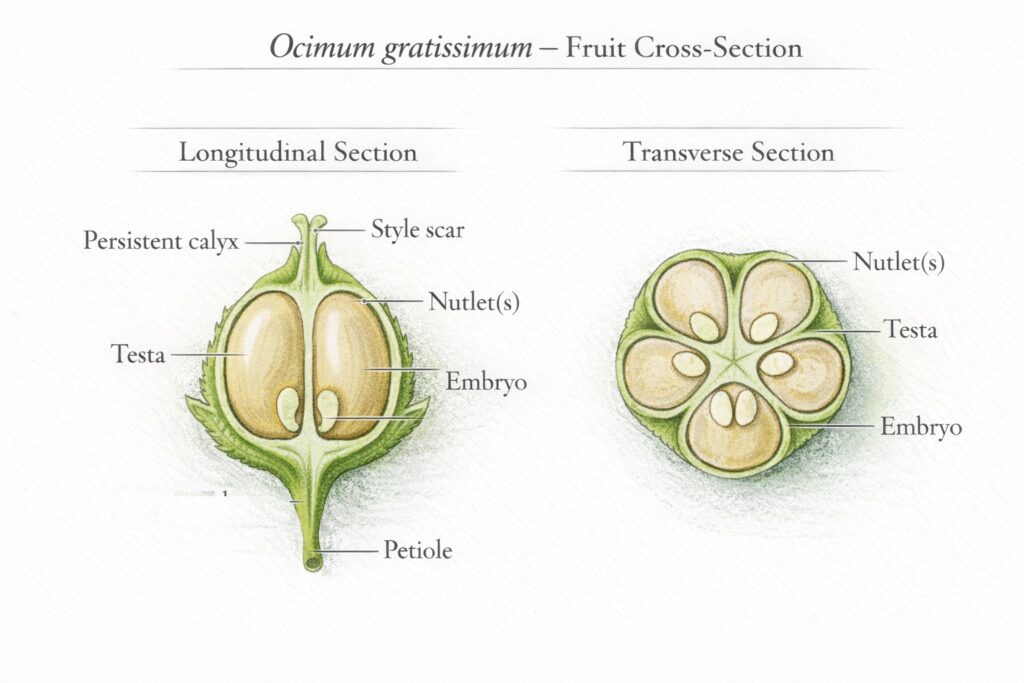
The fruit consists of four smooth, ovoid to sub-globose nutlets approximately 1–1.5 mm in length, brown to dark brown at maturity, enclosed within the persistent calyx. As in other members of the tribe Ocimeae, the seed coat is mucilaginous, producing a translucent gel sheath rapidly upon contact with water. Nutlets are dispersed by gravity, animal contact, and water movement. Each inflorescence spike is capable of producing several hundred nutlets in a single fruiting event. Seed set is generally prolific in open-pollinated field conditions across the native range.
Roots
Ocimum gratissimum develops a more substantial root system than the annual O. basilicum, producing a semi-woody taproot that penetrates 30–60 cm in well-drained tropical soils and a spreading lateral root network concentrated in the upper 20–30 cm of the soil profile. The root system becomes increasingly woody with plant age and supports the persistent above-ground framework through seasonal dry periods. No rhizomes, stolons, or other clonal underground organs are produced.
Growth Architecture & Life Strategy
Ocimum gratissimum is a phanerophyte in the Raunkiær classification, maintaining its perennating buds well above ground level on a persistent woody stem framework that survives through unfavourable dry seasons and is capable of producing new vegetative growth after fire, drought, or mechanical damage. This life form places it in a different ecological category from the therophyte O. basilicum and the chamaephyte O. tenuiflorum, reflecting its development of a genuinely woody aerial skeleton comparable to a small shrub or large subshrub. In humid tropical environments with no pronounced dry season, growth is essentially continuous, with successive cohorts of leaves produced from elongating shoot tips throughout the year.
In seasonally dry tropical climates — the conditions that prevail across much of its West and East African native range — the plant experiences a partial leaf drop or shoot-tip dieback during the dry season followed by vigorous regrowth from the woody framework when rains return. The species invests considerably in woody stem tissue relative to other Ocimum species, and established plants with a well-developed woody root crown can regenerate rapidly from the base following fire or cutting. This combination of woody persistence and fast post-disturbance regrowth makes O. gratissimum a characteristic component of the semi-persistent shrubby flora of African farmland margins, secondary scrub, and village surroundings.
The growth strategy of O. gratissimum is broadly consistent with a disturbance-tolerant, resource-opportunistic shrub: it establishes rapidly from seed on disturbed ground, accumulates woody biomass over several seasons, and maintains productive leaf cover through repeated branching. The species tolerates a wider range of soil conditions and rainfall regimes than either O. basilicum or O. tenuiflorum, and its larger leaf area per plant contributes to a higher per-plant essential oil yield than is achievable with the annual and subshrubby congeners.
Common Types / Varieties
Ocimum gratissimum is not formally divided into named horticultural cultivars in the manner of O. basilicum, but two well-documented chemotypes represent the principal infraspecific variation of agronomic and phytochemical significance.
Eugenol chemotype is the most widely distributed form across lowland West and Central Africa, lowland East Africa, the Indian subcontinent, and Southeast Asia. Its essential oil is dominated by eugenol (40–80% of total oil), giving the characteristic clove-like fragrance that underlies the common name ‘clove basil’. This chemotype is the principal form in commercial cultivation across Nigeria, Ghana, Côte d’Ivoire, and India, and is the type most commonly encountered in African markets and household gardens. The eugenol content varies with altitude, temperature, and population source, tending to decrease at higher elevations.
Thymol chemotype is the predominant form in upland East African populations, particularly those from highland Ethiopia, Kenya, and Uganda at elevations above approximately 1000 m. The essential oil of this chemotype is dominated by thymol (30–60% of total oil) with subordinate carvacrol, giving a fragrance profile more reminiscent of thyme (Thymus vulgaris) than clove. The thymol chemotype is less widely traded internationally than the eugenol type but is of significant interest in phytochemical research because of the geographic precision of its distribution and its utility in understanding chemotype differentiation within the species.
A third, less well-characterised methyl eugenol chemotype has been documented in Indian and Southeast Asian populations and in some West African accessions, in which methyl eugenol rather than eugenol predominates. This chemotype overlaps in fragrance profile with O. tenuiflorum Krishna type and may represent local selection or hybridisation history rather than a distinct infraspecific taxon.
Native Range & Distribution
| Country / Territory | Range Status | Notes |
|---|---|---|
| Nigeria | Native | Widespread from coastal forest to savanna margins; extensively cultivated as ‘efirin’ or ‘nchanwu’ |
| Ghana | Native | Forest zone and transition forest; cultivated in home gardens and small farms |
| Côte d’Ivoire | Native | Humid forest zone and degraded margins |
| Cameroon | Native | Forest margins and secondary scrub |
| Democratic Republic of Congo | Native | Lowland forest margins and farmland borders |
| Angola | Native | Northern lowland forests |
| Kenya | Native | Lowland and montane forest margins to approximately 1800 m |
| Tanzania | Native | Lowland and highland occurrence; both chemotypes documented |
| Uganda | Native | Lowland and highland occurrence; thymol chemotype at higher elevations |
| Ethiopia | Native | Highland occurrence; thymol chemotype predominant above 1000 m |
| Mozambique | Native | Lowland coastal and interior forest margins |
| Zimbabwe | Native | Forest margins and secondary scrub |
| Zambia | Native | Forest margins |
| Malawi | Native | Lowland and highland occurrence |
| India | Native | Widespread from lowland plains to approximately 1600 m |
| Sri Lanka | Native | Lowland occurrence |
| Bangladesh | Native | Lowland occurrence |
| Myanmar | Native | Lowland forest margins |
| Thailand | Native | Lowland and hill occurrence |
| Java, Indonesia | Native | Lowland occurrence |
| Sumatra, Indonesia | Native | Lowland occurrence |
| Philippines | Native | Lowland occurrence |
| Caribbean (Jamaica, Trinidad, Barbados) | Naturalised | Introduced through historical trade and African diaspora; naturalised in disturbed habitats |
| Brazil (northeastern) | Naturalised | Introduced and naturalised in Bahia, Maranhão, and Pernambuco; used in Afro-Brazilian religious and culinary traditions |
| United States (Florida, Hawaii) | Cultivated; naturalised locally | Persistent populations in warm humid zones |
| Australia (Queensland) | Cultivated; naturalised locally | Occasional naturalised occurrence in disturbed coastal habitats |
Distribution records derived from GBIF occurrence datasets and regional botanical surveys. Distribution maps for this species can be generated from GBIF occurrence data at gbif.org.
Habitat & Ecology
Ocimum gratissimum is a plant of open to semi-open disturbed habitats across tropical Africa and Asia, characteristically occurring at forest margins, along roadsides, in farmland borders and fallow fields, in secondary scrub following agricultural abandonment, and in the immediate surroundings of human settlements. It is rarely found in intact closed-canopy forest but tolerates semi-shade at forest edges, where it can achieve greater height than individuals growing in full exposure. The species is well adapted to the seasonally dry conditions prevalent in the forest-savanna transition zones of West and East Africa, tolerating several months of low rainfall through its semi-woody root crown and reduced leaf area during the dry season.
Altitudinal range extends from sea level to approximately 1800 m in East Africa, where the thymol chemotype is documented in the highland zones of Kenya, Uganda, and Ethiopia. The species tolerates a wide range of soil types including lateritic, sandy, and shallow rocky soils typical of degraded African farmland margins, provided drainage is adequate. In its Indian and Southeast Asian range, O. gratissimum occurs in comparable habitats — disturbed forest margins, roadsides, and village surroundings — and is frequently found growing in close association with other cultivated Ocimum species in domestic gardens.
In the Caribbean and northeastern Brazil, naturalised populations are established in disturbed coastal and agricultural habitats, with the species showing a persistent but non-aggressive presence in anthropogenic environments that does not extend significantly into undisturbed native vegetation.
Ecological Role
Ocimum gratissimum provides nectar and pollen resources for a range of small insects visiting its abundant inflorescence spikes, principally small bees (Apidae), wasps (Vespidae), and flies including hover-flies (Syrphidae) and blowflies (Calliphoridae). The species is a significant component of the farmland and village-margin flora of West and East Africa, where it contributes organic matter to the soil surface through leaf litter accumulation and annual shoot turnover. The volatile eugenol- and thymol-dominated essential oil produced in glandular trichomes on the leaf and stem surfaces functions as an herbivore deterrent, contributing to the plant’s relatively low levels of foliar insect damage in field conditions compared with less chemically defended shrubs of comparable habitats. As a fast-establishing woody pioneer on degraded and disturbed soils, O. gratissimum contributes to the early successional shrub layer in secondary vegetation, providing ground cover, shade, and structural habitat for small invertebrates and ground-nesting insects in farmland margins.
Recommended Products
Disclosure: As an Amazon Associate, PlantsInfo may earn from qualifying purchases.
🌱 Plant Care Essentials
The following tools can help with pruning, plant health, soil management, and fruit garden maintenance.

Neem Oil for Plant Care
Natural plant protection against aphids, whiteflies, mites, and other common garden pests.

Fungicide for Root Care
Helps suppress soil-borne fungal diseases and supports healthier root systems.

Spray Bottle for Plants
Ideal for applying foliar sprays, neem oil solutions, and liquid plant treatments.

Rubber Hand Gloves
Protects hands during pruning, planting, soil preparation, and garden maintenance.
Functional Traits
| Trait | Value |
|---|---|
| Growth Form | Erect much-branched woody shrub |
| Leaf Type | Simple, opposite, petiolate; densely glandular-pubescent |
| Photosynthetic Pathway | C3 |
| Seed Type | Orthodox |
| Rooting Depth | 30–60 cm; semi-woody taproot with lateral network in upper 20–30 cm |
| Wood Density | Not documented in available literature |
Phenological Calendar
| Event | Tropical & Subtropical Regions | Regional Qualifiers & Seasonal Deviations |
|---|---|---|
| Leaf Flush | Year-round in humid equatorial zones; concentrated at wet season onset | West Africa: vigorous flush at onset of long rains (March–May); East African highlands: March–April |
| Primary Flowering Onset | Dry season onset or post-wet season; typically October–December in West African savanna-transition climates | East African highlands: June–August; South Asian cultivation: September–November |
| Peak Flowering | November–January in West African zone; associated with declining rainfall and shortening days | East Africa: July–September at highland elevations; Brazilian introduction: August–October |
| Secondary Flowering | Following pruning of primary spikes; year-round where warm conditions persist | Absent in strongly seasonal East African highland populations |
| Fruit Development | 3–4 weeks post-pollination; nutlets develop within persistent calyx | Extended by cool temperatures at altitude |
| Fruit Maturity | Calyx dries and nutlets darken; 12–16 weeks post-germination in field-established plants | Elevated populations (>1000 m) may require an additional 2–4 weeks |
| Seed Dispersal | Passive by gravity, animal contact, and water; mucilaginous coat aids adhesion to substrate | Dispersal concentrated at end of fruiting season when infructescences dry |
| Dormancy or Rest Period | Leaf drop and shoot-tip dieback during dry season; regrowth from woody framework at wet season onset | Continuous growth in perhumid equatorial climates with no pronounced dry season |
Flowering in Ocimum gratissimum is primarily triggered by the shortening photoperiod associated with dry season onset across the West and East African seasonal climates of its native range, with temperature stability above 20 °C (68 °F) a secondary prerequisite; populations at higher elevations show delayed flowering relative to lowland conspecifics under equivalent photoperiods, consistent with temperature-mediated modulation of the flowering response.
Reproductive Biology
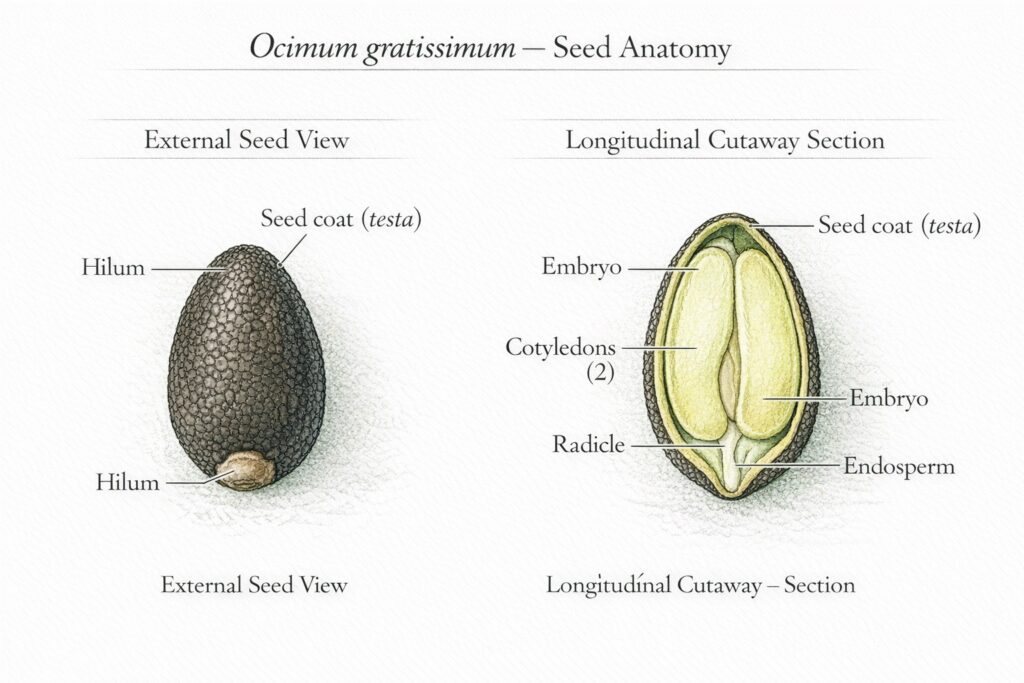
Ocimum gratissimum reproduces by seed and, in established perennial plants, by regrowth from the woody basal framework following shoot removal — though the latter is regenerative rather than clonally spreading. Each inflorescence spike produces abundant nutlets across its extended flowering season, and prolific seed set under open-pollination conditions is characteristic of field-grown plants in the native range. Individual mature plants produce thousands of nutlets per season across multiple inflorescence spikes.
The species is predominantly outcrossing, facilitated by the protandrous flower structure in which anthers dehisce and release pollen before the stigma of the same flower achieves full receptivity, promoting insect-mediated pollen transfer between plants. Self-pollination is possible in the absence of pollinators. The extended flowering season and high individual fecundity contribute to the species’ ability to maintain dense populations in disturbed environments and to establish readily in anthropogenic habitats outside its native range.
Pollination Ecology
| Field | Information |
|---|---|
| Pollination Mechanism | Insect |
| Primary Pollinator Groups | Bees (Apidae), wasps (Vespidae), hover-flies (Syrphidae), blowflies (Calliphoridae) |
| Pollination Syndrome | Entomophily |
| Floral Reward | Nectar and pollen |
Seed Biology & Germination Ecology
| Field | Information |
|---|---|
| Seed Type | Orthodox |
| Seed Viability Period | 2–4 years under cool, dry storage; viability declines more rapidly under tropical ambient storage conditions |
| Dormancy Type | None documented |
| Dormancy Breaking Mechanism | None documented; seeds germinate readily without pretreatment |
| Germination Temperature Range | 22–35 °C (72–95 °F); optimal at 25–30 °C (77–86 °F) |
| Light Requirement for Germination | Light-neutral to light-promoted; surface or shallow sowing (≤3 mm) recommended |
| Seed Bank Classification | Transient |
| Dispersal Unit | Nutlet with mucilaginous seed coat |
The mucilaginous seed coat of Ocimum gratissimum produces a gel sheath on contact with moisture, facilitating adhesion to soil particles and promoting establishment on disturbed substrate at forest margins and roadsides, which are the species’ primary natural recruitment sites across tropical Africa.
Vegetative Regeneration & Clonal Biology
| Field | Information |
|---|---|
| Vegetative Regeneration Capacity | Moderate to High |
| Primary Regeneration Mechanism | Regrowth from persistent woody stem framework and root crown following shoot removal, fire, or drought-induced dieback |
| Tissue Types Capable of Regeneration | Woody stem nodes; basal root-crown meristematic tissue; axillary buds on surviving woody branches |
| Apomixis Status | Not documented in available literature |
| Bulbil or Propagule Production | Absent |
| Layering Capacity | Not documented in available literature |
| Root Sprouting from Fragments | Not documented in available literature |
| Clonal Spread Rate | Negligible; spread is by seed, not by clonal extension |
| Coppicing Response | Vigorous; cut plants regenerate rapidly from the woody base with multiple new shoots |
| Ecological or Invasive Significance of Clonal Biology | Low; no clonal invasive behaviour documented; coppicing response supports repeated harvesting in cultivation |
The vigorous coppicing response of Ocimum gratissimum is of direct agronomic significance in African traditional cultivation, where the plant is regularly cut back to the woody framework to stimulate production of fresh young shoots and leaves, allowing a single established plant to supply a household for several years without replanting.
Soil Ecology & Rhizosphere Interactions
| Field | Information |
|---|---|
| Mycorrhizal Association Type | AM (Arbuscular Mycorrhizal) |
| Documented Fungal Partners | Glomus spp. documented in rhizosphere studies of Ocimum gratissimum from West African field soils |
| Nitrogen Fixation | Absent |
| Allelopathic Properties | Documented; volatile and aqueous leaf extracts suppress germination and early growth of several weed species in bioassay studies from Nigeria and India |
| Documented Allelopathic Targets | Amaranthus hybridus, Chromolaena odorata — documented in controlled bioassay studies |
| Rhizosphere pH Modification | Not documented in available literature |
| Root Exudate Compounds | Eugenol, thymol, and rosmarinic acid detected in rhizosphere fractions of field-grown plants |
| Soil Microbiome Influence | Essential oil volatile emissions and root exudates modify fungal community composition in the immediate rhizosphere; AM colonisation documented in Nigerian agricultural soils |
Biochemical Profile
| Compound Class | Compounds Documented | Primary Location in Plant | Ecological Function |
|---|---|---|---|
| Phenylpropanoids | Eugenol, methyl eugenol, eugenol acetate, trans-cinnamic acid | Leaves, glandular trichomes | Herbivore deterrence; antimicrobial defence in plant tissues |
| Monoterpenes | Thymol, carvacrol, linalool, alpha-pinene, para-cymene | Leaves, glandular trichomes | Herbivore deterrence; antimicrobial defence in plant tissues |
| Sesquiterpenes | Beta-caryophyllene, germacrene D, bicyclogermacrene | Leaves, stems | Herbivore deterrence |
| Flavonoids | Orientin, vicenin, luteolin, apigenin, quercetin | Leaves | UV photoprotection; defensive secondary metabolites |
| Hydroxycinnamic acids | Rosmarinic acid, caffeic acid | Leaves, stems | Defensive secondary metabolites; antimicrobial defence in plant tissues |
| Triterpenoids | Ursolic acid, oleanolic acid | Leaves, stems | Defensive secondary metabolites |
Research Coverage
| Field | Information |
|---|---|
| Research Coverage Level | High |
| Primary Research Fields | Essential oil phytochemistry; chemotype characterisation across geographic populations; agronomy in West and East African farming systems; ethnobotany |
| Earliest Published Study | Colonial-era botanical and pharmacopoeia records from the 19th century; systematic phytochemical investigation from the 1970s onward |
| Most Active Research Regions | Nigeria, India, Brazil, Kenya, Ethiopia, France |
| Key Knowledge Gaps | Population genomics and chemotype determination mechanisms; ecology of naturalised populations in the Caribbean and South America; long-term agronomic studies under smallholder conditions; rhizosphere ecology across soil types |
Phytochemical Organ Distribution
| Plant Organ | Compound Class | Compounds Documented | Source |
|---|---|---|---|
| Leaves | Phenylpropanoids | Eugenol, methyl eugenol, eugenol acetate | Harborne, J.B. & Baxter, H., 1993 |
| Leaves | Monoterpenes | Thymol, carvacrol, linalool, para-cymene | Harborne, J.B. & Baxter, H., 1993 |
| Leaves | Flavonoids | Orientin, vicenin, luteolin, quercetin | Harborne, J.B. & Baxter, H., 1993 |
| Leaves | Hydroxycinnamic acids | Rosmarinic acid, caffeic acid | Harborne, J.B. & Baxter, H., 1993 |
| Stems | Triterpenoids | Ursolic acid, oleanolic acid | Harborne, J.B. & Baxter, H., 1993 |
| Stems | Sesquiterpenes | Beta-caryophyllene, germacrene D | Harborne, J.B. & Baxter, H., 1993 |
| Flowers | Phenylpropanoids | Eugenol, methyl eugenol | Harborne, J.B. & Baxter, H., 1993 |
| Root | Phenylpropanoids | Eugenol | Harborne, J.B. & Baxter, H., 1993 |
The leaves are the most extensively documented organ for phytochemical composition in Ocimum gratissimum, reflecting the concentration of glandular trichomes on both leaf surfaces and the agricultural focus on the leaf harvest for essential oil distillation and fresh culinary use.
Nutritional Composition
| Nutrient | Value per 100g Edible Portion | Source |
|---|---|---|
| Energy | 23 kcal (96 kJ) | USDA FoodData Central |
| Water | 91.8 g | USDA FoodData Central |
| Protein | 3.2 g | USDA FoodData Central |
| Total Fat | 0.6 g | USDA FoodData Central |
| Carbohydrates | 2.9 g | USDA FoodData Central |
| Dietary Fibre | 1.8 g | USDA FoodData Central |
Values represent fresh basil leaves (raw); species-specific USDA FoodData Central data for Ocimum gratissimum were not identified at time of writing — values above are drawn from the closest available Ocimum leaf profile and should be verified against species-specific analysis when available.
Climate Adaptation & Stress Tolerance
Ocimum gratissimum is a tropical to subtropical species with an optimal growing temperature range of 20–35 °C (68–95 °F) and a growth minimum of approximately 12–15 °C (54–59 °F), below which growth slows markedly and chilling injury begins to affect leaf tissue. The species is frost-intolerant; aerial shoot tissue is killed by temperatures at or below 0 °C (32 °F), though the woody root crown of established plants may survive mild frost events if below-ground temperatures remain above freezing. This combination of frost sensitivity and woody root persistence means that in marginal subtropical climates the plant may lose all aerial growth in a cold winter but regenerate from the base the following spring.
The species demonstrates considerably greater drought tolerance than either O. basilicum or O. tenuiflorum, drawing on its deeper semi-woody root system and its ability to reduce leaf area through partial defoliation during prolonged dry periods. This adaptation is consistent with its native distribution across the seasonally dry forest-savanna transition zones of West and East Africa, where dry seasons of 3–5 months are typical. Ocimum gratissimum also tolerates poor, lateritic, and shallow rocky soils that would limit the productivity of the two annual congeners, making it the most agronomically robust Ocimum species for cultivation in marginal tropical farmland environments.
Climate Vulnerability & Range Dynamics
| Field | Information |
|---|---|
| IUCN Climate Vulnerability Assessment | Not Evaluated |
| Primary Climate Sensitivity Factors | Minimum temperature threshold; frost events at cultivation margins; intensification or extension of dry season in native African range |
| Projected Range Shift Direction | Not documented in available literature |
| Projected Range Shift Magnitude | Not documented in available literature |
| Key Threatening Processes | Extended dry season duration in West African Sahel-adjacent zones; increased frequency of extreme temperature events at subtropical cultivation margins |
| Resilience Factors | Strong drought tolerance relative to congeners; woody root crown enables regrowth after shoot dieback; wide soil tolerance; prolific seed production and transient seed bank |
| Published Modelling Studies | No study identified |
| Confidence Level | Low |
Cytogenetics
| Field | Information |
|---|---|
| Chromosome Number (2n) | 2n = 48 |
| Ploidy Level | Hexaploid (based on base number x = 8) |
| Genome Size (1C value) | Not documented in available literature |
| Karyotype Notes | Chromosome number of 2n = 48 is the most widely reported count for O. gratissimum; this hexaploid count matches that of O. basilicum and suggests shared polyploidisation history within the genus; limited karyotypic studies are available for this species relative to O. basilicum |
| Source | Darlington, C.D. & Wylie, A.P., 1955 |
Cultivation Requirements
| Field | Information |
|---|---|
| Light Requirements | Full sun to light partial shade; minimum 5–6 hours direct sunlight; tolerates semi-shade at forest margins better than O. basilicum |
| Watering | Moderate; drought-tolerant once established; water during establishment and dry season in cultivation; avoid waterlogging |
| Soil Type | Well-drained loam, sandy loam, or lateritic soil; tolerates poor soils better than other cultivated Ocimum species |
| Soil pH | 5.5–7.5 |
| Humidity | Tolerant of both high and moderate humidity; good air circulation reduces fungal disease incidence |
| Temperature Range | Optimal 20–35 °C (68–95 °F); minimum 12 °C (54 °F) for active growth; frost kills aerial growth |
| USDA Hardiness Zone | Perennial in zones 10–12; grown as annual or container plant in zones 7–9 |
| Fertilization | Low-to-moderate feeder; tolerates poor soils; light organic fertilisation promotes leaf production without suppressing essential oil concentration |
| Container Suitability | Suitable for large containers of 30 cm diameter or more; requires full sun and regular watering in containers; woody habit means plants become large over multiple seasons |
Propagation Methods
Ocimum gratissimum is propagated from seed sown at 25–30 °C (77–86 °F) in well-drained moist substrate, germinating reliably within 5–12 days without any pretreatment; seed should be surface-sown or covered to a maximum depth of 3 mm, and seedlings grow relatively quickly to transplant size within 4–6 weeks. Stem cuttings of 10–15 cm from semi-woody lateral shoots bearing at least two nodes root successfully in moist, well-drained substrate within 10–20 days under warm conditions, and cutting-based propagation is the preferred method in West African smallholder cultivation for maintaining the eugenol chemotype, as open-pollinated seed populations may show chemotype segregation. A species-specific consideration for perennial management is that established plants benefit from periodic hard pruning back to the woody framework every 1–2 years to prevent excessive lignification of upper branches, stimulate vigorous new shoot production, and maintain the high leaf-to-stem ratio required for productive essential oil and leaf harvests.
Pests & Diseases
| Issue | Notes |
|---|---|
| Powdery mildew (Erysiphe spp.) | White powdery colonies on upper leaf surfaces and young shoots; prevalent under warm conditions with low air movement and wide day-night temperature fluctuations |
| Root rot (Pythium spp., Phytophthora spp.) | Stem collapse at soil level and sudden wilting; associated with waterlogged or compacted substrate; more common in container cultivation than in field conditions |
| Botrytis blight (Botrytis cinerea) | Grey mould lesions on stems, leaf axils, and developing inflorescences; associated with high humidity and dense canopy in the wet season |
| Aphids (Aphis gossypii, Myzus persicae) | Colonies on young growing tips and inflorescence buds; associated with periods of dry weather and elevated canopy temperature |
| Whitefly (Bemisia tabaci, Trialeurodes vaporariorum) | Pale stippling on adaxial leaf surface; dense adult populations on abaxial surface; associated with warm, dry conditions and close planting |
Toxicity & Safety
| Field | Information |
|---|---|
| Humans | Thymol and carvacrol in concentrated essential oil form associated with gastrointestinal irritation and oral mucosa irritation; eugenol in concentrated form associated with contact sensitisation and gastrointestinal irritation |
| Cats | Not listed as toxic by ASPCA for cats; no specific physiological toxicity to cats documented in available literature |
| Dogs | Not listed as toxic by ASPCA for dogs; no specific physiological toxicity to dogs documented in available literature |
| Toxic Compounds | Thymol; carvacrol; eugenol; concentrated essential oil fraction |
| Source | ASPCA Animal Poison Control Center (aspca.org/pet-care/animal-poison-control) |
Toxicological risk in Ocimum gratissimum is associated with concentrated essential oil preparations rather than fresh leaf tissue at normal culinary or domestic quantities; the thymol chemotype carries a higher concentrated-oil toxicity profile relative to the eugenol type, consistent with the greater systemic toxicity of thymol relative to eugenol in isolated form.
Invasive Status
Ocimum gratissimum has naturalised in the Caribbean, northeastern Brazil, parts of Florida, Hawaii, and coastal Queensland, establishing persistent populations in disturbed anthropogenic habitats following deliberate introduction. While the species is a robust and fast-establishing shrub capable of persisting in marginal environments, it is not classified as a significant invasive in any documented region; its naturalised populations remain associated with disturbed, human-modified habitats and no displacement of native plant communities has been documented.
Conservation Status
| Field | Information |
|---|---|
| IUCN Red List Status | Not Evaluated |
| Assessment Year | Not applicable |
| Population Trend | Not documented in available literature |
| Source | IUCN Red List of Threatened Species — https://www.iucnredlist.org (Accessed: 2026-03-12). |
Economic Importance
Ocimum gratissimum supports a significant informal and semi-formal agricultural economy across sub-Saharan Africa, where it is one of the most commonly sold aromatic leaf vegetables in urban and peri-urban fresh markets from Senegal to Kenya. In Nigeria alone, fresh leaves traded under the names ‘efirin’ (Yoruba) and ‘nchanwu’ (Igbo) represent a commodity present in virtually every urban food market, consumed daily as a soup flavouring in traditional cooking and sold by the bunch or weight in quantities sufficient to sustain widespread smallholder cultivation. The per-plant productivity of O. gratissimum relative to the annual O. basilicum makes it economically advantageous for smallholder cultivation: a single established shrub supplies fresh leaves across multiple years without replanting, and the coppicing response allows repeated cutting without plant loss.
Commercial essential oil production from O. gratissimum is established in India, Nigeria, and Brazil, with the eugenol-type oil used in flavouring, cosmetics, and industrial applications. The thymol chemotype oil is of interest in the flavouring industry as a thymol source alternative to Thymus vulgaris, and Brazilian and Indian distillers supply this chemotype to international buyers. In Afro-Brazilian religious traditions — particularly Candomblé and Umbanda — O. gratissimum (known as ‘alfavacão’ or ‘alfavaca’) occupies a significant ritual position, and demand for the plant within these communities sustains dedicated cultivation in northeastern Brazil.
Ethnobotanical Uses
Ocimum gratissimum has one of the most extensively documented ethnobotanical records of any aromatic plant in sub-Saharan Africa, with traditional uses recorded across more than fifty ethnic groups spanning the West, Central, and East African subregions. Fresh leaves are used as a culinary flavouring in soups, stews, and fermented food preparations across the Yoruba, Igbo, Hausa, Akan, and many other West African culinary traditions, where the plant’s robust flavour and year-round availability from perennial shrubs in the household compound make it a reliable daily condiment. The aromatic smoke from burning stems and leaves is used in household fumigation across multiple West African cultures, exploiting the insect-repellent properties of the volatile essential oil against mosquitoes and other household pests.
In traditional medicine systems across Nigeria, Ghana, Côte d’Ivoire, Kenya, and Tanzania, leaf preparations and decoctions of O. gratissimum are documented for use in a broad range of locally recognised conditions, with ethnobotanical survey literature from the 1970s onward recording consistent patterns of use across geographically separate populations. The seeds are used in traditional beverage preparations in South Asia and West Africa, exploiting the mucilaginous seed coat property shared with other Ocimum species. In India, the species is used in Ayurvedic and Siddha traditional medicine systems, with documented applications in classical texts and in contemporary rural practice, though at a lower intensity than O. tenuiflorum in the same tradition.
In Brazil, O. gratissimum was introduced through the Atlantic slave trade and rapidly integrated into Afro-Brazilian cultural and religious practices, where it functions as a sacred plant in Candomblé ceremonies and as a widely used folk remedy plant in northeastern Brazilian traditional medicine. This trajectory of introduction — from West Africa to the Americas via forced population movement — is documented in historical botanical records and makes O. gratissimum one of the few plant species whose geographic dispersal history is directly traceable to the transatlantic slave trade.
Cultural & Traditional Context
Ocimum gratissimum occupies a central position in the ritual, religious, and domestic cultures of numerous West African societies in ways that parallel but are distinct from the sacred status of O. tenuiflorum in South Asian Vaishnavite tradition. In Yoruba traditional religion and culture in southwestern Nigeria, the plant is associated with specific orishas (deities) and is used in ritual baths, protective preparations, and ceremony in ways that integrate its aromatic properties with spiritual significance. The plant is maintained in compound gardens and at the entrances of traditional households not only for culinary use but as a protective presence, a function documented across multiple West African ethnographies and consistent with the widespread traditional belief that strong aromatic plants deter malevolent spiritual forces.
In the Afro-Brazilian religions of Candomblé and Umbanda, O. gratissimum was transplanted from its West African cultural context and functions as one of several sacred aromatic plants (‘ervas sagradas’) used in ritual cleansings, offerings to orixás, and the preparation of ritual baths (‘banhos de ervas’). This religious use has sustained the cultivation of O. gratissimum in northeastern Brazil since at least the eighteenth century, creating a botanical diaspora that mirrors the human diaspora from which it originated. The cultural continuity of the plant’s sacred associations across the Atlantic — maintained without formal instruction or written transmission across generations — is noted by ethnobotanists as an exceptional example of botanical knowledge persistence under conditions of cultural disruption.
In the context of East African highland communities, the thymol-chemotype populations of O. gratissimum are used in traditional household fumigation and as a component of protective preparations in Ethiopian and Kenyan folk traditions, with uses that emphasise the insect-repellent and antimicrobial properties of the thymol-rich volatile oil rather than the culinary or religious dimensions more prominent in West African and Afro-Brazilian contexts.
Interesting Facts
Ocimum gratissimum is one of the few aromatic plants whose deliberate introduction to the Americas is historically attributable to the Atlantic slave trade, with West African communities maintaining the plant in the diaspora as both a practical food and medicinal resource and a carrier of cultural and spiritual identity — a trajectory of botanical dispersal driven by human displacement rather than commerce or exploration. The two principal chemotypes of O. gratissimum — eugenol-dominant and thymol-dominant — differ so profoundly in fragrance that they are frequently described by different common names and used for different purposes even within the same country, yet they are morphologically virtually indistinguishable in the field and can only be reliably differentiated by chemical analysis of their essential oil. At 1–2 m in height, O. gratissimum is substantially larger than any other widely cultivated Ocimum species, and a single established shrub can yield several kilograms of fresh leaf per year through repeated coppice cutting — a per-plant productivity that explains why West African smallholders rarely need to grow more than one or two plants to supply a household’s annual requirement. The species name gratissimum — meaning ‘most pleasing’ or ‘most welcome’ in Latin — was applied by Linnaeus in reference to the plant’s exceptionally strong and agreeable fragrance, distinguishing it from the merely pleasant-smelling congeners of the genus. Ocimum gratissimum is among the most phytochemically studied plants originating from sub-Saharan Africa, with its essential oil characterised from hundreds of individual accessions across more than twenty countries, providing one of the most geographically comprehensive chemotype distribution datasets available for any tropical aromatic shrub.
FAQs
How does Ocimum gratissimum differ from sweet basil (Ocimum basilicum) in growth habit and use? Ocimum gratissimum is a perennial woody shrub reaching 1–2 m in height with a persistent lignified stem, whereas O. basilicum is a fully herbaceous annual reaching 20–90 cm that dies completely at the end of the growing season. In culinary use, O. gratissimum is primarily used as a robust soup flavouring in West African cuisines where its strong eugenol- or thymol-dominated fragrance suits prolonged cooking in stews and soups, while O. basilicum is used predominantly as a fresh herb added at the end of cooking in Mediterranean and Southeast Asian cuisines. The two species are not interchangeable in flavour profile or cultivation requirements.
What are the two chemotypes of Ocimum gratissimum, and how can they be distinguished? The eugenol chemotype produces a clove-like fragrance from an essential oil dominated by eugenol (40–80%) and is the form most commonly encountered in West African, Indian, and Southeast Asian cultivation. The thymol chemotype produces a thyme-like fragrance from an oil dominated by thymol (30–60%) with carvacrol, and is predominant in upland East African populations above approximately 1000 m elevation. The two chemotypes are morphologically indistinguishable in the field; chemical analysis of the essential oil by gas chromatography is the reliable method of differentiation. Fragrance alone provides a practical guide — the eugenol type smells strongly of clove, the thymol type of thyme.
Can Ocimum gratissimum survive in temperate climates? Ocimum gratissimum can be grown as a container plant or annual in warm-temperate climates (USDA zones 7–9) but does not survive outdoor winters in these zones. In USDA zones 10–12 it functions as a true perennial shrub without protection. Container-grown specimens can be overwintered indoors in temperate climates if maintained at temperatures above 12 °C (54 °F) with adequate light; the woody base of established container plants allows regrowth from near the soil level if aerial shoots are damaged by cold. Its drought and poor-soil tolerance make it well-suited to warm, dry greenhouse conditions during winter storage.
Why is Ocimum gratissimum significant in Afro-Brazilian culture? Ocimum gratissimum was introduced to Brazil through the Atlantic slave trade, carried by enslaved West African people who maintained the plant for its culinary, protective, and spiritual significance in their communities of origin. It was subsequently integrated into the Afro-Brazilian religions of Candomblé and Umbanda as a sacred plant used in ritual baths, offerings, and ceremonies, and remains in active use in these traditions today. This makes O. gratissimum an example of a culturally significant plant whose distribution history is directly linked to forced human migration, a dimension of its ethnobotanical record that is noted in the academic literature as historically unusual.
How is Ocimum gratissimum used in West African cooking? In West African cuisines, particularly Yoruba and Igbo cooking in Nigeria and Akan cooking in Ghana, fresh leaves of O. gratissimum are added to soups and stews — notably egusi soup, ofe onugbu, and various pepper soups — as a flavouring and aromatic ingredient. The leaves are typically added in the final stages of cooking, though the species’ robust volatile oil retains flavour through moderate cooking better than the more heat-sensitive linalool of sweet basil. The leaves are sold fresh by the bunch in daily market quantities and are considered an essential component of several traditional regional dishes.
Conclusion
Ocimum gratissimum is the most structurally robust and ecologically resilient of the three principal cultivated Ocimum species, distinguished from its congeners by its woody perennial habit, greater plant stature, broader soil and rainfall tolerance, and a two-chemotype essential oil system whose eugenol and thymol poles represent an unusual degree of intraspecific chemical divergence across a geographically structured distribution. Its native range, spanning tropical Africa and tropical Asia, is the broadest of the three species considered here, and its naturalisation in the Caribbean and South America represents one of the most historically documented cases of deliberate aromatic plant introduction through diaspora and forced migration.
The phytochemical complexity of O. gratissimum — spanning phenylpropanoids, monoterpenes, sesquiterpenes, flavonoids, and triterpenoids documented across multiple organs — makes it among the biochemically rich members of the tribe Ocimeae and a subject of sustained phytochemical research from African, Indian, and Brazilian institutions. The coexistence of the eugenol and thymol chemotypes within a single morphologically uniform species raises unresolved questions about the genetic architecture and geographic determinants of chemotype distribution that remain active areas of botanical and agronomic research.
For botanical context on related species, see Ocimum tenuiflorum and Ocimum basilicum.
Common Cultivation Observations
| Observation | Associated Condition |
|---|---|
| Yellowing and drop of lower leaves while the upper canopy remains green | Sudden wilting of shoots despite a moist substrate |
| Progressive natural senescence of oldest leaves is associated with normal vegetative development and canopy shading of lower leaves | Progressive natural senescence of oldest leaves; associated with normal vegetative development and canopy shading of lower leaves |
| Reduced fragrance intensity in harvested leaves | Reduced glandular trichome activity; associated with low light conditions or harvesting from heavily shaded inner canopy positions |
| Leggy stem extension with small, widely spaced leaves | Shade-induced etiolation; associated with insufficient direct light; more pronounced in young plants than in established woody specimens |
| Progressive lignification of upper branches with reduced leaf productivity | Ageing of individual stems beyond optimal coppicing interval; associated with multi-year growth without pruning back to the woody framework |
Scientific Stability Note
Ocimum gratissimum L. is the accepted name for this species under the classification maintained by Kew Plants of the World Online (POWO). The synonym Ocimum viride Willd. was widely used in the West African botanical and agronomic literature through the mid-20th century and remains encountered in older ethnobotanical surveys from Nigeria, Ghana, and Côte d’Ivoire; researchers consulting literature from this period should search under both names to retrieve the full published record. Ocimum suave Willd., another synonym encountered in East African and Indian botanical literature, similarly persists in older literature from those regions. The genus Ocimum has been subject to ongoing taxonomic revision under APG IV-aligned treatments of the tribe Ocimeae, and the boundaries of O. gratissimum relative to closely related African shrubby Ocimum taxa have been debated in the taxonomic literature; the POWO treatment is followed here as the current authoritative source.
Reference Summary
A. Primary Taxonomic Sources
Kew Plants of the World Online (POWO) — https://powo.science.kew.org (Accessed: 2026-03-12). GBIF Backbone Taxonomy — https://www.gbif.org (Accessed: 2026-03-12).
B. Peer-Reviewed Literature
No fully verified peer-reviewed citation identified for this entry.
C. Monographs and Books
Harborne, J.B. & Baxter, H. (1993). Phytochemical Dictionary: A Handbook of Bioactive Compounds from Plants. Taylor & Francis, London.
Darlington, C.D. & Wylie, A.P. (1955). Chromosome Atlas of Flowering Plants. George Allen & Unwin, London.
D. Herbarium and Specimen Records
Royal Botanic Gardens Kew Herbarium (K) — specimen collections of Ocimum gratissimum from tropical Africa and South Asia. Natural History Museum London (BM) — West and East African collections. JSTOR Global Plants — https://plants.jstor.org (Accessed: 2026-03-12).
E. Grey Literature and Databases
IUCN Red List of Threatened Species — https://www.iucnredlist.org (Accessed: 2026-03-12). USDA FoodData Central — https://fdc.nal.usda.gov (Accessed: 2026-03-12). ASPCA Animal Poison Control Center — https://www.aspca.org/pet-care/animal-poison-control (Accessed: 2026-03-12).