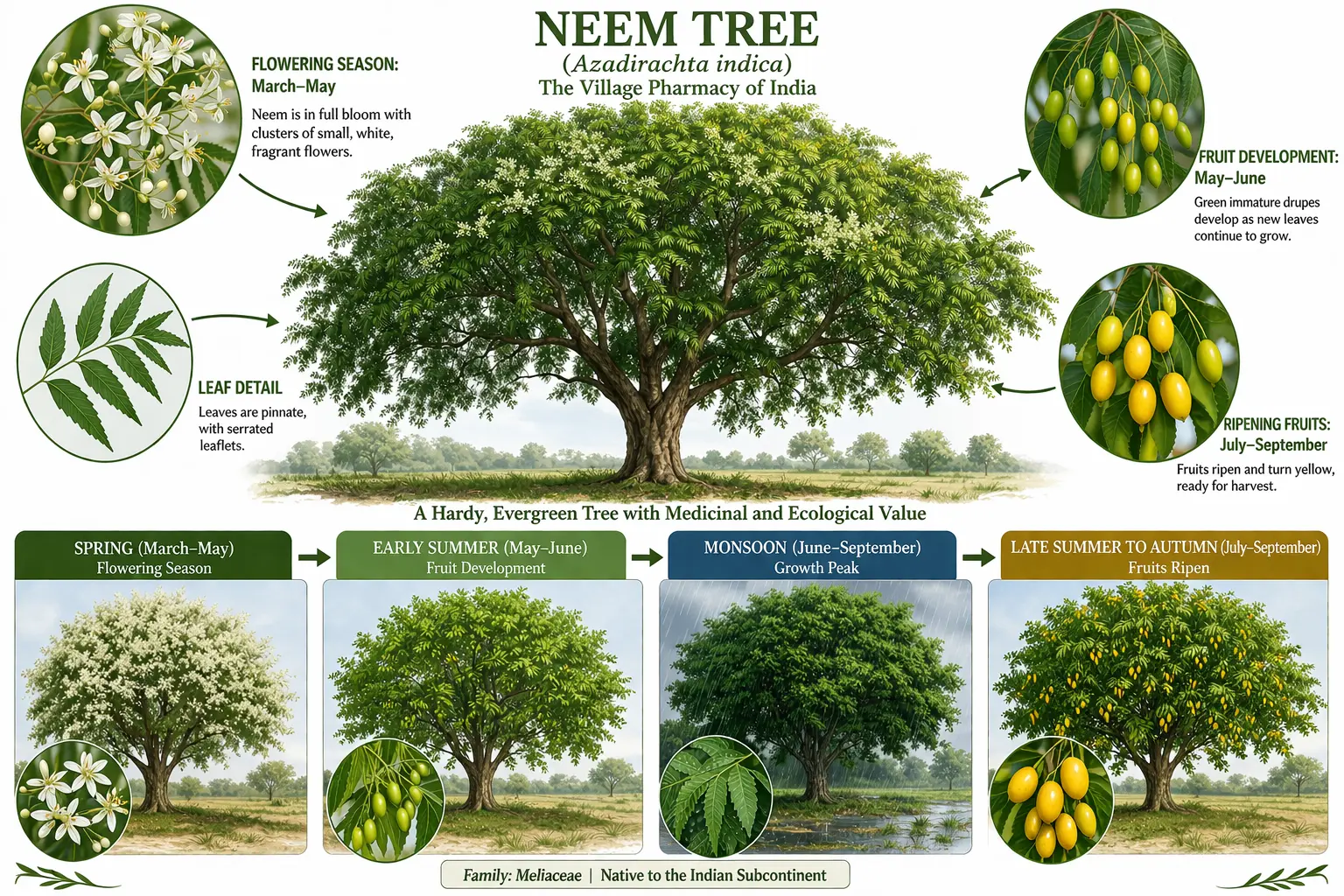
Neem trees in India typically flower between February and April, with peak bloom in March. Fruiting follows in April through June. Timing shifts slightly by region — trees in South India flower a few weeks earlier than those in the North.
See also: Neem Plant plant profile, how to grow it, common problems, its benefits, and its varieties.
By late February in most of peninsular India, the neem tree is already covered in small white flower clusters, and the air around it carries a distinctive sweet-sharp fragrance that signals the pre-summer season is arriving.
Recommended Products
Disclosure: As an Amazon Associate, PlantsInfo may earn from qualifying purchases.
🌱 Growing Essentials
The following products can help with container gardening, potting, root development, soil management, and healthy plant growth.
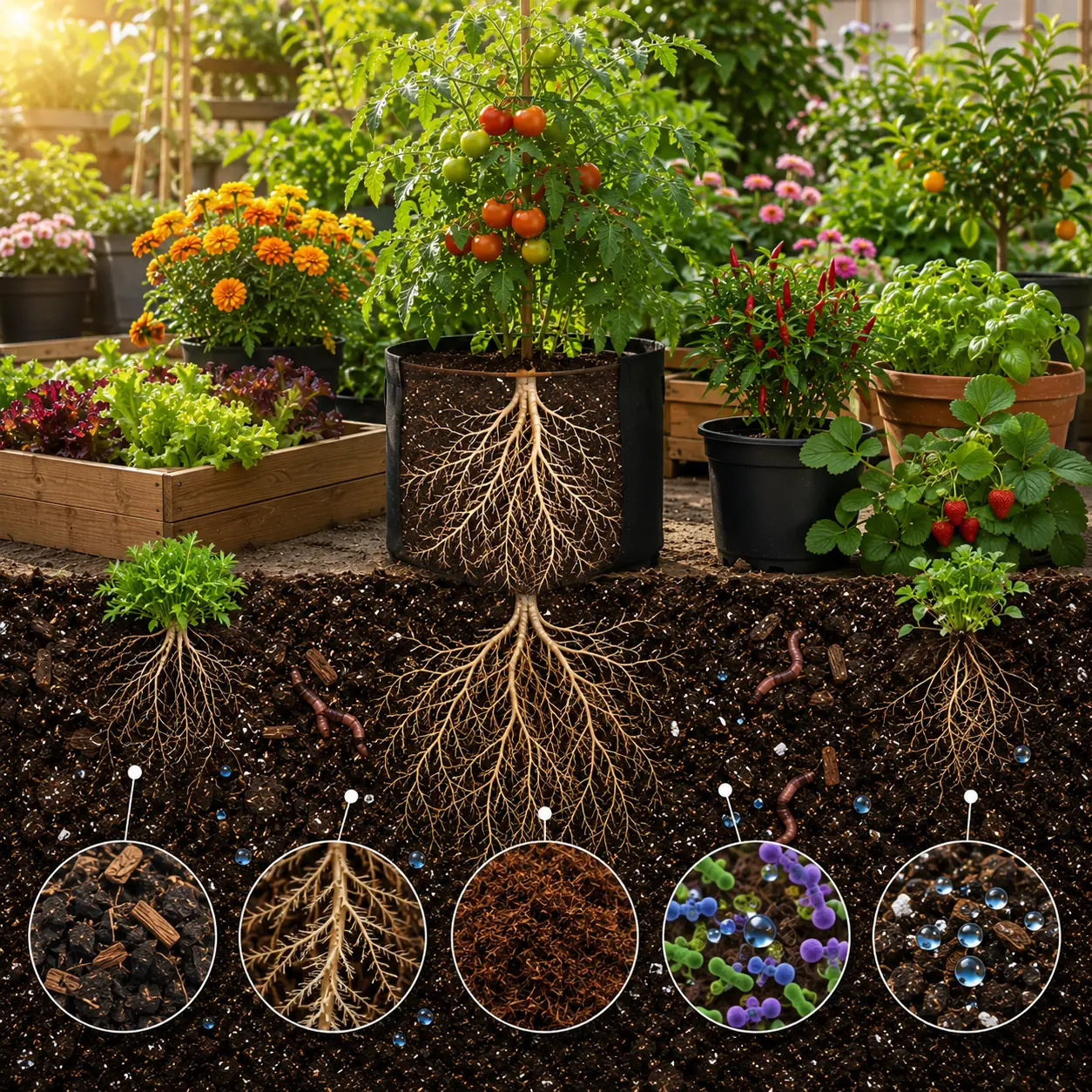
Organic Potting Soil Mix
Provides nutrients, structure, and healthy growing conditions for container plants.
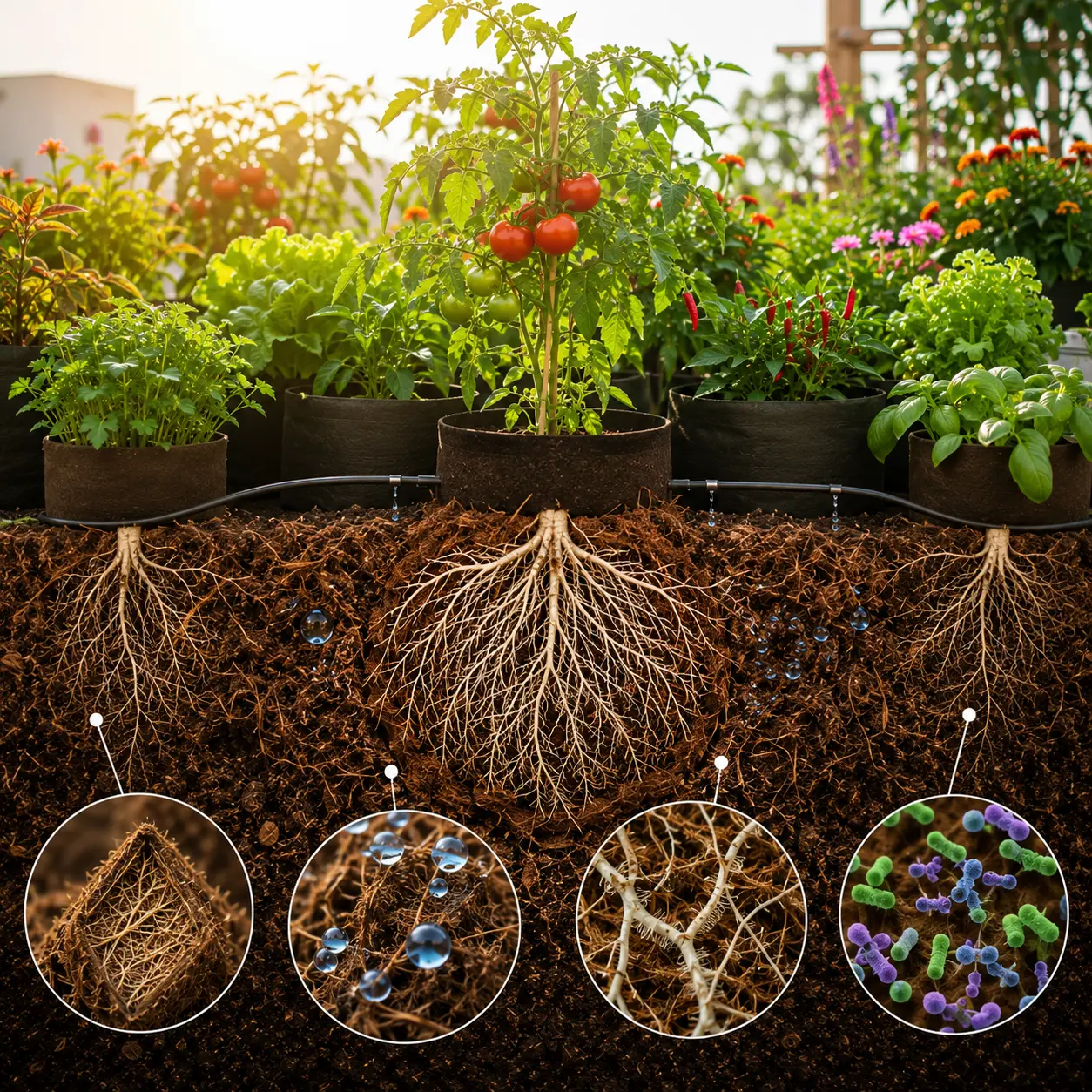
Coco Peat Growing Medium
Enhances moisture retention while maintaining excellent root-zone aeration.

Grow Bags for Plants
Improve drainage, root aeration, and vegetable production in limited spaces.

Plastic Pots for Plants
Ideal containers for seedlings, ornamentals, herbs, and balcony gardens.
India’s Seasons and This Plant
| Season (months) | What the plant is doing |
|---|---|
| Pre-monsoon (Mar–May) | Steady canopy growth; the tree consolidates after monsoon |
| Monsoon (Jun–Sep) | Active vegetative growth; new leaf flush; seeds dispersed by rain and birds |
| Post-monsoon (Oct–Nov) | Steady canopy growth; the tree consolidates after the monsoon |
| Winter (Dec–Feb) | Relative dormancy in North India; partial leaf shed in drier zones; flower buds forming by January–February |
Flowering Season in Detail
Flower buds typically appear in January to February in South India and from February to March in the North. The trigger is a combination of cooler winter temperatures followed by rising warmth — the transition into pre-summer is what prompts flowering.
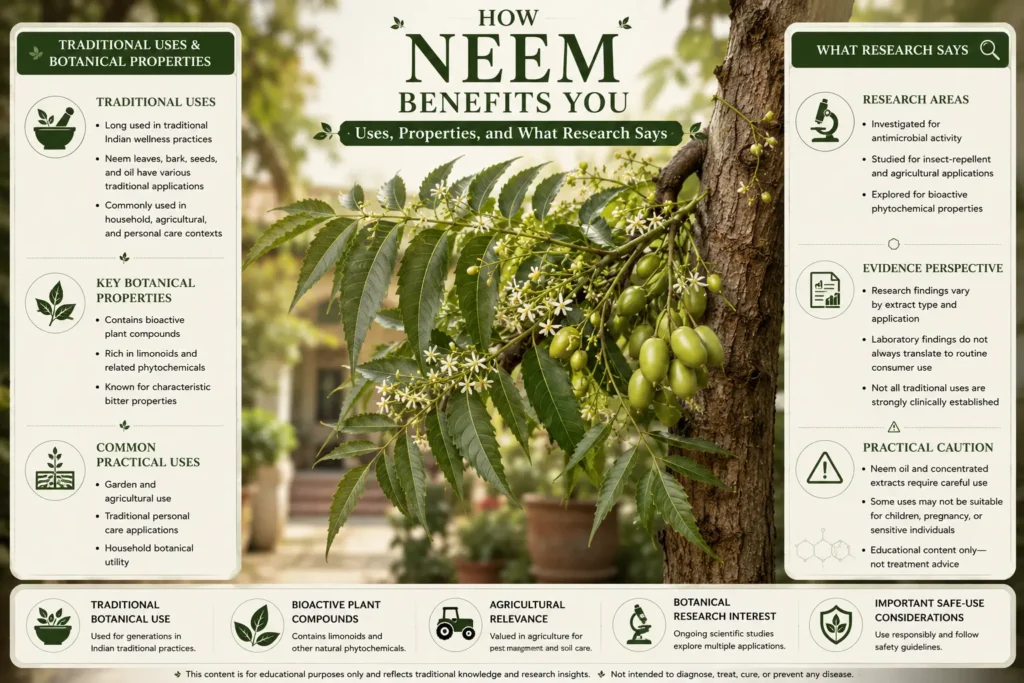
Peak bloom falls in March across most of India. The flowers are small, white, and clustered in branching panicles. Each flower is tiny, but the clusters are numerous enough that a mature tree in full bloom is visually striking and very fragrant.
Flower clusters last approximately 2–3 weeks before dropping. In South India (Tamil Nadu, Karnataka, Andhra Pradesh), peak bloom can arrive 2–4 weeks ahead of North Indian trees due to earlier warming.
Fruiting Season
Fruit sets shortly after flowering — typically April to May. The fruit starts green, roughly olive-sized, and ripens to a translucent yellow-green by May to June.
Ripe neem fruit has a thin, slightly sweet outer pulp surrounding a hard seed. The ripening indicator is a colour shift from solid green to a soft yellowish-green, accompanied by a slight softening of the skin.
Birds (particularly mynahs and parakeets) are the primary dispersers — they eat the pulp and drop the seeds. The harvest window for seed collection is narrow: once fully ripe, the fruit drops or is taken by birds quickly. If you are collecting seeds for propagation, watch the tree closely from mid-May.
Missing the window means waiting another year — neem seeds lose viability quickly after the fruit drops and dries.
Best Time to Plant
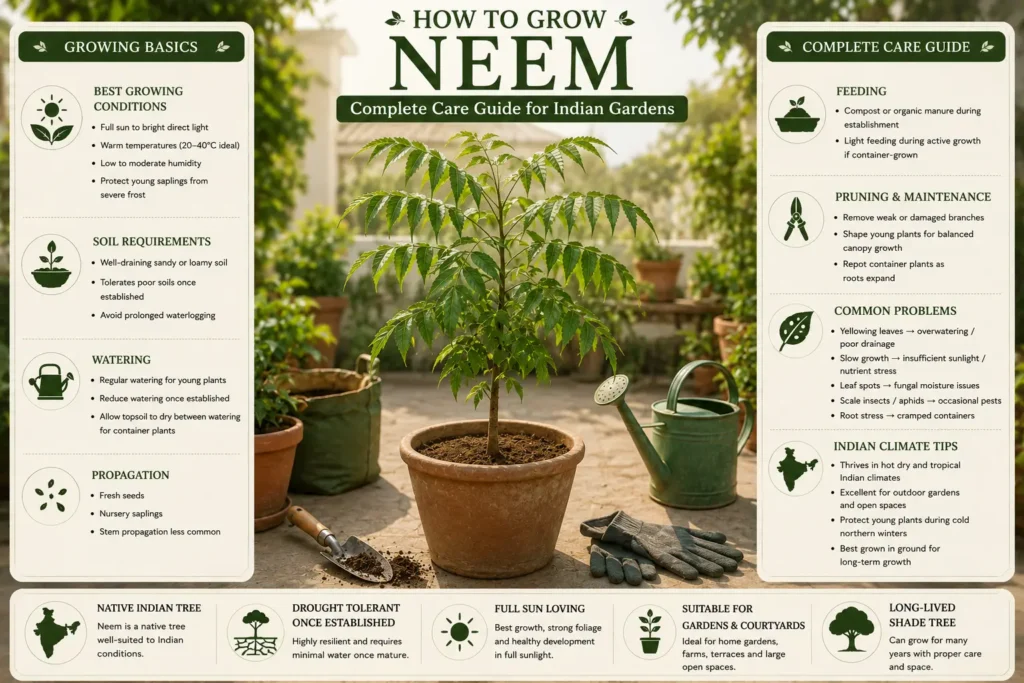
The best time to plant neem in India is at monsoon onset — June to July. Rainfall reduces establishment stress, the soil stays moist without irrigation, and the tree can put down roots before the next dry season.
This works because neem, once past its first summer, is drought-tolerant — but in the first few months after planting, it needs consistent moisture to establish.
The second-best window is post-monsoon (September to October) — soil is still warm and moist, the worst heat has passed, and the sapling has a full cool season ahead.
For container planting, timing is more flexible — monsoon is still preferred,d but a sheltered pot can be started in late winter (February) if watering is managed.
Month-by-Month Calendar
| Month | Season | What to Observe / Do |
|---|---|---|
| January | Winter | Relative rest; flower buds beginning to form in South India |
| February | Winter / Pre-monsoon | Flower buds visible; early bloom in South India |
| March | Pre-monsoon | Peak flowering across most of India; strong fragrance |
| April | Pre-monsoon | Seeds drop and disperse; the best time to plant saplings |
| May | Pre-monsoon / Summer | Fruit ripening to yellow-green; seed collection window opens |
| June | Monsoon onset | Rest period; some leaves shed in North India and drier regions |
| July | Monsoon | Active growth; new leaf flush; planted saplings establishing |
| August | Monsoon | Continued vegetative growth; canopy filling out |
| September | Monsoon / Post-monsoon | Growth slows; second planting window begins |
| October | Post-monsoon | Stable canopy; tree consolidating |
| November | Post-monsoon | Quiet period; monitor for leaf drop in drier zones |
| December | Winter | Rest period; some leaf shed in North India and drier regions |
What Can Go Wrong Seasonally?
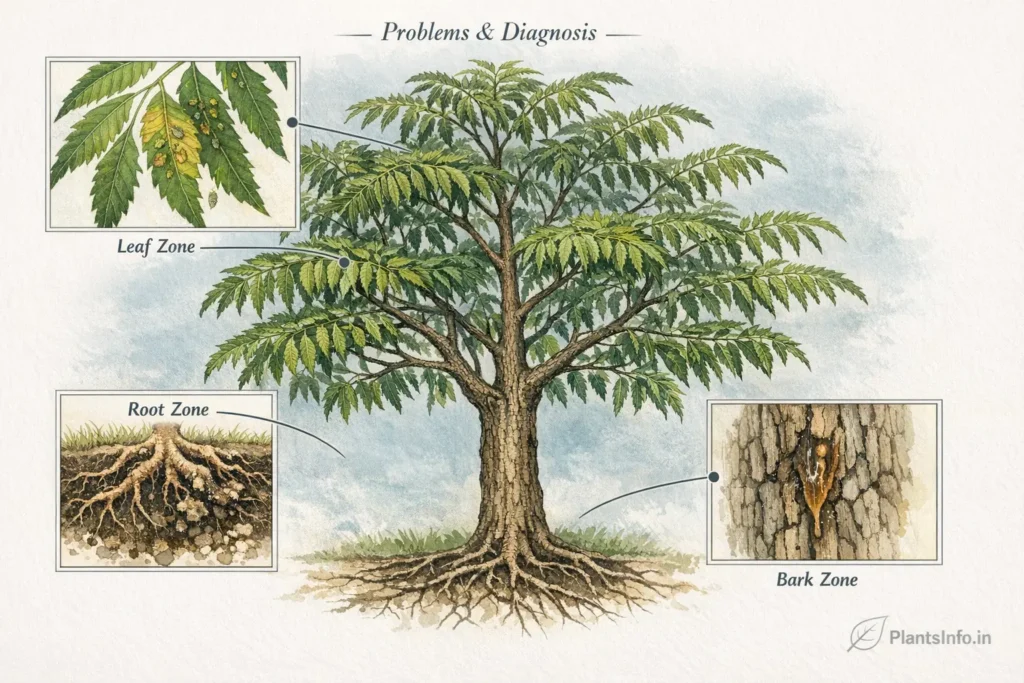
Premature flower drop: A sudden dry spell or unseasonal heat wave in February–March can cause flower clusters to drop before setting fruit. This is the most common seasonal disappointment with neem — if you notice it, increase watering around the root zone to reduce heat stress.
Fruit not setting: In young trees (under 5 years), flowering may be sparse or fruit set unreliable — this is normal and not a sign of disease. Full fruiting productivity typically begins from year 5–7.
Post-monsoon leaf yellowing: Heavy monsoon can cause temporary yellowing of older leaves as the tree sheds them in favour of new growth. This is commonly mistaken for a nutrient deficiency — check for new growth before responding.
Post-Harvest Care
After the fruiting season ends in June, neem enters its most vigorous growth phase during the monsoon. This is a good time to check drainage around the base — neem does not tolerate waterlogging, and the monsoon is when standing water becomes a risk.
If light structural pruning is needed, late post-monsoon (October–November) is the better window — the productive season is over, and the tree is stable before winter.
Conclusion
Neem’s year is defined by one spectacular flush — white flowers in March, fruit by May, then quiet growth through the monsoon. Time your planting to the rains,s and you’ll rarely go wrong.