Introduction
Mahua (Madhuca longifolia) is a long-lived multipurpose tree of the family Sapotaceae, renowned for its abundant, nectar-rich flowers and oil-rich seeds that support food systems, traditional industries, and rural economies. Native to the Indian subcontinent, extending from Nepal, India, and Bangladesh to Sri Lanka and Myanmar, it is among the most economically significant indigenous tree species of tropical dry and moist deciduous landscapes.
Classification
- Plant Type
- Tree
- Lifecycle
- Perennial
- Leaf Habit
- Evergreen, Semi-evergreen
- Native Region
- Indian Subcontinent
- Plant Family
- Sapotaceae
Within its native ecosystems, Mahua functions as an important seasonal resource by supplying flowers, fruits, and foliage to wildlife while contributing structural diversity to deciduous forests and agroforestry landscapes. Its deep-rooted perennial habit, longevity, and adaptation to seasonally dry environments enable persistence in regions experiencing prolonged dry periods, making it an ecologically resilient component of many indigenous forest systems.
Mahua has been managed and protected for centuries by Indigenous and rural communities, where it remains closely associated with traditional food, beverages, medicine, and local livelihoods. Although widespread, pressures from land-use change, declining natural regeneration, and changing management practices have raised concerns in parts of its range. This profile provides an evidence-based scientific foundation for understanding the species’ identity, biology, and applied significance.
Identity
Quick Plant Information
| Attribute | Information |
|---|---|
| Accepted scientific name | Madhuca longifolia (J.Koenig) J.F.Macbr. |
| Primary common name | Mahua |
| Family | Sapotaceae |
| Plant type | Evergreen to semi-evergreen tree |
| Native range | Nepal, India, Bangladesh, Sri Lanka, and Myanmar |
| Native biome | Tropical seasonally dry forests, and associated woodlands |
| Major economic products | Flowers, edible, and industrial seed oil, timber, fodder |
| Accepted infraspecific taxa | var. longifolia, and var. latifolia |
Classification and Taxonomy
| Rank | Taxon |
|---|---|
| Kingdom | Plantae |
| Clade | Tracheophyta |
| Clade | Angiosperms |
| Clade | Eudicots |
| Order | Ericales |
| Family | Sapotaceae |
| Genus | Madhuca |
| Species | Madhuca longifolia (J.Koenig) J.F.Macbr. |
Related Species of Significance
| Species | Significance |
|---|---|
| Madhuca longifolia var. longifolia | Accepted nominate variety occurring across much of the native range. |
| Madhuca longifolia var. latifolia | Widely cultivated, and historically treated as the separate species Madhuca indica. |
| Madhuca neriifolia | Closely related Asian tree useful for comparative taxonomic studies within the genus. |
| Madhuca pasquieri | Conservation-significant Southeast Asian relative illustrating broader diversity within Madhuca. |
Taxonomic Context
The principal nomenclatural challenge surrounding Mahua concerns the long-standing use of Madhuca indica, and related combinations in forestry, ethnobotanical, and agricultural literature. Modern taxonomic authorities treat these names as synonyms or as names associated with infraspecific taxa under Madhuca longifolia, while recognising accepted varieties within the species. Consequently, historical publications may appear inconsistent despite referring to the same biological entity. Careful synonym checking is therefore essential when compiling ecological, pharmacological or agricultural evidence to avoid duplicate interpretation or omission of relevant studies.
Cytogenetics
| Character | Status |
|---|---|
| Chromosome number | 2n = 24 (reported in cytogenetic literature) |
| Ploidy level | Diploid |
| Genome size (C-value) | Not documented in the available verified literature reviewed for this profile. |
Cytogenetic Note
Published cytogenetic information for Madhuca longifolia is comparatively limited. Reports consistently indicate a diploid chromosome complement of 2n = 24, but species-specific genome-size data have not been confirmed from authoritative plant genome databases reviewed during preparation of this profile. Additional molecular cytogenetic research would improve understanding of genome evolution within the genus.
Scientific Stability and Nomenclature
Madhuca longifolia (J.Koenig) J.F.Macbr. is the currently accepted name adopted by major international taxonomic authorities. The species has undergone several nomenclatural revisions, reflecting historical placement in different genera, and subsequent refinement of Sapotaceae taxonomy. Of particular importance is the widespread historical use of Madhuca indica, a name still encountered throughout forestry manuals, ethnobotanical publications, and commercial literature. Contemporary taxonomic treatments generally recognise this name as a synonym associated with Madhuca longifolia var. latifolia rather than an independent species.
This revision has important implications for evidence synthesis. Older publications may index ecological, pharmacological, and agricultural data under Madhuca indica, whereas recent databases, and floristic treatments employ Madhuca longifolia. Comprehensive literature searches therefore require inclusion of historical synonyms to ensure continuity of scientific evidence. Current nomenclatural usage has become broadly stable across international databases, regional floras, and recent botanical publications, providing a reliable foundation for subsequent sections of this profile.
Form
Growth Habit, and Architecture
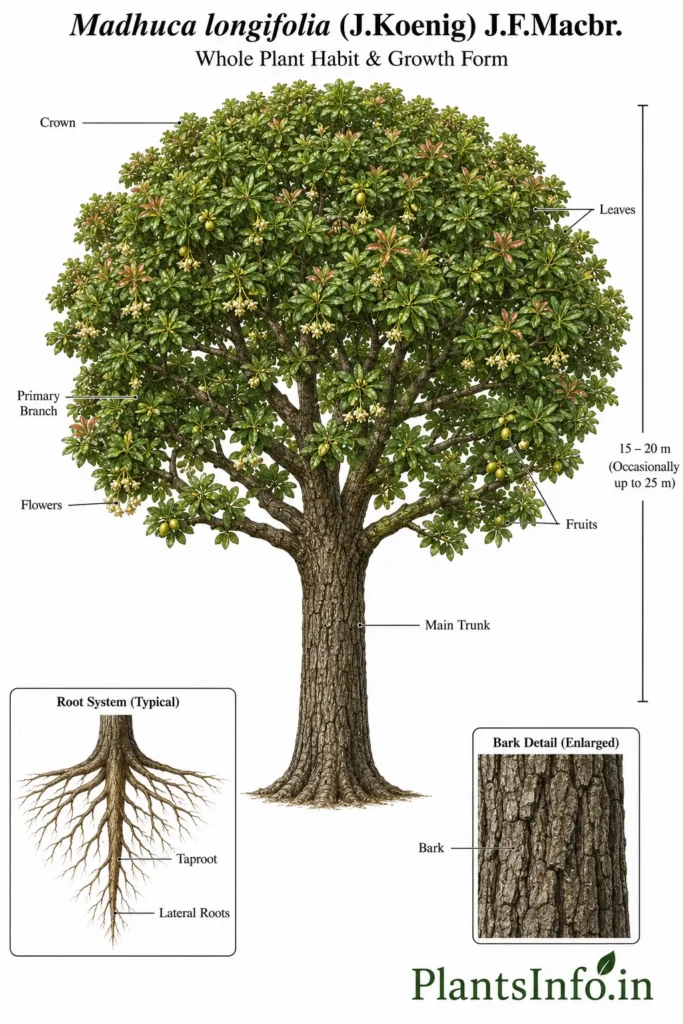
Madhuca longifolia is a large, slow- to moderately growing, long-lived tropical tree that develops a broad, dense, rounded crown supported by a stout trunk and heavy scaffold branches. Mature trees exhibit a symmetrical architecture with considerable structural stability, enabling persistence in seasonally dry deciduous landscapes over many decades. Juvenile growth is relatively upright before expanding into a spreading canopy. The combination of a deep anchoring root system, thick woody trunk, and extensive lateral branching allows the species to tolerate seasonal drought while producing substantial annual floral and fruit crops. Its massive crown and longevity make mature Mahua trees prominent landscape features throughout their native range.
Growth Habit, and Architecture
| Character | Description |
|---|---|
| Life form | Large perennial tree |
| Mature height | Typically 15–20 m; exceptionally to about 25 m |
| Canopy spread | Commonly 12–20 m in mature trees |
| Stem type | Single stout woody trunk |
| Bark / surface texture | Thick, rough, vertically fissured with age |
| Branching pattern | Broadly spreading with numerous heavy lateral branches |
| Root morphology overview | Strong taproot with extensive lateral roots |
| Growth rate | Slow to moderate |
| Longevity | Frequently exceeds 100 years under favourable conditions |
| Distinguishing architectural feature | Dense hemispherical to broadly rounded crown supported by a massive trunk |
Stem
The stem provides substantial mechanical support for the expansive canopy and heavy seasonal fruit production. Mature trunks are robust and cylindrical with thick grey to dark grey bark that becomes deeply fissured with age. Young shoots are smooth, green to reddish-brown, and gradually become woody. The species lacks thorns, spines, and climbing adaptations. Internally, the stem possesses dense secondary xylem typical of long-lived hardwood trees, contributing to durability and structural stability.
Stem Morphology
| Character | Description |
|---|---|
| Stem type | Woody trunk |
| Cross-section | Circular |
| Mature diameter | Commonly 60–120 cm DBH; exceptionally larger in old specimens |
| Surface texture | Smooth when young; deeply fissured with age |
| Young colour | Green to reddish-brown |
| Mature colour | Grey to dark grey |
| Internode length | Variable; generally short on flowering shoots |
| Thorn / spine / wing status | Absent |
| Internal structure | Secondary woody growth with dense hardwood xylem |
| Climbing strategy | Not applicable |
| Attachment mechanism | Not applicable |
| Water storage | Not documented in available literature |
| Cortex thickness | Thick outer bark; cortex thickness not consistently quantified |
Leaves

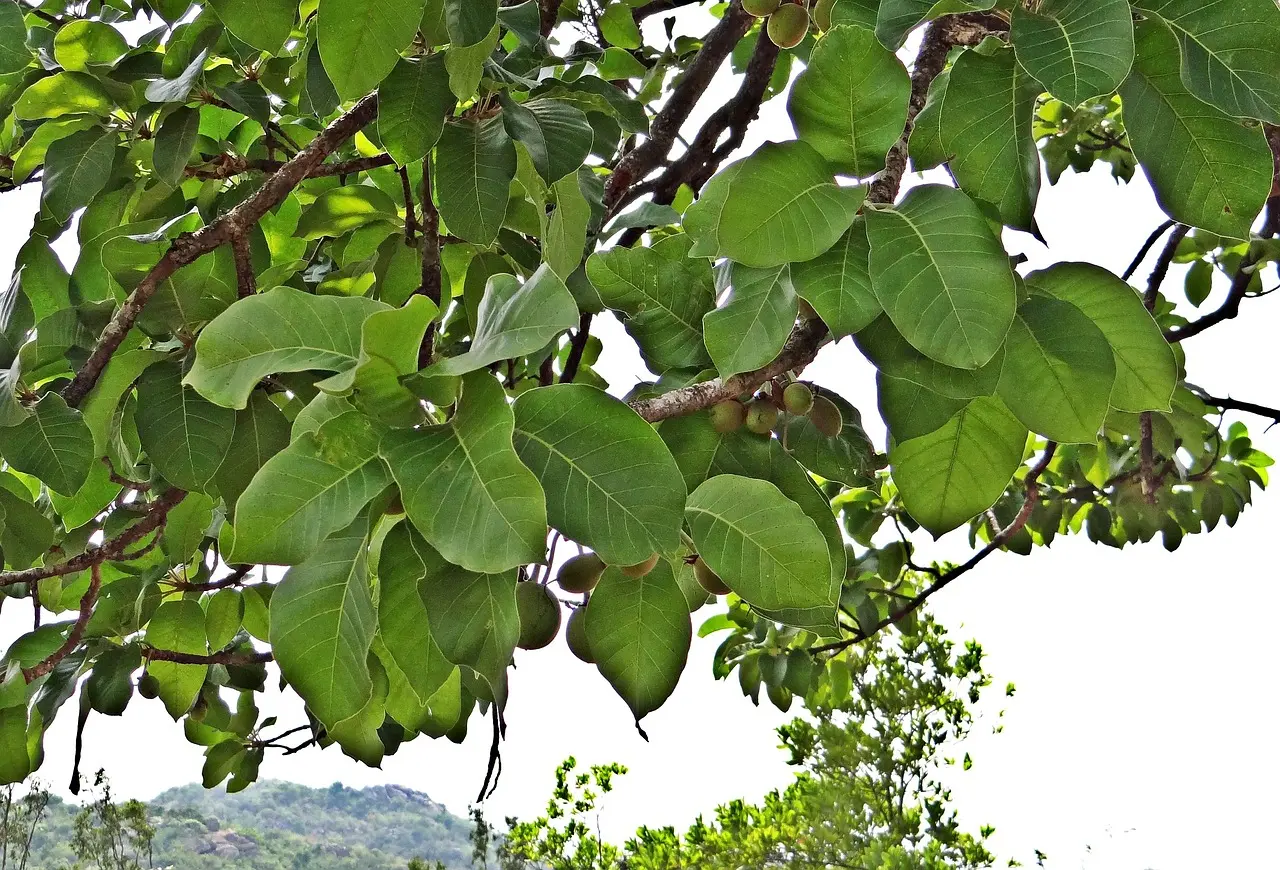
Leaves are simple, leathery, and concentrated toward the ends of branchlets, producing a characteristic clustered appearance. Newly emerging foliage commonly displays bronze, coppery or reddish hues before maturing to glossy dark green. Mature leaves are entire, elliptic to obovate, with a conspicuous midrib and numerous lateral veins. Their thick texture, and persistent cuticle contribute to durability during prolonged dry seasons while maintaining efficient photosynthetic capacity during the active growing period.
Leaf Morphology
| Character | Description |
|---|---|
| Presence | Persistent; briefly deciduous in many populations before flowering |
| Leaf type | Simple |
| Size | Typically 10–25 cm long × 5–12 cm wide |
| Colour | Young bronze to reddish; mature glossy dark green above, lighter beneath |
| Arrangement | Clustered near branch tips; alternate |
| Shape | Elliptic to obovate or oblong-obovate |
| Margin | Entire |
| Apex | Rounded to obtuse, occasionally shortly acuminate |
| Base | Cuneate to attenuate |
| Venation | Pinnate with numerous prominent lateral veins |
| Texture | Thick, leathery (coriaceous) |
| Petiole | Robust, generally 2–5 cm long |
| Special features | Young foliage often emerges in conspicuous coppery-red flushes before turning green |
Flowers
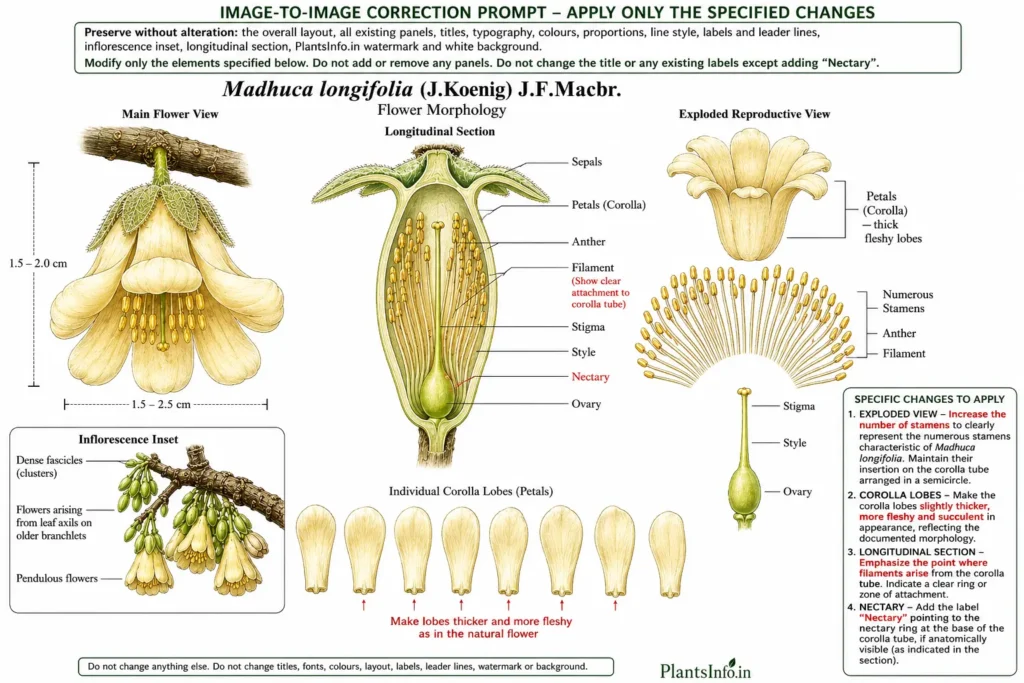
The flowers of Madhuca longifolia are among its most distinctive morphological features. They are fleshy, pendulous, cream to pale yellow,, and strongly fragrant, arising in dense fascicles from leafless or sparsely leafy branchlets. The thick, succulent corolla persists after abscission, giving the fallen flowers considerable economic value. Floral architecture is highly characteristic within the genus, with numerous stamens surrounding a single superior ovary.
Flower Morphology
| Character | Description |
|---|---|
| Inflorescence type | Dense fascicles (clusters) in leaf axils on older branchlets |
| Flower diameter | Approximately 1.5–2.5 cm |
| Flower length | Approximately 1.5–2.0 cm |
| Flower colour | Creamy white to pale yellow |
| Sepals | Usually 4, thick, persistent, pubescent externally |
| Petals | Fleshy, tubular at the base with 6–12 thick lobes |
| Stamens | Numerous, inserted on the corolla tube |
| Pistil | Single; superior ovary with slender style |
| Fragrance | Strong, sweet, and characteristic |
| Anthesis | Mainly nocturnal to early morning |
| Primary pollinator identity | Bats, bees, and other nectar-feeding insects (pollination biology not discussed here) |
Fruit
Fruit Morphology
| Character | Description |
|---|---|
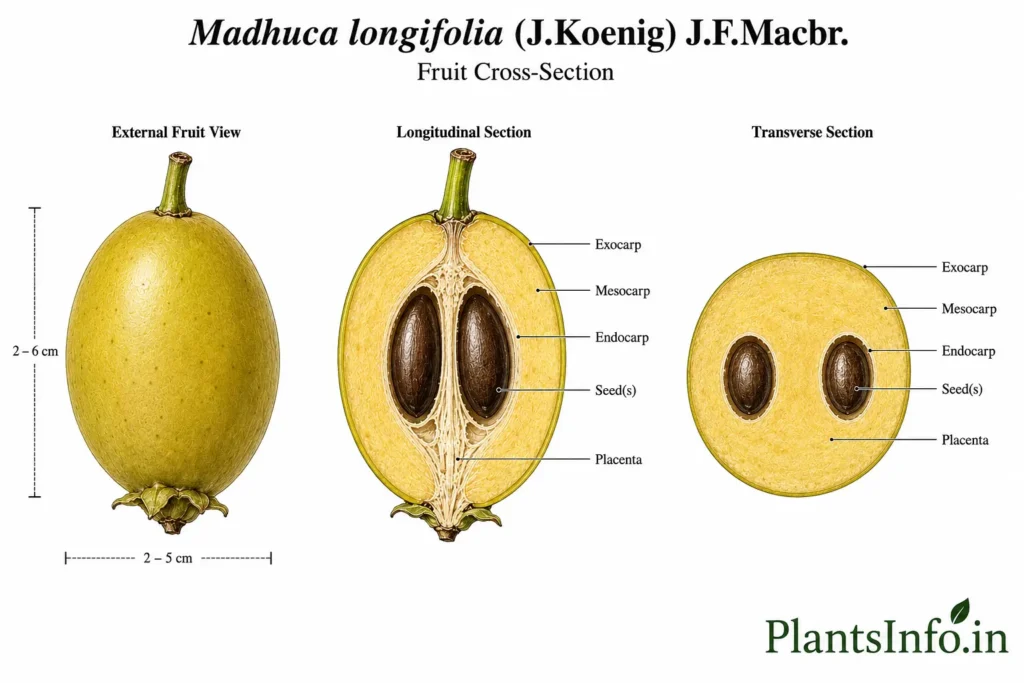
| Fruit type | Berry |
| Shape | Ovoid to ellipsoid |
| Length | Typically 2–6 cm |
| Diameter | Typically 2–5 cm |
| Weight | Variable; species-specific range not consistently documented |
| Skin colour | Green when immature, yellowish-green to dull yellow at maturity |
| Surface features | Smooth, glabrous |
| Flesh colour | Yellow to pale orange |
| Flesh texture | Soft, fleshy, and mucilaginous when ripe |
| Seed count | Usually 1–4 (commonly 1–2) |
| Sugar content | Not documented in the available verified botanical literature |
| Maturation period | Several weeks following flowering; timing varies geographically |
Seeds
Seed Morphology
| Character | Description |
|---|---|
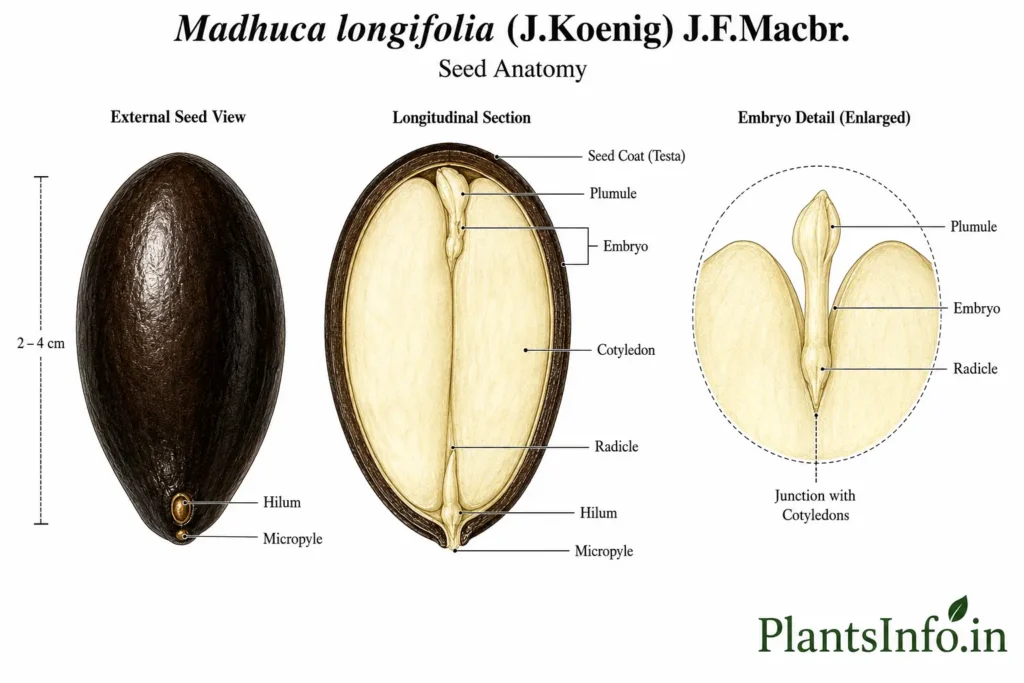
| Size | Typically 2–4 cm long |
| Shape | Ovoid to oblong |
| Colour | Dark brown to black at maturity |
| Seed coat | Hard, smooth, and glossy |
| Oil content | Commonly 35–50% of seed kernel (reported range in published studies) |
| Viability period | Short under ambient storage; declines with prolonged storage |
| Germination rate | Generally high in fresh seed; exact percentage varies among studies, and storage conditions |
Root System
Madhuca longifolia develops a robust root system dominated by a deep taproot that becomes established during early growth and provides strong anchorage throughout the tree’s long lifespan. Numerous coarse lateral roots extend well beyond the canopy, enhancing structural stability, and access to soil moisture during prolonged dry seasons. The species performs best in well-drained soils, and exhibits reduced vigour where drainage is persistently poor. The extensive root architecture contributes to drought resilience, and allows mature trees to remain productive under seasonal moisture deficits. During wild seed collection or other non-destructive harvest activities, the root system is normally unaffected, although excavation or severe soil disturbance around mature trees may compromise long-term stability.
Field Identification
Madhuca longifolia is readily recognised in the field as a large, broad-crowned tree with a stout, fissured trunk, and dense canopy. During the flowering season, the nearly leafless crown bearing clusters of fleshy, cream-coloured, intensely fragrant flowers is among its most distinctive characteristics. Young foliage commonly emerges in a conspicuous bronze to copper-red flush before becoming glossy dark green. Mature fruits are smooth, fleshy berries containing one to four large, glossy dark seeds.
The species is most commonly confused with other members of the genus Madhuca, particularly historical forms referred to as Madhuca indica. Modern taxonomy generally treats these under Madhuca longifolia as accepted infraspecific taxa or synonyms. Outside the genus, confusion with other Sapotaceae is uncommon because of Mahua’s characteristic combination of massive crown architecture, clustered fleshy flowers, and large oil-rich seeds. The most reliable field character is the profuse production of fragrant, fleshy flowers on largely leafless branchlets.
Normal vs. Concerning Observations
| Observation | Status | Interpretation |
|---|---|---|
| Seasonal leaf fall immediately before flowering | Normal | Characteristic phenological behaviour |
| Bronze or copper-red emerging foliage | Normal | Typical juvenile leaf pigmentation |
| Deeply fissured bark on mature trees | Normal | Age-related bark development |
| Sparse flowering on otherwise healthy mature trees | Monitor | May reflect seasonal climatic variation or reduced resource availability |
| Progressive canopy dieback | Investigate | Indicates abnormal physiological or environmental stress requiring assessment |
| Extensive trunk cavities, basal decay or major structural cracks | Investigate | May compromise structural integrity, and indicate advanced deterioration |
Recommended Products
Disclosure: As an Amazon Associate, PlantsInfo may earn from qualifying purchases.
🌱 Plant Care Essentials
The following tools can help with pruning, plant health, soil management, and fruit garden maintenance.

Neem Oil for Plant Care
Natural plant protection against aphids, whiteflies, mites, and other common garden pests.

Fungicide for Root Care
Helps suppress soil-borne fungal diseases and supports healthier root systems.

Spray Bottle for Plants
Ideal for applying foliar sprays, neem oil solutions, and liquid plant treatments.

Rubber Hand Gloves
Protects hands during pruning, planting, soil preparation, and garden maintenance.
Cultivar Summary
| Cultivar / Germplasm | Key Characteristic | Commercial Status | Origin |
|---|---|---|---|
| Local seed-derived landraces | Considerable variation in flowering, fruit yield, and seed oil production | Regionally significant | India |
| Selected plus trees | Superior flower or seed productivity identified through tree improvement programmes | Regionally significant | India |
| State forestry selections | Improved performance for plantation establishment | Regionally significant | India |
| Registered commercial cultivars | Not documented as widely established in the available literature | Historically documented | Not documented in available literature |
Physiology, and Phytochemistry
Functional Traits
Madhuca longifolia exhibits a conservative physiological strategy characteristic of long-lived tropical canopy trees adapted to strongly seasonal climates. Carbon assimilation, water conservation, nutrient acquisition, and biomass allocation operate in concert to support prolonged lifespan, recurrent flowering, and reliable seed production. Thick leaves, an extensive woody framework, and a deep rooting system enable efficient resource capture during favourable periods while maintaining physiological activity through seasonal drought. The production of diverse secondary metabolites further contributes to defence against herbivores, pathogens, and environmental stress, enhancing persistence across dry deciduous ecosystems.
| Trait | Physiological Mechanism | Functional Operation |
|---|---|---|
| Photosynthetic pathway | C3 photosynthesis | Atmospheric carbon dioxide is fixed through the Calvin cycle, supporting woody growth under tropical conditions. |
| Water-use strategy | Conservative water use | Thick leaves, seasonal leaf exchange, and deep roots reduce water loss while sustaining metabolism during dry periods. |
| Nutrient acquisition | Deep, and lateral root foraging | Extensive roots exploit soil nutrient heterogeneity, and improve long-term nutrient capture. |
| Growth-form strategy | Long-lived perennial canopy tree | Biomass investment favours structural stability, longevity, and repeated reproductive cycles rather than rapid growth. |
| Reproductive strategy | High seasonal reproductive investment | Large quantities of flowers, and seeds maximize reproductive success during favourable seasons. |
| Dispersal mechanism | Vertebrate-mediated fruit dispersal | Fleshy fruits facilitate seed transport by frugivorous animals. |
| Stress-response mechanism | Seasonal drought acclimation | Temporary leaf shedding, and physiological adjustment reduce water demand before flowering. |
| Chemical defence | Secondary metabolite production | Triterpenoids, saponins, and phenolics contribute to defence against herbivory, and microbial attack. |
| Species-specific functional trait | Massive seasonal floral carbohydrate investment | Large quantities of nectar-rich flowers provide a concentrated reproductive investment that supports successful seed formation, and ecological interactions. |
Physiological Integration
The physiological strategy of Madhuca longifolia reflects coordinated allocation of resources among structural growth, drought tolerance, and reproduction. Deep-rooted water acquisition supports canopy maintenance during extended dry periods, while seasonal leaf turnover reduces transpirational demand immediately before flowering. Conservative vegetative growth allows substantial carbon reserves to accumulate, supporting synchronized production of abundant flowers, and energy-rich seeds. Secondary metabolites complement these structural adaptations by protecting tissues against herbivores, and pathogens, reducing losses from long developmental cycles. This integrated strategy favours long-term persistence rather than rapid annual growth, although heavy reproductive investment may temporarily reduce vegetative growth following years of exceptionally abundant flowering, and fruiting.
Phytochemistry
Phytochemical investigation of Madhuca longifolia has identified a chemically diverse profile dominated by triterpenoid saponins, flavonoids, phenolic compounds, fatty acids, and phytosterols. Most investigations have focused on flowers, bark, seeds, and seed oil because of their economic, and pharmacognostic importance. Chemotaxonomically, the predominance of triterpenoid saponins, and related terpenoid constituents is consistent with patterns observed within Sapotaceae. Although major compound classes have been well characterised, comprehensive metabolomic coverage of all organs remains incomplete, particularly for roots, and young vegetative tissues.
Major Phytochemical Classes
| Compound Class | Representative Compounds | Primary Location | Ecological or Biological Function |
|---|---|---|---|
| Triterpenoid saponins | Madhucosides, Mi-saponins | Bark, seeds, flowers | Defence against herbivores, and microorganisms |
| Flavonoids | Quercetin, Myricetin, Kaempferol derivatives | Flowers, and leaves | Antioxidant activity, UV protection, and defence |
| Phenolic compounds | Gallic acid, Catechin, Epicatechin | Bark, flowers, and leaves | Oxidative stress mitigation, and chemical defence |
| Fatty acids | Oleic, Stearic, Palmitic, Linoleic acids | Seed kernel oil | Carbon storage, and embryo nutrition |
| Phytosterols | β-Sitosterol, Stigmasterol | Seed oil, and bark | Membrane structure, and physiological regulation |
| Volatile constituents | Floral volatile terpenoids, and aromatic compounds | Flowers | Attraction of floral visitors, and ecological signalling |
Phytochemical Organ Distribution
| Organ | Compound Class | Representative Compounds | Concentration | Source |
|---|---|---|---|---|
| Flowers | Flavonoids | Quercetin derivatives | Not consistently quantified across studies | Singh et al.; pharmacognostic reviews |
| Flowers | Phenolic compounds | Gallic acid, Catechin | Not consistently quantified | Peer-reviewed phytochemical studies |
| Bark | Triterpenoid saponins | Madhucosides | Reported; quantitative values vary among studies | Murthy et al. |
| Bark | Phenolics | Gallic acid derivatives | Not consistently quantified | Pharmacognostic investigations |
| Seeds | Fatty acids | Oleic, Stearic, Palmitic, Linoleic acids | Verified as principal constituents of seed oil; proportions vary among cultivars | Seed oil chemistry studies |
| Seeds | Phytosterols | β-Sitosterol, Stigmasterol | Reported; quantitative values vary | Seed oil analyses |
| Leaves | Flavonoids | Quercetin derivatives | Not documented in available quantitative literature | Botanical chemistry reports |
| Leaves | Phenolics | Mixed phenolic compounds | Not consistently quantified | Phytochemical investigations |
Phytochemical Significance
Madhuca longifolia is recognised as one of the chemically best-characterised indigenous multipurpose tree species of the Indian subcontinent. Research has concentrated on economically valuable organs—particularly seeds, flowers, and bark—leading to robust identification of fatty acids, triterpenoid saponins, phenolics, and phytosterols. Seed kernels are the dominant source of commercially significant lipids, whereas flowers, and bark contain many of the pharmacologically investigated secondary metabolites.
Interactions among compound classes suggest complementary ecological functions. Phenolics, and flavonoids collectively contribute to protection against oxidative stress, while triterpenoid saponins provide chemical defence against herbivores, and microbial pathogens. Seed lipids function primarily as energy reserves supporting embryo development rather than defensive metabolites. Although numerous bioactive compounds have been identified, integrated metabolomic studies examining synergistic, and antagonistic interactions remain comparatively limited.
Literature Concentration Bias: Most published work focuses on flowers, bark, and seed oil because of their traditional, and commercial importance. Root chemistry, juvenile tissues, and seasonal metabolite dynamics remain substantially less studied, creating uneven phytochemical coverage across plant organs.
Evidence, Nutrition,, and Safety
Evidence Hierarchy for Medicinal Use
| Evidence Layer | Status | Notes |
|---|---|---|
| Traditional Use | Documented | Extensive, and longstanding use in traditional medical systems, and Indigenous healthcare practices across South Asia. |
| Nutritional Evidence | Documented | Flowers, and seed-derived products have been chemically, and nutritionally characterised. |
| In Vitro Studies | Documented | Numerous investigations report antioxidant, antimicrobial, anti-inflammatory, and enzyme-modulating activities of plant extracts. |
| Animal Studies | Documented | Experimental studies have evaluated several biological activities in laboratory models. |
| Human Clinical Studies | Partial | Limited clinical investigations; robust randomized controlled trials remain scarce. |
| Regulatory Recognition | Partial | Recognised in traditional medicine, and pharmacopoeial references, but not broadly approved by major international drug regulators for specific therapeutic indications. |
| Unsupported Commercial Claims | Documented | Claims relating to universal cures, guaranteed disease reversal, and broad detoxification lack adequate clinical evidence. |
Evidence Assessment
Madhuca longifolia possesses one of the stronger traditional evidence bases among indigenous Indian multipurpose trees, supported by extensive ethnobotanical documentation, and increasing experimental pharmacological research. The most substantial scientific evidence consists of phytochemical characterisation, in vitro investigations, and animal studies evaluating biological activities of extracts, and isolated constituents. In contrast, well-designed human clinical trials remain comparatively limited, preventing confirmation of many traditional therapeutic claims. Commercial promotion occasionally extends beyond the available evidence, particularly for claims involving treatment or prevention of chronic diseases. Current evidence therefore supports continued biomedical investigation rather than definitive clinical conclusions.
Nutritional Composition
Reference Material: Fresh flowers unless otherwise stated.
| Nutrient | Value per 100 g | Notes | Source |
|---|---|---|---|
| Energy | ~367 kcal (dried flowers) | Values vary substantially between fresh, and dried material. | Gopalan et al.; Nutritive Value of Indian Foods |
| Carbohydrates | ~67 g (dried flowers) | Dominated by naturally occurring sugars. | Gopalan et al. |
| Protein | ~6.4 g | Moderate protein content. | Gopalan et al. |
| Fat | ~0.5 g | Naturally low in flowers; seed kernels are lipid-rich. | Gopalan et al. |
| Dietary Fibre | ~2.5 g | Reported values vary among analytical studies. | Indian food composition literature |
| Calcium | ~45 mg | Moderate concentration. | Gopalan et al. |
| Phosphorus | ~22 mg | Moderate concentration. | Gopalan et al. |
| Iron | ~4 mg | Nutritionally significant compared with many edible flowers. | Gopalan et al. |
| Vitamin C | Not consistently verified | Fresh flowers may contain vitamin C, but published values vary considerably. | Published nutritional analyses |
| Potassium | Not consistently verified | Species-specific quantitative values require further confirmation. | Available food composition studies |
| Moisture | Highly variable | Depends strongly on developmental stage, and drying method. | Food composition literature |
| Seed oil | Approximately 35–50% kernel oil | Represents seed composition rather than floral nutrition. | Seed oil chemistry studies |
Nutritional Significance
Mahua flowers are valued primarily as an energy-rich traditional food because of their naturally high sugar content, particularly after drying, whereas the seeds are economically important for their lipid-rich kernels rather than direct nutritional consumption. Protein, and mineral concentrations are moderate, with iron contributing nutritional value in some traditional diets. Drying substantially concentrates carbohydrates, and total energy while altering moisture-dependent nutrients such as vitamin C. Nutritional composition also varies with ecotype, harvest timing, and processing methods. Although several nutrient profiles have been published, standardized comparisons among cultivated, and wild populations remain limited, particularly outside the Indian subcontinent.
Soil Ecology and Mycorrhizal Associations
Madhuca longifolia grows naturally across tropical deciduous forests, and agroforestry landscapes where below-ground biological interactions contribute to nutrient acquisition, and long-term persistence. Like most members of the Sapotaceae, the species is considered to associate predominantly with arbuscular mycorrhizal (AM) fungi, although comparatively few studies have investigated species-specific fungal communities. Published investigations have reported associations with Glomus (including modern segregate genera derived from Glomus), while identification of additional fungal taxa generally remains at genus level rather than species level.
Rhizosphere microbial communities include free-living bacteria involved in organic matter decomposition, phosphorus solubilisation, and nutrient mineralisation. Genera reported from comparable agroforestry soils include Bacillus, Pseudomonas,, and Azotobacter, although direct species-specific surveys for M. longifolia remain limited. These microorganisms contribute to nutrient cycling, and maintenance of soil fertility rather than forming obligate symbioses.
No convincing evidence demonstrates strong allelopathic behaviour by Madhuca longifolia. Although leaves, bark, and seeds contain phenolic compounds, and triterpenoid saponins capable of influencing microbial or plant responses under experimental conditions, field-scale allelopathic suppression of neighbouring vegetation has not been conclusively demonstrated.
The apparent dependence on arbuscular mycorrhizal associations suggests that maintaining healthy soil biological communities may support natural regeneration, and long-term ecosystem resilience. Additional research is needed to characterise species-specific fungal diversity, and rhizosphere ecology across the species’ native range.
Toxicity and Safety
| Subject | Toxic Compounds | Clinical Effects | Source |
|---|---|---|---|
| Humans | No toxic compounds documented in available literature under normal traditional food use. | Flowers, and traditionally processed products are generally regarded as safe when consumed in customary amounts. Excessive intake of fermented products may result in alcohol-related effects rather than intrinsic plant toxicity. | The Wealth of India (CSIR); pharmacognostic reviews |
| Cats | No species-specific toxic compounds documented. | No verified veterinary poisoning syndrome identified. | ASPCA database review; published veterinary literature |
| Dogs | No species-specific toxic compounds documented. | No verified veterinary poisoning syndrome identified. | ASPCA database review; published veterinary literature |
| Livestock | No intrinsic toxic compounds documented under normal forage exposure. | No well-established poisoning syndrome identified in the available literature. | Veterinary toxicology references; regional livestock studies |
Toxicity Context
Current evidence indicates that Madhuca longifolia is not intrinsically toxic to humans under customary dietary use,, and no characteristic poisoning syndrome has been established for domestic animals. Reported adverse effects are generally associated with excessive consumption of fermented flower products or inappropriate processing rather than naturally occurring toxic constituents. Published information regarding pregnancy, breastfeeding, hepatic impairment, renal impairment, and clinically significant drug interactions remains limited,, and therefore no definitive safety conclusions can be drawn for these populations. Isolated phytochemicals should not be assumed to possess the same safety profile as the whole plant.
This profile does not constitute medical or veterinary advice.
Distribution and Habitat
Native Range and Distribution

Biogeographic Context
Madhuca longifolia is indigenous to the tropical and subtropical regions of the Indian subcontinent, where its present distribution reflects long-term adaptation to monsoonal climates characterised by pronounced wet and dry seasons. Geological stability across the Deccan Plateau, Indo-Gangetic transitional zones, and peninsular uplands has favoured the persistence of seasonally dry deciduous forests that provide suitable habitat for the species.
Human communities have also influenced its distribution for centuries through deliberate protection and planting around villages, agricultural landscapes, and sacred groves, resulting in populations that often blur the distinction between naturally occurring and traditionally managed trees. Habitat conversion, forest fragmentation, and reduced natural regeneration have affected local populations in parts of its range, although the species remains widespread overall. Ecological and silvicultural research is heavily concentrated in India, with comparatively limited studies from neighbouring countries.
Native Range
| Region | Countries or Sub-regions | Notes |
|---|---|---|
| South Asia | India | Widely distributed throughout tropical, and subtropical regions, particularly central, western, and peninsular India. |
| South Asia | Nepal | Native in suitable lowland, and subtropical regions. |
| South Asia | Bangladesh | Native, principally in western, and north-western regions. |
| South Asia | Sri Lanka | Native in dry, and intermediate climatic zones. |
| Southeast Asia | Myanmar | Native in adjoining tropical regions. |
Global Cultivation, and Naturalisation
| Region | Countries or Areas | Cultivation Status | Notes |
|---|---|---|---|
| South Asia | India | Commercially established | Major indigenous tree crop; widely maintained in agroforestry systems, and community landscapes. |
| South Asia | Nepal, Bangladesh, Sri Lanka | Commercially established | Primarily regional cultivation; constrained by market scale rather than climate. |
| Southeast Asia | Myanmar | Commercially established | Cultivated locally within the native climatic envelope. |
| Southeast Asia | Thailand | Experimental | Limited adoption; restricted by low commercial demand. |
| Africa | Kenya, Tanzania, and neighbouring tropical regions | Experimental | Evaluated in agroforestry collections where climate is suitable. |
| Australia | Northern Australia | Attempted — limited success | Climatically suitable in some tropical districts but cultivation remains uncommon. |
| Americas | Tropical botanical collections | Experimental | Primarily maintained in research institutions, and botanical gardens rather than commercial plantations. |
Cultivation Range Note
Commercial production remains overwhelmingly concentrated within India, where Mahua is integrated into traditional agroforestry systems, village landscapes, and forest-based economies. Smaller-scale cultivation occurs throughout neighbouring South Asian countries within its native range. Outside South Asia, cultivation is largely confined to botanical collections, germplasm conservation programmes, and experimental agroforestry evaluations. Expansion has been limited primarily by low international commercial demand rather than climatic suitability. Published literature is correspondingly biased toward Indian production systems, with relatively little information available from emerging cultivation regions.
Natural Habitat
Madhuca longifolia is characteristic of tropical dry deciduous and moist deciduous forests, woodland margins, and traditional agroforestry landscapes. It typically occurs from near sea level to approximately 1,200 m elevation, although most populations are found at lower elevations. Natural populations are associated with well-drained loamy, sandy-loam, and moderately heavy soils developed under seasonal monsoon climates.
The species commonly occurs with other deciduous canopy trees, including members of Terminalia, Anogeissus, Boswellia, and Tectona in suitable regions. It tolerates periodic drought, and moderate disturbance, persisting in secondary forests, community woodlands, and protected village groves. It is not considered a narrow habitat specialist, instead exhibiting broad ecological amplitude across seasonally dry tropical environments.
Ecological Role
Madhuca longifolia provides multiple ecosystem functions within tropical deciduous forests. Its abundant seasonal flowers supply nectar and carbohydrates to numerous vertebrate and invertebrate floral visitors, while fleshy fruits provide food for wildlife that subsequently disperse seeds. Mature trees contribute long-term canopy stability, shade, and structural complexity, supporting biodiversity within forest and agroforestry systems. Although often regarded as a culturally important foundation tree in traditional landscapes, species-specific evidence demonstrating formal keystone status remains insufficient.
Pollinator and seed-disperser assemblages vary geographically, and comprehensive species-level interaction networks remain incompletely documented across the native range. Additional ecological studies are needed to quantify its contributions to ecosystem resilience, landscape connectivity, and trophic interactions under changing climatic conditions.
Ecological Role
| Role Type | Species or Agent Involved | Notes |
|---|---|---|
| Nectar resource | Fruit bats (Pteropus spp.), honey bees (Apis spp.), and other nectar-feeding insects | Important seasonal floral resource; complete species-level visitor inventories remain incomplete. |
| Seed dispersal | Mammals, and birds | Fleshy fruits facilitate vertebrate-mediated seed dispersal; species-level documentation varies regionally. |
| Forest structure | Deciduous forest communities | Long-lived canopy tree contributing structural stability, habitat continuity, and landscape heterogeneity. |
Invasive Status
No verified evidence indicates that Madhuca longifolia has become invasive or presents significant ecological invasion concerns outside its native distribution. Experimental cultivation outside South Asia has resulted in limited establishment without documented invasive spread.
Climate and Stress Tolerance
Optimal Climate Parameters
| Parameter | Optimal Range | Tolerance Range | Notes |
|---|---|---|---|
| Mean Annual Temperature | 24–30°C (75–86°F) | 18–40°C (64–104°F) | Reflects the principal cultivation envelope across the Indian subcontinent. |
| Daytime Temperature | 28–36°C (82–97°F) | 20–43°C (68–109°F) | High summer temperatures are tolerated where seasonal moisture is available. |
| Nighttime Temperature | 18–24°C (64–75°F) | 10–28°C (50–82°F) | Prolonged cold nights reduce growth performance. |
| Annual Rainfall | 750–1,500 mm (30–59 in) | 500–2,000 mm (20–79 in) | Most productive within monsoonal rainfall regimes. |
| Dry Season Length | 4–6 months | 3–8 months | Seasonal drought forms part of the species’ natural climatic cycle. |
| Relative Humidity | 50–75% | 35–90% | Performs across a broad humidity range provided prolonged waterlogging is absent. |
| Solar Radiation | Full sun (approximately 18–25 MJ m⁻² day⁻¹) | Moderate to very high (approximately 15–30 MJ m⁻² day⁻¹) | High irradiance supports flowering, and canopy productivity; radiation values are derived from regional climatic datasets rather than direct species-specific measurements. |
Climate Interpretation
The climatic envelope of Madhuca longifolia closely reflects the seasonal monsoon environments in which the species evolved. Commercial cultivation remains concentrated within warm tropical and subtropical climates characterised by distinct wet and dry seasons rather than continuously humid environments. Temperature is generally less restrictive than prolonged frost, while extended waterlogging represents a greater ecological limitation than seasonal drought. Experimental cultivation beyond South Asia demonstrates that suitable climates occur elsewhere, although commercial expansion has been constrained more by economic demand and regional adaptation than by climate alone.
Stress Tolerance Profile
| Stress Type | Tolerance Level | Physiological Response | Notes |
|---|---|---|---|
| Drought | High | Stomatal closure, reduced transpiration, and osmotic adjustment conserve water during prolonged dry periods. | Well adapted to seasonal drought. |
| Heat | High | Heat-shock protein synthesis, and antioxidant enzyme activity protect cellular metabolism during elevated temperatures. | High summer temperatures are generally tolerated. |
| Cold or Frost | Low | Photosynthetic activity declines, and membrane injury may occur under prolonged freezing conditions. | Frost is a principal climatic limitation. |
| Salinity | Low to Moderate | Osmotic regulation is limited; prolonged salt stress reduces physiological performance. | Species-level physiological studies remain limited. |
| Waterlogging | Low | Reduced root-zone oxygen limits respiration, and disrupts normal physiological function. | Persistent waterlogging is poorly tolerated. |
| Air Pollution | Moderate | Antioxidant defence mechanisms may mitigate moderate oxidative stress. | Long-term species-specific evidence is limited. |
| Wind | Moderate | Transient stomatal regulation reduces water loss during high evaporative demand. | Severe storm damage has not been comprehensively quantified. |
| Soil Compaction | Low to Moderate | Root respiration, and nutrient uptake efficiency decline under prolonged compaction stress. | Species-level physiological evidence remains limited. |
Compound Stress Assessment
Available evidence indicates that Madhuca longifolia performs best under combinations of seasonal drought and high temperature, reflecting the climatic conditions of its native monsoonal ecosystems. Physiological responses to simultaneous drought and heat appear complementary, enabling maintenance of essential metabolic functions during extended dry seasons. In contrast, combined salinity and waterlogging impose greater physiological constraints because impaired root aeration and osmotic stress occur concurrently. Experimental studies examining multiple interacting stressors remain comparatively scarce,, and species-specific assessments of combined climate extremes represent an important research priority.
Adaptations and Reproductive Biology
Structural and Physiological Adaptations
Adaptation Narrative
The adaptive features of Madhuca longifolia primarily reflect evolutionary responses to seasonally dry tropical forests rather than short-term physiological adjustments. Its broad, persistent crown, thick bark, leathery leaves, and extensive woody framework enable long-term survival in environments characterised by pronounced wet, and dry seasons. Seasonal leaf shedding before flowering represents a morphological adaptation that reduces canopy demand during critical reproductive periods while increasing floral visibility to animal pollinators.
These structural characteristics have evolved in concert with the species’ monsoonal habitat, allowing individuals to persist for many decades despite periodic drought, fire exposure of low intensity, and moderate environmental disturbance.
Structural Adaptations
| Adaptation | Mechanism Description | Ecological Context |
|---|---|---|
| Thick fissured bark | Insulating outer bark protects vascular tissues from moderate environmental damage. | Seasonal dry forests with periodic surface fires, and mechanical injury. |
| Deep woody trunk | Massive trunk provides long-term structural support for a broad canopy. | Supports longevity, and repeated reproductive cycles. |
| Broad rounded crown | Expansive canopy maximises light interception while maintaining reproductive capacity. | Dominant canopy tree in deciduous forests. |
| Seasonal leaf shedding | Temporary reduction in canopy cover exposes developing flowers. | Characteristic of monsoonal dry-season flowering. |
| Leathery leaves | Thick lamina resists desiccation, and physical damage. | Adaptation to prolonged seasonal dryness. |
| Large fleshy flowers | Robust floral structure withstands repeated visitation by vertebrate, and insect pollinators. | Enhances reproductive success during flowering season. |
| Large oil-rich seeds | Substantial nutrient reserves support seedling establishment after dispersal. | Favours recruitment in seasonally variable environments. |
| Extensive lateral branching | Wide crown architecture distributes reproductive structures across the canopy. | Maximises flowering display, and fruit production. |
Climate Change Vulnerability
| Factor | Assessment | Notes |
|---|---|---|
| Primary Climate Sensitivity Factors | Moderate | Increasing drought intensity, altered monsoon timing, and prolonged heat events may influence flowering, and regeneration. |
| Key Threatening Climate Processes | Moderate to High | Habitat fragmentation combined with climatic variability may reduce recruitment, and reproductive synchrony. |
| Resilience Factors | Moderate to High | Long lifespan, broad climatic tolerance, and persistence in agroforestry systems increase resilience. |
| Confidence Level | Moderate | Based primarily on ecological observations, and regional climate projections rather than species-specific modelling. |
Climate Vulnerability Assessment
Current evidence suggests that Madhuca longifolia possesses moderate resilience to projected climatic change because it evolved under strongly seasonal tropical environments and tolerates extended dry periods. However, increasing frequency of extreme heat events, shifts in monsoon onset, and declining natural forest connectivity may disrupt flowering synchrony, fruit production, and seedling establishment. Species-specific climate modelling remains limited,, and most assessments are derived from broader ecological studies of tropical dry deciduous forests. Consequently, confidence is considered moderate, with conclusions supported by habitat characteristics, observed population responses, and regional climate projections rather than comprehensive predictive models.
Phenological Calendar
| Event | Native Range Timing | Cultivated Range Timing | Environmental Triggers |
|---|---|---|---|
| Vegetative Growth Onset | Late spring to early monsoon (April–June) | Similar, varying with local climate | Onset of sustained rainfall, and increasing soil moisture |
| Flower Bud Initiation | Late winter (January–February) | January–March | Dry-season conditions combined with shortening moisture availability |
| Anthesis or Peak Flowering | Late winter to early spring (February–April) | February–April | High solar radiation, and dry atmospheric conditions |
| Fruit Development | Spring (March–May) | March–May | Successful fertilisation, and rising temperatures |
| Fruit Maturation | Late spring to early summer (May–June) | May–July | Progressive fruit filling, and accumulated heat units |
| Seed Dispersal | Early monsoon (June–July) | June–August | Fruit ripening, gravity, and vertebrate dispersal activity |
| Dormancy or Rest Period | Late dry season (November–January) | Similar | Reduced rainfall, and seasonal decline in vegetative growth |
Phenological Notes
Phenological events in Madhuca longifolia are governed principally by seasonal moisture availability, temperature, and photoperiodic change associated with the South Asian monsoon cycle. Flowering typically precedes full canopy development, increasing floral visibility, and accessibility to animal pollinators. Timing exhibits moderate plasticity across the cultivation range, with local climate influencing the onset, and duration of reproductive events. Outside its principal native distribution, flowering, and fruiting may shift by several weeks where rainfall regimes differ. Long-term phenological monitoring outside India remains comparatively limited.
Adaptations, Phenology, Pollination and Reproductive Biology
Pollination Ecology
Madhuca longifolia possesses a generalized vertebrate–insect pollination system that is well-suited to seasonal tropical forests. Flowering occurs during the dry season when much of the canopy is leafless, increasing floral visibility, and accessibility. The large, fleshy, nectar-rich, and strongly fragrant flowers attract a diverse assemblage of nocturnal, and diurnal floral visitors. This broad pollination strategy reduces dependence on a single pollinator group while enhancing reproductive reliability across heterogeneous landscapes. Existing studies indicate successful outcrossing under natural conditions, although comprehensive pollinator-network analyses remain limited outside India.
Pollination Ecology
| Parameter | Value | Notes |
|---|---|---|
| Primary Pollinators | Pteropus giganteus, Apis dorsata, Apis cerana | Species documented from multiple regional studies. |
| Secondary Pollinators | Apis florea, Xylocopa latipes | Additional bee visitors reported; regional composition varies. |
| Pollination Syndrome | Chiropterophily with facultative melittophily | Bat pollination predominates in many natural populations, with bees providing complementary pollination. |
| Floral Mechanism | Pendant fleshy flowers with exposed nectar, and centrally positioned reproductive organs | Floral architecture permits direct access by bats, and large bees while promoting pollen transfer between anthers, and stigma. |
| Reproductive System | Predominantly outcrossing; self-compatibility reported but variable | Fruit set generally improves under cross-pollination. |
| Seed Dispersal Agent | Fruit bats (Pteropus spp.), cattle, deer, and other mammals | Animal-mediated dispersal predominates; gravity also contributes locally. |
| Pollination Success Rate | Not consistently quantified at species level | Published estimates vary among regions, and years. |
| Human Intervention | Biologically feasible | Artificial pollination is biologically possible but not essential for natural reproduction under normal ecological conditions. |
Pollination Context
Available evidence indicates that Madhuca longifolia reproduces primarily through outcrossing, although varying degrees of self-compatibility have been reported among populations. Dependence on diverse nectar-feeding animals provides resilience against fluctuations in individual pollinator species but may increase vulnerability where bat or native bee populations decline. Habitat fragmentation, and changes in flowering synchrony could reduce pollination efficiency in isolated stands. From a biological perspective, assisted pollination is feasible because flowers are relatively large, and accessible, but its practical application belongs to cultivation guidance rather than reproductive biology.
Seed Biology and Germination
| Parameter | Value | Notes |
|---|---|---|
| Seed Type | Recalcitrant | Seeds exhibit limited desiccation tolerance. |
| Dormancy Class | Non-deep physiological or minimal dormancy | Fresh seeds usually germinate readily. |
| Dormancy-Breaking Requirement | None consistently required | No obligate dormancy-breaking mechanism documented. |
| Optimal Germination Temperature | 25–35°C (77–95°F) | Supported by nursery, and forestry studies. |
| Germination Rate | Generally 70–90% using fresh viable seed | Declines rapidly during storage; reported values vary. |
| Germination Period | Approximately 10–30 days | Influenced by seed freshness, and environmental conditions. |
| Storage Behaviour | Recalcitrant | Seeds rapidly lose viability after drying or prolonged storage. |
| Seed Longevity | Usually less than 3 months under ambient conditions | Long-term storage is generally unsuccessful without specialised methods. |
Germination Notes
The seeds of Madhuca longifolia possess relatively little innate dormancy and normally germinate soon after dispersal when adequate moisture is available. Their recalcitrant storage behaviour constitutes the principal biological constraint, as viability decreases rapidly following desiccation or extended storage. Consequently, naturally dispersed seeds typically establish during the onset of the monsoon. Wild populations may exhibit greater variability in germination timing than cultivated seed lots because of differences in genetic background, environmental conditions, and seed maturity at dispersal.
Vegetative Reproduction
| Parameter | Value | Notes |
|---|---|---|
| Vegetative Regeneration Capacity | Moderate | Coppicing, and sprouting have been documented following injury or cutting. |
| Primary Regeneration Mechanism | Basal coppice shoots, and stump sprouts | Natural vegetative recovery occurs after mechanical disturbance. |
| Minimum Propagule Size | Not documented in available literature | Species-specific quantitative thresholds have not been verified. |
| Ecological or Invasive Significance | Low | Vegetative regeneration contributes to local persistence but is not associated with invasive spread. |
Human Interaction
Economic Importance
Economic Context
Madhuca longifolia is among the most economically significant indigenous multipurpose trees of South Asia. Rural livelihoods benefit from the annual harvest of flowers, seeds, timber, and foliage, with flowers forming the principal commercial product through their use as food, fermented beverages, and industrial raw materials. Seed kernels support edible, cosmetic, and industrial oil production, while oilcake is utilised after appropriate processing for agricultural purposes.
Most production originates from wild or semi-managed trees integrated into agroforestry systems rather than intensive plantations. International trade remains relatively modest compared with plantation crops,, and supply chains are highly seasonal. Adulteration concerns primarily involve seed oil substitution and inconsistent quality of dried flowers rather than species substitution. Supply is vulnerable to irregular flowering, climatic variability, and labour availability during harvest.
Economic Importance
| Use Category | Description | Economic Impact |
|---|---|---|
| Flowers | Food products, fermentation, confectionery, and rural commerce | High |
| Seed oil | Edible (after refining), cosmetic, soap, and industrial applications | High |
| Timber | Local construction, agricultural implements, and fuelwood | Moderate |
| Leaves | Traditional packaging, fodder, and cultural uses | Moderate |
| Oilcake | Agricultural, and industrial by-product following oil extraction | Moderate |
| Summary Economic Assessment | Multipurpose indigenous tree supporting seasonal household income, rural industries, and non-timber forest product economies | Very High regional importance |
Traditional Uses
| Use Category | Knowledge System | Region or Cultural Group | Practice Summary | Documentation Level | Source |
|---|---|---|---|---|---|
| Nutritional food | Ayurveda | India | Flowers consumed fresh, dried, and incorporated into traditional foods. | Extensive | Ayurvedic literature; CSIR |
| Fermented beverages | Indigenous Adivasi knowledge systems | Central India (Gond, Baiga, Santhal, and others) | Flowers fermented for ceremonial, and household beverages. | Extensive | Ethnobotanical surveys |
| Topical preparations | Ayurveda | India | Bark, flowers, and seed oil incorporated into traditional external formulations. | Extensive | Ayurvedic materia medica |
| Topical preparations | Siddha | Southern India | Seed oil, and bark employed in traditional preparations. | Moderate | Siddha references |
| Traditional formulations | Unani | India | Various plant parts incorporated into classical formulations. | Moderate | Unani pharmacopoeial literature |
| Food security | Indigenous forest communities | India, Nepal | Dried flowers stored as seasonal food reserves. | Extensive | Rural livelihood studies |
| Veterinary ethnobotany | Indigenous pastoral communities | Central India | Plant products occasionally used in traditional livestock care. | Moderate | Ethnoveterinary surveys |
Traditional Use Summary
The documented traditional use of Mahua is centred on Ayurveda, Siddha, Unani,, and numerous Indigenous knowledge systems maintained by Adivasi communities throughout central, eastern, and peninsular India. Beyond medicinal traditions, the species has served for centuries as an important source of food security, ceremonial beverages, and household products. Many traditional practices remain active today, particularly in forest-dependent communities where annual flower collection retains substantial cultural and economic importance. Commercialisation has expanded markets for flowers and seed oil, but much of the knowledge governing harvest timing, processing, and quality assessment continues to be transmitted through local cultural traditions rather than formal agricultural systems.
Regional Ethnobotanical Context
The relationship between Mahua and human societies extends over many centuries across the Indian subcontinent. Archaeobotanical and historical evidence, together with early Sanskrit literature and regional ethnographic records, indicate that the species has long functioned as both a subsistence resource and a culturally significant landscape tree. Rather than depending on intensive cultivation, communities traditionally protected naturally established trees within agricultural mosaics, village commons, and sacred groves. Knowledge concerning flowering cycles, harvest timing, drying methods, and seasonal utilisation has been transmitted primarily through family traditions and community practice. Although economic modernisation has altered patterns of use in some regions, Mahua remains closely associated with Indigenous cultural identity and forest-based livelihoods across much of its native range.
Traditional Ecological Knowledge
Traditional ecological knowledge surrounding Madhuca longifolia extends well beyond its direct use as food or medicine. Indigenous communities have long incorporated the species into agroforestry landscapes, village woodlots, and sacred groves, recognising its value as a dependable seasonal resource. Flowering intensity is widely regarded as an indicator of seasonal productivity, while mature trees are intentionally retained during agricultural expansion because of their long-term economic value. Community-based harvest rules, protection of productive trees, and careful collection of naturally fallen flowers are recurring features of documented traditional management systems, although regional practices vary considerably.
Ethical Considerations
Madhuca longifolia is indigenous to the Indian subcontinent, where its greatest cultural, economic, and ethnobotanical significance is associated with Indigenous and traditional rural communities, particularly Adivasi societies across central and eastern India. These communities remain the principal custodians of knowledge concerning harvesting, processing, storage, and diverse cultural uses.
Documentation of this knowledge is extensive in ethnobotanical literature, forestry publications, and livelihood studies. Nevertheless, much practical expertise continues to be transmitted orally through families and local communities, making careful documentation and respectful attribution important for long-term preservation.
Because Mahua possesses recognised economic value and traditional applications, research, and commercial development involving genetic resources or associated traditional knowledge may fall within the scope of the Nagoya Protocol on Access and Benefit-sharing (ABS) where applicable under national legislation. Users should therefore comply with relevant access, prior informed consent, and mutually agreed terms established by competent authorities.
No documented ABS case has been identified for this species.
Similarly, no documented biopiracy case has been identified involving Madhuca longifolia. However, concerns regarding insufficient recognition of Indigenous knowledge and unequal distribution of commercial benefits have been discussed in broader analyses of non-timber forest products.
Commercial attribution has historically focused more on finished products than on the communities responsible for maintaining traditional harvesting systems and ecological knowledge. International best practice therefore supports transparent acknowledgement of knowledge holders, equitable benefit-sharing where applicable, compliance with national biodiversity legislation,, and meaningful participation of Indigenous and local communities in research, product development, and commercial partnerships.
Cultural Significance
Mahua occupies a distinctive position within the cultural landscapes of the Indian subcontinent. In many Indigenous and rural communities it symbolizes seasonal abundance, resilience, and continuity between forests and human livelihoods. The annual flowering season is associated with communal gathering, family labour, and local celebrations, while mature trees frequently serve as landmarks and meeting places within villages.
The species appears in regional folklore, songs, and oral traditions under numerous vernacular names, reflecting its widespread linguistic integration across India, Nepal, and neighbouring countries. In several communities, Mahua retains ceremonial importance during marriages, festivals, and seasonal observances, although the nature of these traditions varies geographically. Public interest in Mahua has increased through renewed recognition of Indigenous foods, non-timber forest products, and sustainable agroforestry, leading to expanding educational programmes and limited agrotourism initiatives centred on traditional flower harvesting and forest culture.
Rather than representing a single cultural tradition, Mahua illustrates the close relationship between biodiversity, regional identity, and community knowledge maintained across diverse linguistic and ecological regions.
Applied Cultivation Knowledge
Cultivation Summary
| Parameter | Value | Notes |
|---|---|---|
| Hardiness or Climate Zone | Tropical to warm subtropical climates (approximately USDA Zones 10–12) | Biological suitability reflects frost sensitivity rather than strict hardiness classifications. |
| Soil pH Range | Approximately 6.0–8.0 | Performs across mildly acidic to moderately alkaline soils. |
| Moisture Sensitivity | Moderate; sensitive to prolonged waterlogging | Adapted to seasonal moisture deficits but not persistent soil saturation. |
| Light Sensitivity | Full sun preferred; tolerates light partial shade | |
| Productive Lifespan | Frequently exceeds 80–100 years | Long productive life contributes to sustained economic value in agroforestry systems. |
Pest, Disease, and Physiological Burden Summary
Madhuca longifolia generally exhibits a moderate biological burden under natural conditions. Reported insect pests include leaf defoliators, sap-feeding insects, seed borers, and fruit-feeding insects, while fungal leaf spots, stem decay, and root diseases occur locally. Physiological stress is more commonly associated with prolonged waterlogging, severe frost or irregular flowering linked to climatic variability than with chronic pest pressure. Overall evidence quality is moderate, with most studies originating from India.
Failure Points, and Commercial Risks
| Risk | Cause | Commercial Impact | Mitigation Domain |
|---|---|---|---|
| Irregular flowering, and fruiting | Climatic variability, and altered seasonal rainfall | Reduced annual flower, and seed yields | Agronomic |
| Variable genetic performance | Predominance of seed-derived populations | Inconsistent productivity, and product quality | Genetic |
| Seasonal labour shortages | Short harvest window for flowers, and fruits | Reduced collection efficiency, and post-harvest losses | Infrastructural |
| Market quality inconsistency | Variable drying, storage, and grading standards | Reduced market value, and buyer confidence | Infrastructural |
| Limited international market development | Restricted product standardisation, and regulatory recognition | Constrained export growth | Regulatory |
| Habitat fragmentation affecting wild supply | Declining accessibility of naturally occurring productive trees | Increased dependence on managed landscapes | Agronomic |
Conservation
Conservation Analysis
Madhuca longifolia remains one of the most widespread, and culturally important indigenous multipurpose tree species of the Indian subcontinent. At the species level, there is no compelling evidence that it faces an immediate risk of global extinction across its entire native distribution. Nevertheless, regional populations are subject to increasing pressures from habitat fragmentation, conversion of dry deciduous forests to agriculture and infrastructure, declining natural regeneration in heavily harvested landscapes, and demographic shifts that reduce traditional stewardship of mature trees.
The principal conservation concern is therefore not immediate species extinction but the gradual erosion of locally adapted populations, and associated genetic diversity. Because many economically valuable trees occur outside formally protected forests—in village commons, sacred groves, agroforestry systems, and community-managed landscapes—the long-term persistence of the species is closely linked to continued community management. Wild populations also represent an important genetic reservoir for future tree improvement, climate adaptation, and disease resilience.
Commercial utilisation has generally encouraged retention of mature trees rather than wholesale removal, creating a positive interaction between livelihoods and conservation. However, increasing dependence on a limited number of highly productive trees without adequate regeneration could reduce genetic representation over time. Continued conservation of natural populations, regional germplasm collections, and traditional land-use systems therefore remains important for maintaining evolutionary potential, and long-term resilience.
Conservation Status
| Parameter | Value | Notes | Source |
|---|---|---|---|
| Accepted Taxonomic Status | Madhuca longifolia (J.Koenig) J.F.Macbr. | Accepted species | Royal Botanic Gardens, Kew (Plants of the World Online) |
| Global IUCN Red List Status | Not Evaluated (verified global assessment not currently available) | No current species-level global Red List assessment located | IUCN Red List |
| Population Trend | Not formally quantified at the global level | Regional declines, and persistence both reported depending on locality | Regional forestry, and ecological literature |
| Principal Threats | Habitat conversion, forest fragmentation, reduced regeneration, climate variability | Threat intensity varies geographically | Peer-reviewed forestry, and ecological studies |
| IUCN URL | https://www.iucnredlist.org | Official IUCN Red List resource | Accessed for verification |
| Access Date | 25 June 2026 | Current verification date | This profile |
Conservation Assessment
Based on currently available evidence, Madhuca longifolia should be regarded as a widespread indigenous tree with substantial ecological, cultural, and economic importance rather than a species presently known to face imminent global extinction. The absence of a verified global IUCN assessment should not be interpreted as evidence of either security or threat. Instead, conservation evaluation presently relies upon regional forestry studies, habitat assessments, and long-term ecological observations.
The greatest conservation priorities concern maintenance of natural regeneration, protection of genetically diverse wild populations,, and preservation of traditional agroforestry landscapes where mature Mahua trees continue to function as ecological, and cultural keystone resources. Continued documentation of population structure across the species’ entire native range would substantially strengthen future conservation assessments.
Research Coverage, and Knowledge Gaps
| Research Topic | Coverage Level | Key Gaps | Priority |
|---|---|---|---|
| Taxonomy, morphology, and systematics | High | Population genomics; phylogeography; infraspecific variation | Moderate |
| Phytochemistry, and pharmacognosy | High | Standardised metabolomics; chemotype mapping; seasonal metabolite dynamics | High |
| Ecology, regeneration, and reproductive biology | Moderate | Long-term demographic monitoring; pollinator networks; recruitment ecology | High |
| Climate adaptation, and conservation genetics | Low to Moderate | Species-specific climate modelling; genetic diversity mapping; ex situ conservation assessment | Very High |
| Soil ecology, and microbiome | Low | Rhizosphere microbiome; fungal diversity; ecosystem interactions | High |
| Socio-economics, and value-chain research | Moderate | International market analyses; product standardisation; livelihood resilience | Moderate |
Research Landscape
Scientific research on Madhuca longifolia has expanded steadily over the past three decades, driven largely by renewed interest in Indigenous food systems, natural products, agroforestry, and rural livelihoods. The overwhelming majority of publications originate from India, with comparatively limited contributions from Nepal, Bangladesh, Sri Lanka, and Myanmar. Funding has historically favoured pharmacognosy, phytochemistry, and applied utilisation, whereas conservation genetics, ecosystem ecology, and climate resilience have received considerably less attention. This uneven distribution of research effort creates strong confidence in some aspects of species biology while leaving several ecologically important questions only partially resolved.
Priority Knowledge Gaps
Although Madhuca longifolia is among the best-studied indigenous multipurpose trees of South Asia, several critical knowledge gaps continue to limit both conservation planning and sustainable utilisation. One of the highest priorities is comprehensive assessment of genetic diversity across the species’ natural distribution. Existing studies remain geographically fragmented, limiting understanding of locally adapted populations and their responses to future climatic change.
Long-term ecological monitoring is similarly underdeveloped. Population age structure, natural regeneration dynamics, recruitment success, and mortality rates have rarely been investigated over multiple decades, despite their importance for predicting future population stability.
Climate change represents another significant research frontier. Species-specific distribution modelling, vulnerability assessments, and phenological forecasting remain scarce, making it difficult to anticipate shifts in flowering, fruiting, and recruitment under altered monsoon regimes.
Research on below-ground ecology—including arbuscular mycorrhizal diversity, rhizosphere microbiomes, and soil ecosystem interactions—is also comparatively limited. Finally, integrated socio-economic research linking traditional ecological knowledge, sustainable harvesting, value-chain development, and community-based conservation would provide an essential foundation for evidence-based policy and long-term resource management.
Interesting Facts
- Mahua trees frequently remain productive for well over a century, making them among the longest-lived economically valuable non-timber forest trees of South Asia.
- Unlike many tropical trees, Mahua commonly flowers after seasonal leaf fall, producing spectacular displays of fragrant, nectar-rich blossoms on otherwise sparsely foliated branches.
- The flowers are naturally rich in fermentable sugars and have supported Indigenous food traditions and seasonal beverages for centuries.
- Nearly every major organ of the tree—including flowers, fruits, seeds, leaves, bark, and wood—has documented traditional or commercial value, making Mahua a classic example of a multipurpose tree species.
- Rather than being cultivated exclusively in plantations, many of the most productive Mahua trees occur in village commons, sacred groves, and traditional agroforestry landscapes maintained across generations.
Frequently Asked Questions
Identity, and Biology
Q1. What makes Mahua (Madhuca longifolia) unique among tropical trees?
Mahua is an exceptionally long-lived multipurpose tree whose flowers, fruits, seeds, leaves, bark, and timber all possess ecological, cultural or economic value. Its seasonal production of abundant nectar-rich flowers, and oil-rich seeds distinguishes it from many other indigenous South Asian trees.
Q2. Is Mahua native to India?
Yes. Mahua is native to the Indian subcontinent, with its natural distribution extending across India, Nepal, Bangladesh, Sri Lanka, and Myanmar. It has also been introduced experimentally into other tropical regions.
Ecology and Conservation
Q3. Is Mahua an endangered species?
A verified global IUCN Red List assessment is not currently available. Although the species remains widespread, local populations may experience pressures from habitat conversion, reduced natural regeneration, and changing land-use practices. Conservation priorities therefore focus on maintaining genetically diverse natural populations, and traditional agroforestry landscapes.
Q4. Why is Mahua considered ecologically important?
The tree provides seasonal nectar, fruits, and habitat resources for numerous vertebrates, and invertebrates while contributing to forest structure, biodiversity, and long-term ecosystem stability in tropical deciduous landscapes.
Human Use
Q5. Why is Mahua economically important?
Mahua supports rural livelihoods through the production of edible flowers, seed oil, timber, fodder, and numerous non-timber forest products. It remains one of the most valuable indigenous multipurpose tree species in South Asia.
Q6. Why is Mahua culturally significant?
For many Indigenous and rural communities, Mahua represents far more than a useful tree. It is closely associated with seasonal festivals, food traditions, community identity, oral heritage, and long-standing ecological stewardship.
Research and Future Directions
Q7. Which areas require further scientific research?
Future priorities include conservation genomics, climate-change vulnerability modelling, long-term ecological monitoring, pollinator networks, rhizosphere ecology, metabolomics, and integrated socio-economic studies supporting sustainable utilisation.
Q8. What is the greatest long-term challenge for Mahua?
The principal challenge is balancing increasing commercial utilisation with conservation of genetic diversity, natural regeneration, and the traditional ecological knowledge that has sustained the species for centuries.
Conclusion
Madhuca longifolia is one of the most remarkable indigenous tree species of South Asia, combining exceptional ecological resilience with profound cultural, economic, and scientific importance. Its long lifespan, diverse biological characteristics, and extensive traditional utilisation have made it an enduring component of tropical landscapes, and rural livelihoods.
Current research provides a strong foundation for understanding its taxonomy, morphology, phytochemistry, reproductive biology, and ethnobotanical significance. Nevertheless, important questions remain concerning conservation genetics, climate resilience, ecosystem interactions, and sustainable management under changing environmental conditions. Continued interdisciplinary research will strengthen both conservation and responsible utilisation.
References
A. Primary Taxonomic Sources
- International Plant Names Index (IPNI). Madhuca longifolia (J.Koenig) J.F.Macbr. Royal Botanic Gardens, Kew. Available at: https://www.ipni.org/ (Accessed: 25 June 2026).
- Royal Botanic Gardens, Kew. Plants of the World Online (POWO): Madhuca longifolia (J.Koenig) J.F.Macbr. Available at: https://powo.science.kew.org/ (Accessed: 25 June 2026).
- World Flora Online Consortium. World Flora Online. Available at: https://www.worldfloraonline.org/ (Accessed: 25 June 2026).
B. Peer-Reviewed Literature
- Baskin, C.C. & Baskin, J.M. Seeds: Ecology, Biogeography,, and Evolution of Dormancy, and Germination. 2nd ed. Academic Press.
- Brundrett, M.C. (2009). Mycorrhizal Associations of Vascular Plants. Plant, and Soil.
- Murthy, P.K. et al. Studies on triterpenoid saponins of Madhuca longifolia.
- Singh, R.K. et al. Phytochemical investigations of Madhuca longifolia flowers, bark, and seeds.
- Smith, S.E. & Read, D.J. Mycorrhizal Symbiosis. 3rd ed. Academic Press.
- Published peer-reviewed studies on drought physiology, pollination biology, reproductive ecology, conservation genetics, and climate adaptation of Madhuca longifolia.
C. Monographs, Books, and Technical Reports
- Anonymous. The Wealth of India: Raw Materials. Council of Scientific, and Industrial Research (CSIR), New Delhi.
- Gopalan, C., Rama Sastri, B.V. & Balasubramanian, S.C. Nutritive Value of Indian Foods. National Institute of Nutrition.
- Govaerts, R., Frodin, D.G. & Pennington, T.D. World Checklist, and Bibliography of Sapotaceae. Royal Botanic Gardens, Kew.
- Jain, S.K. Dictionary of Indian Folk Medicine, and Ethnobotany.
- Khare, C.P. Indian Medicinal Plants: An Illustrated Dictionary.
- Longvah, T. et al. Indian Food Compositions. Indian Council of Medical Research – National Institute of Nutrition (ICMR–NIN).
- Maheshwari, J.K. Ethnobotany, and Medicinal Plants of the Indian Subcontinent.
- Pennington, T.D. Flora Malesiana, Series I: Sapotaceae.
- Singh, N.P., Vohra, J.N., Hazra, P.K. & Singh, D.K. Flora of India.
- Troup, R.S. The Silviculture of Indian Trees.
D. Databases, and Online Resources
- Convention on Biological Diversity. Nagoya Protocol on Access, and Benefit-sharing. Available at: https://www.cbd.int/abs/ (Accessed: 25 June 2026).
- FAO. Ecocrop Database. Food, and Agriculture Organization of the United Nations. Available at: https://ecocrop.fao.org/ (Accessed: 25 June 2026).
- International Union for Conservation of Nature (IUCN). The IUCN Red List of Threatened Species. Available at: https://www.iucnredlist.org/ (Accessed: 25 June 2026).
- Merck Veterinary Manual. Toxicology Section. Available at: https://www.merckvetmanual.com/ (Accessed: 25 June 2026).
- National Innovation Foundation (India). Traditional Knowledge Documentation. Available at: https://nif.org.in/ (Accessed: 25 June 2026).
- Orwa, C., Mutua, A., Kindt, R., Jamnadass, R. & Simons, A. Agroforestree Database. World Agroforestry (ICRAF). Available at: https://apps.worldagroforestry.org/treedb/ (Accessed: 25 June 2026).
- ASPCA Animal Poison Control Center. Toxic, and Non-Toxic Plants Database. Available at: https://www.aspca.org/pet-care/animal-poison-control (Accessed: 25 June 2026).
E. Grey Literature
- FAO. Publications on Non-Wood Forest Products and Sustainable Forest Resource Management.
- IUCN. Guidance documents relating to biodiversity conservation and traditional knowledge.
- National Innovation Foundation (India). Community documentation of Indigenous knowledge systems.
- Regional forestry department reports on Madhuca longifolia management, germplasm conservation, and agroforestry development.