How to Grow Amla: Complete Care Guide for Indian Gardens
Amla is a hardy, low-maintenance fruit tree that grows well across most of India. It suits both ground planting and large containers, and a grafted sapling will give you fruit within 3–4 years. The biggest beginner mistake is overwatering a newly planted tree — amla roots rot faster than most people expect.
See also: Amla Plant plant profile, common problems, its flowering season, its benefits, and its varieties.
Bite into a fresh amla, and the flavour hits in waves — sharp, astringent, then unexpectedly sweet on the back of the throat. Indian gardeners grow it for that fruit, yes, but also for the near-certainty of success: amla (Phyllanthus emblica) is one of the most forgiving fruit trees you can plant in the Indian subcontinent. Difficulty level: Easy to Moderate. The one thing that trips beginners up is treating it like a mango — amla needs far less water and far less fuss.
Recommended Products
Disclosure: As an Amazon Associate, PlantsInfo may earn from qualifying purchases.
🌱 Growing Essentials
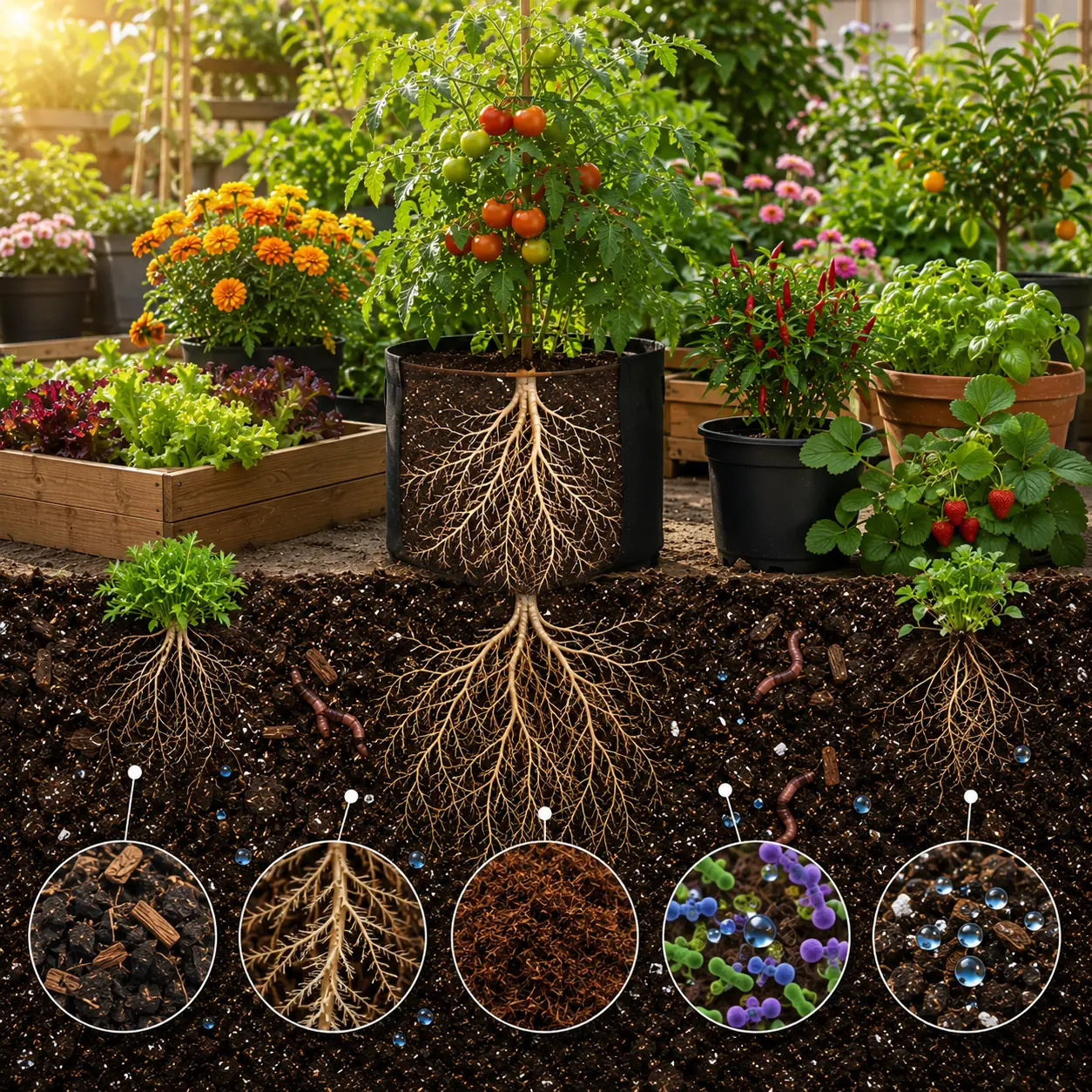
The following products can help with container gardening, potting, root development, soil management, and healthy plant growth.
Organic Potting Soil Mix
Provides nutrients, structure, and healthy growing conditions for container plants.
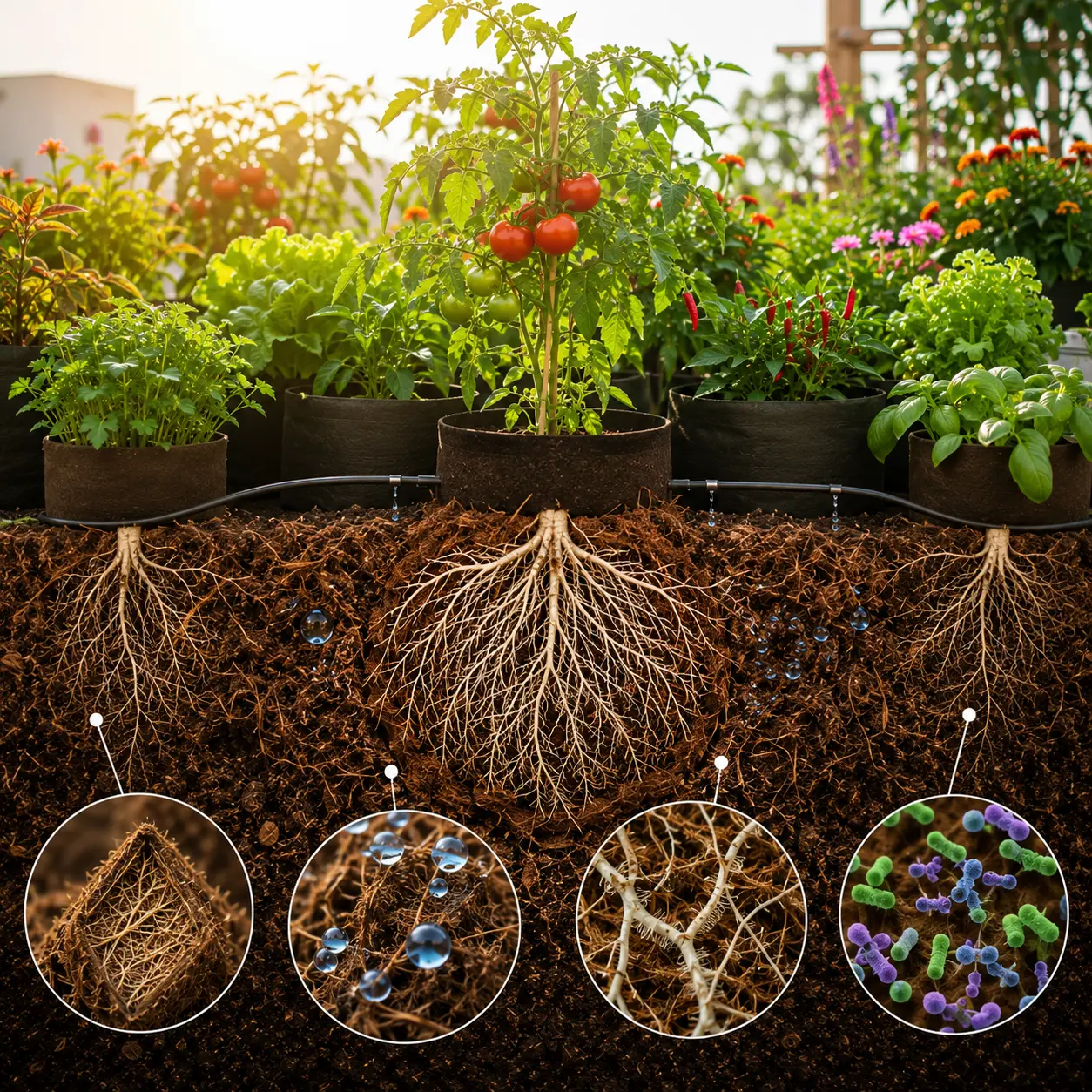
Coco Peat Growing Medium
Enhances moisture retention while maintaining excellent root-zone aeration.

Grow Bags for Plants
Improve drainage, root aeration, and vegetable production in limited spaces.

Plastic Pots for Plants
Ideal containers for seedlings, ornamentals, herbs, and balcony gardens.
Biggest Success Factor
The single biggest factor determining success with amla is drainage.
Unlike mango, amla tolerates drought remarkably well once established, but prolonged waterlogging can quickly damage roots and reduce long-term vigor.
Quick Facts
| Attribute | Detail |
|---|---|
| Common names | Amla, Amlaki, Indian Gooseberry, Nelli (Tamil/Malayalam), Usirikaya (Telugu), Avala (Kannada) |
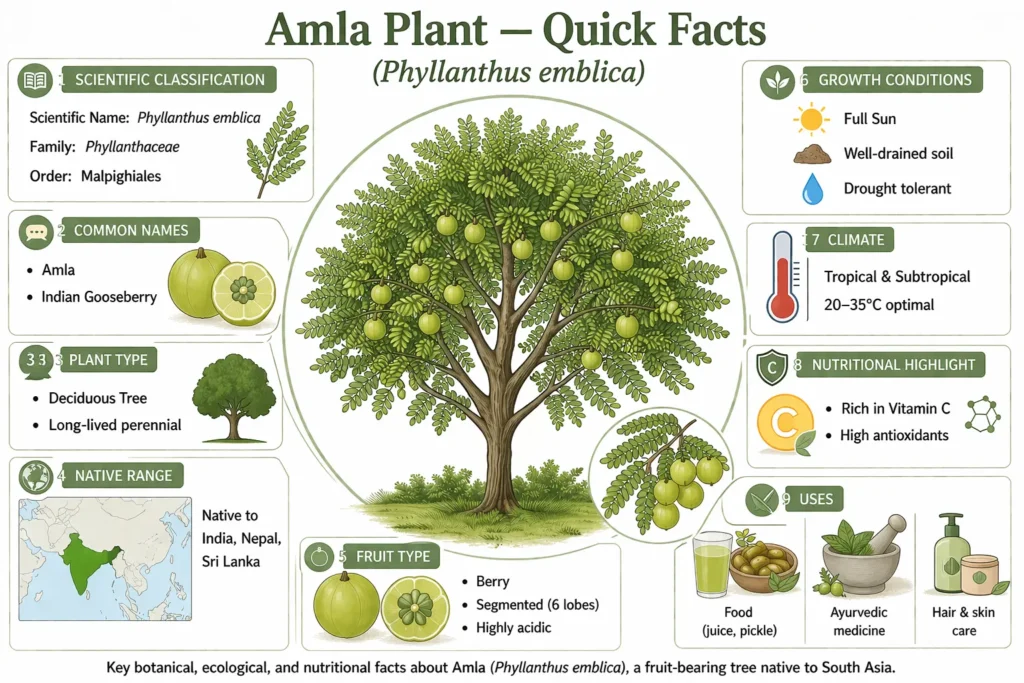
| Scientific name | Phyllanthus emblica (syn. Emblica officinalis) |
| Plant type | Deciduous fruit tree |
| Mature size | 8–18 metres in the ground; 2–3 metres in a large container |
| Sunlight | Full sun — minimum 6 hours direct daily |
| Water needs | Low to moderate; drought-tolerant once established |
| Best season to plant | Post-monsoon (October–November) or pre-monsoon (February–March) |
| Suitable states | All of India performs best in Uttar Pradesh, Rajasthan, Madhya Pradesh, Maharashtra, Andhra Pradesh, Tand amil Nadu |
Before You Start
✓ Full sun available
✓ Well-drained soil
✓ Space for a medium-sized tree
✓ Frost-free during establishment
If several of these conditions cannot be met, container growing or a different fruit tree may be a better choice.
Choosing the Right Spot
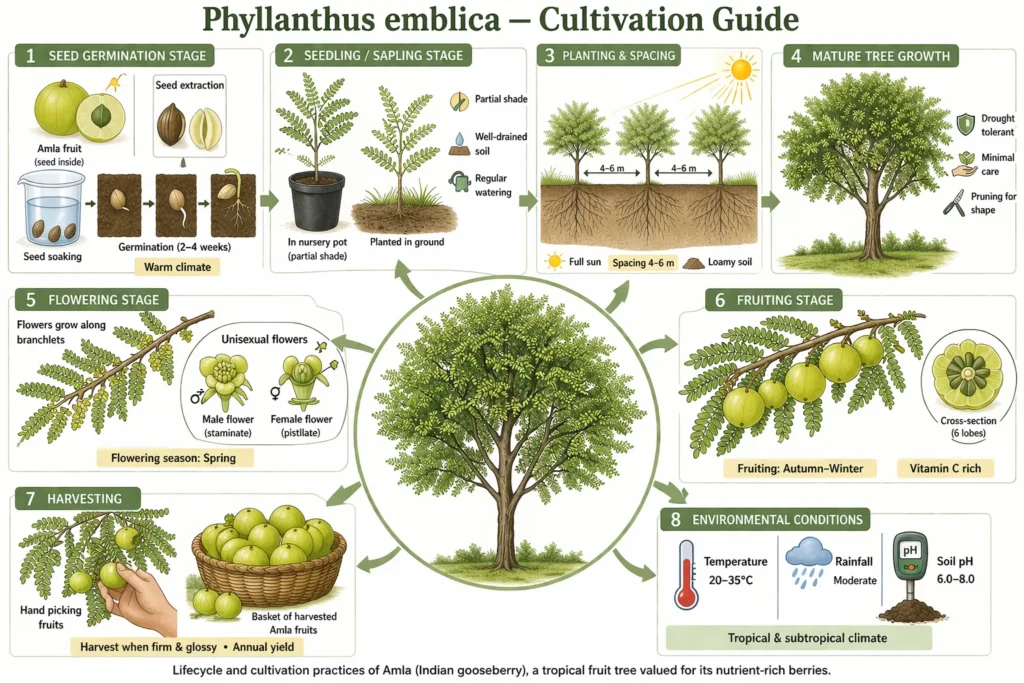
Amla is a full-sun tree — place it where it gets at least 6 hours of direct sunlight every day. In North India, avoid planting directly against a west-facing wall; afternoon heat reflected off concrete can scorch young leaves in May and June.
In the ground, leave at least 6–8 metres between amla and other large trees. The root system spreads widely and competes aggressively for water. For container growing, a 24-inch or larger pot on a south- or east-facing terrace works well for the first few years.
Container growing is genuinely viable for amla — more so than for mango or jackfruit — but yields will be modest. Ground planting is always the better choice if space allows.
Soil and Potting Mix
| Factor | Recommendation |
|---|---|
| Soil | Sandy loam |
| pH | 6.0–8.0 |
| Drainage | Excellent |
| Organic Matter | Moderate |
Amla is unusually tolerant of poor soils. It grows in sandy loam, red laterite, and even slightly alkaline black cotton soils. Preferred pH range is 6.0–8.0, making it one of the few fruit trees that doesn’t punish you for imperfect soil.
If you’re using regular garden soil, mix in one part coarse sand and one part compost to improve drainage. Amla will not tolerate waterlogged roots — soggy soil is the single most common reason young trees die.
The mistake Indian gardeners make most often: adding too much organic matter upfront. Rich, moisture-retaining soil feels like a gift to the tree, but it keeps roots wet between waterings. Keep the mix lean and free-draining.
Planting — Season and Method
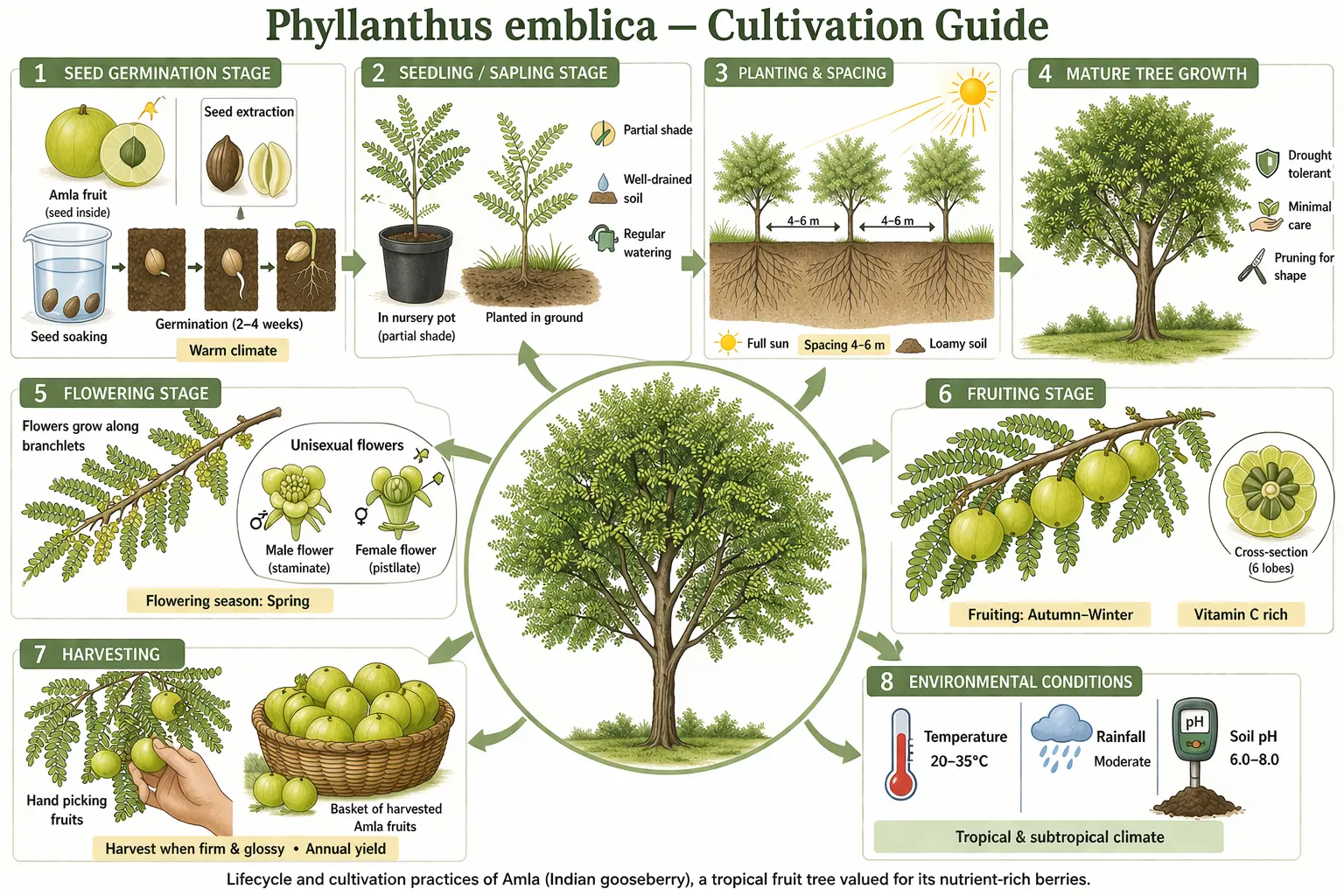
The best time to plant amla is post-monsoon — October through November — when the soil is moist, temperatures are falling, and the tree has several cool months to establish roots before its first summer. The second-best window is late winter, February into early March, before peak heat arrives.
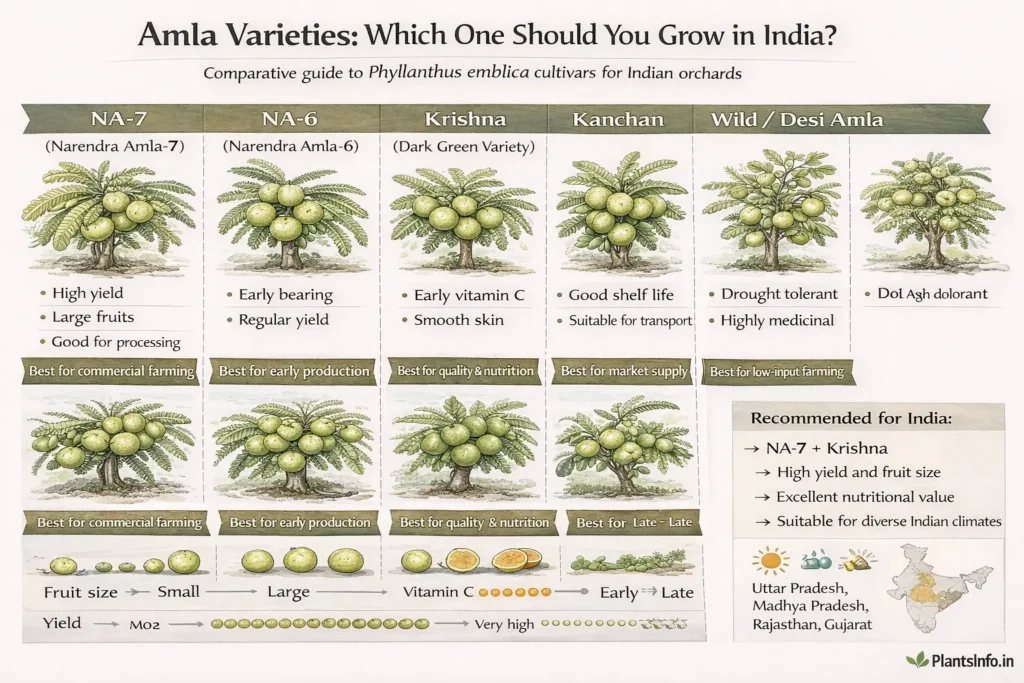
Saplings are almost always the practical choice over seeds. Amla grown from seed takes 7–10 years to fruit and shows high genetic variation. A grafted sapling from a nursery fruits in 3–4 years and produces predictably sized, quality fruit. Budded or grafted varieties like Krishna, Chakaiya, NA-7, and BSR-1 are widely available across Indian nurseries.
Dig a planting pit 60 cm × 60 cm × 60 cm. Fill the base with a mix of topsoil, compost, and a handful of neem cake. Set the sapling so the graft union sits above soil level — burying it invites collar rot. Water thoroughly once at planting, then hold back for a week.
Watering
| Plant Stage | Watering |
|---|---|
| Newly planted | Every 2–3 days |
| Establishing | Weekly |
| Mature tree | During prolonged dry periods |
For the first 4–6 weeks, water every 2–3 days — enough to keep the root zone moist but never soggy. Once you see 2–3 flushes of new growth, the tree is establishing, and you can reduce it to once a week.
A mature amla tree in the ground needs watering only during the driest months — typically March through May in most states. Two deep waterings per week during this period are sufficient. During the monsoon, stop irrigating entirely unless your region receives less than 600 mm annually.
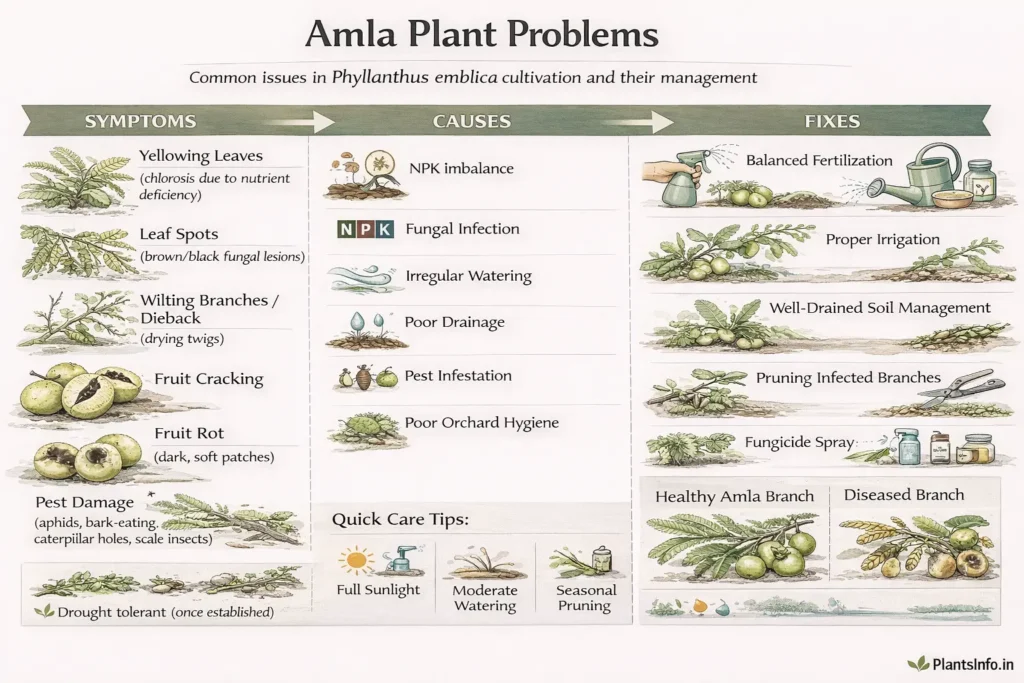
The specific overwatering sign to watch for: soft, darkening bark at the base of the stem, just above soil level. Yellow leaves are ambiguous. Soft, discoloured bark at the collar is a clear warning that roots are sitting in too much moisture.
In containers, check the top 2 inches of soil before every watering. If still moist, wait.
Fertiliser
Young trees (years 1–3) respond well to a light application of vermicompost — roughly 2–3 kg per tree — applied at the start of the monsoon and again in October. Avoid nitrogen-heavy fertilisers in year one; they push leafy growth at the expense of root development.
From year 4 onward, apply neem cake (1–2 kg) and vermicompost (5 kg) together at monsoon onset. If you want to supplement with a chemical fertiliser, a balanced NPK 10:10:10 applied once in February works well. Potassium matters most for fruit quality — a potassium-rich organic source like wood ash (a small fistful worked into the soil) is a traditional practice that holds up.
One organic alternative that works reliably: a diluted liquid feed of fermented banana peel once a month during the growing season. Low cost, easy to prepare, and noticeably effective on container plants.
Common Problems and Fixes
Rust (orange powdery patches on leaves): Amla is susceptible to a rust fungus (Ravenelia emblica) that appears most commonly in humid post-monsoon conditions. Remove and bin affected leaves; improve airflow around the canopy. A spray of diluted neem oil (5 ml per litre) applied fortnightly controls mild infections.
Bark-eating caterpillar: The most damaging pest for young amla trees in India. You’ll notice circular patches of bark scraped away, often with frass (brown, sawdust-like droppings) nearby. Apply a paste of neem cake and cow dung directly to affected areas and wrap loosely with a cloth. This is frequently misdiagnosed as a fungal problem because of the dark staining the wound leaves behind.
Leaf curl and drop in summer: Often caused by mite infestation rather than heat stress — the distinction matters because the fixes are different. Examine curled leaves with a magnifying glass; tiny mites along the midrib are the giveaway. A miticide spray or diluted sulphur spray resolves it; more watering does not.
Propagation
For home gardeners, buying a grafted sapling is the most reliable route. If you want to propagate your own, the two practical methods are budding and softwood cuttings.
Budding — attaching a bud from a fruiting variety onto a seedling rootstock — has a reasonably high success rate (typically 60–75%) and is how most nurseries produce their stock. It requires some skill but is learnable. The best window is June–August when the bark slips easily.
Softwood cuttings taken in the monsoon, treated with rooting hormone, and kept in humid shade can root in 6–8 weeks, though success rates are lower (40–60%) without a greenhouse setup.
Seed propagation is not recommended for gardeners who want fruit within a reasonable timeframe.
Pruning and Training
Amla needs minimal pruning compared to most fruit trees. In the first two years, remove only crossing branches and any growth below the graft union — the goal is a clean central leader with 3–4 well-spaced scaffold branches.
Once the tree is established, prune after fruiting ends — typically January through February in North India, slightly later in the South. Remove dead wood, overcrowded interior branches, and any downward-facing shoots. Keep cuts clean; seal larger wounds with a paste of turmeric and mustard oil if you prefer an organic approach.
Avoid heavy pruning in summer. Amla goes through a brief semi-dormancy, and any significant cutting during peak heat stresses the tree unnecessarily.
Container Growing
| Requirement | Recommendation |
|---|---|
| Minimum Pot | 24 inch |
| Pot Depth | 20 inch |
| Soil Mix | 40/30/30 |
Use a minimum 24-inch wide, 20-inch deep container — terracotta or grow bags work well; avoid dark-coloured plastic pots in full sun as they heat the root zone excessively.
Container mix: 40% garden soil, 30% coarse sand, 30% compost. The extra sand is critical — container soil compacts faster and drains less freely than ground soil.
Repot every 2–3 years or when you see roots circling the base or emerging from drainage holes. The best time to repot is just before the monsoon — the rains help the tree recover from root disturbance quickly.
Harvesting
| Indicator | Description |
|---|---|
| Season | November–February |
| Colour | Pale green–yellow green |
| Texture | Slight give |
| Storage | 5–7 days |
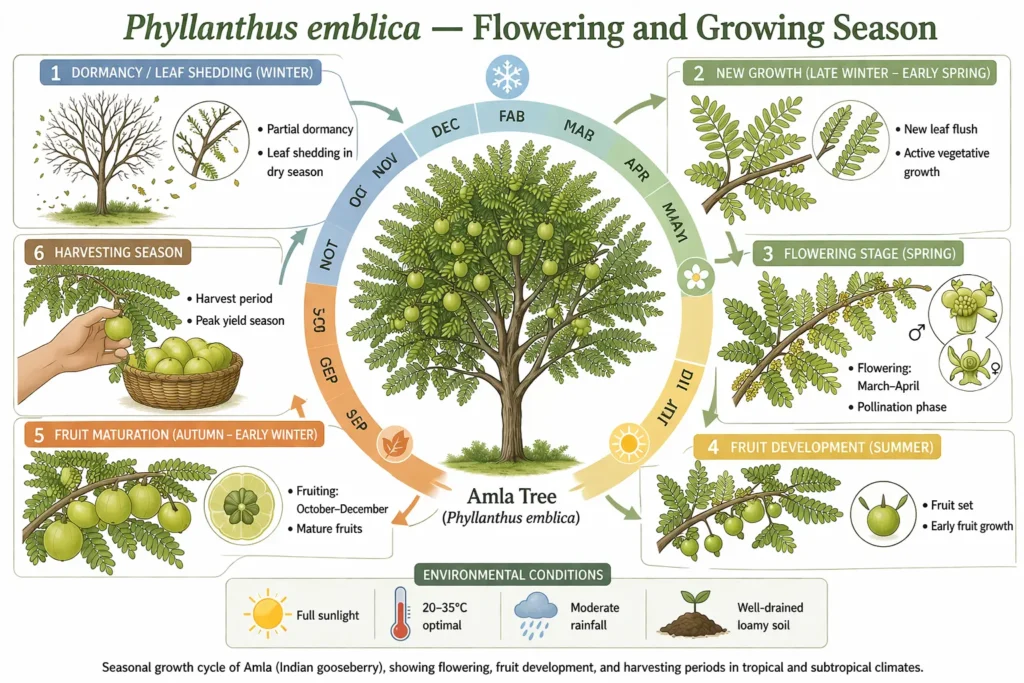
Amla fruits from November through February across most of India, with North Indian trees typically peaking in December–January. Don’t rely on colour alone — ripe amla ranges from pale green to yellow-green and doesn’t turn dramatically. The reliable cue is a slight give when pressed gently and a faint yellowing at the base.
Harvest by hand-picking or by spreading a cloth and gently shaking branches. Avoid pulling — it can tear the short fruiting spurs that carry next year’s crop.
Fresh amla keeps at room temperature for 5–7 days. Refrigerated, it holds for 2–3 weeks. For longer storage, sun-drying, pickling in brine, or making murabba (amla preserve) are all traditional and effective methods.
Key Takeaways
- A grafted sapling (NA-7, Chakaiya, or BSR-1) is the only practical choice for home gardeners — seed-grown trees take 7–10 years to fruit.
- Amla tolerates poor, slightly alkaline soil far better than most fruit trees, but it will not survive waterlogged roots.
- Plant in October–November for the best establishment before the first summer.
- Soft, darkening bark at the base is the early warning sign of overwatering — act on it immediately.
- Minimal pruning after fruiting (January–February) is all the tree needs once it matures.
When Will You See Results?
In year one, expect the tree to settle in quietly — some leaf drop is normal as it adjusts. You may see a flush of new growth within 6–8 weeks of planting.
Grafted trees typically flower for the first time in year 3 or 4. Don’t be surprised if the tree drops its first crop of flowers — this is common and not a sign of poor health. A meaningful fruit harvest usually arrives from year 4 or 5 onward, building each season.
Amla is a long-term investment. The trees that gardeners planted a decade ago and almost forgot about are the ones now producing 20–30 kg of fruit each winter. Patience is the only real requirement.
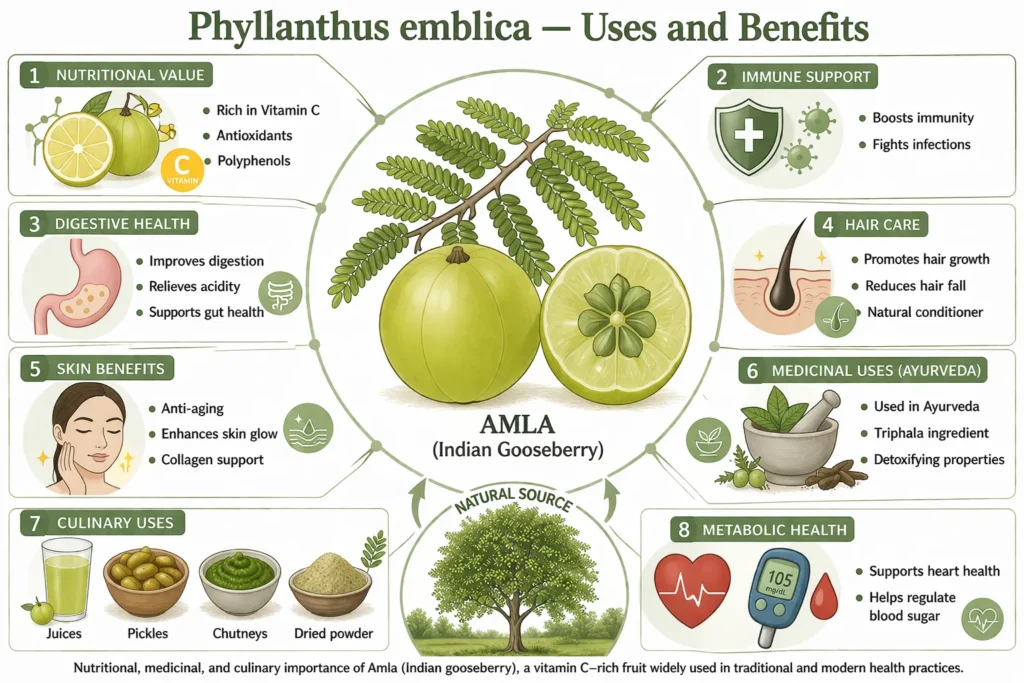
Amla rewards low intervention and a good planting spot. Get those two things right, and the tree largely takes care of itself — returning a harvest of some of the most nutritionally dense fruit you can grow at home.