Amla Varieties: Which One Should You Grow in India?
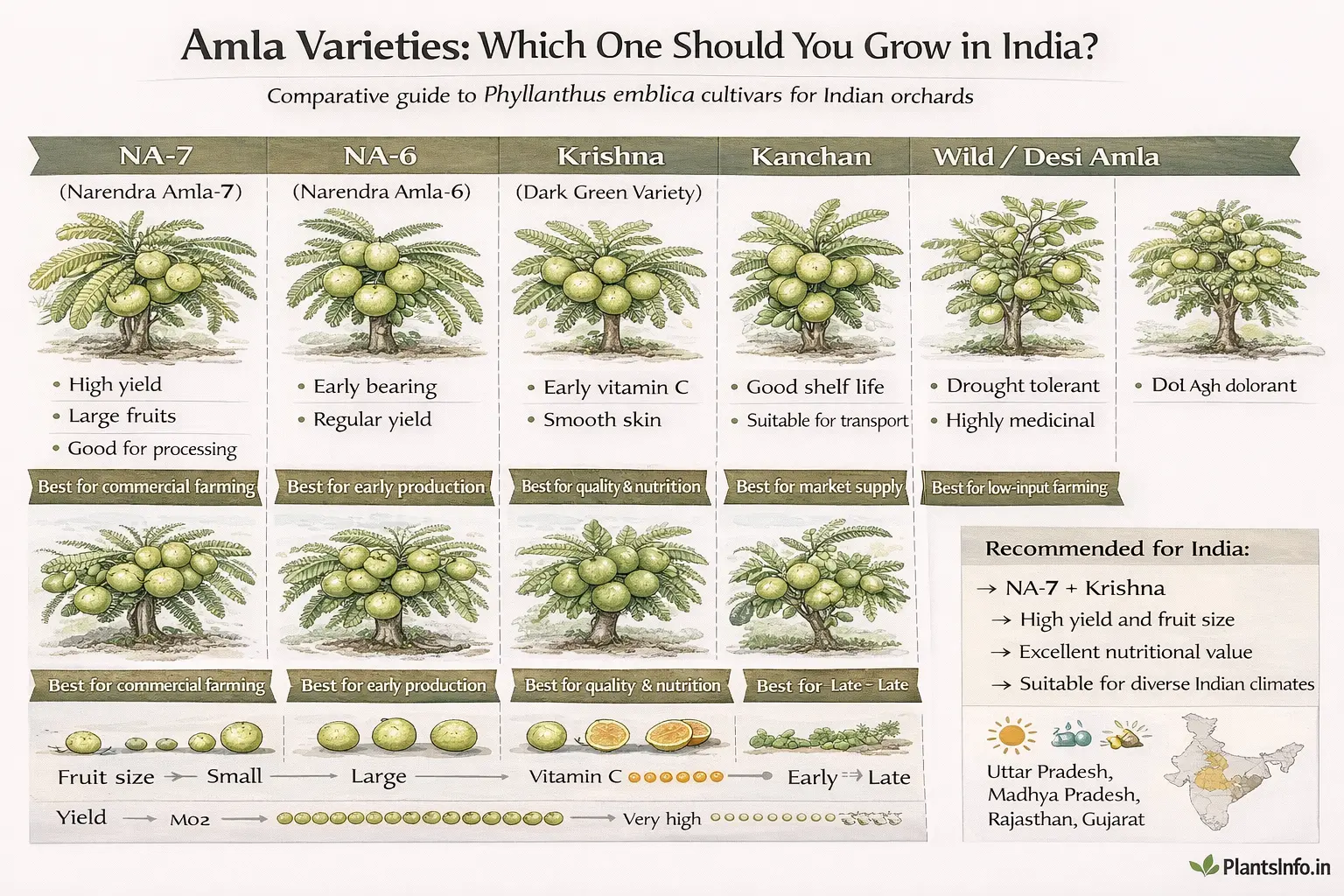
Quick Answer: India has dozens of named amla varieties, but a handful of improved selections — NA-7, Krishna, Chakaiya, and BSR-1 — account for most home garden and orchard planting. Choosing by fruit size, tree size, and regional climate suitability will serve you better than choosing by name recognition alone.
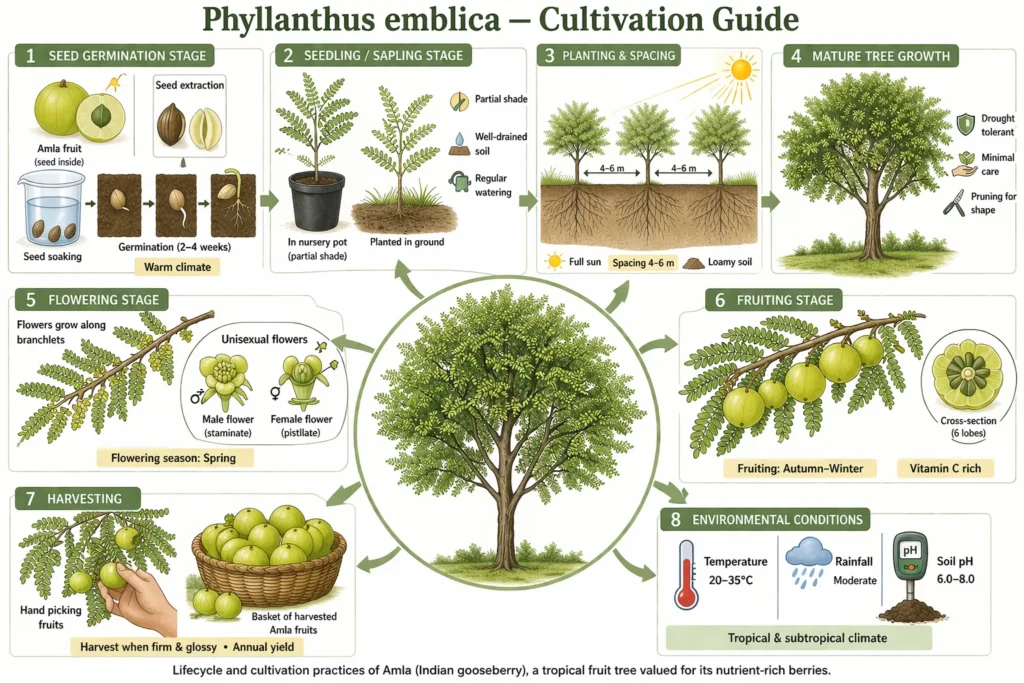
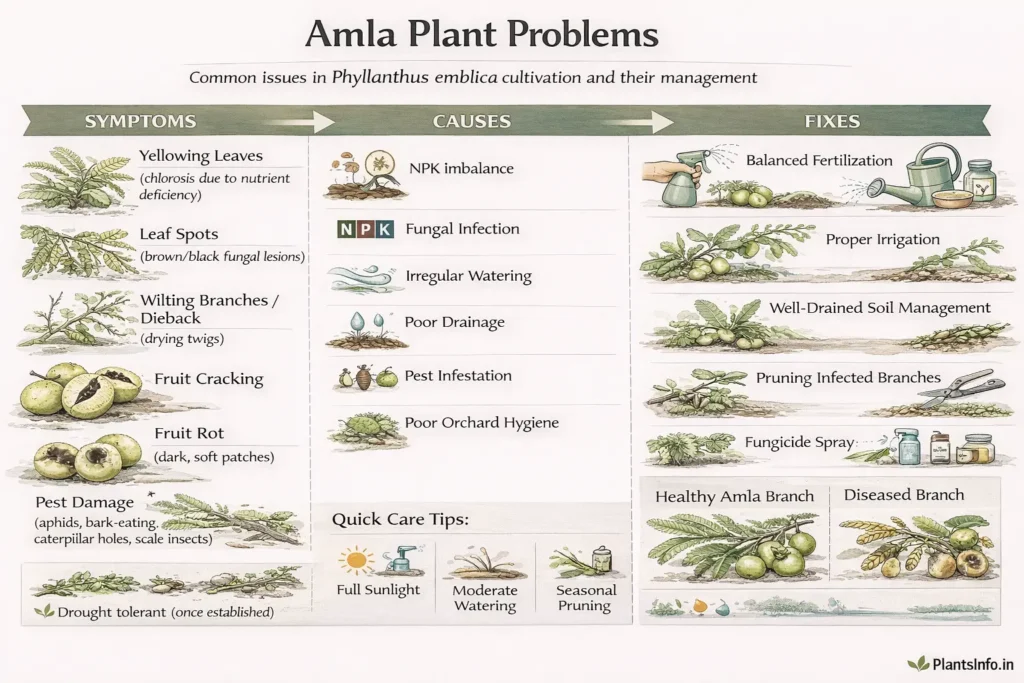
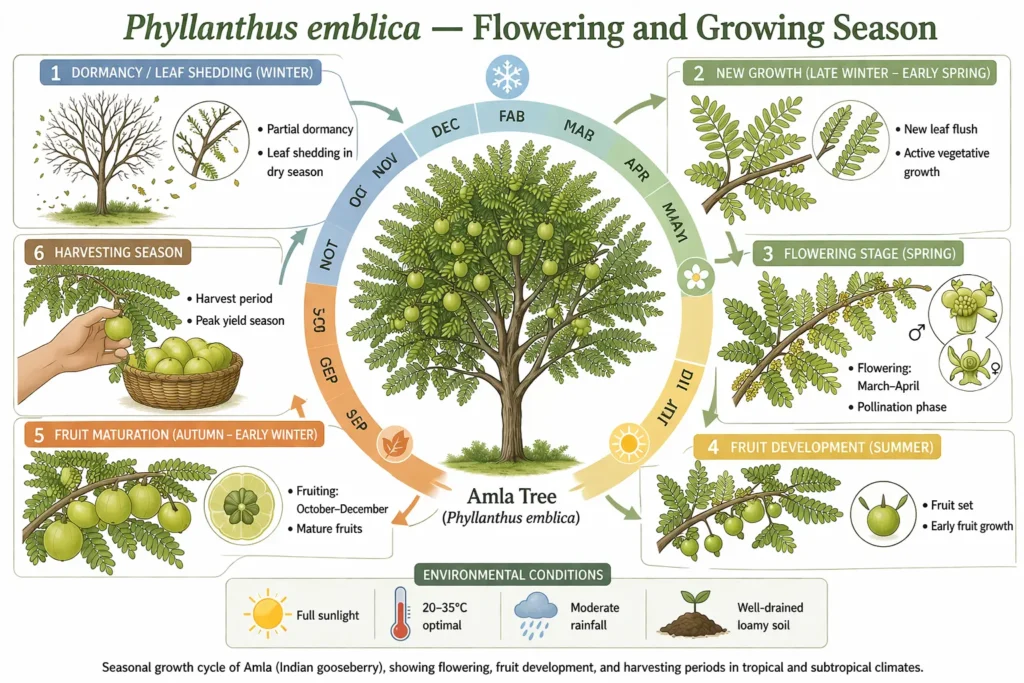
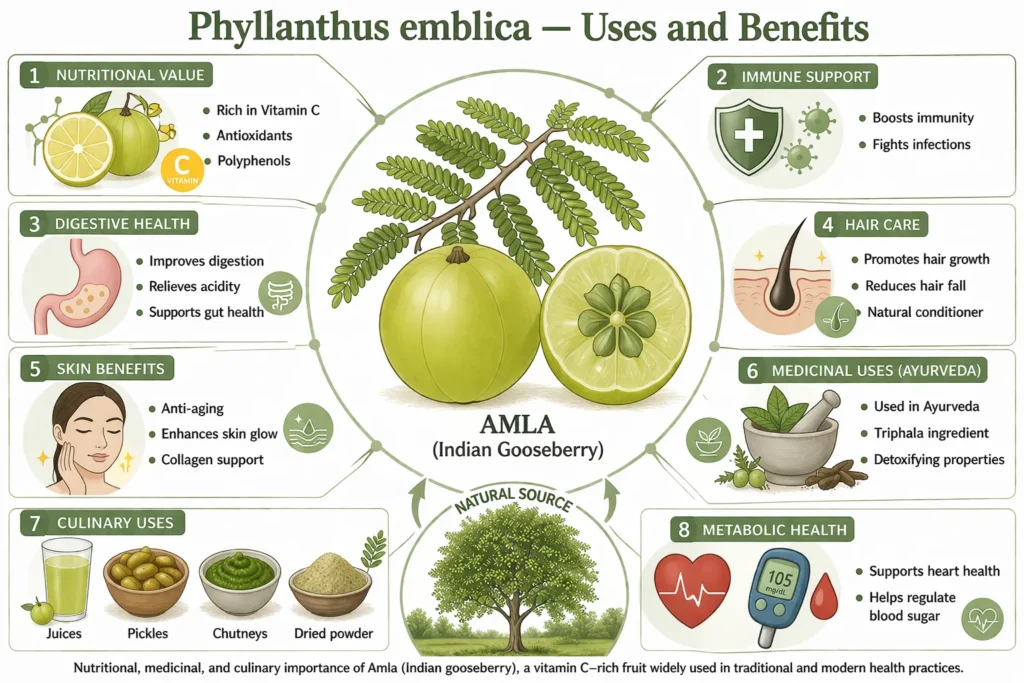
See also: Amla Plant plant profile, how to grow it, common problems, its flowering season, and its benefits.
Most gardeners buy an amla sapling because they want the fruit — and then discover there are meaningful differences in tree height, fruiting age, fruit size, and processing suitability that nobody at the nursery mentioned.
Recommended Products
Disclosure: As an Amazon Associate, PlantsInfo may earn from qualifying purchases.
🌱 Growing Essentials
The following products can help with container gardening, potting, root development, soil management, and healthy plant growth.
Organic Potting Soil Mix
Provides nutrients, structure, and healthy growing conditions for container plants.
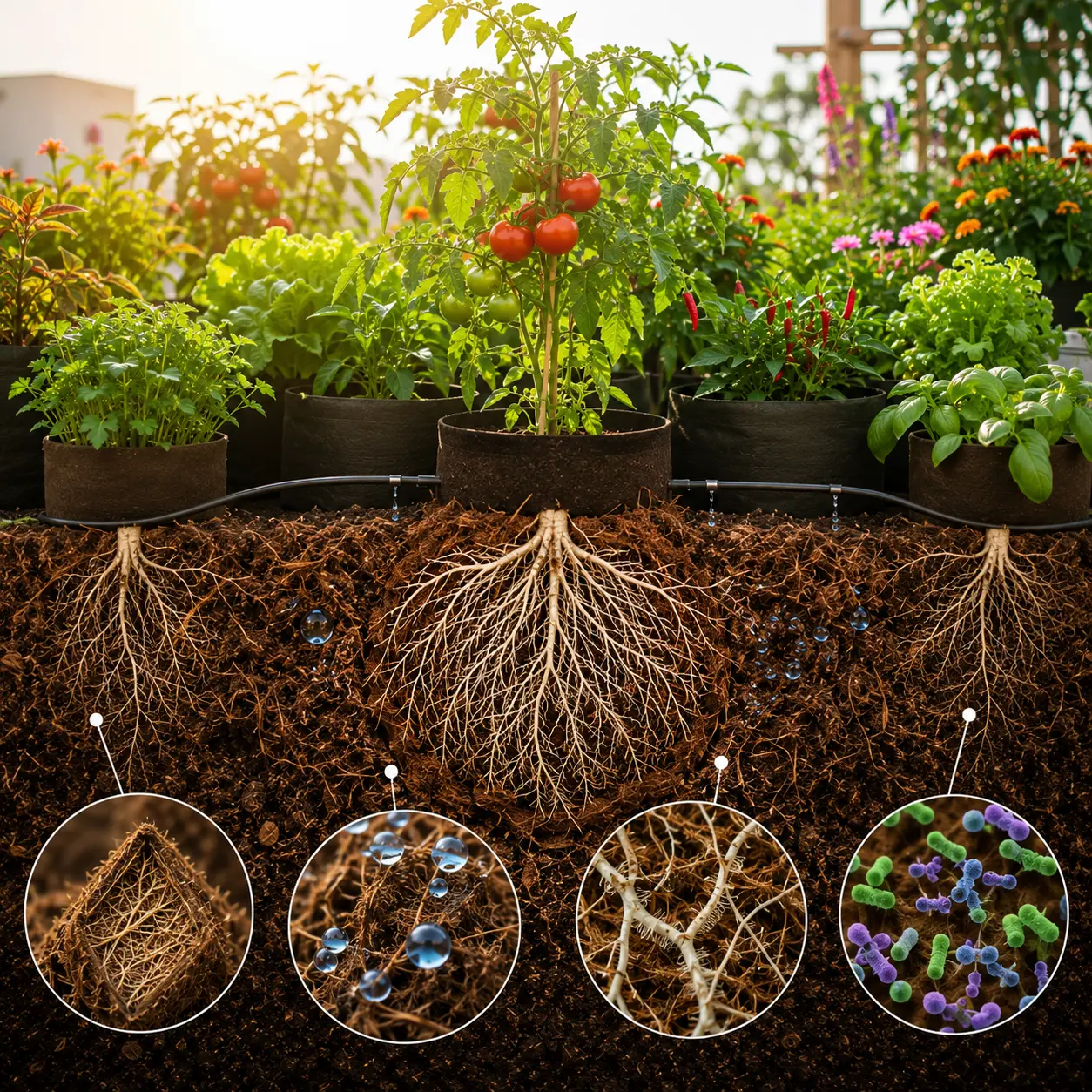
Coco Peat Growing Medium
Enhances moisture retention while maintaining excellent root-zone aeration.

Grow Bags for Plants
Improve drainage, root aeration, and vegetable production in limited spaces.

Plastic Pots for Plants
Ideal containers for seedlings, ornamentals, herbs, and balcony gardens.
The variety decision matters most for two reasons: grafted trees of named varieties fruit in 4–5 years versus 7–10 for seedlings, and variety largely determines whether your fruit is best eaten fresh, juiced, pickled, or dried.
Quick Variety Selector
| Variety | Type | Plant Size | Best For | Suited To |
|---|---|---|---|---|
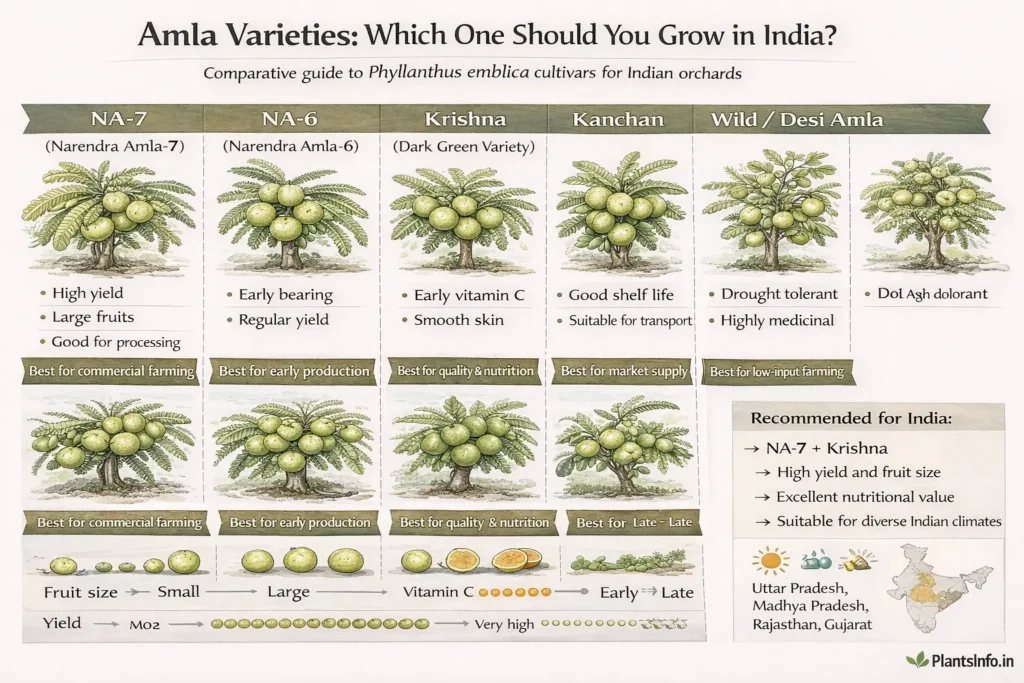
| NA-7 (Narendra Amalaki-7) | Improved grafted | Medium | High yield, fresh use, processing | North India, UP, MP, Rajasthan |
| Chakaiya | Improved grafted | Medium-compact | Early bearing, home gardens | North and Central India |
| Krishna (Banarasi) | Traditional improved | Medium-large | Fresh eating, pickling | UP, Bihar, MP |
| BSR-1 | Improved grafted | Medium | Heavy yield, processing | Tamil Nadu, Andhra Pradesh |
| Kanchan | Improved grafted | Medium | Moderate yield, fresh use | Central India, Maharashtra |
| NA-10 | Improved grafted | Medium | Large fruit, fresh eating | North India, UP |
| Francis | Traditional | Large | Home garden, traditional use | Maharashtra, South India |
| Desi / Wild seedling | Seedling | Large | Traditional use, wildlife value | Pan-India |
Varieties in Detail
NA-7 (Narendra Amalaki-7)
NA-7 was developed at Narendra Dev University of Agriculture and Technology in Uttar Pradesh and is the most widely planted improved amla variety in North India. It produces medium to large fruit with thin skin and high vitamin C content, and bears reliably from the 4th–5th year after grafting. Its key strength is consistent yield across a range of North Indian soil types, including the alluvial plains of UP and Bihar. Its weakness is moderate performance in humid southern conditions — it is not the first choice for Tamil Nadu or Kerala gardens.
Chakaiya
Chakaiya is valued primarily for early bearing — grafted trees can begin fruiting in the 3rd year under good conditions, making it the fastest-returning option for impatient home gardeners. The fruit is medium-sized, slightly ribbed, and has a good fresh flavour. Tree size is manageable relative to other Amla varieties, which makes it a reasonable choice for gardens where space is a consideration. It is widely available in North and Central Indian nurseries.
Krishna (Banarasi)
Krishna is one of the oldest named selections in Indian amla cultivation, associated with the Varanasi growing belt of Uttar Pradesh. The fruit is large, smooth-skinned, and considered among the best for fresh eating and traditional pickling (murabba).
The tree grows larger than NA-7 or Chakaiya and takes slightly longer to come into full bearing. For home gardeners who want a traditional variety with cultural significance and excellent fresh fruit quality, Krishna is the most rewarding choice in North India.
BSR-1
BSR-1 was developed for South Indian conditions and is the recommended improved variety for Tamil Nadu and Andhra Pradesh. It produces high yields of medium-large fruit with good processing characteristics — particularly for amla candy, juice concentrate, and Chyawanprash-grade raw material.
It performs well in the red laterite and sandy loam soils of peninsular India. For home gardeners in South India who want a high-yielding, regionally adapted grafted variety, BSR-1 is the most practical option currently available.
Kanchan
Kanchan is a mid-range variety suited to Central India and Maharashtra, producing moderate yields of medium fruit. It is less widely available than NA-7 or Chakaiya but performs reliably in the black cotton soil zones of Maharashtra when drainage is managed. For gardeners in the Vidarbha or Marathwada regions who struggle to source South Indian varieties, Kanchan is worth seeking out.
NA-10
NA-10 is a later Narendra Dev University selection bred for larger fruit size. Where NA-7 prioritises yield consistency, NA-10 prioritises individual fruit weight — the fruit is noticeably larger, which makes it attractive for fresh eating and gifting. Yield per tree is slightly lower than NA-7. It suits the same North Indian growing conditions and is increasingly available in UP and MP nurseries.
Francis
Francis is a traditional variety with a long history in Maharashtra and parts of South India. Trees grow large and are long-lived — specimens of 30–40 years are not uncommon in old home gardens. Fruit is medium-sized with a tart, astringent flavour profile suited to traditional processing.
Francis is no longer a first recommendation for new plantings due to its long juvenile period and large tree size, but for gardeners in Maharashtra who can source it and have the space, it carries cultural and culinary value that improved varieties do not fully replicate.
Head-to-Head Comparisons
NA-7 vs Chakaiya
NA-7 wins on total yield, fruit size, and long-term productivity once the tree matures. Chakaiya wins on time to first fruit — meaningfully so, by 1–2 years in many cases. For a home gardener who wants fruit quickly and is planting in a limited space, Chakaiya is the practical choice. For anyone planting with a 10-year horizon and prioritising maximum annual yield, NA-7 is the better investment.
Krishna vs NA-7
Krishna produces superior fruit for fresh eating and traditional preparations — larger, smoother, and with a more pronounced flavour. NA-7 produces more reliably and is better adapted to a wider range of North Indian soils. If fresh eating quality and traditional use are your priority, Krishna wins. If you want consistent volume for juicing, drying, or processing, NA-7 is more reliable.
How to Choose for Your Space
Container or terrace garden: Amla is not well-suited to containers as a long-term tree. In large containers (100 litres minimum), Chakaiya or NA-7 grafted onto dwarfing rootstock can be maintained with aggressive pruning, but expect reduced yields and higher maintenance. Most terrace gardeners are better served by a large ground-level planting near a boundary wall.
Small ground plot (under 100 sq ft): Chakaiya is the most manageable choice — earlier bearing and slightly smaller canopy than other named varieties. Plant at least 5–6 metres from structures to allow for mature spread.
Larger garden or backyard: Full flexibility. In North and Central India, Krishna or NA-7 in a prominent garden position rewards the gardener with a beautiful tree and a consistent harvest from year 5 onward. In South India, BSR-1 is the clear choice for yield; Francis suits gardeners who want a traditional, long-lived specimen tree.
Processing vs fresh eating: NA-7, BSR-1, and Chakaiya are the better processing varieties — high acid content, thin skin, and high vitamin C. Krishna and NA-10 are the better fresh-eating choices — larger fruit, better fresh flavour balance.
Regional Suitability
North India (UP, MP, Rajasthan, Bihar): NA-7, Chakaiya, Krishna, and NA-10 are all well-adapted. This is India’s primary amla-growing belt — Pratapgarh district in UP is the largest single amla-producing zone in the country.
Central India and Maharashtra: Kanchan and Chakaiya perform best. Francis suits gardeners in the Konkan and Western Maharashtra who can source it locally.
South India (Tamil Nadu, Andhra Pradesh, Karnataka): BSR-1 is the recommended choice. NA-7 can be grown, but underperforms relative to its North Indian results in high-humidity coastal conditions.
Kerala and humid coastal zones: Amla is not a primary fruit tree in Kerala’s traditional horticulture and performs moderately at best in the high-rainfall coastal strip. Gardeners in Kerala who want amla should prioritise drainage above all else and consider BSR-1 or local seedling selections.
Desi vs Hybrid — What Nobody Tells You
Improved grafted varieties of amla are not hybrids in the same sense as banana TC plants — they are clonal selections propagated by grafting, and most can be propagated from cuttings or air layers by experienced gardeners. The main trade-off with seedling-grown desi amla is time: seedlings take 7–10 years to first fruit versus 4–5 years for grafted named varieties.
Seedling trees are larger, often longer-lived, and more genetically variable — meaning fruit quality is unpredictable until the tree bears. For a home gardener with patience and space, a seedling from a known productive mother tree has real value. For anyone who wants reliable fruit within a reasonable timeframe, grafted named varieties are the only practical recommendation.
Watch Out for Mislabelling
Amla mislabelling in Indian nurseries is most common with Krishna and NA-7 — both are high-demand varieties frequently substituted with ungrafted seedlings or mixed-variety grafts. The most reliable verification method is to check the graft union on the lower stem — a genuine grafted plant will show a clear union scar 10–30 cm above the soil line. Seedlings have no such scar and a taproot-dominant root system when removed from the pot.
For verified material, state horticulture department nurseries, KVK outlets, and university-linked nurseries (particularly NDUAT in UP for North Indian varieties and TNAU-linked nurseries for BSR-1) are the most trustworthy sources.
Where to Source These Varieties in India
Narendra Dev University of Agriculture and Technology (NDUAT) in Faizabad, UP, is the originating institution for NA-7, NA-10, and related selections — state horticulture department nurseries in UP stock these varieties most reliably.
For BSR-1 and South Indian varieties, Tamil Nadu Agricultural University (TNAU)-affiliated nurseries and state horticulture department outlets in Tamil Nadu and Andhra Pradesh are the best sources.
KVK outlets in major amla-growing districts — Pratapgarh (UP), Chittoor (AP), Anantapur (AP) — carry regionally appropriate planting material. When buying, always verify the graft union, ask for the variety name in writing, and avoid nurseries that cannot confirm the source of their grafting material.
For most Indian home gardeners, the decision comes down to one question: Are you in North India or South India? North — choose NA-7 or Chakaiya. South — choose BSR-1. Everything else is refinement from there.