Amla Flowering Season: When and What to Expect in India
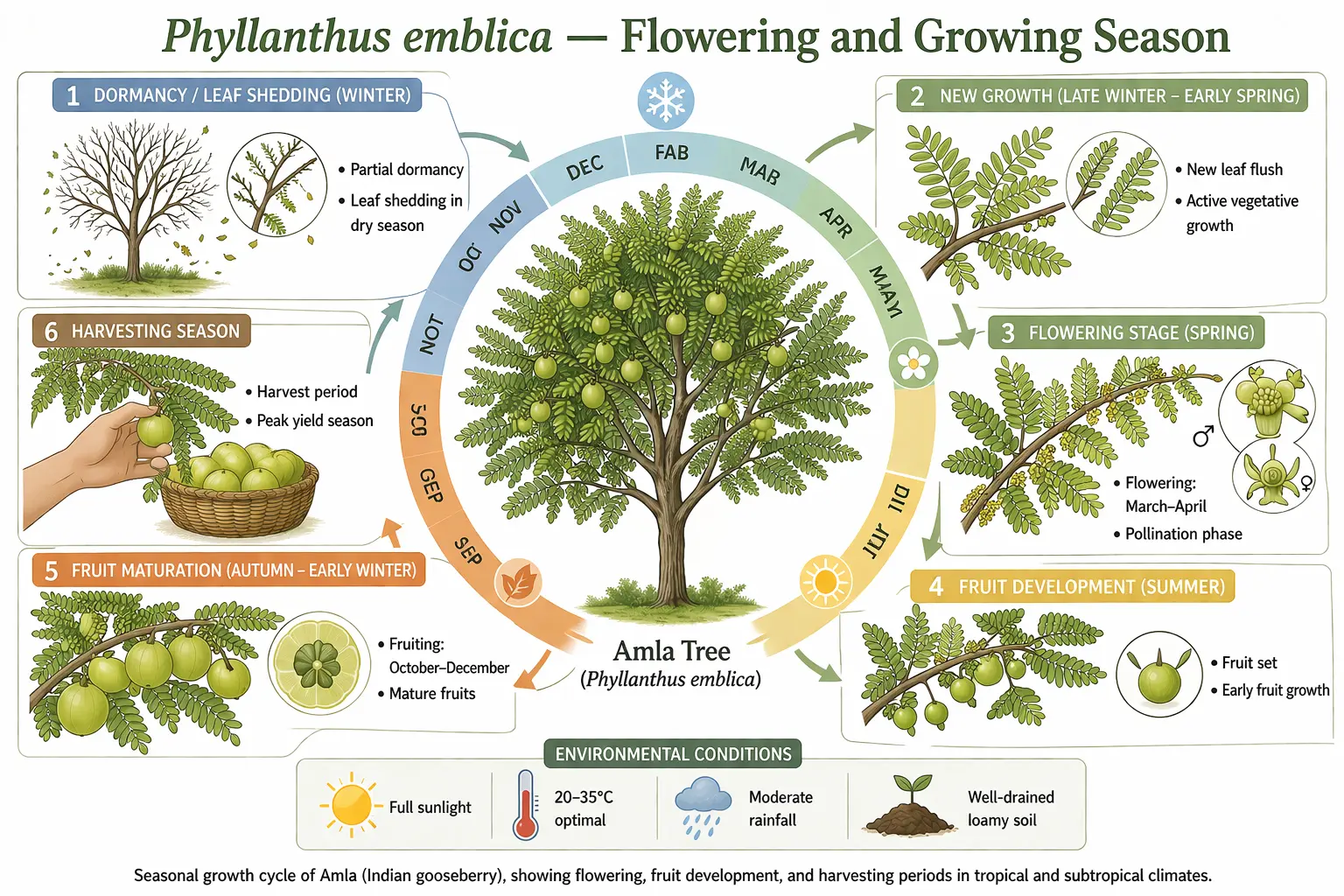
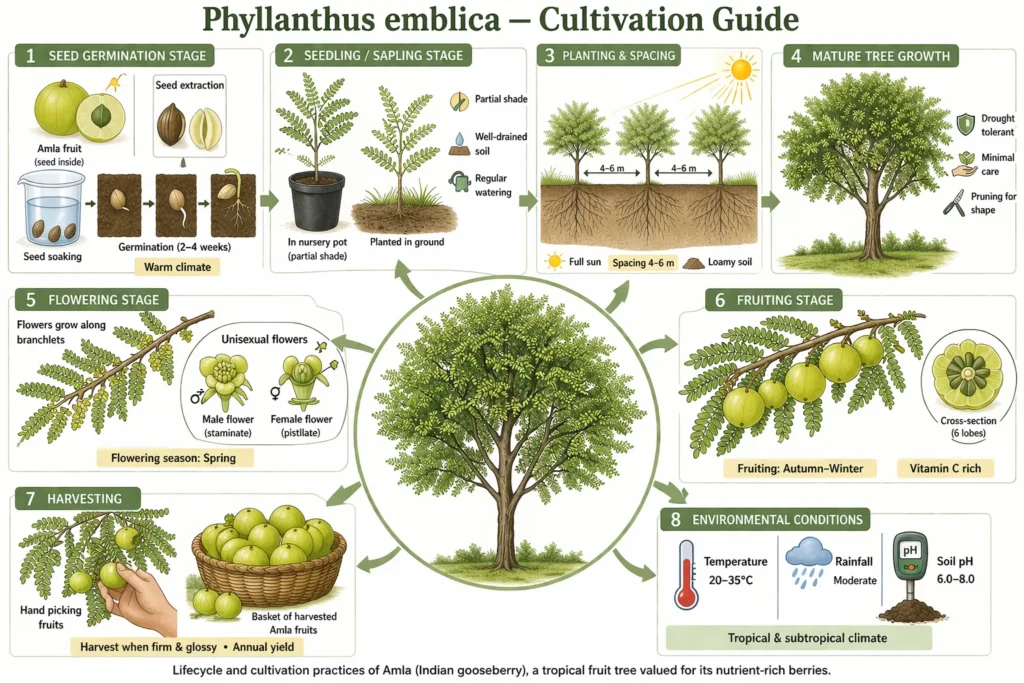
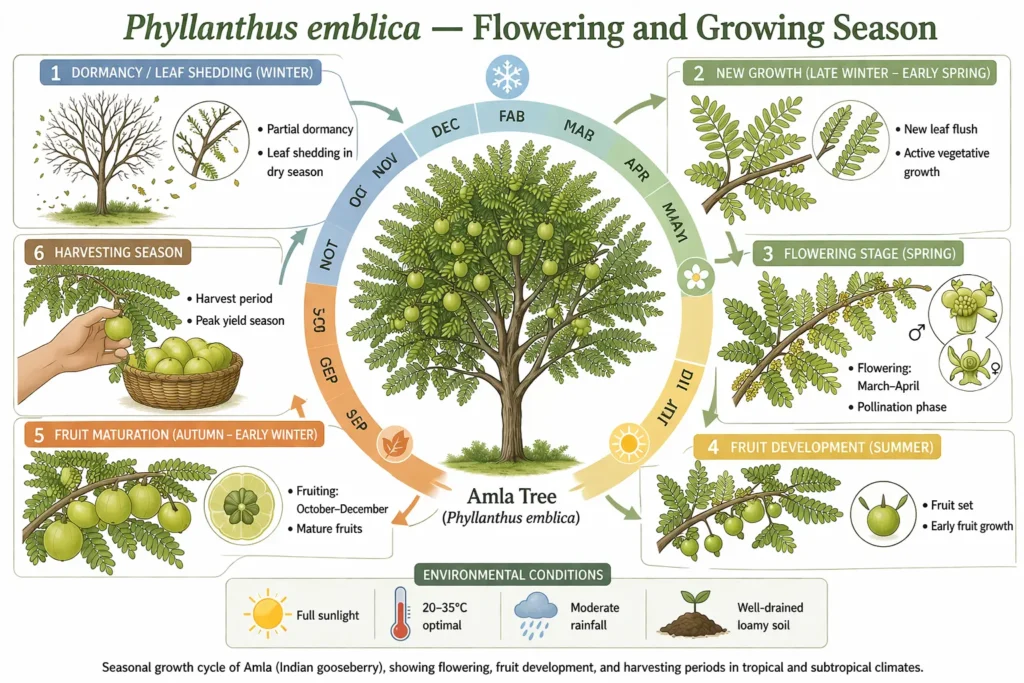
Amla flowers between February and April across most of India, with fruiting completing from October through February the following season. North Indian trees — particularly in Uttar Pradesh — fruit heaviest in December and January. Timing shifts by 4–6 weeks in South India, where the season begins and ends earlier.
See also: Amla Plant plant profile, how to grow it, common problems, its benefits, and its varieties.
The amla calendar is back to front compared to most fruit trees. Flowers appear when winter is just releasing its grip; the fruit ripens and falls in the cold months that follow. By the time you’re harvesting, the tree has already dropped most of its leaves — a counterintuitive sequence that catches first-time growers off guard every year.
Recommended Products
Disclosure: As an Amazon Associate, PlantsInfo may earn from qualifying purchases.
🌱 Growing Essentials
The following products can help with container gardening, potting, root development, soil management, and healthy plant growth.
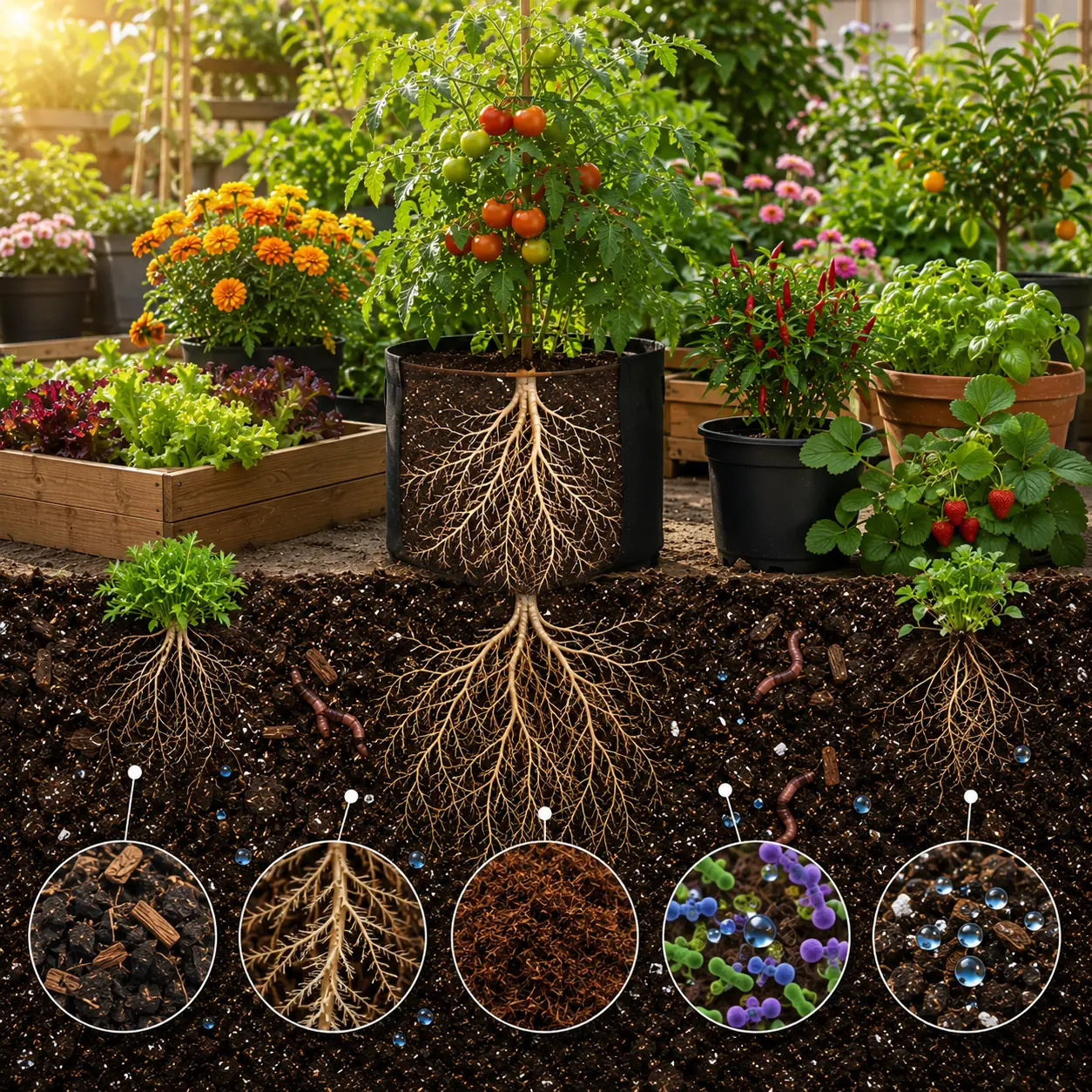
Organic Potting Soil Mix
Provides nutrients, structure, and healthy growing conditions for container plants.
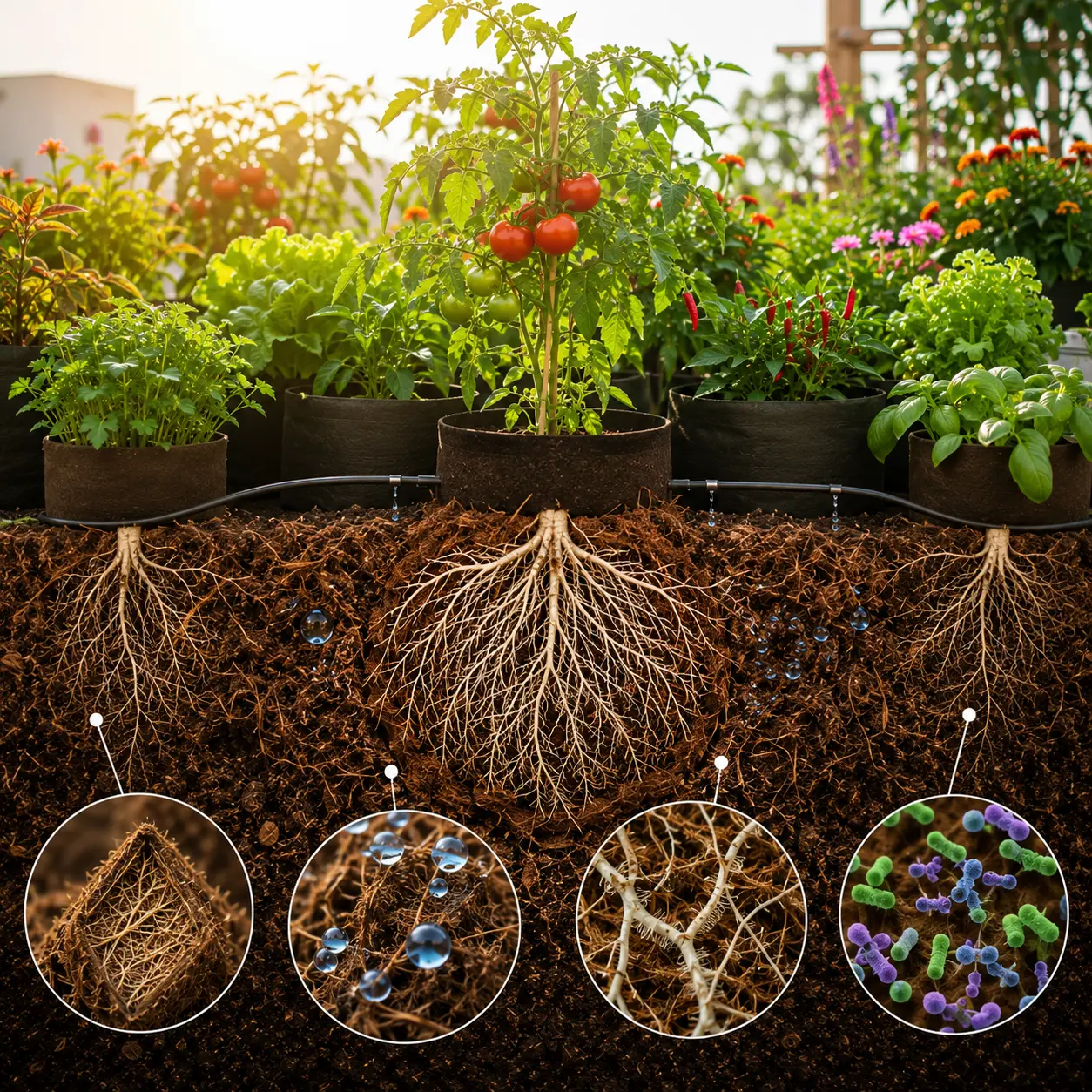
Coco Peat Growing Medium
Enhances moisture retention while maintaining excellent root-zone aeration.

Grow Bags for Plants
Improve drainage, root aeration, and vegetable production in limited spaces.

Plastic Pots for Plants
Ideal containers for seedlings, ornamentals, herbs, and balcony gardens.
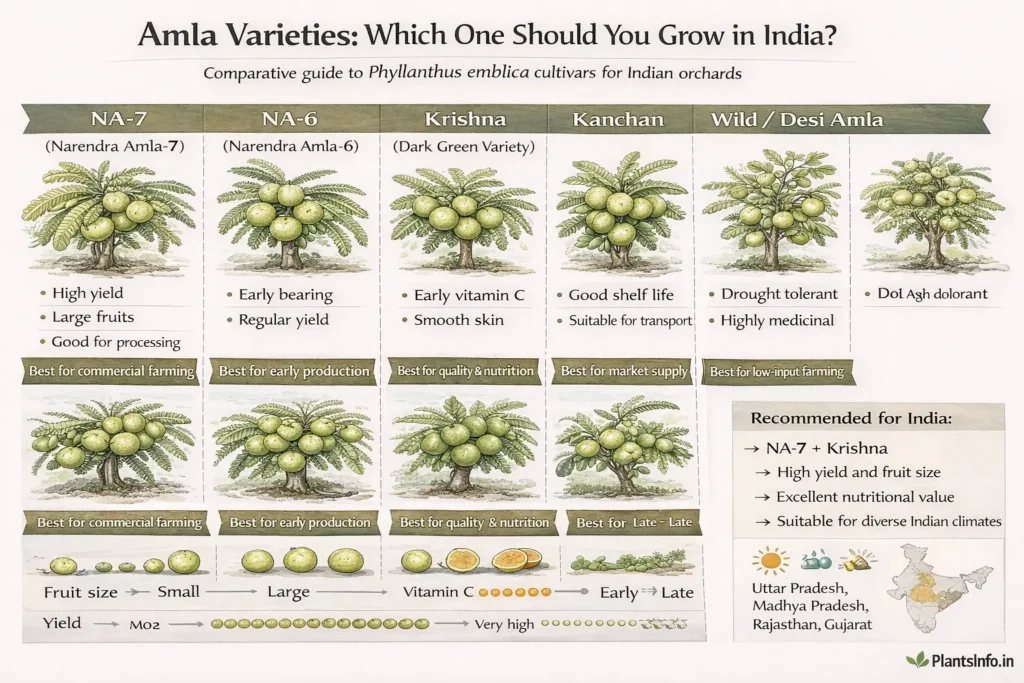
India’s Seasons and This Plant
| Season (months) | What the plant is doing |
|---|---|
| Pre-monsoon (Mar–May) | Flowering peaks in March–April; new leaf flush begins; fruit setting starts by May |
| Monsoon (Jun–Sep) | Active vegetative growth; young fruits developing and sizing up; leaves fully out |
| Post-monsoon (Oct–Nov) | Fruit maturing; colour changing from deep green to pale yellowish-green; leaves beginning to drop |
| Winter (Dec–Feb) | Peak harvest; the tree becomes progressively leafless; the fruits ripen and drop naturally |
Flowering Season in Detail
Flower buds appear in February in North and Central India — often while some winter chill still lingers in the air. In South India, buds can emerge as early as late January.
Peak bloom is March through April across most of the country. The flowers are small, pale greenish-yellow, and clustered along the branchlets in dense axillary bunches. They are not showy — a flowering amla tree from a distance looks simply leafy — but up close the clusters are dense and carry a faint, slightly sharp fragrance.
Individual flowers are short-lived, lasting only a few days, but successive flushes mean the flowering period extends across 6–8 weeks for the whole tree. In humid coastal climates (Kerala, coastal Andhra), flowering may be slightly compressed and more synchronised.
Temperature drop is the primary flowering trigger. Extended warm winters can delay flower initiation by 2–4 weeks — something North Indian growers noticed increasingly in recent seasons.
Fruiting Season
Fruit sets from April through May as temperatures rise after flowering. The young fruits are tiny, hard, and bright green — easy to miss against the new leaf flush. Through the monsoon months (June–September), they size up steadily; the tree is in full leaf, and the fruits are largely hidden within the canopy.
From October onward, the shift becomes visible. Leaves begin dropping, and the pale, ribbed fruits become more apparent on the branches. Colour change from dark green to pale yellowish-green with a translucent quality is the primary ripening indicator. A ripe amla also yields very slightly to gentle thumb pressure without being soft.
In North India, peak ripeness and the main harvest window run from late November through January. Trees in Uttar Pradesh’s Pratapgarh belt are typically at peak harvest in December. In South India — Tamil Nadu and Andhra Pradesh — fruit ripens and is harvested somewhat earlier, from October through December.
Missing the harvest window matters: overripe amla drops from the tree, and the fruit deteriorates quickly on the ground. Check trees every few days once October arrives.
Best Time to Plant
Post-monsoon planting — October through November — is the ideal window. The soil is moist from recent rain, air temperatures are falling, and the tree has 4–5 cool months to establish a root system before it must cope with its first summer.
This timing works because the worst stress a young amla sapling faces is its first April–June in the ground. A tree planted in October arrives at that summer with a 6-month-old root system; one planted in spring faces heat stress with roots only weeks old.
The second-best option is late winter planting — February through early March — just before flowering season on established trees. The sapling itself won’t flower, but warm days returning after winter cold help root growth resume quickly.
Avoid planting during the monsoon. Waterlogged soil is the leading cause of death in young amla trees, and the monsoon planting window that works well for many other fruit trees does not suit amla’s drainage needs.
Container planting follows the same logic — October–November for best results, with slightly more flexibility since drainage is controllable.
Month-by-Month Calendar
| Month | Season | What to Do |
|---|---|---|
| January | Winter | Flower buds are emerging in North India; observe, no intervention needed |
| February | Late winter | Young fruits are sizing up; canopy filling with new leaves; watch for heat stress on newly planted saplings |
| March | Pre-monsoon onset | Peak flowering; observe pollinator activity; South Indian trees may already be in fruit set |
| April | Pre-monsoon | Flowering ends; fruit setting visible; new leaf flush expanding |
| May | Pre-monsoon / early summer | Flower buds are emerging in North India; observe; no intervention needed |
| June | Monsoon onset | South Indian harvest begins; North Indian trees losing leaves; colour change starting. |
| July | Monsoon | Steady fruit development; tree in full leaf; no action needed for established trees |
| August | Monsoon | Continue monitoring; fruits reaching mid-size; strong growth period |
| September | Late monsoon | Monsoon tapering; fruit continues to develop; pre-harvest period begins in South India |
| October | Post-monsoon | Peak harvest in UP and Central India; fruit at its highest Vitamin C content; collect promptly |
| November | Post-monsoon | Harvest window opens in North India; check for ripeness every few days |
| December | Early winter | Peak harvest in UP and Central India; fruit at highest Vitamin C content; collect promptly |
What Can Go Wrong Seasonally?
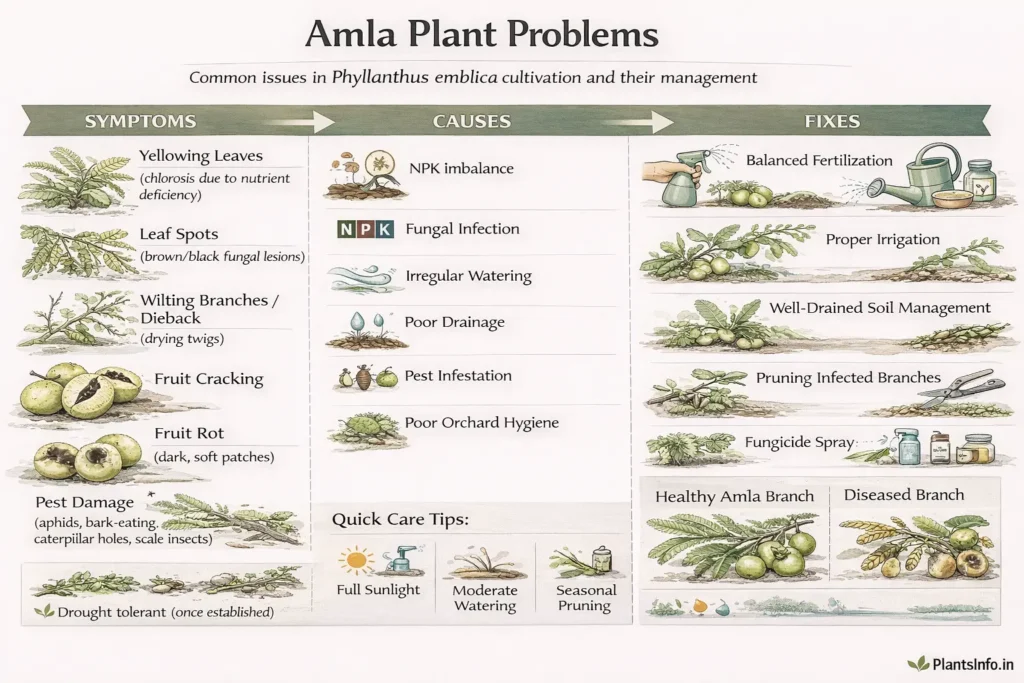
Flower drop in March without fruit set: A warm, dry February often causes this — insufficient chilling hours reduce viable pollen and flower retention. There is no remedy mid-season; the following year, mulching heavily in January can moderate soil temperature and slightly extend the effective chilling period.
Fruit crack in October–November: Erratic rainfall after a dry September causes rapid water uptake into nearly-ripe fruit, splitting the skin. This is frequently misidentified as a fungal problem because cracked fruit quickly shows mould — but the cracking comes first. Consistent deep watering in September (one or two long sessions) reduces the severity.
Post-monsoon fruit drop before ripening (August–September): Often caused by fruit fly (Bactrocera spp.) infestation rather than premature natural drop. Check fallen fruit for puncture marks and larvae. Fruit fly is the seasonal pest to watch for — set pheromone traps from August onward.
Post-Harvest Care
Once the main harvest is complete — typically by February in North India — the tree benefits from a light pruning of dead and crossing wood before new growth resumes. This is the natural pruning window; the tree will be largely bare, and the structure is easy to read.
A top-dressing of compost and neem cake applied in February or early March gives the tree nutritional support heading into the flowering and fruit-set season. Timing the feeding to coincide with the pre-monsoon growth flush is more effective than feeding during dormancy.
The amla season is brief, and the harvest window on any individual tree is shorter than most gardeners expect. Mark October on your calendar as the month to start paying attention — the fruit does not wait long once it decides it is ready.