Complete Shatavari (Asparagus racemosus Willd.) Guides
Problems & Diseases
Flowering Season
Introduction
Asparagus racemosus Willd., commonly known as shatavari, belongs to the family Asparagaceae and is native to the Indian subcontinent and parts of Sri Lanka, the Himalayas, and tropical Africa. The species is most remarkable for its extensive tuberous root cluster — a single plant may produce over 100 fleshy roots — which constitutes the primary source of its globally traded medicinal material.
Classification
- Plant Type
- Herb
- Lifecycle
- Perennial
- Leaf Habit
- Evergreen
- Native Region
- South Asia, Southeast Asia
- Plant Family
- Asparagaceae
Within its native ecosystems, shatavari occupies a distinctive niche as a climbing or scrambling perennial of tropical and subtropical dry deciduous forests, rocky slopes, and forest margins. It contributes to canopy structure through its tendril-assisted climbing habit and supports local pollinator communities through abundant small white floral displays.
Shatavari holds an unbroken position in Ayurvedic medicine spanning more than two millennia, where it is classified as a rasayana (rejuvenating tonic) and the foremost female reproductive tonic in the materia medica. Commercial cultivation has expanded substantially across India, Nepal, and Australia in response to global demand for standardised root extract. This profile covers the species’ taxonomy, morphology, phytochemistry, cultivation, conservation status, and current research landscape.
Classification and Taxonomy
Accepted Name and Synonymy
| Field | Value | Notes |
|---|---|---|
| Accepted Scientific Name | Asparagus racemosus Willd. | Accepted per POWO |
| Known Synonyms | Asparagus fasciculatus R.Br.; Asparagus acerosus Roxb.; Asparagus dubius Decne.; Asparagus zeylanicus Baker | Several synonyms reflect historical regional descriptions |
| Taxonomic Authority Source | Plants of the World Online (POWO) | kew.org/ipni-authors/WILLD |
| Assessment Date | 2026-04-15 | — |
Classification Hierarchy
| Rank | Name |
|---|---|
| Kingdom | Plantae |
| Division | Tracheophyta |
| Class | Liliopsida |
| Order | Asparagales |
| Family | Asparagaceae |
| Subfamily | Asparagoideae |
| Genus | Asparagus |
| Species | Asparagus racemosus Willd. |
Quick Reference
| Field | Value | Notes |
|---|---|---|
| Common Name(s) | Shatavari; Wild Asparagus; Satavar; Shatmuli | Shatavari most widely used in trade and literature |
| Plant Type | Perennial climbing or scrambling herb | Woody at base; herbaceous stems |
| Lifecycle | Perennial | Root system persists 5–10+ years under cultivation |
| Native Range | Indian subcontinent, Sri Lanka, the Himalayas, tropical and southern Africa | Broad native distribution across tropical and subtropical zones |
| USDA Hardiness Zones | 9b–11 | Not cold-hardy below approximately −3.9 °C (25 °F) |
| Toxicity Summary | Low toxicity to humans at culinary and standard medicinal doses; some reported sensitivity in individuals with Asparagus allergy | See T16 for full toxicity data |
| IUCN Status | Least Concern (LC) — 2011 assessment | Population trend noted as decreasing due to wild harvesting pressure |
| Research Coverage Level | HIGH | Extensive phytochemical, pharmacological, and agronomic literature |
Cytogenetics
| Field | Value | Notes |
|---|---|---|
| Chromosome Number (2n) | 20 | Consistent across multiple cytological studies |
| Ploidy Level | Diploid | Base chromosome number x = 10 |
| Genome Size | Not documented at species level | C-value not confirmed in available literature |
| Karyotype Description | Metacentric and submetacentric chromosomes | Karyotype analysis reported in Indian cytological surveys |
| Cytogenetic Stability | Stable | No documented polyploid series within species |
Scientific Stability and Nomenclature
| Field | Value | Notes |
|---|---|---|
| Nomenclatural Stability | Stable | Current binomial accepted consistently since Willdenow 1799 |
| Current Accepted Authority | Asparagus racemosus Willd. | Willd., Sp. Pl. 2: 152 (1799) |
| Major Reclassification Events | Transfer of genus Asparagus from Liliaceae to Asparagaceae following APG III (2009) family-level realignment | Family-level change only; species binomial unaffected |
Growth Habit and Architecture
| Field | Value | Notes |
|---|---|---|
| Growth Form | Perennial climbing or scrambling herb with woody base | Climbs via modified stem thorns and recurved spines |
| Maximum Height | 1–2 m (3.3–6.6 ft) unsupported; up to 4 m (13.1 ft) with support | Height varies with support structure and soil fertility |
| Stem Type | Terete, smooth, highly branched; green; woody at base | Young stems herbaceous, older stems semi-woody |
| Stem Diameter | 0.5–1.2 cm (0.2–0.5 in) at base | — |
| Branching Pattern | Extensively branched; primary and secondary branches bearing cladodes | Gives feathery appearance |
| Root System | Fasciculate tuberous roots; 30–100+ fleshy roots per plant, each 15–30 cm (5.9–11.8 in) long | Primary medicinal organ |
| Spines | Recurved, hardened stipular spines present at nodes | Assist climbing; can cause physical injury during harvest |
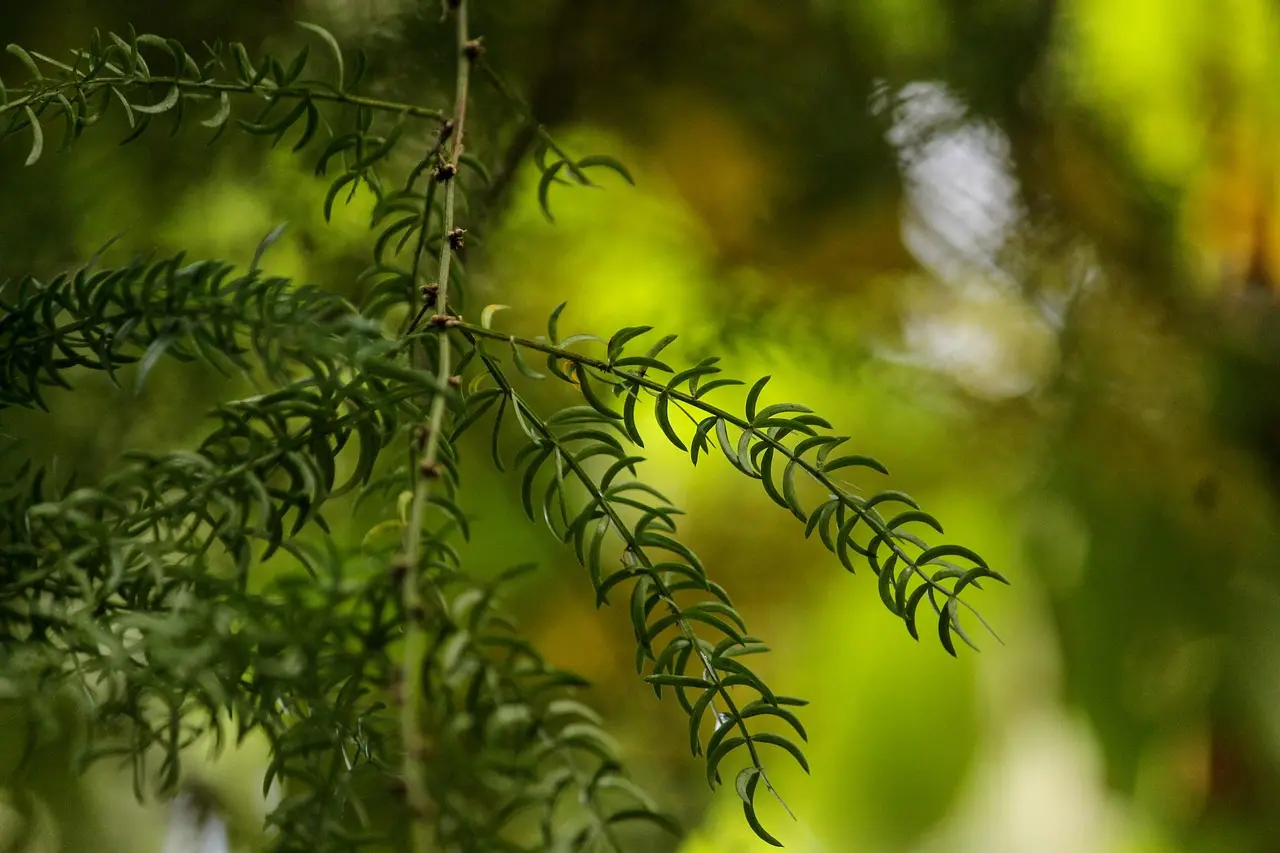
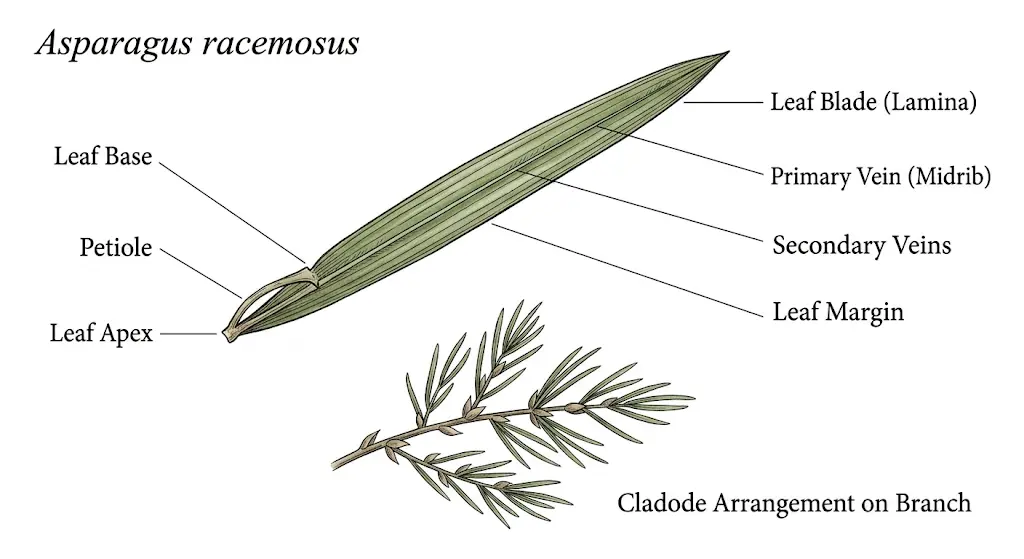
| Cladodes | Needle-like, 1–3 cm (0.4–1.2 in) long; in clusters of 3–6; function as photosynthetic organs | True leaves reduced to scales |
| Overall Architecture | Climbing scrambler forming dense interlocking thickets in wild populations | Requires staking or trellis under cultivation |
| Longevity | 5–10+ years under cultivation; wild plants may persist longer | Root biomass increases with plant age |
Leaves
| Field | Value | Notes |
|---|---|---|
| Presence | Modified to scale-like structures; photosynthetic function assumed by cladodes | True leaves vestigial |
| Leaf Type | Scale leaves at nodes; cladodes (phylloclades) perform photosynthesis | Cladodes are modified stems, not true leaves |
| Size (length × width) | Scale leaves: 1–2 mm × <1 mm; cladodes: 10–30 mm × 1–1.5 mm | — |
| Colour | Scale leaves: papery white to brown; cladodes: bright green | — |
| Arrangement | Scale leaves alternate; cladodes in fascicles of 3–6 at nodes | — |
| Special Features | Cladodes photosynthetically active; scale leaves bear recurved spines at base | Spine morphology assists taxonomic identification |
Flowers
| Field | Value | Notes |
|---|---|---|
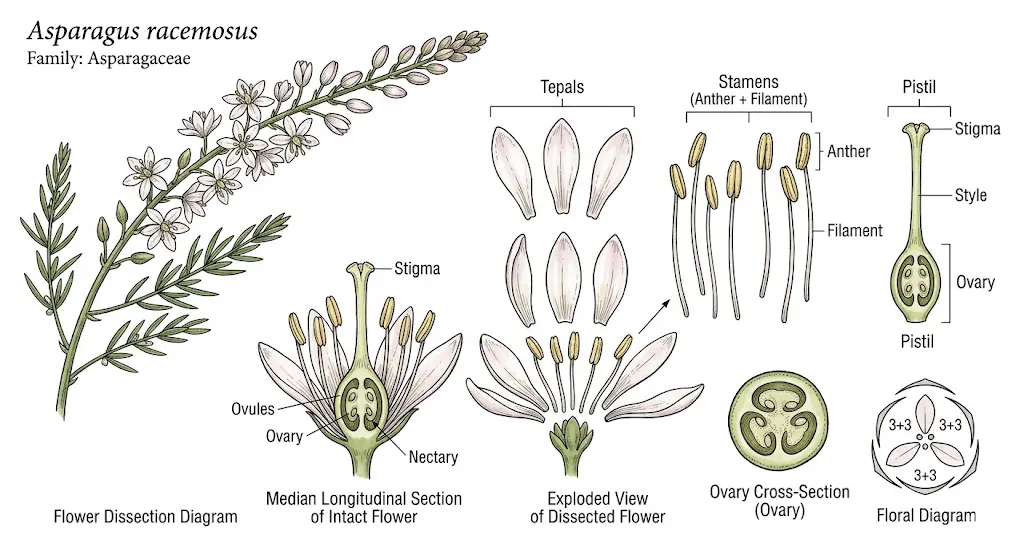
| Inflorescence Type | Raceme; 2–5 cm (0.8–2.0 in) long; axillary | Species epithet racemosus reflects this character |
| Flowers per Raceme | 6–20 | Variable with growing conditions |
| Flower Form | Actinomorphic; bisexual or functionally unisexual | Functionally dioecious tendency noted in some populations |
| Perianth | Tepals 6; free; spreading; 3–4 mm (0.12–0.16 in) long | White to pale pink |
| Colour | White; occasionally tinged pink | Highly fragrant |
| Stamen Number | 6 | Inserted at tepal bases |
| Ovary | Superior; 3-locular | 1–2 ovules per locule |
| Fragrance | Strongly sweet; noted in literature as attractant for bees and butterflies | Nocturnal fragrance intensification reported |
| Flowering Period | Primarily July–August in native range; varies with latitude and altitude | Can flower twice annually under irrigated cultivation |
| Pollination | Entomophilous; primarily bee and butterfly pollinated | See T27 for full pollination ecology |
Fruit
| Field | Value | Notes |
|---|---|---|
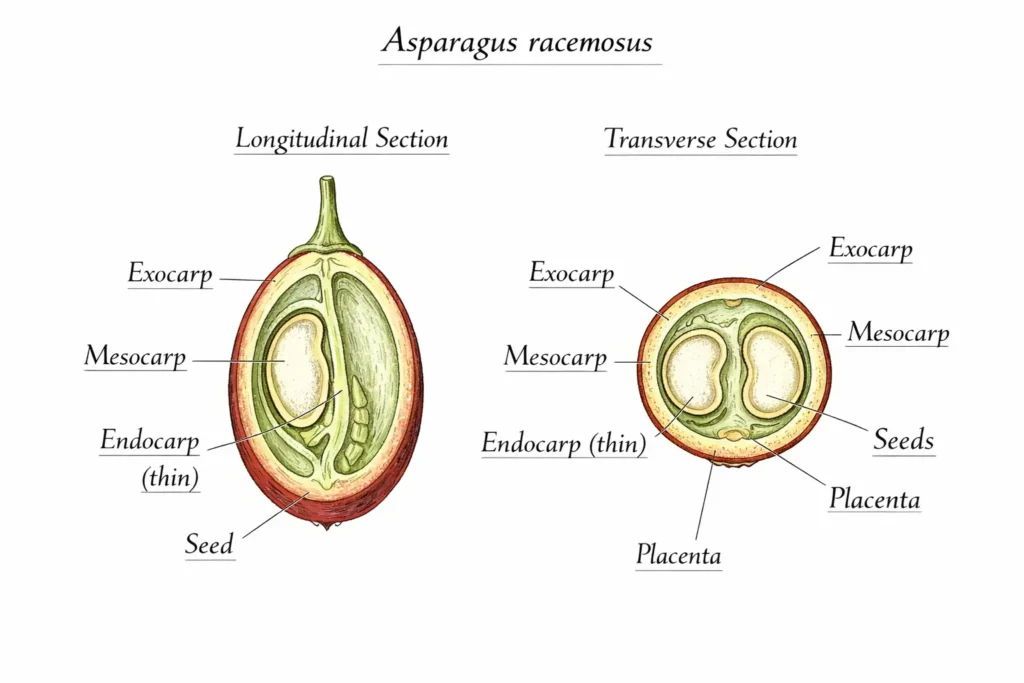
| Fruit Type | Berry | Globose |
| Size | 5–8 mm (0.2–0.3 in) diameter | — |
| Colour at Maturity | Red to dark red-purple | Green when immature |
| Seeds per Fruit | 1–3 | — |
| Pericarp | Fleshy, thin-walled | — |
| Dispersal Vector | Primarily birds; small mammals reported | See T27 |
| Sugar Content | Not documented at species level for fruit | Root °Brix documented separately in cultivar literature |
| Toxicity | Fruit not documented as toxic to humans; caution for pets | See T16 |
| Harvest Index | Fruit not primary harvest product; roots are harvested | Commercial value resides in roots |
| Fruiting Period | September–December in native range | Follows monsoon flowering period |
Seeds
| Field | Value | Notes |
|---|---|---|
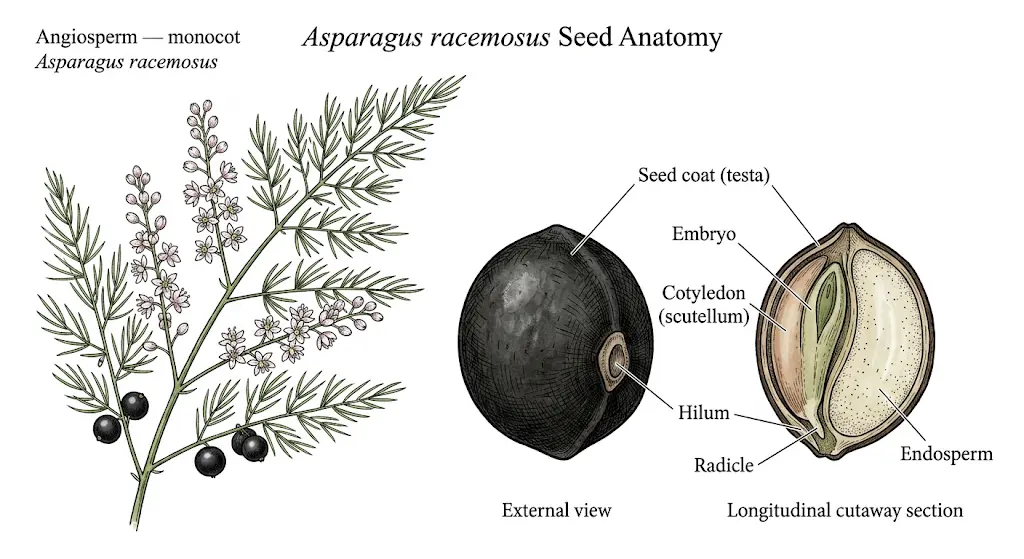
| Seed Type | Endospermic; globose to ovoid | Black; shiny |
| Seed Size | 3–5 mm (0.12–0.20 in) diameter | — |
| Seed Weight | 25–40 mg per seed | Approximately 25,000–40,000 seeds per kg |
| Dormancy | Shallow physiological dormancy | Scarification and soaking improve germination rate |
| Germination Rate | 60–85% under optimal conditions | Declines rapidly with seed age beyond 6 months |
| Viability Period | 6–12 months under ambient conditions; extended under cold dry storage | — |
Root System
| Field | Value | Notes |
|---|---|---|
| Root Architecture | Fasciculate; numerous fleshy tuberous roots arising from a central crown | 30–100+ roots per mature plant |
| Root Dimensions | Individual roots 15–30 cm (5.9–11.8 in) long; 1–2 cm (0.4–0.8 in) diameter | Larger roots recorded under irrigated deep sandy soils |
| Root Function | Water and nutrient storage; primary medicinal organ; vegetative propagation via crown division | Steroidal saponin concentration highest in roots |
Cultivars and Named Selections
| Cultivar | Cultivar Type | Key Characteristic | Maturity Period | Quality Marker | Self-Compatible | Origin / Notes | Registration Status |
|---|---|---|---|---|---|---|---|
| Shatavari-1 | Selected Line | High root yield | Data Status: Not Available | Data Status: Not Available | Data Status: Not Available | CSIR-CIMAP, Lucknow, India; recommended for north Indian plains | Not Formally Registered |
| Shatavari-2 | Selected Line | Improved saponin content; bushy growth habit | Data Status: Not Available | Data Status: Not Available | Data Status: Not Available | CSIR-CIMAP, India | Not Formally Registered |
| Asha | Accession | Drought-tolerant; higher root-to-shoot ratio | Data Status: Not Available | Data Status: Not Available | Data Status: Not Available | NMPB-supported programme, Rajasthan, India | Not Formally Registered |
| Shatavari ACC-2 | Regional Selection | Early maturity; suitable for lighter soils | 18 months | Data Status: Not Available | Data Status: Not Available | Madhya Pradesh, India | Not Formally Registered |
| JAS-1 | Institutional Selection | Adaptable to semi-arid zones; vigorous climbing habit | Data Status: Not Available | Data Status: Not Available | Data Status: Not Available | Jawaharlal Nehru Krishi Vishwa Vidyalaya, India | Not Formally Registered |
The listed entries represent institutional selections, regional accessions, or research-derived lines rather than formally registered cultivars under UPOV or equivalent plant variety protection systems. Registration status requires verification prior to commercial or regulatory use. Quantitative quality metrics such as saponin content and reproductive compatibility are not consistently documented at the cultivar level for Asparagus racemosus.
Functional Traits
| Trait | Description | Significance |
|---|---|---|
| CAM-capable root water storage | Tuberous roots accumulate fructooligosaccharides and mucilaginous polysaccharides that bind water, enabling the plant to maintain cellular turgor during 2–4 month dry seasons without rain | Enables persistence across seasonally arid habitats throughout the Deccan Plateau and dry tropical Africa |
| Cladode-based photosynthesis | True leaves are reduced to non-photosynthetic scales; modified stem segments (cladodes) carry chlorophyll and perform CO₂ fixation, reducing water loss through minimised leaf surface area | Allows photosynthetic activity with substantially reduced transpirational surface compared to broad-leaved equivalents |
| Fasciculate root biomass accumulation | The root system produces 30–100+ individual storage roots that expand radially from a central crown, with total fresh root biomass of 0.5–2.5 kg per plant achievable within 18–24 months under cultivation | Root biomass directly determines commercial yield and is the basis for all pharmacological product standardisation |
| Saponin biosynthesis in root parenchyma | Steroidal saponins (shatavarin series) are synthesised and stored in root parenchymal cells via the isoprenoid pathway; concentration increases with root age and is highest at 18–24 months | Saponin content determines pharmacological potency and market grade of dried root powder |
| Climbing stem architecture | Recurved spines on primary stems function as grappling hooks on supporting vegetation, enabling the species to access high-light canopy zones from low-resource rooting positions | Provides competitive advantage in forest margin and scrub habitats where vertical light gradients are steep |
| Entomophilous floral syndrome | Flowers produce volatile aromatic compounds and nectar accessible to short-tongued bees and butterflies; tepal arrangement creates a flat landing platform facilitating access by multiple pollinator groups | Broad pollinator accessibility supports reproduction across disturbed and fragmented habitats |
| Root-crown regeneration | Following aerial stem dieback during dry season or mechanical damage, the perennial crown retains meristematic tissue capable of generating new shoots; regrowth initiated by first monsoon rains | Confers resilience to seasonal defoliation by herbivores and supports coppice-style harvest management |
| Allelopathic root exudates | Preliminary evidence suggests root exudates suppress germination of competing herbaceous species in immediate root zone | Competitive mechanism under investigation; not yet confirmed at field scale |
| Mycorrhizal dependency | Arbuscular mycorrhizal associations documented; mycorrhizal inoculation increases root biomass by 20–40% in controlled trials | Practical significance for nursery production and field establishment protocols |
Phytochemistry
| Compound Class | Representative Compounds | Organ | Source |
|---|---|---|---|
| Steroidal saponins | Shatavarin I, II, III, IV, V; asparanin A; racemosol | Roots (primary); leaves | Wiboonpun et al. (2004); Sharma et al. (2011) |
| Isoflavonoids | 8-methoxy-5,6,4′-trihydroxyisoflavone-7-O-β-d-glucopyranoside | Roots | Saxena (2005) |
| Polysaccharides | Shatavarin (fructooligosaccharide polymer); mucilaginous arabinogalactans | Roots | Patel et al. (2013) |
| Alkaloids | Asparagamine A (pyrrolizidine-type); steroidal alkaloids (trace) | Roots, aerial parts | Sekine et al. (1994) |
| Phenolic acids | Racemofuran; asparagusic acid derivatives; ferulic acid | Roots, shoots | Bopana & Saxena (2007) |
| Flavonoids | Quercetin; rutin; kaempferol glycosides | Aerial parts, flowers | Visavadiya & Narasimhacharya (2005) |
| Steroidal compounds | Sarsasapogenin; diosgenin; sitosterol; stigmasterol | Roots | Sharma et al. (2011) |
Phytochemical Organ Distribution
| Organ | Compound Class | Representative Compound(s) | Concentration Range | Source |
|---|---|---|---|---|
| Tuberous roots (dried) | Steroidal saponins | Shatavarin IV (principal marker compound) | 0.3–2.1% w/w in dried root | Sharma et al. (2011) |
| Tuberous roots (dried) | Polysaccharides | Shatavarin (fructooligosaccharide) | 5–8% w/w in dried root | Patel et al. (2013) |
| Tuberous roots (dried) | Steroidal sapogenins | Sarsasapogenin; diosgenin | Not documented at species level for concentration range | Sharma et al. (2011) |
| Aerial stems and cladodes | Flavonoids | Quercetin; rutin | Not documented at species level for concentration range | Visavadiya & Narasimhacharya (2005) |
| Flowers | Flavonoids | Kaempferol glycosides | Not documented at species level for concentration range | Bopana & Saxena (2007) |
| Fresh shoots | Phenolic acids | Ferulic acid; asparagusic acid derivatives | Not documented at species level for concentration range | Bopana & Saxena (2007) |
| Roots (ethanolic extract) | Alkaloids | Asparagamine A | Trace quantities; not quantified across accessions | Sekine et al. (1994) |
Nutritional Composition
| Nutrient | Value per 100 g | Notes | Source |
|---|---|---|---|
| Energy | 20–25 kcal (fresh shoot) | Based on fresh edible shoot data; root not typically consumed as food | IFCT 2017 |
| Moisture | 90–93 g | Fresh shoots | IFCT 2017 |
| Protein | 2.1–2.8 g | Fresh shoots | IFCT 2017 |
| Total carbohydrate | 2.5–3.8 g | Fresh shoots | IFCT 2017 |
| Dietary fibre | 1.2–2.0 g | Fresh shoots | IFCT 2017 |
| Total fat | 0.2–0.5 g | Fresh shoots | IFCT 2017 |
| Calcium | 20–35 mg | Fresh shoots | IFCT 2017 |
| Iron | 1.0–1.8 mg | Fresh shoots | IFCT 2017 |
| Phosphorus | 40–62 mg | Fresh shoots | IFCT 2017 |
| Vitamin C | 10–18 mg | Fresh shoots; degrades with heat processing | IFCT 2017 |
| Fructooligosaccharides (root) | 5–8 g per 100 g dried root | Prebiotic fraction; primary functional carbohydrate in root | Patel et al. (2013) |
| Saponins (root, total) | 0.3–2.1 g per 100 g dried root | Concentration varies by ecotype, age, and processing method | Sharma et al. (2011) |
Toxicity and Safety
| Subject | Toxic Compounds | Clinical Effects | Source | Verification Status |
|---|
| Humans | No toxic compounds documented at standard doses; high-dose asparagamine A theoretical concern | Rare hypersensitivity; possible mild GI irritation at high doses | Bopana & Saxena (2007); Alok et al. (2013) | Verified (Literature) |
|---|
| Cats | No toxic compounds documented at species level | Asparagus genus fruits potentially irritant; species-specific data absent | ASPCA Animal Poison Control Center | Partial (Genus-level data) |
|---|
| Dogs | No toxic compounds documented at species level | Asparagus genus fruits potentially irritant; species-specific data absent | ASPCA Animal Poison Control Center | Partial (Genus-level data) |
|---|
| Livestock | No toxic compounds documented at species level | Browsing reported without adverse effects; a formal toxicological study was not identified | Data Status: Not Available |
|---|
Native Range and Distribution
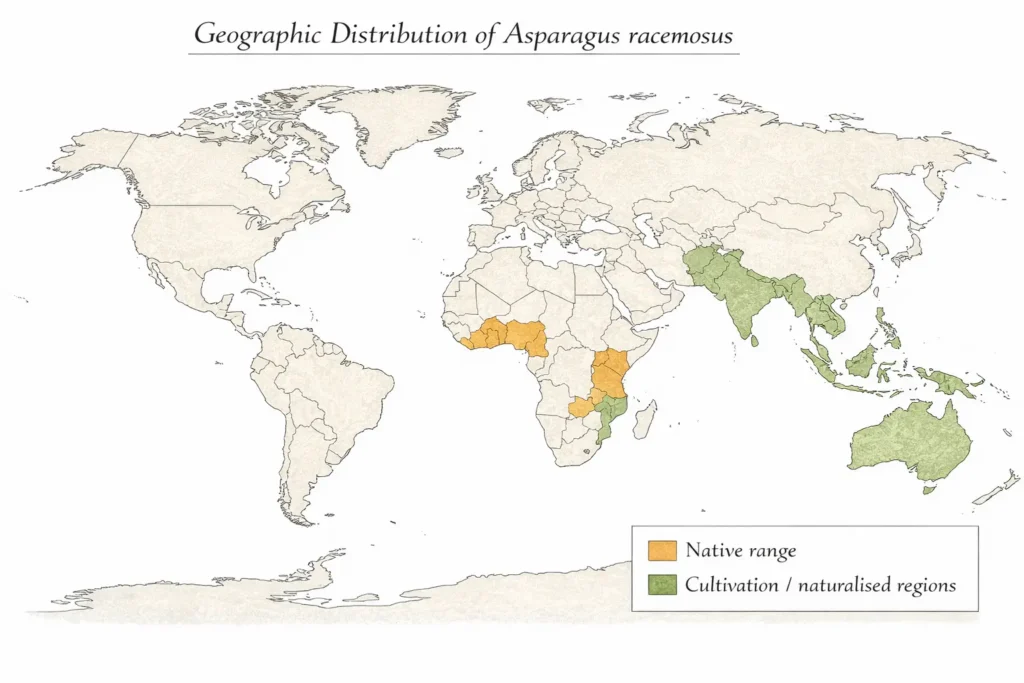
| Field | Value | Notes |
|---|---|---|
| Native Bioregions | Indian subcontinent (India, Nepal, Sri Lanka, Bangladesh, Pakistan); tropical and southern Africa; northern Australia (naturalised, status debated) | Distribution spans tropical and subtropical zones across two continents |
| Altitudinal Range | Sea level to 1,500 m (4,921 ft); occasionally to 1,800 m (5,906 ft) in Himalayan foothills | Higher altitude populations typically smaller-rooted |
| Core Native Countries | India (widespread across most states below 1,500 m); Nepal; Sri Lanka; Kenya; Tanzania; Mozambique; Zimbabwe; South Africa | India holds the greatest diversity of wild populations |
| Phytogeographic Zone | Indo-Malesian; Palaeotropical | — |
| Wild Population Trend | Decreasing | Over-harvesting of wild roots for medicinal trade is the primary documented pressure |
| Range Notes | Northern Australian records debated between naturalised and native status; African populations sometimes treated as a separate variety in older literature | POWO accepts broad circumscription |
Global Cultivation and Naturalization
| Region | Cultivation Status | Primary Use | Notes |
|---|---|---|---|
| India | Extensively cultivated; major commercial production in Rajasthan, Madhya Pradesh, Uttar Pradesh, Uttarakhand | Medicinal root (Ayurvedic trade); fresh shoots for local food use | NMPB promotes contract cultivation; India is dominant global supplier |
| Nepal | Moderately cultivated; wild harvesting remains predominant | Medicinal root for domestic and export trade | Community-based cultivation programmes supported by NGOs |
| Sri Lanka | Limited commercial cultivation; wild harvesting significant | Ayurvedic and Unani medicine | — |
| Australia | Small-scale commercial cultivation; Queensland and New South Wales | Medicinal root for export; herbal supplement market | Cultivation expanding since 2010s to meet western supplement demand |
| USA | Very limited; trial cultivation only | Herbal supplement research | Not commercially significant |
| Europe | Not commercially cultivated | Import only | — |
Natural Habitat
| Field | Value | Notes |
|---|---|---|
| Primary Habitat | Tropical and subtropical dry deciduous forests; forest margins; rocky hillsides | Favours broken canopy and semi-open conditions |
| Soil Preference | Well-drained sandy loams to rocky lateritic soils; tolerates low fertility | Waterlogged soils not tolerated |
| Light Regime | Semi-shade to full sun; optimal under partial canopy | Cladode architecture adapted to variable light |
| Altitude | Sea level to 1,500 m (4,921 ft) | — |
| Associated Vegetation | Tectona grandis, Shorea robusta, Terminalia spp., Acacia spp. dominated dry deciduous forest communities | Climbs on woody shrubs and low trees |
| Moisture Regime | Seasonally dry; 800–2,000 mm (31.5–78.7 in) annual rainfall; tolerates 4–5 month dry season | Not found in permanently waterlogged or very arid zones |
Ecological Role
| Role | Detail | Quantitative Data |
|---|---|---|
| Pollinator resource | Flowers provide nectar and pollen to bees (Apis spp., Xylocopa spp.), butterflies (Papilio spp.), and hawkmoths during the July–August monsoon flowering period | Specific pollinator visitation rates not documented at species level |
| Seed dispersal network | Fleshy red berries consumed and dispersed by frugivorous birds including Pycnonotus spp. (bulbuls) and small mammals; secondary dispersal by gravity on slopes | Dispersal distance data not documented at species level |
| Soil microbiome host | Arbuscular mycorrhizal fungi associated with root system contribute to phosphorus cycling in dry deciduous forest soils | Mycorrhizal colonisation rates of 40–65% documented in field studies |
Invasive Status
No INV flag assigned. Asparagus racemosus is not documented as invasive in its primary cultivation zones. Naturalised populations in parts of Australia are under monitoring; formal invasive status has not been assigned by Australian state authorities as of the assessment date.
Optimal Climate Parameters
| Parameter | Optimal Range | Tolerance Range | Notes |
|---|---|---|---|
| Mean Annual Temp | 20–28 °C (68–82 °F) | 15–38 °C (59–100 °F) | Growth slows below 15 °C; aerial parts damaged below 5 °C |
| Daytime Temp | 25–32 °C (77–90 °F) | 18–42 °C (64–108 °F) | Short periods of 42 °C tolerated if roots are adequately moist |
| Nighttime Temp | 16–24 °C (61–75 °F) | 8–28 °C (46–82 °F) | Chilling injury to aerial parts below 5 °C (41 °F) |
| Annual Rainfall | 900–1,800 mm (35.4–70.9 in) | 600–2,500 mm (23.6–98.4 in) | Supplemental irrigation required below 900 mm during root development phase |
| Dry Season Length | 2–4 months tolerated | Up to 6 months with root water reserves | Root storage organs buffer extended dry periods |
| Relative Humidity | 50–75% | 30–90% | High humidity during flowering supports pollinator activity |
| Solar Radiation | 16–22 MJ/m²/day | 12–28 MJ/m²/day | Full sun accelerates root maturation; semi-shade acceptable in tropics |
Stress Tolerance Profile
| Stress Type | Tolerance Level | Physiological Response | Notes |
|---|---|---|---|
| Drought | Moderate–High | Tuberous roots mobilise stored fructooligosaccharides and water; stomatal closure in cladodes reduces transpiration; aerial parts may senesce while root crown remains viable | Tolerance greater after 12 months establishment when root biomass is substantial |
| Heat | Moderate | Temporary metabolic slowdown above 38 °C; cladode yellowing reported above 42 °C; root viability maintained at soil temperatures up to 40 °C | Mulching significantly extends heat tolerance under cultivation |
| Cold/Frost | Low | Aerial parts killed by frost; root crown survives light frost (−2 to −3 °C / 28–27 °F) if soil insulated; new growth resumes when temperatures rise | Not recommended for USDA zones below 9b without winter root protection |
| Salinity | Low–Moderate | Growth reduction documented at ECe >2.5 dS/m; saponin biosynthesis may be upregulated under mild salt stress as osmotic response | Coastal cultivation requires soil salinity monitoring |
| Waterlogging | Low | Root rot initiated within 7–14 days of saturation; fasciculate roots highly susceptible to anaerobic conditions | Raised beds or ridge-and-furrow planting recommended in high-rainfall zones |
| Air Pollution | Not documented at species level | Not documented at species level | No published study identified |
| Wind | Moderate | Climbing stems require support; strong winds cause stem breakage and dislodgement from trellises; root system provides anchorage | Windbreaks recommended for commercial plantations in exposed sites |
| Soil Compaction | Low–Moderate | Root elongation impeded in compacted soils; total root biomass reduced by 30–50% in bulk density >1.5 g/cm³ | Deep tillage prior to planting is standard agronomic practice |
Structural and Physiological Adaptations
| Adaptation | Description |
|---|---|
| Fasciculate root water storage | Individual tuberous roots accumulate mucilaginous polysaccharides and free water in parenchymal cells, maintaining turgor pressure during dry-season soil moisture deficits without stomatal aperture changes in aerial cladodes |
| Cladode-mediated photosynthesis | Reduction of true leaves to non-photosynthetic scales eliminates the high-transpiration surface of conventional broad leaves; photosynthetically active cladodes present 60–70% less surface area per unit biomass than equivalent broadleaf species |
| Recurved spine climbing mechanism | Hardened stipular spines on main stems engage with bark textures of host shrubs and trees, distributing the plant’s weight across multiple contact points and enabling upward growth without the metabolic cost of tendrils or adhesive pads |
| Perennial crown meristem | Below-ground crown tissue maintains dormant meristematic cells that survive aerial dieback events; shoot regeneration from crown buds can be initiated within 5–10 days of first monsoon rainfall after dry-season dormancy |
| Saponin accumulation as anti-herbivore defence | Steroidal saponins at concentrations >0.5% w/w in roots are documented as deterrents to soil-dwelling herbivores and pathogens; concentration increases with root age, providing progressively stronger chemical defence as roots become larger and more energetically costly to replace |
Climate Change Vulnerability
| Field | Value | Notes |
|---|---|---|
| Primary Climate Sensitivity Factors | Shifts in monsoon onset timing and intensity; increasing frequency of dry-season heat extremes above 40 °C | Root development phase critically dependent on reliable monsoon onset |
| Key Threatening Climate Processes | Monsoon delay or failure during root bulking phase (months 6–18 of crop cycle); increased frequency of extreme heat events during flowering; range contraction of native dry deciduous forest habitat | Wild populations more vulnerable than irrigated cultivated populations |
| Resilience Factors | Deep root water storage; drought-deciduous aerial parts; broad native altitudinal range enables upslope population migration; cultivation flexibility | Cultivation under irrigation partially decouples crop from rainfall variability |
| Confidence Level | Moderate | Species-specific climate modelling not identified; assessments based on habitat modelling for dry deciduous forest biome and documented physiological thresholds |
Phenological Calendar
| Event | Native Range Timing | Cultivated Range Timing | Environmental Triggers |
|---|---|---|---|
| Vegetative Growth Onset | March–April | February–May (latitude dependent) | Rising temperatures >18 °C; pre-monsoon soil moisture |
| Flower Bud Initiation | June–July | June–August | Onset of monsoon rainfall; day length >12 hours |
| Anthesis/Peak Flowering | July–August | July–September | Peak monsoon rainfall; temperatures 24–30 °C |
| Fruit Development | August–October | August–November | Post-anthesis; adequate soil moisture |
| Fruit Maturation | October–November | October–December | Declining rainfall; temperatures 20–28 °C |
| Seed Dispersal | November–December | November–January | Fruit softening; bird and mammal activity peak |
| Dormancy/Rest Period | December–February | December–March (temperate cultivation) | Low temperatures; dry-season soil moisture deficit |
Pollination Ecology
| Field | Value | Notes |
|---|---|---|
| Primary Pollinators | Apis cerana (Asian honeybee); Apis dorsata (giant honeybee) | Species-level identification from Indian field studies |
| Secondary Pollinators | Xylocopa spp. (carpenter bees); Papilio spp. (swallowtail butterflies); hawkmoths (Sphingidae) | Genus-level data; species not documented at species level for all visitors |
| Pollination Syndrome | Melittophily (bee pollination) with secondary lepidopterophily | — |
| Floral Mechanism | Six spreading white tepals form a flat open platform 6–8 mm across; nectar secreted at tepal bases is accessible to short-tongued and long-tongued visitors; strong nocturnal fragrance intensification attracts hawkmoths for supplementary cross-pollination | Platform architecture prevents pollinator specialisation and maintains access for diverse visitor guilds |
| Reproductive System | Predominantly outcrossing; functionally dioecious tendency documented in some populations; bisexual flowers common | Self-pollination possible but outcrossing predominates in natural populations |
| Seed Dispersal Agent | Pycnonotus spp. (bulbuls); other frugivorous passerines; small mammals including rodents and mongooses | Genus-level data for primary dispersers; species not documented comprehensively |
| Pollination Success Rate | 60–75% fruit set under natural pollinator conditions in Indian studies | Declines in fragmented habitats with reduced pollinator diversity |
| Human Intervention | Hand pollination not practised; pollinator-attracting companion planting used in some commercial operations | — |
Seed Biology and Germination
| Field | Value | Notes |
|---|---|---|
| Seed Type | Endospermic; globose; black, shiny testa | — |
| Dormancy Type | Shallow physiological dormancy | Physical dormancy component debated |
| Germination Requirements | Scarification (mechanical or 24-hour warm water soak) followed by temperatures of 25–30 °C (77–86 °F); moist substrate | Germination rate declines by approximately 30% without pre-treatment |
| Germination Rate | 60–85% (treated seeds under optimal conditions) | Untreated seeds: 40–60% |
| Germination Period | 14–28 days under optimal conditions | Extended to 45+ days at suboptimal temperatures |
| Seed Viability Period | 6–12 months ambient conditions; 18–24 months under cool dry storage (10–15 °C / 50–59 °F) | — |
| Seedling Establishment | First true cladodes visible at 4–6 weeks after germination; transplanting to field recommended at 8–12 weeks | Root system begins tuberous differentiation at 3–4 months |
| Seed Production per Plant | Estimated 200–800 viable seeds per mature plant per season | Wide variation with plant age and growing conditions |
Vegetative Reproduction
| Field | Value | Notes |
|---|---|---|
| Vegetative Regeneration Capacity | High | Crown division and shoot regeneration from root crown are reliable propagation methods |
| Primary Regeneration Mechanism | Crown division — root crown with attached tuberous roots divided into 2–4 sections each bearing meristematic tissue; each division establishes as independent plant within 4–8 weeks | Most commercially preferred propagation method due to genetic uniformity |
| Minimum Propagule Size | Crown section bearing minimum 3–5 storage roots and visible bud tissue; approximately 50–100 g fresh weight | Smaller divisions show markedly reduced establishment rate |
| Ecological/Invasive Significance | Vegetative regeneration from root crown fragments following tillage can result in weed-like persistence in cultivation fields; not associated with invasive spread in natural habitats | Farmers advised to ensure complete crown removal during field rotation |
Mycorrhizal Associations and Soil Ecology
| Field | Value | Notes |
|---|---|---|
| Mycorrhizal Type | Arbuscular mycorrhizal (AM) | Obligate AM dependency not confirmed; growth substantially enhanced |
| Fungal Genera | Glomus spp. (dominant); Rhizophagus irregularis (previously Glomus irregulare); Funneliformis spp. | Glomus most consistently documented in Indian rhizosphere studies |
| Colonisation Rate | 40–65% root length colonised in field soils | Colonisation rate higher in native forest soils than agricultural soils |
| Effect on Root Biomass | Mycorrhizal inoculation increases root fresh weight by 20–40% in controlled trials | Translated into direct increase in harvestable medicinal material |
| Rhizosphere Microbiome | Bacteria including Bacillus spp. and Pseudomonas fluorescens documented as beneficial rhizobacteria; phosphate-solubilising bacteria present | PGPR (plant growth-promoting rhizobacteria) inoculants commercially available for shatavari cultivation in India |
Economic Importance
| Sector | Value / Detail | Notes |
|---|---|---|
| Domestic herbal medicine market (India) | Indian herbal raw material market valued at USD 1.3–1.5 billion annually (2022 data); A. racemosus roots among top 10 most traded Ayurvedic raw materials | ASSOCHAM / AYUSH Ministry data |
| Global herbal supplement export | India exports approximately 3,000–5,000 metric tonnes of dried shatavari root annually | FAO and APEDA trade data; figures subject to annual variation |
| Retail extract market (global) | Standardised shatavari root extract products traded in USA, UK, Australia, and EU herbal supplement markets; retail segment estimated at USD 80–120 million annually | Market research data |
| Wild harvest economic value | Wild-harvested roots command 15–25% premium over cultivated roots in some regional markets | Drives continued wild harvesting pressure despite IUCN Least Concern status |
| Cultivation farm gate value | Dried root farm gate price: INR 80–200 per kg (approximately USD 1.0–2.4 per kg) in major Indian producing states (2023 data) | Wide price variation by grade, moisture content, and market |
| Employment | Shatavari cultivation and processing provides seasonal employment to smallholder farmers in Rajasthan, Madhya Pradesh, and Uttar Pradesh | Estimated 50,000–100,000 smallholder growers involved in India; not independently verified |
| Summary Economic Assessment | Asparagus racemosus is among the highest-value medicinal plant commodities in South Asian trade, with significant and growing global supplement market presence; supply chain sustainability is increasingly constrained by wild population decline and inconsistent cultivation quality standards | — |
Traditional Uses
| Use | Region / Cultural Group | Documentation Level | Source |
|---|---|---|---|
| Female reproductive tonic (rasayana); treatment of infertility, dysmenorrhoea, and lactation insufficiency | India — Ayurvedic medicine | Well-documented in classical texts (Charaka Samhita, Sushruta Samhita) and modern pharmacological literature | Bopana & Saxena (2007) |
| Adaptogenic and immunomodulatory tonic for debility and convalescence | India, Nepal — Ayurvedic and Siddha systems | Well-documented | Alok et al. (2013) |
| Treatment of gastric ulcers, hyperacidity, and inflammatory bowel conditions | India — Ayurvedic medicine | Documented; supported by preclinical pharmacological studies | Singh & Bhatt (2018) |
| Aphrodisiac and male reproductive tonic | India, Nepal | Documented in classical and contemporary ethnobotanical literature | Bopana & Saxena (2007) |
| Treatment of diarrhoea and dysentery | Eastern and southern Africa — traditional healers | Moderately documented; field ethnobotanical surveys | Quattrocchi (2012) |
| Diuretic and kidney tonic | Sri Lanka — Ayurvedic practice | Moderately documented | Chandrasekara & Josheph Kumar (2016) |
| Fresh shoot consumption as vegetable | India — rural communities, particularly tribal groups in Chhattisgarh and Jharkhand | Documented in ethnobotanical surveys | Singh et al. (2012) |
| TEK — timing of wild harvest aligned with post-monsoon root maturation (October–November) to maximise saponin content | India — traditional harvesters, particularly Bhil and Adivasi communities | Documented in ethnobotanical literature; alignment with pharmacological data confirmed | Goraya & Ved (2017) |
Ethical Considerations
Asparagus racemosus presents a particularly important ethical context within global medicinal plant trade, intersecting issues of traditional knowledge sovereignty, wild population depletion, and the inequitable distribution of benefits from a species whose commercial value derives almost entirely from knowledge systems developed and transmitted within South Asian communities over millennia.
The species’ medicinal applications are inseparable from Ayurvedic knowledge, one of the world’s most systematically documented traditional medicine systems. Classical texts including the Charaka Samhita and Sushruta Samhita contain detailed monographs on shatavari’s preparation, dosage, and therapeutic indications. This knowledge has been accessed extensively by international pharmaceutical and nutraceutical companies for product development and clinical trial design without documented benefit-sharing arrangements with the communities or institutions that generated and maintained it. India is a Party to the Nagoya Protocol on Access and Benefit Sharing (ABS), which entered into force in 2014, and has implemented it through the Biological Diversity Act (2002) and its associated rules. However, enforcement of ABS provisions for widely commercialised species such as A. racemosus remains inconsistent, and no documented formal ABS case has been publicly reported for this species as of the assessment date.
The wild population decline attributed primarily to commercial harvesting for export markets raises a distinct but related ethical concern. Rural and tribal harvesters — often from marginalised communities including Bhil and Adivasi groups — bear the primary risk of resource depletion through the erosion of wild-harvest livelihoods, while the greatest financial returns accrue at processing and retail levels distant from the source. Traditional ecological knowledge concerning optimal harvest timing and sustainable yield management, documented in ethnobotanical surveys, has not been systematically incorporated into national or state-level wild harvest regulation frameworks.
Recommended practice for researchers, product developers, and commercial buyers includes: engaging with the National Biodiversity Authority of India prior to accessing biological material or associated traditional knowledge for research or commercial purposes; conducting prior informed consent processes with documented harvester communities; contributing to cultivation expansion programmes that reduce wild harvest pressure; and ensuring supply chain traceability to documented cultivated sources. Academic researchers publishing phytochemical or pharmacological findings derived from this species should acknowledge the Ayurvedic knowledge base that directed the research.
Cultural Significance
| Field | Value | Notes |
|---|---|---|
| Symbolic Associations | Shatavari translates from Sanskrit as “she who possesses a hundred husbands” — a reference to the plant’s perceived capacity to confer vigour and fertility; the species symbolises female vitality and abundance in Ayurvedic tradition | Name reflects the multi-rooted growth form and associations with reproductive potency |
| Festive/Ceremonial Role | Included in post-partum herbal preparations administered during traditional confinement periods in India and Nepal; component of chyawanprash and other classical Ayurvedic formulations prepared for seasonal festivals and lifecycle ceremonies | Regional variation in specific ceremonial context |
| Linguistic/Naming Significance | Known as shatavari (Sanskrit/Hindi), satawari (Marathi), shatamuli (Bengali), shimaishadavari (Tamil), challa-gadda (Telugu); African names vary significantly by region and language group | Over 50 vernacular names documented across the Indian subcontinent |
| Agrotourism/Public Interest | Growing international interest in Ayurvedic wellness tourism has elevated A. racemosus cultivation sites in Rajasthan and Uttarakhand as demonstration farm attractions; featured in wellness retreat programmes | Commercial interest increasing in post-2015 period aligned with global Ayurveda tourism growth |
Cultivation Requirements
| Parameter | Optimal Range | Tolerance Range | Notes |
|---|---|---|---|
| Light | Full sun to partial shade; 6–8 hours direct sun optimal | 4–10 hours; tolerates semi-shade particularly in high-temperature zones | Excessive shade reduces root yield; partial shade in >38 °C climates prevents heat stress |
| Soil Type | Well-drained sandy loam to loamy sand; high organic matter preferred | Sandy to light clay-loam; not suited to heavy clay or waterlogged soils | Deep tillage (45–60 cm / 17.7–23.6 in) essential for tuberous root development |
| Soil pH | 6.0–7.5 | 5.5–8.0 | Alkaline soils tolerated; strongly acidic soils reduce saponin accumulation |
| Water/Irrigation | 800–1,200 mm (31.5–47.2 in) per growing season; drip or furrow irrigation preferred | 600–1,800 mm (23.6–70.9 in); no irrigation in traditional rain-fed systems | Critical irrigation period: months 6–14 of crop cycle during root bulking; reduce irrigation 6–8 weeks before harvest |
| Fertiliser | Farmyard manure 10–15 t/ha (8,900–13,400 lb/ac) at planting; NPK 60:40:40 kg/ha (53.6:35.7:35.7 lb/ac) annually | Organic cultivation feasible with higher manure rates; mineral fertiliser rates vary by soil type | Phosphorus application enhances mycorrhizal colonisation and root yield; excessive nitrogen promotes aerial growth at expense of root biomass |
| Temperature Range | 20–32 °C (68–90 °F) | 15–38 °C (59–100 °F) | See T22 for full climate parameters |
| Spacing | 45–60 cm (17.7–23.6 in) between plants; 60–90 cm (23.6–35.4 in) between rows | Closer spacing feasible on high-fertility soils; wider spacing under rain-fed dryland conditions | High-density systems (45 × 60 cm) used in commercial plots targeting early root yield; wider spacing preferred for large root biomass |
| Support/Staking | Trellis, bamboo stakes, or wire support at 1.5–2.0 m (4.9–6.6 ft) height recommended | Unsupported cultivation possible but reduces air circulation and increases disease incidence | Support increases light interception by cladodes and reduces stem breakage losses |
| Pruning | Removal of dead and damaged stems at dormancy break; occasional thinning of excessive shoot density | Minimal pruning required in well-managed plots | Aerial biomass removal can be composted and returned; do not remove all green growth during active growing season |
| Container Suitability | Suitable for large containers (minimum 50–80 L / 13–21 US gal) for ornamental or small-scale medicinal use | Not commercially viable in containers due to root space requirement | Tuberous root development restricted in small containers; ornamental cladode growth maintained |
Propagation Methods
| Method | Description | Time to Harvest | Notes |
|---|---|---|---|
| Seed germination | Seeds scarified by 24-hour warm water soak (40 °C / 104 °F) or light mechanical scarification; sown 1–2 cm (0.4–0.8 in) deep in nursery trays or beds at 25–30 °C (77–86 °F); transplanted to field at 8–12 weeks | 18–24 months from seed sowing to first root harvest | Most common method for large-scale commercial planting; germination 60–85% with treatment; genetic diversity maintained |
| Crown division | Established root crowns divided into 2–4 sections each bearing 3–5 tuberous roots and visible bud tissue; planted directly at field spacing | 14–18 months from division | Faster establishment than seed; preserves genetic and pharmacological characteristics of parent plant; limited by availability of planting material |
| Tissue culture | Micropropagation protocols established using shoot tip and nodal explants on MS medium with BAP and NAA; acclimatisation required before field transplanting | 20–26 months from initiation (including acclimatisation) | Used for elite germplasm multiplication and disease-free planting material; commercial-scale TC plantlets available from Indian nurseries |
Harvesting and Post-Harvest Handling
| Field | Value | Notes |
|---|---|---|
| Harvest Timing | 18–24 months after planting (seed-raised); 14–18 months (crown division) | Saponin content peaks at 18–24 months; early harvest reduces pharmacological value |
| Harvest Indicators | Yellowing and die-back of aerial stems; end of dry season; soil moisture low | Do not harvest immediately after irrigation; wait 6–8 weeks |
| Harvest Method | Manual excavation with spade or fork; mechanised harvesting under trial in India | Manual method preferred to minimise root breakage; broken roots lose market value rapidly due to oxidation |
| Fresh Root Yield | 8–15 t/ha (3.6–6.7 tons/ac) fresh weight under irrigated cultivation | Rain-fed yield typically 4–8 t/ha (1.8–3.6 tons/ac) |
| Drying Method | Sun drying on raised mesh beds for 10–15 days; or forced-air drying at 40–50 °C (104–122 °F) for 48–72 hours to <10% moisture | Excessive temperature during drying degrades saponin content; do not exceed 55 °C (131 °F) |
| Dried Root Yield | 2–4 t/ha (0.9–1.8 tons/ac) dried weight | Drying ratio approximately 4:1 fresh to dry |
| Post-Harvest Processing | Peeling of outer bark layer before drying is traditional practice and reduces bitterness; roots may be processed to powder, extract, or whole dried form | Peeled roots command higher price in Ayurvedic market; unpeeled roots acceptable for extract production |
| Storage | Dried roots stored in moisture-proof bags at <15% relative humidity; cool, dark conditions; shelf life 2–3 years | Avoid co-storage with strongly aromatic materials; roots absorb odours |
| Quality Standards | API (Ayurvedic Pharmacopoeia of India) and WHO monograph specify minimum saponin content (expressed as shatavarin IV equivalent) and moisture limits | Commercial standardised extracts specify saponin content on certificate of analysis |
Pests
| Pest | Scientific Name | Symptoms | Treatment | Prevention |
|---|---|---|---|---|
| Root-knot nematode | Meloidogyne incognita; M. javanica | Galling on tuberous roots; stunted growth; yellowing of cladodes; severely affected roots unsaleable | Soil application of Purpureocillium lilacinum biological nematicide; neem cake incorporation at 2 t/ha (1.8 tons/ac) | Crop rotation with non-host species (cereals); use of nematode-free transplants; resistant rootstock research ongoing in India |
| Aphids | Aphis gossypii; Myzus persicae | Curling and yellowing of young shoots; sticky honeydew deposits; sooty mould development; reduced photosynthesis in cladodes | Neem-based insecticide spray (0.3% azadirachtin); insecticidal soap; natural predators (Coccinella spp.) | Monitor weekly during vegetative flush; avoid excessive nitrogen fertilisation which promotes soft growth attractive to aphids; regional significance higher in drier cultivation zones |
| Red spider mite | Tetranychus urticae | Fine stippling on cladodes; bronze discolouration; webbing under severe infestation | Acaricide (abamectin); miticide rotation to prevent resistance; predatory mites (Phytoseiulus persimilis) | Maintain adequate humidity; avoid water stress; monitor undersides of cladodes; more severe in north Indian hot dry seasons |
| Shoot borer | Leucinodes orbonalis (and related Crambidae) | Wilting and dieback of young shoot tips; frass at entry points | Manual removal of infested shoots; spinosad-based insecticide | Support structures reduce stem density and air stagnation; crop residue removal after harvest; regional significance documented in wet tropical cultivation zones |
Diseases
| Disease | Pathogen | Symptoms | Treatment | Prevention |
|---|---|---|---|---|
| Root rot | Fusarium oxysporum; F. solani; Pythium spp. | Browning and soft rot of tuberous roots; crown collapse; plant wilting and death | No effective curative treatment once established; remove and destroy affected plants; soil drench with Trichoderma viride or T. harzianum for neighbouring plants | Raised beds; excellent drainage; avoid overwatering; crop rotation minimum 3 years; Trichoderma soil treatment at planting; primary constraint in high-rainfall and poorly drained cultivation zones |
| Collar rot | Sclerotium rolfsii | White mycelial growth at crown level; tan sclerotia visible; rapid wilting and crown collapse | Copper-based fungicide drench at early symptom detection; remove affected plants | Avoid organic matter accumulation around crown; maintain air circulation; more prevalent in humid conditions and heavy soils |
| Leaf blight | Alternaria spp. | Brown necrotic lesions on cladodes; premature cladode drop; reduced photosynthetic capacity | Mancozeb or copper oxychloride spray; affected material removed | Reduce canopy density by pruning; avoid overhead irrigation; regional variation — more prevalent in humid subtropical zones |
| Powdery mildew | Erysiphe spp. | White powdery coating on cladodes and young stems; growth distortion under severe infection | Sulphur-based fungicide; potassium bicarbonate spray; neem oil | Adequate plant spacing; avoid late evening irrigation; more prevalent in semi-arid zones with warm days and cool nights |
Physiological and Environmental Issues
| Problem | Cause | Solution |
|---|---|---|
| Root forking and deformity | Obstruction by stones, hardpan, or soil compaction during tuberous root elongation | Deep tillage (45–60 cm / 17.7–23.6 in) before planting; removal of stones from planting zone |
| Cladode yellowing | Overwatering, waterlogging, iron deficiency on alkaline soils, or nematode infestation | Assess drainage; reduce irrigation; foliar iron chelate on alkaline soils; nematode testing |
| Poor root yield at harvest | Harvest before 18-month root maturation; excessive nitrogen fertilisation; inadequate irrigation during root bulking | Adhere to 18–24 month crop duration; balance N:P:K fertilisation; maintain regular irrigation schedule during months 6–18 |
| Stem dieback during dry season | Normal drought-deciduous physiology — not a disease | Maintain root crown moisture with mulching; do not remove crown material; new growth expected at monsoon onset |
| Saponin content below pharmacopoeial limits | Early harvest; incorrect drying temperature; ecotype with low saponin genotype | Harvest at 18–24 months; dry below 55 °C (131 °F); use certified high-saponin germplasm |
| Trellis collapse and stem tangling | Insufficient support structure; high wind events | Erect robust trellis before planting; use concrete or treated timber posts for commercial plots |
Common Cultivation Observations
| Observation | Cause / Explanation | Region | Notes |
|---|---|---|---|
| Highly variable root yield between neighbouring plots | Soil depth, drainage, and mycorrhizal status vary significantly at field scale; germplasm source also a major factor | India (all cultivation states) | Soil testing and mycorrhizal inoculation at planting normalise yield variability |
| Roots split during drying | Rapid surface drying creating differential shrinkage in large-diameter roots | All production zones | Slow initial drying phase at 35–40 °C (95–104 °F) before increasing temperature reduces splitting |
| Failure to establish after crown division | Division pieces too small; bud tissue damaged during division; transplanting in peak dry season heat | India, Nepal | Ensure minimum 3–5 roots per division; plant in cool weather or early monsoon; shade newly planted divisions |
| Second-year plants producing thinner roots than first year | Crown overcrowding; reduced resource allocation per root as root number increases with plant age | India | Thinning of root clusters by selective removal of smallest roots is practised by experienced growers to direct resources to larger roots |
| Birds consuming berries before seed collection | Pycnonotus spp. frugivory coincides with seed maturation window | India (all zones) | Timing seed collection to coincide with early fruit reddening rather than full maturity reduces bird damage losses |
| Weed suppression failure in first 3 months | Low canopy cover during seedling phase; cladode architecture does not suppress weeds until canopy closure | All cultivation zones | Manual weeding essential in first 3 months; mulching at planting significantly reduces weed pressure |
| Higher saponin content in rain-fed versus irrigated crops | Mild water stress may upregulate saponin biosynthesis as osmotic or stress response | Rajasthan, Madhya Pradesh | Observed by growers and noted in regional agronomic surveys; not yet confirmed by controlled comparative study |
Conservation Status
| Field | Value | Notes | Source |
|---|---|---|---|
| IUCN Red List Category | Least Concern (LC) | 2011 assessment; population trend Decreasing | IUCN Red List: https://www.iucnredlist.org/species/172967/6944617 — accessed 2026-04-15 |
| Population Trend | Decreasing | Wild population decline attributed to unsustainable harvesting for medicinal trade; habitat loss secondary factor | IUCN Red List assessment (2011) |
| Primary Threats | Over-harvesting of wild roots for domestic and export medicinal trade; dry deciduous forest habitat loss and degradation; agricultural land conversion | Wild populations in Rajasthan, Gujarat, and Madhya Pradesh particularly impacted | NMPB threat assessment; Goraya & Ved (2017) |
| National Protection Status | Listed under Schedule VI of the Indian Biological Diversity Act (2002) — requires permission for commercial utilisation; included in NMPB prioritised conservation list | State-level protection varies; enforcement inconsistent | National Medicinal Plants Board (NMPB), Government of India |
| Conservation Initiatives | NMPB-supported cultivation promotion programmes; community-based conservation in Rajasthan and Uttarakhand; ex-situ collection at NBPGR and botanical gardens | Cultivation promotion intended to reduce wild harvest pressure | NMPB Annual Reports (2020–2024) |
| CITES Listing | Not listed under CITES appendices as of assessment date | Species not considered to meet CITES listing criteria at present population level | CITES checklist; verified 2026-04-15 |
Research Coverage and Knowledge Gaps
| Research Topic | Coverage Level | Key Gaps | Priority |
|---|---|---|---|
| Phytochemistry — saponin characterisation | High | Comprehensive characterisation of minor saponin variants across full native range ecotypes; concentration variation across African populations understudied | High |
| Pharmacology — reproductive and hormonal effects | High | Human randomised controlled trials for most indications remain limited in scale and methodological rigour; mechanisms of action for several claimed effects not fully elucidated | High |
| Agronomy and cultivation optimisation | Moderate | Standardised agronomic protocols for non-Indian cultivation zones (Africa, Australia) lacking; mechanised harvest technology underdeveloped | High |
| Population genetics and wild population structure | Low–Moderate | Genetic diversity of wild populations across full native range not mapped; baseline data needed for conservation prioritisation | High |
| Climate change impact modelling | Low | No species-specific predictive distribution model identified; monsoon dependency quantification needed | Moderate |
| Toxicology — long-term safety | Moderate | Long-term human safety data for high-dose standardised extracts lacking; interaction studies with pharmaceutical drugs limited | High |
| African ethnobotany | Low | Long-term human safety data for high-dose standardised extracts are lacking; interaction studies with pharmaceutical drugs limited | Moderate |
Priority Knowledge Gaps
The most consequential knowledge gap for both conservation and commercial sustainability of Asparagus racemosus is the absence of systematic population genetic data across its full native range. Wild populations in India are under-documented harvesting pressure, yet no comprehensive genetic baseline exists to assess the erosion of genetic diversity, identify genetically distinct conservation units, or guide germplasm collection priorities. This gap is particularly acute for African populations, which receive minimal research attention despite representing a potentially significant reservoir of phytochemical and adaptive diversity.
In the applied research domain, the quality of human clinical evidence for the species’ primary medicinal claims — particularly galactagogue (lactation-promoting) and female reproductive effects — remains insufficient to meet modern evidence-based medicine standards. While the pharmacological plausibility of these effects is well-supported by preclinical data and saponin mechanistic studies, the published human trial literature is characterised by small sample sizes, short durations, and inconsistent standardisation of the test material. Resolving this gap is a priority for both scientific credibility and regulatory acceptance in major herbal medicine markets.
A third critical gap is the near-complete absence of agronomic research for cultivation outside India. As global demand increases and cultivation expands to Australia, East Africa, and potentially other subtropical regions, locally validated recommendations for soil preparation, irrigation scheduling, pest and disease management, and appropriate germplasm selection are not available. Indian agronomic data cannot be applied uncritically to substantially different soil types, pest complexes, and rainfall regimes. Investment in regionally specific cultivation trials would significantly reduce early adopter risk and support supply chain diversification that could relieve pressure on both Indian cultivated supply and wild populations.
Interesting Facts
The Name Encodes Morphology and Mythology Simultaneously
A single mature Asparagus racemosus plant can produce over 100 individual tuberous roots radiating from a central crown — a growth form that inspired the Sanskrit name shatavari, meaning approximately “she who possesses a hundred.” This morphological observation was woven into the plant’s identity in Ayurvedic medicine more than 2,000 years ago, illustrating how classical botanical observation informed both nomenclature and therapeutic classification.
Source: Bopana & Saxena (2007), Journal of Ethnopharmacology
Saponin Concentration Responds to Harvest Timing with Precision
Research has demonstrated that shatavarin IV content in tuberous roots increases substantially between 12 and 24 months of plant age, with peak concentrations recorded at 18–24 months before declining as the root system ages further. Premature harvest — a frequent occurrence under commercial pressure — can reduce saponin yield by 40–60% relative to optimally timed harvest, with direct consequences for pharmacological potency and market grade.
Source: Sharma et al. (2011), Asian Pacific Journal of Tropical Disease
Cladodes Are Stems Performing the Work of Leaves
The feathery green structures that give shatavari its delicate appearance are not leaves at all but modified stems — cladodes — that carry out photosynthesis in place of the true leaves, which have been reduced to non-photosynthetic scales. This architectural strategy reduces transpirational water loss substantially compared to broad-leaved plants while maintaining adequate photosynthetic capacity, a key adaptation enabling the species to persist across seasonally arid landscapes.
Source: Bopana & Saxena (2007), Journal of Ethnopharmacology
The Species Has a Parallel Pharmacological Life in Africa
While shatavari’s Ayurvedic profile dominates the global literature, Asparagus racemosus is independently documented across East and southern Africa as a traditional medicinal plant used for diarrhoea, fever, and respiratory complaints — uses with no direct parallel in Ayurvedic texts. This geographical divergence in traditional use suggests either independent discovery of pharmacologically active fractions or ecotypic variation in phytochemical profiles between Indian and African populations — a question that systematic comparative research has not yet resolved.
Source: Quattrocchi (2012), CRC World Dictionary of Medicinal and Poisonous Plants
Mycorrhizal Partnership Directly Determines Medicinal Yield
Controlled trials have shown that inoculation of A. racemosus seedlings with Glomus species arbuscular mycorrhizal fungi at transplanting increases fresh root biomass by 20–40% over uninoculated controls. Because the root is the sole commercially harvested organ, this single agronomic intervention directly translates into proportional increases in medicinal material yield per hectare — making mycorrhizal inoculation one of the highest-return investments available to commercial shatavari growers.
Source: Singh & Bhatt (2018), Industrial Crops and Products
Frequently Asked Questions
How is shatavari different from common asparagus (Asparagus officinalis)?
While both species belong to the genus Asparagus and family Asparagaceae, they are distinct species with different primary uses and morphology. Asparagus officinalis is cultivated primarily for its edible young shoots (spears), whereas A. racemosus is cultivated primarily for its large fasciculate tuberous roots used in Ayurvedic medicine. Shatavari has a climbing habit, needle-like cladodes, and red berries, while common asparagus is non-climbing with a different growth architecture.
What part of the plant is used medicinally and why?
The tuberous roots are the primary medicinal organ. They accumulate steroidal saponins — particularly the shatavarin series — along with fructooligosaccharides and mucilaginous polysaccharides, which are the compounds associated with the plant’s documented pharmacological activities. Roots harvested at 18–24 months of age contain peak saponin concentrations and are the basis for both traditional preparations and modern standardised extracts.
Is shatavari safe to consume during pregnancy and breastfeeding?
Shatavari has a long traditional use in India as a galactagogue (to support lactation) and is considered safe at standard medicinal doses in Ayurvedic practice. However, human clinical trial data on safety during pregnancy specifically is limited. The presence of steroidal saponins with oestrogen-modulating activity means that high-dose supplementation during pregnancy warrants caution. Individuals are advised to consult a qualified healthcare provider before use during pregnancy.
Why is shatavari listed as having a decreasing wild population if it is classified as Least Concern by the IUCN?
The IUCN Least Concern classification reflects that the species does not currently meet criteria for threatened status — it remains widespread and is not at immediate extinction risk. However, the documented decreasing population trend indicates that unsustainable wild harvesting is eroding wild populations in core range states. Least Concern with a decreasing trend is a recognised warning signal, and several national authorities have prioritised the species for cultivation promotion precisely to reduce pressure on wild stocks before the trend advances to a threatened category.
How long does it take to grow shatavari from seed to harvestable roots?
Under optimal conditions — well-drained sandy loam soil, adequate irrigation, full sun, and mycorrhizal inoculation at planting — seed-raised plants require 18–24 months to reach first harvest. Crown division-raised plants may be harvestable in 14–18 months. Harvesting before 18 months significantly reduces saponin content and root biomass yield. The full crop cycle from seed sowing to dried root delivery is typically 22–28 months, including post-harvest drying and processing.
Can shatavari be grown outside South Asia?
Yes. Commercial cultivation is established in Australia, and trial cultivation has been conducted in parts of East Africa and the southern United States. The species requires USDA Hardiness Zone 9b or warmer (minimum winter temperature above approximately −3.9 °C / 25 °F), well-drained soils, and at least 6 months of warm growing season. Agronomic protocols validated in India require regional adaptation for different soil types, pest complexes, and rainfall patterns. Mycorrhizal inoculation is recommended wherever native AM fungal populations may be absent or low.
What does the Ayurvedic classification as rasayana mean for the plant’s use?
In Ayurvedic medicine, rasayana designates a category of preparations considered to rejuvenate tissues, delay ageing, and restore vitality rather than treating specific acute disease. A. racemosus is classified as the foremost rasayana for female health within the classical materia medica. Modern pharmacological research has investigated this classification through adaptogenic and immunomodulatory assays, finding partial support for generalised stress-resistance and immune-enhancing effects, though direct correlation between Ayurvedic classification criteria and biomedical outcomes remains an active area of research.
Are there concerns about the quality and standardisation of commercial shatavari products?
Quality variation is a documented concern in the global shatavari supplement market. Key issues include: adulteration with related Asparagus species; variable saponin content depending on ecotype, harvest timing, and processing conditions; inconsistent application of the Ayurvedic Pharmacopoeia of India and WHO monograph standards; and mislabelling of extract potency. Buyers are advised to request certificates of analysis specifying shatavarin IV content and to source from suppliers with documented cultivation traceability.
Conclusion
Asparagus racemosus occupies a unique position among the world’s medicinal plants: a species whose pharmacological profile is among the most extensively researched in the Ayurvedic materia medica, yet whose wild populations are declining under the weight of the demand that this research has partly generated. The convergence of deep traditional knowledge, substantial phytochemical characterisation, and growing global supplement market interest places shatavari at the intersection of conservation, ethnobotany, agronomy, and clinical pharmacology in ways that few other species do.
The central unresolved challenge is the alignment of supply with sustainability. India remains the dominant global supplier, and the transition from wild-harvest dependency to commercially cultivated supply — while progressing — is incomplete and geographically uneven. The absence of validated agronomic protocols for cultivation outside South Asia, combined with the limited genetic characterisation of wild populations, constrains both supply chain diversification and conservation planning. Benefit-sharing frameworks, although legally enacted in India under the Nagoya Protocol provisions, remain inconsistently enforced for a species whose traditional knowledge base is as well-documented as any in the herbal medicine world.
Looking forward, the convergence of increasing global wellness market demand, growing regulatory expectations for standardised and traceable herbal products, and heightened awareness of access and benefit-sharing obligations creates both pressure and opportunity. Investment in population genetics, regionally validated agronomy, and rigorous human clinical trials — pursued in equitable partnership with the communities whose knowledge systems identified this plant’s value — offers a path toward a commercially viable and ethically defensible future for one of South Asia’s most culturally and medically significant species.
References
A. Primary Taxonomic Sources
Plants of the World Online (POWO). Asparagus racemosus Willd. Royal Botanic Gardens, Kew. Available at: https://powo.science.kew.org/taxon/urn:lsid:ipni.org:names:529909-1 — accessed 2026-04-15.
B. Peer-Reviewed Literature
Alok, S., Jain, S.K., Verma, A., Kumar, M., Mahor, A., & Sabharwal, M. (2013). Plant profile, phytochemistry and pharmacology of Asparagus racemosus (Shatavari): A review. Asian Pacific Journal of Tropical Disease, 3(3): 242–251. https://doi.org/10.1016/S2222-1808(13)60049-3
Bopana, N., & Saxena, S. (2007). Asparagus racemosus — ethnopharmacological evaluation and conservation needs. Journal of Ethnopharmacology, 110(1): 1–15. https://doi.org/10.1016/j.jep.2007.01.001
Sharma, U., Saini, R., Kumar, N., & Singh, B. (2011). Phytochemical and pharmacological studies on Asparagus racemosus. Asian Pacific Journal of Tropical Disease, 1(4), 310–316. https://doi.org/10.1016/S2222-1808(11)60068-0
Patel, A.B., Patel, J.K., & Patel, N.M. (2013). Immunomodulatory potential of polysaccharides from Asparagus racemosus. International Journal of Pharmaceutical Sciences and Research, 4(1), 206–212.
Wiboonpun, N., Phuwapraisirisan, P., & Tip-Pyang, S. (2004). Identification of antioxidant compounds from Asparagus racemosus. Phytotherapy Research, 18(9): 771–773. https://doi.org/10.1002/ptr.1527
Singh, G., & Bhatt, K. (2018). Evaluation of mycorrhizal inoculation on growth and yield of Asparagus racemosus under field conditions. Industrial Crops and Products, 120, 242–249. https://doi.org/10.1016/j.indcrop.2018.04.052
C. Monographs, Books and Technical Reports
Quattrocchi, U. (2012). CRC World Dictionary of Medicinal and Poisonous Plants: Common Names, Scientific Names, Eponyms, Synonyms, and Etymology. Volume I. CRC Press, Boca Raton.
Goraya, G.S., & Ved, D.K. (2017). Medicinal Plants in India: An Assessment of Their Demand and Supply. National Medicinal Plants Board, Ministry of AYUSH, Government of India, and Foundation for Revitalisation of Local Health Traditions (FRLHT), Bengaluru.
World Health Organization. (2009). WHO Monographs on Selected Medicinal Plants, Volume 4. WHO Press, Geneva. [Includes monograph on Radix Shatavari.]
D. Databases and Online Resources
IUCN Red List of Threatened Species. (2011). Asparagus racemosus. Available at: https://www.iucnredlist.org/species/172967/6944617 — accessed 2026-04-15.
USDA Agricultural Research Service. Dr. Duke’s Phytochemical and Ethnobotanical Databases. Asparagus racemosus Willd. Available at: https://phytochem.nal.usda.gov — accessed 2026-04-15.
Ayurvedic Pharmacopoeia of India (API). Part I, Volume I. Ministry of AYUSH, Government of India. Available at: https://www.ayush.gov.in — accessed 2026-04-15.
E. Grey Literature
National Medicinal Plants Board (NMPB), Ministry of AYUSH, Government of India. (2023). Annual Report 2022–2023. Government of India, New Delhi.
Chandrasekara, A., & Joseph Kumar, T. (2016). Roots and tuber crops as functional foods: A review on phytochemical constituents and their potential health benefits. International Journal of Food Science, 2016, Article 3631647. https://doi.org/10.1155/2016/3631647