Choose a location with plenty of sunlight. A sunny garden bed, corner, or along fences works well.
Ensure the site offers space for the plant to spread, especially if it’s a larger variety.
Soil Preparation:
Prepare the soil by mixing organic compost or well-rotted manure to enhance drainage and fertility.
A slightly acidic to neutral pH (6.0–7.0) is ideal for optimal growth.
Planting Process:
Plant Mussaenda during the spring, after the last frost, or in a warm region where frost is not a concern.
Space the plants about 3–4 feet (1–1.2 meters) apart to allow for growth.
Watering:
Keep the soil consistently moist during the growing season, but ensure that water drains well to prevent root rot.
Water more frequently in dry periods, but avoid overwatering during the winter months when the plant is dormant.
Fertilizing:
Apply a balanced fertilizer or slow-release plant food during the growing season (spring to summer) to encourage healthy growth and vibrant blooms.
Reduce fertilization in winter when growth slows down.
Pruning and Maintenance:
Prune dead or overgrown branches after the flowering season to maintain the plant’s shape.
Light pruning can also be done during the growing season to promote bushier growth.
Pest and Disease Control:
Pests: Mussaenda is relatively pest-resistant but may occasionally attract aphids, mealybugs, or whiteflies. Use organic insecticides or neem oil to treat infestations.
Diseases: Overwatering may cause fungal diseases like root rot. Ensure the soil is well-drained and avoid stagnant water around the roots.
Support:
If grown as a shrub, no special support is needed, but taller varieties may require staking to keep them upright.
Benefits and Uses
Aesthetic Value:
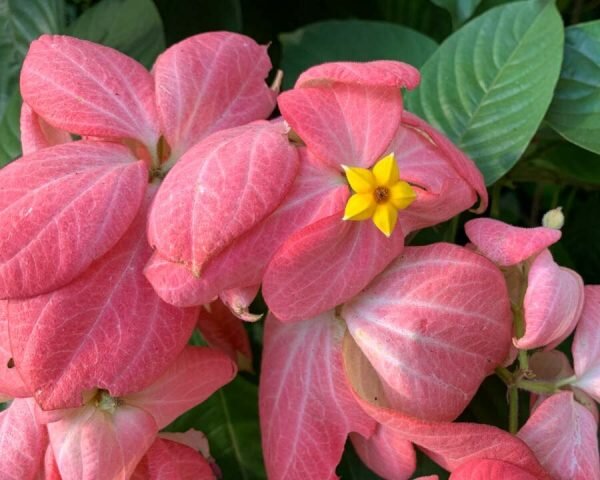
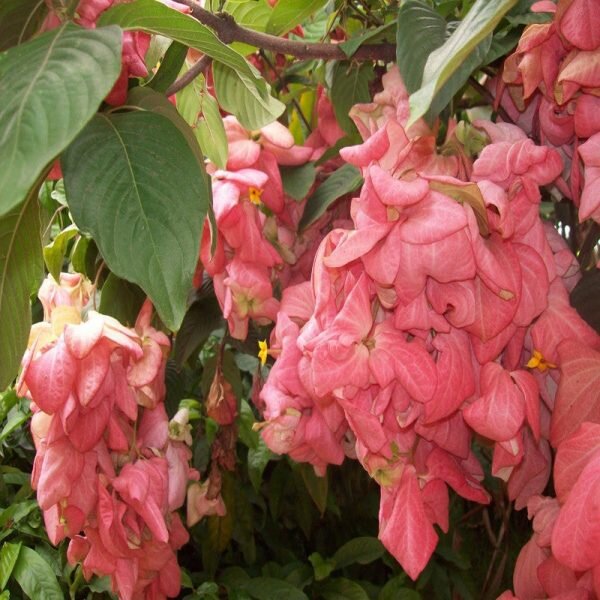
Mussaenda’s colorful bracts make it a popular choice for ornamental gardens and landscaping.
Ideal for hedges, and borders, and as a focal point in tropical or subtropical garden designs.
Low Maintenance:
With proper care, Mussaenda is a low-maintenance plant, especially once established.
Attracts Pollinators:
Its flowers attract bees, butterflies, and hummingbirds, making it a good choice for pollinator-friendly gardens.
“Add a touch of tropical elegance to your garden with the vibrant Mussaenda, a stunning flowering shrub that brings color and charm to any space, available now at PlantsInfo!”