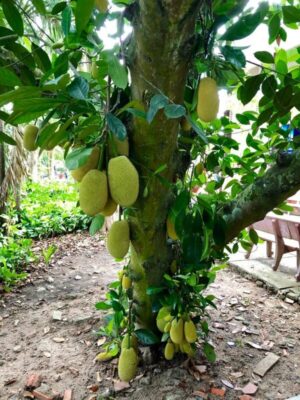
Common Names:
Thai Wood Apple, Elephant Apple, Monkey Fruit, Bael Fruit (in some regions).
Bloom Type:
Seasonal bloomers produce small, fragrant flowers, followed by round, hard-shelled fruits.
Flower Colors:
Pale green to yellowish-white.
Fragrance:
Mildly sweet fragrance from flowers; fruits have an earthy, tangy aroma when ripe.
Growth Habit:
Type: Tropical deciduous tree.
Height: 20–30 feet (6–9 meters) under optimal conditions.
Spread: 15–25 feet (4.5–7.5 meters).
Lifespan: Long-lived tree with a productive life spanning several decades.
Other Details:
Native Habitat: Widely cultivated in tropical Asia, particularly in Thailand, for its fruits and ornamental value.
Hardiness Zones: USDA zones 9–12.
Soil: Prefers well-drained sandy to loamy soil with a slightly acidic to neutral pH (6.0–7.5).
Light: Thrives in full sunlight; requires at least 6–8 hours of direct light daily.
Special Traits: Known for its hard, woody shell encasing sweet-sour, aromatic pulp, the Thai Wood Apple is a versatile plant with culinary, medicinal, and ornamental applications.
Common Pests: Scale insects and fruit flies. Use neem oil or organic pesticides for management.
Diseases: Fungal infections like leaf spot or root rot may occur in poorly drained soils. Ensure proper watering practices and remove infected parts promptly.
Temperature and Care:
The ideal temperature range is 68–95°F (20–35°C). Protect young trees from frost by covering them or moving to a sheltered location.
Benefits and Uses
Fruit Quality: The hard-shelled fruits contain sweet, tangy pulp rich in flavor and nutrients.
Nutritional Value: High in calcium, phosphorus, vitamin C, and antioxidants, the fruit is excellent for digestive health.
Culinary Uses: Used in beverages, chutneys, and desserts; the pulp can also be consumed fresh or dried.
Medicinal Value: Traditionally used in Ayurveda and herbal medicine for treating digestive issues, boosting immunity, and improving skin health.
Ornamental Value: Its unique fruits, glossy foliage, and sturdy structure make it an attractive addition to landscapes.
The Thai Wood Apple Plant is a perfect blend of beauty, utility, and hardiness, making it an excellent choice for tropical and subtropical gardens.
“Discover the charm and utility of the Thai Wood Apple Plant, available online at PlantsInfo!”