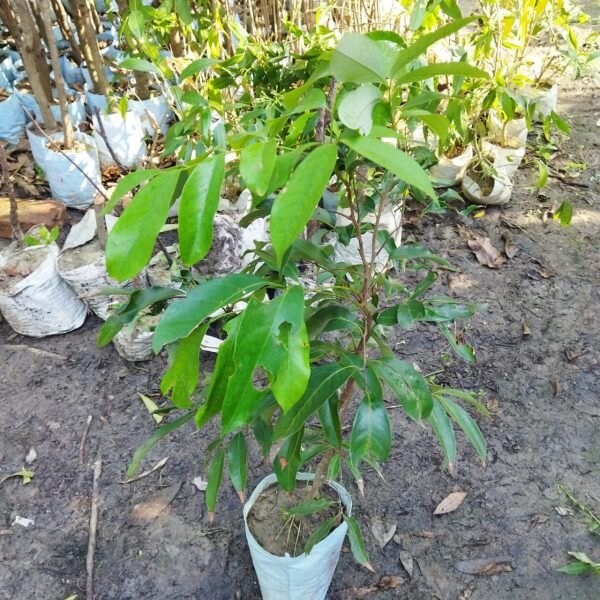
Thai Lychee Plant

Original price was: ₹750.00.Current price is: ₹651.00.

Thai Lychee Plant Details

  • Botanical Name:
    Litchi chinensis (Thai Variety).
  • Common Names:
    Thai Lychee, Litchi, Lichi.
  • Fruit Type:
    Small, round to oval fruits with rough, leathery skin encasing sweet, juicy flesh and a single seed.
  • Fruit Color:
    • Skin: Bright red or pinkish-red when ripe.
    • Flesh: Translucent white.
  • Fragrance:
    Delightfully sweet and floral aroma.
  • Growth Habit:
    • Type: Tropical evergreen fruit tree.
    • Height: 20–40 feet (6–12 meters).
    • Spread: 15–30 feet (4.5–9 meters).
    • Lifespan: Long-lived, can remain productive for over 50 years.
  • Other Details:
    • Native Habitat: Native to southern China and introduced widely in tropical and subtropical regions like Thailand and India.
    • Hardiness Zones: USDA zones 10–11.
    • Soil: Prefers well-drained, fertile loamy soil with a slightly acidic pH (5.5–7.0).
    • Light: Requires full sunlight but benefits from partial shade during extreme heat.
    • Special Traits: High-yielding and tolerant to warm, humid climates.

Out of stock

Planting Tips for Thai Lychee Plant

  1. Site Selection:
    • Choose a sunny location with good air circulation and protection from strong winds.
  2. Soil Preparation:
    • Enrich the soil with compost and organic matter to enhance fertility.
    • Ensure the soil is well-draining to avoid waterlogging.
  3. Planting Time:
    • Plant during spring or early monsoon when the soil is warm and moist.
  4. Planting Process:
    • Dig a hole twice as wide and deep as the root ball.
    • Place the plant, ensuring the root collar is level with the soil.
    • Backfill with soil, water thoroughly, and mulch around the base to retain moisture.
  5. Watering:
    • Water regularly during the first 2–3 years for root establishment.
    • Once established, water deeply during dry periods but avoid overwatering.
  6. Fertilizing:
    • Apply a balanced fertilizer (10-10-10) twice a year during the growing season.
    • Supplement with potassium and phosphorus to encourage flowering and fruiting.
  7. Pruning and Maintenance:
    • Prune annually to remove dead or diseased branches.
    • Thin overcrowded growth to improve sunlight penetration and air circulation.
  8. Pest and Disease Control:
    • Common Pests: Aphids, scale insects, and fruit borers. Use neem oil or organic pesticides.
    • Diseases: Anthracnose and root rot. Ensure good air circulation and proper drainage.
  9. Temperature and Care:
    • Thrives in temperatures between 70–90°F (21–32°C).
    • Protect young plants from frost and cold winds.

Benefits and Uses

  • Nutritional Value: Rich in vitamin C, antioxidants, and dietary fiber, promoting immunity and digestion.
  • Culinary Uses:
    • Eat fresh, juiced, or used in desserts and salads.
    • Used in syrups, jellies, and flavored beverages.
  • Aesthetic Appeal: Its lush foliage and seasonal flowering enhance the landscape.
  • Economic Importance: Highly profitable due to the global demand for lychees.

The Thai Lychee Plant is a tropical treasure, delivering sweet, aromatic fruits and adding beauty to any garden or orchard.

“Get the exotic Thai Lychee Plant for your garden, available online at PlantsInfo!”