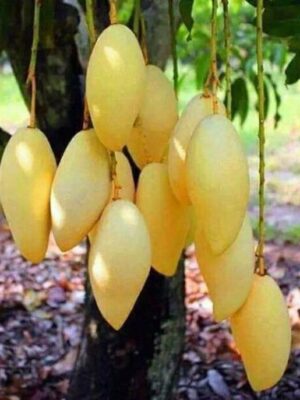
₹2,050.00Original price was: ₹2,050.00.₹1,250.00Current price is: ₹1,250.00.
Almond Fruit Plant
Botanical Name: Prunus dulcis (also known as Prunus amygdalus)
Bloom Type:
Almond trees produce beautiful, showy flowers before the leaves appear in early spring. The flowers are typically large, solitary, or in small clusters, with five petals each.
Color:
The flowers of the almond tree are usually soft pink or white with a subtle pink blush at the edges. The color varies slightly depending on the cultivar, with some varieties exhibiting darker pink or even red tones.
Fragrance:
Almond flowers have a delicate, sweet fragrance that is quite mild but adds to the plant’s appeal. The scent attracts bees and other pollinators, which help in the pollination process.
Growth Habit:
The almond tree is a deciduous, medium-sized tree that typically grows 10–15 feet tall. It has a spreading, rounded canopy with a dense structure. The tree is known for its smooth, greyish bark and its long, slender branches. Almond trees are best grown in well-spaced, open areas to allow proper air circulation and full sun exposure.
Other Details:
Foliage: Almond trees have narrow, lance-shaped leaves that are dark green on top and paler beneath. These leaves can grow up to 3–5 inches long.
Fruit: The almond fruit itself is a drupe, containing a hard, brown seed inside, which is the edible almond nut. The outer fruit is a fuzzy green, resembling a peach, which splits open when the almond nut is ready for harvest.
Hardiness: Almond trees thrive in USDA hardiness zones 7–9. They prefer a Mediterranean climate with mild winters and hot, dry summers. They are sensitive to frost, particularly during the flowering stage.
Sunlight: Almond trees require full sun to produce high-quality fruit. Ensure they receive 8–10 hours of direct sunlight per day for optimal growth and fruiting.
Soil: Almond trees prefer well-draining, sandy loam or loamy soil. They thrive in slightly alkaline soil with a pH level between 6.0 and 7.5. Ensure that the soil is not heavy or waterlogged.
Watering: Almond trees are drought-tolerant once established but need regular watering during the growing season, particularly when the fruit is developing. Water deeply, allowing the soil to dry out slightly between watering. Avoid waterlogging, which can cause root rot.
Fertilizer: Almond trees benefit from fertilization in early spring before they start blooming. Use a balanced fertilizer with nitrogen, phosphorus, and potassium to encourage healthy growth and fruit production. Avoid over-fertilizing, as it can lead to excessive leaf growth and fewer almonds.
Pruning: Prune the almond tree to remove dead, damaged, or crossing branches. Light pruning should be done in late winter or early spring before the new growth starts. Pruning helps maintain a strong structure and promotes better air circulation, reducing the risk of fungal diseases.
Pollination: Almond trees are self-sterile, meaning you will need at least two different varieties for cross-pollination to ensure good fruit yield. Planting multiple almond trees nearby can increase pollination success.
Pest Control: Common pests include aphids, scale insects, and mites. Regularly check for infestations and treat them with appropriate organic pesticides or insecticidal soaps. Watch out for fungal diseases, such as rust and brown rot, especially during wet periods.
PlantsInfo Note:
For more expert care tips and detailed information on almond trees and other plants, visit PlantsInfo—your trusted guide to gardening and plant care! 🌳