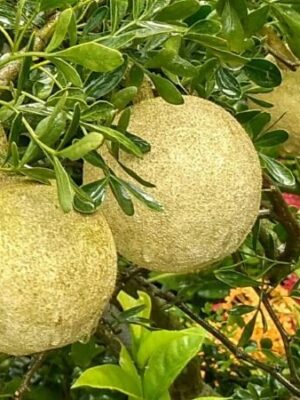
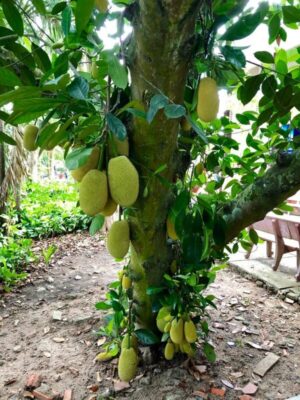
Soil: Well-drained, loamy soil with a slightly acidic to neutral pH (6.0-7.5).
Watering: Requires moderate watering; keep the soil moist but not waterlogged.
Ideal Planting Time:
Spring or early monsoon season.
Soil Preparation:
Enrich the soil with organic compost and ensure proper drainage.
Avoid heavy clay soils as they retain excess water.
Watering Routine:
Water regularly during the first few years to establish the plant.
Reduce frequency once the tree matures.
Fertilizing:
Apply a balanced, slow-release fertilizer twice yearly, during spring and autumn.
Pruning:
Prune to remove dead or damaged branches and shape the tree as needed.
Pest and Disease Control:
Monitor for pests like scale insects and caterpillars.
Use organic sprays or neem oil for pest control.
Prevent fungal infections by avoiding overwatering and ensuring good air circulation.
Pollination Requirements:
Typically self-pollinating, but cross-pollination may enhance fruit production.
Benefits and Uses:
Nutritional Value: The fruit pulp is not typically consumed, but the seeds are highly valued for their spiritual significance.
Aesthetic Value: Adds ornamental beauty to gardens and landscapes with its lush foliage and unique fruits.
Ecological Role: Provides habitat and food for birds and insects, contributing to biodiversity.
Special Notes:
Learn more about unique plants like the Hybrid Rudraksha Plant and explore expert planting tips on PlantsInfo—your trusted source for plant care and insights!