

Plants form the foundation of life on Earth. They provide oxygen, food, shelter, raw materials, and ecological balance. While plants appear in countless shapes and sizes, botanists and scientists classify them into broad groups based on their growth habits, structure, lifespan, and physical characteristics. Understanding these different plant types helps people better recognize plants around them and appreciate their diversity and role in nature.
This article explains the major types of plants in a clear and easy-to-understand way, covering herbs, shrubs, trees, climbers, creepers, and several other important plant categories. Rather than focusing on gardening techniques, this guide aims to provide foundational plant knowledge that can support learning, education, and exploration of plant biology.
Why Are Plants Classified into Types?
Plant classification helps organize the immense diversity of the plant kingdom. By grouping plants with similar characteristics, scientists, students, and nature enthusiasts can better understand how plants grow, survive, and interact with their environment.
Some common criteria used to classify plants include:
- Growth form (height and structure)
- Stem type (soft or woody)
- Lifespan (annual, biennial, perennial)
- Habitat (land, water, or mixed)
- Mode of growth (upright, climbing, creeping)
These classifications are practical and observational, making them useful even outside scientific study.
Herbs
What Are Herbs?
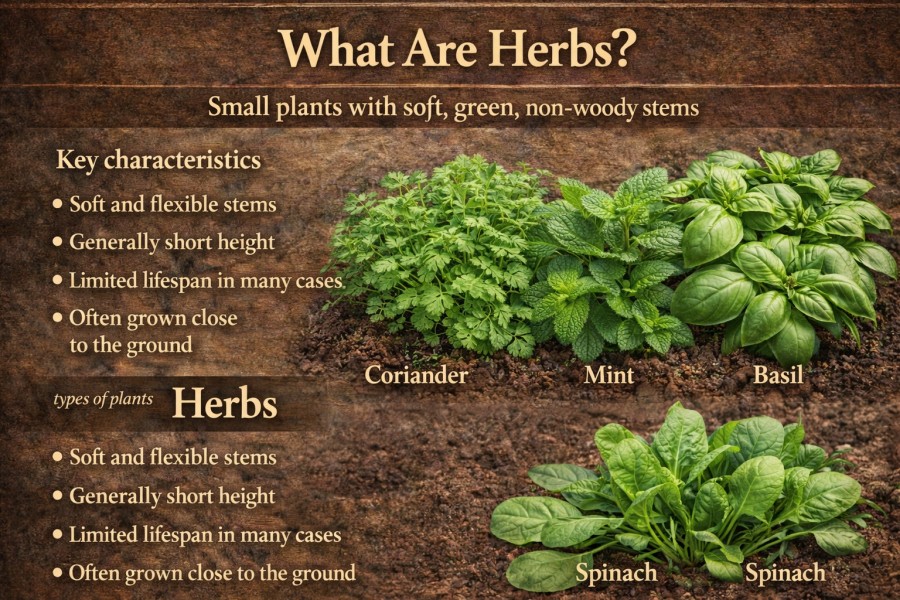
Herbs are small plants with soft, green, and non-woody stems. They are usually short in height and often complete their life cycle within a single growing season. Because of their delicate structure, herbs do not develop thick or woody trunks.
Herbs are commonly found in gardens, farms, grasslands, and natural ecosystems. Many well-known culinary and medicinal plants belong to this group.
Key Characteristics of Herbs
- Soft and flexible stems
- Generally short height
- Limited lifespan in many cases
- Often grown close to the ground
Examples of Herbs
- Coriander
- Mint
- Basil
- Spinach
Herbs play an important role in human culture due to their widespread use in food, traditional practices, and natural ecosystems.
Shrubs
What Are Shrubs?
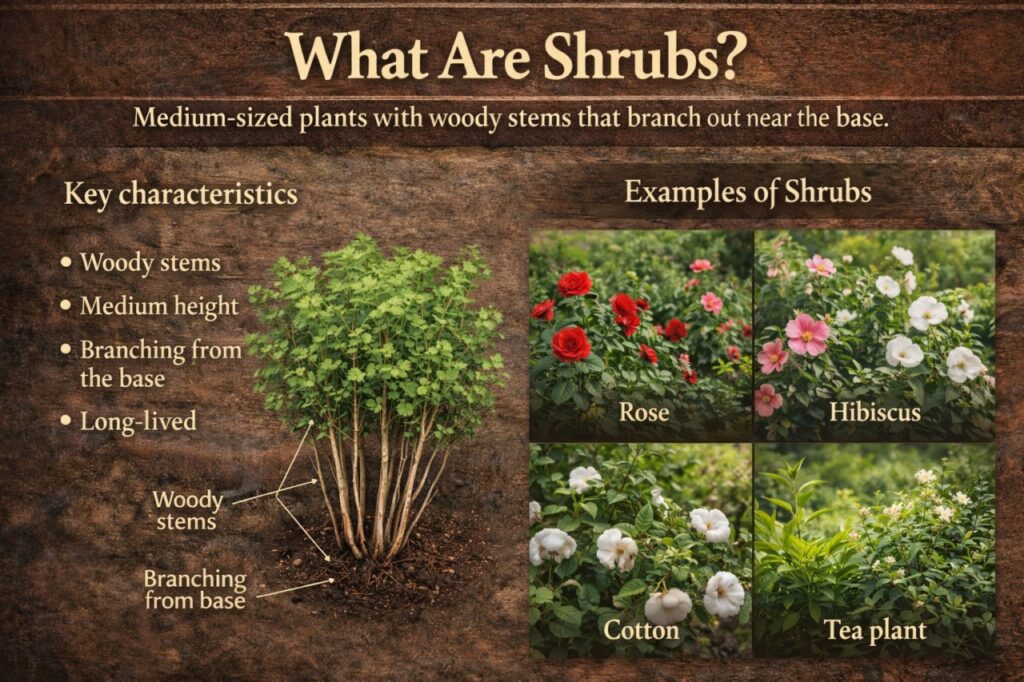
Shrubs are medium-sized plants with woody stems that branch out near the base. Unlike trees, shrubs do not usually have a single main trunk. Instead, they grow multiple stems that give them a bushy appearance.
Shrubs are longer-lived than herbs and can survive for many years under suitable conditions.
Key Characteristics of Shrubs
- Woody stems
- Medium height
- Branching from the base
- Perennial nature
Examples of Shrubs
- Rose
- Hibiscus
- Cotton
- Tea plant
Shrubs are commonly used in landscaping, hedges, and ornamental gardening, and they also occur naturally in forests and grasslands.
Trees

What Are Trees?
Trees are tall, woody plants with a single main trunk. They are among the longest-living organisms on Earth and can reach impressive heights. Trees form the backbone of forests and play a crucial role in maintaining ecological balance.
Key Characteristics of Trees
- Single thick trunk
- Woody and rigid structure
- Great height and wide canopy
- Long lifespan
Examples of Trees
- Mango
- Neem
- Banyan
- Oak
Trees provide shade, shelter, food, and raw materials. They also help regulate climate, conserve soil, and support countless forms of life.
Climbers
What Are Climbers?
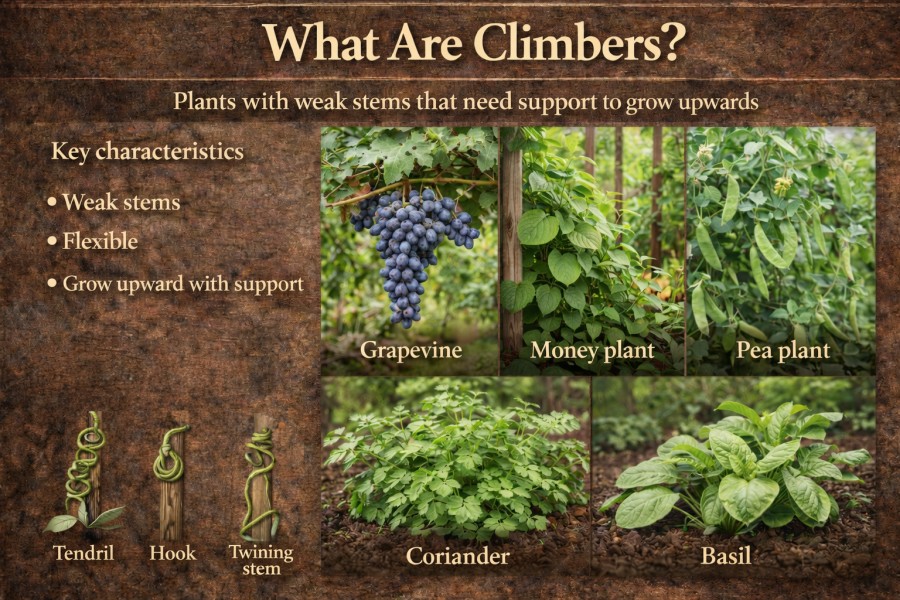
Climbers are plants with weak stems that cannot stand upright on their own. Instead, they grow upward by taking support from nearby structures such as walls, fences, trellises, or other plants.
Climbers use various mechanisms to attach themselves, including tendrils, hooks, or twining stems.
Key Characteristics of Climbers
- Weak, flexible stems
- Grow upward with support
- Often fast-growing
Examples of Climbers
- Grapevine
- Money plant
- Pea plant
- Jasmine
Climbers are found in both natural habitats and cultivated environments and contribute to vertical greenery.
Creepers
What Are Creepers?
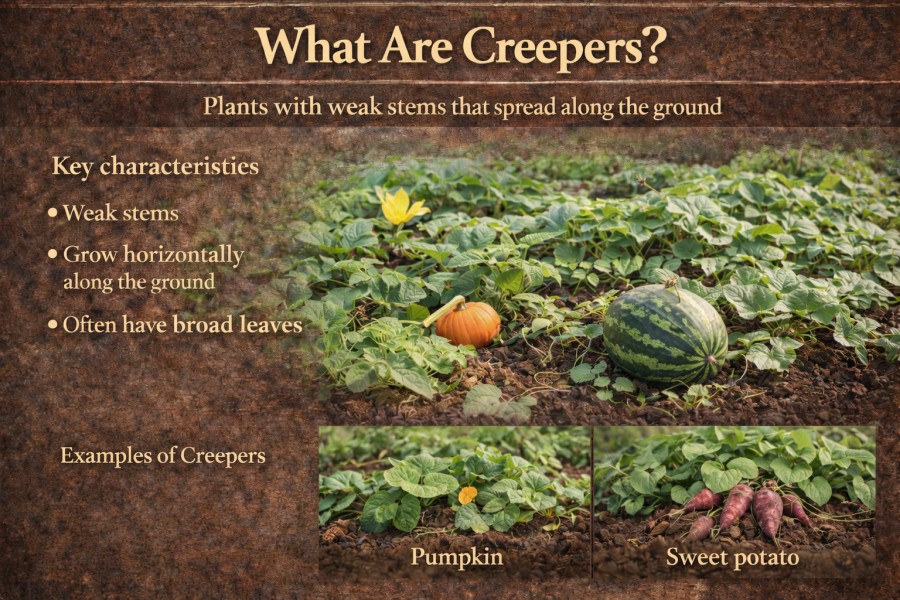
Creepers are plants with weak stems that spread along the ground rather than growing upright. Their stems trail over the surface of the soil, and they often cover large areas.
Key Characteristics of Creepers
- Weak stems
- Grow horizontally along the ground
- Often have broad leaves
Examples of Creepers
- Pumpkin
- Watermelon
- Sweet potato
Creepers are common in agricultural fields and open landscapes, where their spreading habit allows them to access sunlight efficiently.
Aquatic Plants
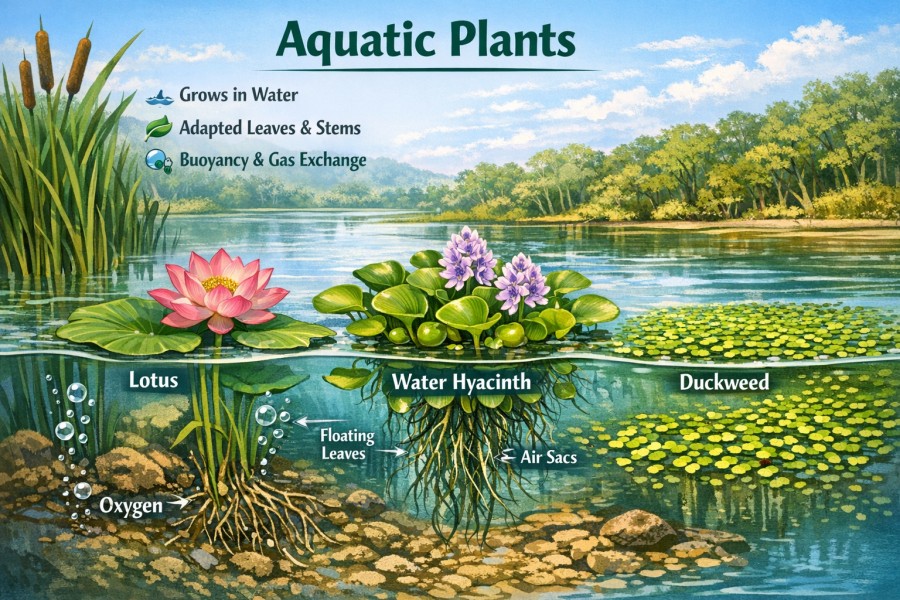
What Are Aquatic Plants?
Aquatic plants grow in water or waterlogged environments such as ponds, lakes, rivers, and wetlands. These plants have special adaptations that allow them to survive in aquatic conditions.
Key Characteristics of Aquatic Plants
- Grow fully or partially in water
- Modified leaves and stems
- Adaptations for buoyancy and gas exchange
Examples of Aquatic Plants
- Lotus
- Water hyacinth
- Duckweed
Aquatic plants contribute to water ecosystems by providing oxygen, shelter, and food for aquatic organisms.
Terrestrial Plants
What Are Terrestrial Plants?
Terrestrial plants grow on land and form the majority of plant species. They are adapted to a wide range of soil types and climates.
Key Characteristics of Terrestrial Plants
- Grow on land
- Rooted in soil
- Wide diversity of forms
Examples of Terrestrial Plants
- Grass
- Wheat
- Trees, shrubs, and herbs
Most of the plants encountered in everyday life belong to this category.
Annual, Biennial, and Perennial Plants
Plants can also be classified based on their lifespan.
Annual Plants
Annual plants complete their life cycle within one growing season.
Examples:
- Wheat
- Rice
- Sunflower
Biennial Plants
Biennial plants complete their life cycle in two years.
Examples:
- Carrot
- Beetroot
Perennial Plants
Perennial plants live for more than two years and often grow back each season.
Examples:
- Mango tree
- Rose plant
This classification helps in understanding plant growth patterns over time.
Flowering and Non-Flowering Plants
Flowering Plants
Flowering plants produce flowers and seeds. They make up the largest group of plants and include the most familiar species.
Examples:
- Rose
- Lily
- Apple tree
Non-Flowering Plants
Non-flowering plants reproduce without flowers and seeds.
Examples:
- Ferns
- Mosses
These plants often reproduce through spores and are commonly found in moist environments.
Comparison Table: Different Types of Plants
You can place this table after the section on plant types (for example, after “Creepers” or before “Importance of Understanding Plant Types”).
| Plant Type | Stem Type | Typical Height | Lifespan | Growth Pattern | Common Examples |
|---|---|---|---|---|---|
| Herbs | Soft, green, non-woody | Short | Usually short-lived | Grow close to the ground | Coriander, Mint, Basil |
| Shrubs | Woody, multiple stems | Medium | Perennial | Upright with a wide canopy | Rose, Hibiscus |
| Trees | Thick, woody trunk | Tall | Long-lived | Upright with wide canopy | Mango, Neem |
| Climbers | Weak, flexible | Variable | Annual or perennial | Grow upward with support | Grapevine, Money Plant |
| Creepers | Weak, trailing | Low-spreading | Annual or perennial | Spread along the ground | Pumpkin, Watermelon |
| Aquatic Plants | Soft, adapted to water | Variable | Annual or perennial | Grow in or on water | Lotus, Duckweed |
| Terrestrial Plants | Varies | Variable | Variable | Grow on land | Wheat, Grass |
Importance of Understanding Plant Types
Knowing different plant types helps in:
- Identifying plants correctly
- Understanding plant behavior and growth
- Learning basic botanical concepts
- Appreciating biodiversity
Plant classification also forms the basis for further studies in botany, agriculture, ecology, and environmental science.
Plants and Their Role in Ecosystems
Each type of plant contributes differently to ecosystems:
- Trees stabilize soil and support wildlife
- Herbs and grasses provide ground cover
- Aquatic plants regulate water quality
- Climbers and creepers add structural diversity
Together, these plant types create balanced and resilient ecosystems.
Conclusion
Plants can be grouped into different types based on their structure, growth habit, habitat, and lifespan. Herbs, shrubs, trees, climbers, creepers, aquatic plants, and terrestrial plants each represent unique adaptations to their environments. Understanding these categories provides a foundation for learning about plant diversity and ecological relationships.
As you explore different plants, recognizing their type helps you better understand how they grow and interact with the world around them. Plant classification is not just a scientific concept—it is a practical way to observe and appreciate the natural world.
For readers interested in exploring individual plants in more detail, Plants Info provides a growing plant database with structured information on herbs, shrubs, trees, indoor plants, and flowering species. Each entry focuses on plant characteristics, classification, and general background to support learning and discovery.

