Introduction
The potato plant is a herbaceous flowering plant widely cultivated for its underground tubers, which serve as a major food source in many regions of the world. Botanically classified within the nightshade family, the potato plant is notable for its annual growth cycle, compound foliage, and ability to form nutrient-rich storage organs beneath the soil surface.
Originating in South America, the potato has undergone extensive domestication and diversification, resulting in thousands of cultivated varieties adapted to different environmental conditions and culinary uses. Beyond its agricultural importance, the potato plant is of botanical interest due to its distinct reproductive structures, vegetative propagation through tubers, and close relationship to other economically significant crops within the same family.
Classification
- Plant Type
- Herb
- Lifecycle
- Annual
- Native Region
- South America
- Plant Family
- Solanaceae
Quick Plant Information
| Attribute | Details |
|---|---|
| Common Names | Potato |
| Scientific Name | Solanum tuberosum |
| Family | Solanaceae |
| Plant Type | Herbaceous crop plant |
| Lifespan | Annual (cultivated) |
| Native Region | Andean region of South America |
| Growth Habit | Upright to spreading |
| Average Height | 60–100 cm |
| Leaf Characteristics | Compound, ovate leaflets, green |
| Flower Color | White, pink, purple, or violet |
| Sunlight Requirement | Full sun |
| Water Requirement | Moderate |
| Soil Type | Loose, well-drained soil |
| Toxicity | Green parts and unripe tubers toxic if ingested |
Botanical Characteristics
The potato plant develops from seed tubers and produces a shallow but extensive root system from which stolons emerge. These stolons expand horizontally beneath the soil surface and give rise to tubers at their tips. Tubers are swollen stem structures that store carbohydrates, primarily in the form of starch.
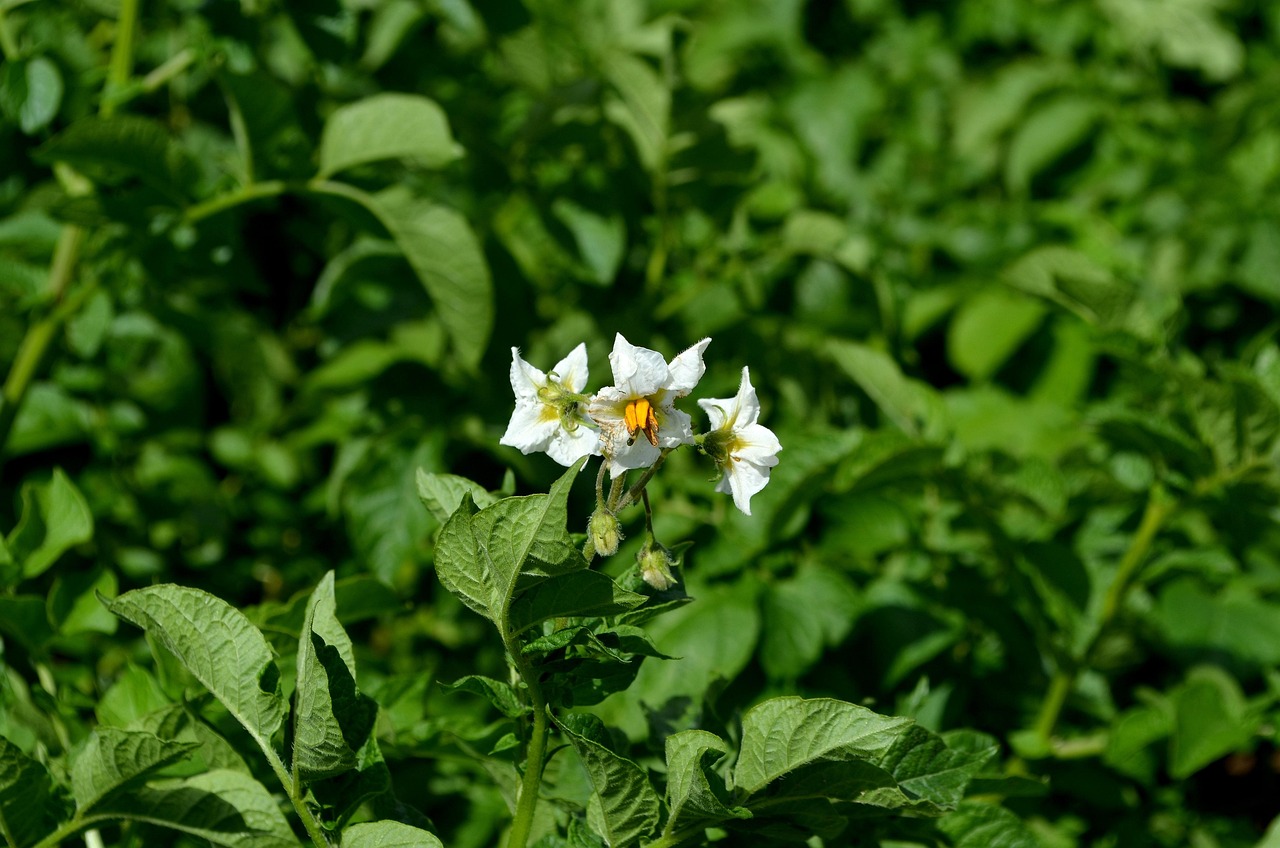
Above ground, the plant forms erect or semi-spreading stems that are angular and green to purplish in color. The leaves are pinnately compound, consisting of a central leaflet and several pairs of lateral leaflets with smaller interspersed segments. Leaf surfaces are generally soft and slightly hairy.
The potato plant produces star-shaped flowers arranged in terminal clusters. Each flower typically contains five fused petals and prominent yellow anthers. Following pollination, small green berry-like fruits may develop, containing true botanical seeds, though these fruits are not consumed.
Native Habitat and Distribution
The potato plant is native to the Andean highlands of present-day Peru and Bolivia, where it evolved under cool temperatures, well-drained soils, and seasonal rainfall. Indigenous communities domesticated the plant thousands of years ago, selecting for tuber size, shape, and storage qualities.
After its introduction to Europe in the 16th century, the potato spread rapidly across continents, becoming a staple crop in temperate regions worldwide. Today, it is cultivated across Asia, Europe, Africa, and the Americas, with adaptation to a wide range of altitudes and climates.
Despite its global distribution, the plant’s genetic diversity remains strongly centered in South America, where wild relatives and traditional landraces continue to grow.
Common Varieties or Types
The potato exhibits extensive varietal diversity, with cultivated types differing in tuber color, texture, maturity period, and culinary application. Broadly, varieties are categorized based on tuber characteristics rather than botanical distinctions.
Commonly recognized groups include russet-type potatoes with rough brown skins, smooth-skinned white and yellow potatoes, red-skinned varieties, and pigmented types with purple or blue flesh. Each group reflects selective breeding aimed at yield, storage behavior, and regional preference.
In addition to cultivated varieties, numerous wild Solanum species exist, contributing genetic traits such as disease resistance and environmental tolerance to breeding programs.
Uses and Importance
The potato plant holds significant importance as a global food crop and nutritional resource. Its tubers are a major source of carbohydrates and contribute essential vitamins and minerals to diets worldwide.
Beyond direct consumption, potatoes are processed into a wide range of products, including flours, starches, and fermented derivatives. The crop also plays a role in agricultural research due to its sensitivity to environmental factors and its historical association with food security.
In some regions, the potato plant has cultural importance, symbolizing sustenance and agricultural heritage, particularly in its native Andean landscapes.
Growth Behavior and Care
The potato plant exhibits rapid vegetative growth during its early developmental stages, producing foliage that supports photosynthesis and tuber formation. Growth activity is concentrated during cooler portions of the growing season, with above-ground development slowing as tubers expand underground.
As the plant matures, energy allocation shifts from leaf and stem growth to tuber enlargement. Foliage gradually senesces toward the end of the lifecycle, indicating the completion of tuber development.
The plant’s overall form and productivity are influenced by environmental factors such as temperature, moisture availability, and soil structure, all of which interact to determine tuber size and number.
Lifecycle, Flowering, and Harvesting Patterns
In cultivated systems, the potato plant is treated as an annual crop, completing its lifecycle within a single growing season. Development begins with sprouting from seed tubers, followed by vegetative growth, flowering, and tuber maturation.
Flowering typically occurs mid-season, though its presence is not essential for tuber formation. In many varieties, flowers may drop without producing fruit.
Harvesting patterns observed in agricultural contexts show that tubers reach full size after foliage decline. Once mature, tubers remain dormant until environmental conditions favor sprouting.
Environmental or Ecological Value
The potato plant contributes to agroecosystems as a rotational crop that can help diversify planting systems. Its growth cycle allows integration with other crops, supporting soil management strategies when combined with appropriate agricultural planning.
In its native habitats, wild relatives of the potato support ecological diversity and serve as genetic reservoirs. Conservation of these species is considered important for maintaining long-term crop resilience and adaptability.
Recommended Products
Disclosure: As an Amazon Associate, PlantsInfo may earn from qualifying purchases.
🌱 Plant Care Essentials
The following tools can help with pruning, plant health, soil management, and fruit garden maintenance.

Neem Oil for Plant Care
Natural plant protection against aphids, whiteflies, mites, and other common garden pests.

Fungicide for Root Care
Helps suppress soil-borne fungal diseases and supports healthier root systems.

Spray Bottle for Plants
Ideal for applying foliar sprays, neem oil solutions, and liquid plant treatments.

Rubber Hand Gloves
Protects hands during pruning, planting, soil preparation, and garden maintenance.
Conclusion
The potato plant is a botanically distinctive and economically vital species with a long history of domestication and global cultivation. Its ability to produce nutrient-dense tubers, adapt to diverse environments, and support large populations has established it as one of the world’s most important food plants.
From its Andean origins to its modern agricultural presence, the potato plant continues to hold relevance in botanical study, food systems, and ecological research.
Frequently Asked Questions (FAQs)
Is the potato plant a perennial or an annual?
In cultivation, the potato plant is grown as an annual, completing its lifecycle within one season.
Do potato plants produce fruits?
Yes, the plant can produce small green fruits containing seeds, though these fruits are not edible.
Which parts of the potato plant are edible?
Only the mature tubers are consumed; other plant parts contain natural toxins.
Why do potato tubers grow underground?
Tubers develop from underground stems called stolons, serving as storage organs for the plant.
Are potato plants related to tomatoes?
Yes, both belong to the same botanical family and share several structural similarities.
This potato plant profile is part of the broader PlantsInfo plant database, which documents botanical characteristics, native origins, growth behavior, and uses of diverse plant species. Through structured reference entries, PlantsInfo supports long-term understanding of agricultural, medicinal, and ornamental plants within a unified botanical knowledge platform.