Introduction
The Anthurium plant is a tropical flowering plant widely recognized for its distinctive, glossy foliage and long-lasting ornamental inflorescences. Belonging to the genus Anthurium within the family Araceae, this plant is notable for its characteristic spathe-and-spadix floral structure, which gives it a striking and easily identifiable appearance. Anthurium species are commonly cultivated as ornamental plants in indoor and controlled outdoor environments due to their visual appeal and extended flowering period.
Classification
- Plant Type
- Herb
- Lifecycle
- Perennial
- Leaf Habit
- Evergreen
- Native Region
- North America, South America
- Plant Family
- Araceae
Anthuriums are often associated with tropical aesthetics and are valued in botanical collections, residential interiors, and commercial landscaping. Their leathery leaves, vibrant spathes, and structural growth habit contribute to their popularity as decorative plants. While numerous species exist within the genus, a relatively small number are widely cultivated for ornamental purposes.
Quick Plant Information
| Attribute | Details |
|---|---|
| Common Names | Anthurium, Flamingo Flower, Laceleaf |
| Scientific Name | Anthurium spp. |
| Family | Araceae |
| Plant Type | Flowering perennial |
| Lifespan | Perennial |
| Native Region | Tropical Americas |
| Growth Habit | Clump-forming, upright |
| Average Height | 30–90 cm |
| Leaf Characteristics | Large, glossy, leathery, heart-shaped or lanceolate |
| Flower Color (if applicable) | Red, pink, white, green, purple (varies by species) |
| Sunlight Requirement | Bright, indirect light |
| Water Requirement | Moderate |
| Soil Type | Well-drained, organic-rich soil |
| Toxicity | Toxic to humans and pets if ingested |
Botanical Characteristics
Anthurium plants are herbaceous perennials characterized by thick, fleshy stems and prominent foliage. Leaves are typically large, smooth, and glossy, with shapes ranging from heart-shaped to elongated, depending on the species. The leaf surface often exhibits a leathery texture, contributing to durability and visual sheen.
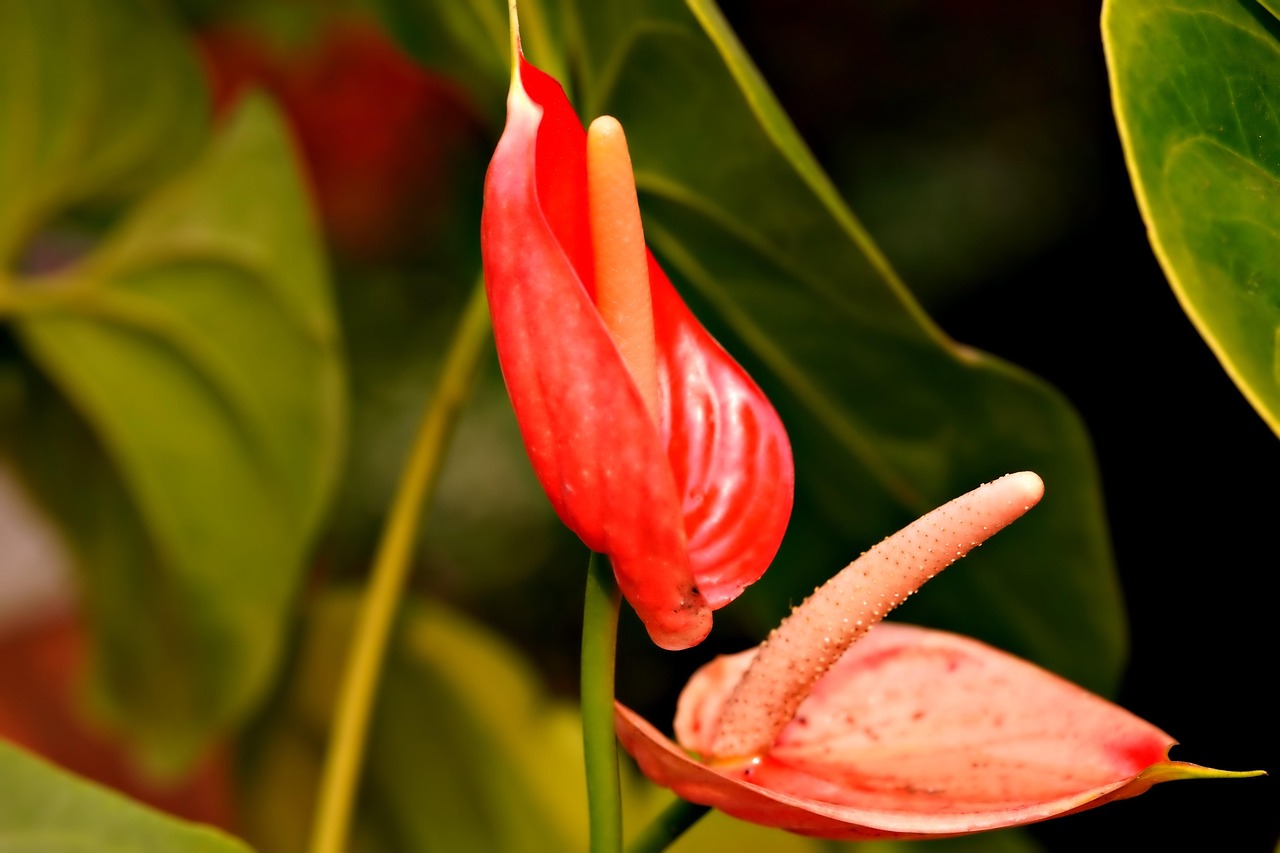
The most distinctive feature of Anthurium plants is their inflorescence, consisting of a spathe and a spadix. The spathe, commonly mistaken for a flower petal, is a modified leaf that displays vivid coloration. The true flowers are minute and densely packed along the spadix, which protrudes from the spathe. This floral structure is a defining trait of the Araceae family.
Roots are generally thick and fibrous, adapted to both terrestrial and epiphytic growth forms in natural habitats. Some species exhibit aerial roots, reflecting their adaptability to varied growing environments.
Native Habitat and Distribution
Anthurium plants are native to the tropical regions of Central and South America, where they naturally occur in warm, humid environments. In their native habitats, they are commonly found in rainforests, growing on forest floors, rocky outcrops, or as epiphytes attached to trees.
These regions are characterized by consistent temperatures, high humidity, and filtered sunlight due to dense forest canopies. Such environmental conditions have shaped the plant’s growth patterns, leaf structure, and moisture requirements. Over time, Anthurium species have been introduced to tropical and subtropical regions worldwide through horticultural trade and ornamental cultivation.
Today, Anthuriums are widely distributed through cultivation rather than naturalized populations, particularly in indoor settings and greenhouse environments.
Common Varieties or Types
The genus Anthurium comprises over 1,000 species, though only a limited number are commonly cultivated as ornamental plants. Among the most recognized types are those valued for either their flowers or foliage.
Flowering varieties, such as Anthurium andreanum and Anthurium scherzerianum, are primarily cultivated for their colorful spathes and compact growth habit. These types are frequently used in decorative displays and floral arrangements due to their long-lasting inflorescences.
Foliage-focused species, including Anthurium crystallinum and Anthurium clarinervium, are appreciated for their dramatic leaf venation and textured surfaces rather than floral display. These varieties highlight the diversity within the genus and demonstrate the ornamental value of Anthurium beyond flowering traits.
Uses and Importance
Anthurium plants hold significant importance in ornamental horticulture. Their vibrant appearance and extended blooming duration make them a prominent choice for interior decoration, conservatories, and botanical exhibits. The spathes are also widely used in cut flower arrangements, where they are valued for durability and visual impact.
In cultural contexts, Anthurium flowers are often associated with hospitality, celebration, and decorative symbolism, particularly in tropical regions. Commercially, the plant contributes to the global floriculture industry, supporting both potted plant and cut flower markets.
Beyond aesthetic applications, Anthurium plants also serve educational and botanical roles, representing key morphological features of the Araceae family in academic and reference collections.
Growth Behavior and Care
Anthurium plants exhibit steady, upright growth under stable environmental conditions. New leaves typically emerge from the central crown, gradually expanding and hardening as they mature. Flowering may occur periodically throughout the year, particularly in consistently warm and humid environments.
Growth patterns are influenced by light availability, ambient moisture, and nutrient-rich substrates. The plant generally maintains a compact clumping habit, with older leaves persisting alongside new growth. In controlled environments, Anthuriums demonstrate predictable growth cycles, contributing to their reliability as ornamental plants.
The leathery nature of the leaves allows the plant to retain moisture efficiently, while its root system supports both anchorage and nutrient absorption.
Lifecycle / Flowering / Harvesting
As a perennial plant, Anthurium follows a continuous lifecycle without a defined annual termination. Vegetative growth and flowering can occur concurrently, with individual inflorescences remaining visually prominent for several weeks or longer.
Flowering is not confined to a single season and may recur multiple times annually under favorable conditions. Each inflorescence progresses from emergence to maturity before gradually fading, after which the plant continues producing foliage and, potentially, new flowers.
In horticultural and commercial contexts, flowering stems are often harvested for ornamental use, reflecting the plant’s capacity for sustained inflorescence production over time.
Environmental or Ecological Value
In natural ecosystems, Anthurium species contribute to forest biodiversity by occupying understory and epiphytic niches. Their flowers provide resources for specialized pollinators, while their foliage adds to structural complexity within tropical habitats.
As cultivated plants, Anthuriums contribute indirectly to environmental awareness by promoting interest in tropical plant diversity. Their presence in botanical collections and educational displays supports conservation awareness related to rainforest ecosystems and plant biodiversity.
Conclusion
The Anthurium plant represents a distinctive and diverse group of tropical flowering plants valued primarily for their ornamental qualities. With their characteristic spathe-and-spadix structure, glossy foliage, and perennial growth habit, Anthuriums occupy an important place in both horticulture and botanical reference collections.
Their adaptability to cultivated environments, combined with visual longevity, has ensured their continued relevance across residential, commercial, and academic settings. As a genus, Anthurium exemplifies the aesthetic and structural diversity found within tropical plant families.
Frequently Asked Questions (FAQs)
Is Anthurium an indoor or outdoor plant?
Anthurium is commonly maintained as an indoor ornamental plant, though it also grows in outdoor settings within suitable tropical or subtropical environments.
Do Anthurium plants flower throughout the year?
Flowering may occur multiple times a year, particularly in environments with stable warmth and humidity.
Are Anthurium plants toxic?
Anthurium plants contain compounds that are considered toxic if ingested by humans or pets.
What part of the Anthurium plant is considered the flower?
The colorful spathe is a modified leaf, while the true flowers are small and located along the spadix.
How long do Anthurium flowers last?
Individual inflorescences are known for their longevity and may remain visually appealing for several weeks.
Plants Info serves as a comprehensive knowledge platform documenting a wide range of plant species, including ornamental, medicinal, and economically significant plants. Reference entries available on Plants Info provide structured, factual information covering botanical characteristics, natural distribution, and ecological relevance, supporting long-term understanding of plant diversity through a centralized plant database.