Introduction
The chilli pepper plant refers to a group of flowering plants belonging to the genus Capsicum, widely known for producing fruits commonly called chilli peppers. These plants are part of the nightshade family (Solanaceae), which also includes tomatoes, potatoes, and eggplants. Chilli pepper plants are cultivated and naturalized across many regions of the world and are recognized for the wide diversity of fruit shapes, sizes, colors, and pungency levels.
Classification
- Plant Type
- Herb
- Leaf Habit
- Evergreen
- Native Region
- South America
- Plant Family
- Solanaceae
Botanically, chilli peppers are notable for the presence of capsaicinoids, the compounds responsible for their characteristic pungency. The genus Capsicum comprises several domesticated species, including Capsicum annuum, Capsicum frutescens, Capsicum chinense, Capsicum baccatum, and Capsicum pubescens. Together, these species account for the majority of chilli peppers encountered in agriculture, cuisine, and horticulture.
Beyond their botanical characteristics, chilli pepper plants hold long-standing cultural and economic importance. Originating in the Americas, they were disseminated globally following early transoceanic trade routes and have since become deeply integrated into regional cuisines, agricultural systems, and cultural traditions across Asia, Africa, Europe, and the Middle East.
Quick Plant Information
| Attribute | Details |
|---|---|
| Common Name(s) | Chilli Pepper, Chili Pepper, Hot Pepper |
| Scientific Name | Capsicum spp. |
| Family | Solanaceae |
| Plant Type | Flowering plant |
| Lifespan | Annual or perennial (species-dependent) |
| Growth Habit / Growth Form | Upright, bushy, or branching herb |
| Native Range | Central and South America |
| Climate Adaptation / Habitat Type | Tropical and subtropical regions |
| Leaf Type | Simple, broad leaves |
| Flower Color(s) | White, greenish-white, occasionally purple |
| Fruit Type | Berry |
| Evergreen / Deciduous | Evergreen in frost-free environments |
Botanical Description
The chilli pepper plant typically develops a branched stem structure that varies from soft and herbaceous to semi-woody, depending on species and age. Stems are generally green when young and may become firmer and slightly lignified as the plant matures. Internodes can be short or elongated, contributing to compact or spreading growth forms.
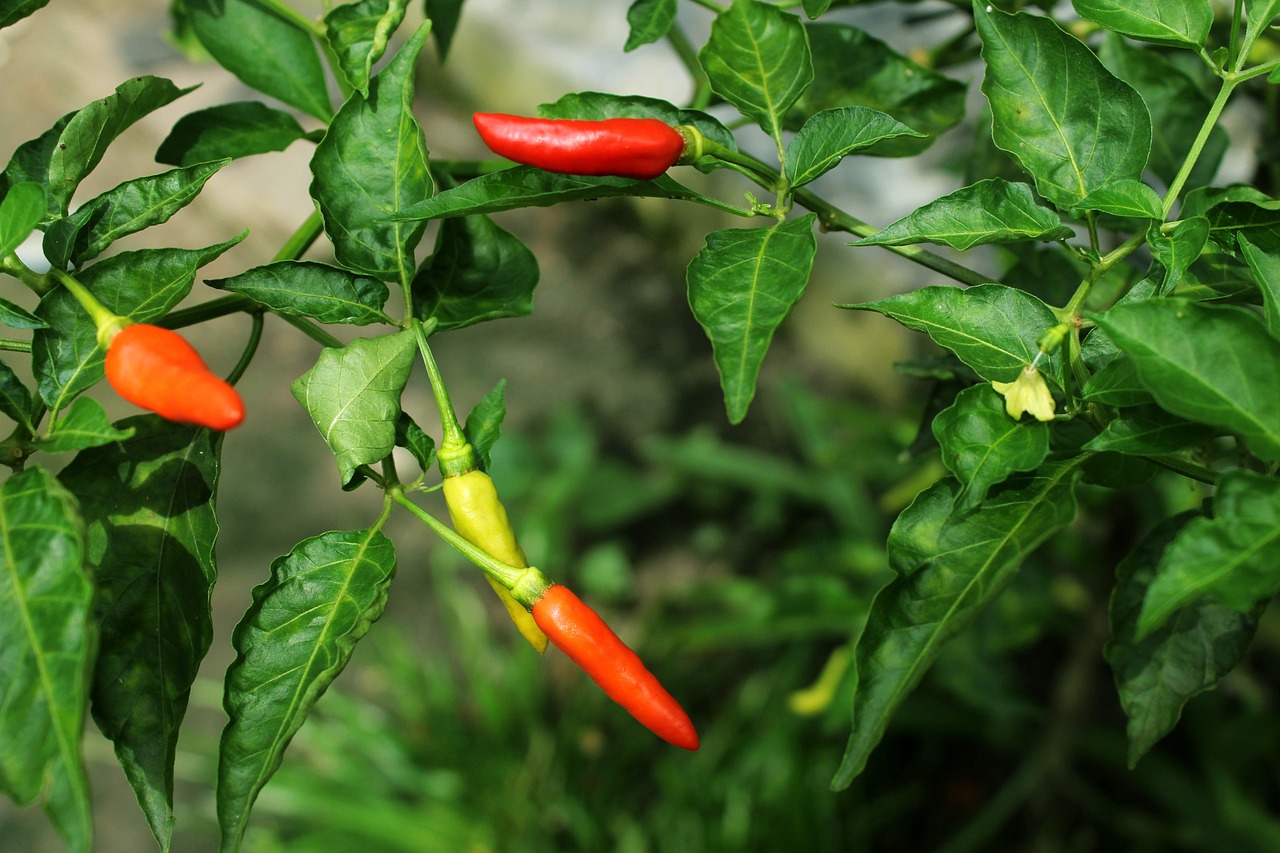
Leaves are arranged alternately along the stems and are simple in structure, with smooth or slightly wavy margins. Leaf blades are usually ovate to lanceolate, tapering toward the tip, and display a glossy to matte surface. Leaf coloration ranges from light to deep green, with some varieties showing darker pigmentation or purple tinges due to anthocyanin presence.
Flowers emerge singly or in small clusters from leaf axils. Each flower typically has five to seven petals, forming a star-like or bell-shaped structure. Petal color is most commonly white, though greenish or purplish hues may occur in certain species. The flowers are bisexual, containing both stamens and a central pistil.
The fruit of the chilli pepper plant is botanically classified as a berry. Fruits exhibit remarkable diversity, varying in size from small, round forms to elongated or blocky shapes. Color transitions often occur during maturation, with fruits changing from green to red, yellow, orange, purple, or brown. The interior of the fruit contains numerous flattened seeds attached to a central placenta, which is also the primary site of capsaicinoid concentration.
Root systems are generally shallow but well-branched, enabling the plant to anchor itself and access surface nutrients. Roots are fibrous and spread laterally rather than penetrating deeply into the soil profile.
Plant Classification & Growth Habit
Chilli pepper plants are classified as herbaceous flowering plants within the Solanaceae family. Depending on species and environmental conditions, they may function as annuals—completing their life cycle within a single growing season—or as short-lived perennials capable of surviving multiple years in suitable climates.
Growth habits range from compact and bush-like forms to taller, more open structures with extensive branching. Most species exhibit an upright growth pattern, though some varieties display spreading or semi-woody characteristics as they mature. The overall form is influenced by genetic traits rather than external intervention.
Common Types / Varieties / General Classifications
Chilli peppers are commonly grouped by species, fruit characteristics, or pungency levels rather than by cultivation suitability. Broad classifications include:
- Capsicum annuum group: Includes many widely known chilli and sweet pepper types, ranging from mild to pungent.
- Capsicum frutescens group: Often characterized by smaller, upright fruits.
- Capsicum chinense group: Known for highly pungent varieties with wrinkled or lantern-shaped fruits.
- Capsicum baccatum group: Recognized by distinctive floral markings and aromatic fruits.
- Capsicum pubescens group: Identified by hairy leaves and dark-colored seeds.
These groupings reflect botanical relationships and fruit morphology rather than preference or performance.
Native Range & Distribution
The chilli pepper plant originated in Central and South America, where archaeological evidence indicates its use and domestication thousands of years ago. Wild ancestors are believed to have been distributed across regions that now include Mexico, Peru, Bolivia, and surrounding areas.
Following early global exploration and trade, chilli peppers were introduced to Europe, Africa, and Asia. Over time, they became naturalized in many tropical and subtropical regions. Today, chilli pepper plants are cultivated or found in a wide range of environments, reflecting their adaptability to diverse climatic zones without being restricted to a single ecological niche.
Cultural, Culinary, or Traditional Context
Chilli peppers have played a prominent role in human societies for centuries. In pre-Columbian cultures of the Americas, they were integral to food systems, rituals, and trade networks. Early records and artifacts suggest their significance extended beyond dietary use to symbolic and ceremonial contexts.
After their introduction to other continents, chilli peppers were rapidly incorporated into regional cuisines. They became defining ingredients in many traditional dishes across South Asia, Southeast Asia, East Asia, Africa, and the Mediterranean. In some cultures, chilli peppers also feature in folklore, festivals, and artistic representations.
Economically, chilli pepper plants are significant agricultural commodities, contributing to local markets and international trade. Dried, fresh, and processed forms of chilli peppers are widely exchanged, underscoring the plant’s enduring global relevance.
Interesting Facts / Did You Know
- The heat sensation associated with chilli peppers is measured using the Scoville scale, which quantifies capsaicinoid concentration.
- Chilli peppers were among the first plants domesticated in the Americas.
- The genus Capsicum includes both pungent and non-pungent varieties.
- Fruit orientation varies by species, with some peppers pointing upward and others hanging downward.
- Chilli peppers are botanically classified as berries, not vegetables.
FAQs
Are chilli peppers and chili peppers the same plant?
Yes. The difference in spelling reflects regional language preferences rather than botanical distinctions.
Is a chilli pepper a fruit or a vegetable?
Botanically, chilli peppers are fruits classified as berries, though they are commonly treated as vegetables in culinary contexts.
Do all chilli pepper plants produce spicy fruits?
No. Some Capsicum varieties produce fruits with little or no pungency.
Are chilli peppers related to bell peppers?
Yes. Both belong to the genus Capsicum and share close botanical relationships.
Conclusion
The chilli pepper plant represents a diverse and historically significant group within the genus Capsicum. Characterized by distinctive flowers, varied fruit forms, and widespread global presence, these plants occupy an important place in botanical classification and cultural history. From their origins in the Americas to their integration into societies worldwide, chilli pepper plants remain notable for their diversity, adaptability, and enduring relevance.
The Plants Info platform provides a structured and factual plant database designed for educational reference, offering consistent botanical profiles that support learning and general plant identification.