Introduction
Zinnia refers to a genus of flowering plants belonging to the family Asteraceae, widely recognized for its vibrant, daisy-like blooms. Native primarily to the Americas, especially Mexico and the southwestern United States, zinnias are known for their striking range of colors and forms. The genus includes both wild species and numerous cultivated selections developed for ornamental display.
Classification
- Plant Type
- Herb
- Native Region
- North America
- Plant Family
- Asteraceae
Zinnias hold botanical and horticultural significance due to their diversity in flower structure, growth habit, and coloration. They are commonly associated with ornamental landscapes, seasonal floral displays, and decorative plantings. Their adaptability to various climates has contributed to their widespread cultivation across temperate and tropical regions worldwide.
As members of the Asteraceae family, zinnias share structural similarities with other composite flowers, characterized by central disc florets surrounded by ray florets. Their distinctive appearance and broad genetic variation make them a notable genus within ornamental flowering plants.
Quick Plant Information
| Category | Details |
|---|---|
| Common Name(s) | Zinnia |
| Scientific Name | Zinnia spp. |
| Family | Asteraceae |
| Plant Type | Flowering ornamental plant |
| Lifespan | Annual (most cultivated types); some perennial species |
| Growth Habit / Form | Upright, bushy, spreading |
| Native Range | Mexico, Central America, Southwestern United States |
| Climate Adaptation / Habitat Type | Warm temperate to subtropical regions |
| Leaf Type | Simple, opposite leaves |
| Flower Color(s) | Red, pink, orange, yellow, purple, white, green, bi-colored |
| Fruit Type | Achene |
| Evergreen / Deciduous | Neither. |
Botanical Description
Zinnia plants are herbaceous flowering species that exhibit upright to spreading growth habits. The stems are typically erect, somewhat angular, and may be smooth or slightly rough in texture. Depending on the species and cultivar, stem height can range from compact forms under 30 cm to taller varieties exceeding 1 meter.
Leaves are simple and arranged oppositely along the stem. They are generally ovate to lanceolate in shape, with entire margins and a rough or slightly coarse surface texture. The leaf coloration is typically medium to deep green. In many species, leaves are sessile, attaching directly to the stem without a distinct petiole.
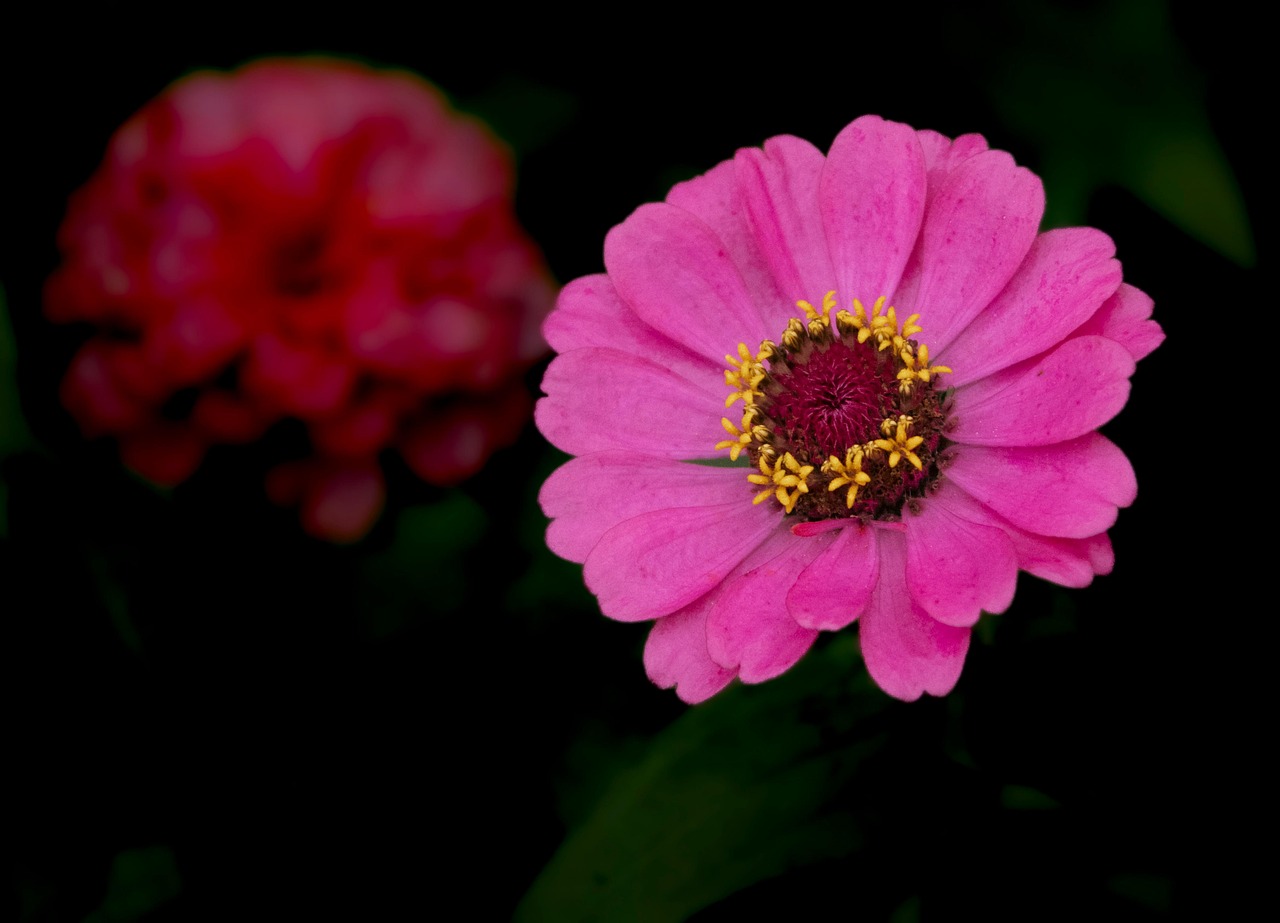
The most prominent feature of zinnias is their composite flower heads. Each flower head consists of two types of florets: central disc florets and surrounding ray florets. The disc florets are tubular and densely packed, while the ray florets are strap-shaped and extend outward, creating the characteristic daisy-like form. Flower size varies widely, ranging from small, button-like heads to large blooms exceeding 10 cm in diameter. Coloration is diverse, including solid hues and bi-colored patterns.
The fruit of the zinnia is a small, dry, one-seeded structure known as an achene. These achenes develop from the disc florets following pollination. The root system is fibrous and relatively shallow, typical of annual herbaceous plants.
Plant Classification & Growth Habit
Zinnia is classified within the Asteraceae family, one of the largest plant families globally, which includes sunflowers, daisies, and chrysanthemums. Within the genus Zinnia, there are approximately 20 recognized species.
Most cultivated zinnias are annual herbaceous plants that complete their life cycle within a single growing season. However, certain wild species are perennial in their native habitats. Growth patterns range from compact, mound-forming plants to taller, upright forms with branching stems.
The plant’s growth form is generally bushy, with multiple stems arising from the base. Flower heads are borne singly at the tips of stems, creating a prominent and visually distinct floral display.
Common Types / Varieties / General Classifications
Zinnias are commonly categorized based on flower form, size, and species origin. High-level groupings include:
By Species:
- Zinnia elegans – The most widely cultivated species, known for large, colorful blooms.
- Zinnia angustifolia – Characterized by narrower leaves and smaller, often single flowers.
- Zinnia haageana – Often displaying warm-toned, bi-colored flowers.
- Zinnia peruviana – A smaller-flowered species with orange to reddish blooms.
By Flower Form:
- Single-flowered types (one row of ray florets)
- Semi-double types (multiple rows with visible central disc)
- Double-flowered types (dense ray florets obscuring the disc)
- Cactus-flowered types (narrow, quilled petals)
- Pompon types (rounded, compact flower heads)
By Height:
- Dwarf varieties (compact growth)
- Intermediate varieties
- Tall varieties suitable for background plantings
These classifications are primarily morphological and horticultural rather than taxonomic distinctions.
Native Range & Distribution
Zinnias are native primarily to Mexico, Central America, and parts of the southwestern United States. Wild species are found in grasslands, scrublands, and open, sun-exposed habitats. Many species naturally occur in areas characterized by seasonal rainfall and warm temperatures.
From their native range, zinnias have been introduced and cultivated worldwide. They are widely grown in North America, Europe, Asia, Africa, and Australia as ornamental plants. In non-native regions, they are typically cultivated rather than naturalized, although some species may occasionally establish outside managed environments.
Their broad adaptability has facilitated their global presence in ornamental horticulture, public landscapes, and seasonal displays.
Cultural, Culinary, or Traditional Context
Zinnias have a long history of ornamental cultivation dating back to the 18th century, when European botanists began studying and hybridizing species collected from Mexico. The genus was named in honor of German botanist Johann Gottfried Zinn.
In cultural contexts, zinnias are often associated with remembrance, endurance, and lasting affection in floral symbolism. Their vibrant coloration has made them a recurring feature in decorative floral arrangements and seasonal displays.
In Mexico, native zinnia species are sometimes included in traditional gardens and decorative plantings, reflecting their indigenous origins. Over time, selective breeding has expanded the diversity of flower forms and colors available in cultivated varieties, contributing to their continued popularity in ornamental horticulture.
Zinnias are primarily ornamental and are not widely recognized for culinary use.
Interesting Facts / Did You Know
- The genus Zinnia was first described in the 18th century and named after Johann Gottfried Zinn.
- Zinnias belong to the same plant family as sunflowers and daisies.
- Flower coloration in zinnias spans nearly the full visible spectrum except for true blue.
- Hybridization has significantly increased the range of flower forms available in cultivated varieties.
- Some wild zinnia species exhibit greater drought tolerance compared to highly bred ornamental forms.
FAQs
Is zinnia a perennial or annual plant?
Most commonly cultivated zinnias are annuals, although certain wild species may be perennial in their native environments.
Are zinnias related to daisies?
Yes. Zinnias belong to the Asteraceae family, which includes daisies, sunflowers, and chrysanthemums.
What type of fruit does a zinnia produce?
Zinnias produce a dry, one-seeded fruit known as an achene.
Are all zinnias brightly colored?
Most cultivated zinnias display bright colors, though shades can range from soft pastels to intense reds, oranges, and purples.
Conclusion
Zinnia is a genus of herbaceous flowering plants within the Asteraceae family, recognized for its vivid composite blooms and diverse growth forms. Native to the Americas, particularly Mexico and surrounding regions, zinnias have become globally cultivated ornamental plants. Their structural characteristics, wide range of colors, and adaptable growth habits contribute to their significance in horticultural and botanical contexts. As a genus, Zinnia represents both natural biodiversity and the outcomes of extensive ornamental hybridization.
Plants Info provides a structured plant database for learning and reference. It offers organized botanical profiles that support accurate identification and general knowledge across a wide range of plant species.