Introduction
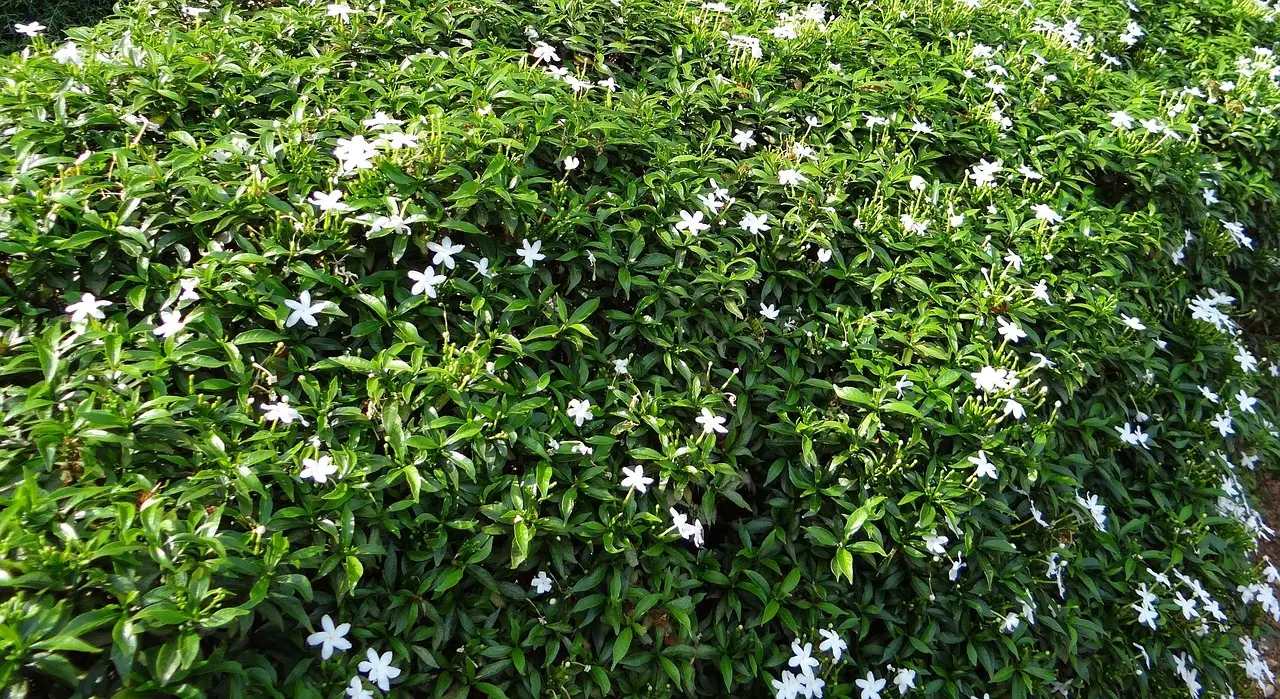
Tabernaemontana divaricata (L.) R.Br. ex Roem. & Schult., commonly known as pinwheel flower or crepe jasmine, is an evergreen shrub or small tree of the Apocynaceae. Its most distinctive ornamental feature is the white, twisted corolla whose lobes give the flowers a pinwheel-like appearance. The species is native to the Himalaya through southern Yunnan and Indochina, including parts of India, Bangladesh, Nepal, Myanmar, Thailand, Laos, Cambodia, Vietnam, and southern China.
Ecologically, the species is primarily associated with the wet tropical biome within its native range. It occurs as a shrub or small tree, and its evergreen foliage provides a persistent vegetative structure in these environments. Available species-level sources establish this broad ecological association, but they do not provide sufficient evidence in this turn to define a more specific ecosystem function without entering the ecological domain assigned to a later section.
The species has a long history of cultivation as an ornamental plant in tropical and subtropical regions, particularly for its white flowers and evergreen foliage, and cultivated forms include both single- and double-flowered selections. Its regional cultural presence is also reflected in the diversity of vernacular names applied to the species. Conservation assessments currently treat it as Least Concern (LC), although its introduced and cultivated distribution extends well beyond its native range.
Quick Plant Information
| Field | Value |
|---|---|
| Accepted Name | Tabernaemontana divaricata (L.) R.Br. ex Roem. & Schult. |
| Family | Apocynaceae |
| Common Names | Pinwheel flower; East Indian rosebay; crepe jasmine |
| Life Form | Evergreen shrub or small tree |
| Native Range | Himalaya to southern Yunnan and Indochina |
| Conservation Status | Least Concern (LC) |
| Uses Category | Medicinal; ornamental/environmental; poison; fuel; food |
The accepted name, family, native range, life form, and documented use categories follow current Kew taxonomic and distributional data; common names and evergreen shrub habit are independently documented by institutional botanical sources.
Classification and Taxonomy
| Rank | Taxon |
|---|---|
| Kingdom | Plantae |
| Phylum | Streptophyta |
| Class | Equisetopsida |
| Subclass | Magnoliidae |
| Order | Gentianales |
| Family | Apocynaceae |
| Genus | Tabernaemontana |
| Species | Tabernaemontana divaricata (L.) R.Br. ex Roem. & Schult. |
The current accepted species and hierarchy follow Plants of the World Online (Royal Botanic Gardens, Kew), which treats the species as accepted and places it in Apocynaceae and Gentianales.
Related Species of Significance
| Species | Relationship | Distinguishing Note |
|---|---|---|
| Tabernaemontana corymbosa Roxb. ex Wall. | Congeneric Asian relative with overlapping geographic occurrence | A shrub or small tree with white flowers, but differing in floral, leaf, inflorescence, and fruit characters documented in the Flora of China treatment. |
Tabernaemontana corymbosa is an appropriate comparative species because it is a closely related Asian member of the same genus and has overlapping regional occurrence. Its documented morphology differs in characters including the inflorescence, corolla structure, and fruit.
Taxonomic Context
A significant nomenclatural consideration is the extensive older literature published under names such as Tabernaemontana coronaria and Ervatamia divaricata. Both are currently treated by Kew as synonyms of T. divaricata. Researchers searching historical botanical, horticultural, or pharmacological literature should therefore account for these names when tracing older records.
Cytogenetics
| Parameter | Value | Source |
|---|---|---|
| Chromosome number | 2n = 22 | Flora of China treatment via World Flora Online |
| Additional reported chromosome numbers | 2n = 23, 33, 34 | PROSEA species account |
| Ploidy level | Diploid and triploid forms documented; higher polyploid material has also been investigated | Species-specific cytogenetic studies |
Cytogenetic Note
A diploid complement of 2n = 22 is directly reported in the Flora of China treatment, while PROSEA records additional chromosome counts of 23, 33, and 34. Cytogenetic studies have documented diploid and triploid material, while historical sources report additional chromosome counts. Higher-polyploid material has also been investigated, but its taxonomic and population-level significance remains unresolved. The evidence therefore supports substantial cytogenetic variation, and a single chromosome number should not be treated as the complete cytogenetic characterization of the species.
Scientific Stability and Nomenclature
Tabernaemontana divaricata (L.) R.Br. ex Roem. & Schult. is currently accepted by Plants of the World Online and by other major taxonomic databases. The species has undergone nomenclatural treatment involving several historical generic and specific combinations; notably, Ervatamia divaricata and Tabernaemontana coronaria are now treated as synonyms. This matters for researchers because older literature may use these names rather than the currently accepted combination.
TURN STATUS: Audited
Growth Habit and Architecture
Tabernaemontana divaricata is an evergreen, rounded, much-branched shrub or small tree with a characteristically spreading architecture. Species-level descriptions place it at roughly 0.5–5 m tall, while cultivated specimens may develop a broad crown. Its branching and persistent glossy foliage create a readily recognizable dense, horizontal-to-rounded profile.
| Field | Value |
|---|---|
| Life form | Evergreen shrub or small tree |
| Mature height | 0.5–5 m |
| Canopy spread | 1–1.8 m |
| Stem type | Woody |
| Bark / surface texture | Smooth |
| Branching pattern | Much-branched; dichotomous branching documented |
| Root morphology overview | Tap-root system documented |
| Growth rate | Moderate |
| Distinguishing architectural feature | Broad, spreading, rounded habit with branches tending toward a horizontal aspect |
The combination of evergreen foliage, repeated branching, and spreading crown gives the plant a compact but distinctly lateral architecture. The milky latex produced after injury is an additional structural-field character, although it is more useful diagnostically than as an architectural feature.
Stem
The stems are woody and smooth, with repeated branching that contributes to the species’ rounded or horizontally spreading form. Injured stems exude conspicuous milky latex, a particularly useful field character within the plant’s overall morphology.
| Field | Value |
|---|---|
| Stem type | Woody |
| Cross-section shape | Not documented in the species-specific sources reviewed |
| Mature diameter | Not documented in available literature |
| Surface texture | Smooth |
| Young / mature colour | Young stems green; mature bark reported greyish-white to silvery-grey |
| Internode length | Not documented in available literature |
| Thorn / spine / wing status | No spines documented |
| Internal structure | Solid stem reported |
| Latex | Milky latex exudes when injured |
The smooth surface and milky latex are more diagnostically useful than stem dimensions, which are not sufficiently standardized across the sources reviewed.
Recommended Products
Disclosure: As an Amazon Associate, PlantsInfo may earn from qualifying purchases.
🌱 Plant Care Essentials
The following tools can help with pruning, plant health, soil management, and fruit garden maintenance.

Neem Oil for Plant Care
Natural plant protection against aphids, whiteflies, mites, and other common garden pests.

Fungicide for Root Care
Helps suppress soil-borne fungal diseases and supports healthier root systems.

Spray Bottle for Plants
Ideal for applying foliar sprays, neem oil solutions, and liquid plant treatments.

Rubber Hand Gloves
Protects hands during pruning, planting, soil preparation, and garden maintenance.
Leaves
The leaves are simple, glossy, evergreen, and generally opposite or subopposite. Their elliptic to oblong form, entire but often undulate margin, acuminate or pointed apex, and prominent pinnate venation provide a strong vegetative identification set.
| Field | Value |
|---|---|
| Presence | Evergreen foliage |
| Leaf type | Simple |
| Size | 3–18 × 1–6 cm |
| Colour | Dark green and glossy above |
| Arrangement | Opposite or subopposite |
| Special features | Entire to undulate margin; acuminate apex; prominent pinnate venation |
Flowers
The flowers are white, waxy, tubular and arranged in dichotomous cymes. The corolla has five lobes that characteristically twist or spread in a pinwheel-like configuration; double-flowered cultivated forms differ by having additional petaloid tissue. Species-level descriptions give a corolla tube of approximately 1.5–2.7 cm and lobes of approximately 1.5–2.7 × 0.8–2 cm.
| Field | Value |
|---|---|
| Inflorescence type | Dichotomous cyme, 1–8-flowered |
| Flower diameter / length | Corolla tube 1.5–2.7 cm; corolla lobes 1.5–2.7 cm long |
| Sepals | Five calyx lobes; often ciliate |
| Petals | Five white corolla lobes; simple in the species description, with double forms cultivated |
| Stamens | Inserted in the basal third of the corolla tube |
| Pistil | Two distinct carpels; bilobed stigma documented |
| Fragrance | Fragrant, particularly noticeable at night |
| Anthesis | Flowering documented April–September in the Flora of China treatment |
| Pollinator groups | Butterflies and moths documented; species-level pollinator identities and effectiveness remain insufficiently resolved. |
The twisted white corolla is the principal floral diagnostic feature and accounts for the pinwheel-flower vernacular name. The absence of a securely established pollinator identity is retained here rather than importing general Apocynaceae pollination biology.
Fruit
The fruit consists of paired follicles. Species-level descriptions characterize the follicles as obliquely and narrowly ellipsoid, while other botanical accounts describe them as divaricate and fleshy internally.
| Field | Value |
|---|---|
| Fruit type | Paired follicles |
| Shape | Obliquely and narrowly ellipsoid |
| Length | 2–7 cm |
| Diameter | 0.6–1.5 cm |
| Surface features | Not sufficiently documented in the species-specific sources reviewed |
| Maturation period | July–November |
Seeds
Species-level sources reviewed confirm that the paired follicles contain numerous seeds, but the available evidence is not sufficiently consistent to populate the requested quantitative seed-character fields without introducing unsupported precision. No absence-marker rows are therefore used.
Root System
A tap-root system is documented for Tabernaemontana divaricata. Available morphological accounts also describe the root as branched and hard, but species-specific information sufficient to establish rooting depth or lateral extent was not identified. The root system therefore supports the plant’s general woody-shrub architecture, but its below-ground spatial organization remains incompletely characterized in the sources reviewed.
Field Identification
A mature Tabernaemontana divaricata can be recognized by the combination of a rounded, spreading evergreen shrub habit; glossy dark-green simple leaves; smooth woody stems that exude milky latex when injured; and conspicuous white, fragrant flowers with twisted, pinwheel-like corolla lobes. The single best distinguishing feature is the combination of the pinwheel-shaped white corolla and milky latex.
Normal vs. Concerning Observations
| Observation | Status | Notes |
|---|---|---|
| Milky latex appears after stem injury | Normal | Latex exudation is a documented species character. |
| White pinwheel-shaped flowers occur on an otherwise healthy evergreen shrub | Normal | Consistent with the documented floral and vegetative morphology. |
| Paired follicles develop after flowering | Normal | Species-level descriptions document paired follicles and a July–November fruiting period. |
Cultivar Summary
Documented named cultivated material exists. ‘Flore Pleno’ is a double-flowered selection with double white flowers and is maintained as a distinct horticultural cultivar. A scientific study has also examined multiple T. divaricata cultivars using molecular barcode markers, confirming that cultivar-level differentiation has been documented.
| Cultivar | Key Characteristic | Commercial Status | Origin |
|---|---|---|---|
| Tabernaemontana divaricata ‘Flore Pleno’ | Double white flowers | Regionally significant | Not documented in available literature |
The Chicago Botanic Garden independently documents ‘Flore Pleno’ as a double-flowering form with strongly fragrant white flowers and glossy elliptic leaves, supporting its recognition as a cultivated selection.
TURN STATUS: Audited
Functional Traits
Tabernaemontana divaricata has species-specific evidence for a flexible physiological response to water availability, although the available studies are primarily controlled experiments rather than long-term field physiology. Under drought and flooding treatments, the species showed measurable changes in chlorophyll, malondialdehyde, superoxide dismutase activity, and leaf retention. In a separate elevated-CO₂ experiment, stomatal conductance and growth responded interactively to water stress and atmospheric CO₂ concentration. These results support a responsive rather than fixed water-stress physiology, but they do not justify assigning a simple categorical label such as “drought tolerant.”
| Trait | Mechanism Description | Ecological Context |
|---|---|---|
| Water-stress response | Water limitation alters stomatal conductance and growth; responses vary with CO₂ concentration and duration of stress. | Controlled experiments demonstrate physiological flexibility under water limitation, but field-level water-use strategy remains incompletely characterized. |
| Flooding response | Waterlogging produces reductions in chlorophyll and soluble protein and increases malondialdehyde; substantial leaf fall was observed. | Indicates sensitivity to prolonged waterlogging despite the species’ ability to respond to changing water availability. |
| Oxidative-stress response | Under water-stress treatments, changes in superoxide dismutase activity and malondialdehyde indicate activation or disruption of oxidative-stress regulation depending on treatment. | Provides experimental evidence for biochemical adjustment under stress rather than establishing a constitutive stress-tolerance mechanism. |
| Stomatal regulation | Stomatal conductance changes over time under combined elevated CO₂ and water-stress treatments; elevated CO₂ modified the response to water limitation. | Demonstrated under controlled higher-temperature conditions; extrapolation to natural populations should remain cautious. |
The strongest species-specific physiological evidence therefore concerns water-stress response and stomatal regulation, rather than photosynthetic pathway, nutrient-acquisition specialization, or a defined drought-adaptation mechanism.
Physiological Integration
The available evidence indicates that water availability, stomatal behaviour, oxidative status, and growth are physiologically interconnected in T. divaricata. In the elevated-CO₂ experiment, stomatal conductance was positively associated with plant height and girth, while the response to water stress depended on CO₂ concentration and the duration of treatment. A separate drought/flooding experiment showed that water stress altered both oxidative-stress indicators and leaf condition. Together these studies demonstrate coordinated physiological responses, but they do not establish a single integrated mechanism operating under natural field conditions.
Phytochemistry
The phytochemical profile of Tabernaemontana divaricata is dominated by monoterpenoid indole alkaloids, with substantial species-specific documentation extending across several structural types. A major review compiled 66 alkaloids isolated and identified from the species and also documented non-alkaloidal constituents including terpenoids and phenolic acids. Subsequent investigations have continued to expand the known alkaloid diversity, including iboga-type, Aspidosperma-type, and bisindole compounds.
| Compound Class | Representative Compounds | Primary Location | Ecological or Biological Function |
|---|---|---|---|
| Monoterpenoid indole alkaloids | Voaphylline, apparicine, coronaridine, vobasine, tabernanthine | Leaves; also documented in other aerial tissues | Species-specific biological activity is extensively documented experimentally; a definitive endogenous ecological function is not established. |
| Iboga-type indole alkaloids | Ibogaine, conodurine, hecubine, voafinidine, tabernanthine; tabernoxidine derivatives | Twigs and leaves | Biological activities have been investigated experimentally; endogenous ecological function remains unresolved. |
| Bisindole / oligomeric indole alkaloids | Conofoline; tabernaricatines A–E; taberdivarines | Leaves and aerial parts | Experimental biological activity has been reported for individual compounds, but a demonstrated ecological role in the intact plant remains unresolved. |
| Phenolic compounds | Phenolic acids and related phenolic constituents | Leaves and roots documented in extract studies | Antioxidant activity has been demonstrated in extracts, but a specific endogenous ecological function is not established. |
| Terpenoid constituents | Terpenoid compounds documented in phytochemical screening and reviews | Roots and other plant material | Species-specific biological significance is incompletely characterized. |
The alkaloid inventory is unusually extensive for this species. Importantly, experimental biological activity of isolated compounds should not be equated with a demonstrated ecological function in the living plant.
Phytochemical Organ Distribution
Direct organ-level isolation evidence exists, particularly for alkaloids. The literature is substantially richer for leaves and twigs/branches than for other organs. The evidence supports organ-specific occurrence but does not provide a sufficiently standardized quantitative dataset for comparing concentrations across all organs.
| Organ | Compound Class | Representative Compounds | Concentration | Source |
|---|---|---|---|---|
| Leaves | Monoterpenoid indole alkaloids | Voaphylline, N¹-methylvoaphylline, voaharine, pachysiphine, apparicine, conophylline, mehranine, conofoline | Not documented in available literature. | Kam & Anuradha (1995) |
| Leaves and twigs | Iboga-type indole alkaloids | (3R)-7,19-di-epi-3-methoxytabernoxidine; 19,20-(E)-vallesamine; ibogaine; conophylline; taberdivarine H; conodurine; hecubine; voafinidine; tabernanthine | Not documented in available literature. | Li et al. (2019) |
| Branches and leaves | Monoterpene indole alkaloids | 3α-hydroxymethyl-ibogamine; 3α-acetatemethoxyl-ibogamine; 16α-hydroxyl-ibogamine | Not documented in available literature. | Deng et al. (2018) |
| Aerial parts | Bisindole and related indole alkaloids | Tabernaricatines A–G and other known indole alkaloids | Not documented in available literature. | Cai et al. (2013) |
| Roots | Alkaloids, phenolics, flavonoids and other screened constituents | Individual constituents incompletely resolved in the available study | Quantitative total phenolic, flavonoid and alkaloid measurements reported in the source study. | Khatoon et al. (2022) (PNR Journal) |
The organ-distribution evidence is therefore isolation-driven rather than a comprehensive tissue-metabolomics map. Leaves and young aerial tissues have received disproportionate attention, while comparable systematic profiling of roots, stems, flowers, fruits, and seeds remains much less developed.
Phytochemical Significance
The principal phytochemical significance of T. divaricata lies in its exceptionally well-documented indole-alkaloid diversity. The literature includes monomeric, dimeric, and higher-order alkaloids, with new compounds continuing to be isolated from leaves and twigs. Recent work has added further alkaloids from these tissues, demonstrating that the species’ chemical inventory remains incompletely resolved.
Characterization is strongest for leaves and aerial tissues, where repeated isolation studies have produced numerous structurally defined alkaloids. Root chemistry is documented but is less deeply resolved at the level of individually characterized compounds. The literature also shows a strong research concentration bias toward alkaloids, especially monoterpenoid indole and bisindole alkaloids, while non-alkaloidal chemistry and quantitative tissue-to-tissue distributions are comparatively less developed.
No well-established synergistic or antagonistic relationship among the species’ endogenous phytochemicals was identified in the reviewed evidence. Experimental activities of individual compounds or extracts demonstrate biological potential, but they do not establish that those interactions occur as functional chemical relationships within the intact plant.
TURN STATUS: Audited
Evidence Hierarchy for Medicinal and Health-Related Claims
Traditional medicinal use of Tabernaemontana divaricata is well documented, while the evidence base becomes progressively weaker as it moves from traditional use through experimental studies to human clinical evidence. A major ethnobotanical review documented traditional medicinal use and summarized pharmacological investigations of numerous alkaloidal and non-alkaloidal constituents.
| Evidence Layer | Status | Notes |
|---|---|---|
| Traditional Use | Documented | Traditional medicinal use is documented across several Asian medical traditions, including use of roots, leaves, flowers and other plant parts. |
| Nutritional Evidence | Partial | Kew records food use, and ethnobotanical sources report edible use of flowers, but a validated species-specific nutritional composition dataset was not identified. |
| In Vitro Studies | Documented | Extracts and isolated compounds have been investigated in cellular and biochemical models, including cytotoxicity and other biological activities. |
| Animal Studies | Documented | Multiple experimental studies have evaluated extracts in rodents and other animal models; acute-toxicity testing has also been reported. |
| Human Clinical Studies | Absent | No documented studies at this evidence level. The identified literature is preclinical or ethnobotanical rather than controlled human clinical evidence. |
| Regulatory Recognition | Absent | No documented studies at this evidence level. No species-specific regulatory recognition of therapeutic efficacy was identified in the reviewed evidence. |
| Unsupported Commercial Claims | Partial | Commercial health claims occur, but the reviewed evidence does not provide human clinical support sufficient to establish those claims as therapeutic efficacy. |
Evidence Assessment
The evidence hierarchy is strongly weighted toward traditional use and preclinical research. Experimental work includes in-vitro studies and animal models investigating analgesic, antitussive, anti-asthmatic, cytotoxic and other biological effects. For example, an ethanolic leaf extract was evaluated in guinea-pig respiratory models and reported as acutely tolerated up to 2,000 mg/kg in that experimental setting.
The strongest evidence categories are therefore traditional documentation and experimental/preclinical evidence. The weakest are human clinical evidence and regulatory recognition, for which no documented evidence was identified in this audit. Experimental activity of an extract or isolated alkaloid should not be interpreted as demonstrated clinical efficacy.
Nutritional Composition
Although Kew records T. divaricata as having food use and an ethnobotanical source reports edible flowers, the reviewed literature did not provide a sufficiently verified species-specific food-composition dataset to populate a quantitative nutrient table.
Accordingly, no numerical nutrient values are presented.
Nutritional Significance
The available evidence is insufficient to characterize T. divaricata as nutritionally significant or to establish a reproducible nutrient profile. Reported food use should therefore not be conflated with nutritional characterization. No adequately verified evidence was identified in this audit for nutrient bioavailability, processing effects, fresh-versus-dried composition, or cultivated-versus-wild nutritional differences.
Soil Ecology and Mycorrhizal Associations
Species-specific soil-biological evidence is low in the sources reviewed. The available literature establishes cultivation and habitat associations but does not adequately characterize mycorrhizal partners, rhizosphere bacterial communities, bacterial functional roles, or species-specific allelopathic interactions.
No verified species-level evidence was identified during this audit for:
- a defined mycorrhizal type or fungal symbiont;
- specific rhizosphere bacterial genera;
- bacterial functional roles;
- a demonstrated allelopathic mechanism attributable to identified compounds.
The soil-ecology section is therefore restricted to this evidence statement rather than being expanded with genus- or family-level assumptions.
Toxicity and Safety
| Subject | Toxic Compounds | Clinical Effects | Source |
|---|---|---|---|
| Humans | Indole alkaloids and other constituents are documented; a specific human toxic compound–effect relationship is not adequately established. | No verified human clinical toxicity profile identified during current audit. Institutional botanical documentation nevertheless classifies the plant as toxic upon ingestion. | NParks; species-specific phytochemical literature |
| Cats | No verified toxicity data identified during current audit. | No verified toxicity data identified during current audit. | Current audit |
| Dogs | No verified toxicity data identified during current audit. | No verified toxicity data identified during current audit. | Current audit |
| Livestock | No verified toxicity data identified during current audit. | No verified toxicity data identified during current audit. | Current audit |
The safety evidence requires careful separation of whole-plant toxicity, extract safety and isolated-compound activity. Experimental studies have reported no acute toxicity at specified doses for particular extracts in particular animal models, but this does not establish safety of the whole plant, all preparations, or ingestion by humans or domestic animals.
The species contains a large and chemically diverse indole-alkaloid inventory, and individual constituents can show substantial biological activity in experimental systems. For example, conophylline from aerial material showed cytotoxic activity against several human cancer cell lines in vitro. Such findings establish biological activity, not a clinical toxicity threshold or therapeutic safety margin.
Toxicity Context
The available evidence does not establish a reliable human dose–response relationship for ingestion of the intact plant. Nor does it establish a standardized relationship between whole-plant exposure and the effects of individual isolated alkaloids. Experimental acute-toxicity results are preparation- and model-specific and should not be generalized to ordinary plant ingestion.
The reviewed evidence does not adequately document species-specific interactions with prescription medicines, pregnancy-related safety, or renal/hepatic risk. These gaps are particularly important because traditional use and experimental pharmacological activity do not constitute evidence of clinical safety.
This profile does not constitute medical or veterinary advice.
TURN STATUS: Audited
Biogeographic Context
Tabernaemontana divaricata has a broad South and Southeast Asian distribution centred on humid tropical and subtropical environments. Kew currently recognizes its native range as extending from the Himalaya through southern Yunnan and Indochina, with native records in Assam, Bangladesh, Cambodia, southern-central China, the eastern and western Himalaya, India, Laos, Myanmar, Nepal, Thailand, and Vietnam. Kew additionally records numerous introductions across tropical and subtropical regions outside that native range.
The distribution is consistent with a species associated principally with wet tropical vegetation, but its documented habitat breadth is greater than a single forest type. Genus-level ecological synthesis places Tabernaemontana in habitats ranging from scrub and forest understory to periodically inundated riverine and swamp forests, while species-level Kew data classify T. divaricata primarily within the wet tropical biome.
The evidence base is geographically uneven. Botanical and ethnobotanical documentation is particularly concentrated in South and Southeast Asia, while horticultural literature is disproportionately represented in regions where the species is cultivated ornamentally. The available sources do not establish a species-wide quantitative relationship between habitat loss or collection pressure and population trends.
| Region | Countries or Sub-regions | Notes |
|---|---|---|
| Himalaya | India, Nepal; eastern and western Himalayan regions | Included within the current native-range treatment. |
| South Asia | Bangladesh, Assam and other parts of India | Native range; substantial ethnobotanical and botanical documentation. |
| Mainland Southeast Asia | Myanmar, Thailand, Laos, Cambodia, Vietnam | Native range; predominantly tropical distribution. |
| Southern China | Southern-central Yunnan and adjoining areas | Included within the accepted native-range treatment. |
Native Range and Distribution
The current Kew distribution treatment supports the South and Southeast Asian range summarized above and separately identifies numerous introduced occurrences outside it. The native-range classification is therefore not being expanded to include the many regions where the plant is cultivated or introduced.
No major disagreement between current authoritative taxonomic sources concerning the overall native-range concept was identified in this turn. Historical sources may describe a narrower range, particularly centred on India and adjoining mainland Southeast Asia, but this appears to reflect differing historical treatments rather than a clearly demonstrated contemporary taxonomic dispute.
Global Cultivation and Naturalisation
The species is extensively cultivated as an ornamental outside its native range. Kew records introductions in tropical and subtropical areas of the Caribbean, Central America, Mexico, the Pacific, Taiwan, parts of China, Malaysia, and the southern United States. UF/IFAS describes it as generally available within its Florida hardiness range, while NParks documents widespread ornamental use in Singapore.
| Region | Countries or Areas | Cultivation Status | Notes |
|---|---|---|---|
| Southern United States | Florida | Commercially established | Ornamental cultivation is well documented; UF/IFAS currently does not consider it a problem species. |
| Southeast Asia | Singapore and other tropical Southeast Asian areas | Commercially established | Widely cultivated as an ornamental shrub. |
| Caribbean and tropical Americas | Multiple Caribbean islands, Central America and Mexico | Commercially established | Kew records numerous introduced occurrences associated with the broader cultivated range. |
| Pacific islands | Caroline, Cook, Mariana, Marquesas, Society, Tuamotu and Tubuai island groups | Emerging | Introduced occurrences are documented, but comparable evidence for commercial establishment is uneven. |
Cultivation Range Note: The literature is strongly concentrated on ornamental horticulture in warm climates. Evidence for commercial establishment is strongest in established tropical/subtropical horticultural regions; the distribution records themselves do not establish equivalent commercial importance in every introduced area.
Natural Habitat
Species-level sources associate T. divaricata with terrestrial habitats including montane brushwoods and sparse forests. Kew’s habitat classification additionally includes forest and woodland, savanna, shrubland, and inland wetlands. The genus-level ecological treatment records Tabernaemontana species from open scrub and forest understory through periodically inundated riverine and swamp forest, from sea level to approximately 1,800 m; this broader elevation range should not be treated as a species-specific elevation limit for T. divaricata.
Available Indian biodiversity observations illustrate occurrence in alluvial soils and tropical moist deciduous forest, but individual observations cannot be converted into a species-wide soil or climate envelope.
The available evidence therefore supports a broad rather than highly specialized habitat association, with documented occurrence across forested and brushland environments and some wetland-associated habitat classifications.
Ecological Role
Species-specific ecosystem-role evidence is relatively limited compared with the botanical and phytochemical literature. NParks records the plant as associated with butterflies and moths and identifies insects as its biotic pollination agents; detailed pollination interactions are reserved for the reproductive domain.
Beyond these fauna associations, the reviewed sources do not establish T. divaricata as a keystone or indicator species, nor do they provide sufficiently resolved species-specific evidence for a broader trophic-role inventory. Its ecological role is therefore best characterized as that of a woody flowering plant participating in local terrestrial plant–animal interactions rather than as a demonstrated ecosystem-defining species.
Invasive Status
Naturalisation outside the native range is documented but appears geographically limited. Flora of North America reports that T. divaricata has escaped ornamental cultivation and become naturalized in a small area of Osceola County, Florida. At the same time, the current UF/IFAS assessment does not consider it a problem species in Florida.
| Region | Status | Impact | Management |
|---|---|---|---|
| Florida, USA | Naturalised locally | Naturalisation is documented, but UF/IFAS currently does not classify the species as a problem species. | No species-specific invasive-management programme identified in the reviewed sources. |
The evidence therefore supports localized naturalisation rather than demonstrated invasive behaviour at a broad regional scale. The distinction is important because Kew’s much larger list of introduced regions records introduction status, not necessarily established naturalisation.
Optimal Climate Parameters
Species-specific quantitative climate-envelope data sufficient to define a global optimum were not identified in the reviewed literature. The available horticultural evidence instead provides a practical warm-climate boundary, while field observations demonstrate occurrence under several humid tropical and subtropical climatic settings.
| Parameter | Optimal Range | Tolerance Range | Notes |
|---|---|---|---|
| Mean Annual Temperature | Not documented in available literature. | Not documented in available literature. | Species-specific global climate-envelope data were not identified. |
| Annual Rainfall | Not documented in available literature. | Not documented in available literature. | Site observations record 1,600–2,000 mm in Kerala and Assam observations of 1,600–2,000 mm and 2,800–3,200 mm, but these are occurrence-site values, not verified tolerance limits. |
The strongest quantitative horticultural climate indicator is its recommended USDA hardiness range of 10B–11, which identifies a warm-climate cultivation envelope but is not equivalent to a species-specific physiological tolerance range.
Climate Interpretation
The available evidence supports a warm, generally humid climate association, consistent with Kew’s wet-tropical biome classification and the species’ concentration in South and Southeast Asia. Its successful ornamental cultivation across other frost-free tropical and subtropical regions indicates a substantial cultivated climatic envelope, but the evidence does not justify assigning exact global temperature or rainfall thresholds.
Water availability appears to be an important physiological constraint. Controlled experiments specifically involving T. divaricata demonstrate measurable responses to both drought and continuous flooding, indicating that the species is physiologically responsive to departures from normal water availability.
Stress Tolerance Profile
Only stress types with species-specific physiological evidence are included.
| Stress Type | Tolerance Level | Physiological Response | Notes |
|---|---|---|---|
| Drought / water deficit | Conditional | Experimental drought treatments altered physiological and morphological parameters, including chlorophyll-related measures, oxidative-stress indicators and leaf condition. | Evidence comes from controlled experiments; it does not establish a field-scale drought-tolerance threshold. |
| Waterlogging / flooding | Conditional | Continuous flooding produced measurable physiological changes, including effects on chlorophyll, malondialdehyde, soluble protein and leaf retention. | Demonstrates a documented flooding response rather than a defined flooding-tolerance limit. |
The evidence does not support assigning a generalized tolerance category to heat, salinity, frost, wind, or other stress types in the absence of comparable species-specific physiological data.
Compound Stress Assessment
No sufficiently resolved species-specific study was identified that establishes how combined drought and heat, salinity and drought, or other compound environmental stresses interact in T. divaricata. The available water-stress research includes drought, flooding, and alternating drought/flooding treatments, but this should not be represented as evidence for a broader compound-climate tolerance mechanism.
TURN STATUS: Audited
Structural and Physiological Adaptations
The available evidence does not support a long list of species-specific adaptive traits without importing general Apocynaceae biology. One defensible adaptation is the production of milky latex following tissue injury: this is a documented species character and is consistent with a defensive function, although a direct experimental demonstration of its ecological defensive effectiveness in T. divaricata was not identified. The species’ evergreen habit and floral characteristics are better treated in the structural and reproductive sections rather than reclassified here as demonstrated adaptations.
| Adaptation | Mechanism Description | Ecological Context |
|---|---|---|
| Injury-induced latex exudation | Specialized laticiferous tissues release milky latex when vegetative tissues are damaged, physically exposing latex at the wound site. | Consistent with a chemical/physical defence function, but a species-specific experimental test of herbivore deterrence was not identified. |
Climate Change Vulnerability
No species-specific climate-vulnerability model or formal climate-change assessment was identified in the evidence reviewed for this turn. The assessment below therefore distinguishes documented sensitivity from qualitative inference rather than assigning a numerical vulnerability score.
| Factor | Assessment | Notes |
|---|---|---|
| Primary Climate Sensitivity Factors | Qualitative: water availability and temperature | Controlled experiments demonstrate responses to drought, flooding and elevated CO₂/temperature conditions. These establish physiological sensitivity but not a quantified future vulnerability threshold. |
| Key Threatening Climate Processes | Qualitative: altered water regimes and increased thermal stress | Changes in drought or flooding frequency could interact with the documented water-stress responses; direct future-climate effects have not been demonstrated for natural populations. |
| Resilience Factors | Qualitative: physiological plasticity and broad cultivated distribution | Experimental responses vary with environmental treatment, and the species is cultivated across a broad tropical/subtropical range. Neither observation constitutes proof of future climate resilience. |
| Confidence Level | Low–moderate | Confidence is limited because species-specific climate projections, demographic studies and population-level vulnerability assessments were not identified. |
The water-stress evidence is particularly relevant because T. divaricata responds measurably to both water deficit and flooding, while the species’ broad cultivated distribution indicates environmental breadth. These observations should not be converted into a prediction of climate resilience without population-level evidence.
Phenological Calendar
Phenology varies geographically. Flora treatments document flowering and fruiting within particular regional windows, whereas tropical cultivated plants may flower repeatedly or throughout the year. Bangladesh field records, for example, report flowering and fruiting from May–January, while the Flora of China treatment gives April–September flowering and July–November fruiting.
| Event | Native Range Timing | Cultivated Range Timing | Environmental Triggers |
|---|---|---|---|
| Vegetative Growth Onset | Not documented as a discrete annual event in available literature. | Not documented as a discrete annual event; evergreen growth is documented. | No species-specific trigger identified. |
| Flower Bud Initiation | Not documented as a discrete event. | May occur repeatedly under suitable tropical conditions. | No verified species-specific trigger identified. |
| Anthesis or Peak Flowering | April–September in the Flora of China treatment; May–January in a Bangladesh field survey. | Free-flowering; year-round flowering documented in Singapore. | Specific photoperiod, temperature or rainfall threshold not established. |
| Fruit Development | July–November in the Flora of China treatment; May–January flowering/fruiting period reported in Bangladesh. | Not sufficiently standardized for a general cultivated-range interval. | No verified species-specific trigger identified. |
| Fruit Maturation | July–November in the Flora of China treatment. | Not documented as a consistent cultivated-range interval. | No verified species-specific trigger identified. |
| Seed Dispersal | Not sufficiently documented. | Not sufficiently documented. | No verified species-specific trigger identified. |
| Dormancy or Rest Period | No documented annual dormancy period; species is evergreen. | No documented annual dormancy period under tropical cultivation. | No verified species-specific trigger identified. |
The main phenological pattern supported by the evidence is extended or repeated flowering under warm conditions rather than a single narrow flowering season. The variation among regional observations indicates phenological plasticity, but the environmental mechanisms controlling that variation remain insufficiently resolved.
Pollination Ecology
Tabernaemontana divaricata has bisexual, tubular, fragrant flowers and documented biotic pollination by insects. NParks specifically records butterflies and moths as associated pollinators, with the plant described as a butterfly-attracting and moth-associated species. The available evidence supports an insect-pollination syndrome, but it does not justify resolving particular pollinator species or claiming a specialized pollination network.
| Parameter | Value | Notes |
|---|---|---|
| Primary Pollinators | Butterflies and moths | Species identities were not resolved in the authoritative species record. |
| Secondary Pollinators | Not documented in available species-specific literature. | No additional pollinator group is entered without adequate evidence. |
| Pollination Syndrome | Insect-mediated, with documented butterfly and moth association | The inference is based on documented moth/butterfly association plus fragrant tubular flowers; a formal syndrome study was not identified. |
| Floral Mechanism | Tubular corolla with nectar-access structure; exact pollen-placement mechanism not established | Floral morphology is documented, but the precise mechanical pathway of pollen transfer has not been sufficiently demonstrated. |
| Reproductive System | Bisexual flowers; broader mating system unresolved | NParks records bisexual flowers. Evidence reviewed here does not establish self-compatibility or obligatory outcrossing. |
| Reproductive Evidence Status | Partial | Flower sexuality and insect-mediated pollination are documented; quantitative pollen-transfer, compatibility and reproductive-success studies remain limited. |
| Human Intervention | Not documented as necessary for natural reproduction | No evidence establishes dependence on hand pollination or other human intervention. |
The principal reproductive uncertainty concerns mating compatibility rather than flower sexuality. Claims of routine self-pollination found in non-authoritative online material were not adopted because they were not sufficiently supported by species-specific primary evidence.
Seed Biology and Germination
Available sources document sexual reproduction by seed and provide a specific germination-temperature range and germination interval, but the evidence is not sufficient to characterize dormancy physiology or long-term storage behaviour with the same confidence. A species account reports germination at 24–26 °C with emergence over approximately 1–2 months.
| Parameter | Value | Notes |
|---|---|---|
| Seed Type | Supported: arillate seeds | Seeds are described as bearing a red fleshy aril. (Monaco Nature Encyclopedia) |
| Dormancy Class | Not documented in available literature. | No species-specific physiological dormancy classification identified. |
| Dormancy-Breaking Requirement | Supported: pre-soaking in water reported | A species account reports immersion before sowing, but this is propagation evidence rather than a demonstrated dormancy mechanism. (Monaco Nature Encyclopedia) |
| Optimal Germination Temperature | Supported: 24–26 °C | Reported in a species-specific botanical account; an experimentally derived optimum was not identified. (Monaco Nature Encyclopedia) |
| Germination Rate | Not documented in available literature. | No sufficiently verified species-specific percentage was identified. |
| Germination Period | Supported: approximately 1–2 months | Reported for seed germination under the stated warm, moist conditions. (Monaco Nature Encyclopedia) |
| Storage Behaviour | Conditional: apparently short-lived | A horticultural biodiversity source describes short seed viability, but a controlled longevity study was not identified. (Xobdo) |
| Seed Longevity | Not quantitatively established | No verified species-specific storage-life interval was identified. |
Germination Notes: The available evidence suggests that seeds are not characterized by a clearly established deep dormancy syndrome. Reported germination takes approximately one to two months under warm, moist conditions, while short viability has been reported qualitatively. The reviewed sources do not establish whether seed behaviour differs systematically between wild and cultivated populations.
Vegetative Reproduction
Vegetative regeneration is experimentally demonstrated through stem cuttings. A 2018 study found that woody cuttings produced greater callus, rooting and sprouting responses than the other cutting material evaluated, establishing substantial regenerative capacity from detached stems. This evidence comes from propagation experiments rather than a study of natural vegetative regeneration in wild populations.
| Parameter | Value | Notes |
|---|---|---|
| Vegetative Regeneration Capacity | Supported | Stem cuttings form callus, roots and shoots under experimental propagation conditions. |
| Primary Regeneration Mechanism | Stem cutting / adventitious rooting | Documented experimentally; natural frequency in wild populations is not established. (Centro Científico Conhecer) |
| Minimum Propagule Size | Not documented in available literature. | No species-specific minimum viable cutting size was identified. |
| Ecological or Invasive Significance | Conditional | Vegetative propagation can facilitate persistence or horticultural spread, but the evidence reviewed does not establish that clonal regeneration is a major driver of naturalised populations. |
TURN STATUS: Audited
Economic Importance
Tabernaemontana divaricata has documented economic relevance primarily as an ornamental plant and as a medicinal raw material, rather than as a major commodity crop. It is widely cultivated in tropical and subtropical horticulture, while a peer-reviewed assessment of Indian medicinal-plant trade lists estimated annual trade for T. divaricata at less than 10 metric tonnes. That figure indicates a relatively small documented medicinal raw-material trade and should not be extrapolated into a global market-size estimate.
| Use Category | Description | Economic Impact |
|---|---|---|
| Ornamental horticulture | Cultivated for its evergreen foliage, white flowers, fragrance, rounded form, and double-flowered selections. | Established horticultural value, particularly in tropical and subtropical landscapes; a global market value was not identified. |
| Medicinal raw material | Roots, leaves, flowers and other plant parts are documented in traditional medicinal systems and have generated a small documented trade in India. | Estimated annual Indian trade is <10 metric tonnes; this is not evidence of a large international commodity market. |
| Cultural / floral use | Flowers are used for garlands and worship in documented South Asian ethnobotanical contexts. | Local cultural and floral value is documented, but its monetary scale is not quantified. (Ethnobotany Journal) |
| Summary Economic Assessment | Primarily an ornamental and culturally/medicinally useful plant rather than a major documented commodity crop. | Economic importance is real but geographically and quantitatively unevenly documented. |
Traditional Uses
Traditional use is documented in identifiable Indian knowledge systems and regional ethnobotanical records. The species is recorded under Ayurvedic and Siddha systems, with Tagar, Nandivriksha, Nandi Pushpa and related names occurring in Indian medicinal literature.
| Use Category | Knowledge System | Region or Cultural Group | Practice Summary | Documentation Level | Source |
|---|---|---|---|---|---|
| Eye-related use | Ayurveda | South India / Indian medicinal tradition | Flower juice is documented as an eye-related traditional preparation. | Documented | (ResearchGate) |
| Eye-related use | Siddha | Tamil medical tradition | Flowers and their preparations are documented in traditional treatment of eye complaints. | Documented | (Siddham) |
| Pain / toothache | Indian ethnobotanical practice | South Asian regional traditions | Root use for toothache and local pain is documented in ethnobotanical surveys. | Documented | (Ethnobotany Journal) |
| Skin / wound-related use | Siddha / regional Indian practice | South India | Leaf latex or preparations from leaves are documented for topical applications involving wounds and skin complaints. | Documented | (Siddham) |
| Gastrointestinal / intestinal complaints | Regional Indian ethnomedicine | Andaman and Nicobar / Indian traditions | Leaf preparations are documented in ethnomedicinal records for gastrointestinal complaints. | Documented | (ResearchGate) |
| Ornamental and ceremonial flower use | Regional South Asian practice | Indian communities | Flowers are made into garlands, including offerings in worship and personal adornment. | Documented | (Ethnobotany Journal) |
These records establish traditional practice, not therapeutic efficacy or clinical safety. The independent ethnobotanical literature confirms that T. divaricata has a substantial history of traditional medicinal use.
Traditional Use Summary
The principal documented knowledge systems are Ayurveda and Siddha, supplemented by geographically specific ethnobotanical traditions. The evidence spans both written medicinal literature and community-level ethnobotanical surveys. Traditional use therefore has continuity across formal Indian medical systems and regional practices, although the reviewed evidence does not establish the extent to which individual traditional preparations remain continuously practiced today. (CAPS)
The species’ traditional-use profile has also contributed to modern phytochemical and pharmacological research, creating a clear historical connection between ethnobotanical documentation and contemporary laboratory investigation. This relationship does not establish that traditional indications are clinically validated.
Regional Ethnobotanical Context
The ethnobotanical record is particularly strong in South India, where T. divaricata occurs under established vernacular and medicinal names and is represented in Ayurveda, Siddha and local plant-use surveys. Records from Tamil Nadu and the Western Ghats document use of flowers and other plant parts for culturally specific medicinal purposes, while other Indian surveys record additional applications.
The plant also has a dual identity as a medicinal and ornamental species. Its flowers are incorporated into garlands and worship, allowing the same species to occupy both utilitarian and cultural roles within local plant-use systems.
Traditional Ecological Knowledge
No sufficiently documented species-specific evidence was identified for agroforestry, living-fence management, ecological-indicator use, or deliberate traditional landscape management involving T. divaricata. The available ethnobotanical record is substantially stronger for medicinal and floral-cultural use than for ecological resource-management practices.
Ethical Considerations
Documented ethical concerns are principally associated with knowledge attribution and raw-material identification, rather than with a demonstrated species-specific biopiracy dispute. The species occurs in medicinal-plant trade, and a recent pharmacognostic study identifies potential confounding/adulterant material associated with T. divaricata root drugs, emphasizing the importance of correct botanical identity in medicinal-material commerce.
No specific, well-documented biopiracy or intellectual-property dispute involving T. divaricata was identified in the evidence reviewed for this turn. This does not establish that no such concern exists.
Cultural Significance
Beyond medicinal use, T. divaricata has documented ceremonial and ornamental significance in South Asian contexts. Ethnobotanical records specifically describe its flowers being made into garlands and offered in worship, as well as being used as hair ornaments.
Cultivation Summary
Tabernaemontana divaricata is biologically well suited to warm tropical and subtropical cultivation. Horticultural documentation describes successful growth in full sun or partial shade and in moist, well-drained soils; established plants require less supplemental water than younger plants. Its rounded habit and persistent glossy foliage contribute substantially to its landscape value.
The species is also readily amenable to vegetative propagation, consistent with the experimental regeneration evidence documented earlier in the profile. Detailed propagation procedures are intentionally not reproduced here.
Pest, Disease and Physiological Burden Summary
Horticultural evidence identifies scale insects, mites, nematodes and sooty mould among the documented pest or associated problems. UF/IFAS states that long-term plant health is usually not seriously affected by pests and identifies no diseases as being of major concern.
A separate physiological burden is chlorosis under alkaline soil conditions, documented in horticultural guidance. This is a species-relevant nutritional/physiological disorder rather than evidence of a major pathogen burden.
Failure Points and Commercial Risks
The principal documented vulnerabilities for cultivated material are pest incidence, alkaline-soil-associated chlorosis, and dependence on warm climatic conditions. The species’ medicinal-material trade is comparatively small in the documented Indian dataset, while ornamental cultivation is geographically widespread but lacks sufficiently standardized production statistics for a reliable global market assessment.
No adequately documented evidence was identified for major species-specific supply-chain disruption, large-scale commodity-price volatility, or commercially dominant production regions. Such factors should therefore not be inferred from the plant’s widespread ornamental cultivation.
TURN STATUS: Audited
Conservation Analysis
Tabernaemontana divaricata currently has a relatively secure global conservation position: the species is assessed as Least Concern, and Kew’s current backbone also reports an independent 2024 Angiosperm Extinction Risk Prediction of “not threatened” with confident prediction.
This status should not be interpreted as evidence that all wild populations are secure. The species has a broad native distribution and is extensively cultivated, but the evidence assembled for this profile does not provide a robust species-wide estimate of wild population size, demographic trajectory, or genetic structure. Cultivated abundance therefore remains separate from conservation security.
The principal conservation uncertainty is consequently monitoring depth rather than a documented global extinction threat. There is also a germplasm-security consideration: extensive cultivation provides ex situ material, but cultivated selections do not necessarily represent the genetic diversity of wild populations.
Conservation Status
| Parameter | Value | Notes | Source |
|---|---|---|---|
| IUCN Red List Category | Least Concern (LC) | The species has a formal IUCN assessment; Kew independently records the same category. | Lakhey & Pathak (2020); Kew |
| Population Trend | Unknown | A current species-data interface reports population trend as unknown; no robust species-wide demographic trend was identified in the reviewed evidence. | IUCN-linked species record / Pl@ntNet |
| Primary Conservation Concern | No major global threat demonstrated; wild-population monitoring remains limited | The broad distribution supports the LC assessment, while quantitative population monitoring is comparatively sparse. | IUCN; Kew |
| Major Conservation Approach | Maintain wild-population and habitat monitoring; retain ex situ germplasm diversity | No species-specific recovery programme was identified as necessary under the current LC assessment. | IUCN; Kew |
| IUCN URL | https://www.iucnredlist.org/species/149853146/149853842 | Species-specific assessment page for T. divaricata. | IUCN Red List |
| Access Date | 2026-08-12 | Source consulted during this profile audit. | IUCN Red List / Kew cross-reference |
Kew explicitly links the species to IUCN taxon 149853146 and records LC; a secondary record identifies the assessment as Lakhey & Pathak (2020), Crape-jasmine, IUCN Red List 2020: e.T149853146A149853842.
Conservation Risk Factors
| Risk Factor | Severity | Evidence Status |
|---|---|---|
| Habitat loss affecting wild populations | Low–moderate | Conditional — broad distribution is documented, but species-wide population-level impact is not quantified. |
| Unsustainable medicinal collection | Low–moderate | Conditional — medicinal use and a documented medicinal-material trade exist, but evidence for population-level depletion is lacking. |
| Genetic erosion through replacement by cultivated selections | Unknown | Partial — cultivation and named selections are documented, but comparative wild-versus-cultivated genetic diversity is insufficiently characterized. |
| Climate-driven alteration of water regimes | Unknown | Conditional — species-specific responses to drought and flooding are documented experimentally, but population-level climate vulnerability has not been established. |
No evidence reviewed supports assigning high severity to any of these factors at the global species level. The distinction between documented exposure and demonstrated population impact is important here.
Conservation Assessment
The current evidence supports retaining Least Concern as the appropriate global conservation status. The combination of a broad native distribution, occurrence across multiple habitat types, and absence of demonstrated global population decline is consistent with that assessment. Kew’s 2024 extinction-risk prediction independently categorizes the species as not threatened with confident prediction.
The main weakness is not evidence of imminent global decline but the limited resolution of population-level information. Population trend is reported as unknown, and the assembled literature is heavily weighted toward taxonomy, phytochemistry, ethnobotany, and experimental pharmacology rather than demographic monitoring.
Research Coverage and Knowledge Gaps
| Research Topic | Coverage Level | Key Gaps | Priority |
|---|---|---|---|
| Taxonomy and nomenclature | High | Few major current identity uncertainties | Low |
| Morphology and identification | High | Quantitative variation across populations | Low |
| Cytogenetics | Moderate | Conflicting chromosome reports; population-level cytogenetic sampling | High |
| Physiology and stress responses | Moderate | Long-term field validation; natural-population responses | High |
| Phytochemistry | High | Quantitative tissue metabolomics; under-studied organs | Moderate |
| Ethnobotany | High | Continuity and geographic comparability of traditional practices | Moderate |
| Reproductive biology | Moderate–low | Compatibility, breeding system, reproductive success | High |
| Pollination ecology | Low–moderate | Pollinator identities, pollen transfer, effectiveness | High |
| Seed biology | Low–moderate | Dormancy, storage longevity, population variation | High |
| Soil ecology | Low | Mycorrhizae, rhizosphere microbiota, soil interactions | High |
| Population biology | Low | Population size, demographic trends, genetic structure | Very high |
| Conservation genetics | Low | Wild-versus-cultivated diversity and germplasm structure | Very high |
| Climate vulnerability | Low | Species-specific projections and population-level modelling | Very high |
Research Landscape
Research on T. divaricata is strongest and most mature in phytochemistry, ethnobotany and pharmacognosy. The 2008 review alone compiled 66 identified alkaloids and a substantial body of pharmacological literature, while subsequent isolation studies continued to identify additional alkaloids and biological activities.
By contrast, ecological and conservation research is much thinner. Species-specific experiments exist for water stress and elevated CO₂, but these are short-term controlled studies rather than long-term population studies.
There is also a strong geographic and disciplinary concentration bias: South and Southeast Asian material dominates ethnobotanical and phytochemical research, while chemical isolation and pharmacological screening receive substantially more attention than demographic monitoring, reproductive ecology, soil biology, and conservation genetics. This concentration increases confidence in chemical characterization but decreases confidence in broader ecological generalization.
Priority Knowledge Gaps
- Population genetics and demographic monitoring across the native range.
- Resolution of cytogenetic variation, including the reported chromosome-number discrepancies.
- Breeding-system and reproductive-success studies under natural conditions.
- Species-specific pollinator identification and effectiveness.
- Wild-versus-cultivated genetic differentiation, including named ornamental selections.
- Seed dormancy, longevity and storage biology under standardized conditions.
- Mycorrhizal and rhizosphere characterization.
- Long-term climate-response studies linking physiological responses to survival and reproduction.
- Quantitative tissue metabolomics beyond the heavily studied leaves, stems and roots.
- Population-level consequences of medicinal harvesting, where collection occurs.
Interesting Facts
- The species is currently assessed as Least Concern, despite its extensive medicinal and ornamental use.
- More than 66 alkaloids had already been isolated and identified in the major 2008 ethnopharmacological review, illustrating the unusually rich chemical research history of the species.
- T. divaricata has been used as a source of structurally diverse monoterpenoid indole and bisindole alkaloids, including compounds investigated as acetylcholinesterase inhibitors.
- A single species can occur as both a traditional medicinal plant and a widely cultivated ornamental shrub, producing a research literature that spans ethnobotany, natural-products chemistry and horticulture.
- The current Kew record identifies the species as accepted and places its native range from the Himalaya through southern Yunnan and Indochina.
Frequently Asked Questions
Is Tabernaemontana divaricata threatened?
It is currently assessed as Least Concern (LC) by the IUCN. This does not mean that every wild population has been thoroughly monitored; population-level information remains comparatively limited.
What is the main scientific research focus?
The strongest research concentration is phytochemistry and pharmacognosy, particularly the species’ diverse indole-alkaloid chemistry.
Is its chromosome number known?
Yes, 2n = 22 is documented, but other chromosome counts have also been reported, so the species’ cytogenetic variation requires further resolution.
Does the species have medicinal significance?
It has a substantial documented history of traditional medicinal use and extensive preclinical investigation. That evidence should not be interpreted as proof of clinical efficacy or safety.
What are the biggest research gaps?
Population biology, conservation genetics, reproductive biology, pollination ecology, soil biology, seed biology and long-term climate vulnerability are substantially less developed than phytochemical research.
Conclusion
Tabernaemontana divaricata is a broadly distributed evergreen Apocynaceae species whose scientific profile is unusually rich in phytochemistry, ethnobotany and experimental pharmacology. Its morphology and nomenclature are comparatively well established, while its ecological and reproductive biology are less completely resolved.
The current global conservation assessment of Least Concern is consistent with the species’ broad distribution and the absence of demonstrated global population decline. Nevertheless, population trends, conservation genetics, reproductive ecology and long-term responses to environmental change remain important evidence gaps. Cultivation should not be treated as a substitute for information about wild populations.
Across the completed profile, the species emerges as both a well-characterized natural-products resource and a comparatively under-studied ecological species. The strongest future research value lies in connecting its extensive chemical and ethnobotanical literature with population biology, reproductive ecology, climate response and conservation genetics.
References
Primary Taxonomic and Botanical Sources
- Royal Botanic Gardens, Kew. (2026). Tabernaemontana divaricata (L.) R.Br. ex Roem. & Schult. Plants of the World Online. Plants of the World Online — Tabernaemontana divaricata
- World Flora Online Consortium. (2025). Tabernaemontana divaricata (L.) R.Br. ex Roem. & Schult. World Flora Online. World Flora Online — Tabernaemontana divaricata
- Chua, L. S. L., & Horsten, S. F. A. J. (2001). Tabernaemontana divaricata (L.) R.Br. ex Roem. & Schult. In J. L. C. H. van Valkenburg & N. Bunyapraphatsara (Eds.), Plant Resources of South-East Asia No. 12(2): Medicinal and Poisonous Plants 2. PROSEA Foundation, Bogor, Indonesia. PROSEA — Tabernaemontana divaricata
- National Parks Board, Singapore. (2026). Tabernaemontana divaricata (L.) R.Br. ex Roem. & Schult. Flora & Fauna Web. NParks — Tabernaemontana divaricata
- Gilman, E. F., Klein, R. W., & Hansen, G. (2024). Tabernaemontana divaricata: Crepe Jasmine, Pinwheel Flower. UF/IFAS Extension, Publication FPS-568. DOI: 10.32473/edis-fp568-1999. UF/IFAS Extension — Tabernaemontana divaricata
Peer-Reviewed Literature
- Pratchayasakul, W., Pongchaidecha, A., Chattipakorn, N., & Chattipakorn, S. (2008). Ethnobotany & ethnopharmacology of Tabernaemontana divaricata. Indian Journal of Medical Research, 127(4), 317–335. DOI: 10.25259/IJMR_20081274_317.
- Kam, T.-S., & Anuradha, S. (1995). Alkaloids from Tabernaemontana divaricata. Phytochemistry, 40(1), 313–316. DOI: 10.1016/0031-9422(95)00266-A.
- Kam, T.-S., Pang, H.-S., Choo, Y.-M., & Komiyama, K. (2004). Biologically active ibogan and vallesamine derivatives from Tabernaemontana divaricata. Chemistry & Biodiversity, 1(4), 646–656. DOI: 10.1002/cbdv.200490056.
- Ingkaninan, K., Changwijit, K., & Suwanborirux, K. (2006). Vobasinyl-iboga bisindole alkaloids, potent acetylcholinesterase inhibitors from Tabernaemontana divaricata root. Journal of Pharmacy and Pharmacology, 58(6), 847–852. DOI: 10.1211/jpp.58.6.0015.
- Ingkaninan, K., et al. (2013). 3′-R/S-Hydroxyvoacamine, a potent acetylcholinesterase inhibitor from Tabernaemontana divaricata. Phytomedicine, 20(6), 543–548. DOI: 10.1016/j.phymed.2012.12.016.
- Ghosh, P., Poddar, S., & Chatterjee, S. (2021). Morphological features, phytochemical and ethnopharmacological attributes of Tabernaemontana divaricata Linn.: A comprehensive review. Journal of Pharmacognosy and Phytochemistry, 10(6), 31–36. DOI: 10.22271/phyto.2021.v10.i6a.14253.
- Thruppoyil, S. B., & Ksiksi, T. (2020). Time-dependent stomatal conductance and growth responses of Tabernaemontana divaricata to short-term elevated CO₂ and water stress at higher than optimal growing temperature. Current Plant Biology, 22, 100127. DOI: 10.1016/j.cpb.2019.100127.
- Kumar, P., Bhushan, A., Gupta, P., & Gairola, S. (2022). Comparative morpho-anatomical standardization and chemical profiling of root drugs for distinction of fourteen species of family Apocynaceae. Botanical Studies, 63, 12. DOI: 10.1186/s40529-022-00342-z.
Foundational Monograph
- van Beek, T. A., Verpoorte, R., Svendsen, A. B., Leeuwenberg, A. J. M., & Bisset, N. G. (1984). Tabernaemontana L. (Apocynaceae): A review of its taxonomy, phytochemistry, ethnobotany and pharmacology. Journal of Ethnopharmacology, 10(1), 1–156. DOI: 10.1016/0378-8741(84)90046-1.
Conservation Source
- Lakhey, P., & Pathak, J. (2020). Tabernaemontana divaricata. The IUCN Red List of Threatened Species 2020, e.T149853146A149853842. IUCN Red List — Tabernaemontana divaricata