Introduction
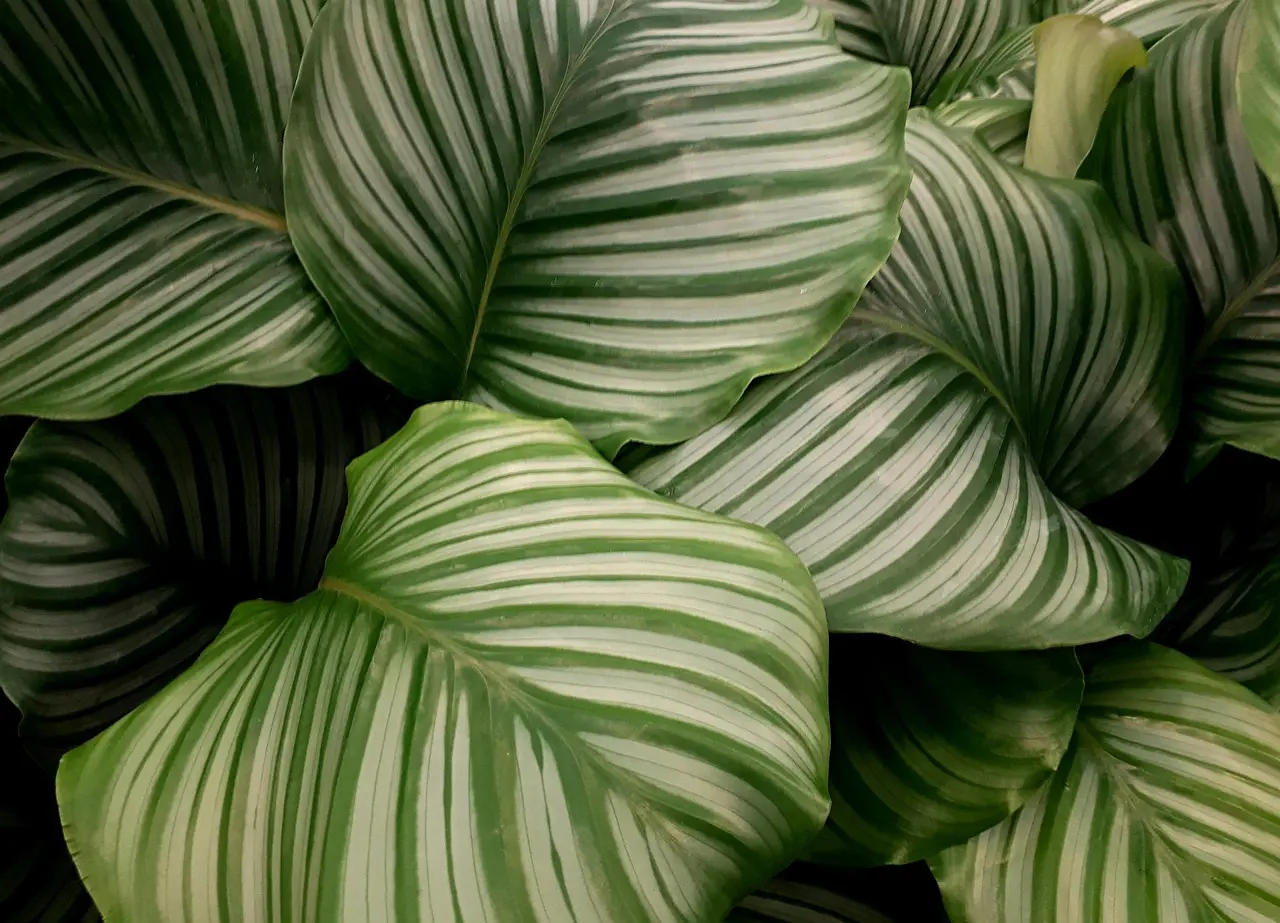
Goeppertia orbifolia (Linden) Borchs. & S.Suárez is a perennial member of the prayer-plant family, Marantaceae, recognized horticulturally by its large, rounded leaves with contrasting silvery-green striping. The species is native to eastern Brazil, with its native distribution recorded in northeastern and southeastern Brazil.
Classification
- Plant Type
- Herb
- Lifecycle
- Perennial
- Leaf Habit
- Evergreen
- Native Region
- South America
- Plant Family
- Marantaceae
Within its native range, G. orbifolia occurs in wet tropical environments. Its identity is particularly relevant to horticulture because plants are still widely encountered under the older name Calathea orbifolia, while Goeppertia orbifolia is the currently accepted botanical name.
The species has a long history of horticultural use as an ornamental foliage plant. No specific cultural significance requiring species-level treatment was identified. No formal IUCN conservation assessment was identified; therefore, predicted extinction-risk information does not substitute for a formal conservation-status label.
Quick Plant Information
| Field | Value |
|---|---|
| Accepted name | Goeppertia orbifolia (Linden) Borchs. & S.Suárez |
| Family | Marantaceae |
| Common names | Round-leaved calathea; round-leaf calathea; calathea orbifolia |
| Life form | Perennial herb |
| Native range | Eastern Brazil, including northeastern and southeastern Brazil |
| Conservation status | Not formally assessed by the IUCN Red List; Kew’s AERP predicts Not Threatened |
| Uses | Ornamental foliage plant |
Note: Kew’s AERP prediction is a modelled extinction-risk assessment and should not be treated as an IUCN Red List assessment.
Classification and Taxonomy
| Rank | Taxon |
|---|---|
| Kingdom | Plantae |
| Phylum | Streptophyta |
| Class | Equisetopsida |
| Subclass | Magnoliidae |
| Order | Zingiberales |
| Family | Marantaceae |
| Genus | Goeppertia |
| Species | Goeppertia orbifolia (Linden) Borchs. & S.Suárez |
Taxonomic Context
Goeppertia orbifolia has also been treated under the names Calathea orbifolia (Linden) H.Kenn. and Maranta orbifolia Linden. These names remain important when consulting older botanical, horticultural, and collection literature.
The currently accepted combination, Goeppertia orbifolia, was published in 2012. Retaining Calathea orbifolia as a searchable synonym is therefore useful for linking current taxonomy with earlier literature and horticultural records.
Cytogenetics
No sufficiently verified species-specific data were identified for chromosome number, ploidy level, or genome size.
Scientific Stability and Nomenclature
Goeppertia orbifolia is currently accepted by the taxonomic authority. The accepted authority is (Linden) Borchs. & S.Suárez.
The principal nomenclatural issue is the transfer from the historically familiar genus Calathea to Goeppertia. The synonym Calathea orbifolia remains particularly relevant for researchers because it occurs extensively in earlier literature and horticultural material.
Growth Habit and Architecture
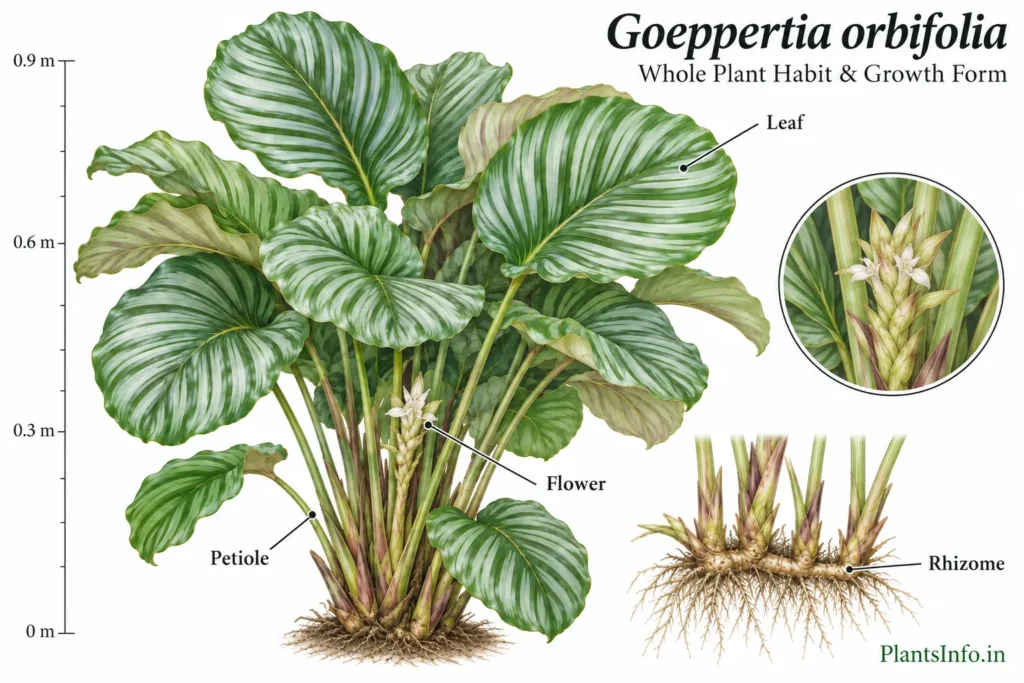
Goeppertia orbifolia is a clump-forming herbaceous perennial with an erect, dense architecture. Its foliage arises from a short rhizomatous base, producing a compact upright clump rather than a conspicuous above-ground stem. The combination of large, nearly circular leaves and an upright clumping habit is the principal architectural character of the species.
| Field | Value |
|---|---|
| Life form | Herbaceous perennial |
| Mature height | Approximately 0.6–0.9 m in cultivated plants |
| Canopy spread | Approximately 0.3–0.6 m in cultivated plants |
| Stem type | Very short, rhizomatous herbaceous axis |
| Branching pattern | Clump-forming; multiple leafy shoots arise from the rhizomatous base |
| Root morphology | Fibrous roots associated with a short rhizomatous base |
| Growth rate | Relatively rapid under favourable cultivated conditions; quantitative species-specific growth-rate data are limited |
| Distinguishing architectural feature | Dense erect clump bearing large, nearly round leaves on long petioles |
The architecture is strongly foliage-dominated: the visible plant consists primarily of overlapping leaf blades and petioles rather than an exposed branching stem.
Stem
The above-ground stem is highly reduced and largely obscured by the basal arrangement of the foliage. New leafy shoots arise from the rhizomatous base, contributing to the plant’s clumping form.
| Field | Value |
|---|---|
| Stem type | Reduced herbaceous stem associated with a rhizome |
| Surface texture | Not sufficiently documented at species level |
| Young/mature colour | Not sufficiently documented at species level |
| Thorn/spine/wing status | Unarmed; no documented thorns or spines |
Leaves
The leaves provide the strongest morphological and identification characters of G. orbifolia. They are simple, large, and characteristically orbicular to broadly rounded, with long petioles. The upper surface is dark green with broad silver-green banding, while the lower surface is substantially paler. The rounded blade and distinctive banding together provide the principal visual recognition characters of the species.
| Field | Value |
|---|---|
| Presence | Present |
| Leaf type | Simple |
| Arrangement | Basal/clump-forming on long petioles |
| Shape | Orbicular to broadly rounded |
| Size | Up to approximately 30 cm wide |
| Upper-surface colour | Dark green with silver-green bands |
| Lower-surface colour | Pale green to silvery green |
| Margin | Slightly undulate |
| Surface | Glossy |
| Special features | Broad silver-green banding across the leaf blade; exceptionally large, rounded blades |
Flowers
The flowers are small and comparatively inconspicuous relative to the foliage. Available horticultural descriptions record small white flowers, while flowering is reported to be uncommon in cultivated specimens.
| Field | Value |
|---|---|
| Inflorescence type | Spike-like or compact inflorescence |
| Flower size | Less than 2.5 cm |
| Flower colour | White |
| Flower form | Tubular |
| Fragrance | Not sufficiently documented |
| Anthesis | Not sufficiently documented |
| Primary pollinator identity | Not established at species-specific level |
The floral structures are not the principal field-recognition feature of the species; identification is dominated by its characteristic foliage.
Recommended Products
Disclosure: As an Amazon Associate, PlantsInfo may earn from qualifying purchases.
🌱 Plant Care Essentials
The following tools can help with pruning, plant health, soil management, and fruit garden maintenance.

Neem Oil for Plant Care
Natural plant protection against aphids, whiteflies, mites, and other common garden pests.

Fungicide for Root Care
Helps suppress soil-borne fungal diseases and supports healthier root systems.

Spray Bottle for Plants
Ideal for applying foliar sprays, neem oil solutions, and liquid plant treatments.

Rubber Hand Gloves
Protects hands during pruning, planting, soil preparation, and garden maintenance.
Fruit
No sufficiently verified species-specific fruit characters were identified.
Seeds
No sufficiently verified species-specific seed characters were identified.
Root System
The species has a rhizomatous underground base associated with fibrous roots. This structure supports the production of multiple leafy shoots and accounts for the plant’s clumping architecture.
Detailed rooting depth and lateral root spread are not sufficiently established for responsible species-specific treatment here.
Field Identification
In field or collection recognition, the most useful character combination is the large, nearly round leaf blade with broad silver-green striping on a dark-green background, carried on long petioles in a dense upright clump.
The single best distinguishing feature is the combination of exceptionally broad orbicular leaves and conspicuous silver-green banding. This combination is substantially more diagnostic than plant height or general clumping habit.
Normal vs. Concerning Observations
| Observation | Status | Notes |
|---|---|---|
| Large, rounded leaf blades with pronounced silver-green banding | Normal | Characteristic foliage of the species. |
| Pale green to silvery-green lower leaf surface | Normal | Consistent with documented leaf coloration. |
| Compact upright clumping habit | Normal | Characteristic growth architecture. |
| Small white flowers occurring infrequently in cultivation | Normal | Flowering is uncommon in cultivated plants but documented. |
| Minor variation in leaf size or degree of waviness | Normal | Morphological variation within the documented foliage form does not by itself indicate abnormality. |
Cultivar Summary
No documented cultivars or named selections identified.
Functional Traits
Species-specific physiological literature for Goeppertia orbifolia is limited. The strongest directly documented physiological evidence concerns photosynthetic performance during acclimatization of plants produced through tissue culture.
| Trait | Mechanism Description | Ecological Context |
|---|---|---|
| Photosynthetic acclimatization | Photosynthetic performance changes substantially during transition from in-vitro to ex-vitro conditions; plants produced through temporary-immersion culture showed higher photosynthetic rates during acclimatization than plants from semi-solid culture. | Demonstrates physiological sensitivity to the transition between controlled culture conditions and external growing conditions. |
| Photosynthetic competence | Ex-vitro plants retained measurable photosynthetic activity after transfer from tissue culture, with chlorophyll-fluorescence performance recovering during acclimatization. | Consistent with the species’ ability to resume more conventional autotrophic functioning after the altered physiological conditions of in-vitro culture. |
The available evidence does not establish a sufficiently detailed species-specific model of water-use strategy, nutrient acquisition, drought response, or other physiological mechanisms. Those mechanisms should therefore not be inferred from general Marantaceae biology.
Physiological Integration
The available species-specific study supports an acclimatization response linking photosynthetic performance with the transition from in vitro to ex-vitro conditions. However, the literature identified does not establish a broader species-specific network of physiological trade-offs or interactions among photosynthetic, water-use, nutrient-acquisition, and stress-response traits.
Accordingly, no additional physiological integration is inferred beyond the documented acclimatization response.
Phytochemistry
No sufficiently robust species-specific phytochemical characterization was identified that would support a representative-compound inventory for Goeppertia orbifolia.
A broad phytochemical profile should therefore not be constructed from family-level Marantaceae chemistry, studies of other Goeppertia species, or generalized claims about ornamental plants.
| Compound Class | Representative Compounds | Primary Location | Ecological or Biological Function |
|---|---|---|---|
| — | — | — | No sufficiently verified species-specific compound inventory identified. |
The evidence base is therefore too limited to characterize the species’ major secondary metabolites or assign documented ecological functions to particular compounds.
Phytochemical Organ Distribution
No sufficiently reliable species-specific organ-distribution dataset was identified.
Phytochemical Significance
No species-specific evidence was identified to establish a commercially or pharmacologically significant compound profile for G. orbifolia. Consequently, the presence of compounds reported from other Marantaceae or Goeppertia species is not treated as evidence for this species.
The maturity of the species-specific phytochemical characterization is limited. No adequately supported dominant organ, compound synergy or antagonism, or research-concentration bias can be stated without additional species-specific chemical literature.
This limitation is scientifically important: absence of an adequate compound inventory is not evidence that the plant contains no secondary metabolites; it indicates that the available evidence does not justify a detailed species-specific characterization.
Evidence Hierarchy for Medicinal Use
Goeppertia orbifolia is treated here as a non-medicinal ornamental species. No established medicinal, nutraceutical, or functional-food use requiring an evidence hierarchy was identified.
Nutritional Composition
No species-specific nutritional composition dataset appropriate for treating G. orbifolia as a food was identified.
Nutritional Significance
Soil Ecology and Mycorrhizal Associations
Species-specific soil-biology evidence for G. orbifolia is limited. The available material does not establish a sufficiently detailed species-specific record of mycorrhizal fungi, rhizosphere bacterial communities, bacterial functional roles, or allelopathic interactions.
No species-specific mycorrhizal association or rhizosphere bacterial relationship is therefore asserted.
At the available evidence resolution, the soil-ecology record should be treated as low coverage. General requirements or associations reported for Marantaceae or other Goeppertia species are not transferred to G. orbifolia as species-specific findings.
No documented species-specific allelopathic mechanism was identified.
Toxicity and Safety
| Subject | Toxic compounds | Clinical effects | Evidence source |
|---|---|---|---|
| Humans | No verified species-specific toxic compound identified in the reviewed sources | No verified species-specific poisoning syndrome identified | New Zealand Environmental Protection Authority risk-assessment material |
| Cats | No species-specific toxic principle identified in the reviewed sources | Calathea spp. are classified as non-toxic to cats by ASPCA; this is a genus-level safety classification rather than a species-specific toxicology study | ASPCA Animal Poison Control Center |
| Dogs | No species-specific toxic principle identified in the reviewed sources | Calathea spp. are classified as non-toxic to dogs by ASPCA; this is a genus-level safety classification rather than a species-specific toxicology study | ASPCA Animal Poison Control Center |
| Livestock | No species-specific toxicity data identified in the reviewed sources | No species-specific clinical toxicity assessment identified | Current evidence review |
Evidence Limitation
Available safety evidence supports a non-toxic classification for the Calathea group used by ASPCA for cats and dogs. The New Zealand Environmental Protection Authority assessment material also identifies Goeppertia orbifolia, under the former name Calathea orbifolia, as non-toxic to pets and humans.
These classifications should not be interpreted as equivalent to a controlled, species-specific toxicological assessment. The available evidence does not establish a comprehensive dose-response profile or demonstrate that ingestion is harmless under all circumstances.
Accordingly, the evidence supports reporting G. orbifolia as having no verified species-specific toxicity identified in the reviewed sources, rather than making an absolute claim that the plant cannot cause adverse effects.
The available evidence does not justify describing ingestion as beneficial or recommending consumption.
Toxicity Context
No species-specific dose-response relationship, isolated-compound toxicity profile, drug-interaction profile, pregnancy-related consideration, or renal/hepatic toxicity assessment was identified in the reviewed evidence.
For cats and dogs, the ASPCA classification of Calathea spp. as non-toxic provides useful animal-safety context, but it is a genus-level classification rather than a species-specific toxicological study. Consumption of plant material may nevertheless produce nonspecific gastrointestinal upset, which should be distinguished from a documented plant-poisoning mechanism.
No species-specific human clinical toxicity study was identified. The appropriate evidence-based formulation is therefore that no verified species-specific toxicity was identified in the reviewed sources, rather than that the species has been definitively demonstrated to be incapable of causing adverse effects.
This profile does not constitute medical or veterinary advice.
Biogeographic Context
Goeppertia orbifolia has a restricted native distribution in eastern Brazil and is associated with the wet tropical biome. Current taxonomic distribution data place the species in northeastern and southeastern Brazil. More specific regional evidence identifies the species with the Atlantic Forest of Bahia.
The documented distribution is therefore consistent with a humid tropical forest origin rather than a broadly distributed continental tropical species. Available evidence does not establish a sufficiently detailed species-specific model separating climatic, geological, and historical drivers of its present range.
Native Range and Distribution
| Region | Countries or Sub-regions | Notes |
|---|---|---|
| South America | Brazil — Northeast | Native; current Kew distribution data include northeastern Brazil. |
| South America | Brazil — Southeast | Native; current Kew distribution data include southeastern Brazil. |
The native range should not be extended to Bolivia or other South American countries sometimes listed in horticultural material. The current taxonomic distribution record supports eastern Brazil.
Global Cultivation and Naturalisation
Goeppertia orbifolia is widely cultivated internationally as an ornamental foliage plant, particularly as a houseplant and greenhouse/conservatory species.
| Region | Countries or Areas | Cultivation Status | Notes |
|---|---|---|---|
| Europe | United Kingdom and other European horticultural markets | Commercially established | Primarily cultivated as a protected ornamental plant. |
| North America | United States | Commercially established | Established in the ornamental-houseplant trade. |
| Australia | Australia | Commercially established | Cultivated as a tropical/subtropical ornamental. |
| Global | International horticultural trade | Commercially established | Distributed primarily through ornamental-plant production and retail. |
Cultivation records should not be interpreted as evidence of establishment in the wild. The evidence did not establish a documented naturalised population outside the native range.
Natural Habitat
Goeppertia orbifolia is a perennial of the wet tropical biome and is documented from eastern Brazil. Regional evidence associates it with the Atlantic Forest, including northeastern Bahia. Additional horticultural and assessment material describes it as occurring on the forest floor of tropical forest environments.
The available evidence therefore supports a humid forest-understorey setting, but does not justify a more precise species-specific soil, elevation, or disturbance classification without stronger locality-level ecological data.
Ecological Role
Species-specific ecological-interaction evidence is limited.
No sufficiently documented species-level evidence was identified during this audit for assigning G. orbifolia a keystone, indicator, ecosystem-engineering, or otherwise disproportionate ecological role.
Its most defensible ecological characterization at the available evidence level is therefore as a native herbaceous component of humid tropical forest vegetation, without an inferred special ecosystem function.
Invasive Status
No documented naturalised population of Goeppertia orbifolia outside its native eastern Brazilian range was identified during the current audit.
Accordingly, no invasive-status table is warranted.
Climate Envelope and Cultivation Context
Species-specific quantitative climate data are limited. A climate-envelope analysis based on filtered native occurrence records estimated a native-record climate centre of approximately 24.2°C mean annual temperature and 1,626 mm annual precipitation, with a reported p10–p90 annual-precipitation envelope of approximately 1,273–2,096 mm.
These values describe climatic conditions associated with the available native occurrence records. They should not be interpreted as experimentally established physiological optima or tolerance limits, particularly because the underlying native-record sample is limited.
| Parameter | Native-record climate | Physiological tolerance | Notes |
|---|---|---|---|
| Mean annual temperature | Approximately 24.2°C (75.6°F) | Not established | Represents the climate centre calculated from available native occurrence records; it is not a demonstrated physiological optimum. |
| Annual precipitation | Approximately 1,626 mm (64.0 in) | Not experimentally established | Represents the climate associated with filtered native records. |
| Annual precipitation envelope | Approximately 1,273–2,096 mm (50.1–82.5 in), p10–p90 | Not established as a tolerance range | Describes the distribution of precipitation values among the available native records rather than experimentally determined rainfall tolerance. |
The distinction between native-record climate, cultivation recommendations, and physiological tolerance is important. Horticultural sources commonly recommend warm conditions around 18–27°C (64–81°F), while the RHS specifies a constant minimum temperature of approximately 16°C (61°F) for protected cultivation. These figures are cultivation guidance rather than experimentally demonstrated species-wide physiological limits.
Climate Interpretation
The available environmental profile places G. orbifolia within a warm, humid climate context. The native-record precipitation data indicate substantial annual moisture availability, while horticultural guidance independently emphasizes the importance of warm, protected conditions and sensitivity to low temperatures.
The available evidence is insufficient to establish universal upper or lower physiological thresholds. In particular, the native-record climate envelope should not be interpreted as a formal drought-, heat-, or cold-tolerance experiment.
Cold exposure is the clearest documented climatic constraint in cultivation. Horticultural guidance recommends protected conditions and temperatures substantially above freezing, but does not establish a precise species-specific lethal temperature threshold.
Documented Stress Responses
Only stress categories for which meaningful species-specific or species-relevant horticultural evidence is available are included below.
| Stress type | Evidence status | Documented response | Evidence limitation |
|---|---|---|---|
| Cold stress | Horticultural evidence | Cold exposure is associated with reduced suitability for growth and foliage damage below recommended protected-culture temperatures. | Does not establish a precise physiological lethal threshold. |
| Low atmospheric humidity | Horticultural evidence | Dry conditions are associated with foliage water-loss symptoms and reduced ornamental quality. | Does not establish a quantitative physiological humidity threshold. |
| Excessive direct irradiance | Horticultural evidence | Strong direct light can cause leaf injury and reduced foliage quality. | Evidence is primarily horticultural rather than derived from a controlled stress-physiology study. |
| Drought | Not established | No sufficiently robust species-specific tolerance threshold identified. | Quantitative drought-response data are lacking. |
| Salinity | Not established | No sufficiently robust species-specific tolerance threshold identified. | Quantitative salinity-response data are lacking. |
| Flooding | Not established | No sufficiently robust species-specific tolerance threshold identified. | Quantitative flooding-response data are lacking. |
| Heat stress | Not established | No sufficiently robust species-specific tolerance threshold identified. | Upper physiological limits have not been established. |
| Nutrient stress | Not established | No sufficiently robust species-specific tolerance threshold identified. | Quantitative species-specific nutrient-stress data are lacking. |
The available evidence therefore supports describing documented sensitivities, rather than assigning categorical tolerance levels such as “supported,” “moderate,” or “high.”
Compound Stress Assessment
No species-specific experimental study was identified that adequately establishes responses to combined stresses such as drought + heat, heat + high irradiance, or cold + low humidity.
Combined-stress responses should therefore be treated as a knowledge gap rather than inferred by combining observations from individual stress categories.
Structural and Physiological Adaptations
No species-specific structural adaptation could be verified at sufficient evidentiary strength beyond ordinary rhizomatous perennial growth already documented in the morphology section. The rhizome may support persistence and vegetative regeneration, but treating that function as a demonstrated evolutionary adaptation would exceed the available evidence.
Climate Change Vulnerability
Species-specific evidence for climate-change vulnerability remains limited. The assessment below therefore distinguishes plausible ecological sensitivity from demonstrated climate impacts.
| Factor | Assessment | Notes |
|---|---|---|
| Primary climate sensitivity factors | Qualitative — low confidence | The species is restricted naturally to eastern Brazil and is associated with humid, wet tropical environments. Dependence on humid forest conditions provides a plausible basis for sensitivity to changes in temperature and moisture availability, but no species-specific climate-vulnerability model was identified. |
| Potential climate-related pressures | Potential sensitivity; not quantified | Altered precipitation regimes, increasing climatic variability, and degradation or drying of humid forest habitat could affect suitable environmental conditions. Species-specific attribution has not been demonstrated. |
| Potential resilience factors | Vegetative persistence documented | Rhizomatous growth permits vegetative multiplication and persistence, but its contribution to resilience under climate change has not been experimentally established. |
| Confidence level | Low | The assessment is based primarily on native habitat and biological characteristics rather than a species-specific climate-impact study. Kew currently reports an Angiosperm Extinction Risk Prediction of “Not Threatened,” but this is a modelled prediction and not a species-specific climate-vulnerability assessment. |
Overall, G. orbifolia can reasonably be described as a species with plausible sensitivity to changes in humid tropical habitat conditions, but the magnitude, direction, and demographic consequences of climate change remain unquantified.
Phenological Notes
Species-specific seasonal flowering and fruiting records were not sufficiently documented in the sources reviewed. The RHS reports that flowers in Goeppertia are seldom produced in cultivation, but this does not establish a native-range flowering season or identify an environmental flowering trigger.
Pollination Ecology
Species-specific pollination biology is poorly documented. A New Zealand Environmental Protection Authority assessment states that sexual reproduction of G. orbifolia is not known and that available pollination information was extrapolated from research on Marantaceae rather than derived directly from this species.
| Parameter | Value | Notes |
|---|---|---|
| Primary pollinators | Not established | No species-specific pollinator observation was verified. |
| Secondary pollinators | Not established | No species-specific secondary pollinator record was verified. |
| Pollination syndrome | Species-specific syndrome unresolved; Marantaceae provides family-level context | Marantaceae possesses a specialized pollination mechanism involving secondary pollen presentation and rapid style movement, but the reviewed comparative studies do not establish the precise pollination syndrome of G. orbifolia. |
| Floral mechanism | Species-specific mechanism not sufficiently documented | Marantaceae generally exhibit mechanically triggered style movement associated with pollen transfer, but direct documentation for G. orbifolia is lacking. |
| Reproductive system | Not established | Species-specific self-compatibility, outcrossing, or breeding-system data were not verified. |
| Seed-dispersal agent | Not established | No species-specific dispersal observation was verified. |
| Reproductive evidence status | Low confidence / knowledge gap | Sexual reproduction of G. orbifolia is poorly documented in the available assessment literature. |
| Human intervention | Biological feasibility suggested; species-specific evidence limited | The New Zealand assessment considered seed production without artificial pollination unlikely under the conditions examined, but this does not establish a general species-wide requirement. No pollination procedure is inferred here. |
Pollination Context
The broader Marantaceae literature demonstrates a highly specialized floral system in which pollinator contact can trigger rapid style movement and pollen transfer. These studies provide useful family-level evolutionary context, but they should not be presented as direct observations of G. orbifolia.
Accordingly, the pollination biology of G. orbifolia remains a significant knowledge gap. The available evidence does not establish its principal pollinator, breeding system, natural pollination frequency, or seed-dispersal pathway.
Seed Biology and Germination
No sufficiently verified species-specific seed-germination dataset was identified.
Germination Notes:
The reviewed horticultural literature indicates that sexual propagation is uncommon in cultivation, while division is the principal documented means of multiplication. This does not establish that the species is intrinsically incapable of seed production; rather, reliable species-specific seed biology remains poorly documented.
Vegetative Reproduction
| Parameter | Value | Notes |
|---|---|---|
| Vegetative Regeneration Capacity | Documented | The species forms clumps from an underground rhizomatous base and can regenerate vegetatively through division of rhizomatous clumps. |
| Primary Regeneration Mechanism | Rhizomatous vegetative growth | Rhizome-based clump formation is the principal documented vegetative multiplication mechanism. |
| Minimum Propagule Size | Not established | No species-specific minimum rhizome/propagule size was sufficiently verified. |
| Ecological or Invasive Significance | Not established | Vegetative multiplication is documented, but this alone does not demonstrate naturalised or invasive behaviour. |
The RHS specifically documents propagation by division of rhizomes, while the species’ natural rhizomatous perennial habit is also consistent with this regeneration pattern.
Economic Importance
| Use category | Description | Economic significance |
|---|---|---|
| Ornamental foliage plant | Cultivated primarily for its large, patterned foliage and use as an indoor or container ornamental. | Documented commercial significance; scale not quantified. C. orbifolia has been included among Calathea taxa used in the foliage-plant industry, and commercial nursery documentation confirms continued production and wholesale distribution. |
| Commercial nursery and interiorscape trade | Commercially propagated and traded under both Calathea orbifolia and its current placement in Goeppertia. | Established commercial trade. A New Zealand government investigation documented long-term cultivation and commercial propagation of the species, while commercial availability is also documented internationally. |
Economic Assessment
Goeppertia orbifolia has established economic importance primarily as a specialist ornamental foliage plant. Its documented commercial role is in horticulture, nursery production, indoor plant markets, and interiorscape use rather than in food, medicinal, fibre, or major agricultural production.
No authoritative species-specific dataset was identified that establishes global production volume, trade value, market share, or total economic value. The scale of its commercial importance is therefore best described qualitatively rather than assigned a numerical market category.
Traditional Uses
No sufficiently documented culturally attributed traditional use was identified.
The available evidence supports G. orbifolia primarily as an ornamental horticultural species. Generic claims concerning medicinal, edible, spiritual, or other traditional uses were not accepted because they lacked adequate cultural attribution and species-specific documentation.
Regional Ethnobotanical Context
No reliable evidence was identified establishing a historically documented ethnobotanical tradition specifically associated with G. orbifolia. Its documented human-use history is primarily horticultural rather than ethnobotanical.
Traditional Ecological Knowledge
No sufficiently documented species-specific traditional ecological knowledge was identified.
No verified evidence was found for G. orbifolia being used as a living fence, agroforestry component, ecological indicator, or component of a specifically attributed traditional resource-management system.
Ethical Considerations
No species-specific biopiracy dispute, intellectual-property conflict, or documented community-benefit-sharing controversy was identified in the reviewed sources.
The principal documentation issue is taxonomic and trade-name ambiguity. Plants may continue to be traded under the former name Calathea orbifolia, while Goeppertia orbifolia is the accepted combination. A New Zealand biosecurity investigation demonstrated that this nomenclatural complexity can complicate regulatory records and accurate documentation of cultivated plants.
Cultural Significance
No sufficiently documented cultural, religious, ceremonial, symbolic, or identity-related significance beyond ornamental use was identified.
Cultivation Summary
Goeppertia orbifolia is primarily suited to protected ornamental cultivation rather than conventional outdoor agriculture. It is an evergreen rhizomatous perennial valued principally for its foliage and is commercially cultivated as a houseplant and interiorscape species.
Commercial Calathea production commonly occurs under protected, shaded conditions, and the production group is propagated through vegetative and tissue-culture systems. These commercial production practices provide useful cultivation context but should not automatically be interpreted as species-specific physiological findings.
The species’ tropical growth requirements can constrain commercial production. Cold exposure, unsuitable light conditions, atmospheric dryness, and environmental or nutritional stress can reduce foliage quality. These observations provide biological and commercial context only; detailed cultivation recommendations belong in the dedicated cultivation module.
Pest, Disease and Physiological Burden Summary
Available species-specific evidence remains limited, although the documented disease literature has expanded in recent years.
- Anthracnose: Colletotrichum fructicola was reported causing leaf anthracnose on Calathea orbifolia in Shenzhen, China. The report provides a species-specific disease record, published in Plant Disease in 2025.
- Whitefly and red spider mite: The RHS identifies glasshouse whitefly and red spider mite as potential pests of G. orbifolia.
- Physiological disorders: Commercial Calathea production literature documents marginal and tip necrosis, chlorosis, leaf spotting, foliage-colour changes, and wilting associated with environmental, nutritional, water-quality, or root-related stresses. These findings are largely reported at the Calathea production-group level, rather than demonstrated exclusively for G. orbifolia, and are therefore retained as contextual production evidence rather than species-specific disease diagnoses.
Failure Points and Commercial Risks
| Risk | Commercial significance |
|---|---|
| Cold and transport sensitivity | Documented at the Calathea production level. Tropical Calathea production and shipping can be affected by chilling injury, making temperature exposure a relevant commercial vulnerability. |
| Foliage-quality sensitivity | Documented at the Calathea production level. Marginal necrosis, chlorosis, spotting, and colour deterioration can reduce ornamental market quality. |
| Pest and disease burden | Documented but evidence-scaled. Whitefly, spider mites, and a recent species-specific anthracnose record establish biological risks relevant to commercial production. |
| Taxonomic and inventory ambiguity | Documented. Continued use of Calathea orbifolia in trade alongside the accepted Goeppertia name can complicate regulatory and commercial plant records. The New Zealand investigation specifically documented this issue. |
| Market-scale uncertainty | Evidence gap. No authoritative species-specific global production, export, market-value, or yield dataset was identified. |
Conservation Analysis
Goeppertia orbifolia has a geographically restricted documented native distribution in eastern Brazil, with Kew recording the species from northeastern and southeastern Brazil and associating it primarily with wet tropical environments. However, no verified species-specific population-size dataset, population-trend assessment, or formal global IUCN Red List assessment was identified during this review.
The principal conservation limitation is therefore insufficient species-specific assessment data, rather than evidence demonstrating that the species is threatened. Its association with humid tropical environments makes habitat condition relevant to its conservation context, but the available evidence does not justify assigning a quantified habitat-loss threat, or population declines specifically to G. orbifolia.
Cultivation and commercial availability should not be interpreted as evidence that wild populations are secure. Ex-situ horticultural material may provide a potential germplasm resource, but it does not substitute for information on wild population condition, distribution, or genetic representation.
Conservation Status
| Parameter | Value | Notes | Source |
|---|---|---|---|
| IUCN Red List assessment | No species-specific assessment identified | No species-specific assessment was identified under Goeppertia orbifolia or its principal synonym Calathea orbifolia. The species should therefore not be presented as having a formal IUCN category. | IUCN Red List |
| Population trend | Not established | No sufficiently verified species-specific global population-trend assessment was identified. | IUCN/Kew review |
| Primary conservation concern | Insufficient population and threat data | A restricted documented native distribution is established, but population condition and species-specific threat magnitude remain unresolved. | Kew POWO; evidence synthesis |
| Priority conservation approach | Formal assessment and field-based population documentation | Improved information on occurrence, population size, habitat, trends, and threats is needed before stronger conservation conclusions are assigned. | Evidence synthesis |
| IUCN assessment record | No species-specific assessment page identified | The IUCN Red List was consulted for assessment status; no species-specific assessment page was identified during the current review. | IUCN Red List |
| Verification date | 2026-10-07 | Current verification date for this profile. | — |
Kew’s current Plants of the World Online record provides an Angiosperm Extinction Risk Prediction (AERP v1) of “Not Threatened,” with a confident prediction. This is a modelled extinction-risk prediction and is not an IUCN Red List category or substitute for a formal IUCN assessment.
Conservation Risk Factors
| Risk factor | Assessment | Evidence status |
|---|---|---|
| Restricted documented geographic range | Potential conservation consideration | Supported by distribution data; the documented native range is in eastern Brazil, but the conservation significance of the range size has not been quantitatively assessed. |
| Dependence on wet tropical environments | Potential conservation consideration | Supported at the habitat level. The species is associated with wet tropical environments, but species-specific effects of habitat loss or climatic drying have not been quantified. |
| Unknown population status | Important knowledge limitation | Verified evidence gap. No sufficiently verified population-size or population-trend dataset was identified. |
| Incomplete formal assessment | Important knowledge limitation | Verified. No formal IUCN assessment was identified, and the available AERP prediction is not a substitute for one. |
No sufficiently robust species-specific evidence was identified to classify commercial harvesting, invasive spread, or documented population decline as established conservation threats.
Conservation Interpretation
The current evidence supports a conservative conclusion: G. orbifolia has a documented restricted native distribution and ecological association with humid tropical environments, but its global conservation status remains unresolved because species-specific population and threat data are insufficient.
The available Kew AERP prediction of Not Threatened provides additional modelled context, but it should be reported separately from formal conservation assessment. At present, the most important conservation priority is therefore improving field-based knowledge of population distribution, abundance, habitat condition, trends, and threats.
Conservation Assessment
The available evidence does not support classifying G. orbifolia as threatened, but neither does commercial abundance provide evidence of security of wild populations. Kew’s AERP v1 prediction is reassuring, but it belongs to a predictive framework designed to help address the large assessment gap among flowering plants. Such predictions do not replace formal IUCN Red List assessments.
The most defensible conservation position is therefore no formal IUCN Red List assessment identified, with a confident Kew AERP prediction of “Not Threatened.” These two evidence types should remain explicitly distinguished in publication.
Research Coverage and Knowledge Gaps
| Research topic | Coverage level | Key gaps | Priority |
|---|---|---|---|
| Taxonomy and nomenclature | Good | Current combination and principal synonyms are well documented. | Low |
| Distribution | Moderate | Fine-scale population distribution and abundance | High |
| Conservation biology | Low | Population size, trends, threats, and demographic structure | High |
| Physiology | Low–moderate | Research is concentrated primarily on acclimatization and photosynthetic performance. | Medium |
| Morphology | Moderate | Reproductive morphology and field variation | Medium |
| Phenology | Low | Native-range flowering and fruiting timing | High |
| Pollination biology | Very low | Species-specific pollinator identity and breeding system | High |
| Seed biology | Very low | Germination, dormancy, storage behaviour, and longevity | High |
| Vegetative regeneration | Moderate | Ecological importance of rhizomatous regeneration in wild populations | Medium |
| Phytochemistry | Very low | Species-specific chemical inventory and organ distribution | Low–medium |
| Soil ecology | Very low | Rhizosphere and mycorrhizal relationships | Medium |
| Disease biology | Emerging | Pathogen diversity, epidemiology, and host susceptibility | Medium |
| Cultivation physiology | Moderate | Commercial production physiology and acclimatization are better represented than wild ecology. | Medium |
The research record is therefore stronger for horticulture and ex-vitro acclimatization than for wild reproductive ecology, population biology, or conservation. The principal species-specific physiological study examined tissue-cultured plants during ex-vitro acclimatization, including photosynthetic performance and leaf anatomical differences between culture systems.
Recent disease reports indicate that species-specific pathology research is beginning to expand. Calathea orbifolia has been reported as a host of Exserohilum rostratum and Colletotrichum fructicola in Shenzhen, China. These records concern cultivated plants and do not, by themselves, establish a major threat to wild populations.
Research Landscape
Research on G. orbifolia is concentrated primarily in ornamental horticulture, propagation, tissue culture, and acclimatization, with substantially thinner coverage of native-range ecology and reproductive biology.
The literature also carries a nomenclatural legacy because much of the older scientific and horticultural literature uses Calathea orbifolia. Kew currently treats this name as a synonym of G. orbifolia.
This creates a practical literature-retrieval issue: searches restricted to the current Goeppertia combination can miss older species-specific studies. Conversely, searches using Calathea can retrieve broader genus-level material that should not automatically be attributed to G. orbifolia.
The available evidence does not establish a reliable funding or geographic concentration pattern for research on the species itself; the literature base is too small to support such a conclusion.
Priority Knowledge Gaps
- Wild population assessment — abundance, population-level distribution, and population trends.
- Native-range phenology — flowering, fruiting, and seasonal reproductive timing.
- Pollination biology — actual pollinator identity, pollination effectiveness, and breeding system.
- Seed biology — dormancy, germination, storage behaviour, and longevity.
- Habitat and demographic ecology — population structure and habitat specificity within eastern Brazil.
- Genetic diversity — genetic differentiation among wild populations and representation in cultivated material.
- Climate vulnerability — species-specific demographic or distribution modelling rather than inference from general tropical requirements.
- Wild disease ecology — whether pathogens documented in cultivation occur naturally and affect wild populations.
Interesting Facts
- The currently accepted combination, Goeppertia orbifolia, was published in 2012, while Calathea orbifolia remains an important synonym in older botanical and horticultural literature.
- The species is native to eastern Brazil, with Kew recording it from northeastern and southeastern Brazil.
- Kew’s AERP v1 currently predicts “Not Threatened” with a confident prediction. This is a modelled extinction-risk prediction and not an IUCN Red List assessment.
- A species-specific study published in 2008 documented differences in ex-vitro acclimatization performance between plants produced through semi-solid culture and temporary-immersion culture.
- The species has an established international horticultural presence; New Zealand formally evaluated it in connection with an ornamental houseplant release application.
- Recent research has documented fungal diseases affecting C. orbifolia in cultivation in China, indicating that the species-specific disease literature is still developing.
Frequently Asked Questions
Is Goeppertia orbifolia endangered?
It has not been formally assessed by the IUCN Red List, so an IUCN threatened category cannot currently be assigned. Kew’s AERP v1 nevertheless predicts the species as Not Threatened with a confident prediction. These represent different assessment systems and should not be treated as equivalent.
Where is Goeppertia orbifolia native?
It is native to eastern Brazil, with Kew recording the species from northeastern and southeastern Brazil.
Is Calathea orbifolia the same plant?
Yes. Calathea orbifolia is a synonym of the currently accepted name Goeppertia orbifolia. The former name remains important when searching older botanical, horticultural, and collection literature.
What is the best-documented area of research on this species?
The strongest species-specific research base is associated with ornamental horticulture, tissue culture, and ex-vitro acclimatization, rather than wild reproductive or population ecology.
Is its natural reproductive biology well understood?
No. Native-range phenology, pollinator identity, breeding system, seed biology, and reproductive success remain poorly documented.
Does widespread cultivation prove that wild populations are secure?
No. Cultivated abundance and commercial availability cannot substitute for population-level information on wild distribution, abundance, trends, or threats.
Conclusion
Goeppertia orbifolia is a tropical rhizomatous perennial native to eastern Brazil and best known scientifically and economically as an ornamental foliage plant. Its taxonomy and horticultural biology are comparatively well documented, whereas its wild reproductive ecology, population biology, and conservation status remain much less resolved.
The current conservation position requires a clear distinction between assessment systems: no formal IUCN Red List assessment has been identified, while Kew’s Angiosperm Extinction Risk Prediction provides a confident “Not Threatened” prediction. The latter is a modelled prediction and should not be presented as an IUCN status or as evidence that wild populations have been comprehensively assessed.
Across the profile, the principal scientific limitation is therefore an imbalance in the evidence base: substantially more information is available on cultivation, propagation, and acclimatization than on native-range demography, phenology, pollination, seed biology, and population-level conservation.
These evidence gaps define the most useful priorities for future species-specific research.
References
A. Primary Taxonomic Sources
- Borchsenius, F., Suárez, L.S.S. & Prince, L.M. (2012). “Molecular Phylogeny and Redefined Generic Limits of Calathea (Marantaceae).” Systematic Botany, 37(3): 620–635. DOI: 10.1600/036364412X648571. — Taxonomic revision establishing the redefined generic limits and transfer of species from Calathea to Goeppertia.
- Royal Botanic Gardens, Kew. Goeppertia orbifolia (Linden) Borchs. & S.Suárez. Plants of the World Online. — Accepted name, nomenclatural authority, classification, synonymy, and distribution.
- Royal Botanic Gardens, Kew. Calathea orbifolia (Linden) H.Kenn. Plants of the World Online. — Historical combination and synonymy.
- Royal Botanic Gardens, Kew. Goeppertia Nees. Plants of the World Online. — Generic placement and taxonomic context.
B. Peer-Reviewed Literature
- Yang, S.-H. & Yeh, D.-M. (2008). “In vitro leaf anatomy, ex vitro photosynthetic behaviors and growth of Calathea orbifolia (Linden) Kennedy plants obtained from semi-solid medium and temporary immersion systems.” Plant Cell, Tissue and Organ Culture, 93(2): 201–207. DOI: 10.1007/s11240-008-9363-3. — Species-specific leaf anatomy, photosynthetic acclimatization, and growth following tissue culture.
- Ley, A.C. & Claßen-Bockhoff, R. (2009). “Pollination syndromes in African Marantaceae.” Annals of Botany, 104(1): 41–56. DOI: 10.1093/aob/mcp106. — Comparative Marantaceae pollination ecology; used as family-level contextual evidence rather than species-specific evidence for G. orbifolia.
- Claßen-Bockhoff, R. & Heller, A. (2008). “Floral Synorganization and Secondary Pollen Presentation in Four Marantaceae from Costa Rica.” International Journal of Plant Sciences, 169(6): 745–760. DOI: 10.1086/588069. — Comparative evidence concerning floral mechanism and secondary pollen presentation in Marantaceae.
- Khuna, S., Hongsanan, S., Thitla, T., Xie, N., et al. (2025). “First Report of Leaf Anthracnose Caused by Colletotrichum fructicola on Calathea orbifolia in China.” Plant Disease, 109(8): 1787. DOI: 10.1094/PDIS-03-25-0501-PDN. — Species-specific anthracnose record.
- Wang, M.-C., Hongsanan, S., Thitla, T., Xie, N., Liu, G., & Khuna, S. (2025). “First Report of Exserohilum rostratum Causing Leaf Blight on Calathea orbifolia in China.” Plant Disease, 109(2). DOI: 10.1094/PDIS-11-24-2415-PDN. — Species-specific leaf-blight record.
- Bachman, S.P., Brown, M.J.M., Leão, T.C.C., Nic Lughadha, E. & Walker, B.E. (2024). “Extinction risk predictions for the world’s flowering plants to support their conservation.” New Phytologist, 242(2): 797–808. DOI: 10.1111/nph.19592. — AERP methodology, predictive framework, and limitations.
C. Monographs, Books and Technical Reports
No eligible sources identified.
D. Databases and Online Resources
- North Carolina State University Extension, NC Extension Gardener Plant Toolbox. Goeppertia orbifolia. — Common names, morphology, growth habit, habitat, and horticultural context.
- Royal Horticultural Society. Goeppertia orbifolia. — Horticultural identity, habit, flowering, temperature requirements, propagation context, and pests.
- Royal Horticultural Society. Calathea orbifolia. — Historical horticultural identity and associated cultivation information.
- International Union for Conservation of Nature. The IUCN Red List of Threatened Species. — Conservation-assessment framework and assessment-status verification. Accessed 2026-10-07.
- FAO AGRIS. Record for Yang, S.-H. & Yeh, D.-M. (2008), Calathea orbifolia. — Bibliographic record for the species-specific tissue-culture and acclimatization study.
- KnowYourPlant. Goeppertia orbifolia — Native-Record Climate Profile. — Occurrence-derived climate values and limitations of the underlying native-record sample.
E. Acceptable Grey Literature
- New Zealand Environmental Protection Authority. (2023). Goeppertia bella and G. orbifolia — EPA Staff Assessment Report. APP204280. — Habitat, reproduction, cultivation, animal-safety, and ecological-risk information.
- New Zealand Environmental Protection Authority. (2023). Greenlife Plants Application — Risk Assessment / Hearing Presentation. APP204280. — Additional regulatory and risk-assessment context.
- New Zealand Ministry for Primary Industries. (2020). Burnip, G. “Biological risk of Calathea houseplant investigated.” Surveillance, 47(2). — Commercial cultivation, propagation, nomenclatural, and biosecurity context.
- University of Florida IFAS Extension. Chen, J. & McConnell, D.B. Cultural Guidelines for Commercial Production of Interiorscape Calathea. — Commercial Calathea production, environmental requirements, and production-related physiological disorders.
F. Animal Safety Source
- ASPCA Animal Poison Control Center. Toxic and Non-Toxic Plants — Calathea / Prayer Plant. — Genus-level animal-safety classification for Calathea spp.; used only as contextual evidence and not as a species-specific toxicological study.