Introduction
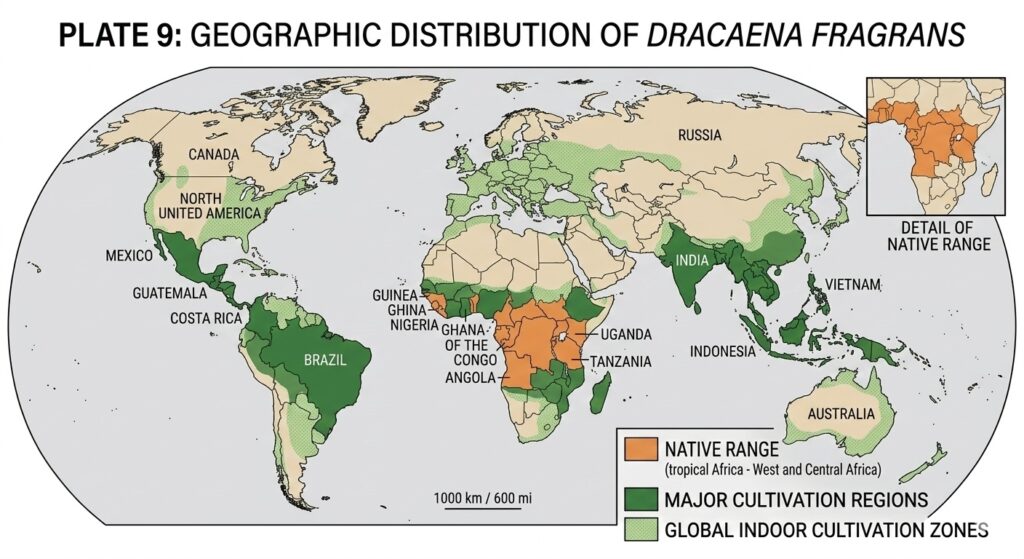
Dracaena fragrans (L.) Ker Gawl. is a slow-growing, evergreen perennial shrub or small tree native to the tropical forest margins and montane woodland edges of sub-Saharan Africa, ranging from Ethiopia and Sudan in the east through Central Africa and into West Africa. In its native range, it occupies the understorey and canopy edges of moist tropical forests, forming an erect, sparsely branched stem that can reach 6–15 metres in height, crowned by dense rosettes of broad, arching, strap-shaped leaves. It is one of the most widely cultivated indoor foliage plants in the world, valued for its tolerance of low light, neglect, and drought conditions that would be intolerable to most ornamental species.
Classification
- Lifecycle
- Perennial
- Leaf Habit
- Evergreen
- Native Region
- Central Africa, East Africa, Southern Africa, West Africa
- Plant Family
- Asparagaceae
The species is notable within the genus for producing intensely fragrant flowers — cream-white panicles with a sweet, heavy scent that can fill an enclosed space at night — an unusual feature among ornamental Dracaena species. Under indoor cultivation, flowering is rare and unpredictable. The species has undergone significant taxonomic revision, having been transferred between the genera Pleomele, Aletris, and Sansevieria over the course of its nomenclatural history, and the broader genus Dracaena itself was reclassified into Asparagaceae under APG IV following molecular studies confirming the polyphyly of the former Agavaceae and Ruscaceae.
Explore additional profiles of Asparagaceae ornamentals in the PlantsInfo Asparagaceae database.
Taxonomic Synonyms
| Field | Information |
|---|---|
| Accepted Scientific Name | Dracaena fragrans (L.) Ker Gawl. |
| Known Synonyms | Aletris fragrans L.; Pleomele fragrans (L.) Salisb.; Dracaena deremensis Engl.; Dracaena fragrans var. deremensis (Engl.) Baker; Dracaena smithii Hook.f.; Dracaena ugandensis Baker |
| Taxonomic Authority Source | Kew Plants of the World Online (POWO) |
Quick Plant Information
| Field | Information |
|---|---|
| Common Name(s) | Corn plant, happy plant, fragrant dracaena, cornstalk dracaena, African corn plant |
| Scientific Name | Dracaena fragrans (L.) Ker Gawl. |
| Family | Asparagaceae |
| Plant Type | Evergreen perennial shrub to small tree |
| Lifespan | Perennial; long-lived (decades under outdoor tropical conditions; multi-year indoors) |
| Growth Habit & Form | Erect, sparsely branched; cane-like stem with terminal rosettes of strap-shaped leaves; 2–6 m in cultivation, up to 15 m in native habitat |
| Native Range | Tropical and montane sub-Saharan Africa; Ethiopia to Mozambique and Angola; West Africa |
| Climate Adaptation & Habitat Type | Humid tropical and subtropical forest understorey; forest margins; montane woodland edges |
| Leaf Type | Simple, linear-lanceolate, strap-shaped; sessile; bright green with cream or yellow central or marginal stripes in cultivated forms |
| Flower Color(s) | Cream-white to pale pink; intensely fragrant |
| Fruit Type | Berry (orange-red when ripe) |
| Evergreen or Deciduous | Evergreen |
Botanical Description
Stem
The stem of Dracaena fragrans is erect, terete, and distinctly cane-like, with a fibrous exterior and a soft, pithy interior lacking secondary woody growth of the type found in dicotyledonous trees. In juvenile plants the stem is entirely hidden by the overlapping leaf bases; with age and the natural shedding of lower leaves, a bare, grey-brown trunk is revealed bearing prominent, horizontal, annular leaf-scar rings at regular intervals. Under natural conditions, the stem branches sparingly from axillary meristems following apical damage or senescence, producing the characteristic multi-headed canopy of older individuals in cultivation.
Leaves
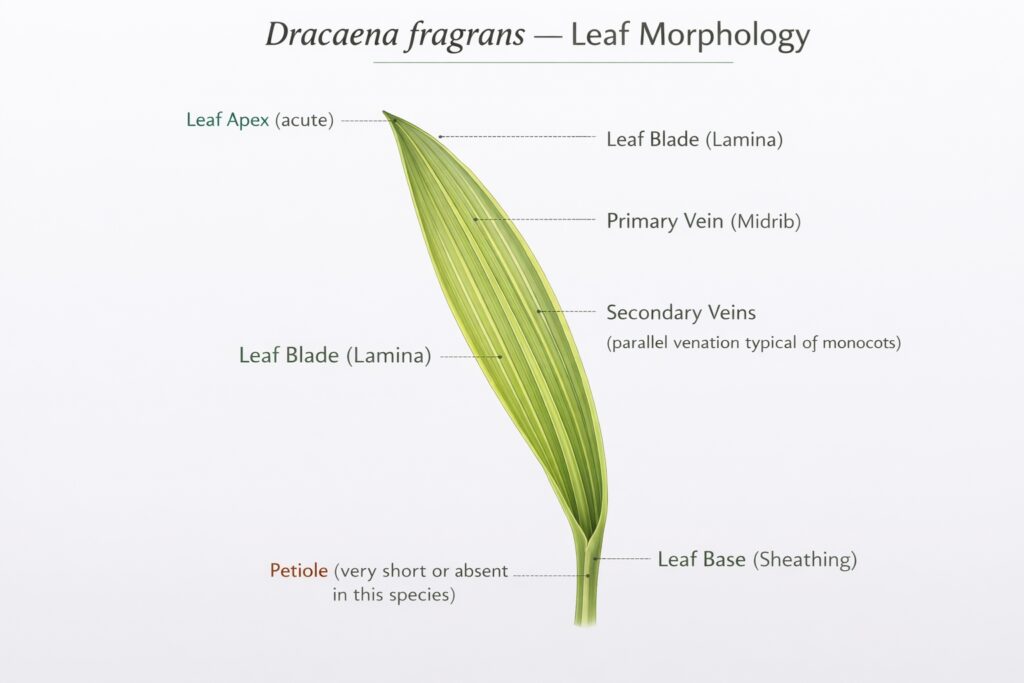
Leaves are sessile, strap-shaped, and spirally arranged in dense terminal rosettes. Blades are 30–150 cm long and 3–10 cm wide in mature plants, tapering to a pointed apex and narrowing at the base into a clasping leaf sheath. Leaf margins are entire to slightly undulate. The surface is glabrous and somewhat glossy; the colour in wild-type plants is uniform bright to mid-green, while most cultivated forms show cream, yellow, or white central stripes or marginal variegation. Leaves persist for one to several years before yellowing, drying at the tip, and abscising to leave the characteristic stem scar.
Flowers
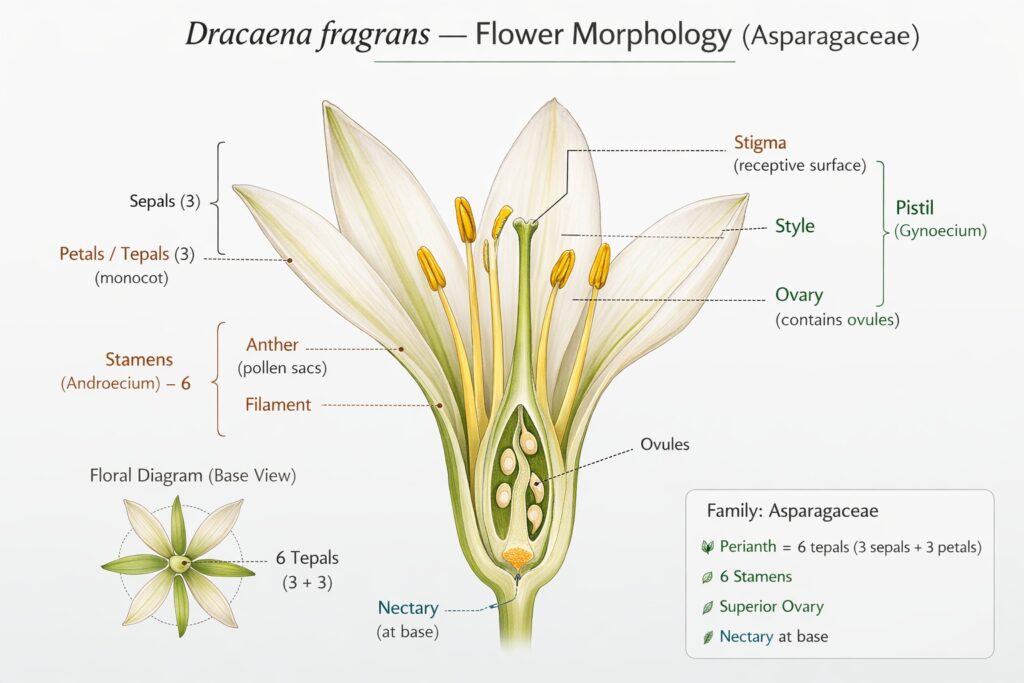
The inflorescence is a large, branched panicle, 30–100 cm long, produced terminally or from axils at the stem apex and bearing numerous small, tubular, six-tepalled flowers. Individual flowers are 2–2.5 cm long, cream-white to pale pink or pinkish-purple on the tepal exterior, and are arranged in sessile clusters along the panicle branches. The flowers are most strongly fragrant at night, producing a sweet, heady scent described as reminiscent of jasmine or vanilla. In cultivation, flowering is rare and typically occurs only on mature outdoor specimens or occasionally on large, well-established pot-grown plants that experience seasonal temperature variation.
Fruit
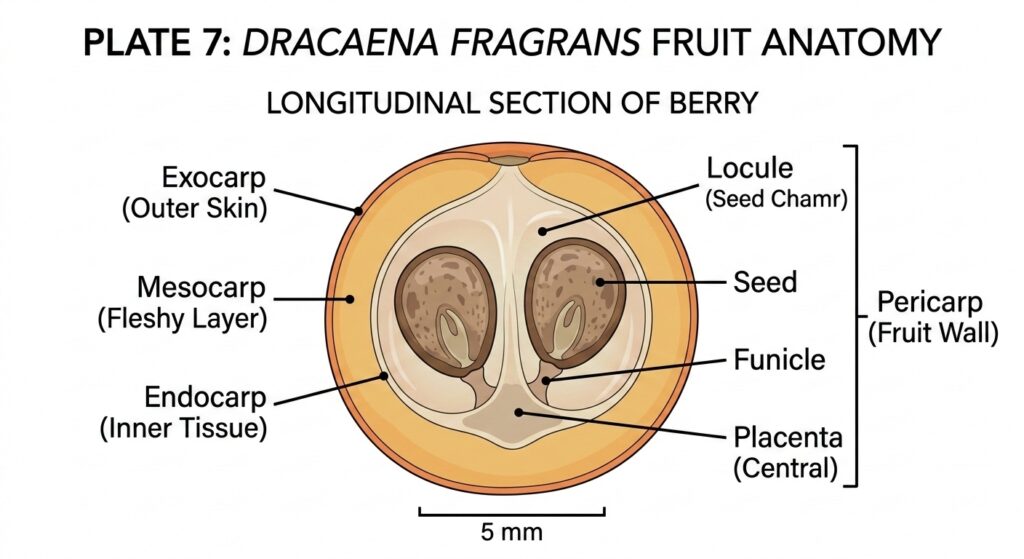
The fruit is a spherical to slightly oblong berry, 8–12 mm in diameter, ripening from green through yellow-orange to a bright orange-red at full maturity. Each berry typically contains one to three seeds enclosed in a fleshy, mucilaginous mesocarp. Fruits are rarely produced in indoor cultivation but develop freely on outdoor specimens in tropical settings, where they are consumed by birds that serve as dispersal agents.
Roots
The root system is fibrous and adventitious, arising from the base of the stem and from the lower internodes. Roots are thick, orange to pale orange-white in colour, and moderately deep in natural soil conditions; under container cultivation the roots are dense and cord-like, tending to form a tightly packed mass around the container perimeter when pot-bound. The distinctive orange root colour is a useful identification feature when repotting or inspecting the root zone.
Growth Architecture & Life Strategy
Dracaena fragrans is a phanerophyte in the Raunkiær classification, with perennating buds carried well above ground level at the apices of persistent, woody-textured cane stems. The species persists through unfavourable dry seasons by maintaining its evergreen canopy and drawing on reserves stored in the large, starchy stem, a strategy characteristic of understorey phanerophytes in African tropical forests.
The growth habit is characteristically monocarpic at the shoot level: each terminal rosette grows vegetatively for an extended period before eventually producing a terminal inflorescence, after which continued growth occurs only through axillary branching below the inflorescence. This results in the progressive development of a multi-branched, candelabra-like architecture in older specimens, though in indoor cultivation the inflorescence stage is rarely reached and the plant typically maintains a single-stemmed form for many years.
Growth rate under cultivation is slow to moderate, typically 15–30 cm of stem elongation per year under optimal conditions. The species employs a shade-adaptation life strategy consistent with forest understorey origin: broad, horizontally held leaves maximise interception of diffuse light, while the capacity to tolerate very low light levels — down to approximately 10–15 µmol m⁻² s⁻¹ of photosynthetically active radiation — allows survival in deep interior spaces. Stem reserves of starch and water provide a buffer against periodic drought and low-light stress.
Common Types / Varieties
‘Massangeana’ is the most widely cultivated form of Dracaena fragrans and the variety most commonly sold under the common name “corn plant” in global houseplant markets. It is distinguished by a broad, bright yellow to cream-yellow central stripe running the full length of each leaf blade, flanked by darker green marginal zones, closely resembling the leaf colouring of maize (Zea mays) — hence the common name. ‘Massangeana’ retains the same habit and cultural requirements as the wild type but is rarely seen in outdoor tropical cultivation where the green wild type predominates.
‘Lindenii’ is characterised by the inverse variegation pattern to ‘Massangeana’: the leaf margins are cream to pale yellow while the central leaf zone is green. This marginal stripe pattern is narrower and less bold than the central stripe of ‘Massangeana’, giving the plant a more refined, striped appearance. ‘Lindenii’ is less commonly encountered in general retail but is prized by collectors for its distinctive marginal colouring and slightly narrower leaf form.
‘Victoria’ produces leaves with a broad, central golden-yellow stripe wider and more intense in colour than ‘Massangeana’, combined with a shorter, more compact leaf rosette than typical for the species. Plants sold under this name are sometimes shorter and more bushy in habit, making them suitable for smaller interior spaces. The distinction between ‘Victoria’ and some selections of ‘Massangeana’ is not always consistent in trade, and the cultivar name is applied variably by different nurseries.
‘Janet Craig’ — now more properly referred to as Dracaena fragrans ‘Janet Craig’, having been reassigned from its former placement as a D. deremensis cultivar following the synonymisation of D. deremensis into D. fragrans — produces entirely dark green, glossy leaves without any stripe or variegation. It is notably more tolerant of very low light than striped cultivars and is widely used as an architectural interior foliage plant in commercial buildings, hotel lobbies, and offices where light levels are insufficient for most other ornamentals.
‘Warneckii’ (also reassigned from D. deremensis) is characterised by narrow white to pale grey-green stripes flanking a darker central green stripe, giving the leaves a pencil-striped or pinstripe appearance quite distinct from the broad variegation of other cultivars. The leaves are typically narrower and more rigid than in ‘Massangeana’. ‘Warneckii’ is valued as an indoor plant for its bold, graphic foliar pattern and its tolerance of low humidity and air-conditioned environments.
Native Range & Distribution
| Country / Territory | Range Status | Notes |
|---|---|---|
| Ethiopia | Native | Montane forest edges and riverine woodland; recorded from southern highlands |
| Sudan | Native | Southern Sudan; forest margins and gallery forest |
| Uganda | Native | Forest understorey and forest edge; widespread in moist zones |
| Kenya | Native | Coastal and highland forest understorey |
| Tanzania | Native | Widespread in forest types; type locality for D. deremensis synonyms |
| Democratic Republic of Congo | Native | Central African rainforest margins; widespread |
| Republic of Congo | Native | Forest edges and secondary growth |
| Cameroon | Native | Moist lowland and submontane forest edges |
| Nigeria | Native | Forest zone; recorded in forest-savanna transition belt |
| Ghana | Native | Semi-deciduous forest margins |
| Guinea | Native | West African moist forest zone |
| Senegal | Native | Forest margin populations; west of range |
| Mozambique | Native | Coastal and interior forest edges; southern limit of native range |
| Zambia | Native | Miombo woodland edge and gallery forest |
| Zimbabwe | Native | Eastern highland forest margins |
| Angola | Native | Moist forest types in northern and central Angola |
| Malawi | Native | Montane and submontane forest understorey |
| Worldwide (tropical and subtropical regions) | Cultivated | Extensively cultivated as an outdoor ornamental in USDA Zones 10–12 and as an indoor plant globally |
| Florida, USA; Hawaii, USA | Cultivated; naturalised locally | Naturalised garden escape populations recorded in disturbed habitats in south Florida and Hawaii |
Distribution records derived from GBIF occurrence datasets and regional botanical surveys. Distribution maps for this species can be generated from GBIF occurrence data at gbif.org.
Habitat & Ecology
Dracaena fragrans occurs naturally in the understorey and lower canopy margins of moist lowland to montane tropical forests across a broad latitudinal band of sub-Saharan Africa. It is particularly characteristic of forest edges, forest-savanna transition zones, gallery forests along watercourses, and secondary forest growth following disturbance. In montane habitats it has been recorded at elevations of up to approximately 1,800 m above sea level in East Africa, where cooler temperatures and high rainfall create conditions analogous to those favoured by the species in lowland equatorial forest.
The species is tolerant of significant shade and is well adapted to the diffuse, low-intensity light environment of the tropical forest understorey, where photosynthetically active radiation may be reduced to 1–5% of full sunlight. Soils in native habitats are typically well-drained, humus-rich, and moderately acidic to neutral. The species does not tolerate waterlogging and is absent from seasonally flooded habitats.
Within its native range, Dracaena fragrans is most often found as a scattered understorey component rather than a dominant species, and it is frequently associated with other shade-tolerant shrubs and small trees in the lower strata of intact or partially disturbed forest. Its presence in secondary growth and forest margins suggests a degree of ecological flexibility and resilience to moderate disturbance.
Ecological Role
In its native African forest habitats, Dracaena fragrans contributes to understorey structural complexity and provides shelter for invertebrates and small vertebrates within the axils of its dense leaf rosettes. The highly fragrant night-blooming flowers attract nocturnal moth pollinators (Sphingidae and Noctuidae) and possibly other nocturnal insects responding to the volatile floral fragrance plume. Ripe orange-red fruits are consumed by frugivorous birds, which serve as the primary seed dispersal agents, distributing seeds across the forest floor and into forest gaps where germination can occur.
The thick, persistent leaf litter produced by Dracaena fragrans at the base of mature stems creates localised microhabitats of stable humidity and moderate temperature, supporting soil invertebrate communities and contributing organic matter to the topsoil layer. In West African forest-savanna ecotones, the species may play a role in stabilising soil surfaces at forest edges through its deep fibrous root system.
Recommended Products
Disclosure: As an Amazon Associate, PlantsInfo may earn from qualifying purchases.
🌱 Plant Care Essentials
The following tools can help with pruning, plant health, soil management, and fruit garden maintenance.

Neem Oil for Plant Care
Natural plant protection against aphids, whiteflies, mites, and other common garden pests.

Fungicide for Root Care
Helps suppress soil-borne fungal diseases and supports healthier root systems.

Spray Bottle for Plants
Ideal for applying foliar sprays, neem oil solutions, and liquid plant treatments.

Rubber Hand Gloves
Protects hands during pruning, planting, soil preparation, and garden maintenance.
Functional Traits
| Trait | Value |
|---|---|
| Growth Form | Erect, sparsely branched perennial monocot shrub to small tree; cane-stemmed; terminal leaf rosettes |
| Leaf Type | Simple, sessile, linear-lanceolate; evergreen; spirally arranged in terminal rosettes |
| Photosynthetic Pathway | C3 |
| Seed Type | Orthodox |
| Rooting Depth | Moderate; adventitious fibrous root system; typically 30–60 cm in natural soils |
| Wood Density | Not documented in available literature |
Phenological Calendar
| Phenological Event | Northern Hemisphere | Southern Hemisphere & Regional Qualifiers |
|---|---|---|
| Leaf Flush | Year-round in tropical cultivation; new leaves from terminal rosette continuously | Year-round; continuous in equatorial populations; seasonal flush in subtropical cultivation |
| Primary Flowering Onset | Variable; November–March most commonly reported in cultivated specimens | May–September in subtropical southern hemisphere cultivation |
| Peak Flowering | December–February (nocturnal flowering peak) | June–August |
| Secondary Flowering | Sporadic; branched stems may reflower after primary panicle | Sporadic; same pattern as northern hemisphere |
| Fruit Development | February–May following successful pollination | August–November |
| Fruit Maturity | April–June; orange-red colouration at maturity | October–December |
| Seed Dispersal | April–July; bird dispersal of ripe berries | October–January |
| Dormancy or Rest Period | Evergreen; no true dormancy; growth slows October–February in cool-temperate indoor conditions | Growth slows April–August in cool subtropical winters |
Flowering in Dracaena fragrans is not consistently triggered by a single environmental cue; mature stems that have not flowered for several years may initiate inflorescences following a period of cooler temperatures, drought stress, or seasonal light reduction, suggesting that mild stress events may function as a floral induction signal in older specimens.
Reproductive Biology
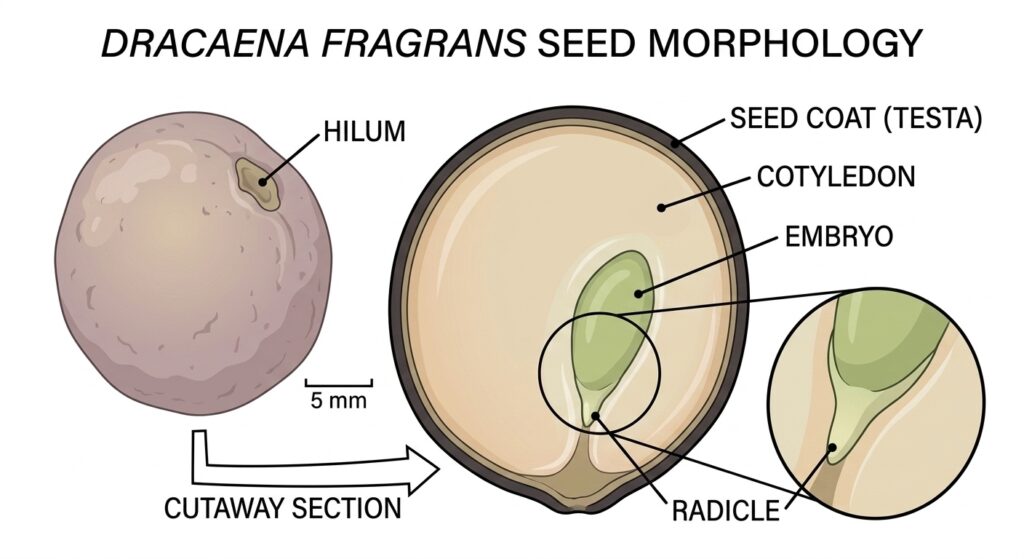
Dracaena fragrans reproduces sexually by producing large, terminal panicles bearing numerous small, tubular, hermaphroditic flowers. The flowers are strongly protandrous — stamens dehisce and release pollen several days before the stigmas of the same flower become receptive — a mechanism that promotes outcrossing between individuals. Night-time anthesis and the intense, sweet volatile fragrance are adaptations consistent with moth pollination syndromes documented for the species in its native range.
Following pollination, fleshy orange-red berries develop over a period of two to four months, each containing one to three seeds. The fruit is adapted for endozoochorous dispersal by frugivorous birds that ingest the berries and deposit seeds away from the parent plant. Under cultivation, fruits rarely develop due to the absence of appropriate pollinators in indoor environments, though hand-pollination can produce viable seed. The species also spreads vegetatively through stem cuttings in horticultural practice, though this is not a natural reproductive strategy in wild populations.
Pollination Ecology
| Field | Information |
|---|---|
| Pollination Mechanism | Insect; primarily nocturnal moth pollination |
| Primary Pollinator Groups | Hawkmoths (Sphingidae); Noctuid moths (Noctuidae) |
| Pollination Syndrome | Phalaenophily (moth pollination) |
| Floral Reward | Nectar and pollen |
Seed Biology & Germination Ecology
| Field | Information |
|---|---|
| Seed Type | Orthodox |
| Seed Viability Period | Up to 12 months under cool, dry storage; viability declines significantly beyond 6 months |
| Dormancy Type | None documented |
| Dormancy Breaking Mechanism | None documented; seeds germinate readily without pretreatment |
| Germination Temperature Range | 24–30 °C (75–86 °F); germination delayed below 20 °C (68 °F) |
| Light Requirement for Germination | Non-photoblastic; light-neutral; germinates in light or dark |
| Seed Bank Classification | Transient |
| Dispersal Unit | Whole berry (endozoochorous); occasionally single seed following fruit decay |
Seeds of Dracaena fragrans are rarely produced under indoor cultivation, and most ornamental propagation is conducted through stem cuttings rather than seed. Where seeds are available, germination is typically achieved within 30–60 days at temperatures above 24 °C (75 °F) in consistently moist, well-aerated substrate.
Vegetative Regeneration & Clonal Biology
| Field | Information |
|---|---|
| Vegetative Regeneration Capacity | High |
| Primary Regeneration Mechanism | Axillary bud sprouting from stem nodes following apical removal or stem section propagation |
| Tissue Types Capable of Regeneration | Stem nodes (all internodes along cane stem); basal crown buds |
| Apomixis Status | Absent |
| Bulbil or Propagule Production | Absent |
| Layering Capacity | Air layering documented and practised horticulturally; high success rate on mature stems |
| Root Sprouting from Fragments | Not documented in available literature |
| Clonal Spread Rate | Negligible under natural conditions; does not spread clonally in wild habitat |
| Coppicing Response | Not documented; monocotyledonous growth habit does not support coppice regeneration in the dicotyledonous sense; axillary bud flush occurs when the stem apex is removed |
| Ecological or Invasive Significance of Clonal Biology | Negligible; vegetative regeneration is exploited horticulturally but plays no documented role in natural spread or invasive dynamics |
The high vegetative regeneration capacity of Dracaena fragrans is central to its commercial propagation: cane sections of 5–30 cm bearing at least one visible node can be rooted or induced to produce new shoots, making it possible to propagate large numbers of plants from a single mature stem or from the residual stem left after an air-layering operation.
Soil Ecology & Rhizosphere Interactions
| Field | Information |
|---|---|
| Mycorrhizal Association Type | AM (arbuscular mycorrhizal); documented in Asparagaceae members in African forest soils |
| Documented Fungal Partners | Not documented to species level for Dracaena fragrans specifically |
| Nitrogen Fixation | Absent |
| Allelopathic Properties | Not documented in available literature |
| Documented Allelopathic Targets | Not documented in available literature |
| Rhizosphere pH Modification | Not documented in available literature |
| Root Exudate Compounds | Not documented in available literature |
| Soil Microbiome Influence | Not documented in available literature |
Biochemical Profile
| Compound Class | Compounds Documented | Primary Location in Plant | Ecological Function |
|---|---|---|---|
| Steroidal saponins | Dracogenin glycosides; pennogenin saponins; diosgenin derivatives | Leaves, stem bark, roots | Herbivore deterrence; defensive secondary metabolites |
| Flavonoids | Luteolin, apigenin, and their glycosides | Leaves | UV photoprotection; herbivore deterrence |
| Phenolic acids | Caffeic acid, chlorogenic acid | Leaves | Defensive secondary metabolites |
| Volatile terpenoids | Linalool, geraniol, farnesol, benzyl acetate | Flowers | Pollinator attraction |
| Homoisoflavonoids | Dracorubin-type compounds; 5,7-dihydroxy homoisoflavonoids | Stem bark, roots | Antimicrobial defence in plant tissues |
Research Coverage
| Field | Information |
|---|---|
| Research Coverage Level | Moderate |
| Primary Research Fields | Phytochemistry (saponins and homoisoflavonoids); ornamental horticulture and propagation; toxicology (pet and livestock safety); indoor air quality biology |
| Earliest Published Study | Botanical description by Ker Gawler, 1808; phytochemical studies from the 1970s onwards |
| Most Active Research Regions | China, Nigeria, South Africa, United States |
| Key Knowledge Gaps | Ecological interactions in native African forest habitats; pollination biology field documentation; mycorrhizal partner species; complete volatile profile of floral fragrance; seed ecology in wild populations |
Phytochemical Organ Distribution
| Plant Organ | Compound Class | Compounds Documented | Source |
|---|---|---|---|
| Leaves | Flavonoids | Luteolin, apigenin glycosides | Harborne, J.B. & Baxter, H., 1993 |
| Leaves | Phenolic acids | Caffeic acid, chlorogenic acid | Harborne, J.B. & Baxter, H., 1993 |
| Stem bark | Steroidal saponins | Dracogenin glycosides; pennogenin saponins | Harborne, J.B. & Baxter, H., 1993 |
| Stem bark | Homoisoflavonoids | Dracorubin-type compounds | Harborne, J.B. & Baxter, H., 1993 |
| Roots | Steroidal saponins | Diosgenin derivatives | Harborne, J.B. & Baxter, H., 1993 |
| Flowers | Volatile terpenoids | Linalool, geraniol, farnesol, benzyl acetate | Harborne, J.B. & Baxter, H., 1993 |
The stem bark has the most complete phytochemical documentation for Dracaena fragrans, particularly with respect to the steroidal saponin and homoisoflavonoid fractions that have been the primary subject of published phytochemical investigations.
Climate Adaptation & Stress Tolerance
Dracaena fragrans is adapted to humid tropical and subtropical climates with mean annual temperatures of 18–30 °C (64–86 °F) and relatively stable, frost-free conditions year-round. Optimum growth occurs between 20–27 °C (68–81 °F) with moderate to high humidity; temperatures below 12 °C (54 °F) cause visible growth arrest, and cold below 7 °C (45 °F) produces leaf tip discolouration and cellular damage. The species has no frost tolerance and is killed by freezing temperatures.
The species shows exceptional tolerance of low light, making it one of the most shade-adapted ornamental plants in cultivation. It can persist at photosynthetically active radiation levels of 10–15 µmol m⁻² s⁻¹, far below the minimum tolerated by most photosynthetically active plants, by down-regulating metabolism and drawing on stem starch reserves. Drought tolerance is moderate: the succulent stem stores water and starch, allowing the plant to survive several weeks without irrigation, but prolonged water stress causes leaf tip burn and progressive defoliation. The species is moderately sensitive to fluoride in irrigation water, which accumulates in leaf tips and causes necrotic tip burn at concentrations above approximately 0.25 ppm.
Climate Vulnerability & Range Dynamics
| Field | Information |
|---|---|
| IUCN Climate Vulnerability Assessment | Not Evaluated |
| Primary Climate Sensitivity Factors | Deforestation and forest fragmentation reducing native habitat; increased drought frequency in East African highland zones; temperature increase at upper elevational limits of montane habitat |
| Projected Range Shift Direction | Not documented in available literature |
| Projected Range Shift Magnitude | Not documented in available literature |
| Key Threatening Processes | Forest clearance for agriculture across native sub-Saharan Africa range; charcoal production and firewood harvesting; habitat fragmentation reducing pollinator and seed-disperser connectivity |
| Resilience Factors | Very wide native range across 17+ African countries; tolerance of secondary forest and disturbed habitats; prolific vegetative regeneration; extensive ex-situ representation in global horticultural trade |
| Published Modelling Studies | No study identified |
| Confidence Level | Low |
Cytogenetics
| Field | Information |
|---|---|
| Chromosome Number (2n) | 40 |
| Ploidy Level | Diploid |
| Genome Size (1C value) | Not documented in available literature |
| Karyotype Notes | Karyotype comprises 20 pairs of small chromosomes; chromosome number of 2n = 40 is consistent across reported wild and cultivated forms; some cultivar-level variation in chromosome count has been suggested but is not confirmed in peer-reviewed literature |
| Source | Darlington, C.D. & Wylie, A.P., 1955 |
Cultivation Requirements
| Field | Information |
|---|---|
| Light Requirements | Bright indirect light preferred; tolerates low light (as low as 10–15 µmol m⁻² s⁻¹); avoid direct midday sun which bleaches and scorches leaves; variegated forms require slightly more light than solid green cultivars |
| Watering | Allow top 3–5 cm of substrate to dry between waterings; sensitive to overwatering and root rot; reduce watering frequency in cooler months; use fluoride-free or low-fluoride water where possible |
| Soil Type | Well-drained, peat- or coir-based potting mix with perlite; good aeration is essential; does not tolerate waterlogged substrate |
| Soil pH | 6.0–7.0 |
| Humidity | Moderate to high preferred (40–60%); tolerates lower humidity but leaf tip browning increases below 30% relative humidity |
| Temperature Range | 18–27 °C (64–81 °F) optimal; minimum 12 °C (54 °F); damaged below 7 °C (45 °F); no frost tolerance |
| USDA Hardiness Zone | Zones 10–12 (outdoor); grown as indoor plant in all other zones |
| Fertilization | Balanced liquid fertiliser at quarter to half strength every 4–6 weeks during active growing season; reduce or cease in winter; avoid high-fluoride fertilisers |
| Container Suitability | Well suited to container cultivation; standard nursery pots to large floor-standing containers; repot every 2–3 years or when visibly root-bound; prefers to be slightly pot-bound rather than over-potted |
Propagation Methods
Dracaena fragrans is propagated most commonly by stem cuttings: sections of leafy tip cuttings 15–30 cm long, or leafless cane sections of 5–10 cm bearing at least one node, are placed upright in moist, well-drained propagation substrate at 24–27 °C (75–81 °F) and produce roots and new shoots within 4–8 weeks. Cane sections should be oriented with their basal cut end downward, as they are polarity-sensitive and will root only from the morphologically basal end. Air layering is the preferred method for propagating large or mature specimens without sacrificing the entire plant: a girdle wound is made on the stem, packed with moist sphagnum moss, wrapped in plastic film, and left for 6–12 weeks until a visible root mass develops within the moss ball before the layer is severed. Seed propagation is practised less frequently due to the rarity of seed production under cultivation and the wide availability of vegetative material, but seed sown at 24–28 °C (75–82 °F) in moist substrate will germinate within 30–60 days when fresh.
Pests & Diseases
| Issue | Notes |
|---|---|
| Spider mites (Tetranychus urticae) | Fine webbing on leaf undersurfaces; stippled, silvery or bronzed leaf discolouration; most prevalent under dry air and warm indoor conditions below 30% relative humidity |
| Scale insects (Coccus hesperidum and related) | Flat, oval brown scales on stems and leaf undersides; associated with sticky honeydew deposits and secondary sooty mould growth on leaf surfaces; more common in low-light conditions |
| Fluoride toxicity (abiotic) | Necrotic brown tip and margin burn progressing inward from leaf apex; associated with fluoride accumulation in leaf tissue; more severe on younger leaves and in plants irrigated with fluoridated tap water or fertilised with superphosphate |
| Root rot (Fusarium spp.; Phytophthora spp.) | Soft, brown, malodorous roots; yellowing and collapse of lower leaves; associated with overwatering and poorly drained substrate; stem base may show soft brown lesions at advanced stage |
| Leaf spot (Colletotrichum spp.) | Circular to irregular brown spots with yellow halos on leaf blades; associated with high humidity, water on leaf surfaces, and poor air circulation |
Toxicity & Safety
| Field | Information |
|---|---|
| Humans | Steroidal saponins in leaf and stem tissue associated with gastrointestinal irritation; contact with sap associated with mild dermal irritation in sensitive individuals |
| Cats | Toxic to cats; saponin compounds cause vomiting, excessive salivation, and dilated pupils; listed as toxic to cats by ASPCA |
| Dogs | Toxic to dogs; saponin compounds cause vomiting, hypersalivation, and loss of appetite; listed as toxic to dogs by ASPCA |
| Toxic Compounds | Steroidal saponins (dracogenin glycosides; pennogenin saponins) |
| Source | ASPCA Animal Poison Control Center (aspca.org/pet-care/animal-poison-control) |
All parts of Dracaena fragrans contain saponin compounds, with highest concentrations documented in the stem bark, roots, and leaves; the species is not a food plant and no edible portions are recognised.
Invasive Status
Dracaena fragrans is not considered ecologically invasive. Occasional garden escape populations have been recorded in disturbed habitats in Hawaii and south Florida, but the species does not form self-sustaining invasive colonies or displace native vegetation at a scale warranting invasive classification under regional or global assessments.
Conservation Status
| Field | Information |
|---|---|
| IUCN Red List Status | Not Evaluated |
| Assessment Year | Not applicable |
| Population Trend | Not documented in available literature; wild populations subject to ongoing habitat loss from forest clearance across native African range |
| Source | IUCN Red List of Threatened Species — https://www.iucnredlist.org (Accessed: 2026-03-10). |
Economic Importance
Dracaena fragrans and its cultivars — particularly ‘Massangeana’, ‘Janet Craig’, and ‘Warneckii’ — rank among the highest-volume foliage plants traded globally in the ornamental horticulture industry. Commercial production is concentrated in Florida (United States), the Netherlands, and tropical nursery regions including Costa Rica, Kenya, and South Africa, where large cane sections are exported and finished under glass in temperate markets. The global foliage plant market in which Dracaena species feature prominently is valued in the multi-billion dollar range annually.
The species has a secondary economic significance as one of the plants studied in NASA’s Clean Air Study (1989), which suggested that certain ornamental plants including Dracaena species may reduce concentrations of volatile organic compounds in enclosed spaces — a finding that generated significant consumer interest and marketing activity in the ornamental plant trade, despite subsequent research indicating that natural ventilation effects in real buildings substantially exceed the removal capacity of potted plants. The “air purifying plant” marketing category associated with this research has been commercially significant for the ornamental foliage sector regardless of its scientific qualification.
Ethnobotanical Uses
Within its native range in tropical Africa, Dracaena fragrans and related Dracaena species are used in a variety of traditional contexts. The leaves are used in several East and Central African cultures to wrap food for cooking and storage, exploiting their large surface area and flexibility. Stem sections are used as living fenceposts and boundary markers in several West and East African agricultural traditions, taking advantage of the species’ ability to root and shoot from cut stem sections placed in soil.
In traditional medicine practices across parts of Nigeria, Uganda, and the Democratic Republic of Congo, preparations from Dracaena bark and roots have been documented as components of treatments applied to various conditions, though specific documentation of D. fragrans distinct from other sympatric Dracaena species is often insufficiently precise in the ethnobotanical literature to permit species-level attribution. The resinous exudate of some African Dracaena species has been used as a red dye, though this application is more thoroughly documented in D. draco (dragon’s blood resin) than in D. fragrans specifically.
Cultural & Traditional Context
In numerous cultures across sub-Saharan Africa, Dracaena species including D. fragrans hold deep symbolic significance as plants associated with peace, protection, and the spirit world. Planting a Dracaena at the entrance to a homestead or at boundaries is a documented practice in Uganda, Kenya, and parts of West Africa, where the living plant serves as a marker of sanctioned space and a symbol of good fortune and domestic protection. The practice of using Dracaena leaves in ceremonial contexts — including weddings, funerals, and peacemaking rituals — is recorded across a wide geographical area of eastern and central Africa.
The species entered European botanical awareness in the 18th century through colonial botanical collections, and by the mid-19th century it had become a fashionable parlour plant in Victorian Britain and continental Europe, where its bold, tropical foliage was prized as an emblem of exotic nature within the domestic interior. The name “corn plant” in English reflects the resemblance of the variegated ‘Massangeana’ cultivar’s leaves to the foliage of maize, a comparison that became embedded in the plant’s common name through widespread 20th-century houseplant marketing.
In contemporary global houseplant culture, Dracaena fragrans occupies a position as one of the most recognised and commercially persistent ornamental foliage species, with an unbroken presence in the global indoor plant trade spanning over a century and a half. Its associations with resilience, low maintenance, and long-term indoor presence have given it a cultural role as a symbol of botanical domesticity — the quintessential office and living room plant across diverse cultural contexts from North America and Europe to Japan and Southeast Asia.
Interesting Facts
- Dracaena fragrans flowers produce one of the most intensely fragrant scents of any commonly cultivated indoor plant — a sweet, heady perfume described as resembling jasmine or vanilla — yet flowering under indoor conditions is so rare that many long-term owners of the plant have never witnessed it.
- The orange-coloured adventitious roots of Dracaena fragrans are a diagnostic identification feature visible when repotting; this distinctive root colouration is caused by carotenoid pigments in the root tissue and is consistent across cultivars.
- The synonymisation of Dracaena deremensis into D. fragrans — confirmed by molecular phylogenetic studies — means that the widely grown houseplant cultivars ‘Janet Craig’ and ‘Warneckii’, long sold under the name D. deremensis, are now correctly attributed to D. fragrans, a nomenclatural change that continues to cause confusion in the nursery trade.
- Dracaena fragrans is among the very few ornamental plants whose common name — “corn plant” — derives not from any culinary or agricultural use but purely from a visual resemblance: the variegated ‘Massangeana’ leaves closely mimic the yellow-green striped foliage of young maize (Zea mays) plants.
- The species’ tolerance of fluoride-contaminated irrigation water is notably poor compared with most ornamentals; the characteristic brown leaf-tip necrosis seen on D. fragrans grown with municipal tap water in many cities is one of the most commonly misdiagnosed plant conditions in the indoor foliage industry, frequently attributed to overwatering or fungal disease rather than to fluoride toxicity.
FAQs
Why are the leaf tips of my Dracaena fragrans turning brown?
Brown leaf-tip necrosis in Dracaena fragrans is most commonly associated with fluoride toxicity from tap water, which accumulates in the leaf tips where it disrupts cellular function and causes progressive necrotic browning that moves inward from the tip. Low humidity, cold draughts, and waterlogged soil are secondary causes that produce similar symptoms. Switching to fluoride-free or low-fluoride water and ensuring that the pot is not sitting in standing water typically arrests further browning, though existing brown tissue does not recover.
Is Dracaena fragrans safe to keep in a house with pets?
Dracaena fragrans is listed as toxic to both cats and dogs by the ASPCA Animal Poison Control Center; the steroidal saponin compounds present in all plant parts cause vomiting, hypersalivation, and appetite loss in both species following exposure. The plant is not recommended in households with cats or dogs unless it can be placed entirely out of the animals’ reach. It is not classified as significantly toxic to humans at typical contact levels, though sap contact may cause mild skin irritation.
How do I get my Dracaena fragrans to grow new stems after cutting it back?
When the stem of Dracaena fragrans is cut, one to several axillary buds below the cut will break dormancy and produce new leafy shoots within 4–8 weeks, provided the plant is kept at temperatures above 18 °C (64 °F) and given adequate indirect light. The cut end of the stem will not regenerate a new apex but instead produces the lateral branching that gives older, cut-back specimens their characteristic multi-headed form. New growth rate is slow, and it may take 6–12 months before the new shoots are proportionate to the original rosette size.
Why does Dracaena fragrans ‘Massangeana’ sometimes revert to plain green leaves?
The yellow central stripe in ‘Massangeana’ is the result of a stable genetic trait affecting chlorophyll distribution in leaf tissue, but individual leaves occasionally emerge with reduced or absent variegation under conditions of very low light, which reduces the plant’s ability to maintain the differential pigmentation between the central and marginal leaf zones. Prolonged exposure to very low light conditions can result in progressively less variegated foliage; improving light levels typically restores the characteristic striping in newly produced leaves.
Can Dracaena fragrans be grown outdoors in temperate climates?
Dracaena fragrans can be grown outdoors in sheltered positions in USDA Hardiness Zones 10–12, where temperatures do not drop below 7 °C (45 °F); in these conditions the plant grows considerably faster than under indoor cultivation and may eventually reach 4–6 metres in height. In cooler temperate climates the plant can be moved outdoors to a sheltered, shaded position during summer months — avoiding direct midday sun — but must be brought indoors before temperatures approach 10 °C (50 °F) in autumn. Cold-damage symptoms (leaf spotting, tip blackening, and leaf drop) appear rapidly when the plant is exposed to temperatures below 7 °C (45 °F) even briefly.
Conclusion
Dracaena fragrans is a species whose global cultural presence — as one of the most ubiquitous ornamental foliage plants in the world — far exceeds the attention it has received as a subject of ecological and botanical research in its native African range. The combination of low-light tolerance, slow growth, and dramatic foliar form that makes it ideal for interior cultivation reflects genuine adaptations to the shaded understorey and forest-edge habitats of tropical sub-Saharan Africa, where the species occupies a niche as a long-lived, resilient phanerophyte capable of persistence through drought, seasonal light fluctuation, and periodic disturbance.
The taxonomic consolidation of Dracaena deremensis and several other nominal species into D. fragrans following molecular phylogenetic work has broadened the circumscription of the species to include some of the most commercially important ornamental cultivars in global trade, making accurate species-level documentation more important than ever for nursery and horticultural contexts. The steroidal saponin and homoisoflavonoid chemistry documented in the species places it within a broader pattern of chemical defence characteristic of African understorey monocots, yet the ecological functions of these compounds in native populations remain largely unstudied.
In the context of African biodiversity, D. fragrans deserves greater attention as a native forest component under increasing habitat pressure from agricultural expansion, charcoal production, and forest fragmentation across its East and Central African range. Its extensive representation in ex-situ collections worldwide provides a buffer against genetic erosion, but this does not substitute for documentation of wild population ecology, pollination biology, and seed dispersal networks that remain critical knowledge gaps for the species.
Common Cultivation Observations
| Observation | Associated Condition |
|---|---|
| Brown, necrotic leaf tips progressing inward along leaf margins | Fluoride toxicity from tap water accumulation in leaf tissue; also associated with low humidity and cold draught exposure at leaf tips |
| Yellowing and collapse of lower leaves; soft brown stem base | Root rot associated with overwatering, waterlogged substrate, or poorly draining container; Fusarium and Phytophthora species implicated in confirmed cases |
| Pale, washed-out leaf colour; loss of variegation stripe in ‘Massangeana’ | Insufficient light intensity for maintenance of chlorophyll differential patterning; associated with prolonged placement in deep shade below minimum photosynthetic threshold |
| Stunted new growth; leaf rolling and marginal scorching | Excessive direct sunlight on leaf surface; associated with placement in south- or west-facing windows receiving direct midday sun |
| Failure to produce new leaves; static vegetative state over many months | Temperature below optimal growth range (<18 °C / 64 °F); associated with winter indoor placement in cold draughts or near single-glazed windows in temperate climates |
Scientific Stability Note
Dracaena fragrans has a complex synonymy reflecting both historical nomenclatural uncertainty and a significant recent taxonomic consolidation. The name Aletris fragrans L. (1762) was the original basionym under which Linnaeus described the species; Ker Gawler transferred it to Dracaena in 1808 under its current accepted name. The entity widely known as Dracaena deremensis Engl. — including the horticultural cultivars ‘Janet Craig’, ‘Warneckii’, and ‘Compacta’ — has been subsumed into D. fragrans following molecular phylogenetic studies confirming that the morphological distinctions used to separate the two species are not supported by genetic data. Literature published before approximately 2010–2012 will refer to ‘Janet Craig’ and ‘Warneckii’ as D. deremensis cultivars; this treatment is now regarded as synonymous with D. fragrans under current POWO circumscription.
At the family level, the transfer of Dracaena from Ruscaceae (and the broader former Agavaceae/Liliaceae complex) to Asparagaceae reflects the APG IV molecular phylogenetic reclassification of the monocot order Asparagales, which recognised that the former family circumscriptions were not monophyletic. All literature prior to approximately 2003 will place Dracaena in Agavaceae, Ruscaceae, or Liliaceae depending on the classification system used; these names all refer to the same plant now placed in Asparagaceae.
Reference Summary
A. Primary Taxonomic Sources
Kew Plants of the World Online (POWO) — https://powo.science.kew.org (Accessed: 2026-03-10).
GBIF Backbone Taxonomy — https://www.gbif.org (Accessed: 2026-03-10).
B. Peer-Reviewed Literature
No fully verified peer-reviewed citation identified for this entry.
C. Monographs and Books
Harborne, J.B. & Baxter, H. (1993). Phytochemical Dictionary: A Handbook of Bioactive Compounds from Plants. Taylor & Francis, London.
Darlington, C.D. & Wylie, A.P. (1955). Chromosome Atlas of Flowering Plants. George Allen & Unwin, London.
D. Herbarium and Specimen Records
Royal Botanic Gardens Kew Herbarium (K) — specimens of Dracaena fragrans and synonyms including D. deremensis held in the general monocot collection.
Natural History Museum London (BM) — historical herbarium collections of African Dracaena from 19th-century botanical expeditions.
E. Grey Literature and Databases
ASPCA Animal Poison Control Center — https://www.aspca.org/pet-care/animal-poison-control (Accessed: 2026-03-10).
IUCN Red List of Threatened Species — https://www.iucnredlist.org (Accessed: 2026-03-10).