Introduction
The Dracaena plant refers to a group of evergreen plants belonging to the genus Dracaena, which includes numerous species known for their distinctive foliage and woody stems. These plants are widely recognized for their structural form, elongated leaves, and adaptability to a range of environments, making them a common subject of botanical classification and ornamental plant studies.
Classification
- Lifecycle
- Perennial
- Leaf Habit
- Evergreen
- Plant Family
- Asparagaceae
Botanically, Dracaena is notable for its taxonomic history, as the genus has been reclassified multiple times and is currently placed within the Asparagaceae family. Species within this genus display significant variation in size, leaf shape, and coloration, ranging from compact shrubs to tree-like forms.
Culturally and ecologically, Dracaena species have been present in both natural ecosystems and human-managed landscapes for centuries. Some species hold traditional significance in their native regions, while others are valued primarily for their visual form and contribution to plant diversity in cultivated settings.
Quick Plant Information
| Attribute | Details |
|---|---|
| Common Name(s) | Dracaena, Dragon Tree |
| Scientific Name | Dracaena spp. |
| Family | Asparagaceae |
| Plant Type | Evergreen foliage plant |
| Lifespan | Perennial |
| Growth Habit / Growth Form | Upright, cane-forming or tree-like |
| Native Range | Africa, southern Asia, Central America |
| Climate Adaptation / Habitat Type | Tropical and subtropical regions |
| Leaf Type | Long, strap-shaped leaves |
| Flower Color(s) | White, cream, pale green |
| Fruit Type | Berry |
| Evergreen / Deciduous | Evergreen |
Botanical Description
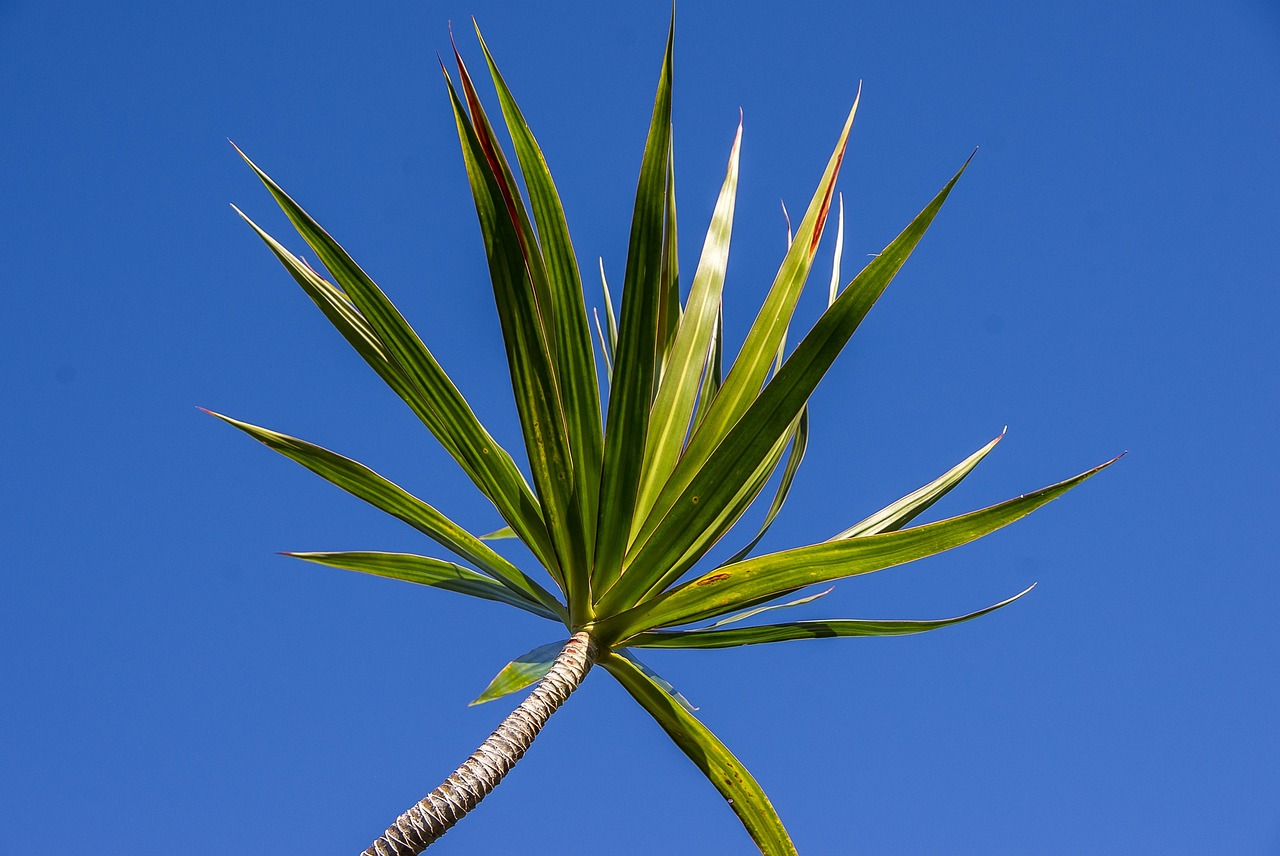
Dracaena plants are characterized by woody or semi-woody stems that may be slender or thickened, depending on the species. In many forms, the stems appear cane-like and may branch as the plant matures. The surface of the stem often shows leaf scar rings, marking previous growth stages.
The leaves are typically long, narrow, and arching, with smooth or slightly pointed tips. Leaf coloration varies widely across species and cultivars, ranging from solid green to variegated patterns that may include yellow, cream, red, or pale green striping along the margins or center. Leaves are arranged in spirals or rosettes along the stem.
Flowering in Dracaena is infrequent in many observed settings but follows a consistent botanical pattern. The flowers are small, tubular to star-shaped, and borne in large branching clusters. They often emit a noticeable fragrance. After flowering, the plant may produce small, round berries that are usually orange or red when mature.
The root system consists of fibrous roots that support the upright growth habit. In some species, roots may appear thickened or orange in color, a feature sometimes visible in cultivated specimens.
Plant Classification & Growth Habit
Dracaena is classified as a perennial evergreen genus, encompassing shrubs and small trees. The plants typically exhibit an upright growth pattern, with a dominant central stem or multiple canes supporting tufts of foliage at their tips.
From a structural perspective, Dracaena species are monocotyledonous plants, sharing characteristics such as parallel leaf venation and fibrous root systems. Growth is generally slow to moderate, and many species maintain a stable architectural form over extended periods, contributing to their recognition as long-lived foliage plants.
Common Types / Varieties / General Classifications
The genus Dracaena includes numerous species and naturally occurring forms. Commonly referenced groupings are based on leaf shape, coloration, and overall plant stature.
- Dragon Tree Group: Species with narrow, arching leaves and woody stems
- Corn Plant Group: Broader-leaved forms with rosette-like foliage clusters
- Variegated Types: Plants displaying striped or multi-colored leaf patterns
- Tree-Form Dracaenas: Larger species that develop thick trunks and branching crowns
These classifications are descriptive and used for identification rather than comparative evaluation.
Native Range & Distribution
Dracaena species are native primarily to tropical and subtropical regions of Africa, with additional species occurring naturally in southern Asia and parts of Central America. In their native habitats, they are found in diverse environments, including forest understories, rocky slopes, and coastal areas.
Through human movement and cultivation, Dracaena plants have become widely distributed beyond their original ranges. They are now present in many regions around the world, particularly in areas with suitable climates, where they are observed in managed landscapes and botanical collections.
Cultural, Culinary, or Traditional Context
Certain Dracaena species have held cultural or symbolic significance in their native regions. For example, some tree-form species have been historically associated with folklore, traditional rituals, or local craftsmanship. The red resin produced by a few species, historically referred to as “dragon’s blood,” has been documented in historical trade and artisanal contexts.
In broader cultural settings, Dracaena plants have been recognized for their architectural appearance and have been incorporated into decorative traditions and landscape design. Their consistent form and evergreen nature have contributed to their long-standing presence in cultivated plant collections.
Interesting Facts / Did You Know
- The name Dracaena is derived from the Greek word drakaina, meaning “female dragon.”
- Some Dracaena species can develop multiple heads as stems branch over time.
- The red resin historically obtained from certain species was used as a pigment and varnish.
- Dracaena flowers are often more noticeable for their fragrance than their size.
- Fossil records and historical references suggest ancient recognition of tree-form Dracaena species.
FAQs
Is Dracaena a tree or a shrub?
Dracaena includes both shrub-like and tree-like species, depending on the specific type.
Do all Dracaena plants produce flowers?
All Dracaena species are capable of flowering, though flowering is infrequently observed in many settings.
Are Dracaena and Cordyline the same plant?
No. While they appear similar, Dracaena and Cordyline are distinct genera with different botanical characteristics.
Is Dracaena an evergreen plant?
Yes. Dracaena plants retain their foliage year-round and are classified as evergreen.
Recommended Products
Disclosure: As an Amazon Associate, PlantsInfo may earn from qualifying purchases.
🌱 Plant Care Essentials
The following tools can help with pruning, plant health, soil management, and fruit garden maintenance.

Neem Oil for Plant Care
Natural plant protection against aphids, whiteflies, mites, and other common garden pests.

Fungicide for Root Care
Helps suppress soil-borne fungal diseases and supports healthier root systems.

Spray Bottle for Plants
Ideal for applying foliar sprays, neem oil solutions, and liquid plant treatments.

Rubber Hand Gloves
Protects hands during pruning, planting, soil preparation, and garden maintenance.
Conclusion
The Dracaena plant represents a diverse genus of evergreen perennials known for their distinctive foliage, upright growth habit, and broad geographic origins. Its combination of structural form and botanical variation has secured its place in plant taxonomy and horticultural history.
As a genus with ecological, cultural, and historical relevance, Dracaena continues to be recognized for its role in both natural ecosystems and human-managed plant collections. Its enduring presence highlights the importance of foliage plants in botanical study and reference.
The Plants Info platform offers a structured plant database designed to support factual learning and botanical reference. Entries such as this Dracaena plant profile contribute to a broader understanding of plant diversity and classification.