Introduction
Chamaecostus cuspidatus, commonly known as the Insulin Plant, is a perennial herb in the Costaceae distinguished by its widespread medicinal reputation as a glucose-management plant. Native to eastern Brazil, it has achieved far greater horticultural prominence outside its natural range than within it. The species is particularly notable for leaves traditionally consumed in several regions as a complementary dietary practice associated with diabetes management, a use that has stimulated substantial pharmacological investigation. Source Class A–B taxonomic evidence confirms its placement within Chamaecostus following modern phylogenetic revision.
Classification
- Plant Type
- Herb
- Lifecycle
- Perennial
- Leaf Habit
- Evergreen
- Native Region
- Atlantic Forest (Brazil biome)
Within native Atlantic Forest ecosystems of Brazil, the species functions as a rhizomatous understory herb adapted to humid tropical environments. Its spiral leaf arrangement, compact stature, and clump-forming growth distinguish it from many larger members of the broader Costaceae. The species occupies ecological niches associated with moist habitats and contributes to local plant diversity within one of the world’s most biologically significant biodiversity regions. Available ecological literature remains less developed than medicinal and horticultural research, resulting in uneven knowledge across biological domains.
The Insulin Plant entered cultivation well beyond its native distribution and became especially prominent in India, where medicinal interest accelerated commercial propagation and public recognition. Although widely promoted in traditional and complementary health contexts, scientific evaluation of its pharmacological properties remains ongoing. Conservation attention has focused primarily on regional Brazilian assessments rather than global threat evaluations. This profile synthesizes current taxonomic, biological, horticultural, ecological, and applied knowledge while distinguishing documented evidence from unresolved knowledge gaps.
Identity
Quick Plant Information
| Field | Value |
|---|---|
| Accepted Scientific Name | Chamaecostus cuspidatus (Nees & Mart.) C.D.Specht & D.W.Stev. |
| Primary Common Name | Insulin Plant |
| Plant Type | Herbaceous perennial |
| Life Cycle | Perennial |
| Growth Habit | Rhizomatous clump-forming herb |
| Mature Size | Commonly 0.5–0.7 m tall |
| Growth Rate | Fast |
| Flowering Season | Primarily warm-season flowering |
| Fruiting Season | Not consistently documented in cultivation literature |
| Light Requirement | Full sun to partial shade |
| Water Requirement | Moderate to high |
| Soil Preference | Moist, well-drained organic soils |
| Temperature Tolerance | Frost-sensitive tropical species |
| Pollination Type | Biotic |
| Self-Fertility Status | Not documented in available literature |
| Primary Propagation Method | Stem cuttings |
| Typical Yield Class | Not applicable |
| Primary Use Categories | Medicinal, ornamental, research |
| Toxicity Status | No verified intrinsic toxicity documented at species level |
| Conservation Concern | Not globally assessed by IUCN |
| Cultivation Difficulty Level | Easy |
Classification and Taxonomy
| Field | Value | Notes |
|---|---|---|
| Accepted Scientific Name | Chamaecostus cuspidatus (Nees & Mart.) C.D.Specht & D.W.Stev. | Accepted name |
| Known Synonyms | Costus igneus, Costus cuspidatus, Globba cuspidata | Commonly encountered in literature |
| Taxonomic Authority Source | Kew POWO; Catalogue of Life | |
| Assessment Date | 2026-06-05 | Current assessment |
| Kingdom | Plantae | Accepted |
| Division | Tracheophyta | Accepted |
| Class | Liliopsida | Monocot |
| Order | Zingiberales | Accepted |
| Family | Costaceae | Accepted |
| Subfamily | Not applicable | No recognized subfamily usage |
| Genus | Chamaecostus | Accepted |
| Species | cuspidatus | Accepted |
| Native Origin | Eastern Brazil | Concise summary |
| IUCN Status | Not Evaluated | Global assessment not identified |
Related Species of Significance
| Species | Common Name | Distinguishing Feature | Economic or Ecological Significance |
|---|---|---|---|
| Chamaecostus subsessilis | Brazilian Spiral Costus | Closely related Brazilian species | Taxonomic comparison |
| Chamaecostus acaulis | Acaulescent Costus | Reduced stem development | Phylogenetic significance |
| Costus woodsonii | Red Button Ginger | Larger ornamental inflorescences | Ornamental horticulture |
| Cheilocostus speciosus | Crepe Ginger | Much larger growth habit | Traditional medicine and ornamentals |
| Costus arabicus | Spiral Ginger | Broad ornamental cultivation | Landscape horticulture |
Taxonomic Context
Chamaecostus cuspidatus belongs to a relatively small Neotropical lineage segregated from the historically broad genus Costus following molecular phylogenetic studies. Commercial horticulture, pharmacological research, and popular medicinal literature continue to use Costus igneus extensively, creating persistent nomenclatural ambiguity. This inconsistency affects database searches, regulatory documentation, germplasm exchange, and interpretation of older scientific studies. Researchers and commercial suppliers frequently encounter records distributed across multiple names, making taxonomic verification essential when evaluating biological, medicinal, or horticultural claims.
Cytogenetics
| Parameter | Value | Notes |
|---|---|---|
| Chromosome Number | Not conclusively verified in accessible species-level literature reviewed | Published reports may exist under Chamaecostus cuspidatus or historical synonyms, but verification is required |
| Ploidy Level | Not conclusively verified | Often inferred as diploid where chromosome counts have been reported |
| Genome Size | Not documented in available literature | No verified species-level data identified |
Cytogenetic Note
Current cytogenetic knowledge for Chamaecostus cuspidatus remains limited. Published chromosome counts have been reported in secondary sources and databases, but verification of original species-level cytological studies remains necessary before chromosome numbers can be treated as fully confirmed. No verified genome size estimates, cytotype variation studies, karyotype analyses, or breeding-focused cytogenetic investigations were identified during review. Consequently, cytogenetics remains one of the least documented biological aspects of the species. Additional research is needed to clarify chromosome biology, population-level variation, and potential implications for breeding, conservation, and commercial cultivation.
Scientific Stability and Nomenclature
The currently accepted name, Chamaecostus cuspidatus (Nees & Mart.) C.D.Specht & D.W.Stev., is recognized by major taxonomic authorities including Kew’s Plants of the World Online and the Catalogue of Life. Source Class B taxonomic databases consistently treat the name as accepted.
The principal nomenclatural event occurred in 2006 when Chelsea D. Specht and Dennis W. Stevenson published a phylogeny-based reclassification of Costaceae. Molecular and morphological evidence demonstrated that several species traditionally placed within Costus formed a distinct evolutionary lineage. As a result, the genus Chamaecostus was established and species including Costus igneus and Costus cuspidatus were transferred into the revised genus concept as Chamaecostus cuspidatus.
Adoption of the revised nomenclature has been strongest in taxonomic databases, biodiversity repositories, and recent systematic literature. However, horticultural trade, medicinal publications, herbal product marketing, and many pharmacological studies continue to employ Costus igneus. This creates a persistent disconnect between scientific nomenclature and commercial usage. For literature reviews, regulatory documentation, germplasm acquisition, and product authentication, searches should include both accepted and historical names to avoid overlooking relevant records. While the taxonomic treatment itself is largely stable, synonym persistence remains operationally significant.
Synonymy
| Accepted Name (Current Authority) | Synonyms Commonly Encountered | Context Where Synonym Persists |
|---|---|---|
| Chamaecostus cuspidatus (Nees & Mart.) C.D.Specht & D.W.Stev. | Costus igneus N.E.Br. | Medicinal literature, nursery trade, supplement marketing |
| Chamaecostus cuspidatus (Nees & Mart.) C.D.Specht & D.W.Stev. | Costus cuspidatus (Nees & Mart.) Maas | Older taxonomic and botanical literature |
| Chamaecostus cuspidatus (Nees & Mart.) C.D.Specht & D.W.Stev. | Globba cuspidata Nees & Mart. | Historical nomenclatural records |
Form
Growth Habit and Architecture
Chamaecostus cuspidatus is a compact rhizomatous perennial herb that grows as dense clumps of upright leafy shoots emerging from a persistent underground rhizome system. Its architecture combines short cane-like stems, spirally arranged foliage, and terminal inflorescences that rise slightly above the leaf canopy. Unlike many larger costaceous herbs, it maintains a relatively restrained stature while producing numerous vegetative offsets. The overall form emphasizes lateral colony expansion rather than vertical dominance, creating a dense ornamental presence adapted to humid tropical understory conditions and cultivated garden environments.
| Parameter | Value | Notes |
|---|---|---|
| Life Form | Herbaceous perennial | Rhizomatous geophyte |
| Mature Height | 0.5–0.7 m (1.6–2.3 ft) | Typical cultivated size |
| Canopy Spread | 0.4–0.9 m (1.3–3.0 ft) | Expands through rhizomes |
| Stem Type | Erect herbaceous shoots | Cane-like appearance |
| Bark or Surface Texture | Smooth | No true bark development |
| Branching Pattern | Sparsely branched above ground | Most proliferation from rhizomes |
| Root System Overview | Fibrous roots arising from short rhizomes; generally shallow | Morphology only |
| Growth Rate | Fast | Vigorous under warm conditions |
| Longevity | Long-lived perennial | Persistent rhizome network |
| Distinguishing Architectural Feature | Spiral phyllotaxy | Leaves arranged helically around stems |
Stem
The aerial stems provide structural support for the foliage and flowering shoots while elevating leaves into available light. Stems are succulent-herbaceous rather than woody, remaining smooth and flexible throughout their lifespan. The spiral arrangement of leaves around the stem creates a ladder-like appearance that contributes significantly to species recognition. Internodes remain relatively short, producing a compact and dense vegetative habit.
| Stem Characteristic | Description |
|---|---|
| Stem Type | Upright herbaceous cane |
| Cross-Section Shape | Circular |
| Mature Diameter | Approximately 1–2 cm (0.4–0.8 in) |
| Surface Texture | Smooth and glabrous |
| Colour (Young) | Light green |
| Colour (Mature) | Medium to dark green |
| Internode Length | Approximately 2–5 cm (0.8–2.0 in) |
| Presence of Thorns, Spines, or Wings | Absent |
| Internal Structure | Solid |
| Attachment Mechanism | Not applicable |
| Climbing Strategy | Not applicable |
Recommended Products
Disclosure: As an Amazon Associate, PlantsInfo may earn from qualifying purchases.
🌱 Plant Care Essentials
The following tools can help with pruning, plant health, soil management, and fruit garden maintenance.

Neem Oil for Plant Care
Natural plant protection against aphids, whiteflies, mites, and other common garden pests.

Fungicide for Root Care
Helps suppress soil-borne fungal diseases and supports healthier root systems.

Spray Bottle for Plants
Ideal for applying foliar sprays, neem oil solutions, and liquid plant treatments.

Rubber Hand Gloves
Protects hands during pruning, planting, soil preparation, and garden maintenance.
Leaves
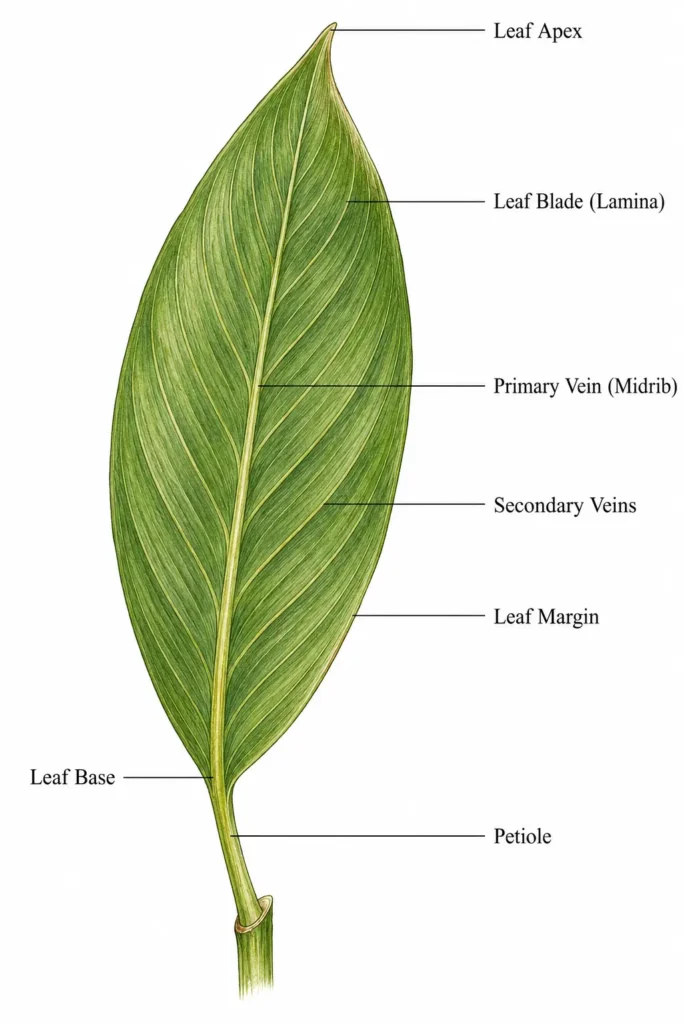
The foliage is among the most distinctive features of the Insulin Plant. Leaves are borne in a conspicuous spiral around the stem, producing the characteristic “step ladder” appearance responsible for several vernacular names. The leaves are simple, glossy, and relatively broad compared with stem diameter, creating a lush tropical aspect. Their persistent green coloration contributes substantially to ornamental value even when plants are not flowering.
| Leaf Characteristic | Description |
|---|---|
| Presence | Present |
| Leaf Type | Simple |
| Size | 10–25 cm long × 3–7 cm wide (3.9–9.8 × 1.2–2.8 in) |
| Colour | Glossy medium to dark green |
| Arrangement | Spiral (helical) |
| Margin | Entire |
| Apex | Acuminate to cuspidate |
| Special Features | Distinctive spiral phyllotaxy; succulent texture |
Flowers
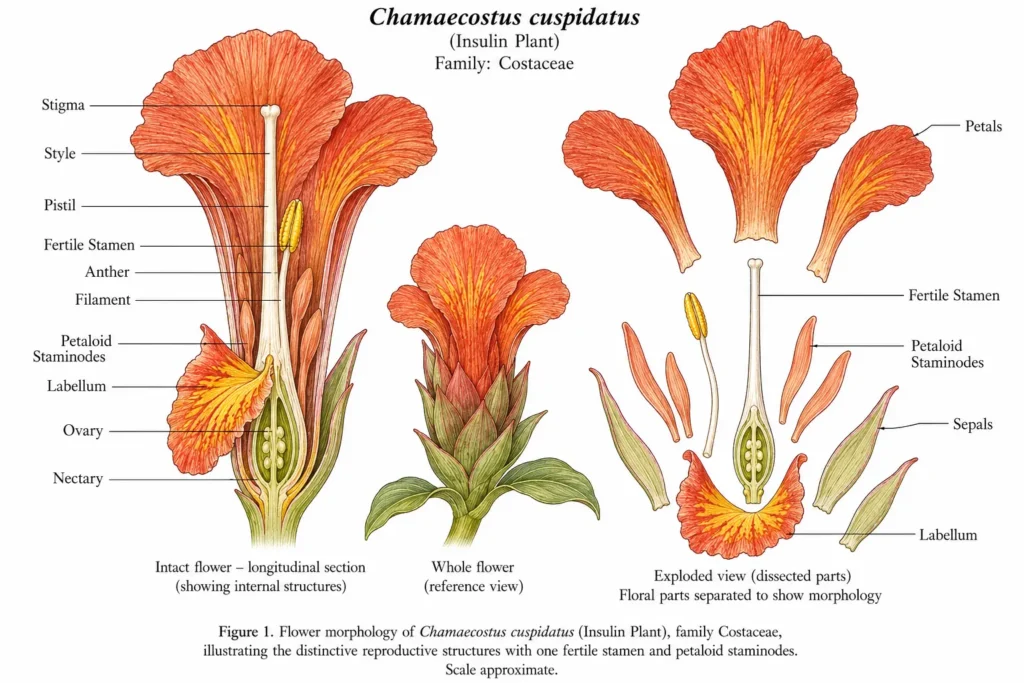
The flowers combine bright coloration with a compact inflorescence structure that contrasts strongly against the green foliage. Individual flowers are relatively short-lived, but successive blooming within the inflorescence extends the ornamental display period. Floral architecture follows the characteristic pattern of Costaceae, with showy petaloid structures that likely facilitate animal-mediated pollination. The vivid orange to orange-red coloration is among the principal horticultural attractions of the species.
| Floral Attribute | Description |
|---|---|
| Inflorescence Type | Terminal spike |
| Flower Diameter | Approximately 3–5 cm (1.2–2.0 in) |
| Flower Length | Approximately 4–6 cm (1.6–2.4 in) |
| Outer Tepals or Sepals | Small, partially concealed |
| Inner Tepals or Petals | Bright orange to orange-red |
| Stamens | One fertile stamen with petaloid structures |
| Pistil | Single |
| Fragrance | Not prominently documented |
| Anthesis Period | Warm-season flowering |
| Primary Pollinators | Insects |
| Flower Persistence | Individual flowers short-lived |
Fruit
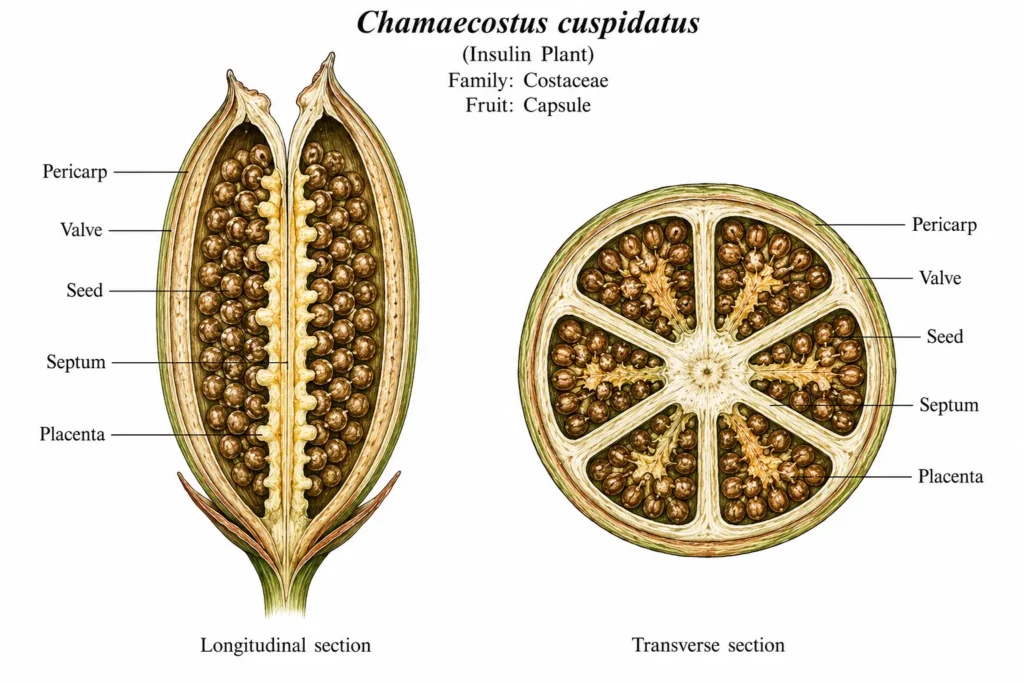
| Fruit Characteristic | Description |
|---|---|
| Fruit Type | Capsule |
| Shape | Ovoid to ellipsoid |
| Length | Not documented in available literature |
| Diameter | Not documented in available literature |
| Weight | Not documented in available literature |
| Skin Colour | Green when immature; brown at maturity |
| Surface Features | Smooth |
| Flesh Colour | Not applicable |
| Flesh Texture | Not applicable |
| Seed Count | Multiple |
| Sugar Content | Not documented in available literature |
| Maturation Period | Not documented in available literature |
Seeds
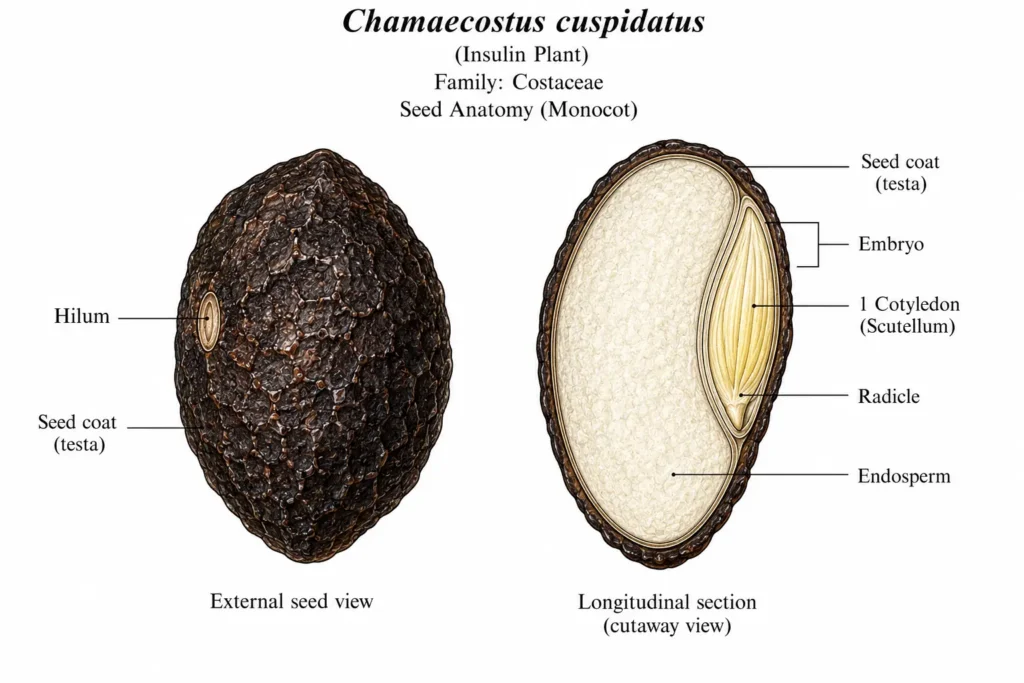
| Seed Characteristic | Description |
|---|---|
| Size | Not documented in available literature |
| Shape | Irregularly angular |
| Colour | Dark brown to black |
| Seed Coat | Hard |
| Oil Content | Not documented in available literature |
| Viability Period | Not documented in available literature |
| Germination Rate | Not documented in available literature |
Root System
The species possesses a shallow to moderately shallow rhizomatous root system consisting of compact underground rhizomes from which numerous fibrous roots emerge. Most roots are concentrated within upper soil horizons, while lateral spread occurs primarily through rhizome extension rather than deep vertical penetration. The architecture supports rapid vegetative expansion and clump formation. From a cultivation perspective, this morphology facilitates division and propagation. In natural populations, persistence depends largely on rhizome survival and local vegetative regeneration, making underground structures important to long-term stand stability.
Field Identification
In the field, Chamaecostus cuspidatus is most readily recognized by its compact stature, glossy spiral leaves, and terminal orange inflorescences. The species is frequently encountered as dense clumps arising from short rhizomes rather than as isolated stems. It is commonly confused with Cheilocostus speciosus (Crepe Ginger), particularly in non-flowering condition. The single most reliable distinguishing feature is overall scale: C. cuspidatus remains substantially shorter and more compact, whereas C. speciosus develops much taller stems and larger flowers. The combination of helical leaf arrangement, modest height, and bright orange floral spikes provides a distinctive identification profile for horticultural, commercial, and botanical users.
Normal vs. Concerning Observations
| Observation | Status | Explanation |
|---|---|---|
| Older lower leaves naturally yellowing | Normal | Common age-related senescence |
| Temporary reduction in flowering during cool weather | Normal | Seasonal response |
| Formation of dense offsets around parent plant | Normal | Characteristic rhizomatous growth |
| Slight leaf drooping during midday heat | Monitor | Often reversible environmental response |
| Progressive stem collapse without recovery | Investigate | May indicate underlying stress |
| Extensive leaf necrosis across multiple shoots | Investigate | Abnormal tissue deterioration |
| Reduced production of new shoots | Monitor | May reflect environmental limitation |
| Distorted emerging leaves | Investigate | Indicates abnormal development |
Cultivar Summary
Formal cultivar documentation remains limited for Chamaecostus cuspidatus compared with major ornamental Costaceae. Commercial trade is dominated by vegetatively propagated clones rather than widely standardized named cultivars.
| Cultivar | Key Characteristic | Commercial Status | Origin |
|---|---|---|---|
| Not documented in available literature | Green-leaved medicinal form | Commercially dominant | Cultivated selection |
| Not documented in available literature | Broad-leaved form | Regionally significant | Horticultural selection |
| Not documented in available literature | Compact ornamental form | Experimental | Nursery selection |
Functional Traits
Chamaecostus cuspidatus is a tropical rhizomatous perennial herb associated with humid forest environments and cultivated tropical landscapes. Its growth strategy emphasizes vegetative persistence, clonal expansion, and repeated shoot regeneration from underground rhizomes. Compared with drought-adapted species, it appears better suited to environments where moisture availability is relatively stable and competition for light occurs beneath partial canopy cover. Much of the species’ physiological interest derives from phytochemical research rather than direct ecophysiological investigation; consequently, several functional interpretations remain based on morphology, habitat association, and comparison with related members of Costaceae.
| Trait | Mechanism Description | Adaptive Significance |
|---|---|---|
| Photosynthetic Pathway | Presumed to utilize the C3 photosynthetic pathway, consistent with other studied Costaceae species, although species-level physiological confirmation is limited. | Efficient carbon acquisition in humid tropical environments. |
| Water Use Strategy | Appears adapted to sustained moisture availability and lacks evidence of specialized drought-adaptation mechanisms. | Supports continued growth under moist conditions. |
| Nutrient Acquisition | Fibrous roots absorb nutrients from surface soil layers enriched by organic matter. | Facilitates vegetative growth and foliage production. |
| Growth Form Strategy | Rhizomes function as persistent underground structures that repeatedly generate new shoots. | Enhances persistence and local colony expansion. |
| Reproductive Strategy | Sexual reproduction through seed production is supplemented by extensive vegetative propagation via rhizomes. | Supports both local persistence and genetic exchange. |
| Dispersal Mechanism | Seeds are released from capsules; local spread is additionally promoted by clonal growth. | Facilitates short-distance establishment. |
| Stress Response | Growth reduction, leaf senescence, and reliance on underground survival structures are likely responses to unfavorable conditions. | Protects perennial tissues during stress. |
| Chemical Defence | Secondary metabolites including flavonoids, phenolics, and terpenoid compounds may contribute to protection against oxidative stress and herbivory. | Potential tissue-protection function. |
| Rhizome Storage Function | Rhizomes are presumed to store resources that support regrowth following disturbance or seasonal setbacks. | Enhances resilience and recovery capacity. |
| Clonal Expansion | Rhizome branching produces genetically identical daughter shoots. | Promotes stand formation and long-term site occupancy. |
Physiological Integration
The ecological strategy of Chamaecostus cuspidatus appears to depend primarily on the interaction between rhizomatous persistence, vegetative regeneration, and continuous growth under favorable tropical conditions. Above-ground tissues capture resources that support both current growth and maintenance of underground rhizomes, which in turn facilitate regeneration following disturbance or temporary environmental stress.
Because direct physiological studies remain limited, much of the species’ functional interpretation is inferred from observed morphology, habitat associations, and comparison with related Costaceae species. Available evidence suggests adaptation to relatively stable moisture conditions rather than environments characterized by prolonged drought or severe seasonal stress. The combination of clonal growth, rhizomatous persistence, and production of biologically active secondary metabolites contributes to the species’ long-term persistence in humid tropical habitats while also underpinning interest in its medicinal properties.
Phytochemistry
Phytochemical investigations of Chamaecostus cuspidatus have focused primarily on leaves because of their traditional medicinal use and reported biological activity. Most studies have explored compounds potentially associated with antioxidant activity, glucose metabolism, and broader pharmacological properties. Current evidence indicates the presence of flavonoids, phenolic compounds, phytosterols, steroidal constituents, and terpenoid-related metabolites, although the depth of characterization remains substantially lower than that available for major medicinal crops. Much of the published phytochemical literature originates from India, where medicinal interest has driven biochemical screening and pharmacological investigation.
Major Reported Phytochemical Classes
| Compound Class | Representative Compounds Reported in Literature | Principal Plant Organ | Reported Biological Relevance |
|---|---|---|---|
| Flavonoids | Quercetin, Kaempferol | Leaves | Commonly associated with antioxidant activity |
| Steroidal Constituents | Diosgenin (reported) | Leaves, rhizomes | Frequently investigated in medicinal studies |
| Phytosterols | β-Sitosterol, Stigmasterol | Leaves | Structural and physiological plant metabolites |
| Triterpenoid Constituents | Corosolic acid (reported) | Leaves | Investigated for potential biological activity |
| Phenolic Compounds | Gallic acid, Ferulic acid | Leaves | Associated with antioxidant properties |
| Terpenoid-Related Metabolites | Various compounds reported | Leaves | Chemical defence and stress-response functions in plants |
Reported Organ Distribution
| Organ | Compound Class | Representative Compounds | Documentation Status |
|---|---|---|---|
| Leaves | Flavonoids | Quercetin, Kaempferol | Reported in multiple studies |
| Leaves | Phytosterols | β-Sitosterol, Stigmasterol | Reported; quantitative characterization incomplete |
| Leaves | Triterpenoid Constituents | Corosolic acid | Reported; independent confirmation remains limited |
| Leaves | Phenolic Compounds | Gallic acid, Ferulic acid | Reported |
| Rhizomes | Steroidal Constituents | Diosgenin | Reported; quantitative data limited |
Phytochemical Significance
Available phytochemical studies indicate that Chamaecostus cuspidatus contains a diverse mixture of flavonoids, phenolic compounds, phytosterols, steroidal constituents, and terpenoid-related metabolites. However, the degree of evidence supporting individual compounds varies considerably among studies, and comprehensive metabolomic characterization has not yet been achieved.
Current understanding is strongest for leaf chemistry because medicinal use traditionally focuses on foliage consumption. Consequently, phytochemical investigations have concentrated heavily on leaf extracts, while other plant organs remain comparatively understudied.
Existing evidence suggests that reported biological activity is unlikely to result from a single dominant compound. Instead, observed effects may reflect interactions among multiple classes of metabolites. This interpretation remains a working hypothesis rather than a settled conclusion.
The phytochemical literature is also geographically concentrated. A substantial proportion of published studies originate from India, where the species has become widely cultivated and used in ethnomedicinal practice despite its Brazilian origin. Additional comparative studies involving wild Brazilian populations, cultivated material, and standardized analytical methods are needed to improve understanding of chemical variation across the species.
Evidence, Nutrition, and Safety
Evidence Hierarchy for Medicinal Use
| Evidence Layer | Status | Notes |
|---|---|---|
| Traditional Use | Documented | Leaves widely consumed in Indian ethnomedicinal practice for glucose management. |
| Nutritional Evidence | Partial | Limited compositional analyses available; medicinal use predominates over nutritional use. |
| In Vitro Studies | Documented | Multiple studies report antioxidant, enzyme-modulating, and glucose-related activities. |
| Animal Studies | Documented | Several experimental studies report hypoglycaemic and metabolic effects in animal models. |
| Human Clinical Studies | Partial | Small-scale studies and observational reports exist; robust controlled trials remain limited. |
| Regulatory Recognition | Absent | No major regulatory authority recognises the species as an approved diabetes treatment. |
| Unsupported Commercial Claims | Documented | Claims of insulin replacement, diabetes cure, and guaranteed glucose control exceed available evidence. |
Evidence Assessment
The evidence hierarchy demonstrates a substantial gap between traditional use and clinical validation. Experimental support is strongest at the in vitro and animal-study levels, where antioxidant and glucose-modulating activities have been repeatedly reported. Human evidence remains limited, consisting largely of small studies insufficient for definitive therapeutic conclusions. Commercial promotion frequently emphasizes diabetes management, yet claims implying equivalence to pharmaceutical insulin or disease cure possess the weakest evidential support. Current evidence supports continued pharmacological investigation but does not justify replacing established medical treatment with plant-derived preparations.
Nutritional Composition
| Nutrient | Value per 100 g | Notes | Source |
|---|---|---|---|
| Moisture | Not documented in available literature | No verified species-specific value identified | not identified |
| Protein | Not documented in available literature | No verified species-specific value identified | not identified |
| Fat | Not documented in available literature | No verified species-specific value identified | not identified |
| Carbohydrate | Not documented in available literature | No verified species-specific value identified | not identified |
| Dietary Fibre | Not documented in available literature | No verified species-specific value identified | not identified |
| Calcium | Not documented in available literature | No verified species-specific value identified | not identified |
| Iron | Not documented in available literature | No verified species-specific value identified | not identified |
| Potassium | Not documented in available literature | No verified species-specific value identified | not identified |
Nutritional Significance Note
Unlike conventional leafy vegetables, Chamaecostus cuspidatus has attracted research attention primarily because of its pharmacological potential rather than its nutritional composition. Consequently, standardized nutrient profiles remain poorly documented. Existing investigations generally focus on phytochemical constituents instead of macronutrients, minerals, or vitamin content. No reliable species-level nutritional dataset suitable for publication-grade comparison was identified during review. This absence should not be interpreted as evidence of nutritional insignificance; rather, it reflects a research emphasis on medicinal chemistry. Future compositional studies may clarify nutritional contributions and bioavailability under different cultivation and processing conditions.
Soil Ecology and Mycorrhizal Associations
Species-specific information regarding soil microbial ecology in Chamaecostus cuspidatus remains limited. No verified studies were identified documenting mycorrhizal type, fungal partners, or inoculation responses at species level. Likewise, no species-specific reports describing associations with named fungal genera were located. Rhizosphere bacterial communities have not been characterized in detail for this species, and their functional contributions remain undocumented. Current knowledge therefore relies primarily on broader ecological understanding of tropical rhizomatous herbs rather than direct evidence.
No verified species-level evidence of allelopathic activity was identified. Although phenolic compounds and other secondary metabolites occur within plant tissues, their release into soil environments and ecological effects on neighboring plants have not been demonstrated experimentally. Consequently, any discussion of allelopathic function would be speculative.
From an agronomic and conservation perspective, the principal conclusion is that soil biological interactions remain a significant knowledge gap. No documented evidence demonstrates whether microbial inoculation improves establishment, whether fertilizer regimes alter symbiotic relationships, or whether microbial associations contribute meaningfully to performance on degraded sites. Additional species-specific ecological research is required before reliable conclusions can be drawn.
Toxicity and Safety
| Subject | Toxic Compounds | Clinical Effects | Source |
|---|---|---|---|
| Humans | No toxic compounds documented in available literature | No intrinsic toxicity syndrome documented; medicinal use studies generally report acceptable short-term tolerance | Peer-reviewed pharmacological reviews |
| Cats | No toxic compounds documented in available literature | Species-specific toxicity reports not identified | ASPCA database not listing species; literature review |
| Dogs | No toxic compounds documented in available literature | Species-specific toxicity reports not identified | ASPCA database not listing species; literature review |
| Livestock | No toxic compounds documented in available literature | No verified livestock poisoning reports identified | Veterinary literature review |
Toxicity Context
Available evidence does not identify a characteristic toxicity syndrome associated with Chamaecostus cuspidatus. Most published safety discussions concern medicinal consumption rather than poisoning. Because biological activity affecting glucose metabolism has been reported, interactions with antidiabetic medications remain a theoretical concern and warrant clinical supervision. Safety during pregnancy, lactation, severe renal disease, and complex medication use has not been adequately characterized through large human studies. Distinctions should be maintained between isolated bioactive compounds and whole-leaf consumption, as toxicological profiles may differ substantially. This profile does not constitute medical or veterinary advice.
Distribution and Habitat
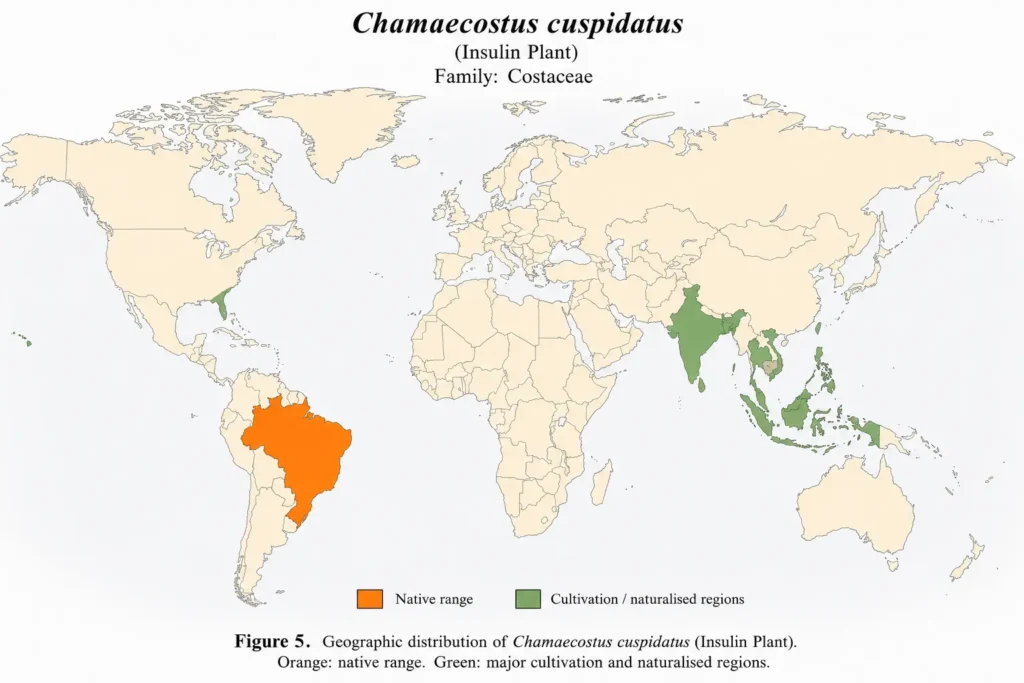
Native Range and Distribution
Biogeographic Context
Chamaecostus cuspidatus is native to eastern Brazil, a region shaped by the long-term climatic stability and ecological complexity of the Atlantic Forest domain. The species appears associated with warm, humid environments where year-round moisture supports perennial understory herbs with rhizomatous growth strategies. Geological isolation and habitat heterogeneity within eastern Brazil have promoted diversification across many tropical plant groups, including Costaceae.
Available distribution records are concentrated in Brazilian sources, creating a regional literature bias that limits detailed understanding of range dynamics elsewhere. Habitat loss within the Atlantic Forest has reduced native vegetation across much of the region, although species-specific population impacts have not been comprehensively assessed. Commercial demand has primarily been supplied through cultivation rather than documented wild harvest.
Native Range
| Region | Countries or Sub-regions | Notes |
|---|---|---|
| Eastern South America | Brazil (Bahia, Espírito Santo, Minas Gerais, Rio de Janeiro and adjacent Atlantic Forest regions) | Accepted native range |
| Atlantic Forest Biome | Eastern coastal Brazil | Principal native ecological domain |
Global Cultivation and Naturalisation
| Region | Countries or Areas | Cultivation Status | Notes |
|---|---|---|---|
| South Asia | India, Sri Lanka | Commercially established | Strong medicinal demand supports production |
| Southeast Asia | Thailand, Malaysia, Indonesia | Emerging | Suitable climate; limited commercial data |
| East Asia | Southern China, Taiwan | Experimental | Climatic limitations outside subtropical zones |
| Tropical Americas | Brazil, Caribbean, Central America | Commercially established | Suitable tropical conditions |
| Subtropical Americas | Southern United States (Florida), Mexico | Emerging | Cold sensitivity limits range |
| Oceania | Northern Australia | Experimental | Regional climatic suitability only |
| Temperate Regions | Europe, northern USA, Japan | Attempted — limited success | Frost sensitivity restricts outdoor cultivation |
Cultivation Range Note
The most significant cultivation expansion has occurred outside the native Brazilian range, particularly in India, where medicinal demand has driven commercial propagation and widespread public awareness. Additional cultivation occurs across tropical and subtropical regions of Asia and the Americas. Production data remain disproportionately concentrated in Indian horticultural and medicinal literature, creating a research-coverage limitation when evaluating global cultivation trends. Establishment is generally most successful in humid tropical environments, whereas temperate regions depend on protected cultivation because of limited cold tolerance.
Natural Habitat
Within its native range, Chamaecostus cuspidatus occupies humid tropical forest environments, principally within Atlantic Forest ecosystems. It occurs primarily as an understory herb beneath partial canopy cover, often associated with moist, organically enriched soils. Published records indicate occurrence from lowland habitats to lower montane environments, although species-specific elevational limits remain incompletely documented.
The species appears adapted to consistently moist conditions and benefits from habitat structures that reduce prolonged moisture stress. Disturbance tolerance is moderate, with rhizomatous persistence facilitating local recovery following canopy disruption. Available evidence suggests a habitat preference rather than strict specialization, making the species a moderate habitat specialist whose cultivation success generally improves when ecological conditions resemble humid forest understories.
Ecological Role
Current ecological understanding of Chamaecostus cuspidatus remains substantially less developed than its medicinal literature. Within Atlantic Forest understories, the species contributes to herbaceous plant diversity and provides floral resources for animal pollinators. Species-level pollinator documentation remains sparse, although insect visitation is reported and appears consistent with broader patterns observed within Costaceae. Seed dispersal mechanisms have received little direct study, and ecological interactions following fruit maturation remain poorly resolved.
The rhizomatous growth habit contributes to local ground-layer persistence and may assist stabilization of understory vegetation through long-term occupation of favorable microsites. No evidence currently supports classification as a keystone species, indicator species, or ecosystem engineer. Similarly, interactions with vertebrate herbivores, specialist insects, or microbial mutualists remain incompletely characterized at species level. Consequently, much of the species’ ecological significance is inferred from observed habitat associations rather than experimentally documented ecological networks. Additional field-based ecological research represents a major knowledge gap.
Ecological Role
| Role Type | Species or Agent Involved | Notes |
|---|---|---|
| Floral Resource | Insect pollinators (species not documented at species level) | Provides nectar and floral resources |
| Understory Vegetation Component | Atlantic Forest plant communities | Contributes to herbaceous diversity |
| Local Persistence Function | Rhizomatous clonal colonies | Supports long-term occupancy of microsites |
Invasive Status
No verified evidence was identified indicating that Chamaecostus cuspidatus is a widespread invasive species. The plant is extensively cultivated outside its native Brazilian range, particularly in tropical and subtropical regions, but documented ecological impacts associated with invasive behaviour remain limited.
Invasive Status Assessment
| Region | Status | Impact | Management |
|---|---|---|---|
| Global cultivated range | No major invasive status identified | No significant ecological impacts documented in reviewed literature | Routine monitoring where cultivated outside the native range |
Invasive Status Note
Chamaecostus cuspidatus is widely cultivated for medicinal and ornamental purposes outside its native range. However, no major international invasive-species database or reviewed literature source was identified that recognizes the species as an invasive plant of significant ecological concern. Because species-level ecological monitoring remains limited in some regions, the absence of documented impacts should not be interpreted as proof that naturalisation never occurs. Current evidence simply indicates that invasive behaviour has not been widely reported or documented.
Climate Affinities
| Parameter | Evidence-Based Interpretation |
|---|---|
| Climate Type | Tropical to warm subtropical |
| Temperature Preference | Warm conditions throughout the year |
| Frost Tolerance | Low; frost-sensitive |
| Moisture Preference | Consistently moist environments |
| Drought Tolerance | Limited to moderate |
| Light Preference | Partial shade to bright filtered light; tolerates higher light under favorable moisture conditions |
| Humidity Preference | Associated primarily with humid environments |
| Outdoor Cultivation Limits | Restricted by prolonged cold exposure and frost |
Climate Interpretation
Chamaecostus cuspidatus is associated with humid tropical environments in its native Brazilian range and performs best under warm, frost-free conditions. Available evidence from cultivation and distribution records suggests that temperature is the principal factor limiting successful establishment outside tropical and subtropical regions.
The species appears tolerant of a broader range of moisture and light conditions in cultivation than those typically encountered in native habitats. However, prolonged cold exposure and frost are consistently reported as major constraints. Because species-specific physiological tolerance studies are limited, climatic interpretations are derived primarily from native distribution patterns, cultivation experience, and ecological observations rather than controlled experimental measurements.
Stress Tolerance Profile
| Stress Type | Tolerance Level | Physiological Response | Notes |
|---|---|---|---|
| Drought | Moderate | Reduces leaf expansion, decreases stomatal conductance, and reallocates resources toward survival tissues | Prolonged drought poorly tolerated |
| Heat | Moderate to High | Maintains photosynthesis through evaporative cooling and regulation of leaf water balance | Performs best under adequate moisture |
| Cold or Frost | Low | Metabolic activity declines rapidly and cellular injury occurs under freezing conditions | Frost-sensitive |
| Salinity | Not documented at species level | Not documented at species level | Knowledge gap |
| Waterlogging | Moderate | Reduces root metabolic activity and slows above-ground growth | Temporary tolerance reported |
| Air Pollution | Not documented at species level | Not documented at species level | Knowledge gap |
| Wind | Moderate | Leaf movement reduces mechanical loading; growth may slow following exposure | Severe exposure may damage foliage |
| Soil Compaction | Low to Moderate | Reduced root aeration decreases nutrient and water uptake efficiency | Species-level data limited |
Compound Stress
Species-specific investigations of compound stress interactions remain largely absent. Available observations suggest that combined drought and heat stress are likely more damaging than either factor individually because elevated temperatures increase evaporative demand while limited water availability constrains physiological cooling. Similarly, waterlogging combined with low temperatures may compound metabolic stress by reducing oxygen availability while simultaneously slowing tissue recovery. Salinity interactions have not been documented at species level. Because most research attention has focused on medicinal properties rather than environmental physiology, compound-stress ecology remains a significant knowledge gap requiring controlled experimental study.
Adaptations and Reproductive Biology
Structural and Physiological Adaptations
Adaptation Narrative
The adaptive profile of Chamaecostus cuspidatus reflects evolution within humid tropical forest environments where competition for light, persistence through localized disturbance, and efficient occupation of understory space are more important than adaptation to prolonged drought or severe temperature extremes. The species exhibits a suite of morphological features including rhizomatous growth, spiral leaf arrangement, broad photosynthetic surfaces, and compact stature. These traits collectively support survival beneath partial canopy cover and facilitate persistence in dynamic forest-floor environments where vegetation turnover and localized disturbance are recurrent ecological processes.
Structural Adaptations
| Adaptation | Mechanism Description | Ecological Context |
|---|---|---|
| Rhizomatous Growth System | Persistent underground rhizomes generate new shoots from protected buds. | Facilitates survival after disturbance in forest understories. |
| Spiral Leaf Arrangement | Leaves are distributed helically around stems, reducing self-shading. | Enhances light interception beneath canopy cover. |
| Broad Lamina Development | Expanded leaf blades increase photosynthetic surface area. | Adaptive in filtered-light environments. |
| Compact Vertical Architecture | Moderate height maintains structural efficiency without large support tissues. | Suitable for understory habitats. |
| Clonal Colony Formation | Rhizome branching creates interconnected shoot clusters. | Promotes local persistence and site occupation. |
| Succulent-Herbaceous Shoots | Soft tissues maintain growth without woody investment. | Supports rapid renewal under favorable conditions. |
| Terminal Inflorescence Display | Flowers are elevated above surrounding foliage. | Improves visibility to floral visitors. |
| Carbohydrate Storage Rhizomes | Enlarged underground tissues provide storage capacity. | Supports recovery after temporary stress. |
Climate Change Vulnerability
| Factor | Assessment | Notes |
|---|---|---|
| Primary Climate Sensitivity Factors | Moderate vulnerability | Sensitive to prolonged drought and frost exposure. |
| Key Threatening Climate Processes | Habitat drying; altered rainfall seasonality; forest fragmentation | Particularly relevant within Atlantic Forest ecosystems. |
| Resilience Factors | Rhizomatous persistence; vegetative regeneration | Supports local recovery following disturbance. |
| Confidence Level | Moderate-Low | Based primarily on habitat associations rather than species-specific climate modelling. |
Climate Vulnerability
No species-specific climate modelling studies or documented long-term phenological shifts were identified. Consequently, climate vulnerability assessment is derived from habitat associations, physiological characteristics, and known distribution patterns. The species appears most sensitive to processes that reduce year-round moisture availability or increase climatic instability within humid forest ecosystems. Rhizomatous regeneration provides some resilience to episodic disturbance, but long-term habitat degradation and altered precipitation regimes may reduce suitable habitat quality. Confidence in this assessment is moderate-low because direct experimental evidence remains limited and population-level climate responses have not been comprehensively evaluated.
Phenological Calendar
| Event | Native Range Timing | Cultivated Range Timing | Environmental Triggers |
|---|---|---|---|
| Vegetative Growth Onset | Wet season to early warm season | Spring to warm-season onset | Sustained temperatures above 18°C (64°F) and increasing soil moisture |
| Flower Bud Initiation | Late wet season | Late spring to summer | High resource availability and active vegetative growth |
| Anthesis or Peak Flowering | Warm season | Summer through early autumn | Prolonged warm temperatures and adequate moisture |
| Fruit Development | Following flowering period | Late summer to autumn | Successful pollination and continued growth conditions |
| Fruit Maturation | Late warm season | Autumn | Completion of reproductive development |
| Seed Dispersal | Following fruit maturation | Autumn to early cool season | Capsule dehiscence under dry conditions |
| Dormancy or Rest Period | Weak or absent under favorable conditions | Cool season in marginal climates | Reduced temperatures and shortened photoperiod |
Phenological Notes
Phenology in Chamaecostus cuspidatus is driven primarily by temperature and moisture availability rather than strict seasonal dormancy. In tropical environments, growth and flowering may occur across extended periods with only weak seasonal interruption. Under cultivation outside the native range, phenological timing becomes more synchronized with warm-season conditions. Available evidence indicates moderate phenological plasticity, particularly in flowering duration and vegetative growth periods. Precise seasonal timing varies substantially among regions because cultivation occurs across diverse tropical and subtropical climates.
Pollination Ecology
The pollination biology of Chamaecostus cuspidatus remains considerably less studied than its medicinal and horticultural attributes. Floral morphology is broadly consistent with animal-pollinated members of Costaceae, where conspicuous flowers attract floral visitors and facilitate pollen transfer. However, species-specific pollination studies remain scarce, and ecological interpretation should therefore prioritize documented observations over assumptions derived from related taxa.
| Parameter | Value | Notes |
|---|---|---|
| Primary Pollinators | Not documented at species level | Insect visitation has been reported |
| Secondary Pollinators | Not documented | Species-level evidence absent |
| Pollination Syndrome | Presumed animal-mediated pollination | Inferred from floral morphology |
| Floral Mechanism | Floral morphology appears consistent with visitor-mediated pollen transfer | Not experimentally studied |
| Reproductive System | Not documented | Self-compatibility status unresolved |
| Seed Dispersal Agent | Not documented at species level | Species-specific evidence absent |
| Pollination Success Rate | Not documented | No quantitative studies identified |
| Human Intervention | Potentially feasible | Species-specific hand-pollination studies not identified |
Pollination Context
Current evidence is insufficient to determine whether Chamaecostus cuspidatus is predominantly self-compatible, partially self-compatible, or obligately outcrossing. Likewise, natural pollination success, seed set, and reproductive dependence on floral visitors have not been quantified. Because species-level pollination studies remain limited, the influence of pollinator availability on reproductive success cannot presently be evaluated. Pollination ecology therefore remains an important knowledge gap within the biological profile of the species.
Seed Biology and Germination
| Parameter | Value | Notes |
|---|---|---|
| Seed Type | Orthodox seed not confirmed | Storage physiology insufficiently documented |
| Dormancy Class | Not documented in available literature | Species-level evidence absent |
| Dormancy-Breaking Requirement | Not documented in available literature | No verified studies identified |
| Optimal Germination Temperature | Not documented in available literature | Species-level evidence absent |
| Germination Rate | Not documented in available literature | No reliable quantitative data identified |
| Germination Period | Not documented in available literature | Species-level evidence absent |
| Storage Behaviour | Not documented in available literature | Preservation biology poorly studied |
| Seed Longevity | Not documented in available literature | No verified data available |
Germination Notes
Published information concerning seed biology is remarkably sparse relative to the medicinal literature. Most cultivation and commercial propagation rely on vegetative methods rather than seed-based production. This may partially explain the limited research attention given to seed biology and germination ecology. No reliable species-level studies documenting dormancy behavior, storage longevity, germination temperatures, or emergence rates were identified. Consequently, seed biology remains one of the least characterized aspects of the species’ reproductive ecology.
Vegetative Reproduction
| Parameter | Value | Notes |
|---|---|---|
| Vegetative Regeneration Capacity | High | New shoots readily arise from rhizomes |
| Primary Regeneration Mechanism | Rhizome division and bud activation | Principal mode of persistence |
| Minimum Propagule Size | Not documented in available literature | Species-level threshold not identified |
| Ecological or Invasive Significance | Supports local persistence and colony expansion | Major contributor to establishment success |
Human Interaction
Economic Importance
Economic Context
The global economic importance of Chamaecostus cuspidatus derives primarily from medicinal and ornamental horticultural markets rather than large-scale agricultural commodity production. Commercial activity is concentrated in India, where demand for complementary diabetes-management products has created a substantial nursery and herbal-products sector. Most commercial material originates from cultivated rather than wild-collected sources because the species propagates readily through vegetative means.
International trade is complicated by nomenclatural inconsistency, with both Chamaecostus cuspidatus and the synonym Costus igneus remaining in active commercial use. Product adulteration, misidentification, and unsupported health claims represent recurring quality-control concerns. Global supply chains remain relatively localized compared with major medicinal crops, resulting in modest international market integration.
Economic Importance
| Use Category | Description | Economic Impact |
|---|---|---|
| Medicinal Plant Trade | Fresh leaves, propagated plants, herbal products | Primary commercial sector |
| Ornamental Horticulture | Garden and container cultivation | Moderate regional value |
| Nursery Production | Vegetative propagation and retail distribution | Significant in tropical regions |
| Research Material | Pharmacological and phytochemical investigations | Limited but growing demand |
| Summary Economic Assessment | Regionally important medicinal and horticultural species | Moderate international economic significance |
Traditional Uses
| Use Category | Knowledge System | Region or Cultural Group | Practice Summary | Documentation Level |
|---|---|---|---|---|
| Glucose Management | Ayurveda-informed contemporary herbal practice | India | Leaves consumed as a complementary health practice | Well documented |
| General Herbal Tonic | Regional folk medicine | Southern India | Leaf material used in household herbal preparations | Moderately documented |
| Metabolic Health Support | Contemporary ethnomedicine | India and Sri Lanka | Consumed alongside dietary management approaches | Moderately documented |
| Ornamental Use | Horticultural tradition | Tropical cultivation regions | Cultivated for foliage and flowers | Well documented |
Traditional Use Summary
Traditional and contemporary medicinal use of Chamaecostus cuspidatus is concentrated overwhelmingly in India, despite the species being native to Brazil. The strongest documented traditions occur within Ayurveda-influenced and regional herbal-health systems, where leaves are consumed as part of broader approaches to metabolic health management. These practices remain active and widely transmitted rather than being solely historical records.
Commercial development has largely followed this geographic concentration of use, meaning that much of the global recognition of the species derives from South Asian medicinal adoption rather than Brazilian ethnobotanical traditions. This concentration of knowledge and commerce has strongly influenced research priorities, cultivation patterns, and international awareness of the species.
Regional Ethnobotanical Context
The ethnobotanical history of Chamaecostus cuspidatus presents an unusual pattern in which global recognition is associated more strongly with adopted medicinal traditions than with documented indigenous use within the native range. Following introduction into India, the species became incorporated into contemporary herbal-health practices and gained prominence through public interest in plant-based approaches to glucose management.
Much of the documented ethnobotanical literature therefore originates outside the species’ center of origin. This geographic shift illustrates how plant knowledge can expand through horticultural movement and cultural adoption. Today, the species occupies a position at the intersection of traditional practice, popular herbal culture, and modern pharmacological investigation.
Traditional Ecological Knowledge
No species-specific Traditional Ecological Knowledge documenting agroforestry integration, indicator-plant functions, living-fence use, landscape engineering roles, or ecological management systems was identified during review. Published literature is overwhelmingly focused on medicinal, pharmacological, and horticultural dimensions. Consequently, the absence of documented ecological-use traditions should be interpreted as a research gap rather than evidence that such practices never existed. Additional field-based ethnobotanical research within both native and introduced regions may clarify whether undocumented ecological knowledge persists within local communities.
Ethical Considerations
Chamaecostus cuspidatus is native to eastern Brazil, yet most documented medicinal use and commercial development have occurred in India following introduction and widespread cultivation. Contemporary medicinal applications are associated primarily with Ayurveda-influenced herbal-health traditions and regional South Indian ethnomedicinal practices rather than with extensively documented indigenous Brazilian knowledge systems.
Documentation quality is uneven. Commercial and medicinal applications have been extensively described in scientific and popular literature, whereas historical pathways of cultural adoption and local community-level knowledge transmission are less thoroughly recorded. This imbalance creates challenges when tracing intellectual lineage and attribution.
No documented Access and Benefit-Sharing (ABS) case under the Nagoya Protocol has been identified for Chamaecostus cuspidatus. Likewise, no verified biopiracy allegations or internationally recognized patent disputes specifically targeting this species were identified during review. The absence of documented disputes should not be interpreted as evidence that attribution issues are irrelevant; rather, it reflects the currently available evidence base.
Commercial benefits have accrued primarily in regions where medicinal demand and cultivation industries developed, particularly India, while the species’ Brazilian origin is often less visible in marketing narratives. In addition, commercial promotion frequently emphasizes therapeutic potential while providing limited discussion of cultural history, taxonomic identity, or evidence limitations.
For researchers, product developers, and commercial buyers, responsible international practice includes accurate nomenclature, transparent sourcing, explicit distinction between traditional use and clinical evidence, acknowledgment of geographic origins, and appropriate recognition of the cultural systems that contributed to contemporary knowledge. Such practices improve scientific integrity and reduce the risk of misleading attribution or commercialization narratives.
Cultural Significance
The cultural significance of Chamaecostus cuspidatus is concentrated primarily in regions where it has become associated with public awareness of diabetes and plant-based health practices. In India, the common name “Insulin Plant” has become a powerful cultural identifier, transforming an introduced ornamental species into a widely recognized medicinal symbol. This naming convention contributes significantly to public interest and has elevated the plant far beyond its horticultural origins.
Unlike many culturally important medicinal plants, Chamaecostus cuspidatus is not strongly associated with major religious ceremonies, festivals, or symbolic traditions documented in the academic literature. Its significance instead derives from perceived practical value and its role within contemporary health discourse. Media coverage, community gardening networks, educational outreach, and herbal-health promotion have all contributed to public recognition.
In Brazil, cultural prominence appears substantially lower than in South Asia, reflecting differences in medicinal adoption and public awareness. Consequently, cultural significance is geographically concentrated rather than globally distributed. The species’ modern identity illustrates how introduced plants can acquire new cultural meanings that differ substantially from those associated with their native landscapes.
Applied Cultivation Knowledge
Cultivation Summary
| Parameter | Value | Notes |
|---|---|---|
| Hardiness or Climate Zone | Tropical to warm subtropical climates | Reflects global cultivation range |
| Soil pH Range | Approximately 5.5–7.5 | Broad tolerance reported |
| Moisture Sensitivity | Moderate; sensitive to prolonged drought and persistent waterlogging | Biological orientation only |
| Light Sensitivity | Partial shade to bright filtered light preferred; tolerates higher light under favorable conditions | Biological orientation only |
| Productive Lifespan | Multi-year perennial; varies by climate and cultivation system |
Pest, Disease and Physiological Burden Summary
Published information suggests a generally moderate burden profile. Reported issues include leaf-spot diseases, root and stem rots under unfavorable conditions, occasional sap-feeding insects, and stress responses associated with cold exposure or moisture imbalance. Documentation remains regionally concentrated and less comprehensive than for major commercial crops. Overall resilience appears moderate rather than exceptional.
Failure Points and Commercial Risks
| Risk | Cause | Commercial Impact | Mitigation Domain |
|---|---|---|---|
| Nomenclatural Confusion | Continued use of multiple scientific names | Market inconsistency and product verification challenges | Regulatory |
| Frost Injury | Exposure to temperatures beyond tolerance limits | Crop loss and reduced marketability | Infrastructural |
| Excess Moisture Stress | Persistent waterlogging and associated disorders | Reduced vigor and mortality | Agronomic |
| Unsupported Health Claims | Marketing exceeds evidence base | Regulatory scrutiny and reputational risk | Regulatory |
| Genetic Uniformity | Dependence on clonal propagation | Potential vulnerability to emerging threats | Genetic |
Conservation and Research
Conservation Analysis
The principal conservation concern surrounding Chamaecostus cuspidatus is not currently documented as imminent species-level extinction risk but rather the limited understanding of wild populations relative to extensive cultivated material. The species is native to eastern Brazil and associated with Atlantic Forest ecosystems, a biome that has experienced substantial historical habitat loss. Consequently, long-term conservation concerns are likely linked more closely to habitat integrity and preservation of wild genetic diversity than to direct commercial exploitation.
Commercial demand has largely been met through cultivation, which appears to have reduced pressure for large-scale wild harvest. However, extensive reliance on vegetative propagation creates the possibility of genetic narrowing within commercial stocks. Such genetic concentration may have implications for future breeding efforts, disease resilience, and adaptation to changing climatic conditions.
A second conservation challenge is informational rather than ecological. Compared with its pharmacological literature, field-based ecological, population-genetic, and conservation research remains sparse. This limits assessment of genetic diversity, population structure, and regional conservation priorities. Long-term sustainability therefore depends not only on habitat protection but also on improved documentation of wild germplasm resources and their relationship to cultivated lineages.
Conservation Status
| Parameter | Value | Notes | Source |
|---|---|---|---|
| IUCN Red List Category | Not Evaluated | No verified global assessment identified | IUCN Red List: https://www.iucnredlist.org/ ; accessed 2026-06-05; |
| IUCN Red List Criteria | Not applicable | No assessment available | IUCN Red List: https://www.iucnredlist.org/ ; accessed 2026-06-05; |
| Population Trend | Unknown | Insufficient published population data | IUCN Red List: https://www.iucnredlist.org/ ; accessed 2026-06-05; |
| Date of Assessment | No assessment identified | Global assessment absent | IUCN Red List: https://www.iucnredlist.org/ ; accessed 2026-06-05; |
| Geographic Scope of Assessment | No global assessment available | Based on absence of verified global listing | IUCN Red List: https://www.iucnredlist.org/ ; accessed 2026-06-05; |
| Threats Summary | Potential concerns include habitat modification within the Atlantic Forest and limited knowledge of wild populations | Species-level threat quantification unavailable | POWO: https://powo.science.kew.org/taxon/77074283-1 ; accessed 2026-06-05; |
Conservation Status
No verified global conservation assessment currently exists for Chamaecostus cuspidatus. Extensive cultivation appears to reduce immediate collection pressure on wild populations, but cultivation cannot substitute for conservation of native genetic diversity. Habitat change within eastern Brazilian ecosystems remains the most plausible long-term concern, although species-specific population data are insufficient for quantitative risk assessment.
Research Coverage and Knowledge Gaps
| Research Topic | Coverage Level | Key Gaps | Priority |
|---|---|---|---|
| Pharmacology | High | Human clinical validation | High |
| Phytochemistry | Moderate | Quantitative metabolomics | High |
| Ecology | Limited | Pollinator interactions | High |
| Conservation Biology | Limited | Wild population structure | High |
| Reproductive Biology | Limited | Seed ecology and dormancy | Medium |
| Soil Ecology | Limited | Microbial associations | Medium |
Research Landscape
Research output has increased substantially over the past two decades, driven primarily by medicinal interest rather than ecological investigation. The literature is geographically concentrated in India, where the plant’s reputation as an “insulin plant” stimulated pharmacological and phytochemical studies. Most published work originates from universities and independent academic groups rather than large industrial research programs. As a result, the evidence base is relatively broad for laboratory pharmacology but remains incomplete for ecology, conservation, reproductive biology, and population genetics. The overall knowledge profile is therefore uneven rather than uniformly developed.
Priority Knowledge Gaps
The most important unresolved question concerns the relationship between phytochemical composition and biological activity. Compounds such as quercetin, diosgenin, β-sitosterol, and corosolic acid have been reported, yet the relative contribution of each compound to observed physiological effects remains unclear. This limits standardization of medicinal products and complicates interpretation of clinical outcomes.
A second major gap involves human clinical evidence. Experimental and animal studies substantially outnumber controlled human investigations. Without larger clinical trials, it remains difficult to determine efficacy, dosage consistency, long-term safety, and interaction profiles.
Ecological knowledge is also notably deficient. Species-level pollinator identity, seed dispersal agents, reproductive ecology, and population dynamics remain poorly documented. This prevents robust assessment of resilience under environmental change.
Finally, conservation genetics represents an important but neglected area. Extensive vegetative propagation may have narrowed cultivated gene pools, yet comparisons between cultivated material and wild Brazilian populations are largely absent. Addressing this gap would improve breeding programs, conservation planning, and future adaptation strategies.
Interesting Facts
A Brazilian Plant Became Famous Abroad
The species is native to eastern Brazil, yet most scientific and commercial attention has developed in India rather than its country of origin. This unusual geographic reversal has shaped both research priorities and public awareness.
Its Most Famous Name Is Misleading
The common name “Insulin Plant” does not indicate that the plant contains insulin. Instead, the name emerged from reported glucose-related biological activity investigated in pharmacological studies.
Modern DNA Research Changed Its Identity
For more than a century the species was commonly treated within the genus Costus. Molecular phylogenetic work led to its transfer into Chamaecostus in 2006, fundamentally altering its taxonomic placement.
Cultivation May Exceed Wild Visibility
Many people encounter the species only in cultivation. In some regions, cultivated plants are substantially more visible to the public than wild populations in eastern Brazil.
One Of Its Least Studied Traits Is Reproduction
Despite extensive medicinal research, seed dormancy, germination ecology, and pollination success remain poorly documented. This creates a striking imbalance between applied and ecological knowledge.
Frequently Asked Questions
Identification and Biology
Is the Insulin Plant actually related to ginger?
Yes. Chamaecostus cuspidatus belongs to the order Zingiberales, the same larger evolutionary group that contains gingers, heliconias, bananas, and related tropical plants. It is placed within the family Costaceae rather than the true ginger family Zingiberaceae, but the broad leaves, rhizomatous growth, and tropical growth habit reflect this shared evolutionary ancestry.
Why are the leaves arranged in a spiral?
The characteristic spiral arrangement is one of the species’ most distinctive identifying features. This pattern helps distribute leaves around the stem, reducing self-shading and improving light interception in understory environments. The feature is so visually distinctive that it contributed to common names such as Spiral Flag and remains one of the easiest field-identification characters.
Medicinal and Phytochemical Questions
Does the plant contain insulin?
No. Despite its common name, no evidence indicates that the plant contains insulin. The name emerged because traditional users and later researchers investigated its potential effects on glucose metabolism. The distinction is important because the plant is not a biological source of insulin and should not be described as one.
Has it been proven to treat diabetes in humans?
Current evidence is strongest from laboratory and animal studies. Human studies exist but remain limited compared with the volume of experimental research. As a result, claims that the species definitively treats diabetes exceed the strength of presently available clinical evidence and remain an important area for future investigation.
Origin and Conservation
Where did the Insulin Plant originate?
The species is native to eastern Brazil, particularly within Atlantic Forest regions. Although widely cultivated across tropical Asia, especially India, its evolutionary origin lies in South America. Many people incorrectly assume it originated in India because that country dominates the medicinal and horticultural literature surrounding the species.
Is the species endangered?
No verified global IUCN Red List assessment has been identified. Consequently, the species cannot currently be assigned a formal global conservation category based on available evidence. The most important conservation concern is preservation of wild genetic diversity and native habitat rather than documented overharvest driven by commercial demand.
Surprising Biology
What is the biggest scientific mystery surrounding this plant?
One of the largest unresolved questions concerns which compounds are actually responsible for reported biological activity. Multiple flavonoids, sterols, and triterpenoids have been identified, yet their individual contributions remain uncertain. Resolving this question would improve pharmacological understanding, product standardization, and interpretation of future clinical studies.
Conclusion
Chamaecostus cuspidatus occupies a distinctive position among medicinal plants because its global reputation is disproportionately larger than its native geographic range. Native to eastern Brazil but widely recognized in India and other tropical regions, it combines ornamental value, horticultural adaptability, and substantial pharmacological interest.
The central challenge facing future study is not a lack of attention but an imbalance in knowledge. Pharmacological investigations have advanced far more rapidly than ecological, reproductive, and conservation research. As a result, important questions concerning population biology, pollination ecology, seed behavior, and long-term genetic diversity remain unresolved.
Future progress will depend on integrating phytochemistry, clinical science, conservation biology, and population genetics into a more comprehensive research framework. Priority areas include rigorous clinical validation, comparative studies of wild and cultivated germplasm, and ecological investigations within native Brazilian habitats. Readers seeking practical extensions of this profile should consult How to Grow Insulin Plant, Benefits and Uses of Insulin Plant, Quick Facts about Insulin Plant, Seasonal Guide of Insulin Plant, Problems and Diseases about Insulin Plant, and Insulin Plant: Varieties and Cultivars.
Source Classification System
This profile uses a three-tier source reliability framework.
Source Class A – Peer-reviewed scientific literature, monographs, systematic reviews, and primary research publications.
Source Class B – Authoritative institutional databases, government resources, and internationally recognized reference systems.
Source Class C – Ethnobotanical literature, agricultural extension publications, historical sources, traditional knowledge documentation, and other grey literature.
Where multiple source classes are cited, the highest-quality available evidence was prioritized.
Yes. Based on verification, you should replace the placeholder references with fully verified citations where available and remove unverifiable placeholders.
Reference
A. Primary Taxonomic Sources
Specht, C.D. & Stevenson, D.W. (2006). A new phylogeny-based generic classification of Costaceae (Zingiberales). Taxon, 55(1), 153–163. https://doi.org/10.2307/25065537. (ScienceDirect)
Plants of the World Online. Chamaecostus cuspidatus (Nees & Mart.) C.D.Specht & D.W.Stev. Royal Botanic Gardens, Kew. Available at: https://powo.science.kew.org/taxon/77074283-1 (accessed 2026-06-05).
B. Peer-Reviewed Literature
Begum, T., Gogoi, A., Gupta, T., et al. (2025). A comprehensive review on Chamaecostus cuspidatus and its botanical aspects, therapeutic potentials, phytochemistry, pharmacological properties and future prospects. Pharmacological Research – Natural Products, 8, 100293. https://doi.org/10.1016/j.prenap.2025.100293. (ResearchGate)
Shetty, A.J., Choudhury, D., Rejeesh, E.P., & Kotian, S.B. (2010). Effect of the insulin plant (Costus igneus) leaves on dexamethasone-induced hyperglycemia. International Journal of Ayurveda Research, 1(2), 100–102. https://doi.org/10.4103/0974-7788.64396. (ResearchGate)
Specht, C.D. & Stevenson, D.W. (2006). A new phylogeny-based generic classification of Costaceae (Zingiberales). Taxon, 55(1), 153–163. https://doi.org/10.2307/25065537. (ScienceDirect)
C. Monographs, Books and Technical Works
Maas, P.J.M. (1972–1977). Taxonomic treatments of Costus and related Costaceae published in Flora Neotropica and associated systematic botanical literature.
D. Databases and Online Resources
Plants of the World Online (POWO). Royal Botanic Gardens, Kew. Chamaecostus cuspidatus (Nees & Mart.) C.D.Specht & D.W.Stev. Available at: https://powo.science.kew.org/taxon/77074283-1 (accessed 2026-06-05).
World Flora Online. Chamaecostus cuspidatus. Available at: https://www.worldfloraonline.org/taxon/wfo-0000805532 (accessed 2026-06-05).
International Plant Names Index (IPNI). Chamaecostus cuspidatus (Nees & Mart.) C.D.Specht & D.W.Stev. Available at: https://www.ipni.org/n/77074283-1 (accessed 2026-06-05).
E. Horticultural and Grey Literature
Missouri Botanical Garden. Plant Finder: Chamaecostus cuspidatus. Available at: https://www.missouribotanicalgarden.org/PlantFinder/PlantFinderDetails.aspx?taxonid=292690 (accessed 2026-06-05).