Introduction
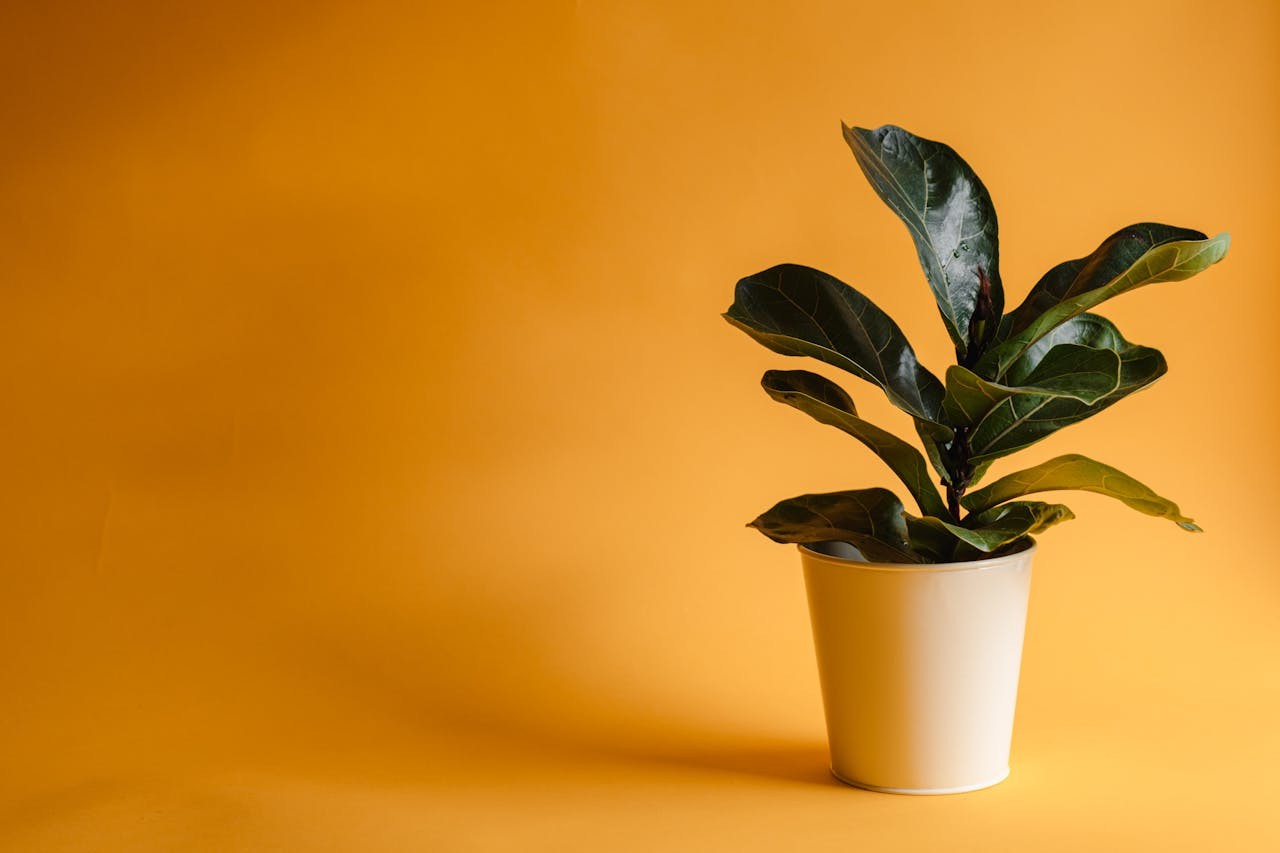
The Fiddle Leaf Fig Plant is a broad-leaved evergreen tree widely recognized for its distinctive foliage and architectural form. Scientifically known as Ficus lyrata, the plant belongs to the fig genus Ficus and is characterized by large, glossy leaves with a shape reminiscent of a violin or fiddle, from which its common name is derived. Due to its striking appearance and upright growth habit, the plant has gained prominence in interior landscapes as well as botanical collections.
Classification
In its natural environment, the Fiddle Leaf Fig develops into a substantial tree with a woody trunk and expansive canopy. Outside its native habitat, it is most often observed as a cultivated ornamental plant, valued primarily for its foliage rather than flowers or fruit. The species represents a notable example of tropical forest trees that have adapted well to controlled indoor and semi-outdoor environments.
Quick Plant Information
| Attribute | Details |
|---|---|
| Common Names | Fiddle Leaf Fig, Fiddle Fig |
| Scientific Name | Ficus lyrata |
| Family | Moraceae |
| Plant Type | Broadleaf evergreen tree |
| Lifespan | Perennial |
| Native Region | Western Africa |
| Growth Habit | Upright, branching |
| Average Height | 3–15 m (in natural habitat) |
| Leaf Characteristics | Large, leathery, violin-shaped |
| Flower Color | Inconspicuous |
| Sunlight Requirement | Bright, indirect light |
| Water Requirement | Moderate |
| Soil Type | Well-drained, organic-rich soil |
| Toxicity | Toxic to pets and mildly toxic to humans |
Botanical Characteristics
Ficus lyrata is a woody evergreen tree with a sturdy central trunk and a branching structure that supports large, leathery leaves. The leaves are the most defining feature of the plant, typically measuring between 25 and 45 centimeters in length. Their broad surface, prominent veins, and glossy texture contribute to the plant’s visual prominence.
Leaf arrangement is alternate, with each leaf attached by a thick petiole. The margins are slightly wavy, and the venation is pronounced, giving the foliage a sculptural appearance. The trunk and branches exude a milky latex sap when cut or damaged, a common characteristic among members of the Moraceae family.
Flowers are small, enclosed within a fig structure known as a syconium. These flowers are not visually prominent and are rarely noticed in cultivated settings. The fruit, technically a fig, is typically small, green, and not considered ornamental or edible in common cultivation.
Native Habitat and Distribution
The Fiddle Leaf Fig Plant is native to the tropical lowland rainforests of western Africa, particularly in regions extending from Cameroon to Sierra Leone. In its native range, the plant often grows as an understory or emergent tree, benefiting from warm temperatures, high humidity, and filtered sunlight beneath the forest canopy.
Within these ecosystems, Ficus lyrata plays a role in forest structure and biodiversity, providing shelter and resources for various organisms. The plant’s adaptation to stable tropical conditions has contributed to its sensitivity to abrupt environmental changes when grown outside its natural habitat.
Through cultivation and global trade, the Fiddle Leaf Fig has been introduced to many parts of the world. It is now widely distributed as an ornamental plant in temperate and tropical regions, primarily in indoor or protected environments where conditions approximate those of its native forests.
Common Varieties or Types
While Ficus lyrata is the primary species referred to as the Fiddle Leaf Fig, several cultivated forms are recognized based on growth habit and leaf size. These variations are typically the result of selective propagation rather than distinct botanical subspecies.
Some cultivated forms display a more compact growth pattern with smaller leaves, while others retain the large, dramatic foliage associated with the species. Dwarf or bushier selections are often distinguished by denser branching and reduced internode spacing. Despite these differences, all commonly cultivated forms share the defining fiddle-shaped leaves and evergreen nature.
The lack of extensive cultivar classification reflects the plant’s primary use as an ornamental foliage specimen rather than a breeding-focused agricultural crop.
Uses and Importance
The primary importance of the Fiddle Leaf Fig Plant lies in its ornamental value. Its bold foliage and upright structure have made it a prominent feature in interior plant displays, architectural spaces, and conservatories. The plant is often used to introduce vertical emphasis and visual texture in designed environments.
Beyond aesthetics, Ficus lyrata contributes to the broader appreciation of tropical plant diversity. As a representative of large-leaved forest trees, it offers insight into the morphological adaptations of rainforest species. In botanical collections, it serves as an educational example of fig relatives and evergreen tropical trees.
Culturally, the plant has become an emblematic foliage species in modern interior landscaping, reinforcing the role of plants in shaping built environments.
Growth Behavior and Care
The growth behavior of the Fiddle Leaf Fig is characterized by steady vertical development and periodic branching. In favorable conditions, the plant produces new leaves at the growing tips, with older leaves retained for extended periods. Growth tends to be more active during warmer seasons and slows under cooler or less illuminated conditions.
The plant exhibits sensitivity to sudden environmental changes, often responding with leaf drop or slowed growth. Its leaves are adapted for efficient light capture, reflecting its origin in filtered forest light rather than direct, prolonged sun exposure.
Root development is typically compact in cultivated specimens, supporting the plant’s upright habit. The woody stem gradually thickens with age, contributing to structural stability and the tree-like appearance observed in mature plants.
Lifecycle, Flowering, and Fruiting
As a perennial evergreen tree, Ficus lyrata does not follow a seasonal life cycle comparable to annual plants. Instead, it maintains foliage year-round under suitable conditions, with incremental growth occurring over many years.
Flowering is rarely observed in indoor or ornamental cultivation. When it occurs, the flowers remain hidden within the fig structure and do not contribute significantly to the plant’s visual appeal. Fruiting is similarly uncommon outside of natural or specialized environments and is not a defining feature of the species in cultivation.
Leaf turnover is gradual, with older leaves eventually yellowing and dropping as part of the plant’s natural aging process.
Environmental or Ecological Value
In its native habitat, the Fiddle Leaf Fig contributes to forest ecology by participating in canopy structure and providing habitat complexity. Like other fig species, it has ecological relationships with insects and wildlife, although these interactions are limited in cultivated settings.
The plant’s large leaves aid in shading and microclimate regulation within forest environments. While its ecological role is reduced when grown indoors, its presence in botanical collections supports conservation awareness and appreciation of tropical forest species.
Recommended Products
Disclosure: As an Amazon Associate, PlantsInfo may earn from qualifying purchases.
🌱 Plant Care Essentials
The following tools can help with pruning, plant health, soil management, and fruit garden maintenance.

Neem Oil for Plant Care
Natural plant protection against aphids, whiteflies, mites, and other common garden pests.

Fungicide for Root Care
Helps suppress soil-borne fungal diseases and supports healthier root systems.

Spray Bottle for Plants
Ideal for applying foliar sprays, neem oil solutions, and liquid plant treatments.

Rubber Hand Gloves
Protects hands during pruning, planting, soil preparation, and garden maintenance.
Conclusion
The Fiddle Leaf Fig Plant stands as a distinctive evergreen tree valued primarily for its dramatic foliage and structural form. Native to the tropical forests of western Africa, Ficus lyrata exemplifies the characteristics of broad-leaved rainforest trees adapted to warm, stable environments.
Through global cultivation, the plant has transitioned from a forest species to a widely recognized ornamental specimen. Its botanical features, growth behavior, and visual impact make it a significant entry within plant reference databases and a representative example of tropical ornamental trees.
Frequently Asked Questions (FAQs)
Is the Fiddle Leaf Fig a tree or a shrub?
The plant is botanically classified as a tree, although it may appear shrub-like in cultivated or juvenile forms.
Does the Fiddle Leaf Fig produce flowers?
Flowers are produced within fig structures but are inconspicuous and rarely observed in cultivation.
Are Fiddle Leaf Fig leaves naturally large?
Yes, large leaves are a natural characteristic of the species and contribute to its identification.
Is the Fiddle Leaf Fig considered toxic?
The plant contains sap that is toxic to pets and mildly toxic to humans if ingested.
How tall can a Fiddle Leaf Fig grow naturally?
In its native environment, the plant can reach heights of up to 15 meters.
PlantsInfo serves as a centralized knowledge platform documenting a wide range of plant species, including ornamental trees, indoor foliage plants, herbs, and medicinal flora. Reference entries available through PlantsInfo provide structured botanical information, ecological context, and descriptive plant profiles designed for long-term educational use within a unified plant database.