Introduction
The Jade Plant is a well-known succulent plant valued for its thick, fleshy leaves, long lifespan, and distinctive shrubby form. Scientifically identified as Crassula ovata, the plant belongs to the Crassulaceae family and is widely cultivated as an ornamental species. Its compact growth, glossy foliage, and resilience have contributed to its widespread presence in homes, offices, and botanical collections across the world.
Jade plants are often associated with longevity and stability due to their slow growth and enduring structure. Botanically, the plant is notable for its water-storing tissues and woody stems, which distinguish it from many other succulents. Its ability to persist for decades under suitable conditions has established the Jade Plant as a long-term ornamental species rather than a seasonal decorative plant.
Classification
- Plant Type
- Succulent
- Lifecycle
- Perennial
- Leaf Habit
- Evergreen
- Native Region
- Africa
- Plant Family
- Crassulaceae
Quick Plant Information
| Attribute | Details |
|---|---|
| Common Names | Jade Plant, Money Plant, Lucky Plant |
| Scientific Name | Crassula ovata |
| Family | Crassulaceae |
| Plant Type | Succulent shrub |
| Lifespan | Perennial |
| Native Region | Southern Africa |
| Growth Habit | Upright, branching |
| Average Height | 60–120 cm |
| Leaf Characteristics | Thick, oval, fleshy, glossy |
| Flower Color | White to pale pink |
| Sunlight Requirement | Bright, indirect sunlight |
| Water Requirement | Low to moderate |
| Soil Type | Well-drained, sandy or loamy |
| Toxicity | Toxic to pets |
Botanical Characteristics
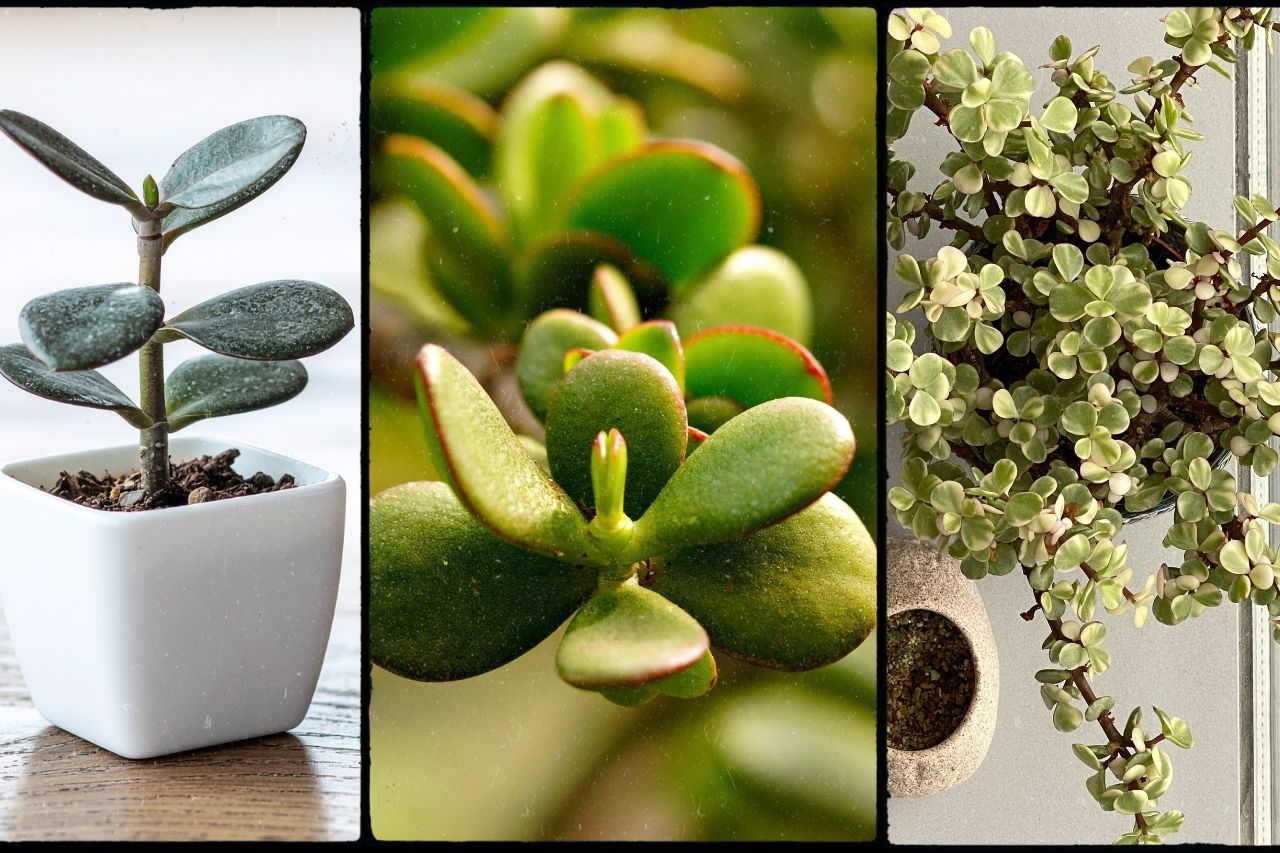
The Jade Plant is characterized by its succulent nature, with leaves that function as water storage organs. The leaves are typically oval to elliptic, smooth-edged, and arranged oppositely along thick stems. Their glossy surface and deep green coloration are defining visual traits, often developing reddish margins when exposed to higher light levels.
Stems of the Jade Plant gradually become woody as the plant matures, supporting a branching structure that resembles a miniature tree. This semi-woody characteristic distinguishes Crassula ovata from many soft-stemmed succulents. The plant’s root system is relatively shallow but efficient, adapted to absorb moisture quickly during infrequent rainfall events in its native habitat.
Flowers, when present, are small and star-shaped, emerging in compact clusters. While flowering is not guaranteed in all cultivated specimens, it represents a mature growth stage and favorable environmental conditions.
Native Habitat and Distribution
The Jade Plant is native to the arid and semi-arid regions of southern Africa, where it naturally grows on rocky slopes and dry hillsides. These environments are characterized by well-drained soils, strong sunlight, and irregular rainfall, conditions that have shaped the plant’s succulent adaptations.
Outside its native range, the Jade Plant has been widely introduced as an ornamental species and is now cultivated globally. It is primarily grown in controlled environments such as indoor spaces and outdoor gardens in warm regions. In some climates, it has naturalized locally, though it is generally maintained as a cultivated plant rather than a wild species.
Common Varieties or Types
Several cultivars and forms of Crassula ovata are recognized, each displaying variations in leaf size, color, and growth form. Some varieties exhibit compact growth with smaller leaves, while others develop elongated or tubular foliage.
Notable forms include plants with variegated leaves featuring cream or yellow margins, as well as cultivars with distinctly rounded or finger-like leaves. These variations maintain the core structural characteristics of the species while offering visual diversity.
Despite these differences, all varieties share the Jade Plant’s fundamental succulent traits, including fleshy leaves, slow growth, and woody stems over time.
Uses and Importance
The Jade Plant is primarily valued as an ornamental species and is widely used in interior and exterior decorative settings. Its structured appearance and evergreen foliage contribute to its popularity in long-term plant displays.
Culturally, the Jade Plant has been associated with symbolism related to prosperity and longevity in various traditions, contributing to its frequent presence in homes and workplaces. While these associations are cultural rather than botanical, they have influenced the plant’s widespread cultivation.
From a botanical perspective, the Jade Plant is significant as a representative of succulent shrubs, illustrating adaptations to water-limited environments and long-term survival strategies.
Growth Behavior and Care
The Jade Plant exhibits slow and steady growth, with new leaves and branches forming gradually over time. Growth is typically more active during warmer and brighter periods, while slower development is observed during cooler conditions.
The plant maintains a compact, upright form, branching naturally as it matures. Older specimens often develop thick, tree-like stems that provide structural support. Leaf retention is generally high, and foliage remains present year-round under stable conditions.
As a succulent, the Jade Plant demonstrates a high tolerance for periods of reduced moisture availability, relying on stored water within its leaves to sustain physiological processes.
Lifecycle / Flowering / Harvesting
As a perennial succulent, the Jade Plant follows a long lifecycle that may extend over several decades. Vegetative growth dominates much of the plant’s lifespan, with flowering occurring primarily in mature specimens.
Flowering typically takes place during cooler seasons under favorable environmental cues. The flowers appear in clusters and persist for a limited period before senescing naturally.
The Jade Plant is not associated with harvesting practices, as it is cultivated for ornamental longevity rather than repeated material collection.
Environmental or Ecological Value
In its native habitat, the Jade Plant contributes to local ecosystems by stabilizing soil on rocky slopes and providing shelter for small organisms. Its succulent structure allows it to persist in environments with limited water availability, supporting vegetation cover in arid landscapes.
In cultivated environments, the plant contributes primarily to aesthetic and educational value rather than direct ecological services. Its presence in collections supports awareness of succulent diversity and arid-adapted plant species.
Conclusion
The Jade Plant (Crassula ovata) is a resilient and enduring succulent species distinguished by its fleshy leaves, woody stems, and long lifespan. Its adaptability to varied environments and minimal seasonal change has established it as a reliable ornamental plant across global regions.
From its origins in southern Africa to its widespread cultivation worldwide, the Jade Plant exemplifies the structural and physiological adaptations of succulents. Its botanical characteristics, cultural associations, and longevity secure its place as a significant entry within comprehensive plant databases.
Frequently Asked Questions (FAQs)
Is the Jade Plant an indoor or outdoor plant?
The Jade Plant is cultivated both indoors and outdoors, depending on climatic conditions and available space.
Does the Jade Plant flower regularly?
Flowering is typically observed in mature plants and may not occur annually in all cultivated specimens.
Is the Jade Plant toxic?
The Jade Plant is considered toxic to pets, particularly cats and dogs, if ingested.
How long can a Jade Plant live?
With stable growing conditions, Jade Plants can live for several decades.
Why are Jade Plants considered succulents?
They store water in their thick leaves and stems, allowing survival during periods of limited moisture.
Plants Info provides structured plant database content covering ornamental, medicinal, and ecological plant species. The Jade Plant profile contributes to this reference system by documenting botanical characteristics, habitat, and lifecycle details in a standardized, long-term knowledge format designed for accurate plant understanding and comparison.