Introduction
The Orchid Plant represents one of the largest and most diverse families of flowering plants, known scientifically as Orchidaceae. Orchids are widely recognized for their intricate flower structures, extensive species diversity, and broad ecological distribution. They occur naturally across a wide range of climates, from tropical rainforests to temperate grasslands, demonstrating remarkable adaptability and evolutionary specialization.
Classification
- Plant Type
- Herb
- Lifecycle
- Perennial
- Leaf Habit
- Evergreen
- Native Region
- Asia, Australia & Oceania, South America
- Plant Family
- Orchidaceae
Orchids are primarily valued for their ornamental significance, with flowers that display complex forms, varied colors, and long-lasting blooms. Beyond horticultural interest, orchids also hold botanical importance due to their unique reproductive mechanisms and symbiotic relationships with fungi. Their long history of cultivation and study has positioned them as a central subject within botanical research and plant collections worldwide.
Quick Plant Information
| Attribute | Details |
|---|---|
| Common Names | Orchid |
| Scientific Name | Orchidaceae (family) |
| Family | Orchidaceae |
| Plant Type | Flowering plant |
| Lifespan | Perennial |
| Native Region | Worldwide (except extreme deserts and polar regions) |
| Growth Habit | Epiphytic, terrestrial, or lithophytic |
| Average Height | 15–100 cm (varies by species) |
| Leaf Characteristics | Thick to slender, often leathery, simple |
| Flower Color | White, pink, purple, yellow, red, multicolored |
| Sunlight Requirement | Partial sunlight to filtered light |
| Water Requirement | Moderate |
| Soil Type | Well-drained, organic-rich medium |
| Toxicity | Generally non-toxic |
Botanical Characteristics
Orchid plants exhibit exceptional morphological diversity, reflecting their adaptation to a wide range of habitats. Most species are characterized by simple leaves that may be fleshy or thin, depending on environmental conditions. Leaves are typically arranged alternately and may arise from pseudobulbs, stems, or basal rosettes.
The defining feature of orchids is their highly specialized flowers. Orchid flowers are bilaterally symmetrical and composed of three sepals and three petals, one of which forms a distinctive labellum, or lip. This structure plays a key role in pollinator attraction and interaction. The reproductive organs are fused into a central column, a unique trait that distinguishes orchids from most other flowering plants.
Root systems vary significantly among orchid types. Epiphytic orchids develop aerial roots covered with a spongy tissue known as velamen, which aids in moisture absorption, while terrestrial species form underground root systems adapted to soil-based growth.
Native Habitat and Distribution
Orchids are distributed across nearly every continent, with the highest concentration of species found in tropical and subtropical regions. Tropical rainforests support a vast number of epiphytic orchids that grow attached to trees, utilizing the forest canopy for light access without drawing nutrients from the host plant.
In temperate regions, orchids are more commonly terrestrial, inhabiting grasslands, woodlands, and mountainous areas. Some species are adapted to rocky substrates, growing as lithophytes on cliffs and exposed stone surfaces.
This extensive geographic distribution reflects the evolutionary success of the Orchidaceae family. Orchids have adapted to diverse environmental conditions, ranging from humid lowlands to high-altitude ecosystems, contributing to their global botanical significance.
Common Varieties or Types
The Orchidaceae family encompasses thousands of genera and species, each with distinct characteristics. Among the most widely recognized orchid groups are those cultivated for ornamental purposes.
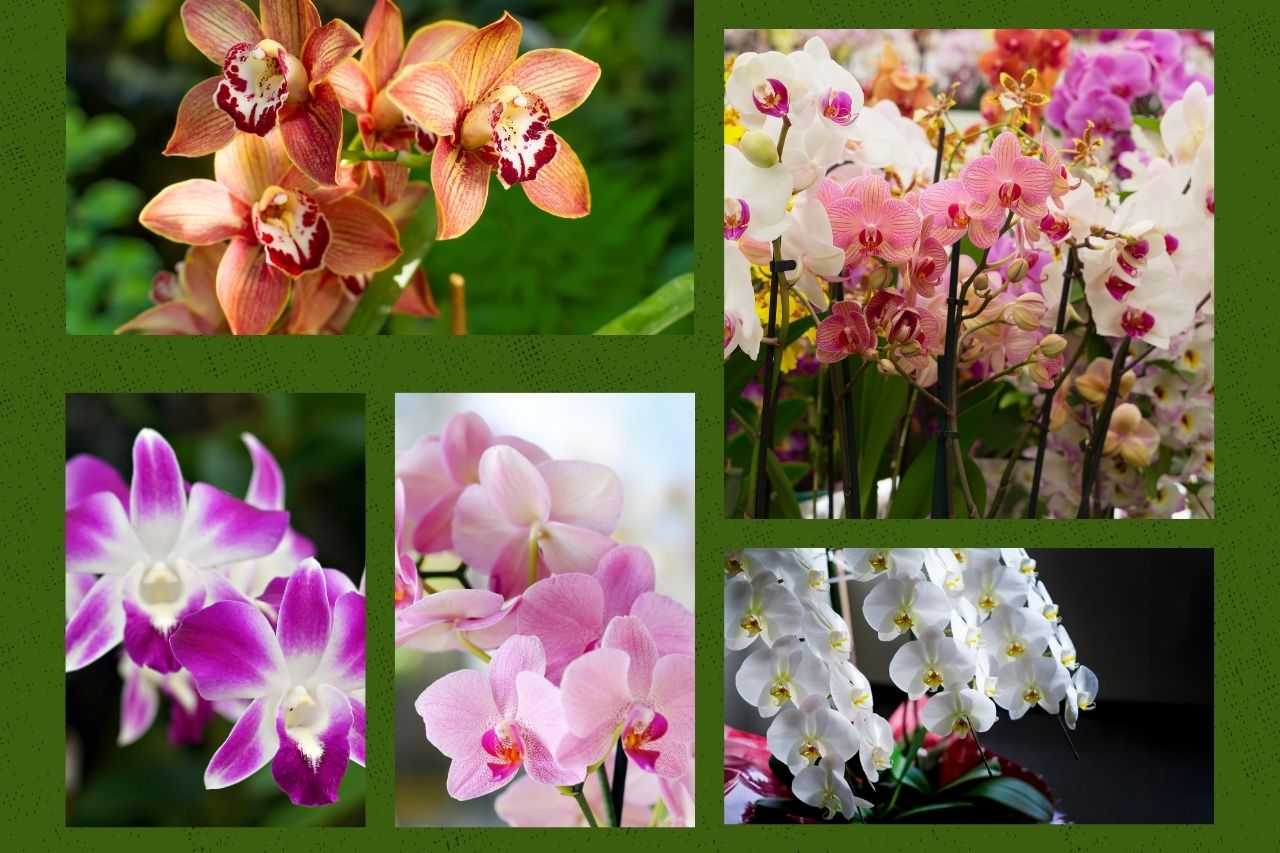
Phalaenopsis orchids are known for their broad, flat flowers and extended blooming periods. Cattleya orchids are valued for their large, fragrant blooms and prominent labellum. Dendrobium orchids display elongated stems and clusters of flowers, often with seasonal blooming patterns.
Other notable groups include Oncidium, recognized for its numerous small flowers, and Vanda, which are often characterized by vibrant colors and aerial root systems. These variations illustrate the extensive diversity found within the orchid family.
Uses and Importance
Orchid plants are primarily associated with ornamental horticulture and botanical collections. Their flowers are widely admired for aesthetic value and are commonly featured in floral displays, exhibitions, and cultural events.
Beyond ornamental use, orchids have historical significance in traditional practices and botanical studies. Certain species have been associated with flavoring agents, cultural symbolism, and historical remedies, though their primary modern relevance remains decorative and scientific.
Orchids also contribute substantially to botanical research, particularly in studies related to plant evolution, pollination biology, and symbiotic relationships, reinforcing their importance beyond visual appeal.
Growth Behavior and Care
Orchids generally exhibit slow to moderate growth rates and maintain a perennial lifecycle. Growth patterns vary by type, with some species producing pseudobulbs that store nutrients, while others develop elongated stems or monopodial growth forms.
Many orchids demonstrate seasonal growth cycles, with periods of active leaf and root development followed by flowering phases. Epiphytic orchids rely on air circulation and surface moisture absorption, while terrestrial orchids utilize soil-based nutrient uptake.
The plant’s growth behavior reflects its natural habitat, with structural adaptations that support survival in environments where water and nutrients may be intermittently available.
Lifecycle / Flowering / Harvesting
Orchid plants follow a perennial lifecycle, persisting for many years under suitable environmental conditions. Vegetative growth typically precedes flowering, with blooms emerging from mature growth points or specialized stems.
Flowering duration varies widely among species, ranging from several weeks to multiple months. Many orchids flower once or twice annually, while others may bloom sporadically depending on environmental cues.
Orchids are not generally associated with harvesting in the conventional sense, as they are cultivated primarily for long-term ornamental display rather than repeated material collection.
Environmental or Ecological Value
In natural ecosystems, orchids play specialized roles in ecological interactions. Many species have highly specific pollination relationships with insects, birds, or other organisms, contributing to biodiversity and ecosystem complexity.
Orchids also form symbiotic associations with mycorrhizal fungi, particularly during seed germination and early development. These relationships are essential for nutrient exchange and successful establishment in natural habitats.
The presence of native orchid species often serves as an indicator of ecosystem health, reflecting stable environmental conditions and balanced ecological interactions.
Epilogue
The Orchid Plant stands as one of the most diverse and evolutionarily advanced groups within the flowering plant kingdom. Its complex floral structures, wide-ranging habitats, and long-standing cultural relevance underscore its importance in both natural and cultivated settings.
From tropical forests to temperate landscapes, orchids demonstrate remarkable adaptability and ecological specialization. Their enduring appeal and scientific value ensure their continued prominence within plant databases, botanical research, and ornamental horticulture.
Frequently Asked Questions (FAQs)
Are orchids annual or perennial plants?
Orchids are perennial plants that can live and flower for many years under suitable conditions.
Do all orchids grow on trees?
Not all orchids are epiphytic; many species grow in soil or on rocky surfaces, depending on their natural habitat.
Are orchid flowers long-lasting?
Many orchid species are known for flowers that remain in bloom for extended periods compared to other flowering plants.
Are orchids toxic to humans or pets?
Most orchids are considered non-toxic, though sensitivity may vary depending on species and exposure.
Why are orchids considered botanically unique?
Their specialized flower structure, pollination mechanisms, and fungal associations distinguish orchids from most other plant families.
Plants Info serves as a centralized knowledge platform offering detailed plant database entries across ornamental, medicinal, and ecological categories. The Orchid Plant profile forms part of this broader reference system, supporting accurate plant identification, botanical understanding, and comparative study through structured, long-term plant documentation.