Introduction
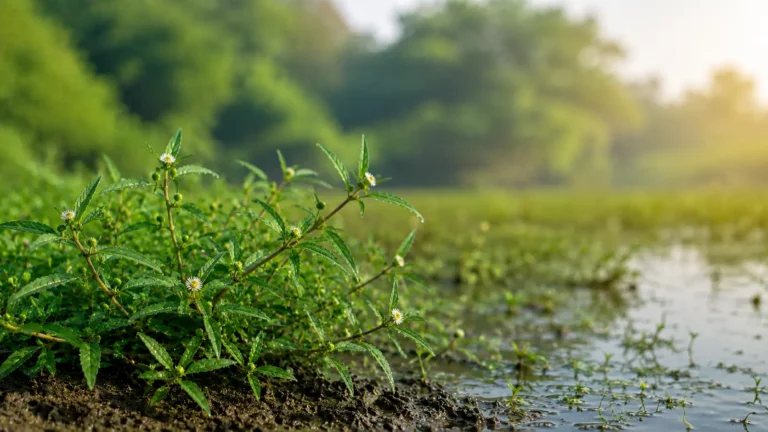
The Sun Rose plant, botanically classified within the Portulaca genus, is a low-growing flowering plant group recognized for its vibrant blossoms and fleshy foliage. Despite the common name “Sun Rose,” these plants are not related to true roses and instead belong to a distinct botanical lineage adapted to warm and open environments. Species of Portulaca are widely noted for their ornamental value as well as their ecological resilience.
Classification
- Plant Type
- Succulent
- Leaf Habit
- Evergreen
- Plant Family
- Portulacaceae
Sun Rose plants are found across multiple continents and have been incorporated into gardens, landscapes, and traditional systems for centuries. Their visual characteristics—particularly their brightly colored, cup-shaped flowers—have contributed to their widespread recognition in both cultivated and naturalized settings.
From a botanical perspective, Portulaca represents an important genus within succulent and semi-succulent flowering plants. Its species exhibit adaptations that allow survival in challenging environments, making the group significant for studies in plant morphology, taxonomy, and environmental tolerance.
Quick Plant Information
| Attribute | Details |
|---|---|
| Common Name(s) | Sun Rose, Moss Rose, Portulaca |
| Scientific Name | Portulaca spp. |
| Family | Portulacaceae |
| Plant Type | Flowering plant |
| Lifespan | Annual or perennial (species-dependent) |
| Growth Habit / Growth Form | Low-growing, spreading |
| Native Range | Tropical and subtropical regions worldwide |
| Climate Adaptation / Habitat Type | Warm, dry to semi-arid environments |
| Leaf Type | Fleshy, succulent-like |
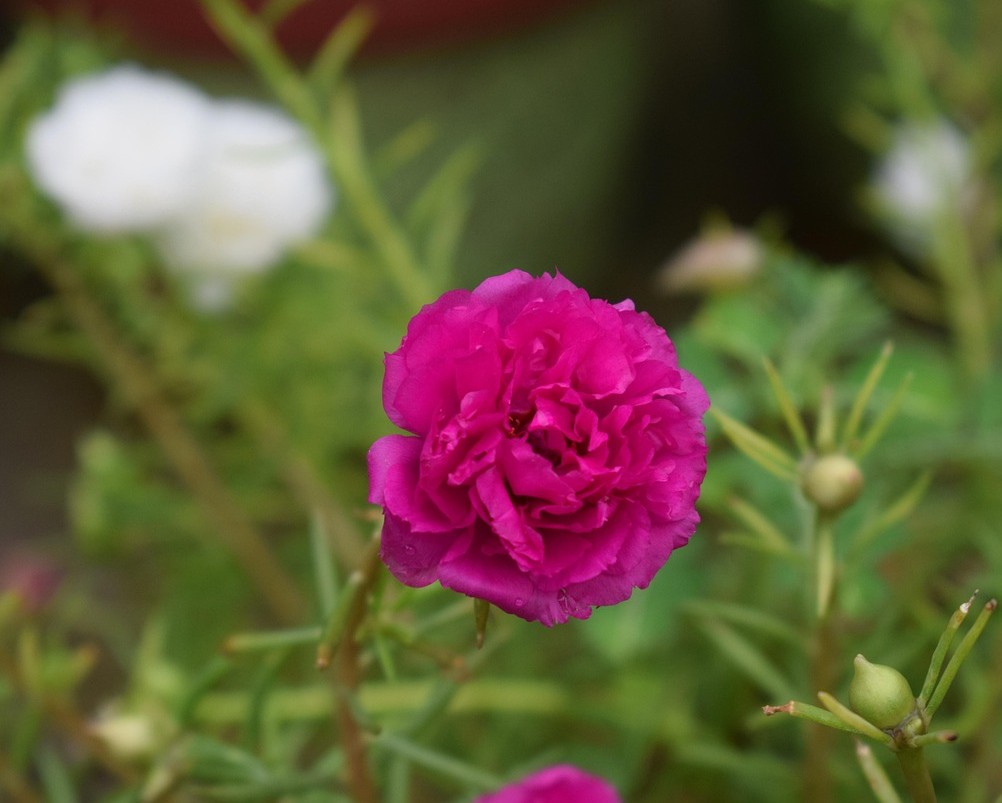
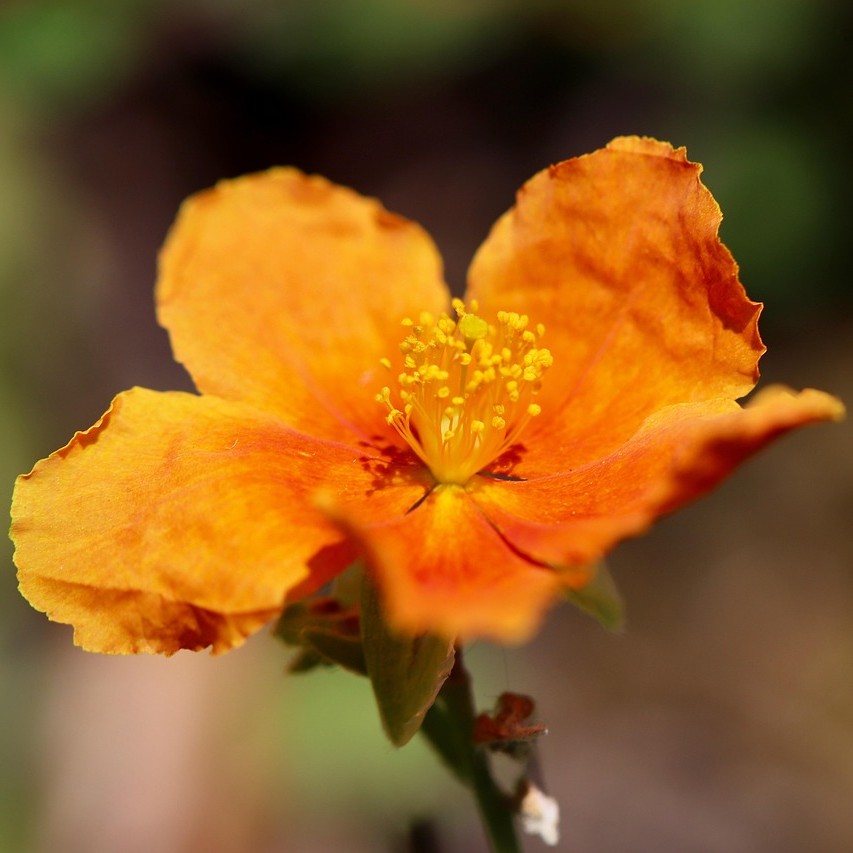
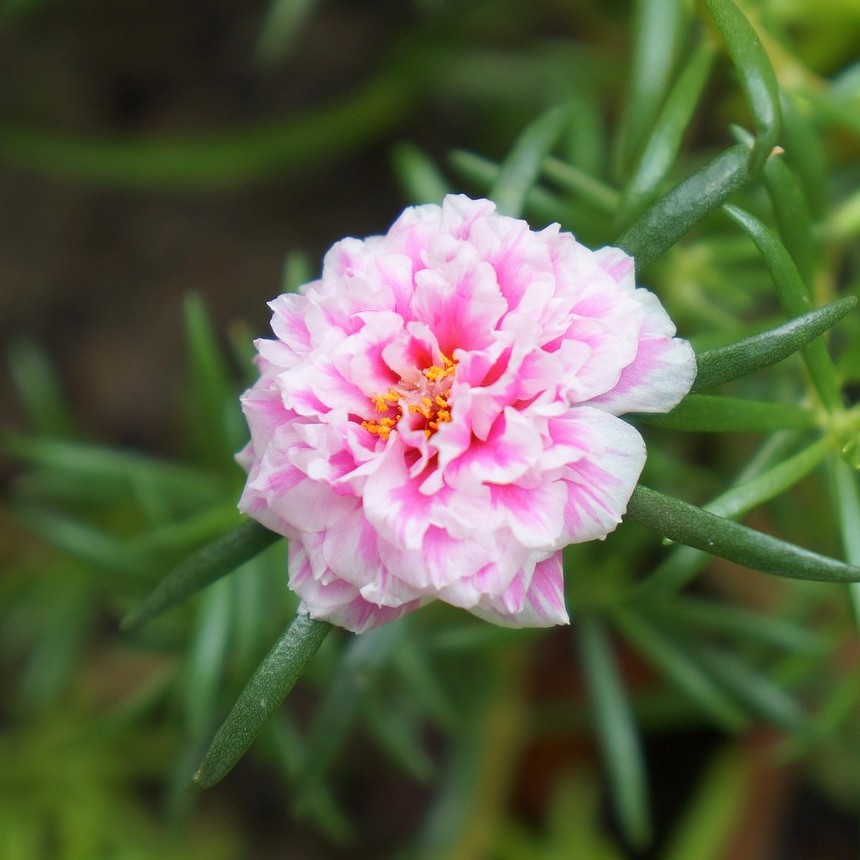
| Flower Color(s) | Red, pink, yellow, orange, white, multicolored |
| Fruit Type | Capsule |
| Evergreen / Deciduous | Evergreen in perennial species |
Botanical Description
Sun Rose plants typically display smooth, fleshy stems that grow close to the ground or trail outward in a mat-forming pattern. The stems are often reddish or green and may branch extensively, contributing to the plant’s spreading appearance.
Leaves are thick, smooth, and succulent-like, arranged alternately or in small clusters along the stems. Their shape ranges from cylindrical to spatulate, and their surface is usually glossy, reflecting the plant’s water-retentive structure.
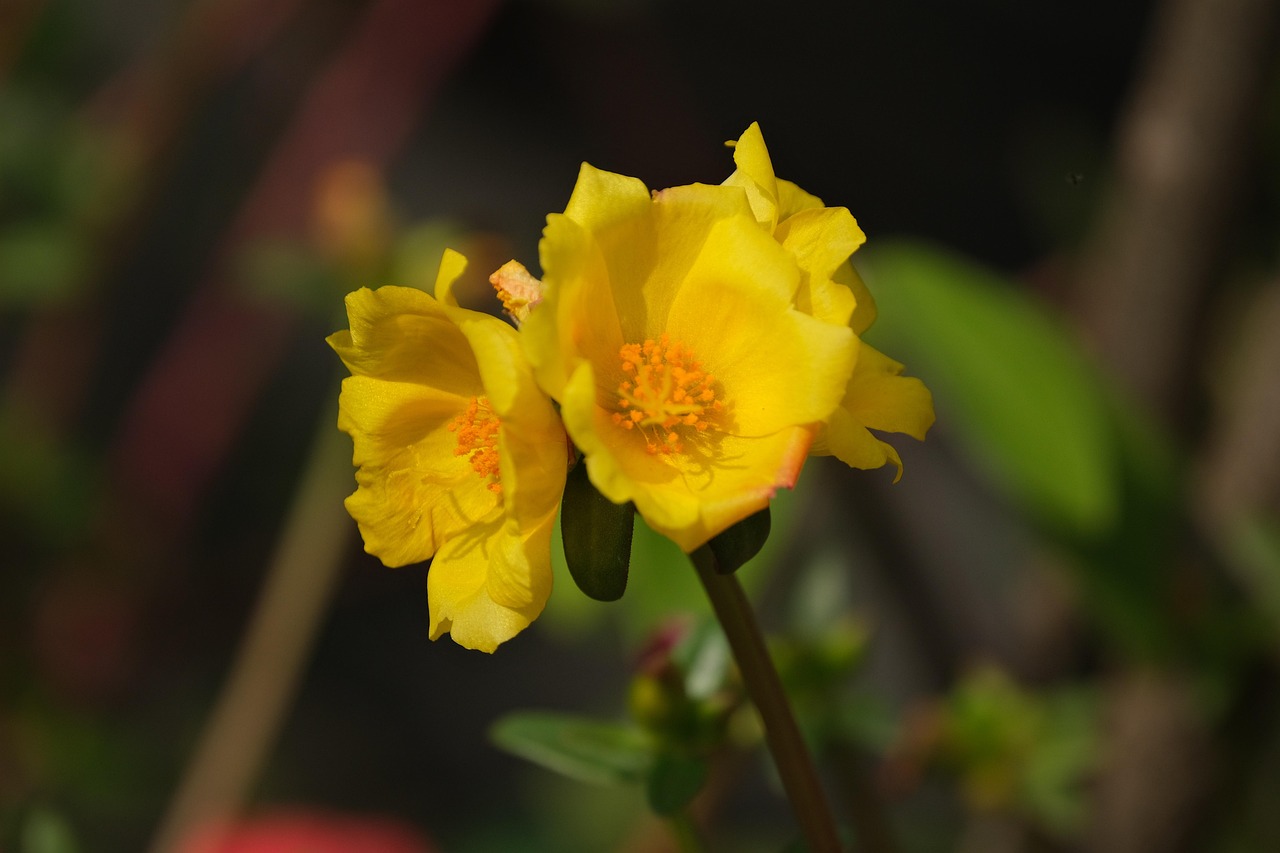
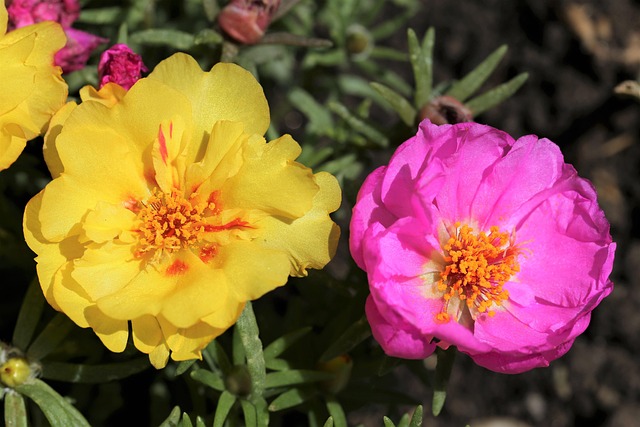
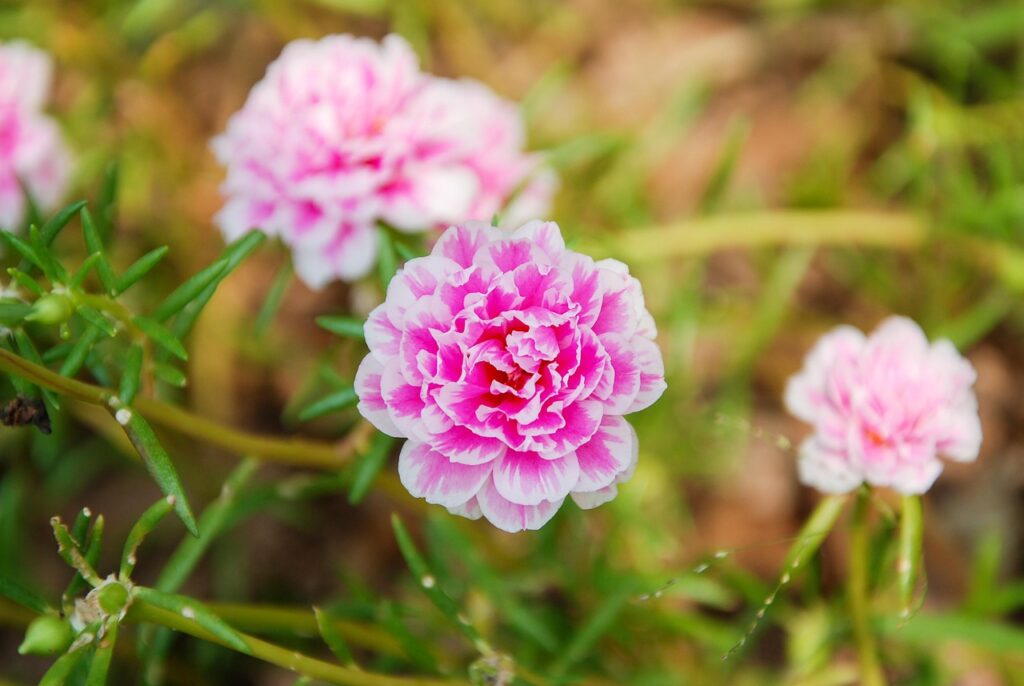
The flowers are one of the most distinctive features of Portulaca. They are cup-shaped with multiple overlapping petals and appear singly or in small groups at the stem tips. Flower coloration varies widely among species and cultivars, often displaying vivid and saturated hues. Blossoms are typically short-lived but produced in succession.
Fruits develop as small, rounded capsules that contain numerous tiny seeds. These capsules split open when mature, releasing seeds close to the parent plant. Root systems are generally shallow and fibrous, supporting the plant’s low-growing habit without deep soil penetration.
Plant Classification & Growth Habit
The Portulaca genus is classified as a group of herbaceous flowering plants within the family Portulacaceae. Depending on the species, Sun Rose plants may be annuals that complete their life cycle within a single growing season or perennials that persist across multiple years in suitable climates.
Growth habit is characteristically prostrate or spreading, forming dense mats across the ground surface. This growth pattern allows the plant to occupy open spaces efficiently and is a defining trait used in botanical classification. The plant’s succulent tissues further place it among species adapted to moisture-variable environments.
Common Types / Varieties / General Classifications
Several species and classifications are commonly associated with the Sun Rose name:
- Portulaca grandiflora – Often referred to as moss rose, known for its large, brightly colored flowers
- Portulaca oleracea – Common purslane, recognized for its edible history and widespread distribution
- Ornamental hybrids – Developed for varied flower colors, petal forms, and compact growth
These classifications are based on morphological characteristics, flower structure, and growth form rather than performance or preference.
Native Range & Distribution
The Portulaca genus has a broad native distribution spanning tropical and subtropical regions of South America, Africa, Asia, and Australia. Many species originate from open, sun-exposed landscapes where seasonal moisture variability is common.
Over time, Sun Rose plants have spread beyond their native ranges and become naturalized in various temperate and warm regions worldwide. Their ability to persist in disturbed soils and open habitats has contributed to their widespread geographic presence.
Cultural, Culinary, or Traditional Context
Historically, certain Portulaca species have held cultural and practical significance in different regions. Portulaca oleracea, for example, has been documented in traditional diets across parts of Europe, the Middle East, and Asia, where it has been collected as a leafy vegetable.
In ornamental contexts, Sun Rose plants have long been valued for their visual appeal in public spaces, home gardens, and decorative plantings. Their vivid blooms have made them a familiar presence in horticultural traditions, especially in regions favoring colorful, low-growing plants.
Economically, Portulaca species have been traded globally as ornamental plants, contributing to the nursery and landscaping industries without being associated with major agricultural commodities.
Interesting Facts / Did You Know
- The name Portulaca is derived from Latin, referencing the plant’s small, enclosed seed capsules
- Sun Rose flowers are known for opening fully in bright light and closing under low-light conditions
- Some Portulaca species exhibit traits associated with both succulents and herbaceous plants
- Fossil records suggest that members of the Portulacaceae family have existed for millions of years
FAQs
Is Sun Rose the same as a true rose?
No. Sun Rose plants are not related to roses and belong to a separate botanical family.
Are all Portulaca plants the same species?
No. Portulaca is a genus containing many species with varying characteristics.
Is purslane a type of Sun Rose?
Yes. Common purslane (Portulaca oleracea) belongs to the same genus and is sometimes grouped under the Sun Rose name.
Do Sun Rose plants have succulent features?
Yes. Their fleshy leaves and stems exhibit succulent-like traits.
Recommended Products
Disclosure: As an Amazon Associate, PlantsInfo may earn from qualifying purchases.
🌱 Plant Care Essentials
The following tools can help with pruning, plant health, soil management, and fruit garden maintenance.

Neem Oil for Plant Care
Natural plant protection against aphids, whiteflies, mites, and other common garden pests.

Fungicide for Root Care
Helps suppress soil-borne fungal diseases and supports healthier root systems.

Spray Bottle for Plants
Ideal for applying foliar sprays, neem oil solutions, and liquid plant treatments.

Rubber Hand Gloves
Protects hands during pruning, planting, soil preparation, and garden maintenance.
Conclusion
The Sun Rose plant, represented by species within the Portulaca genus, is a distinctive group of flowering plants characterized by vivid blooms, fleshy foliage, and a spreading growth habit. Its wide native distribution and adaptability have contributed to its global presence.
Botanically, Portulaca holds significance for its structural adaptations and classification within the Portulacaceae family. Culturally and historically, select species have played roles in ornamental traditions and regional food practices.
Overall, Sun Rose plants remain notable for their visual impact, ecological resilience, and longstanding relationship with human cultivation and observation.
Plants Info provides a structured plant database designed for educational reference, offering detailed botanical profiles that support learning, identification, and general understanding of plant species across diverse categories.