Introduction
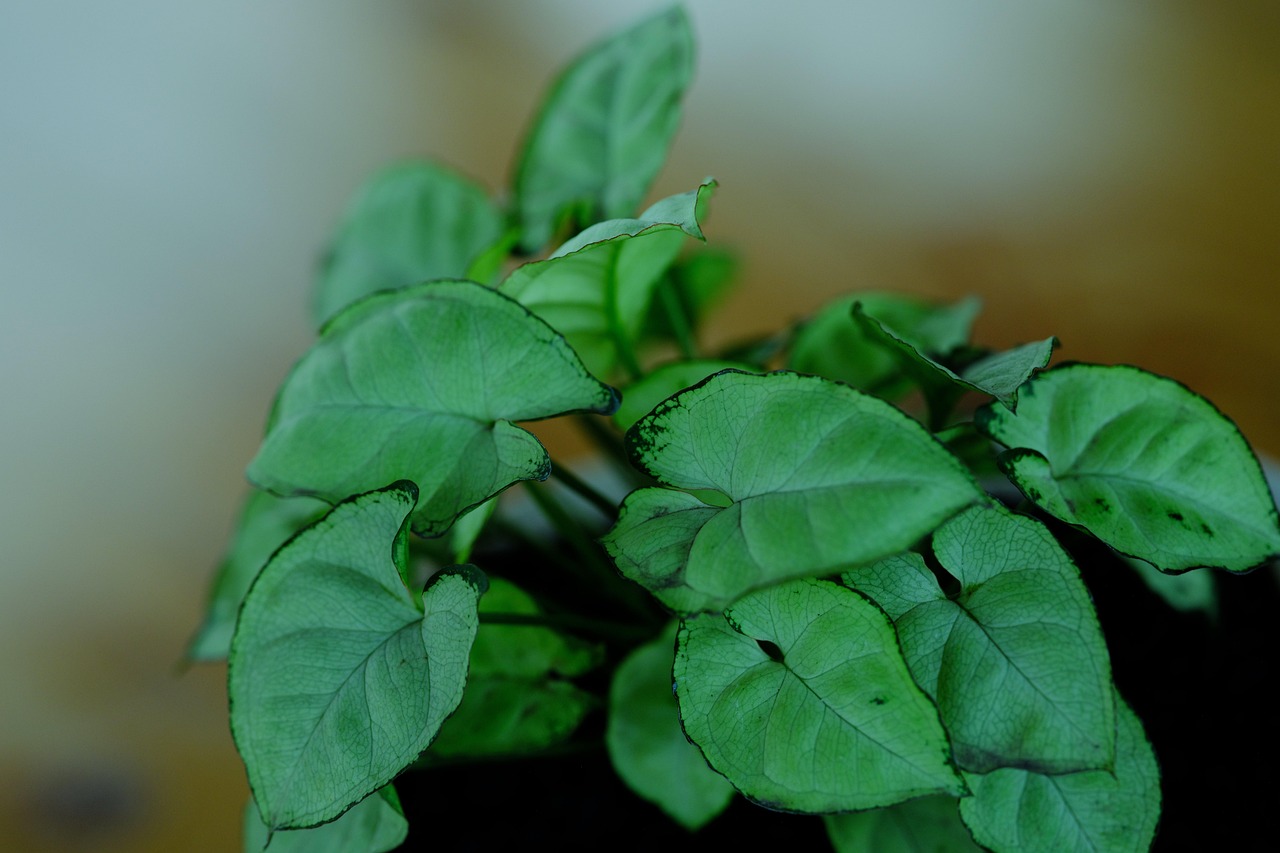
The Syngonium plant refers to a group of tropical flowering plants within the genus Syngonium, belonging to the family Araceae. These plants are widely recognized for their distinctive arrow-shaped juvenile leaves and their tendency to develop more complex, lobed foliage as they mature. Native primarily to the tropical regions of Central and South America, Syngonium species are notable members of understory vegetation in humid forest ecosystems.
Classification
- Plant Type
- Vine
- Lifecycle
- Perennial
- Leaf Habit
- Evergreen
- Native Region
- North America, South America
- Plant Family
- Araceae
Botanically, Syngonium is significant for its adaptive growth forms and heterophyllous leaf development, meaning the leaf shape changes over the plant’s life cycle. This characteristic has made the genus a frequent subject of botanical observation and classification within the aroid family, which also includes genera such as Philodendron and Anthurium.
Beyond its botanical traits, the Syngonium plant has cultural and economic relevance due to its long-standing presence in ornamental horticulture. Its visual variability and climbing or trailing habit have contributed to its widespread recognition across tropical and subtropical regions worldwide.
Quick Plant Information
| Attribute | Details |
|---|---|
| Common Name(s) | Syngonium, Arrowhead Plant, Arrowhead Vine |
| Scientific Name | Syngonium spp. (commonly Syngonium podophyllum) |
| Family | Araceae |
| Plant Type | Flowering plant |
| Lifespan | Perennial |
| Growth Habit / Growth Form | Climbing, trailing, or spreading vine |
| Native Range | Central America and South America |
| Climate Adaptation / Habitat Type | Tropical and subtropical forests |
| Leaf Type | Broad, simple to lobed |
| Flower Color(s) | Greenish-white |
| Fruit Type | Berry |
| Evergreen / Deciduous | Evergreen |
Botanical Description
Syngonium plants exhibit flexible stems that are typically slender, smooth, and capable of producing aerial roots at nodes. These aerial roots assist the plant in anchoring to nearby surfaces in its natural forest habitat. The stems may grow along the ground or climb vertically when support is available, reflecting the plant’s adaptive growth strategy.
The leaves are among the most distinctive features of the Syngonium genus. Juvenile leaves are generally arrowhead-shaped, with a simple structure and pointed lobes. As the plant matures, the leaves often become more divided, developing multiple lobes that vary in number and depth depending on species and age. Leaf coloration ranges from solid green to variegated patterns featuring shades of white, cream, or pale green.
Flowers are produced in a typical aroid inflorescence structure, consisting of a spathe surrounding a central spadix. The spathe is usually greenish-white and relatively inconspicuous compared to the foliage. The spadix contains numerous small flowers arranged densely along its length. Following pollination, the plant forms small, fleshy berries that contain seeds.
The root system includes both subterranean roots and aerial roots. Subterranean roots provide anchorage and nutrient uptake, while aerial roots contribute to climbing and stabilization in natural environments.
Plant Classification & Growth Habit
Syngonium is classified as a herbaceous perennial within the Araceae family. It is not woody and maintains soft, flexible tissues throughout its life cycle. The genus is characterized by its vining or climbing nature, with stems that can trail along surfaces or ascend vertical structures using aerial roots.
From a growth-pattern perspective, Syngonium displays a transitional habit. In early stages, it often grows in a compact, bush-like form. As it matures, the plant increasingly exhibits a climbing or spreading habit, reflecting its ecological role as a forest understory climber. This shift in form is closely linked to changes in leaf morphology and stem elongation.
Common Types / Varieties / General Classifications
Several species and cultivated forms fall under the Syngonium genus. While numerous selections exist, they can be broadly grouped based on foliage characteristics:
- Green-leaved types: Feature solid green foliage with minimal patterning.
- Variegated types: Display patterns of white, cream, or pale green alongside darker green tones.
- Compact forms: Characterized by shorter internodes and denser leaf arrangement.
- Climbing forms: Develop longer stems and more pronounced lobed leaves at maturity.
These groupings reflect observable morphological traits rather than performance or suitability distinctions.
Native Range & Distribution
Syngonium species are native to the tropical regions of Central America, extending into parts of South America, including countries such as Mexico, Costa Rica, Panama, Colombia, and Brazil. In these regions, they are commonly found in humid lowland forests, where they grow beneath the canopy or climb tree trunks to access filtered light.
Due to their adaptability, Syngonium plants have been introduced to many tropical and subtropical regions outside their native range. In some areas, they have naturalized, becoming part of local plant communities. Their distribution today reflects both natural dispersal and human-mediated movement associated with the ornamental plant trade.
Cultural, Culinary, or Traditional Context
Historically, Syngonium plants have been associated primarily with ornamental and decorative contexts rather than culinary or medicinal traditions. Indigenous communities within the plant’s native range have recognized Syngonium as part of the broader forest flora, though it has not been a staple food plant.
In modern contexts, Syngonium holds economic importance within the global ornamental plant industry. Its visual diversity and adaptability have made it a commonly recognized foliage plant in interior landscaping and botanical collections. The plant’s evolving leaf shapes have also contributed to its symbolic association with growth and transformation in some cultural interpretations, though these associations remain informal and aesthetic rather than ritualized.
Interesting Facts / Did You Know
- Syngonium plants exhibit heterophylly, meaning their leaf shape changes noticeably as the plant matures.
- The genus name Syngonium is derived from Greek words meaning “joined ovaries,” referring to aspects of the flower structure.
- In natural habitats, Syngonium often begins life as a groundcover before climbing nearby trees.
- The plant’s berries are typically dispersed by wildlife in native ecosystems.
- Syngonium belongs to the same plant family as taro and peace lilies.
FAQs
Is Syngonium a vine or a shrub?
Syngonium is classified as a herbaceous vine with climbing or trailing growth habits rather than a shrub.
Are all Syngonium leaves arrow-shaped?
Juvenile leaves are typically arrow-shaped, but mature plants often develop more complex, lobed leaves.
Does Syngonium produce flowers?
Yes, Syngonium produces flowers in the form of a spathe and spadix, characteristic of the Araceae family.
Is Syngonium the same as Arrowhead Vine?
Arrowhead Vine is a common name frequently used to refer to Syngonium, particularly Syngonium podophyllum.
Recommended Products
Disclosure: As an Amazon Associate, PlantsInfo may earn from qualifying purchases.
🌱 Plant Care Essentials
The following tools can help with pruning, plant health, soil management, and fruit garden maintenance.

Neem Oil for Plant Care
Natural plant protection against aphids, whiteflies, mites, and other common garden pests.

Fungicide for Root Care
Helps suppress soil-borne fungal diseases and supports healthier root systems.

Spray Bottle for Plants
Ideal for applying foliar sprays, neem oil solutions, and liquid plant treatments.

Rubber Hand Gloves
Protects hands during pruning, planting, soil preparation, and garden maintenance.
Conclusion
The Syngonium plant represents a diverse and adaptable genus within the Araceae family, distinguished by its changing leaf forms and climbing growth habit. Native to the tropical forests of Central and South America, it plays a role in understory ecosystems while also holding long-standing ornamental significance.
Its botanical characteristics, including heterophyllous leaves and aroid-style inflorescences, make Syngonium a subject of interest in plant classification and observation. As a perennial evergreen with a flexible growth form, it remains a notable example of tropical foliage plants recognized across many regions of the world.
The Plants Info platform presents Syngonium alongside many other species within a structured plant database, offering clear, reference-focused information intended for learning and general botanical understanding.