Introduction
Oregano, scientifically known as Origanum vulgare, is a perennial herbaceous plant belonging to the mint family, Lamiaceae. It is widely recognized for its aromatic foliage and small, clustered flowers, and it holds a longstanding presence in culinary and botanical traditions. Native to parts of Europe, North Africa, and Western Asia, oregano has become naturalized in many temperate regions worldwide.
Classification
- Plant Type
- Herb
- Lifecycle
- Perennial
- Leaf Habit
- Deciduous, Semi-evergreen
- Plant Family
- Lamiaceae
The plant is characterized by its compact growth habit, opposite leaves, and branched flowering stems. As a member of the genus Origanum, it shares botanical traits common to many Mediterranean herbs, including essential oil–producing glands within its leaves. Beyond its botanical identity, oregano has historical and cultural associations across Mediterranean societies, where it has been cultivated and referenced for centuries.
Today, Origanum vulgare is considered one of the most widely distributed and recognized perennial herbs within its family.
Quick Plant Information
| Field | Information |
|---|---|
| Common Name(s) | Oregano, Wild Marjoram |
| Scientific Name | Origanum vulgare |
| Family | Lamiaceae |
| Plant Type | Herbaceous perennial |
| Lifespan | Perennial |
| Growth Habit / Growth Form | Low-growing, spreading, upright flowering stems |
| Native Range | Europe, North Africa, Western Asia |
| Climate Adaptation / Habitat Type | Temperate regions, dry grasslands, rocky slopes |
| Leaf Type | Simple, opposite, ovate |
| Flower Color(s) | Pink, purple, occasionally white |
| Fruit Type | Nutlet |
| Evergreen / Deciduous | Semi-evergreen to deciduous (climate dependent) |
Botanical Description
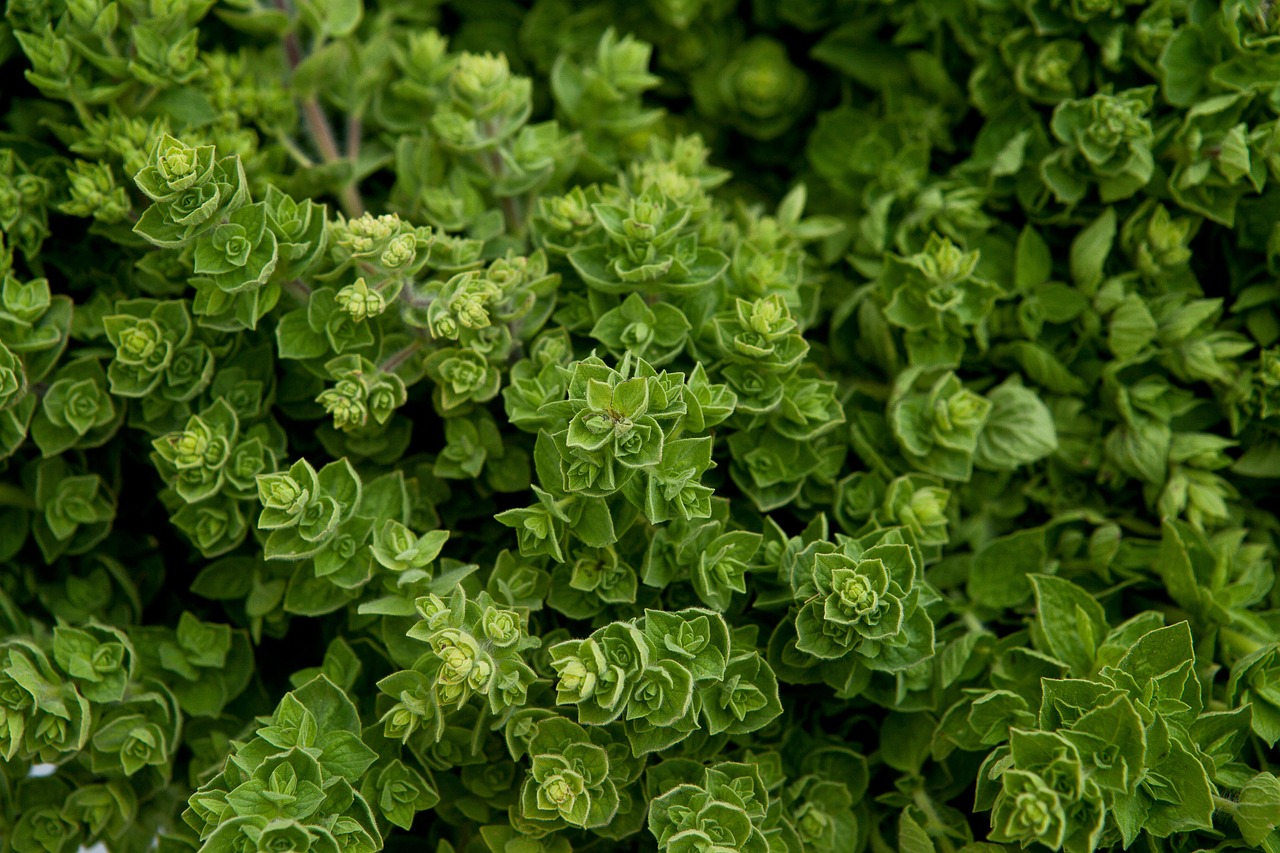
Origanum vulgare is a low-growing perennial herb that develops from a branching rootstock. The stems are square in cross-section, a characteristic feature of many members of the Lamiaceae family. Stems may be green to reddish and are often covered with fine hairs.
The leaves are arranged oppositely along the stems. They are ovate to broadly elliptical in shape, typically measuring a few centimeters in length. The leaf surface may appear slightly textured due to the presence of glandular structures that produce aromatic compounds. Margins are generally smooth or lightly toothed.
Flowering occurs on upright stems that bear compact clusters of small tubular blossoms. The flowers are typically pink to purple, though white forms can occur. Each flower is bilabiate (two-lipped), reflecting the typical floral morphology of the mint family. The inflorescences are often arranged in terminal clusters surrounded by small bracts.
The fruit consists of four small nutlets enclosed within the persistent calyx, another defining trait of Lamiaceae species. The root system is fibrous and spreading, enabling the plant to form clumps or patches over time.
Plant Classification & Growth Habit
Oregano is classified as a herbaceous perennial within the genus Origanum. The genus includes numerous species and subspecies distributed primarily across the Mediterranean basin and western Asia.
As a perennial, Origanum vulgare survives for multiple growing seasons. It produces upright flowering stems from a persistent root system, while vegetative growth forms a low, spreading base. The plant’s growth habit is often described as clump-forming with outward-spreading stems.
Within plant classification, oregano is part of:
- Kingdom: Plantae
- Order: Lamiales
- Family: Lamiaceae
- Genus: Origanum
- Species: Origanum vulgare
The square stems, opposite leaves, and bilabiate flowers are key diagnostic features linking it to the mint family.
Common Types / Varieties / General Classifications
Origanum vulgare includes several subspecies and horticultural forms that differ in leaf size, aroma intensity, and flower coloration. Common classifications include:
- Greek Oregano (Origanum vulgare subsp. hirtum) – Noted for dense leaf coverage and strong aromatic properties.
- Common Oregano (Origanum vulgare subsp. vulgare) – Native to much of Europe; often found in wild habitats.
- Golden Oregano – Selected forms with yellow-green foliage.
- Compact or Dwarf Forms – Smaller growth variants used in ornamental plantings.
It is important to distinguish oregano from sweet marjoram (Origanum majorana), a closely related but distinct species within the same genus.
Native Range & Distribution
Oregano is native to temperate regions of Europe, North Africa, and Western Asia. It is commonly found in dry grasslands, open woodlands, rocky slopes, and disturbed soils within these regions.
Over time, the species has been introduced and naturalized in North America and other temperate parts of the world. It is capable of establishing in diverse environments, particularly in areas with seasonal temperature variation.
Its distribution reflects both natural spread and historical human cultivation, particularly throughout Mediterranean regions, where it became integrated into agricultural and culinary systems.
Cultural, Culinary, or Traditional Context
Oregano has been referenced in Mediterranean cultures since antiquity. The name “oregano” derives from Greek roots meaning “joy of the mountain,” reflecting its common presence on hillsides in its native range.
Historically, the plant has been associated with regional cuisines of Southern Europe, particularly Italian and Greek traditions. Its dried leaves have long been incorporated into seasoning blends and preserved food preparations. Beyond culinary contexts, oregano has appeared symbolically in folklore and traditional ceremonies in parts of Europe.
Its widespread cultivation has made it one of the most economically significant herbs within the Lamiaceae family.
Interesting Facts / Did You Know
- The genus Origanum contains over 40 species distributed mainly in the Mediterranean region.
- Oregano and marjoram belong to the same genus but are distinct species.
- The plant’s aromatic qualities are due to naturally occurring volatile compounds in its leaves.
- Wild oregano populations can vary significantly in scent and flower color across regions.
- In some regions, oregano grows naturally on rocky limestone slopes.
FAQs
Is oregano the same as marjoram?
No. Oregano (Origanum vulgare) and marjoram (Origanum majorana) are closely related but distinct species within the same genus.
Is oregano a perennial plant?
Yes. Origanum vulgare is a perennial herb that persists for multiple growing seasons.
What type of plant is oregano?
Oregano is a herbaceous flowering plant in the mint family (Lamiaceae).
Does oregano produce flowers?
Yes. It produces small pink to purple tubular flowers arranged in clustered inflorescences.
Recommended Products
Disclosure: As an Amazon Associate, PlantsInfo may earn from qualifying purchases.
🌱 Plant Care Essentials
The following tools can help with pruning, plant health, soil management, and fruit garden maintenance.

Neem Oil for Plant Care
Natural plant protection against aphids, whiteflies, mites, and other common garden pests.

Fungicide for Root Care
Helps suppress soil-borne fungal diseases and supports healthier root systems.

Spray Bottle for Plants
Ideal for applying foliar sprays, neem oil solutions, and liquid plant treatments.

Rubber Hand Gloves
Protects hands during pruning, planting, soil preparation, and garden maintenance.
Conclusion
Oregano (Origanum vulgare) is a perennial herbaceous plant belonging to the Lamiaceae family, recognized for its aromatic leaves and compact clusters of pink to purple flowers. Native to Europe, North Africa, and Western Asia, it has become widely distributed across temperate regions of the world.
With its characteristic square stems, opposite leaves, and bilabiate flowers, oregano represents a classic example of mint family morphology. Its historical presence in Mediterranean regions and global naturalization underscore its botanical and cultural significance.
The Plants Info platform maintains a structured plant database designed for organized botanical reference and long-term educational use. Entries such as this provide factual, scalable plant information suitable for systematic documentation and study.