Introduction
Cosmos is a genus of flowering plants recognized for its finely divided foliage and vibrant, daisy-like blossoms. Belonging to the family Asteraceae, the genus includes several species widely cultivated and naturalized in various parts of the world. Cosmos plants are known for their open, airy growth habit and extended blooming period, contributing to their presence in ornamental landscapes and naturalized meadows.
Classification
- Plant Type
- Herb
- Lifecycle
- Annual
- Leaf Habit
- Deciduous
- Native Region
- North America
- Plant Family
- Asteraceae
The genus is native primarily to Mexico and parts of Central America, where many species occur in grasslands and open habitats. Over time, cosmopolitan species have been introduced to other continents and have adapted to diverse climatic regions. Their botanical structure and ecological adaptability make them a notable group within flowering plant classifications.
Cosmos plants are valued for their ornamental characteristics and their role in attracting pollinating insects. As members of the composite family, their flowers exhibit the typical inflorescence structure of Asteraceae, consisting of central disc florets surrounded by ray florets.
Quick Plant Information
| Category | Details |
|---|---|
| Common Name(s) | Cosmos, Garden Cosmos, Mexican Aster |
| Scientific Name | Cosmos spp. (notably Cosmos bipinnatus, Cosmos sulphureus) |
| Family | Asteraceae |
| Plant Type | Flowering ornamental plant |
| Lifespan | Annual (most cultivated species) |
| Growth Habit / Growth Form | Upright, branching, herbaceous |
| Native Range | Mexico and Central America |
| Climate Adaptation / Habitat Type | Subtropical and temperate open landscapes |
| Leaf Type | Finely dissected, pinnate or bipinnate |
| Flower Color(s) | Pink, white, purple, red, orange, yellow |
| Fruit Type | Dry achene |
| Evergreen / Deciduous | Deciduous annual |

Botanical Description
Cosmos plants are herbaceous flowering plants characterized by slender, erect stems that may branch freely. The stems are typically smooth and light green, sometimes displaying a slightly ridged surface. Depending on the species and environmental conditions, plants can range from approximately 30 centimeters to over 1.5 meters in height.
The leaves are finely divided and feathery in appearance. In species such as Cosmos bipinnatus, the leaves are bipinnate with thread-like segments, giving the plant a delicate texture. Other species, such as Cosmos sulphureus, have broader, less dissected leaves. Leaf arrangement is opposite along the stem.
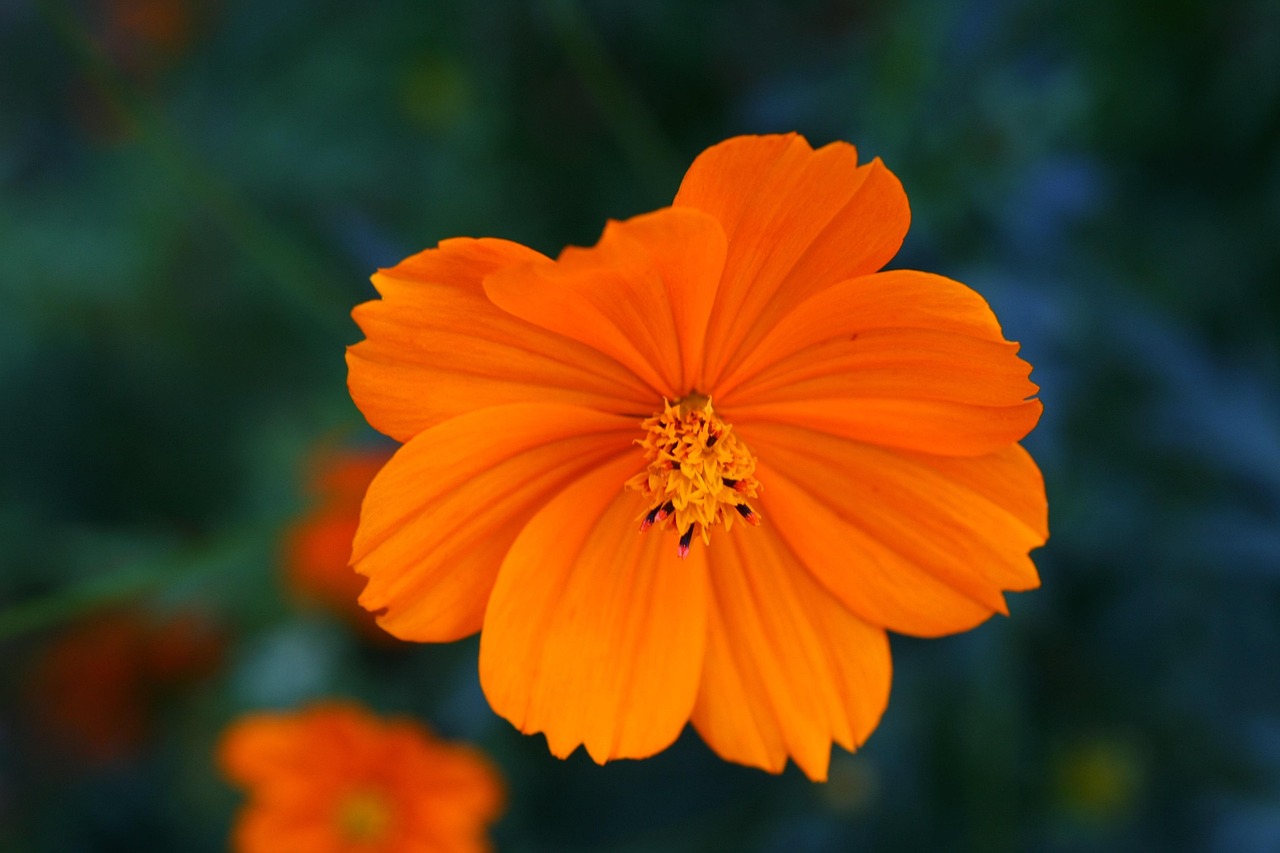
The flowers are composite inflorescences typical of the Asteraceae family. Each flower head consists of central disc florets surrounded by ray florets that resemble petals. Ray florets may be flat or slightly notched at the tip. Flower coloration varies by species and cultivar, including shades of pink, white, magenta, orange, and yellow. Blooming typically occurs over an extended seasonal period.
The fruit of the cosmos plant is a slender, elongated achene. These dry fruits contain a single seed and are produced after the flowering phase. The root system is generally fibrous and relatively shallow, supporting the plant’s upright growth habit.
Plant Classification & Growth Habit
Cosmos belongs to the genus Cosmos within the Asteraceae family, one of the largest families of flowering plants. The genus comprises approximately 20–40 species, depending on classification standards.
Botanically, cosmos plants are categorized as:
- Herbaceous flowering plants
- Primarily annual species (though some perennial species exist)
- Upright and freely branching in growth pattern
- Composite-flowered members of the daisy family
Most commonly cultivated cosmos species are annuals that complete their life cycle within a single growing season. Their structure is generally open and airy, with long stems bearing solitary flower heads. The branching habit allows multiple blooms to form on a single plant.
Perennial cosmos species, though less widely cultivated, may exhibit more robust or woody bases compared to annual types.
Common Types / Varieties / General Classifications
Several species within the genus are commonly recognized:
Cosmos bipinnatus
- Often referred to as Garden Cosmos
- Characterized by pink, white, or magenta flowers
- Features highly dissected, feathery foliage
Cosmos sulphureus
- Commonly known as Sulphur Cosmos
- Displays warm-toned flowers in yellow, orange, or red
- Leaves are broader and less finely divided
Cosmos atrosanguineus
- Known as Chocolate Cosmos
- Deep maroon to dark red flowers
- Perennial species native to Mexico
General classifications may also be based on:
- Flower color groups (pastel, warm-toned, dark-flowered)
- Plant height (dwarf forms vs. tall forms)
- Single or semi-double flower forms
These classifications are typically ornamental distinctions rather than botanical divisions.
Native Range & Distribution
The genus Cosmos is native primarily to Mexico and Central America. In its natural habitat, the cosmos species are found in open grasslands, roadside areas, and disturbed soils. These regions typically experience warm temperatures and seasonal rainfall patterns.
Through horticultural introduction and seed dispersal, cosmos plants are now present in many temperate and subtropical regions worldwide. They have become naturalized in parts of North America, South America, Europe, Asia, and Australia.
In several regions, cosmos species are observed growing in meadows, along highways, and in cultivated gardens. Their adaptability to various open environments has contributed to their widespread distribution outside their native range.
Cultural, Culinary, or Traditional Context
Cosmos plants have held ornamental value in horticulture since their introduction to Europe in the late 18th century. The name “cosmos” is derived from the Greek word kosmos, meaning order or harmony, referencing the symmetrical arrangement of the flower petals.
In Mexico, cosmos species are part of native floral biodiversity and contribute to seasonal landscapes. The plants are often associated with informal garden aesthetics due to their light structure and abundant flowering.
While primarily cultivated as ornamental plants, cosmos flowers also play a role in ecological systems by attracting pollinating insects such as butterflies and bees. Their extended blooming period contributes to their presence in pollinator-supporting landscapes.
Cosmos flowers are sometimes used in floral arrangements due to their long stems and colorful blooms, making them part of decorative horticultural traditions.
Interesting Facts / Did You Know
- The genus name Cosmos reflects the balanced and symmetrical appearance of its flower heads.
- Cosmos bipinnatus was introduced into European horticulture in the late 1700s.
- Some species of cosmos have become naturalized outside their native range and are considered part of wildflower communities.
- Chocolate Cosmos (Cosmos atrosanguineus) is noted for its dark coloration and distinctive fragrance.
- Cosmos flowers are structurally composed of numerous tiny florets grouped into a single composite head.
FAQs
Is cosmos a perennial or an annual plant?
Most commonly cultivated cosmos species are annuals, though some species within the genus are perennial.
Are cosmos flowers related to daisies?
Yes. Cosmos belongs to the Asteraceae family, which includes daisies, sunflowers, and asters.
What is the difference between Cosmos bipinnatus and Cosmos sulphureus?
Cosmos bipinnatus typically has pink or white flowers and finely divided foliage, while Cosmos sulphureus generally produces yellow or orange flowers with broader leaves.
Is Chocolate Cosmos a true Cosmos species?
Yes. Chocolate Cosmos is classified as Cosmos atrosanguineus, a perennial species native to Mexico.
Conclusion
Cosmos plants are herbaceous flowering members of the Asteraceae family known for their delicate foliage and vibrant composite blooms. Native to Mexico and Central America, they have become widely distributed across temperate and subtropical regions due to ornamental cultivation and naturalization.
With both annual and perennial species represented within the genus, cosmos plants display diverse floral colors and growth forms. Their symmetrical flower heads and airy structure contribute to their botanical and aesthetic recognition. As a genus, Cosmos represents an adaptable and visually distinctive group within flowering plant classifications.
For structured botanical references and detailed plant entries, the Plants Info platform maintains a comprehensive plant database designed for organized learning and long-term plant identification research.