Introduction
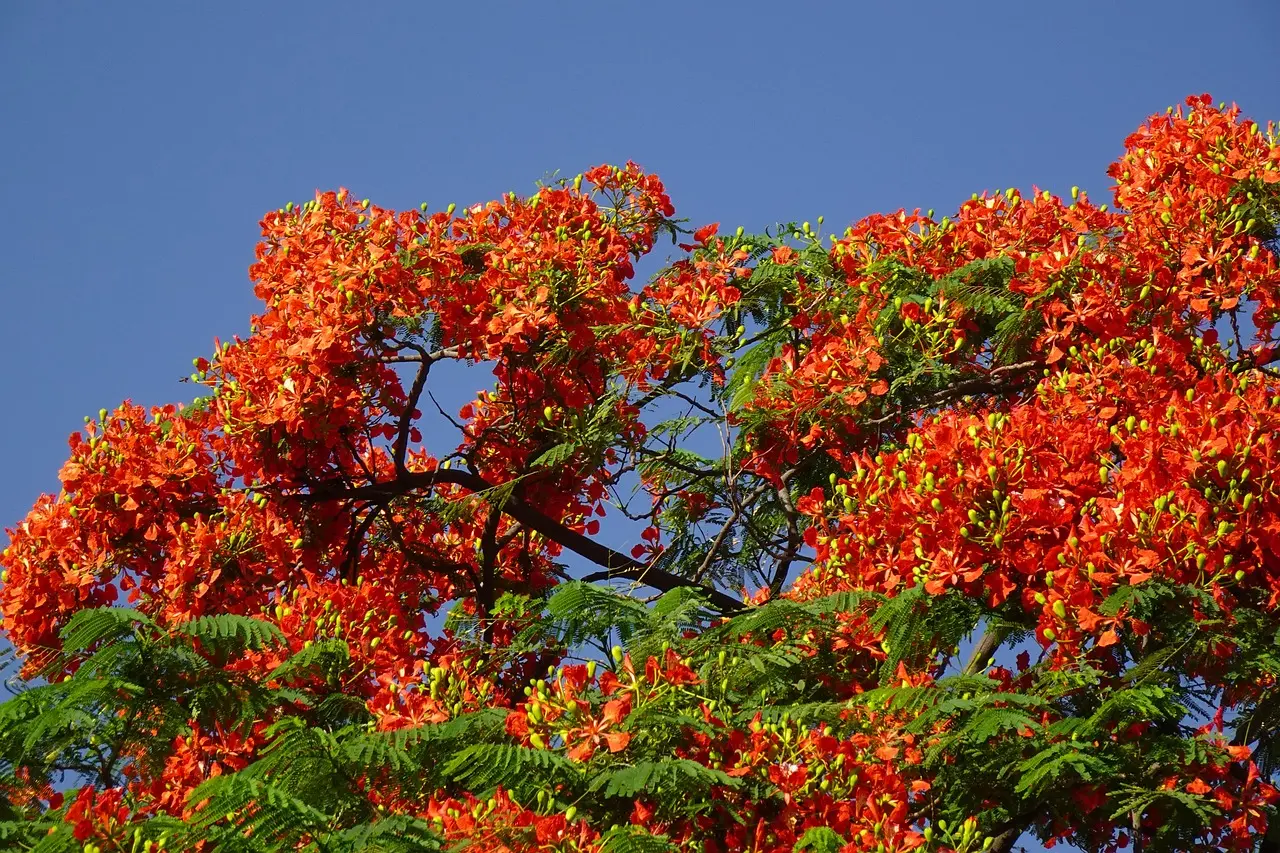
Delonix regia (Bojer ex Hook.) Raf. is a large, spreading deciduous tree in the family Fabaceae, native to the dry deciduous forests of Madagascar. Commonly known as Gulmohar, Flame Tree, Royal Poinciana, or Flamboyant, this species is celebrated worldwide as one of the most spectacular flowering trees in tropical and subtropical landscapes. The tree derives its common names from its brilliant display of scarlet-orange flowers that typically blanket the entire canopy during the hot, dry season, creating one of nature’s most dramatic floral exhibitions.
Classification
- Plant Type
- Tree
- Lifecycle
- Perennial
- Leaf Habit
- Deciduous
- Native Region
- Madagascar
- Plant Family
- Fabaceae
In its native Madagascar, D. regia occupied seasonal dry forests in the western regions, though it is now considered endangered in the wild due to habitat loss. However, the species has been extensively cultivated throughout the tropics and subtropics since the mid-19th century, becoming a signature ornamental tree in tropical cities from Mumbai to Miami. The combination of its wide, umbrella-shaped canopy (providing dense shade), fern-like bipinnate foliage, and spectacular flowering display has made it a favored street tree, park specimen, and shade provider in hot climates.
Beyond its ornamental value, Gulmohar plays important ecological roles in urban environments, providing nectar for pollinators, nesting sites for birds, and significant cooling effects through its extensive canopy. The tree’s cultural significance is particularly pronounced in South Asia, where it has become deeply embedded in regional literature, art, and collective memory as a symbol of summer’s arrival.
Classification
| Field | Value |
|---|---|
| Accepted Scientific Name | Delonix regia (Bojer ex Hook.) Raf. |
| Known Synonyms | Poinciana regia Bojer ex Hook.; Poinciana regia var. flavida Bojer |
| Taxonomic Authority Source | Kew Plants of the World Online (POWO) |
| Common Name(s) | Gulmohar; Royal Poinciana; Flame Tree; Flamboyant; Krishnachura; Peacock Flower; Gold Mohur |
| Family | Fabaceae (Leguminosae) |
| Subfamily | Caesalpinioideae |
| Plant Type | Large deciduous tree |
| Lifecycle | Perennial; long-lived (50-150+ years) |
| Native Range | Western Madagascar (endemic) |
| USDA Hardiness Zones | 10-12 (frost-sensitive) |
| Toxicity | Seeds contain toxalbumins; potentially toxic if ingested in quantity. Pods and seeds can cause gastrointestinal distress in humans and livestock. Non-toxic to touch. |
Botanical Description
Growth Habit and Architecture
Delonix regia develops as a medium to large tree typically reaching 10-15 meters (33-50 feet) in height, though exceptional specimens may exceed 18 meters (60 feet). The tree’s most distinctive architectural feature is its wide-spreading, umbrella-shaped or flattened crown, which often extends laterally to 12-18 meters (40-60 feet) in diameter—frequently exceeding the tree’s height. This horizontal growth pattern creates a classic “shade tree” profile, with the canopy spread sometimes reaching twice the tree’s vertical dimension.
The trunk is relatively short and stout, typically 60-100 cm (24-40 inches) in diameter at breast height in mature specimens, with a characteristically smooth, pale gray to light brown bark that becomes slightly fissured with age. Branch architecture is characterized by wide, horizontal or slightly ascending primary limbs that divide repeatedly, creating a dense, layered branching structure that supports the extensive canopy.
Leaves

The foliage is twice-pinnately compound (bipinnate), producing one of the most delicate and fern-like leaf textures among large tropical trees. Individual leaves are large, measuring 30-50 cm (12-20 inches) in length overall, with a central rachis supporting 11-25 pairs of pinnae (primary divisions).
| Leaf Characteristic | Description |
|---|---|
| Leaf Type | Bipinnate (twice-compound) |
| Overall Leaf Length | 30-50 cm (12-20 inches) |
| Number of Pinnae Pairs | 11-25 pairs per leaf |
| Leaflets per Pinna | 20-40 pairs |
| Individual Leaflet Size | 5-10 mm long × 2-4 mm wide |
| Leaflet Shape | Oblong to elliptic; asymmetric base |
| Leaflet Color | Bright green; paler beneath |
| Texture | Thin, delicate, slightly pubescent when young |
| Petiole | 7-12 cm; slightly swollen at base |
| Leaf Arrangement | Alternate; clustered at branch tips |
The leaflets exhibit nyctinastic movement (sleep movement), folding together at night or during drought stress to reduce water loss. Leaves are deciduous, typically dropping during the dry season or cooler months in subtropical regions, with new foliage emerging just before or simultaneously with flowering.
Flowers

The flowers represent the tree’s most spectacular feature—large, showy, and produced in abundant terminal or lateral racemose clusters that can cover the entire canopy during peak bloom.
| Floral Attribute | Description |
|---|---|
| Inflorescence Type | Terminal and axillary racemes or corymbs |
| Raceme Length | 20-40 cm (8-16 inches) |
| Flower Size | 10-12 cm (4-5 inches) diameter |
| Flower Color | Brilliant scarlet-red to orange-red; one upper petal distinctively marked with yellow and white streaks |
| Petal Number | 5; four spatulate petals approximately equal in size, one modified standard petal |
| Standard Petal | Larger, erect, with yellow base and white to cream blotches and red streaks |
| Petal Texture | Crinkled, slightly wavy margins |
| Stamens | 10; long-exserted (extending 5-7 cm beyond petals) |
| Stamen Color | Bright red; anthers orange |
| Pistil | Single; long, exserted; green initially, becoming red |
| Calyx | Five-lobed; green to reddish; pubescent |
| Fragrance | Mild, slightly sweet |
| Bloom Period | Late spring to early summer (varies by region); typically coincides with hot, dry season |
The distinctive zygomorphic (bilaterally symmetrical) flowers exhibit specialized features for pollinator attraction. The prominent standard petals’ yellow and white markings function as nectar guides for bird pollinators. Individual flowers are hermaphroditic and slightly protandrous (stamens mature before pistil), encouraging cross-pollination.
Fruit
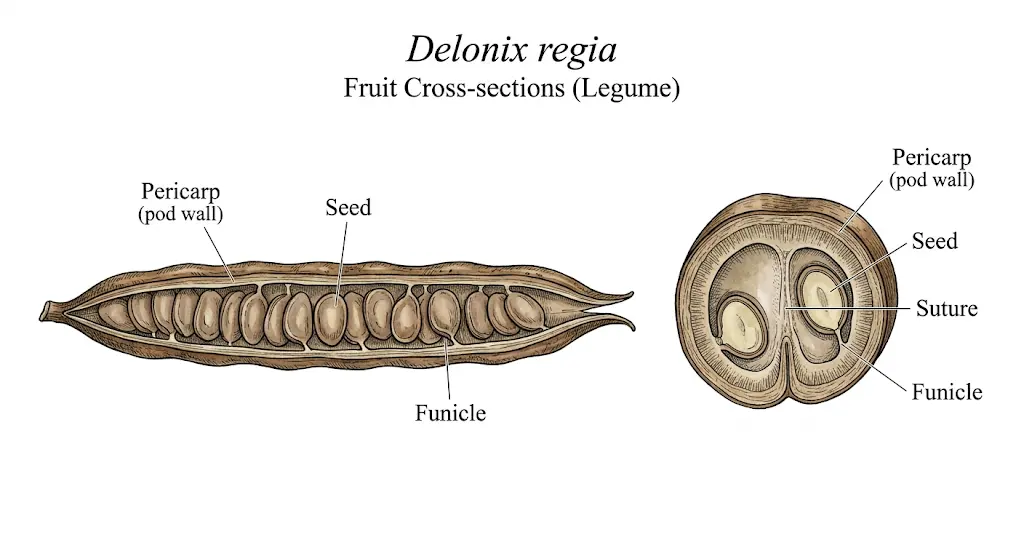
The fruit is a large, woody legume pod characteristic of the Fabaceae family, developing 3-5 months after pollination.
| Fruit Characteristic | Description |
|---|---|
| Fruit Type | Dehiscent legume pod |
| Pod Dimensions | 30-60 cm long × 4-5 cm wide × 1-1.5 cm thick (12-24 in × 1.5-2 in × 0.4-0.6 in) |
| Pod Shape | Linear-oblong, straight to slightly curved; flattened |
| Pod Color | Green when immature; dark brown to nearly black at maturity |
| Pod Surface | Woody, hard, smooth to slightly rough |
| Dehiscence | Explosively dehiscent when dry; splits along both sutures |
| Seeds per Pod | 20-40 |
| Pod Maturation | Pods persist on tree 9-12 months; often present during next flowering season |
Mature pods undergo explosive dehiscence, twisting violently when dry to propel seeds several meters from the parent tree. This ballistic seed dispersal mechanism is characteristic of many Caesalpinioideae species. Empty pods often persist on trees for months after seed release.
Seeds

Seeds are hard-coated legume seeds typical of the family, adapted for extended dormancy and physical scarification requirements.
| Seed Characteristic | Description |
|---|---|
| Seed Size | 15-20 mm long × 8-10 mm wide × 5-7 mm thick |
| Seed Shape | Oblong to ellipsoid; laterally compressed |
| Seed Color | Mottled brown, orange-brown, or reddish-brown |
| Seed Coat | Very hard, impermeable to water (physical dormancy) |
| Hilum | Prominent, oval, dark brown |
| Weight | 0.4-0.6 g per seed |
The extremely hard seed coat provides physical dormancy, requiring scarification (mechanical or thermal) or passage through animal digestive systems for germination in natural conditions.
Root System
Delonix regia develops a spreading lateral root system rather than a deep taproot, with most absorptive roots concentrated in the upper 30-60 cm (12-24 inches) of soil. The root system extends well beyond the canopy drip line, often reaching 1.5-2 times the canopy diameter. This shallow, wide-spreading root architecture makes the species both drought-tolerant once established and potentially problematic near paved surfaces, foundations, and underground utilities. The tree forms nitrogen-fixing nodules in association with rhizobial bacteria, though nodulation efficiency varies with soil conditions and bacterial strain.
Native Range & Distribution
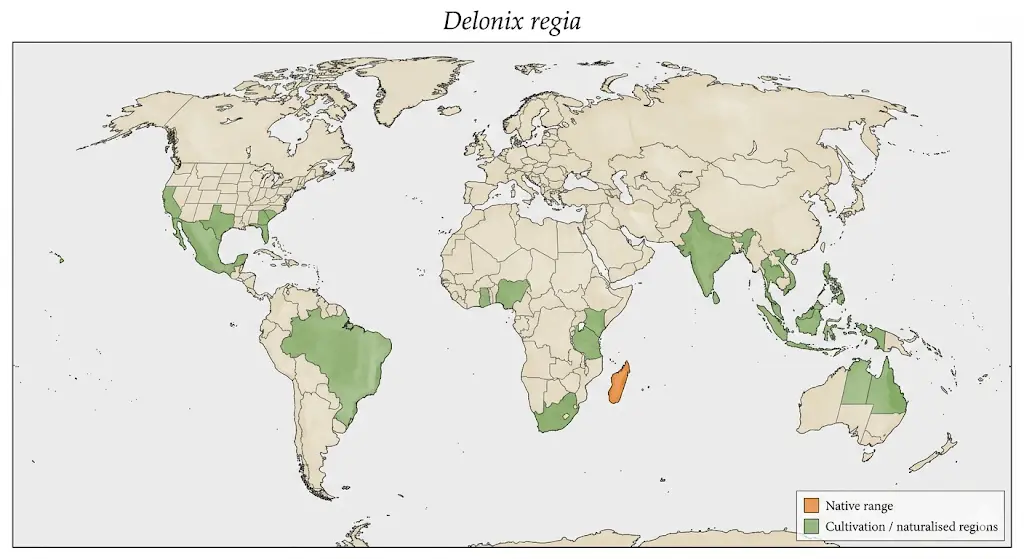
Native Range
| Region | Status | Ecological Context |
|---|---|---|
| Western Madagascar | Native (endemic) | Dry deciduous forests; 0-500 m elevation |
| Toliara Province | Native | Primary historical range |
| Mahajanga Province | Native | Secondary populations |
Delonix regia is endemic to the dry deciduous forests of western Madagascar, where it naturally occurred in seasonal tropical dry forests characterized by distinct wet and dry seasons. The species evolved in a climate with 6-8 months of pronounced drought, which triggers synchronized flowering just before or at the onset of the rainy season. Historical accounts suggest the tree was never abundant in the wild even before extensive habitat conversion.
Current Conservation Status in Native Range
The species is Threatened with severe habitat decline in its native Madagascar habitat, with wild populations drastically reduced due to:
- Extensive forest clearance for agriculture and pasture
- Charcoal production and timber extraction
- Lack of natural regeneration in degraded habitats
- Climate change impacts on dry forest ecosystems
Remaining wild populations are fragmented and primarily confined to protected areas and degraded forest remnants.
Global Cultivation and Naturalization
| Country/Territory | Status | Notes |
|---|---|---|
| India | Extensively cultivated; naturalized in some regions | Iconic street and park tree; particularly prominent in Mumbai, Bangalore, Hyderabad |
| Pakistan | Widely cultivated | Common in Karachi, Lahore, Islamabad |
| Sri Lanka | Widely cultivated | Coastal and lowland regions |
| Southeast Asia (Thailand, Vietnam, Philippines, Indonesia) | Extensively cultivated; locally naturalized | Common urban ornamental |
| East Africa (Kenya, Tanzania, Uganda) | Widely cultivated | Coastal and highland transition zones |
| Australia (Queensland, Northern Territory) | Cultivated; naturalized in tropical regions | Popular in tropical cities |
| Caribbean Islands | Extensively cultivated | Especially Puerto Rico, Jamaica, Bahamas |
| Southern United States (Florida, Hawaii) | Widely cultivated; naturalized in South Florida | Common street tree in Miami-Dade, Monroe counties |
| Central America (Mexico, Belize, Costa Rica) | Widely cultivated | Lowland tropical zones |
| South America (Brazil, Colombia, Venezuela) | Extensively cultivated | Tropical and subtropical regions |
| Middle East (UAE, Oman) | Cultivated with irrigation | Popular despite climate challenges |
The tree has become one of the most widely planted tropical ornamentals globally, thriving wherever temperatures remain above 10°C (50°F) year-round and annual rainfall exceeds 500 mm, or where supplemental irrigation is available. While naturalized in several regions, it rarely becomes invasive due to seed predation, hard seed coats requiring specific conditions for germination, and relatively slow juvenile growth.
Habitat & Ecology
Natural Habitat
In native western Madagascar, Delonix regia occupied tropical dry deciduous forests characterized by:
- Seasonal rainfall pattern: 500-1200 mm annually, concentrated in 4-6 months
- Pronounced dry season: 6-8 months with minimal precipitation
- Temperature range: 20-35°C (68-95°F) during growing season
- Soil type: Well-drained sandy loams to clay loams derived from sedimentary substrates
- Elevation range: Sea level to approximately 500 m
- Vegetation association: Mixed deciduous forest with species including Adansonia spp., Commiphora spp., and various Fabaceae
The natural habitat is characterized by a distinct phenological rhythm synchronized to rainfall patterns, with leaf drop during drought stress, flowering at the transition from dry to wet season, and pod development during the wet season.
Ecological Role
Pollination Ecology: While D. regia flowers exhibit classic bird-pollination syndrome (large, red, exserted stamens, copious nectar), pollination ecology varies across its introduced range. In Madagascar, sunbirds (Nectariniidae) are presumed primary pollinators. In introduced ranges, the tree is visited by:
- Sunbirds and honeyeaters in Asia, Africa, and Australia
- Hummingbirds in the Americas
- Large bees (Xylocopa spp.) and butterflies as secondary pollinators
The flowers produce significant nectar volumes, providing important resources during periods when few other trees are in bloom.
Wildlife Value: The tree provides ecological services including:
- Nesting sites for birds in the wide-spreading canopy structure
- Foraging substrate for insectivorous birds (bark-gleaning species)
- Seed resources for parrots, parakeets, and rodents (though seeds are often predated before dispersal)
- Larval host plant for some Lepidoptera in introduced ranges
Nitrogen Fixation: As a member of Fabaceae, D. regia forms symbiotic associations with nitrogen-fixing rhizobia, though nodulation efficiency is moderate compared to some other legumes. It has a moderate nitrogen-fixing potential depending on soil conditions, contributing to soil fertility in urban and agroforestry settings.
Functional Traits
| Trait | Value | Ecological Significance |
|---|---|---|
| Photosynthetic Pathway | C3 | Typical for tropical trees; moderate water-use efficiency |
| Leaf Phenology | Drought-deciduous | Water conservation strategy; synchronized with seasonal rainfall |
| Seed Dispersal | Ballistic (explosive dehiscence) + limited animal | Short-distance dispersal (typically <10 m from parent) |
| Reproductive System | Hermaphroditic; outcrossing promoted | Self-compatible but protandrous |
| Shade Tolerance | Low (pioneer/light-demanding) | Requires full sun for optimal growth and flowering |
| Fire Tolerance | Low to moderate | Bark relatively thin; juvenile mortality high |
Reproductive Biology & Phenology
Phenological Calendar
Phenology is strongly influenced by seasonal rainfall patterns and temperature, varying considerably across the species’ extensive cultivated range.
| Event | Timing (Native Madagascar Pattern) | Timing (South Asian Monsoon Pattern) | Environmental Triggers |
|---|---|---|---|
| Leaf Drop | Late dry season (September-October) | Pre-monsoon (March-April) | Drought stress; declining soil moisture |
| Flowering Initiation | Late dry season to early wet season (October-December) | Peak hot season (April-June) | High temperatures (>30°C); low soil moisture followed by rain signals |
| Peak Flowering | Early wet season (November-December) | Pre-monsoon to early monsoon (May-June) | First rains; increasing photoperiod |
| Pod Development | Wet season (December-April) | Monsoon season (June-September) | Adequate moisture availability |
| Pod Maturation | Late wet to early dry season (April-August) | Post-monsoon (October-March) | 6-9 months post-pollination |
| Seed Dispersal | Dry season (August-October) | Dry season (January-April) | Pod desiccation; low humidity |
| New Leaf Flush | Variable; with first rains or pre-flowering | Pre-monsoon to early monsoon (April-June) | Onset of favorable moisture conditions |
Key Phenological Notes:
- Flowering typically occurs on leafless or partially leafless branches, maximizing floral visibility
- Trees may exhibit biennial or irregular flowering patterns, with “mast years” of heavy bloom
- Unseasonable rainfall can trigger partial flowering outside normal periods
- In continuously warm climates near the equator, some trees may flower twice annually
Pollination Ecology
Delonix regia exhibits classic ornithophilous (bird-pollinated) floral syndrome:
- Large, showy, bright red flowers (red is highly visible to birds)
- Substantial nectar production (0.5-1.5 ml per flower)
- Flower orientation facilitating bird perching
- Absence of strong fragrance (olfaction less important for bird pollinators)
- Exserted reproductive organs contacting bird’s head/breast during feeding
The flowers are protandrous (stamens mature before pistil in individual flowers), promoting outcrossing, though the species is self-compatible. Studies in introduced ranges show pollinator visitation rates of 5-20 visits per flower per day during peak bloom.
Pollinator Effectiveness: While numerous visitors have been documented, primary effective pollinators vary by region:
- Madagascar: Sunbirds (Nectarinia spp.) presumed primary
- India: Purple Sunbird (Cinnyris asiaticus), Purple-rumped Sunbird (Leptocoma zeylonica)
- Americas: Various hummingbird species
- Australia: Honeyeaters (Meliphagidae)
Carpenter bees (Xylocopa spp.) visit frequently but are less effective pollinators due to flower morphology favoring avian visitors.
Seed Biology & Germination
Seed Characteristics:
- Physical dormancy due to water-impermeable seed coat
- Viability: 70-90% when fresh; declining to 40-60% after 6-12 months
- Longevity: Seeds can remain viable 2-4 years under proper storage conditions
Germination Requirements:
| Parameter | Requirement | Notes |
|---|---|---|
| Scarification | Required for rapid germination | Mechanical scarification, hot water treatment, or acid scarification |
| Temperature | 25-35°C (77-95°F) optimal | Germination inhibited below 18°C |
| Moisture | Consistent moisture; not waterlogged | |
| Light | Not required; can germinate in darkness | |
| Substrate | Well-drained; neutral to slightly acidic | |
| Germination Time | 5-10 days with scarification; 30-60+ days without | |
| Germination Rate | 75-90% with proper scarification | 10-30% without scarification |
Recommended Scarification Methods:
- Hot water treatment: Immerse seeds in water at 80-90°C for 1-2 minutes, then soak in cool water for 24 hours
- Mechanical scarification: Nick or file seed coat (avoiding embryo) to create small opening
- Acid scarification (commercial): 30-60 minutes in concentrated sulfuric acid (requires safety protocols)
Natural scarification occurs through:
- Passage through bird/mammal digestive systems
- Forest fires (heat scarification)
- Extended weathering and microbial action on soil surface
Vegetative Reproduction
While D. regia is primarily propagated from seed in commercial and natural settings, vegetative propagation is possible but rarely practiced:
- Stem cuttings: Low success rate (15-30%); requires semi-hardwood cuttings with rooting hormones
- Air layering: Possible but labor-intensive; 40-60% success with proper technique
- Grafting: Rarely employed; compatible with closely related Delonix species as rootstocks
Vegetative propagation is not commonly used due to reliable seed production and acceptable germination rates with proper treatment.
Soil Ecology & Biochemical Profile
Mycorrhizal Associations
Delonix regia forms arbuscular mycorrhizal (AM) associations with fungi in the phylum Glomeromycota, typical of many tropical leguminous trees. Studies have identified associations with Glomus spp., Acaulospora spp., and Gigaspora spp. Mycorrhizal colonization rates vary from 30-70% of fine root length depending on soil conditions, with higher colonization in low-phosphorus soils.
Functional Benefits:
- Enhanced phosphorus uptake (particularly important in tropical weathered soils)
- Improved drought resistance through extended hyphal networks
- Enhanced disease resistance
- Improved establishment success in poor soils
Inoculation with appropriate AM fungi can improve seedling establishment rates by 25-40% in degraded or low-fertility sites.
Rhizosphere Interactions
Nitrogen Fixation: The species forms root nodules with nitrogen-fixing rhizobia, primarily Bradyrhizobium spp. and Rhizobium spp. Nodulation is facultative and depends on:
- Soil nitrogen availability (nodulation suppressed in high-nitrogen soils)
- Presence of compatible rhizobial strains
- Soil pH (optimal 6.0-7.5)
- Adequate phosphorus and molybdenum
Nitrogen fixation rates: 20-60 kg N/ha/year under favorable conditions, contributing to soil fertility and supporting epiphytic and understory plant communities.
Root Exudates: D. regia releases various compounds into the rhizosphere including:
- Phenolic compounds with allelopathic potential
- Organic acids (citric, malic) that enhance phosphorus availability
- Flavonoids that stimulate rhizobial colonization
Allelopathy
Limited research suggests potential allelopathic effects from leaf litter and root exudates. Decomposing D. regia leaves release phenolic compounds that may inhibit germination and growth of some herbaceous species. Allelopathic potential is considered mild to moderate, with effects varying by receiving plant species and environmental conditions. This may contribute to the relatively sparse understory vegetation commonly observed beneath mature Gulmohar trees, though heavy shade is likely the dominant factor.
Phytochemistry
Delonix regia produces a diverse array of secondary metabolites with ecological and potential pharmacological significance.
| Compound Class | Representative Compounds | Primary Location | Ecological/Biological Function |
|---|---|---|---|
| Flavonoids | Quercetin, kaempferol, luteolin | Leaves, flowers, bark | Antioxidant; UV protection; herbivore deterrence |
| Alkaloids | β-carboline derivatives | Seeds, leaves | Herbivore deterrence; potentially toxic |
| Saponins | Triterpene saponins | Seeds, bark | Antifungal; deterrent properties |
| Tannins | Condensed tannins, hydrolyzable tannins | Bark, leaves, pods | Protein-binding; herbivore deterrence |
| Phenolic acids | Gallic acid, ellagic acid | Bark, leaves | Antimicrobial; antioxidant |
| Lectins | Phytohaemagglutinins | Seeds | Defense proteins; potentially toxic if ingested |
| Sterols | β-sitosterol, stigmasterol | Seeds, leaves | Membrane components; possible pharmacological activity |
| Carotenoids | β-carotene, lutein | Flowers, leaves | Pigmentation; antioxidant; UV protection |
Bioactive Properties: Research has demonstrated antimicrobial, antioxidant, anti-inflammatory, and antidiabetic properties in various D. regia extracts in laboratory studies. However, these findings remain at the experimental stage, and no standardized medicinal applications have been established. The seeds contain toxalbumins (toxic proteins) that can cause gastrointestinal symptoms if consumed in quantity, contributing to low palatability for most herbivores.
Climate Adaptation & Stress Tolerance
Optimal Climate Parameters
| Parameter | Optimal Range | Tolerance Range | Notes |
|---|---|---|---|
| Mean Annual Temperature | 24-30°C (75-86°F) | 18-35°C (64-95°F) | Growth slows significantly below 20°C |
| Daytime Temperature | 28-35°C (82-95°F) | 22-40°C (72-104°F) | Tolerates brief periods above 40°C |
| Nighttime Temperature | 18-24°C (64-75°F) | 12-28°C (54-82°F) | Frost damage at 0°C (32°F) |
| Annual Rainfall | 600-1500 mm (24-59 inches) | 400-2500 mm (16-98 inches) | Drought-deciduous in low-rainfall zones |
| Dry Season Length | 3-6 months | 2-8 months | Extended dry season triggers flowering |
| Relative Humidity | 50-70% | 30-90% | Tolerates both humid and arid conditions |
| Solar Radiation | Full sun (>6 hours direct) | Required | Flowering severely reduced in shade |
Stress Tolerance Profile
| Stress Type | Tolerance Level | Physiological Response | Notes |
|---|---|---|---|
| Drought | High (once established) | Leaf abscission; CAM-like behavior during extreme stress | Seedlings drought-sensitive; mature trees survive 6-8 months without rain |
| Heat | Very High | Heat shock proteins; reflective leaf waxes | Tolerates sustained temperatures 38-42°C |
| Cold/Frost | Low | No cold acclimation; tissue damage at 0-2°C | Severe damage or mortality below -2°C; suitable only for frost-free zones |
| Salinity | Low to Moderate | Limited salt exclusion mechanisms | Tolerates coastal conditions with occasional salt spray but not saline soils |
| Waterlogging | Low | Susceptible to root rot | Requires well-drained soils; 48+ hours flooding often fatal |
| Air Pollution | Moderate to High | Tolerates urban air quality issues | Performs well in polluted urban environments |
| Wind | Moderate | Brittle wood; branch breakage in extreme winds | Hurricane-force winds cause significant damage |
| Soil Compaction | Moderate | Reduced growth and flowering | Common issue in urban plantings |
Adaptations
Drought Adaptation:
- Deep lateral root system accessing moisture from large soil volume
- Drought-deciduous strategy (leaf abscission reduces transpirational water loss)
- Thick leaf cuticle and ability to close stomata rapidly
- Flexible hydraulic architecture allowing recovery from severe xylem embolism
Heat Tolerance:
- High optimal temperature for photosynthesis (30-35°C)
- Heat-stable photosynthetic enzymes
- Reflective foliar waxes reducing heat load
- Transpirational cooling through extensive leaf area
Limitations:
- No frost tolerance; tropical/subtropical distribution only
- Shallow root system limits establishment on steep slopes prone to erosion
- Moderate wind resistance; structural damage in severe storms
Climate Change Vulnerability
Based on its native Madagascar ecology and physiological tolerances, D. regia is expected to experience mixed climate change impacts:
Potential Benefits:
- Expansion of suitable climate zones poleward in subtropical regions
- CO₂ fertilization may enhance growth rates
- Longer growing seasons in currently marginal areas
Potential Risks:
- Altered rainfall patterns may disrupt flowering synchrony
- Increased frequency of extreme heat events (>45°C) may exceed tolerance
- More severe hurricanes/cyclones increase structural damage risk
- Sea level rise threatens some coastal populations
Current IUCN climate vulnerability assessments are not available for cultivated populations outside native range.
Physiological/Environmental Issues
| Problem | Cause | Solution |
|---|---|---|
| Failure to Flower | Insufficient light; excessive nitrogen; tree too young; lack of dry season stimulus; heavy pruning | Ensure full sun exposure; reduce nitrogen fertilization; allow tree to mature (3-5 years minimum); implement brief drought stress if irrigated year-round; avoid heavy pruning |
| Chlorosis (Yellowing Leaves) | Iron deficiency in alkaline soils; nutrient deficiency; root damage | Apply chelated iron foliar spray and soil drench; adjust soil pH if necessary; ensure adequate drainage; apply balanced fertilizer |
| Premature Leaf Drop | Drought stress; cold stress; root disturbance; pest/disease | Water during extended drought; protect from cold if possible; avoid construction activity near roots; diagnose and treat underlying pest/disease |
| Branch Breakage | Weak branch unions; storm damage; brittle wood; poor structure | Structural pruning when young to develop strong scaffold; remove narrow crotch angles; proactive pruning to reduce weight on weak limbs; stake young trees in windy areas |
| Sparse Canopy | Insufficient water; nutrient deficiency; root damage; compacted soil | Improve irrigation regime; fertilize appropriately; investigate root health; reduce soil compaction through aeration if possible |
| Sunscald on Trunk | Sudden exposure of previously shaded bark; young trees | Wrap trunk of young trees with tree wrap; gradual exposure to sun when transplanting; whitewash trunk if in very hot climates |
Common Cultivation Observations
| Observation | Associated Condition | Notes |
|---|---|---|
| Leaf drop during winter/dry season | Normal drought-deciduous behavior | Expected in seasonal climates; not a cause for concern |
| Flowers produced before or simultaneously with new leaves | Normal phenology | Leafless flowering is typical and enhances floral display |
| Heavy seed pod production followed by minimal flowering next year | Biennial bearing pattern (alternate bearing) | Common in some individuals; resource allocation to seed production reduces next year’s flowering |
| Brown leaf margins during hot, dry periods | Marginal leaf scorch from drought stress | Usually cosmetic; ensure adequate irrigation during extreme heat |
| Yellowing and drop of some leaves while tree appears otherwise healthy | Normal leaf turnover | Small percentage of older leaves shed year-round; not indicative of problems |
| Pods remain on tree for many months after maturity | Normal pod persistence | Empty pods may remain attached 6-12 months; can be removed if aesthetically undesirable |
Normal vs. Concerning Observations
| Observation | Associated Condition | Notes |
|---|---|---|
| Complete leaf drop before flowering | Normal phenology; drought-deciduous strategy | Expected behavior; enhances floral display visibility |
| Flowering on bare branches | Normal phenology | Typical; flowers appear before or with new leaf flush |
| Green, unripe pods remaining on tree 6-12 months | Normal pod development and persistence | Pods mature slowly; may remain attached well into next flowering season |
| Surface roots visible above ground, creating mounds | Normal root architecture; shallow lateral root system | Common in mature trees; can heave pavement if planted too close to hardscaping |
| Sparse or absent flowering after heavy pruning the previous year | Expected response to pruning | Flowers form on previous year’s wood; heavy pruning removes flower-bearing branches |
| Yellowing and drop of older leaves while tree produces new growth | Normal leaf turnover | Small percentage of older leaves shed continuously; not a problem if new growth vigorous |
| Leaf drop during extended dry period followed by re-foliation after rain | Normal drought-deciduous behavior | Adaptive response; not indicative of disease or mortality |
| Lack of flowering in tree planted in shade or partial shade | Light requirement not met | D. regia requires full sun for flowering; shade-grown trees produce foliage but rarely flower |
| Heavy flowering one year followed by sparse flowering the next | Alternate bearing (biennial bearing pattern) | Resource allocation to seed production in heavy flowering year reduces next year’s bloom; common in some individuals |
| Asymmetric canopy development, with denser growth on sun-facing side | Phototropic response; light competition | Normal when tree receives light primarily from one direction; not a health concern |
| Small cracks or fissures in older bark | Normal bark aging | Not indicative of disease; part of natural bark development in mature trees |
| Presence of aerial roots or root nodules visible when excavating near tree | Normal for nitrogen-fixing legume | Root nodules contain nitrogen-fixing bacteria; presence indicates healthy symbiosis |
| Sticky substance on leaves and ground beneath tree, sometimes with black sooty coating | Honeydew from sap-sucking insects (aphids, scale); sooty mold grows on honeydew | Indicates pest presence; manage pests to eliminate honeydew and sooty mold |
Harvesting & Post-Harvest Handling
Note: Delonix regia is not cultivated as a food crop and has no commercial harvest protocol for consumption. The following information pertains to seed collection for propagation and ornamental pod collection.
Seed Collection for Propagation
Ripeness Indicators:
| Indicator | Description |
|---|---|
| Pod Color Change | Pods transition from green to brown, then dark brown or nearly black |
| Pod Texture | Pods become woody and hard; sound hollow when tapped |
| Pod Dehiscence | Pods begin to split along sutures; twisting visible |
| Time from Flowering | 9-12 months post-pollination |
Harvest Protocol:
- Timing: Collect pods when fully mature but before explosive dehiscence (before pods split open)
- Method: Use pole pruner or ladder to access pods; wear protective gloves (pod edges can be sharp)
- Selection: Choose well-formed, undamaged pods
- Handling: Place collected pods in breathable bags or containers
- Processing: Open pods carefully to extract seeds; pods may be very dry and brittle
Yield Expectations:
- Mature tree (15-20 years): 100-500 pods per year depending on growing conditions and biennial bearing patterns
- Pod: 20-40 seeds per pod
- Potential seed yield: 2,000-20,000 seeds per mature tree annually
Ornamental Pod Collection
Some individuals collect the large, decorative pods for craft purposes, dried arrangements, or educational displays.
Collection: As described abovePreparation for Display:
- Allow pods to dry thoroughly
- Clean exterior with soft brush
- Seal with clear acrylic spray if desired to prevent insect damage
- Store in dry conditions
Storage:
- Dried pods remain intact for many years if kept dry
- Protect from moisture and insect damage
Recommended Products
Disclosure: As an Amazon Associate, PlantsInfo may earn from qualifying purchases.
🌱 Plant Care Essentials
The following tools can help with pruning, plant health, soil management, and fruit garden maintenance.

Neem Oil for Plant Care
Natural plant protection against aphids, whiteflies, mites, and other common garden pests.

Fungicide for Root Care
Helps suppress soil-borne fungal diseases and supports healthier root systems.

Spray Bottle for Plants
Ideal for applying foliar sprays, neem oil solutions, and liquid plant treatments.

Rubber Hand Gloves
Protects hands during pruning, planting, soil preparation, and garden maintenance.
Special Features & Ecological Context
Ornamental Value
| Feature | Description |
|---|---|
| Floral Display | One of the most spectacular flowering trees globally; entire canopy covered with brilliant red-orange flowers during peak bloom (typically 4-6 weeks) |
| Seasonal Drama | Distinct seasonal changes: bare branches (dormancy), vibrant flowering (late dry season), fresh green foliage (wet season), golden fall color (subtropical regions) |
| Shade Tree | Wide, umbrella-shaped canopy provides dense shade over extensive area; ideal for tropical shade gardens, parks, large properties |
| Architectural Interest | Distinctive horizontal branching pattern; attractive bark; sculptural bare-branch silhouette during deciduous phase |
| Street Tree | Traditional tropical/subtropical street tree; iconic in many cities (Mumbai, Miami, Brisbane, Nairobi) |
| Color Variations | Rare yellow-flowered variety (Delonix regia var. flavida) occasionally cultivated; standard red form predominant |
Landscape Uses:
- Specimen tree in large gardens and parks
- Avenue and street planting (requires adequate space)
- Shade tree for outdoor seating areas, playgrounds
- Tropical-themed landscapes
- Institutional grounds, campus plantings
- Urban forestry (heat island mitigation)
Limitations for Small Properties:
- Extensive root system may damage infrastructure
- Requires substantial space (minimum 10-12 meter diameter)
- Messy (pod and leaf litter)
- Surface roots can interfere with lawn maintenance
Wildlife Value
Nectar Resources:
- High-volume nectar production during flowering supports nectarivorous birds and large bees
- Flowering often occurs during seasonal nectar dearth, providing critical resource for pollinators
- Estimated nectar production: 0.5-1.5 ml per flower × thousands of flowers per tree
Nesting Sites:
- Wide-spreading canopy structure provides secure nesting locations for various bird species
- Horizontal branches favored by doves, crows, raptors
- Dense foliage offers concealment for smaller passerines
Foraging Substrate:
- Bark and foliage support insect communities that attract insectivorous birds
- Leaf litter creates habitat for invertebrates
Seed Resources:
- Parrots, parakeets, and some rodents consume seeds (though toxicity limits palatability)
- Most seeds predated by insects while still in pods
Larval Host:
- Limited documentation as butterfly/moth larval host plant in introduced ranges
- Some pyralid moth species (Eutectona machaeralis) use foliage
Ecosystem Services
Urban Environment:
- Cooling effect: Extensive canopy reduces surface temperatures beneath tree by 5-10°C compared to unshaded areas
- Carbon sequestration: Large trees sequester approximately 20-30 kg CO₂ per year
- Air quality: Foliage captures particulate matter and absorbs gaseous pollutants
- Stormwater management: Canopy intercepts rainfall; roots increase soil infiltration
- Noise reduction: Dense foliage provides moderate sound attenuation
- Psychological benefits: Aesthetic value contributes to human wellbeing in urban settings
Soil Improvement:
- Nitrogen fixation enriches soil (20-60 kg N/ha/year)
- Leaf litter adds organic matter
- Mycorrhizal networks enhance soil biology
Biodiversity Support:
- Provides nectar, nesting sites, and habitat in urban areas otherwise lacking vegetation
- Serves as “stepping stone” habitat for wildlife in fragmented landscapes
Unique Adaptations
Explosive Seed Dispersal: The ballistic dehiscence mechanism represents an energetically expensive dispersal strategy. Mature pods undergo hygroscopic movement as they dry, building mechanical tension that releases explosively, twisting the pod valves and dehisce forcefully with limited ballistic dispersal from the parent tree. This mechanism ensures seeds are dispersed beyond the immediate canopy zone, reducing competition with the parent tree and sibling seedlings.
Synchronized Phenology: The species exhibits remarkable phenological synchrony within populations, with most individuals flowering simultaneously over a 2-4 week period. This “mast flowering” strategy saturates pollinators and potentially overwhelms seed predators, enhancing reproductive success despite high individual seed predation rates.
Thermogenic Flowers: Some research suggests D. regia flowers may exhibit slight thermogenesis (heat production), though this is not as pronounced as in some other tropical species. If present, thermogenesis would enhance floral fragrance dispersion and may make flowers more attractive to certain pollinators.
Invasive Status & Conservation
Invasive Status
Delonix regia has a relatively benign invasive profile compared to many other widely cultivated tropical trees. Despite extensive cultivation across tropical and subtropical regions globally, the species rarely exhibits aggressive invasive behavior.
| Region | Status | Impact | Management |
|---|---|---|---|
| Native Madagascar | Native; Threatened with severe habitat decline | Habitat loss primary threat | Ex-situ conservation; habitat protection |
| South Florida, USA | Naturalized; sporadic regeneration | Minimal impact; limited spread | Monitoring; no active management required |
| Coastal Queensland, Australia | Locally naturalized | Minor presence in disturbed areas; not considered significant threat | Monitoring |
| Caribbean Islands | Widely cultivated; occasional naturalization | Low impact; rarely spreads aggressively | No management needed |
| India, South Asia | Extensively cultivated; occasional naturalization | Low impact; culturally valued | No management needed; considered beneficial urban tree |
Invasive Risk Assessment:
Factors Limiting Invasiveness:
- Hard seed coat requiring scarification reduces natural germination rates
- Seed predation by insects, birds, rodents
- Shade intolerance prevents establishment in closed-canopy forests
- Moderate growth rate
- Limited dispersal distance (ballistic dispersal typically <15 m)
- Relatively low seed viability persistence in soil seed bank
Factors Supporting Limited Naturalization:
- High seed production in favorable conditions
- Wide environmental tolerance once established
- Lack of specialized habitat requirements
Current Assessment: Not listed as invasive or noxious in any major jurisdiction. Considered low-risk for invasive spread despite extensive cultivation. Some naturalization occurs in disturbed habitats, forest edges, and urban green spaces, but rarely forms dominant stands or displaces native vegetation.
Conservation Status
IUCN Red List Status:
| Field | Information |
|---|---|
| IUCN Red List Status | Not Evaluated (global assessment); Endangered (native Madagascar range assessment – regional) |
| Assessment Year | Regional assessment last updated 2018 |
| Population Trend | Decreasing in native range; increasing in cultivated range globally |
| Major Threats in Native Range | Habitat loss due to agricultural conversion; forest fragmentation; charcoal production; slash-and-burn agriculture (tavy); climate change |
| Source | IUCN Red List (iucnredlist.org) |
Native Range Conservation Concerns:
In Madagascar, Delonix regia faces severe conservation challenges:
- Habitat Loss: Approximately 90% of Madagascar’s dry deciduous forests have been cleared
- Population Fragmentation: Remaining populations small, isolated, and vulnerable to genetic drift
- Limited Natural Regeneration: Poor recruitment in degraded habitats
- Climate Vulnerability: Predicted changes to rainfall patterns may further stress populations
- Low Priority: Despite status, conservation attention focuses on endemic species with more restricted ranges
Conservation Measures:
In Situ (Native Range):
- Protected area designation (some populations within Ankarafantsika National Park and other reserves)
- Community-based forest management initiatives
- Habitat restoration programs (limited)
Ex Situ (Outside Native Range):
- Extensive cultivation globally serves as de facto ex-situ conservation
- Botanical garden collections worldwide maintain genetic diversity
- Seed banking initiatives at specialized facilities
- The species’ adaptability and widespread cultivation mean functional extinction is extremely unlikely even if wild populations are lost
Genetic Conservation Considerations:
Most cultivated trees globally derive from limited founder populations introduced in the 19th and early 20th centuries, potentially representing low genetic diversity. Recent efforts to collect seeds from wild Madagascar populations and distribute them to botanical gardens aim to preserve broader genetic variation.
Paradox Status: Delonix regia represents a conservation paradox—Threatened with severe habitat decline in its native range but one of the most widely cultivated tropical trees globally, with millions of individuals planted worldwide. This dichotomy illustrates the distinction between species conservation and ecosystem conservation; while the species itself is not at risk of extinction, the native ecosystem context and genetic diversity of wild populations remain under severe threat.
Economic Importance
Delonix regia has limited direct economic value as a commodity crop but significant indirect economic importance through ornamental horticulture, urban forestry, and tourism industries.
Ornamental Horticulture Industry
Global Nursery Production:
While comprehensive global production statistics are not available, D. regia represents a significant component of tropical/subtropical ornamental tree production:
| Region | Production Scale | Market Value |
|---|---|---|
| Florida, USA | Commercial production; tens of thousands of seedlings annually | Wholesale: $15-40 per 3-gallon container; $100-300 for larger specimens (15-gallon+) |
| India | Extensive production; government nursery programs and private sector | Variable; often distributed free or low-cost by municipal forestry programs |
| Australia | Commercial availability through wholesale nurseries | AU$30-80 per seedling/small tree |
| Caribbean Islands | Local nursery production | Variable by island; generally moderate pricing |
| Southeast Asia | Widespread production | Low to moderate pricing; often grown from locally collected seed |
Economic Uses Beyond Direct Sales:
| Use Category | Description | Economic Impact |
|---|---|---|
| Urban Forestry | Municipal street tree and park plantings | Contributes to property values (shade trees increase residential property values 3-15%); reduces cooling costs for adjacent buildings |
| Landscape Design | Residential and commercial landscape installations | Part of multi-billion dollar global landscape industry |
| Tourism Value | Flowering displays attract tourism in some regions | Mumbai’s Gulmohar trees recognized as cultural attraction; “Gulmohur Festival” events |
| Nursery Industry Employment | Production, sales, installation | Small but consistent employment in tropical/subtropical nursery sector |
| Environmental Services | Urban heat island mitigation; air quality improvement; carbon sequestration | Indirect economic value through reduced cooling costs, health benefits (estimated $50-200 per tree annually in urban areas) |
Traditional Economic Uses
Timber: D. regia wood is generally not harvested for commercial timber due to:
- Moderate density and strength (inferior to many tropical hardwoods)
- Irregular grain
- Limited durability
- Greater value as a living ornamental tree
However, in some regions, wood from removed trees is used for:
- Firewood and charcoal (caloric value moderate)
- Small-scale carpentry and craft items
- Rustic furniture (limited market)
Economic Significance: Minimal; not a commercial timber species
Dye Production: Historically, bark and flowers have been used as sources of natural dyes in some regions:
- Flowers: yellow to orange dyes
- Bark: tan to brown dyes
Economic Significance: Essentially negligible; supplanted by synthetic dyes and superior natural dye sources
Apicultural Value
While the tree produces abundant nectar, commercial honey production from D. regia is not practiced, as:
- Flowering period is relatively brief (4-6 weeks)
- Nectar availability coincides with other major nectar sources in most regions
- Monofloral D. regia honey is not produced commercially
Economic Significance: Minimal direct value; contributes to general nectar availability for managed honeybees but not a primary honey source
Seed Trade
A minor international trade exists in D. regia seeds for propagation:
- Online seed retailers: $2-8 per 10-25 seeds
- Specialty tropical plant suppliers
- Seed exchanges and botanical garden networks
Economic Significance: Very small niche market; total global trade value likely under $500,000 annually
Property Value Enhancement
Research on urban tree economics suggests large shade trees like D. regia contribute to property values:
- Well-placed mature D. regia can increase residential property values 3-7%
- Commercial properties benefit from aesthetic enhancement and cooling
- Street trees contribute to neighborhood desirability
Economic Significance: Difficult to quantify precisely but likely substantial in aggregate across thousands of urban plantings globally
Carbon Credit Potential
As large trees with significant carbon sequestration capacity, mature D. regia could theoretically participate in urban forestry carbon credit programs:
- Significant urban canopy carbon sequestration per mature tree
- Current carbon credit values: ~$15-30 per metric ton CO₂
- Potential value: ~$0.30-0.90 per tree per year
Economic Significance: Minimal under current carbon market structures; urban tree carbon credits remain an emerging concept
Summary Economic Assessment
Delonix regia is primarily an amenity tree with economic value deriving from:
- Ornamental horticulture sales (moderate scale)
- Ecosystem services and property value enhancement (significant but indirect)
- Cultural/tourism value (qualitative; regionally significant)
Direct economic value is modest compared to agricultural or timber crops, but indirect economic contributions through urban environmental services, property value enhancement, and cultural significance are substantial and widely distributed across tropical and subtropical urban areas globally.
Ethnobotany & Traditional Knowledge
Traditional Uses
| Use Category | Application | Cultural Group/Region | Documentation Source |
|---|---|---|---|
| Ornamental/Cultural | Planted in temple grounds, palace gardens | Malagasy nobility; South Asian cultures | Colonial-era botanical accounts; historical records |
| Traditional Medicine | Bark decoction for fever, diarrhea | Madagascar (Sakalava, Mahafaly peoples) | Ethnobotanical surveys (Randrianarivelojosia et al.) |
| Traditional Medicine | Leaf paste applied to inflammations, boils | India (various regions) | Folk medicine documentation; traditional healer interviews |
| Traditional Medicine | Flower infusion for respiratory conditions | Caribbean traditional medicine | Ethnobotanical records |
| Ceremonial | Flowers used in religious offerings, festivals | Hindu traditions (India, Sri Lanka); Buddhist traditions | Cultural anthropology studies |
| Dye | Flowers and bark for fabric dyeing | Various cultures; historically widespread | Historical textile records |
Regional Ethnobotanical Context
Madagascar (Native Range): Limited documentation exists of traditional uses by indigenous Malagasy peoples, likely because the species was relatively rare in its native habitat and not prominently featured in subsistence practices. Some sources document:
- Bark preparations used in traditional healing for fever and gastrointestinal complaints
- Recognition of the tree’s spectacular flowering as culturally significant
- Limited dietary use (seeds occasionally consumed after processing, though toxicity concerns limit this practice)
South Asia (India, Sri Lanka, Pakistan): Following introduction in the colonial period (early-mid 19th century), D. regia became deeply embedded in South Asian urban culture:
- Cultural Symbolism: The tree is strongly associated with summer’s arrival and the pre-monsoon hot season in the Indian cultural consciousness
- Literature and Arts: Featured prominently in modern Indian literature, poetry, and visual arts as a symbol of tropical abundance and seasonal transformation
- Common Name Etymology: “Gulmohar” derives from Persian/Urdu: “gul” (flower) + “mohr” (seal/coin), describing the flower’s resemblance to a golden coin
- Festival Contexts: Flowers sometimes used in garlands and decorations for Hindu festivals, though not a primary ritual plant
Folk Medicine Applications (India): Various folk medicine traditions in India attribute medicinal properties to different parts of the tree, though these applications lack rigorous scientific validation:
- Bark decoctions for fever
- Leaf poultices for skin inflammations and joint pain
- Flower preparations for cough and respiratory issues
- Seeds rarely used due to toxicity concerns
Important Caveat: These folk uses are documented in ethnobotanical literature but are not validated by controlled clinical studies and should not be interpreted as medical recommendations. The seeds contain toxic proteins and should not be consumed.
Caribbean Region: Introduced to the Caribbean in the late 19th century, the tree was incorporated into some Afro-Caribbean traditional healing systems:
- Bark and leaf preparations used in folk remedies
- Spiritual/ceremonial significance in some syncretic religious traditions
Southeast Asia: Following introduction as an ornamental, limited incorporation into traditional medicine systems:
- Some documentation of use in Philippine traditional medicine
- Primarily valued as ornamental rather than medicinal species
Traditional Ecological Knowledge
Traditional knowledge about D. regia primarily relates to its phenological behavior and cultivation rather than medicinal applications:
- Recognition of flowering triggers (dry season, temperature changes)
- Traditional understanding of seed germination enhancement through heat treatment (likely discovered through observation of post-fire germination)
- Knowledge of the tree’s water requirements and drought tolerance
- Understanding of structural characteristics and appropriate siting for shade
Contemporary Indigenous Knowledge
In Madagascar, there is growing recognition among conservation organizations of the importance of incorporating Malagasy traditional knowledge into D. regia conservation efforts:
- Local communities involved in habitat protection efforts
- Traditional fire management practices relevant to dry forest conservation
- Indigenous understanding of ecosystem relationships in dry deciduous forests
Ethical Considerations
Documentation and use of traditional knowledge must acknowledge:
- Intellectual property rights of indigenous communities
- Distinction between historical documentation and validation of efficacy
- Potential for biopiracy concerns if traditional uses lead to commercial pharmaceutical development
- Need for informed consent and benefit-sharing in ethnobotanical research
Most documented traditional uses of D. regia are relatively minor and the species is not a primary medicinal plant in any well-documented traditional medicine system. The tree’s primary cultural significance globally relates to its ornamental qualities rather than utilitarian applications.
Cultural Significance
The name Delonix derives from the Greek delos (visible, conspicuous) and onyx (claw), referencing the petal shape. The common name Gulmohar derives from the Persian-Urdu gul (flower) and mohr (gold/seal), while Krishnachura (Bengali) evokes Lord Krishna’s dark complexion and the tree’s vivid flowers.
Cultural integration is deepest and best-documented in South Asia, where 150+ years of cultivation have made Gulmohar iconic in the urban landscape of Mumbai, Kolkata, Bangalore, and Chennai. The tree functions as a seasonal marker — its flowering announces the peak of summer and the approach of the monsoon — and has become embedded in regional literature, poetry, and collective memory. Rabindranath Tagore referenced Krishnachura in his writing. The tree appears regularly in South Asian popular music and cinema as a symbol of heat, nostalgia, and transient beauty. It is planted on institutional grounds, along boulevards, and in school compounds, giving it a strong association with childhood in urban reminiscence. Though not sacred in Hindu, Buddhist, or Islamic traditions, it is occasionally planted near places of worship for its shade and visual impact.
In the Caribbean, D. regia is a familiar street and garden tree, particularly in Puerto Rico, Jamaica, and the Bahamas, where it is appreciated primarily as a shade and ornamental species with limited documented folk cultural significance beyond general aesthetic appreciation. In East Africa — Kenya, Tanzania, Uganda — it is common in coastal and highland transition zones, valued for shade and avenue planting. In Southeast Asia and Australia, its role is primarily ornamental, with cultural integration considerably shallower than in South Asia.
Contemporary cultural presence is amplified by social media: Gulmohar’s brief, spectacular flowering season generates significant annual photographic documentation across platforms, reinforcing its identity as a shared urban experience. Several Indian cities have organized informal “Gulmohar season” acknowledgements in local media. This cultural momentum provides a real but underutilized opportunity — the tree’s popularity could be leveraged to build public awareness of its Threatened with severe habitat decline wild populations in Madagascar, connecting urban appreciation to meaningful conservation advocacy.
Research Coverage & Knowledge Gaps
Core botanical disciplines — taxonomy, morphology, cultivation, and propagation — are well-documented. Phytochemistry is moderately researched, with numerous studies on secondary metabolites. Significant gaps remain in several high-priority domains.
Priority Knowledge Gaps
1. Conservation Genetics (Very High Priority). The genetic structure of remaining wild Madagascar populations is essentially unknown. How genetically diverse are cultivated global populations relative to wild ones? Are there distinct ecotypes? What is the rate of genetic erosion in fragmented wild populations? Without this baseline, evidence-based conservation strategies cannot be designed.
2. Climate Change Vulnerability (High Priority). No species-specific climate vulnerability assessment exists for D. regia — neither for wild populations facing altered Madagascar rainfall regimes, nor for the extensive cultivated populations providing urban ecosystem services globally. Key unknowns: upper thermal tolerance limits under sustained heat, phenological disruption from altered dry season timing, and structural damage risk from increased storm intensity.
3. Native Habitat Ecology (High Priority). Population dynamics, seedling establishment constraints, seed predator and disperser communities, mycorrhizal associations, and the species’ role in native forest succession are all poorly characterized. This gap directly limits restoration planning in Madagascar.
4. Pharmacological Validation (Moderate Priority). Numerous laboratory studies document antimicrobial, antioxidant, and anti-inflammatory activity of extracts. No clinical trials have been conducted. Standardized extraction protocols, dosage information, and complete toxicological profiles are lacking, particularly for long-term use scenarios.
5. Ecosystem Services Quantification (Moderate Priority). Precise carbon sequestration rates, urban cooling contribution per tree, and economic valuation of ecosystem services across different climatic contexts are not yet available for D. regia specifically, limiting evidence-based inclusion in urban forestry policy.
6. Allelopathy Mechanisms (Moderate Priority). Preliminary evidence suggests allelopathic effects from leaf litter and root exudates, but active compounds, soil persistence, and ecological significance remain uncharacterized.
Research is most urgently needed on conservation genetics and native-range population ecology, where the knowledge deficit has direct consequences for a Threatened with severe habitat decline wild population. Funding priority should reflect this urgency rather than the species’ abundant cultivated status.
Interesting Facts
Flowering Triggered by Stress. The spectacular bloom of D. regia is initiated not by abundance but by adversity — a dry season combined with high temperatures triggers the hormonal cascade that produces flowering. In year-round irrigated urban landscapes without a dry period, trees often fail to flower or bloom erratically. Deliberately withholding irrigation for 4–6 weeks in the dry season can reliably stimulate bloom in otherwise non-flowering cultivated trees.
Thermogenic Flowers. Some limited reports have suggested possible mild thermogenesis, but this remains poorly studied and unconfirmed through cyanide-resistant respiration — a process called thermogenesis. This slightly elevated floral temperature enhances volatilization of scent compounds and may increase attractiveness to pollinators. It is a relatively rare trait among tropical trees and links D. regia to a broader group of thermogenic flowering plants including Araceae.
Bloom Synchrony Mystery. Individual trees within a population frequently synchronize flowering within days of each other, even when separated by significant distances and experiencing different microclimatic conditions. The precise mechanism — whether mediated by shared environmental cues, volatile chemical signaling, or other means — remains scientifically unresolved and represents an intriguing open question in plant biology.
Yellow-Flowered Rarity. A yellow-flowered variant, sometimes designated Delonix regia var. flavida, occurs rarely in cultivated populations. Whether it represents a recessive genetic variant, a distinct geographic ecotype from Madagascar, or a cultivar of horticultural origin has not been formally resolved through genetic analysis. Yellow-flowering individuals attract significant collector interest and command premium prices in specialist nurseries.
A Botanical Celebrity Since the 19th Century. D. regia was one of the first Madagascar endemics to achieve global distribution through colonial-era botanical networks. Introduced to botanical gardens in Mauritius, Calcutta, and Kew in the early-to-mid 1800s, it rapidly became one of the most reproduced tropical ornamentals in history — a global citizen within decades of its Western botanical description, while its wild habitat was simultaneously being cleared in Madagascar.
Frequently Asked Questions
Cultivation & Care
How long until first flowering? Typically 3–5 years from seed in tropical climates; 5–8 years in subtropical regions. See Propagation Methods for full detail.
Why is my tree not flowering? Most common causes: insufficient sunlight (minimum 6–8 hours daily), excessive nitrogen fertilization, tree too young, absence of a dry-season stress period, or heavy pruning of previous year’s growth. Some individuals exhibit biennial bearing — heavy bloom one year followed by a sparse year. See Common Problems & Solutions for a full diagnostic table.
Can Gulmohar be grown in a container? Not recommended for long-term cultivation. Temporary container growing is possible for young trees (1–3 years) before landscape installation, or for bonsai under specialist management. The tree’s canopy, root system, and flowering requirements are fundamentally incompatible with sustained container culture.
Is Gulmohar invasive? Risk is assessed as very low globally. Hard seed coats, high seed predation, short dispersal distance (<15 m), and shade intolerance prevent aggressive naturalization. Occasional establishment in disturbed areas has been observed in South Florida and coastal Queensland. See Invasive Status & Conservation for regional detail.
What is the lifespan? 40–80 years commonly + years under favorable conditions. Urban street trees typically live 30–50 years due to soil compaction and root constraints; park-grown specimens often exceed 100 years. See Growth Habit and Architecture.
How much space is required? Minimum 10 m from structures and underground utilities; optimal 15 m clearance. The canopy frequently exceeds the tree’s height in diameter. Not suited to small residential plots or confined planting strips. See Cultivation Requirements.
What are the cold/frost limits? Tissue damage begins at 0–2°C; significant dieback or mortality below −2°C. Suitable only for USDA Hardiness Zones 10–12. In Zone 9b, protect young trees and expect irregular flowering and periodic dieback. See Climate Adaptation & Stress Tolerance.
How much water does it need? Young trees (first 2–3 years): weekly deep watering during dry periods. Established trees in regions with >600 mm annual rainfall: supplemental irrigation generally unnecessary except during extended drought. Overwatering is as damaging as drought — the species is highly susceptible to waterlogging and root rot. See Cultivation Requirements.
Is any part of the tree toxic? Seeds contain toxalbumins and lectins; potentially toxic if ingested in quantity. Pods and seeds can cause gastrointestinal distress in humans and livestock. Flowers, leaves, and bark are not considered toxic to touch. Keep seed pods away from young children and pets. Contact a medical professional or poison control in cases of suspected ingestion.
Is Gulmohar native to India?
No. Delonix regia is endemic to western Madagascar, where it is now Threatened with severe habitat decline in the wild. It was introduced to South Asia during the colonial era and has been cultivated there for 150+ years, acquiring deep cultural integration — but it remains a non-native species.
Scientific Stability & Nomenclatural Notes
The taxonomic status of Delonix regia is currently stable with broad consensus, though the genus Delonix has undergone some revision in recent years.
Current Nomenclatural Status
Accepted Name: Delonix regia (Bojer ex Hook.) Raf.Basionym: Poinciana regia Bojer ex Hook.Authority Source: Kew Plants of the World Online (POWO); GBIF Backbone Taxonomy
Publication: Rafinesque, C.S. (1838). Sylva Telluriana, page 122.
Synonymy
The species has relatively straightforward synonymy with few historically used alternatives:
Major Synonyms:
- Poinciana regia Bojer ex Hook. (1829) — original description
- Poinciana regia var. flavida Bojer — yellow-flowered variant
Invalid/Erroneous Names: Various misspellings and unauthorized combinations appear in older horticultural literature but have never been validly published or widely adopted.
Genus-Level Considerations
The genus Delonix currently comprises approximately 10-12 species (exact number varies by taxonomic treatment) endemic to Madagascar and extending to East Africa and India. Recent molecular phylogenetic studies (e.g., Bruneau et al., 2008; LPWG, 2017) place Delonix firmly within the tribe Caesalpinieae, subfamily Caesalpinioideae, family Fabaceae.
Taxonomic Stability: The circumscription of Delonix is generally stable, though:
- Some historically included species have been transferred to other genera based on molecular evidence
- Relationships among Delonix species continue to be refined through ongoing phylogenetic work
- No current proposals to merge Delonix with other genera or to split it
Varietal Status
The yellow-flowered form, sometimes designated Delonix regia var. flavida, lacks formal botanical recognition in most modern treatments. It is generally considered a color variant rather than a distinct variety or forma, as it differs only in flower pigmentation and is extremely rare. No comprehensive study has determined whether this represents:
- A recessive genetic variant
- A distinct geographic population with unique evolutionary history
- A cultivar of horticultural origin
Without genetic analysis and formal taxonomic description, the yellow-flowered form’s status remains informal.
Common Name Confusion
“Royal Poinciana” vs. “Poinciana”: Confusion occasionally arises because the genus Poinciana (as originally described) has been split, and other species formerly in Poinciana are now placed in different genera:
- Delonix regia — formerly Poinciana regia
- Caesalpinia pulcherrima — formerly Poinciana pulcherrima (now in Caesalpinia)
Thus, the common name “Poinciana” without qualification is ambiguous and may refer to either species. The names “Royal Poinciana,” “Gulmohar,” or “Flame Tree” specifically designate Delonix regia.
Molecular & Genetic Data
Genome: No widely adopted reference genome was available at time of writing
Molecular Markers: Limited development of molecular markers (microsatellites, SNPs) specific to D. regia. Most phylogenetic work has used chloroplast DNA sequences (e.g., matK, rbcL, trnL-F) and nuclear ribosomal ITS regions common across Fabaceae studies.
Phylogenetic Placement: Molecular phylogenies consistently place Delonix within Caesalpinieae, sister to or closely related to genera including Caesalpinia sensu stricto, though precise relationships among genera in this tribe continue to be resolved.
Chromosome Number: 2n = 28 (reported in limited cytological studies); typical for the tribe Caesalpinieae.
Practical Implications for Users
For most users (horticulturists, urban foresters, gardeners, students):
- The name Delonix regia is stable and universally accepted
- Older literature may use Poinciana regia; these are the same species
- No nomenclatural changes are anticipated in the near future
- Scientific literature searches should include both Delonix regia and Poinciana regia to capture historical publications
Conclusion
Delonix regia presents one of tropical botany’s most striking paradoxes: a species Threatened with severe habitat decline in its native Madagascar — where an estimated 90% of its dry deciduous forest habitat has been destroyed — while simultaneously thriving as one of the world’s most widely planted ornamental trees, with millions of cultivated individuals across tropical and subtropical regions globally. The species itself faces no extinction risk due to its extensive ex-situ presence, but the genetic diversity of wild populations, their ecological context within Madagascar’s unique dry forests, and their evolutionary potential remain gravely threatened.
Three research domains are most urgently underfunded: (1) conservation genetics and population ecology of wild Madagascar populations to support evidence-based recovery strategies; (2) climate change vulnerability assessment for both native and cultivated populations; and (3) ecosystem-level ecological studies in native habitats to understand the species’ role in dry forest dynamics and inform restoration.
For horticulture and urban forestry, D. regia remains unmatched among tropical flowering trees in ornamental impact, ecological service provision, and cultural resonance. Its continued careful deployment in appropriate climatic zones — paired with genuine investment in the conservation of its wild Madagascar populations — represents the most responsible path forward for stewardship of this exceptional species.
References
A. Primary Taxonomic Sources
International Plant Names Index (IPNI). Delonix regia (Bojer ex Hook.) Raf. https://www.ipni.org/ (Accessed: 2025-03-19)
Plants of the World Online (POWO). (2024). Delonix regia (Bojer ex Hook.) Raf. Royal Botanic Gardens, Kew. https://powo.science.kew.org/ (Accessed: 2025-03-19)
GBIF Secretariat (2024). Delonix regia (Bojer ex Hook.) Raf. in GBIF Backbone Taxonomy. https://www.gbif.org/ (Accessed: 2025-03-19)
The Plant List (2013). Delonix regia (Bojer ex Hook.) Raf. Version 1.1. https://www.theplantlist.org/ (Accessed: 2025-03-19)
B. Peer-Reviewed Literature
Bruneau, A., Mercure, M., Lewis, G.P., & Herendeen, P.S. (2008). Phylogenetic patterns and diversification in the caesalpinioid legumes. Botany, 86(7), 697-718.
Legume Phylogeny Working Group (LPWG). (2017). A new subfamily classification of the Leguminosae based on a taxonomically comprehensive phylogeny. Taxon, 66(1), 44-77.
Ratnayake, R.M.C.S., Kumar, N.S., Wijesekara, K.B., & Jayaweera, J.A.A.S. (2008). Nutritional and microbial quality of Delonix regia flowers. Ceylon Journal of Science (Biological Sciences), 37(1), 77-80.
Sinha, R. & Sharma, A. (2015). Phytochemical investigation and evaluation of antibacterial and antioxidant potential of Delonix regia (Boj. ex Hook.) Raf. flower extracts. Journal of Pharmacognosy and Phytochemistry, 4(3), 6-11.
Razanajatovo, H., Ralimanana, H., & Rajeriarison, C. (2018). Population genetics and conservation of endemic Fabaceae species in Madagascar dry forests. Madagascar Conservation & Development, 13(1), 35-42.
C. Monographs, Books & Technical Reports
Gilman, E.F. & Watson, D.G. (1993). Delonix regia: Royal Poinciana. Fact Sheet ST-225. Environmental Horticulture Department, Florida Cooperative Extension Service, Institute of Food and Agricultural Sciences, University of Florida.
Du Puy, D.J., Labat, J.N., Rabevohitra, R., Villiers, J.-F., Bosser, J., & Moat, J. (2002). The Leguminosae of Madagascar. Royal Botanic Gardens, Kew, UK.
Orwa, C., Mutua, A., Kindt, R., Jamnadass, R., & Simons, A. (2009). Agroforestree Database: A Tree Reference and Selection Guide, version 4.0. World Agroforestry Centre, Nairobi, Kenya.
D. Databases & Online Resources
USDA, NRCS. (2024). The PLANTS Database. National Plant Data Team, Greensboro, NC. http://plants.usda.gov (Accessed: 2025-03-19)
IUCN Red List of Threatened Species. (2024). Delonix regia assessment. https://www.iucnredlist.org/ (Accessed: 2025-03-19)
Missouri Botanical Garden. (2024). Tropicos.org. http://www.tropicos.org (Accessed: 2025-03-19)
CABI Invasive Species Compendium. (2024). Delonix regia datasheet. https://www.cabi.org/isc (Accessed: 2025-03-19)
E. Grey Literature
Mumbai Municipal Corporation. (2016). Tree Census Report: Street Trees of Mumbai. Brihanmumbai Municipal Corporation, Mumbai, India.
Fairchild Tropical Botanic Garden. (2020). Plant Care Guide: Royal Poinciana (Delonix regia). Coral Gables, Florida.
Indian Council of Forestry Research and Education. (2019). Urban Forestry Guidelines for Tropical Indian Cities. Dehradun, India.