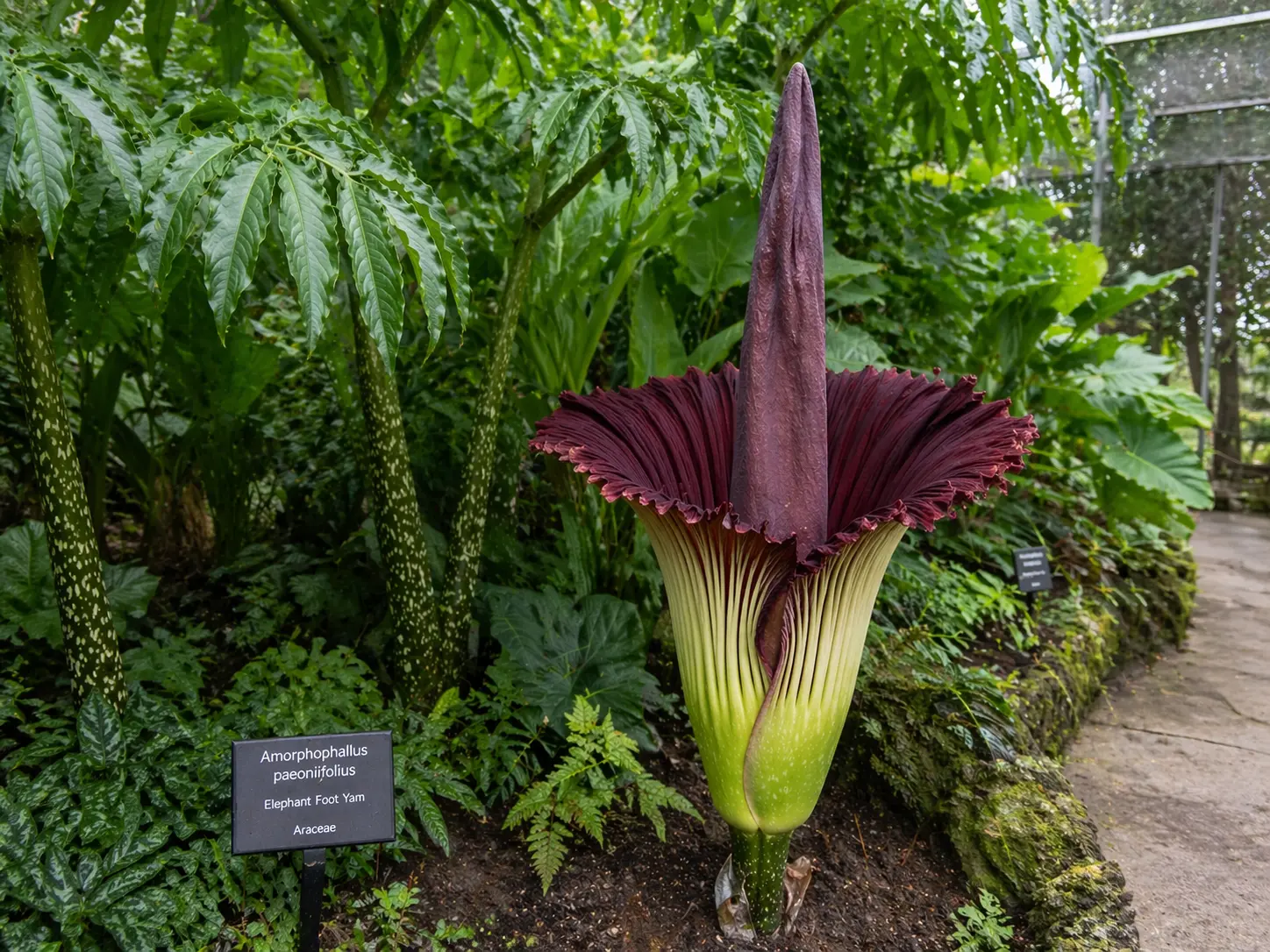
Amorphophallus paeoniifolius, commonly known as Elephant Foot Yam, is most remarkable for its massive underground corm, which serves as both a survival organ and a major food crop. It belongs to the family Araceae and is native to tropical South and Southeast Asia, where it occurs in monsoonal forests, forest margins, and seasonally disturbed fertile soils.
Classification
- Plant Type
- Herb
- Lifecycle
- Perennial
- Leaf Habit
- Deciduous
- Native Region
- South Asia, Southeast Asia
- Plant Family
- Araceae
Amorphophallus paeoniifolius, commonly known as Elephant Foot Yam, is most remarkable for its massive underground corm, which serves as both a survival organ and a major food crop. It belongs to the family Araceae and is native to tropical South and Southeast Asia, where it occurs in monsoonal forests, forest margins, and seasonally disturbed fertile soils.
Amorphophallus paeoniifolius, commonly known as Elephant Foot Yam, is most remarkable for its massive underground corm, which serves as both a survival organ and a major food crop. It belongs to the family Araceae and is native to tropical South and Southeast Asia, where it occurs in monsoonal forests, forest margins, and seasonally disturbed fertile soils.
In native ecosystems, the species functions as a seasonal geophyte adapted to strong wet–dry climatic cycles. Its large subterranean corm stores energy through dormancy, allowing rapid emergence during rainy periods. The striking inflorescence, with its large spathe and central spadix, attracts specialised pollinators, often carrion-associated insects drawn by scent and heat production during flowering.
Elephant Foot Yam has been cultivated for centuries as a staple food, medicinal resource, and culturally important crop across Asia. Its nutritional value, drought resilience, and market demand make it economically significant, while habitat loss and genetic erosion highlight conservation concerns.
Classification and Taxonomy
Accepted Name and Synonymy
| Field | Value | Notes |
|---|---|---|
| Accepted Scientific Name | Amorphophallus paeoniifolius (Dennst.) Nicolson | Current accepted botanical name |
| Known Synonyms | Amorphophallus campanulatus, Dracontium paeoniifolium | Older literature and trade references commonly use these names |
| Taxonomic Authority Source | POWO (Plants of the World Online), Kew Science | Widely accepted current authority |
| Assessment Date (YYYY-MM-DD) | 2026-04-24 | Current editorial review |
Classification Hierarchy
| Rank | Name |
|---|---|
| Kingdom | Plantae |
| Division | Magnoliophyta |
| Class | Liliopsida |
| Order | Alismatales |
| Family | Araceae |
| Subfamily (if applicable) | Aroideae |
| Genus | Amorphophallus |
| Species | Amorphophallus paeoniifolius |
Related Species of Significance
| Species | Common Name | Distinguishing Feature | Economic or Ecological Significance |
|---|---|---|---|
| Amorphophallus konjac | Konjac | Smaller corm, major glucomannan content | Important industrial starch and food crop |
| Amorphophallus titanum | Titan Arum | Giant inflorescence and extreme size | Major botanical conservation interest |
| Amorphophallus bulbifer | Devil’s Tongue | Produces bulbils and smaller edible corms | Regional food and medicinal use |
| Amorphophallus sylvaticus | Woodland elephant yam relative | Wild forest species with smaller corm | Ecological and taxonomic significance |
| Amorphophallus muelleri | Porang | High glucomannan and cultivated tuber | Commercial export crop in Southeast Asia |
Quick Reference
| Field | Value | Notes |
|---|---|---|
| Common Name(s) | Elephant Foot Yam, Suran, Jimikand, Zamikand | Regional names vary widely |
| Plant Type | Perennial tuberous herb | Large geophytic crop species |
| Lifecycle | Perennial with annual dormancy cycle | Seasonal above-ground growth |
| Native Range | South and Southeast Asia | Widely cultivated beyond native range |
| USDA Hardiness Zones | 9–12 | Frost sensitive tropical species |
| Toxicity Summary | Raw tissues contain calcium oxalate crystals causing irritation; proper cooking required | Safe after correct preparation |
| IUCN Status | Not formally assessed globally | Wild genetic resources locally affected |
| Research Coverage Level | High | Strong agronomic and food crop literature |
Within the genus Amorphophallus, A. paeoniifolius is one of the most economically important edible species and among the most widely cultivated. It has historically been confused in agricultural literature with A. campanulatus, an older synonym still common in seed trade and extension manuals. Confusion with smaller edible congeners can affect planting stock quality and market classification. Stable nomenclature is especially important because corm quality, cooking properties, and phytochemical composition differ significantly among species, directly influencing both cultivation outcomes and commercial trust.
Cytogenetics
| Parameter | Value | Notes |
|---|---|---|
| Chromosome Number | 2n = 28 | Most commonly reported diploid chromosome count in cultivated material |
| Ploidy Level | Diploid | Standard cultivated condition |
| Genome Size | Not documented in available literature | Limited genomic characterisation |
Diploid chromosome stability supports predictable vegetative propagation and breeding selection in cultivated lines. Since Elephant Foot Yam is largely propagated through corm pieces rather than seed, chromosome consistency is valuable for maintaining uniform yield, corm size, and culinary quality. Expanded cytogenetic work would improve formal breeding programmes and help identify elite lines with superior disease tolerance and starch performance.
Scientific Stability and Nomenclature
Scientific Stability
| Parameter | Value | Notes |
|---|---|---|
| Nomenclatural Stability | Stable with historical synonym usage | Accepted name is widely standardised |
| Current Accepted Authority | (Dennst.) Nicolson; recognised by POWO | Preferred international reference |
| Major Reclassification Events | Transfer from Amorphophallus campanulatus usage to accepted Amorphophallus paeoniifolius standardisation | Historical literature often used synonym |
Nomenclatural stability is currently strong, and POWO remains the preferred authority for scientific indexing, cultivation records, and commercial plant verification.
Growth Habit and Architecture
| Parameter | Value | Notes |
|---|---|---|
| Life form | Perennial geophytic herb | Underground corm-bearing species |
| Mature height | 1–1.5 m (3.3–4.9 ft) | During active vegetative growth |
| Canopy spread | 1–2 m (3.3–6.6 ft) | Umbrella-like leaf spread |
| Stem type | Pseudostem formed by petiole | No true woody stem |
| Bark or surface texture | Smooth, mottled green-brown surface | Characteristic: mottled marbled petiole surface |
| Branching pattern | Single dominant leaf per season | Umbellate branching at apex |
| Root system overview | Fibrous roots from large underground corm | Root mass supports nutrient uptake |
| Growth rate | Rapid seasonal emergence | Strong monsoon response |
| Longevity | Multi-year perennial | Corm enlarges over successive seasons |
| Distinguishing architectural feature | Massive depressed globose corm | Primary crop organ |
Leaves
| Parameter | Value | Notes |
|---|---|---|
| Presence | Present | One major compound leaf per cycle |
| Leaf Type | Large tripartite compound leaf | Highly divided lamina |
| Size (length × width, metric + imperial) | 100–200 × 100–200 cm (39–79 × 39–79 in) | Depends on plant age and corm size |
| Colour | Bright to deep green | Mature vigorous foliage |
| Arrangement | Solitary from corm apex | One dominant seasonal leaf |
| Special Features | Mottled petiole resembling tree bark | Strong field recognition trait |
Flowers
| Parameter | Value | Notes |
|---|---|---|
| Floral Formula | Unisexual flowers on monoecious spadix | Typical Araceae structure |
| Symmetry | Irregular at inflorescence level | Individual flowers highly reduced |
| Perianth | Absent | Naked flowers typical of genus |
| Colour | Outer green-purple, inner deep maroon to purple | Visually distinctive |
| Size | Inflorescence 30–70 cm (12–28 in) tall | Large and prominent |
| Scent | Strong carrion-like odour | Attracts pollinating insects |
| Sex | Monoecious with separate male and female zones | Female flowers below male flowers |
| Inflorescence Type | Spadix enclosed by spathe | Diagnostic aroid structure |
| Flowering Season | Pre-monsoon to early monsoon | Often before leaf emergence |
| Additional Diagnostic Feature | Thermogenic flowering event | Heat production aids pollinator attraction |
Fruit
| Parameter | Value | Notes |
|---|---|---|
| Fruit Type | Clustered berries on infructescence | Produced after successful pollination |
| Colour at Maturity | Bright red to orange-red | Highly visible |
| Dimensions (metric + imperial) | 1–2 cm (0.4–0.8 in) | Individual berries |
| Weight | Light; not commercially significant | Rarely used economically |
| Texture | Fleshy when mature | Soft berry tissue |
| Taste Profile | Not commonly consumed | Limited food relevance |
| Seed Count | Usually 1–3 seeds per berry | Variable |
| Dispersal Unit | Berry and seed | Animal-assisted dispersal possible |
| Nutritional Significance | Minimal agricultural importance | Crop value lies in corm |
| Harvest Indicator | Full red berry coloration | Indicates mature seed set |
Seeds
| Parameter | Value | Notes |
|---|---|---|
| Seed Type | True seed within berry | Sexual reproduction possible |
| Dimensions | Approximately 5–8 mm (0.2–0.3 in) | Variable |
| Weight if Documented | Not documented in available literature | Commercial propagation uncommon |
| Seed Coat | Smooth, firm outer layer | Protective structure |
| Viability Period | Short under ambient storage | Fresh seed preferred |
| Dormancy Type | Limited dormancy; rapid sowing preferred | Germination declines with delay |
Root System
| Parameter | Value | Notes |
|---|---|---|
| Root system type | Fibrous roots arising from central corm | Storage organ dominates system |
| Depth and spread | Usually 30–60 cm deep and 40–80 cm spread (12–24 in deep; 16–31 in spread) | Depends on soil depth |
| Symbiotic associations | General soil microbial and mycorrhizal associations | Healthy soil improves corm development |
The underground system is dominated by the corm, which functions as both the survival organ and the harvested economic product. Its size determines vigour, flowering potential, and market value. Because harvest removes the entire storage organ, sustainable production depends on deliberate propagation rather than wild extraction. For full cultivation guidance, see How to Grow Elephant Foot Yam.
Field Identification
In the field, Amorphophallus paeoniifolius is recognised by its single massive umbrella-like compound leaf emerging from a large underground corm and supported by a thick mottled petiole that resembles a small tree trunk. Before leaf emergence, the dramatic inflorescence appears alone, with a broad purple-green spathe surrounding a stout central spadix that emits a strong carrion odour. It is often confused with Amorphophallus konjac, especially in cultivation. The single most reliable distinguishing feature is the much larger depressed corm and thicker, broader spadix of A. paeoniifolius, which gives the plant its characteristic robust architecture.
Cultivar Summary
| Cultivar | Key Characteristic | Commercial Status | Origin Notes |
|---|---|---|---|
| ‘Gajendra’ | High yield and large corm size | Commercially dominant | Indian improved cultivar |
| ‘Sree Padma’ | Uniform corm development and good cooking quality | Regionally significant | Indian agricultural selection |
| ‘Bidhan Kusum’ | Strong field performance and adaptation | Regionally significant | Institutional breeding line |
| ‘Local Landrace’ | Variable quality with local adaptation | Historically documented | Traditional farmer-maintained stock |
| ‘Elite Clone Selection’ | Experimental disease tolerance and yield stability | Experimental | Ongoing clonal improvement |
For full variety and cultivar listings, performance data, and selection guidance, see Elephant Foot Yam: Varieties and Cultivars.
Functional Traits
| Trait | Mechanism Description | Adaptive Significance |
|---|---|---|
| Photosynthetic pathway | C3 photosynthesis using rapid seasonal canopy expansion; high photosynthetic output during wet-season leaf emergence supports large corm replenishment | Efficient biomass accumulation during monsoon growth period |
| Water use strategy | Seasonal dormancy reduces transpiration during dry months; the underground corm stores water and carbohydrates, allowing survival without active foliage | Strong adaptation to monsoonal drought cycles |
| Nutrient acquisition | Extensive fibrous roots emerging from the corm rapidly absorb nutrients from fertile upper soil horizons during active growth | Supports fast seasonal vegetative development and corm enlargement |
| Growth form strategy | Geophytic perennial habit stores reserves in a large corm, allowing annual re-emergence even after complete canopy senescence | Protects the plant from drought, fire, and disturbance |
| Reproductive strategy | Combined sexual reproduction through seed and dominant vegetative propagation through corm division maintains both persistence and cultivation reliability | Balances genetic diversity with commercial uniformity |
| Dispersal mechanism | Bright fleshy berries attract animals that disperse seeds, while cultivated spread depends mainly on deliberate corm transport by humans | Enables both wild persistence and agricultural expansion |
| Stress response mechanism | Dormancy induction and rapid post-rain emergence minimise exposure to heat and water deficit; corm reserves buffer temporary nutrient stress | Improves resilience in seasonal climates |
| Chemical defence | Calcium oxalate crystals in raw tissues cause irritation and reduce herbivory; secondary metabolites may further discourage pests and pathogens | Protects storage tissues from predation |
| Additional species-specific trait | Thermogenic flowering raises inflorescence temperature and intensifies carrion-like odour release, improving attraction of specialised insect pollinators | Increases pollination efficiency in short flowering windows |
The physiology of Amorphophallus paeoniifolius is built around synchronisation between dormancy, rapid growth, and reproductive timing. Seasonal dormancy protects the plant during dry periods, while stored carbohydrates in the corm support sudden wet-season leaf expansion and flowering before full canopy establishment. This same reserve system strengthens stress tolerance and enables thermogenic flowering, which is energetically expensive but improves pollinator attraction. Chemical defence through calcium oxalate protects the storage organ that makes all other processes possible. Vegetative propagation further reinforces this strategy by preserving high-performing corm lines even where pollination success is irregular.
Phytochemistry
| Compound Class | Representative Compounds | Concentration / Notes | Source |
|---|---|---|---|
| Starch polysaccharides | Amylose, amylopectin | Dominant dry matter fraction of edible corm | Food chemistry studies from India |
| Dietary fibre | Insoluble fibre fractions, hemicellulose | Significant contribution to digestive value | Nutritional analyses from cultivated corms |
| Phenolic compounds | Gallic acid, catechol, caffeic acid | Detected mainly in corm extracts; antioxidant relevance | Phytochemical studies from India |
| Flavonoids | Quercetin, rutin | Moderate concentration in methanolic extracts | Pharmacognostic studies |
| Sterols | β-sitosterol, stigmasterol | Present in corm and medicinal extracts | Herbal pharmacology literature |
| Oxalates | Calcium oxalate crystals | Responsible for acridity and irritation in raw tissue | Food toxicology and processing literature |
| Proteolytic enzymes | Specific compounds not yet characterised | Enzymatic activity reported but incomplete molecular characterisation | No characterisation study identified — manual research required |
Phytochemical Organ Distribution
| Organ | Compound Class | Representative Compounds | Concentration | Source |
|---|---|---|---|---|
| Corm | Starch polysaccharides | Amylose, amylopectin | High; dominant storage fraction | Food chemistry studies from India |
| Corm | Phenolic compounds | Gallic acid, caffeic acid | Moderate; extract-dependent variation | Pharmacognostic publications |
| Corm | Flavonoids | Quercetin, rutin | Moderate in alcoholic extracts | Indian phytochemical studies |
| Corm | Sterols | β-sitosterol, stigmasterol | Low to moderate | Medicinal plant chemistry reports |
| Corm | Oxalates | Calcium oxalate crystals | High in raw tissue before processing | Food toxicology literature |
| Leaf | Phenolic compounds | Specific compounds not fully characterised | Lower than corm; limited study | Regional phytochemical screening |
| Inflorescence | Volatile compounds | Specific compounds not yet characterised | Odour-producing but poorly characterised | No characterisation study identified — manual research required |
The phytochemical profile of Elephant Foot Yam is commercially dominated by the corm, where starch, fibre, phenolics, sterols, and oxalates concentrate. For food systems, starch composition is the principal economic driver, while phenolics and flavonoids support antioxidant and medicinal interest. Calcium oxalate is equally important because it determines processing requirements and consumer acceptability; improper preparation preserves acridity and irritation despite otherwise valuable nutrition. Sterols and phenolic compounds are pharmacologically relevant but remain less comprehensively characterised than the carbohydrate fraction. Much of the published work comes from Indian agricultural and pharmacognostic studies, so extrapolation to all cultivated populations should be cautious. Environmental conditions, cultivar identity, and harvest stage strongly affect composition. Synergy between fibre and phenolics supports functional-food interest, while oxalate acts as a practical antagonistic factor requiring heat treatment and processing control. For detailed medicinal, nutritional, and commercial applications, see Elephant Foot Yam: Benefits and Uses.
Nutritional Composition
| Nutrient | Value per 100g | Notes | Source |
|---|---|---|---|
| Energy | 118 kcal | Fresh edible corm, cooked basis varies | Indian food composition tables |
| Carbohydrates | 26–28 g | Primarily starch | Food composition studies |
| Protein | 1.2–2.0 g | Moderate for tuber crop | Nutritional analyses |
| Fat | 0.1–0.3 g | Very low lipid content | Food composition tables |
| Dietary Fibre | 4–6 g | Higher than many common tubers | Regional nutritional studies |
| Calcium | 40–50 mg | Variable by soil and cultivar | Food chemistry reports |
| Phosphorus | 50–60 mg | Moderate mineral contribution | Nutritional studies |
| Potassium | 300–500 mg | Important electrolyte contribution | Food composition analyses |
| Iron | 0.6–1.2 mg | Moderate level | Regional nutrient analysis |
| Vitamin C | 4–8 mg | Reduced by cooking | Fresh corm measurements |
| Oxalate Content | Variable; significant raw levels | Requires cooking for safety and palatability | Food toxicology literature |
| Moisture | 65–75 g | Fresh harvested corm basis | Food composition tables |
Elephant Foot Yam is nutritionally strongest as a fibre-rich, starch-dense staple rather than as a protein or vitamin source. Its dietary fibre is comparatively higher than many commonly consumed tropical tubers, improving satiety and digestive value, while potassium content is also notable. Protein and fat remain modest and are not exceptional. Most values are reported from fresh cultivated corms rather than dried material, and composition varies substantially with cultivar and regional soil conditions, especially in South Asian production systems where most studies originate. Cooking substantially improves usability by reducing oxalate-related irritation and altering starch digestibility. For preparation methods and applications, see Elephant Foot Yam: Benefits and Uses.
Toxicity and Safety
| Subject | Toxic Compounds | Clinical Effects | Source |
|---|---|---|---|
| Humans | Calcium oxalate crystals | Oral irritation, throat burning, itching, gastrointestinal discomfort if improperly prepared raw corm is consumed | Food toxicology publications; Indian Council of Agricultural Research references |
| Cats | Calcium oxalate crystals | Oral pain, drooling, vomiting, reduced appetite after chewing raw plant tissue | ASPCA toxic plant references for Araceae |
| Dogs | Calcium oxalate crystals | Oral irritation, pawing at mouth, vomiting, hypersalivation | ASPCA toxic plant references for Araceae |
| Livestock | Calcium oxalate crystals | Mouth irritation, reduced feed intake, digestive discomfort if raw material consumed in quantity | Veterinary toxicology references for aroid crops |
Toxicity is strongly dose-dependent and is mainly associated with raw tissue exposure rather than properly cooked edible corm. Calcium oxalate crystals cause mechanical irritation rather than systemic poisoning in most cases, although concentrated intake can produce significant discomfort. Medicinal use should distinguish between processed traditional preparations and crude extracts. Individuals with renal stone risk, oxalate-sensitive conditions, or special dietary restrictions may require additional caution. This profile does not constitute medical or veterinary advice.
Distribution and Habitat
Native Range
| Region | Countries or Sub-regions | Notes |
|---|---|---|
| South Asia | India, Sri Lanka, Bangladesh, Nepal (lowland tropical zones) | Strongest historical cultivation and wild occurrence records |
| Southeast Asia | Myanmar, Thailand, Laos, Cambodia, Vietnam, Malaysia, Indonesia, Philippines | Native and long-naturalised populations overlap in some areas |
| Indo-Malesian Region | Andaman and Nicobar-associated floristic zone, western Malesian forest margins | Biogeographic continuity across humid tropical systems |
Amorphophallus paeoniifolius occupies regions shaped by monsoonal tropical climates, fertile alluvial and forest-edge soils, and strong seasonal wet–dry cycles that favour geophytic survival strategies. Its large corm allows persistence through prolonged dry periods and disturbance, making it successful in forest margins, secondary woodland, and cultivated transitional landscapes. Much of the published distribution literature is derived from Indian floristic and agricultural sources, which creates a regional documentation bias despite the species being broadly distributed across South and Southeast Asia. Local wild populations have declined in some areas because of repeated corm harvest and land conversion, especially where traditional wild collection preceded formal cultivation.
Global Cultivation and Naturalisation
Global Cultivation Status
| Region | Countries or Areas | Cultivation Status | Notes |
|---|---|---|---|
| South Asia | India, Bangladesh, Sri Lanka, Nepal | Commercially established | India provides the strongest production and research base |
| Southeast Asia | Indonesia, Philippines, Thailand, Vietnam, Malaysia | Commercially established | Regional culinary demand supports stable production |
| East Asia | Southern China, Taiwan | Emerging | Climate suitable in frost-free zones; regional market still developing |
| Africa | Nigeria, Ghana, Kenya, Tanzania | Experimental | Climatic suitability exists but planting material access is limited |
| Caribbean and Tropical Americas | Trinidad, Guyana, Suriname | Regionally significant | Often linked to diaspora food systems |
| Oceania | Papua New Guinea, northern Australia | Emerging | Tropical adaptation possible but limited commercial scale |
| Temperate Europe and North America | Protected cultivation only | Attempted — limited success | Frost sensitivity and dormancy constraints restrict field production |
Commercially significant production is concentrated in South Asia and Southeast Asia, with India representing the dominant research and agronomic reference point. Indonesia and the Philippines also maintain important food-market cultivation. Emerging production is seen in East Asia, tropical Africa, and parts of Oceania, while temperate regions remain restricted to protected systems because frost severely limits field survival. Because production literature is disproportionately sourced from India, global performance comparisons remain incomplete and some cultivar responses outside South Asia are under-documented. For region-specific growing guidance, see How to Grow Elephant Foot Yam.
Natural Habitat
| Parameter | Value | Notes |
|---|---|---|
| Biome Type | Tropical moist deciduous forest, secondary woodland, forest margins, agroforestry transition zones | Thrives in seasonally wet tropical systems |
| Elevation Range (metric + imperial) | Sea level to 1,200 m (0–3,937 ft) | Most vigorous in warm lowlands |
| Soil Type | Deep loam, sandy loam, fertile alluvial soils, well-drained lateritic soils | Poorly suited to compacted heavy clay |
| Associated Vegetation | Mixed deciduous trees, understory herbs, semi-shaded agroforest species | Common near disturbed forest edges |
| Moisture Regime | Strong monsoonal rainfall followed by seasonal dry dormancy | Requires dry resting period |
| Disturbance Response | Moderate disturbance tolerant | Persists well in cultivated forest-edge systems |
The species is a moderate habitat generalist rather than a strict specialist, provided warm temperatures, deep friable soil, and seasonal moisture cycles are present. It tolerates disturbed margins better than intact dense forest interiors, which supports both cultivation and persistence near settlement zones. This flexibility improves agricultural adaptation but does not eliminate conservation concerns where repeated corm harvest removes reproductive stock. For site selection and soil preparation, see How to Grow Elephant Foot Yam.
Ecological Role
| Role Type | Species or Agent Involved | Notes |
|---|---|---|
| Pollination | Carrion-associated beetles (Dermestes spp.) | Attracted by odour and thermogenesis; species-level resolution limited |
| Pollination | Flies (Calliphoridae) | Scavenger-associated flies commonly reported in aroid pollination |
| Seed Dispersal | Frugivorous birds | Bright berries likely dispersed by birds; exact species poorly documented |
| Soil Nutrient Cycling | Rhizosphere microbial communities | Large corm turnover contributes seasonal nutrient exchange |
Ecologically, Amorphophallus paeoniifolius functions as a disturbance-adapted seasonal geophyte linking below-ground storage with brief but intense reproductive events. Its thermogenic inflorescence creates a specialised pollination niche associated with carrion-mimicking insects, while fruiting supports probable bird-mediated seed movement. Much of the ecological literature focuses on cultivated performance rather than wild ecosystem interactions, so pollinator specificity and seed dispersal networks remain incompletely resolved. Its role in nutrient cycling is also under-studied despite the large annual biomass turnover between canopy emergence and dormancy.
Invasive Status
No significant invasive behaviour has been documented in available major literature
Ecology and Adaptation
Optimal Climate Parameters
| Parameter | Optimal Range | Tolerance Range | Notes |
|---|---|---|---|
| Mean Annual Temperature | 25–32°C (77–89.6°F) | 18–38°C (64.4–100.4°F) | Most production data from South Asia |
| Daytime Temperature | 28–35°C (82.4–95°F) | 20–40°C (68–104°F) | High vegetative performance in warm humid conditions |
| Nighttime Temperature | 20–26°C (68–78.8°F) | 15–30°C (59–86°F) | Extended cool nights reduce vigour |
| Annual Rainfall | 1,000–1,500 mm (39–59 in) | 700–2,000 mm (27.5–78.7 in) | Requires clear wet and dry seasonal separation |
| Dry Season Length | 3–5 months | 2–6 months | Dormancy supported by seasonal dryness |
| Relative Humidity | 60–85% | 45–95% | High humidity supports rapid canopy growth |
| Solar Radiation | Bright filtered sun to full sun with seasonal moisture support | Moderate shade to full tropical sun | Excess exposure in dry heat can reduce vigour |
The strongest global limitation for Elephant Foot Yam expansion is not rainfall volume alone but the combination of frost sensitivity and the requirement for a warm wet-growing phase followed by a defined dry dormancy period. Native populations are adapted to monsoonal tropical forests, while the broader cultivation envelope includes managed tropical and subtropical agricultural systems. Regions with persistent cold, waterlogged winter soils, or no clear dormancy season perform poorly even if total rainfall is adequate. Most quantified climate thresholds come from Indian production systems, so extrapolation to Africa and the Americas should be interpreted cautiously.
Stress Tolerance Profile
| Stress Type | Tolerance Level | Physiological Response | Notes |
|---|---|---|---|
| Drought | Moderate during dormancy; low during active growth | Dormancy and corm reserve storage reduce water demand during dry periods | Actively growing plants remain moisture dependent |
| Heat | High | Large corm reserves and broad leaf efficiency support continued metabolism in warm climates | Performs best in tropical heat |
| Cold or Frost | Low | Low temperatures suppress growth; frost damages tissues and can destroy corm viability | Major cultivation constraint |
| Salinity | Low to moderate | Root uptake efficiency declines under salt stress, reducing corm expansion | Not suited to saline soils |
| Waterlogging | Low | Prolonged anaerobic soil conditions promote corm rot and root failure | Temporary moisture tolerated only with drainage |
| Air Pollution | Not documented at species level | Not documented at species level | Urban tolerance poorly studied |
| Wind | Moderate | Solitary tall petiole is mechanically vulnerable but flexible under moderate exposure | Severe storms can cause lodging |
| Soil Compaction | Low | Restricted aeration and poor root penetration reduce corm development and increase disease risk | Deep loose soil strongly preferred |
Compound stress performance is significantly weaker than single-stressor tables suggest. Drought combined with high heat is tolerated mainly when the plant is dormant; during active leaf growth, the same combination sharply reduces productivity because transpiration demand rises while corm reserves are being depleted. Salinity plus waterlogging is especially damaging because both impair root function and accelerate corm rot. Formal compound-stress trials remain limited, and most available data come from field observations rather than controlled experiments. This is an important research gap because commercial production rarely faces one stress factor in isolation.
Structural and Physiological Adaptations
| Adaptation | Mechanism Description | Ecological Context |
|---|---|---|
| Massive underground corm | Stores carbohydrates, water, and mineral reserves, allowing survival through prolonged dry seasons and rapid reactivation when moisture returns | Seasonal tropical climates with pronounced dry dormancy periods |
| Thick mottled petiole pseudostem | Supports a large canopy with strong hydraulic transport while maintaining flexibility against wind stress | Open forest margins and disturbed agroforestry zones |
| Single large compound leaf | Maximises short-season photosynthetic capture with high surface area during favourable wet periods | Rapid biomass accumulation before dormancy |
| Thermogenic inflorescence | Generates heat that volatilises odour compounds and improves attraction of carrion-associated insect pollinators | Pollinator-limited flowering windows in seasonal habitats |
| Calcium oxalate crystal deposition | Protects corm and vegetative tissues from herbivory through mechanical irritation and feeding deterrence | Herbivore pressure on nutrient-rich storage organs |
| Seasonal complete canopy senescence | Above-ground tissues are shed during adverse dry periods, reducing water loss and metabolic cost | Monsoonal drought and heat stress |
| Fibrous feeder roots from corm | Rapid nutrient uptake occurs during active growth without permanent woody root investment | Nutrient pulses in wet-season upper soil horizons |
These adaptations are structural responses to repeated seasonal stress rather than day-to-day physiological functions. In native monsoonal habitats, survival depends on enduring predictable dry periods followed by rapid exploitation of short wet growing windows. The corm is the central adaptation, acting as both a survival organ and a reproductive investment reserve. The large temporary leaf then converts that reserve into rapid biomass gain, while thermogenic flowering ensures reproduction within a brief seasonal opportunity. Because these traits depend on deep soil, seasonal drainage, and thermal stability, unsuitable site conditions directly disrupt plant architecture rather than only reducing growth efficiency. For site management guidance, see How to Grow Elephant Foot Yam.
Climate Change Vulnerability
| Factor | Assessment | Notes |
|---|---|---|
| Primary Climate Sensitivity Factors | High sensitivity to frost, prolonged waterlogging, and irregular dry-season timing | Dormancy cycle depends on seasonal predictability |
| Key Threatening Climate Processes | Rainfall irregularity, extreme heat waves during active growth, flood events, and soil disease expansion under warming humidity | Increased corm rot risk under unstable monsoon systems |
| Resilience Factors | Large underground corm buffers short-term climatic stress; broad cultivated range improves adaptive potential | Strong vegetative propagation supports persistence |
| Confidence Level | Moderate | Based mainly on agronomic observations rather than species-specific climate models |
No robust species-specific climate modelling has been published for Amorphophallus paeoniifolius, so vulnerability assessment remains primarily qualitative. Confidence is moderate because field performance data consistently show dependence on predictable wet–dry seasonal cycles. Climate change is most likely to disrupt phenology through delayed monsoon onset, prolonged saturation, and extreme temperature spikes during active canopy growth. Wild populations may face compounded pressure where habitat fragmentation and wild corm collection already reduce resilience. In cultivated systems, clonal persistence offers some buffering, but repeated disease outbreaks under unstable rainfall patterns may outweigh that advantage in poorly drained landscapes.
Phenological Calendar
| Event | Native Range Timing | Cultivated Range Timing | Environmental Triggers |
|---|---|---|---|
| Vegetative Growth Onset | Late spring to early monsoon (April–June) | Spring to early wet season depending on tropical region | Soil temperature above 20°C (68°F) and first sustained rainfall |
| Flower Bud Initiation | Late dry season to pre-monsoon (March–May) | Late dry season before major rainfall | Mature corm reserve threshold and increasing soil warmth |
| Anthesis or Peak Flowering | Pre-monsoon to early monsoon (April–June) | Early warm season before full leaf emergence | High corm energy reserves and stable daytime warmth above 28°C (82.4°F) |
| Fruit Development | Early to mid-monsoon (June–August) | Wet growing season | Successful pollination and sustained soil moisture |
| Fruit Maturation | Late monsoon to early post-monsoon (August–October) | Late wet season | Continued warm temperatures and resource availability |
| Seed Dispersal | Post-monsoon (September–November) | Late growing season to early dry season | Full berry coloration and frugivore activity |
| Dormancy or Rest Period | Dry season (November–March) | Dry or cool inactive season depending on region | Soil drying and decline in daylength or temperature |
Phenological transitions are driven primarily by corm reserve status and the seasonal switch between dry dormancy and monsoonal moisture availability. Flowering often occurs before full leaf emergence because stored reserves support reproduction independently of current photosynthesis. This creates strong phenological plasticity across the cultivation range: equatorial systems may show compressed dormancy, while subtropical regions display longer inactive periods linked to cooler temperatures. As a result, harvest timing varies more with climate rhythm than with calendar month alone. For season-by-season management, see Elephant Foot Yam: Seasonal Guide.
Pollination Ecology
| Parameter | Value | Notes |
|---|---|---|
| Primary Pollinators | Dermestes spp. | Genus-level data only; carrion-associated beetles frequently reported |
| Secondary Pollinators | Calliphoridae flies | Family-level data only; attracted by odour and heat |
| Pollination Syndrome | Sapromyiophily and saprocantharophily | Carrion mimicry system |
| Floral Mechanism | Female flowers open first at the base of the spadix, guiding insects inward; later male flowers release pollen as trapped visitors move upward and exit | Sequential sex phase reduces self-pollination |
| Reproductive System | Monoecious with protogyny | Female phase precedes male phase |
| Seed Dispersal Agent | Frugivorous birds | Species-level data not consistently documented |
| Pollination Success Rate | Variable; moderate under natural insect visitation | Lower in isolated cultivation systems |
| Human Intervention | Hand pollination is biologically feasible but not standard for food production | More relevant in breeding collections |
The species is functionally biased toward outcrossing because protogyny reduces automatic self-pollination, although controlled pollination remains possible. This means pollinator decline can affect seed production, especially in fragmented cultivation where carrion-associated insects are less abundant. Since commercial production depends mainly on vegetative propagation, reduced natural pollination is less critical for yield than for breeding and genetic diversity conservation. Hand pollination is biologically feasible and valuable for breeding programmes, but it is not central to routine corm production. For pollinator management and hand pollination technique, see How to Grow Elephant Foot Yam.
Seed Biology and Germination
| Parameter | Value | Notes |
|---|---|---|
| Seed Type | True seed enclosed in fleshy berry | Sexual reproduction less common than vegetative propagation |
| Dormancy Class | Mild physiological dormancy | Fresh seed performs better |
| Dormancy-breaking Requirement | Removal of pulp and prompt sowing after harvest | Delayed sowing reduces viability |
| Optimal Germination Temperature (metric + imperial) | 25–30°C (77–86°F) | Warm stable tropical conditions preferred |
| Germination Rate (%) | 50–75% | Strongly dependent on seed freshness |
| Germination Period (days) | 15–40 days | Variable by seed maturity and storage |
| Storage Behaviour | Intermediate to short-lived | Not suitable for prolonged dry storage |
| Seed Longevity | Usually less than 6 months under ambient storage | Rapid decline in viability |
Germination success is limited more by storage sensitivity than by deep dormancy. Freshly collected seed from cultivated fruiting plants generally performs better than older stored seed, while wild-collected material may show greater variability because maturity at collection is less controlled. Pulp removal is biologically important because retained fruit tissue can promote fungal loss. Since viability declines rapidly, seed banking potential is limited compared with clonal corm propagation. For propagation protocols and nursery management, see How to Grow Elephant Foot Yam.
Vegetative Reproduction
| Parameter | Value | Notes |
|---|---|---|
| Vegetative Regeneration Capacity | High | Primary commercial propagation pathway |
| Primary Regeneration Mechanism | Corm division and corm setts | Each viable section can produce new growth |
| Minimum Propagule Size | Approximately 500–750 g (1.1–1.7 lb) corm section | Smaller pieces reduce vigour |
| Ecological or Invasive Significance | Supports rapid field establishment but limited invasive spread without deliberate planting | Human-mediated propagation dominates |
Mycorrhizal Associations and Soil Ecology
| Parameter | Value | Notes |
|---|---|---|
| Mycorrhizal Type | Arbuscular mycorrhizal association | Typical for tropical aroid crops |
| Fungal Genera | Glomus spp. | Most commonly reported genus in comparable systems |
| Soil pH Preference | Slightly acidic to neutral (pH 5.5–7.0) | Strongly alkaline soils reduce performance |
| Nutrient Cycling Role | Supports phosphorus uptake and early root establishment | Important during active corm expansion |
| Rhizosphere Ecology | High microbial activity around feeder roots improves nutrient turnover | Organic matter strongly influences performance |
Arbuscular mycorrhizal association likely improves establishment and phosphorus efficiency, particularly where soils are degraded or repeatedly cultivated. Although species-specific dependency has not been quantified rigorously for A. paeoniifolius, comparable tropical geophytes show improved early vigour under active mycorrhizal colonisation. Excessive conventional fertiliser, especially high soluble phosphorus, may suppress beneficial association strength. This has implications for organic systems, where biological nutrient cycling becomes more important, and for restoration planting on low-fertility soils where microbial support can improve establishment stability. For soil preparation and inoculation guidance, see How to Grow Elephant Foot Yam.
Human Interaction
Economic Importance
| Sector | Significance | Global Value or Scale | Notes |
|---|---|---|---|
| Food Crop Sector | Major edible tropical tuber used as staple and vegetable crop | Regionally significant across South and Southeast Asia; international ethnic food trade established | Fresh and processed corm markets both important |
| Processed Food Industry | Flour, chips, dehydrated slices, starch products | Expanding specialty export trade, especially for diaspora and functional-food markets | Processing improves shelf life and market reach |
| Medicinal and Nutraceutical Sector | Used in traditional medicine and functional-food formulations | Moderate commercial value; often linked to Ayurvedic and herbal product chains | Demand overlaps with medicinal tuber markets |
| Germplasm and Planting Material Trade | Corm setts and cultivar distribution for cultivation systems | Strong regional commercial circulation rather than formal global export | Quality and disease-free stock are critical |
| Academic and Crop Research Sector | Subject of breeding, nutrition, and post-harvest studies | High research value rather than direct trade value | Important for food security and diversification |
| Summary Economic Assessment | Economically strong as a regional staple with growing international specialty trade | Global value concentrated in tropical Asia with expanding export relevance | Market value depends heavily on cultivar identity, corm quality, and processing standards |
Global production is dominated by South and Southeast Asia, particularly India, Indonesia, Bangladesh, Sri Lanka, and the Philippines, where Elephant Foot Yam functions as both a staple food and a commercial cash crop. International trade is strongest in processed corm products and planting material rather than fresh export because perishability limits long-distance shipment. Wild harvest and cultivated supply coexist, but cultivated corms command greater commercial trust because uniform size, reduced acridity, and traceable quality improve buyer confidence. Adulteration through substitution with lower-value aroid tubers and inconsistent post-harvest curing can reduce export value. Climate-linked disease outbreaks and limited clean planting stock remain important global supply-chain vulnerabilities.
Traditional Uses
| Use Category | Knowledge System | Region or Cultural Group | Practice Summary | Documentation Level | Source |
|---|---|---|---|---|---|
| Food and Digestive Health | Ayurveda | India | Processed corm used to support digestion and balance heavy food intake | High | Ayurvedic pharmacopeial references |
| Anti-inflammatory Use | Siddha Medicine | South India | Cooked and formulated preparations used for swelling and joint discomfort | Moderate | Siddha medicinal documentation |
| Postpartum Dietary Use | Regional household medicine | Eastern India and Bangladesh | Special cooked preparations used in recovery diets | Moderate | Ethnobotanical surveys |
| Hemorrhoid and Gut Support | Ayurveda | India | Traditional use in digestive and anorectal formulations | High | Classical Ayurvedic texts |
| Village Food Security | Tribal ethnomedicine | Central India | Seasonal famine-reserve and household food source | Moderate | Tribal agricultural studies |
| Ritual Food Use | Rural culinary tradition | Sri Lanka and Kerala | Included in ceremonial meals and seasonal household feasts | Moderate | Cultural food documentation |
| Veterinary Feeding Use | Folk livestock practice | Rural South Asia | Limited use of processed material in controlled feed contexts | Low | Local agricultural reports |
| Functional Food Use | Contemporary herbal nutrition systems | India and Southeast Asia | Marketed as fibre-rich medicinal food | Emerging | Functional food studies |
The strongest traditional knowledge systems associated with Elephant Foot Yam are Ayurveda and Siddha, both centred in the Indian subcontinent, where the species has remained a living medicinal and culinary resource rather than a purely historical one. Tribal food systems and regional household medicine also preserve long-standing use patterns, especially where the crop functions as a famine-reserve tuber. Because much of the commercial development now targets processed foods and nutraceutical positioning, traditional knowledge is often commercialised far beyond its original geographic context. This creates ethical sourcing questions around attribution, especially where community practices are documented but benefit-sharing remains weak. For comprehensive traditional use documentation and preparation methods, see Elephant Foot Yam: Benefits and Uses. For cultural and ethnographic context, see Elephant Foot Yam: Quick Facts.
Recommended Products
Disclosure: As an Amazon Associate, PlantsInfo may earn from qualifying purchases.
🌱 Plant Care Essentials
The following tools can help with pruning, plant health, soil management, and fruit garden maintenance.

Neem Oil for Plant Care
Natural plant protection against aphids, whiteflies, mites, and other common garden pests.

Fungicide for Root Care
Helps suppress soil-borne fungal diseases and supports healthier root systems.

Spray Bottle for Plants
Ideal for applying foliar sprays, neem oil solutions, and liquid plant treatments.

Rubber Hand Gloves
Protects hands during pruning, planting, soil preparation, and garden maintenance.
Ethical Considerations
Amorphophallus paeoniifolius originates across South and Southeast Asia, with its strongest documented traditional use systems rooted in Ayurveda, Siddha medicine, village food traditions, and tribal subsistence agriculture in India, Sri Lanka, Bangladesh, and parts of Southeast Asia. These uses include digestive preparations, anti-inflammatory food formulations, famine-reserve storage, and ceremonial food practices. Ayurvedic and Siddha uses are comparatively well documented through formal texts and pharmacological studies, while tribal and household knowledge is more unevenly recorded and often preserved through regional ethnobotanical surveys rather than institutional archives.
No documented Access and Benefit Sharing (ABS) case under the Nagoya Protocol has been identified specifically for this species in major published sources. Likewise, no major international biopiracy allegation or high-profile patent dispute has been clearly documented for Elephant Foot Yam comparable to disputes seen in turmeric or neem. However, absence of formal dispute does not remove attribution concerns. Commercial development frequently draws on long-standing food and medicinal knowledge from specific South Asian communities while product marketing reframes the crop as a generic “functional food product” without cultural context.
This attribution gap is especially relevant where value-added export products are developed outside the communities that maintained cultivation knowledge and cultivar diversity. Researchers and product developers should identify the specific knowledge systems informing product claims rather than citing anonymous “traditional medicine.” Commercial buyers should prioritise traceable sourcing, cultivar transparency, and supplier partnerships that recognise the geographic origin of both germplasm and traditional preparation knowledge. Ethical international trade should treat community knowledge as an origin system requiring acknowledgment, not merely as historical background.
Cultural Significance
| Dimension | Description | Region or Context | Source |
|---|---|---|---|
| Symbolic Associations | Associated with resilience and household food security because of large underground storage and famine-use value | Rural India and Bangladesh | Ethnobotanical literature |
| Festive or Ceremonial Role | Included in specific seasonal meals and ceremonial vegetarian dishes | Kerala, Sri Lanka, Eastern India | Regional culinary documentation |
| Linguistic or Naming Significance | Names such as Suran and Jimikand reflect strong vernacular integration across language groups | South Asia | Agricultural lexicons |
| Agrotourism or Public Interest | Featured in local agricultural fairs and root-crop exhibitions | India and Southeast Asia | Extension and agri-fair documentation |
Cultural significance remains stable to moderately growing where the crop is tied to food identity, but it is declining in some urban markets where younger consumers prefer convenience foods over traditional tuber preparation. Interest is increasing again through functional-food marketing and heritage cuisine revival. Most cultural significance is geographically concentrated in South and Southeast Asia rather than globally distributed. For regional cultural context and public interest topics, see Elephant Foot Yam: Quick Facts.
Applied Cultivation Knowledge
Cultivation Summary
| Parameter | Value | Notes |
|---|---|---|
| Hardiness or Climate Zone | USDA Zones 9–12 | Frost-free tropical to warm subtropical cultivation range |
| Soil pH Range | 5.5–7.0 | Soil preparation details and amendment strategy: see How to Grow Elephant Foot Yam |
| Moisture Sensitivity | Moderate; sensitive to waterlogging | Irrigation scheduling and water management: see How to Grow Elephant Foot Yam |
| Light Sensitivity | Full sun preferred; tolerates partial shade | Light management and shade guidance: see How to Grow Elephant Foot Yam |
| Productive Lifespan | 1–3 productive cycles depending on corm management | Lifespan varies significantly by cultivar, region, and propagation system |
For complete cultivation requirements, propagation methods, and post-harvest handling, see How to Grow Elephant Foot Yam.
Pest, Disease and Physiological Burden Summary
Documented burdens include aphids, mealybugs, tuber beetles, and nematodes, along with corm rot caused by Pythium, Fusarium, and bacterial soft rot pathogens such as Erwinia. Leaf blight and waterlogging-related physiological collapse are also significant. Overall burden is moderate: the crop is productive but vulnerable under poor drainage and repeated monoculture. Most burden profiles are best documented from South Asian production systems. For diagnosis, treatment, and prevention, see Elephant Foot Yam: Problems and Diseases.
Conservation and Research
Conservation Status
| Parameter | Value | Notes | Source |
|---|---|---|---|
| IUCN Red List Category | No global IUCN Red List assessment identified | No formal current global Red List category published | IUCN Red List https://www.iucnredlist.org/ accessed 2026-04-24 |
| IUCN Red List Criteria | Not applicable | Formal criteria unavailable without global assessment | IUCN Red List https://www.iucnredlist.org/ accessed 2026-04-24 |
| Population Trend | Locally decreasing in some wild populations | Driven by habitat conversion and repeated corm harvest | Regional floristic and conservation studies |
| Date of Assessment | No formal global assessment | National and regional observations available | IUCN Red List https://www.iucnredlist.org/ accessed 2026-04-24 |
| Geographic Scope of Assessment | Predominantly regional population data | No confirmed global population synthesis available | Regional botanical surveys |
| Threats Summary | Habitat loss, wild corm extraction, narrowing landrace diversity, disease pressure in cultivation | Cultivation partially buffers but can reduce wild genetic diversity | Conservation agriculture literature |
Although the species is widely cultivated, cultivation can obscure declines in wild populations because commercial availability creates the impression of security. In reality, repeated wild corm harvest and habitat conversion reduce natural genetic diversity, especially in forest-margin populations that historically supplied planting stock. Conservation is therefore linked not only to protecting wild stands but also to maintaining diverse cultivated landraces rather than narrowing production to a few dominant clones.
Research Coverage and Knowledge Gaps
| Research Topic | Coverage Level | Key Gaps | Priority |
|---|---|---|---|
| Agronomy and Yield | High | Comparative multi-region cultivar trials remain limited | High |
| Food Chemistry and Nutrition | High | Standardised global composition datasets across ecotypes are incomplete | High |
| Medicinal Phytochemistry | Moderate | Sterol pathways, phenolic standardisation, and compound validation remain incomplete | High |
| Conservation Genetics | Low | Wild population mapping and landrace diversity preservation poorly documented | Very High |
| Climate Resilience | Moderate | Species-specific climate modelling and compound-stress trials lacking | High |
| Pollination Ecology | Low | Pollinator specificity and wild reproductive success poorly resolved | Medium |
Research output is increasing, driven mainly by agricultural universities and independent academic programmes rather than industry-funded large-scale commercial research. The literature is heavily concentrated in India, which improves detail for South Asian cultivation systems but limits confidence when applying conclusions to Africa, Southeast Asia outside India, or tropical America. Food chemistry and agronomy are comparatively strong fields, while conservation genetics and ecological interactions remain underrepresented. This imbalance means production recommendations are often stronger than biodiversity knowledge, and global generalisation must be made cautiously where cultivar identity and environmental conditions differ substantially.
Priority Knowledge Gaps
The most urgent unresolved question is the conservation status of truly wild Amorphophallus paeoniifolius populations versus long-naturalised cultivated escape populations. Without clear genetic mapping, conservation planning risks protecting redundant cultivated material while losing distinct wild gene pools. Molecular work comparing landraces across India, Sri Lanka, Indonesia, and the Philippines is especially needed.
Phytochemical standardisation is another major gap. While starch composition is well described, sterol pathways, phenolic profiles, and cultivar-linked medicinal variability remain insufficiently standardised for international nutraceutical use. Specific validation of β-sitosterol, stigmasterol, and antioxidant-active phenolics across harvest stages would improve both trade reliability and pharmacological credibility.
Pollination ecology is also underdeveloped. Thermogenic flowering is recognised, but pollinator specificity, natural seed set rates, and reproductive isolation among cultivated populations remain poorly documented. Finally, compound-stress research—especially drought combined with waterlogging disruption under unstable monsoon systems—is essential for climate adaptation planning beyond South Asia.
Interesting Facts
Heat-Producing Flowers Attract Insects
The flowering structure of Elephant Foot Yam can generate measurable heat during anthesis. This thermogenesis helps volatilise carrion-like odours that attract beetles and flies needed for pollination. The process increases reproductive success during a very short flowering window.
Source: Mayo et al. (1997)
One Leaf Can Look Like A Tree
A mature plant usually produces only one major leaf during its active season, but that single leaf can exceed 2 metres across. Its thick mottled petiole resembles a small trunk, causing the plant to be mistaken for a young tree from a distance.
Source: Tropical Root Crop Botany references
Cooking Changes Safety Dramatically
Raw corm tissue can cause intense mouth and throat irritation because of calcium oxalate crystals. Proper cooking breaks down much of this effect, transforming the same organ from irritating raw tissue into a widely consumed staple food. This is one of the species’ most counter-intuitive biological features.
Source: ICAR food toxicology documentation
Mature corms may flower before leaf emergence
Flowering often occurs before any leaf emerges because the plant uses stored reserves from the underground corm rather than current photosynthesis. Large mature corms can therefore reproduce before rebuilding foliage for the season. This strategy is highly unusual among major food crops.
Source: Aroid reproductive ecology studies
Cultivation Can Hide Conservation Decline
Because Elephant Foot Yam is common in markets, it is often assumed to be conservation-secure. However, wild genetic populations may still decline while cultivation expands, especially when farmers replace diverse landraces with a few commercial clones.
Source: Conservation agriculture literature
The corm can exceed 10 kg in cultivation
Large mature cultivated corms can become extremely heavy, making Elephant Foot Yam one of the physically largest edible underground storage organs among tropical food crops.
Navigation and Reference
Glossary
| Term | Definition | First Used In |
|---|---|---|
| Anthesis | The period when a flower is fully open and functionally active for pollination | Phenological Calendar |
| Arbuscular Mycorrhiza | A symbiotic relationship where soil fungi help plant roots absorb nutrients, especially phosphorus | Mycorrhizal Associations and Soil Ecology |
| Corm | A swollen underground storage stem that stores energy and water for regrowth | Introduction |
| Geophyte | A plant that survives adverse seasons using underground storage organs such as bulbs, corms, or tubers | Growth Habit and Architecture |
| Monoecious | A plant bearing separate male and female flowers on the same individual | Flowers |
| Protogyny | A flowering system where female flowers become receptive before male flowers release pollen | Pollination Ecology |
| Sapromyiophily | Pollination by flies attracted to odours that imitate decaying organic matter | Pollination Ecology |
| Spadix | A fleshy central flowering spike typical of many aroid plants | Introduction |
| Spathe | A large bract that surrounds or protects the spadix in aroid flowers | Introduction |
| Thermogenesis | Heat production by plant tissues, often used to enhance scent release for pollinator attraction | Flowers |
Frequently Asked Questions
Is Elephant Foot Yam the same as regular yam?
No. Elephant Foot Yam (Amorphophallus paeoniifolius) is not a true yam of the genus Dioscorea. It belongs to the family Araceae and grows from a large corm rather than a tuber. The common name causes frequent confusion, but botanically and physiologically it is much closer to aroid crops than to true yams.
Why does raw Elephant Foot Yam cause itching?
Raw corm tissue contains calcium oxalate crystals that create mechanical irritation in the mouth, throat, and skin. These needle-like crystals cause burning and itching rather than classic poisoning. Proper cooking and processing reduce this effect significantly, which is why preparation method determines whether the crop is safely edible or unpleasantly irritating.
Does the plant really produce only one leaf?
Yes. A mature plant usually produces one very large compound leaf during each active growth cycle. That single leaf can spread widely and look like a small tree canopy because the thick mottled petiole resembles a trunk. This is one of the most commonly misunderstood features of the species and helps field identification.
Can Elephant Foot Yam survive drought?
It survives drought mainly by becoming dormant, not by continuing active growth under dry conditions. The large underground corm stores water and carbohydrates, allowing the plant to persist through dry seasons. During active leaf growth, however, the species still requires reliable moisture and performs poorly under prolonged water stress.
Is Elephant Foot Yam important for conservation if it is widely cultivated?
Yes. Cultivation does not automatically protect wild genetic diversity. Many wild populations decline because of habitat loss and repeated corm harvest, while farms increasingly rely on a small number of productive clones. Conservation therefore requires protecting wild populations and maintaining diverse landraces rather than assuming market abundance equals ecological security.
What makes the flower biologically unusual?
The inflorescence produces heat and releases a strong carrion-like smell to attract beetles and flies for pollination. This thermogenic flowering system is unusual among major food crops. Female flowers become receptive before male flowers release pollen, which helps reduce self-pollination and increases the chance of genetic exchange between plants.
Is Elephant Foot Yam mainly a food crop or a medicinal plant?
It is both, but globally it is primarily a food crop with important medicinal associations. The corm is widely consumed as a staple or vegetable, while Ayurveda and other traditional systems also value it for digestive and anti-inflammatory uses. Its strongest commercial importance comes from food systems rather than pharmaceutical extraction alone.
Conclusion
Amorphophallus paeoniifolius is globally significant because it combines food security, climate resilience, medicinal relevance, and strong cultural continuity in one species. Its large corm supports both biological survival and human use, making it valuable across tropical agriculture, traditional medicine, and nutritional diversification. Few geophytic crops occupy such an important position across both subsistence and commercial systems.
The central unresolved challenge is the gap between cultivation success and conservation understanding. Because the crop is common in markets, wild genetic decline is often overlooked. Narrowing cultivar diversity, habitat loss, incomplete pollination ecology, and weak conservation genetics all limit long-term resilience. Research remains strongest in agronomy and weakest in biodiversity protection and global comparative performance.
Future work should prioritise conserving wild populations, preserving landrace diversity, and improving internationally comparable phytochemical and climate-response data. A stronger global evidence base will improve both conservation and responsible commercial development.
References
A. Primary Taxonomic Sources
Plants of the World Online (POWO). Kew Science. Amorphophallus paeoniifolius (Dennst.) Nicolson. Available at: https://powo.science.kew.org/ Accessed 2026-04-24.
B. Peer-Reviewed Literature
Misra, R.S., Nedunchezhiyan, M., & Swamy, T.M.S. (2002). Mass multiplication of elephant foot yam (Amorphophallus paeoniifolius) through minisett technique. Journal of Root Crops, 28(2), 78–82.
This paper supports cultivation and vegetative propagation sections, especially corm division and planting material quality.
Dey, Y.N., Ota, S., Srikanth, N., Jamal, M., & Wanjari, M. (2012). A phytopharmacological review on an important medicinal plant – Amorphophallus paeoniifolius. AYU, 33(1), 27–32. https://doi.org/10.4103/0974-8520.100303
This source informs the medicinal and phytochemical interpretation of phenolics, sterols, and traditional therapeutic relevance.
Mayo, S.J., Bogner, J., & Boyce, P.C. (1997). The Genera of Araceae. Kew, UK: Royal Botanic Gardens, Kew.
This reference supports floral biology, thermogenesis, pollination syndrome, and diagnostic morphology of the inflorescence.
C. Monographs, Books, and Technical Reports
Rashid, M.M. (1999). Root and Tuber Crops. Bangladesh Agricultural Research Institute. Technical monograph.
D. Databases and Online Resources
IUCN Red List of Threatened Species. Available at: https://www.iucnredlist.org/ Accessed 2026-04-24.
ASPCA Toxic and Non-Toxic Plants Database. Available at: https://www.aspca.org/pet-care/animal-poison-control/toxic-and-non-toxic-plants Accessed 2026-04-24.
E. Grey Literature
Indian Council of Agricultural Research (ICAR). (2021). Elephant Foot Yam Production and Crop Management Notes.