Introduction
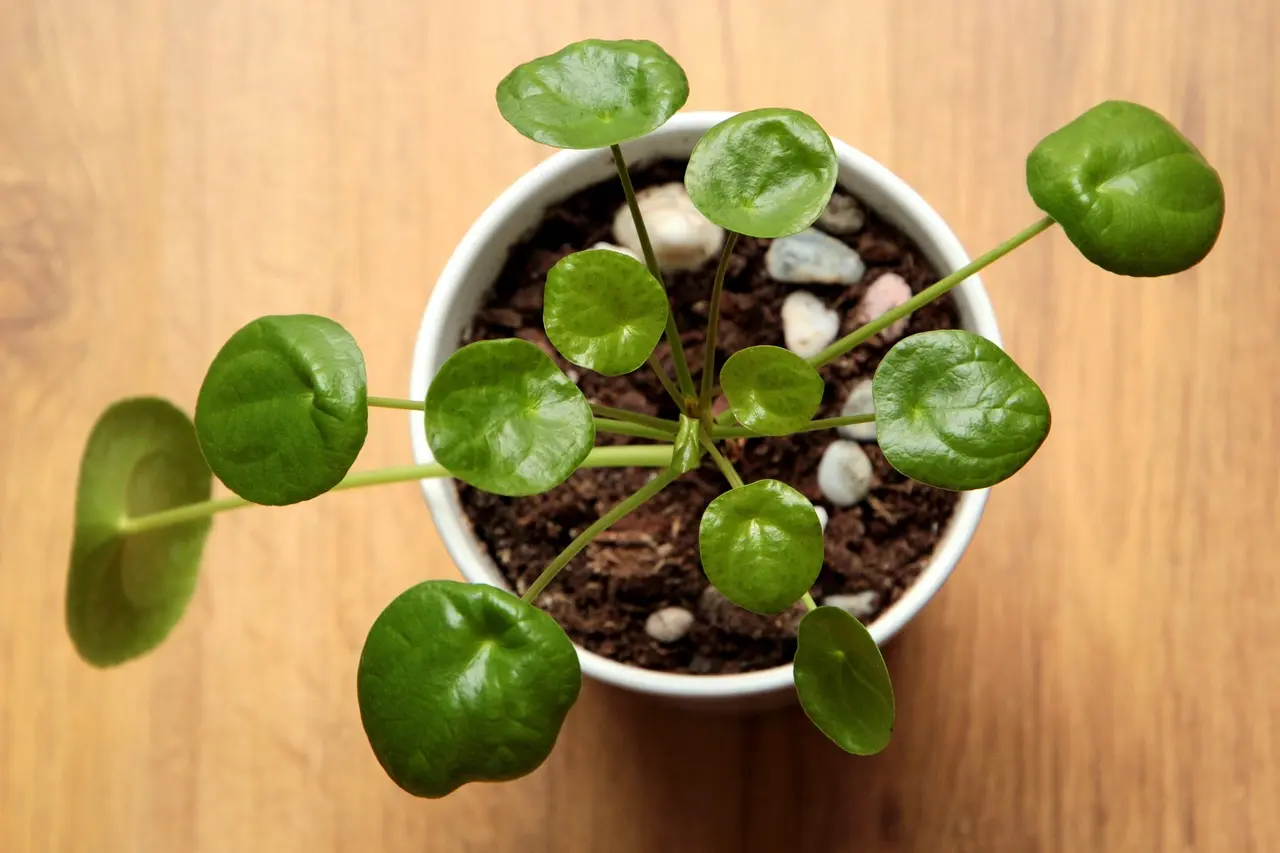
Pilea peperomioides Diels, commonly known as the Chinese money plant, is an accepted species in the nettle family, Urticaceae. It is readily recognized horticulturally by its distinctive peltate, nearly circular leaves and is widely cultivated as an ornamental pot plant. The species is native to southwestern Sichuan and western Yunnan in China.
Classification
- Plant Type
- Herb
- Lifecycle
- Perennial
- Leaf Habit
- Evergreen
- Native Region
- East Asia
- Plant Family
- Urticaceae
Within its native range, Pilea peperomioides occurs in shaded, moist rocky sites associated with forests at approximately 1,500–3,000 m elevation. Flora of China describes the species as very rare and possibly endangered in the wild. This assessment should be distinguished from contemporary extinction-risk assessments and should not be treated as an IUCN Red List category.
The species has a much broader cultivated presence than its native geographic range. Its identity, nomenclature, conservation baseline, and available cytogenetic evidence therefore require distinction between documented wild occurrence, taxonomic status, and horticultural distribution.
Quick Plant Information
| Field | Information |
|---|---|
| Scientific name | Pilea peperomioides Diels |
| Family | Urticaceae |
| Order | Rosales |
| Primary common name | Chinese money plant |
| Other documented common names | Pancake plant; UFO plant; lefse plant; missionary plant |
| Native range | Southwestern Sichuan and western Yunnan, China |
| Native habitat | Shaded, moist rocky sites in forests |
| Native elevation | Approximately 1,500–3,000 m |
| Life form | Perennial, rhizomatous herb |
| Horticultural role | Ornamental pot plant |
| Current taxonomic status | Accepted species |
| Conservation baseline | Kew Angiosperm Extinction Risk Predictions v1: predicted extinction risk threatened, with a confident prediction |
| Nomenclatural authority | Diels, 1912 |

Classification and Taxonomy
| Rank | Classification |
|---|---|
| Kingdom | Plantae |
| Phylum | Streptophyta |
| Class | Equisetopsida |
| Subclass | Magnoliidae |
| Order | Rosales |
| Family | Urticaceae |
| Genus | Pilea |
| Species | Pilea peperomioides Diels |
Kew’s Plants of the World Online currently recognizes Pilea peperomioides Diels as an accepted species in Urticaceae and Rosales. NCBI Taxonomy likewise records Pilea peperomioides Diels, 1912 as the current species name.
Related Species of Significance
Pilea peperomioides should be distinguished from other accepted Pilea species in botanical and molecular literature. In particular, Pilea cavaleriei H.Lév. is taxonomically relevant because it occurs in comparative Pilea datasets and may be encountered alongside P. peperomioides in molecular studies.
Pilea cavaleriei is currently recognized by Kew as a separate accepted species. It should therefore not be treated as a synonym, variety, or alternative name for Pilea peperomioides.
Other Pilea species may occur in comparative taxonomic or horticultural literature, but their inclusion is not necessary for establishing the identity of P. peperomioides in this profile.
Taxonomic Context
The current identity of Pilea peperomioides is relatively stable across major contemporary taxonomic resources. The principal practical issue for researchers is therefore the accurate matching of names and taxonomic identities when consulting older botanical, horticultural, or molecular literature.
The common name money plant is not taxonomically specific and is used for several unrelated plants. Literature searches based only on this common name can therefore retrieve information concerning species outside Pilea. The scientific name Pilea peperomioides should be used when assembling a research literature set.
Importantly, Pilea cavaleriei H.Lév. should not be treated as a synonym of Pilea peperomioides in the current profile. Kew recognizes Pilea cavaleriei as a separate accepted species. This distinction is relevant when interpreting comparative molecular datasets in which multiple Pilea species are included.
Cytogenetics
Cytogenetic Table
| Parameter | Status |
|---|---|
| Chromosome number | No species-specific nuclear chromosome count verified. |
| Ploidy level | No species-specific nuclear ploidy determination verified. |
| Nuclear genome size | No species-specific nuclear genome-size estimate verified. |
Cytogenetic Note
Species-specific genomic resources are available for Pilea peperomioides, but plastid genomic measurements should not be conflated with classical nuclear cytogenetic measurements.
A complete plastid genome has been sequenced for Pilea peperomioides, with a reported length of approximately 152,327 bp. This value represents the plastid genome and does not establish the species’ nuclear genome size, chromosome number, or ploidy level.
Scientific Stability and Nomenclature
Current accepted status: Pilea peperomioides Diels is currently accepted by major contemporary taxonomic resources.
Authority: The species was published by Ludwig Diels in 1912 in Notes of the Royal Botanic Garden, Edinburgh.
Nomenclatural context: Historical and modern Pilea literature contains multiple species names that require careful taxonomic matching. In particular, Pilea cavaleriei H.Lév. is currently recognized as a separate accepted species rather than as a synonym of P. peperomioides.
Research implication: Literature searches should use the accepted scientific name and verify the identity of comparative Pilea taxa rather than assuming that similar names represent synonyms.
Growth Habit and Architecture
Pilea peperomioides is a compact perennial, rhizomatous herb with a generally erect to ascending stem and a concentrated crown of long-petioled leaves. The nearly circular leaf blades are displayed on conspicuously long petioles, producing the characteristic open, coin-leaf appearance of the species.
The combination of a robust central stem, long petioles, and broad, nearly circular leaf blades provides an important set of features for identification. In cultivation, these characteristics produce the familiar upright form associated with the Chinese money plant.
| Field | Species-specific evidence |
|---|---|
| Life form | Perennial, rhizomatous herb |
| Mature height | Approximately 15–40 cm in the Flora of China description; cultivated plants may reach approximately 60 cm |
| Canopy spread | Approximately 10–50 cm in horticultural references |
| Stem type | Erect to ascending; robust and somewhat succulent |
| Stem surface / texture | Rough |
| Branching pattern | Stems often simple |
| Root morphology overview | Rhizomatous |
| Longevity | Perennial |
| Distinguishing architectural feature | Long petioles supporting nearly circular peltate leaves from a compact upright stem |
Stem
The stem forms the principal supporting axis for the foliage. Its relatively robust construction supports the long petioles and broad leaf blades and contributes to the species’ upright or ascending habit.
Stem surface character, internode structure, leaf scars, and the somewhat succulent distal portions provide additional morphological information, although the leaf architecture remains the more conspicuous identification feature.
Stem Morphology
| Field | Evidence |
|---|---|
| Stem type | Erect to ascending |
| Cross-section shape | No species-specific cross-sectional shape suitable for publication-level reporting was verified |
| Mature diameter | Approximately 0.6–2 cm |
| Surface texture | Rough |
| Young colour | Greenish |
| Mature colour | Dark brownish to greenish-brown |
| Internode length | Approximately 0.3–1 cm |
| Thorn/spine/wing status | No thorns, spines or wings documented |
| Internal structure | Distal stem portions described as succulent; base described as thick and woody |
Recommended Products
Disclosure: As an Amazon Associate, PlantsInfo may earn from qualifying purchases.
🌱 Plant Care Essentials
The following tools can help with pruning, plant health, soil management, and fruit garden maintenance.

Neem Oil for Plant Care
Natural plant protection against aphids, whiteflies, mites, and other common garden pests.

Fungicide for Root Care
Helps suppress soil-borne fungal diseases and supports healthier root systems.

Spray Bottle for Plants
Ideal for applying foliar sprays, neem oil solutions, and liquid plant treatments.

Rubber Hand Gloves
Protects hands during pruning, planting, soil preparation, and garden maintenance.
Leaves
The leaves are the most diagnostically important vegetative structures of Pilea peperomioides. Their nearly circular blades, peltate attachment, and conspicuously elongated petioles produce the characteristic coin-like appearance for which the species is widely recognized.
The peltate leaf structure has also made P. peperomioides a subject of biomechanical research concerning the transition between the petiole and leaf blade. The leaf blade is somewhat succulent and has radiating venation from the petiole–lamina junction.
Leaf Morphology
| Field | Evidence |
|---|---|
| Presence | Present |
| Leaf type | Simple |
| Blade size | Approximately 2.5–9 × 2–8 cm in the Flora of China description |
| Blade shape | Suborbicular to orbicular |
| Attachment | Peltate |
| Arrangement | Spirally arranged; crowded toward upper nodes |
| Colour | Green above; paler green beneath |
| Petiole length | Approximately 2–17 cm |
| Margin | Entire; rarely slightly undulate |
| Apex | Rounded or obtuse |
| Venation | Three primary veins, with 3–4 lateral veins on each side |
| Special features | Somewhat succulent blade; conspicuous cystoliths; finely honeycombed lower surface |
Flowers
The flowers are small and visually subordinate to the foliage. They are nevertheless useful for formal identification because the species produces separate male and female inflorescences and is commonly dioecious, although monoecious individuals are also reported.
Male inflorescences form relatively long cymose panicles, whereas female inflorescences are shorter. The flowers are small and reduced, consistent with the reproductive morphology documented for Pilea.
Flower Morphology
| Field | Evidence |
|---|---|
| Inflorescence type | Male: cymose panicle; female: shorter inflorescence |
| Flower diameter | Not reported as a sufficiently reliable species-specific value |
| Flower length | Male flower approximately 2.5 mm in bud |
| Sepals / perianth | Male flowers with 4 obovate perianth lobes; female perianth lobes unequal |
| Petals | Not differentiated as a separate petal whorl in the species description |
| Stamens | 4 |
| Pistil / ovary | Rudimentary ovary in male flowers; female ovary straight with oblique apex |
| Fragrance | No species-specific fragrance evidence verified |
| Anthesis / flowering period | April–July |
| Primary pollinator identity | Not established from species-specific evidence reviewed. |
Fruit
The fruit is a very small achene that develops within the persistent perianth. Its minute size contrasts with the highly recognizable foliage.
Fruit Morphology
| Field | Evidence |
|---|---|
| Fruit type | Achene |
| Shape | Broadly ovoid |
| Length | Approximately 0.8 mm |
| Surface features | Slightly compressed, oblique and verrucose |
| Colour | Purplish |
| Perianth relationship | Enclosed by the persistent perianth |
| Maturation period | July–September |
Fields without sufficiently specific evidence have been omitted rather than populated with generic values.
Seeds
The available species description characterizes the mature reproductive unit primarily as an achene rather than providing a separate set of seed measurements.
No species-specific evidence sufficient for publication-grade reporting of seed dimensions, seed-coat morphology, oil content, viability period, or germination rate was verified. Those fields are therefore intentionally omitted.
Root System
The species is described as a rhizomatous perennial herb, establishing the presence of a rhizomatous underground system. The verified morphological evidence does not provide a sufficiently reliable quantitative description of rooting depth or lateral root spread.
Field Identification
For field or collection identification, the strongest combination of features is a relatively small perennial herb with a robust upright-to-ascending stem and conspicuously long petioles carrying nearly circular, peltate leaves. The leaves are generally smooth-edged and radiate visually around the upper portion of the plant.
A genuine horticultural identification confusion exists with Peperomia polybotrya, the raindrop peperomia. The two belong to different plant families and can appear superficially similar because both are cultivated for rounded foliage. Pilea peperomioides is distinguished by its strongly orbicular, peltate leaf blades and characteristic long petioles, whereas P. polybotrya has distinctly teardrop-shaped leaves with a pointed apex.
Single best distinguishing feature: the combination of a nearly circular peltate leaf blade and its long petiole.
Normal Morphology vs. Identification Concerns
| Observation | Status | Morphological basis |
|---|---|---|
| Long petioles supporting widely separated circular leaves | Normal | Characteristic species architecture |
| Slightly unequal leaf size within the crown | Normal | Leaf blades are described as unequal in size |
| Slightly undulate leaf margin on some leaves | Normal | Documented variation in the species description |
| Greenish to darkening stem toward maturity | Normal | Stem colour varies with developmental stage |
| Very small, inconspicuous flowers | Normal | Species produces small reduced flowers |
| Pronounced departure from the characteristic orbicular-peltate leaf form | Investigate | Leaf architecture is a principal diagnostic feature of the species |
| Strongly pointed, teardrop-shaped leaves throughout the plant | Investigate | Consistent with possible confusion with Peperomia polybotrya rather than typical P. peperomioides morphology |
Cultivar Summary
Named horticultural selections of Pilea peperomioides are documented.
| Cultivar | Key characteristic | Documentation status |
|---|---|---|
| ‘Mojito’ (‘Mospilmoj’) | Green leaves marked and spotted with paler green | Documented by RHS |
| ‘Sugar’ | Variegated foliage with pale/white spotting | Horticulturally documented |
| ‘White Splash’ | Foliage with prominent white splash markings | Horticulturally documented |
RHS specifically documents Pilea peperomioides ‘Mojito’ (‘Mospilmoj’) as a named cultivar. Additional horticultural documentation identifies ‘Sugar’ and ‘White Splash’ among named selections, but their formal registration details were not sufficiently established in the evidence reviewed here to assign more specific provenance.
Physiology and Phytochemistry
Functional Traits
The physiological strategy of Pilea peperomioides is characterized by predominantly C3 carbon assimilation together with a demonstrable but low-level capacity for CAM. Under the experimental conditions studied, carbon uptake occurred predominantly during daylight, indicating that conventional C3 photosynthesis is the principal carbon-acquisition pathway. At the same time, reduced nocturnal CO₂ loss and experimentally observed nocturnal CO₂ uptake under water deficit demonstrate that the species can activate CAM.
The CAM component appears to be environmentally responsive rather than constitutive. During water-deficit treatment, nocturnal CO₂ exchange shifted sufficiently to produce a short period of net nighttime carbon uptake in one experimental plant, while nocturnal increases in titratable acidity occurred in both leaf laminae and petioles. These observations indicate physiological plasticity rather than replacement of C3 photosynthesis by a fully developed CAM system.
The physiological response may be relevant to the species’ response to drying, but the available evidence does not establish the ecological contribution of CAM under natural conditions.
Functional Traits Table
| Trait | Species-specific evidence |
|---|---|
| Photosynthetic pathway | Predominantly C3 photosynthesis, with low-level CAM activity |
| Water-deficit response | Water deficit can induce transient nocturnal CAM activity |
| Growth form / physiological context | Perennial herb with somewhat succulent tissues; predominantly C3 photosynthesis with limited CAM activity |
| Stress-response mechanism | Water deficit can induce transient nocturnal CO₂ uptake and increased nocturnal titratable acidity |
| Species-specific physiological distinction | Low-level CAM activity has been documented in Pilea peperomioides |
The experimental evidence does not establish a quantitative field water-use efficiency value, a fixed proportion of carbon derived from CAM, or a universal threshold at which CAM becomes active.
Physiological Integration
The available evidence indicates that the unusual physiological feature of Pilea peperomioides is not a simple transition from C3 to CAM. Instead, the species retains predominantly light-driven C3 carbon assimilation while expressing a limited CAM component that becomes detectable under particular water-deficit conditions.
This arrangement may provide physiological flexibility during drying periods without requiring the species to abandon its principal C3 strategy. However, the current evidence comes primarily from controlled experiments rather than measurements across natural populations. Consequently, the ecological importance of CAM under native montane conditions remains unresolved.
The available studies do not establish how CAM activity interacts with whole-plant water relations, growth, or reproduction under natural conditions. Such relationships should therefore not be inferred beyond the demonstrated physiological responses.
Phytochemistry
Species-specific phytochemical characterization of Pilea peperomioides is substantially less developed than its physiological and morphological literature.
We did not identify a sufficiently reliable species-specific primary study establishing a defined set of named secondary metabolites with reproducible organ-level distribution. Some secondary sources and patent literature associate P. peperomioides with broad compound classes such as polyphenols or flavonoids, but these sources do not provide adequate species-specific compound identification and analytical validation for inclusion in a publication-grade phytochemical table.
Accordingly, Plant Framework V7’s evidence threshold requires these claims to remain outside the formal compound table rather than converting broad family-level or unverified extract claims into species-specific phytochemistry.
Phytochemistry Table
No compound-class rows are included at this stage.
No named phytochemical class could be verified with sufficient species-specific analytical evidence to support the required combination of:
- compound class;
- named representative compounds;
- species-specific occurrence; and
- biological or ecological significance.
This is an evidence limitation, not a claim that the species contains no secondary metabolites.
Phytochemical Organ Distribution
A publication-grade organ-distribution table does not apply to the evidence currently verified.
No sufficiently robust species-specific dataset was identified that directly establishes compound presence and concentration across defined organs such as leaves, petioles, stems, roots, flowers, or fruits.
The physiological study by Winter et al. provides an important organ-specific biochemical observation: water-deficit experiments detected nocturnal increases in titratable acidity in both leaf laminae and petioles. This represents physiological acid accumulation associated with CAM activity rather than a phytochemical concentration dataset and therefore does not satisfy the phytochemical organ-distribution table requirements.
Phytochemical Significance
At the present evidence level, no specific compound can be assigned demonstrated biological or pharmacological significance in Pilea peperomioides. This conclusion reflects the absence of sufficiently strong species-specific chemical characterization in the reviewed literature rather than evidence that biologically active compounds are absent.
Characterization maturity: low relative to the physiological and morphological literature. The available research base is much stronger for photosynthetic behavior, leaf biomechanics, anatomy, and development than for comprehensive metabolite identification.
Multi-compound interactions: no species-specific synergistic or antagonistic phytochemical interactions were sufficiently established in the reviewed evidence for inclusion.
Literature Concentration Bias: Research on P. peperomioides is disproportionately concentrated on photosynthetic physiology, peltate-leaf biomechanics, leaf development, venation, and anatomy, while direct species-specific secondary-metabolite characterization and organ-resolved phytochemistry remain comparatively under-studied.
This imbalance is important for interpreting future chemical claims: broad phytochemical statements about Urticaceae or other Pilea species should not automatically be transferred to P. peperomioides.
Evidence Hierarchy for Medicinal Use
Although Pilea peperomioides is primarily documented as an ornamental species, a peer-reviewed study on Pilea records its use in Dai medicine, including traditional applications described in terms of anti-inflammatory and detoxifying activity and uses associated with erysipelas and bone setting.
These records establish a history of traditional use, not demonstrated clinical efficacy. Traditional-use descriptions therefore remain explicitly separated from experimental or clinical evidence.
| Evidence Layer | Status | Notes |
|---|---|---|
| Traditional Use | Documented | A peer-reviewed Pilea study records P. peperomioides in Dai medicine for traditional applications including anti-inflammatory and detoxifying uses. |
| Nutritional Evidence | Absent | No reliable species-specific evidence was identified establishing P. peperomioides as a food plant or providing a food-composition dataset. |
| In Vitro Therapeutic Evidence | Absent | No sufficiently established species-specific therapeutic in-vitro evidence was identified.. |
| Animal Therapeutic Studies | Absent | No sufficiently established species-specific therapeutic animal study was identified.. |
| Human Clinical Studies | Absent | No species-specific human clinical evidence establishing therapeutic efficacy was identified. |
| Regulatory Recognition | Absent | No regulatory recognition of P. peperomioides as an approved medicinal treatment was identified in the evidence reviewed. |
| Unsupported Commercial Claims | Partial | Traditional-use descriptions may occur in secondary or commercial material, but therapeutic efficacy should not be inferred without experimental or clinical evidence. |
Evidence Assessment
The strongest medicinal evidence identified for Pilea peperomioides is traditional-use documentation, rather than clinical or experimental therapeutic evidence.
The available peer-reviewed source records traditional Dai-medicine applications, but such documentation establishes historical use rather than efficacy.
No species-specific human clinical evidence was identified that establishes therapeutic efficacy, dosage, safety, or therapeutic benefit for a defined medical condition. No sufficiently established species-specific in vitro or animal therapeutic evidence was identified either.
Accordingly, traditional medicinal descriptions should not be converted into statements of demonstrated therapeutic activity. Terms such as “anti-inflammatory” and “detoxifying” should remain explicitly attributed to the traditional-use context.
Nutritional Composition
Nutritional evidence: Absent.
A food-composition profile does not apply to the present evidence base because Pilea peperomioides is principally documented as an ornamental plant, and no authoritative species-specific food-composition dataset was identified.
Accordingly, no numerical nutritional table is provided.
The absence of a nutritional dataset should not be interpreted as experimental evidence that the plant is inedible or toxic as food.
Nutritional Significance
No publication-grade assessment of nutritional significance can currently be established.
Species-specific evidence was not identified that would allow reliable assessment of:
- Nutrient composition
- Nutrient bioavailability
- Fresh versus dried material
- Processing effects
- Cultivar variation
- Ecotype or wild-population variation
The plant’s established ornamental and horticultural use should therefore not be converted into nutritional or edible-use claims without dedicated species-specific evidence.
Toxicity and Safety
| Subject | Evidence on Toxic Compounds | Species-Specific Safety Evidence |
|---|---|---|
| Humans | No species-specific toxic compound was verified in the evidence reviewed for this profile. | No species-specific clinical poisoning profile was identified. |
| Cats | No species-specific toxic principle was verified. | No species-specific ASPCA listing was verified; available database evidence therefore does not establish either toxicity or confirmed safety. |
| Dogs | No species-specific toxic principle was verified. | No species-specific ASPCA listing was verified; available database evidence therefore does not establish either toxicity or confirmed safety. |
| Livestock | No species-specific toxic compound was verified. | No species-specific livestock toxicity dataset was identified. |
Companion-Animal Evidence Boundary
Some secondary sources may describe Pilea peperomioides as non-toxic to cats or dogs. However, the reviewed ASPCA plant database did not provide a species-specific entry for P. peperomioides.
Therefore, broader Pilea information or secondary-source descriptions should not be presented as definitive species-specific toxicological findings.
The absence of a species-specific database listing should likewise not be interpreted as proof of safety.
Toxicology Evidence Context
No species-specific toxicological dataset was identified that would establish a dose-response relationship or permit a reliable comparison between whole-plant exposure and isolated compounds.
No species-specific human toxicology evidence was identified that would establish safety or toxicity for particular vulnerable populations. Similarly, no species-specific evidence was identified establishing clinically relevant drug interactions, pregnancy-related safety, or organ-specific toxicity.
The appropriate interpretation is therefore limited toxicological evidence, rather than a blanket declaration of confirmed human safety.
This profile does not constitute medical or veterinary advice.
Biogeographic Context
The native distribution of Pilea peperomioides is concentrated in southwestern Sichuan and western Yunnan, China. Flora of China documents the species at approximately 1,500–3,000 m in shaded, moist forest habitats.
The documented range is consistent with a montane environment characterized by substantial shade and moisture availability rather than a lowland tropical distribution. Flora of China specifically records the species on shaded, moist rocks in forests.
The species has a substantially broader cultivated distribution than its native range and has been maintained internationally as an ornamental plant. However, cultivation outside the native range should not be treated as evidence of naturalisation.
A limited introduced or adventive record is documented in Belgium, while a New Zealand environmental assessment found no documented invasive behaviour under the conditions assessed. The available evidence therefore supports a distinction between wide horticultural cultivation and established ecological invasion.
The principal documented biogeographic concern is the species’ restricted native range. Flora of China describes the species as very rare and possibly endangered in the wild, while current Kew data assign a predicted threatened extinction risk.
Native Range and Distribution
| Region | Country or Sub-region | Status | Notes |
|---|---|---|---|
| Asia | China — southwestern Sichuan | Native | Confirmed component of the restricted native range |
| Asia | China — western Yunnan | Native | Confirmed component of the restricted native range; type locality is associated with Yunnan |
No additional country is included in the native-range table because the verified floristic sources restrict the native distribution to China.
Global Cultivation and Naturalisation
| Region | Country or Area | Status | Notes |
|---|---|---|---|
| East Asia | China | Cultivated | Widely maintained as an ornamental plant |
| Europe | Multiple countries | Cultivated | Long-established ornamental cultivation |
| North America | Multiple countries/areas | Cultivated | Established in horticultural cultivation |
| Australasia | Multiple countries/areas | Cultivated | Documented ornamental cultivation |
| Belgium | Belgium | Introduced / adventive record | Kew records an introduced occurrence; this should not be generalized to broad European naturalisation |
| New Zealand | New Zealand | Limited establishment / attempted introduction | Environmental assessment found no documented invasive behaviour or established undesirable self-sustaining population |
The global cultivation evidence demonstrates a much wider horticultural range than the species’ natural range. Cultivation presence should not be treated as evidence of naturalisation.
Cultivation Range Note
Pilea peperomioides is widely cultivated internationally as an ornamental plant, including in horticultural markets outside its native range.
The evidence is substantially stronger for presence in cultivation than for quantified regional production volumes. No reliable global production statistics were identified; individual countries are therefore not ranked by commercial output.
A limited introduced record exists in Belgium, while the New Zealand environmental assessment found no documented invasive behaviour despite international cultivation. The available evidence does not support describing the species as broadly naturalised or invasive.
Systematic global occurrence datasets distinguishing cultivated plants, escaped individuals, and self-sustaining populations remain limited.
Natural Habitat
The native habitat is montane forest, particularly shaded, moist rocky sites. The documented elevational range is approximately 1,500–3,000 m.
The species is associated with shaded microsites rather than exposed open vegetation. Flora of China records it on shaded, moist rocks in forests. The New Zealand environmental assessment also describes its native habitat in relation to cloud-forest environments in the Diancang range of Yunnan.
The available evidence supports a moist forest environment but does not provide sufficiently standardized quantitative soil data to define a universal native-soil chemical profile.
Vegetation association is best described at the ecosystem level as shaded montane forest and associated rocky microsites. A narrowly defined plant-community association has not been established in the evidence reviewed.
The geographically restricted native range and specific documented habitat indicate a restricted ecological distribution, but the precise causes of that distribution remain incompletely resolved.
Ecological Role
Evidence Level: Low to Moderate
The available evidence is insufficient to establish a detailed species-specific interaction network. The strongest evidence concerns habitat occurrence rather than documented relationships with particular animals, fungi, or other plants.
| Role Type | Agent or Context | Evidence Status |
|---|---|---|
| Montane forest understory component | Forest vegetation community | Documented occurrence in shaded, moist forest habitat; species-level associates not established |
| Rock-associated plant | Moist rocky microsites | Repeatedly documented as part of the native habitat |
| Reproductive interaction | Species-specific pollinator | Not established; floral biology is documented, but a confirmed species-level pollination relationship was not verified |
| Seed dispersal | Specific dispersal agent | Not established; sufficiently specific field evidence was not identified |
No evidence reviewed. is sufficient to classify P. peperomioides as a keystone species, ecosystem engineer, indicator species, or major ecological resource.
Invasive Status
Naturalisation outside the native range is documented at least to the level of an introduced record in Belgium, according to Kew. The available evidence does not establish widespread invasive behaviour.
A New Zealand environmental assessment found no documented invasive behaviour despite international cultivation and assessed establishment of an undesirable self-sustaining population as unlikely under the conditions considered. This regional assessment should not be generalized into a universal prediction for every environment.
| Region | Status | Documented Impact | Management Evidence |
|---|---|---|---|
| Belgium | Introduced / adventive record | No significant ecological impact established in the evidence reviewed | No species-specific invasive-management response established |
| New Zealand | Limited establishment / attempted introduction | No documented invasive impact | No specific invasive-management programme established |
Invasive Status Note
The available evidence supports a clear distinction between wide cultivation and ecological invasion.
Pilea peperomioides has been cultivated internationally, but relatively few documented records of self-sustaining populations were identified in the evidence reviewed.
Restricted seed establishment and reproductive limitations have been discussed as possible factors affecting establishment potential. These factors should not, however, be treated as universal proof of non-invasiveness.
Optimal Climate Parameters
The available evidence does not support a defensible global species-specific numerical optimum or tolerance range for mean annual temperature or annual rainfall.
| Parameter | Optimal Range | Tolerance Range | Evidence Note |
|---|---|---|---|
| Mean Annual Temperature | Not established | Not established | Native distribution indicates a montane climate, but no standardized species-specific temperature envelope was verified |
| Annual Rainfall | Not established | Not established | Native habitat is moist, but no sufficiently robust species-specific precipitation range was verified |
The core climate rows are retained because the framework requires them, but values are deliberately left as Not established rather than substituting regional climate averages for species-specific physiological limits.
Experimental physiological research provides controlled-condition information, but those experimental settings do not constitute a species-wide climate tolerance envelope. The cited study maintained plants under 25°C day / 20°C night conditions and demonstrated a water-deficit response; these values describe the experimental conditions, not an optimal field climate.
Climate Interpretation
The native range indicates association with temperate montane conditions characterized by substantial shade and moisture availability.
The principal climate uncertainty is quantitative. Insufficient evidence is available to define defensible global thresholds for mean annual temperature or annual rainfall. Consequently, the native climatic envelope and the much broader horticultural distribution should not be treated as equivalent datasets.
The species’ persistence in indoor cultivation demonstrates horticultural flexibility, but indoor cultivation substantially decouples the plant from outdoor climate conditions. Cultivated occurrence is therefore not a substitute for field-derived climate tolerance.
The documented low-level CAM response provides evidence of physiological flexibility during water deficit, but it does not establish tolerance to prolonged drought, high temperature, or combined climatic extremes.
Stress Tolerance Profile
Only stress responses supported by species-specific physiological evidence are included.
| Stress Type | Evidence Status | Physiological Response | Interpretation |
|---|---|---|---|
| Water deficit / drought | Verified | Predominantly C3 carbon assimilation is supplemented by transient nocturnal CO₂ uptake and increased nocturnal titratable acidity during water-deficit treatment | Demonstrated experimentally; does not establish field drought tolerance |
| Wet–dry cycling | Verified | Nocturnal titratable acidity increased in leaf laminae and petioles during wet–dry–wet cycles | Evidence concerns a physiological response associated with low-level CAM activity |
| Low-temperature exposure | Conditional | No sufficiently standardized species-specific physiological tolerance threshold was verified | Native elevation indicates exposure to cool montane conditions, but quantitative limits remain unresolved |
The documented water-deficit response should not be interpreted as evidence that the species is drought tolerant in the horticultural sense. The physiological experiment demonstrated a limited CAM-associated response during water deficit, not indefinite survival under severe dehydration.
Compound Stress Assessment
No sufficiently robust species-specific study was identified that directly tests combinations such as:
- Drought + heat
- Drought + salinity
- Waterlogging + heat
- Comparable multi-stressor conditions
Accordingly, no interaction among these stressors is inferred.
The available evidence establishes a response to water deficit and provides native-range evidence for cool, shaded montane environments, but it does not establish how simultaneous heat, drought, salinity, waterlogging, or high irradiance would modify those responses.
This remains an important evidence gap when translating controlled physiological findings into predictions of climate-change tolerance.
Structural and Physiological Adaptations
The most defensible functional interpretation concerns the species’ occurrence in shaded, moist montane rocky habitats and the structural characteristics that allow it to occupy those microsites.
Its succulent vegetative tissues are compatible with intermittent water limitation within otherwise moist habitats, while its peltate leaves provide a distinctive leaf architecture whose mechanical properties have been experimentally investigated. Rhizomatous perennial growth also provides a vegetative persistence and regeneration pathway.
However, functional significance should not automatically be equated with evolutionary adaptation. The available evidence does not establish that every conspicuous structural feature evolved specifically in response to a particular environmental pressure.
Structural Adaptations and Functional Traits
| Trait | Functional Significance | Ecological Context | Evidence Boundary |
|---|---|---|---|
| Peltate leaf attachment | The petiole joins the leaf blade away from the margin, producing a distinctive petiole–lamina junction with experimentally measurable mechanical properties. | Relevant to the species’ leaf architecture in shaded montane habitats. | Functional significance is better established than any specific evolutionary adaptive explanation. |
| Succulent vegetative tissues | Water-containing tissues provide greater tissue water-storage capacity than a purely non-succulent herbaceous construction. | Consistent with intermittent water limitation in rocky montane microsites. | Contribution to survival under natural field conditions has not been quantitatively established. |
| Rhizomatous perennial growth | Underground vegetative structures support persistence and production of new shoots without requiring every new shoot to originate from seed. | Potentially important in localized rocky forest microsites. | Contribution to wild-population persistence has not been quantified. |
Climate Change Vulnerability
| Factor | Assessment | Notes |
|---|---|---|
| Primary Climate Sensitivity Factors | Moderate confidence | Restricted native distribution, montane habitat specialization, moisture dependence, and exposure to environmental extremes are relevant considerations; quantitative species-specific thresholds remain limited. |
| Key Threatening Climate Processes | Conditional | Changes in temperature and precipitation could alter conditions within the restricted montane habitat, but species-specific climate-impact modelling was not identified. |
| Resilience Factors | Partial | Vegetative regeneration and extensive ex situ cultivation provide biological and horticultural persistence outside the wild range; these do not necessarily demonstrate resilience of natural populations. |
| Overall Confidence | Low to moderate | Assessment is based primarily on habitat specificity, geographic distribution, physiological studies, and conservation assessments rather than species-specific climate projections. |
Climate Vulnerability Assessment
No species-specific population or distribution model projecting the future range of Pilea peperomioides under defined climate scenarios was identified in the evidence reviewed.
The qualitative vulnerability assessment therefore rests on three documented characteristics:
- A geographically restricted native range
- Specialized shaded montane habitat
- Physiological responses to water deficit
These characteristics provide a reasonable basis for identifying potential sensitivity to environmental change, but they do not establish a numerical extinction probability or predict a specific future range contraction.
An important resilience factor is the species’ capacity for vegetative reproduction and its extensive ex situ cultivation. However, horticultural abundance should not be treated as a direct measure of wild-population resilience because cultivated plants are maintained under substantially different environmental and demographic conditions.
Phenological Calendar
| Event | Native-Range Timing | Cultivated-Range Timing | Environmental Trigger |
|---|---|---|---|
| Vegetative Growth Onset | Not specifically established | Not specifically established | No species-specific temperature or photoperiod threshold was identified |
| Flower-Bud Initiation | Not specifically established | Not specifically established | Specific environmental trigger not established |
| Anthesis / Peak Flowering | April–July | Exact cultivated peak not established; flowering is uncommon under typical indoor cultivation | Specific environmental trigger not established |
| Fruit Development | July–September | Rare in typical indoor cultivation | Specific trigger not established |
| Fruit Maturation | July–September | Rarely documented in ordinary indoor cultivation | Specific trigger not established |
| Seed Dispersal | Not specifically established | Not specifically established | Specific dispersal trigger not established |
| Dormancy / Rest Period | Not specifically established | Not specifically established | No species-specific dormancy threshold established |
The native-range flowering and fruiting periods are documented in the Flora of China treatment. Other life-cycle timing remains inadequately documented at the species-specific level.
Phenological Notes
The clearest documented phenological pattern is seasonal reproduction:
- Flowering: approximately April–July
- Fruiting: approximately July–September
The available evidence does not establish a precise environmental trigger such as a minimum temperature, photoperiod threshold, or rainfall threshold responsible for flowering initiation. Seasonal timing should therefore not be converted into a mechanistic flowering model.
Cultivated plants can differ substantially from wild plants in reproductive expression. Indoor plants may rarely flower, and the New Zealand environmental assessment reports that plants grown under artificially heated indoor conditions generally do not flower.
This creates an important cultivation-range bias in available phenological observations.
Pollination Ecology
Pilea peperomioides is predominantly dioecious, with male and female flowers generally occurring on separate plants, although monoecious individuals have also been documented.
The flowers are small and structurally reduced. Although the reproductive system is relatively well documented, the available evidence does not establish a species-specific pollinator.
Consequently, a definitive pollination syndrome should not be assigned from floral morphology alone.
Pollination Ecology Table
| Parameter | Value | Evidence Boundary |
|---|---|---|
| Primary Pollinators | Not established | No species-specific pollinator was verified |
| Secondary Pollinators | Not established | No species- or genus-level secondary pollinator was verified |
| Pollination Syndrome | Not securely assigned | Floral morphology alone is insufficient to establish a species-specific syndrome |
| Floral Mechanism | Small unisexual flowers with exposed reproductive structures | Male flowers bear four stamens; female flowers contain the ovary; a species-specific pollinator-guidance mechanism has not been established |
| Reproductive System | Predominantly dioecious; monoecious individuals also reported | Male and female flowers generally occur on separate plants |
| Seed Dispersal Agent | Not established | No species-specific dispersal agent was verified |
| Reproductive Evidence Status | Partial | Floral structure and sexual system are documented; field pollinator identity and reproductive success remain poorly documented |
| Human Intervention | Biologically feasible but not quantitatively established | Cross-plant reproduction is biologically possible, but no operational pollination protocol is provided here |
Pollination Context
The documented predominantly dioecious reproductive system means that sexual reproduction generally requires reproductive compatibility between plants bearing male and female flowers.
The existence of monoecious individuals prevents an absolute characterization of the species as exclusively dioecious, but it does not establish that self-fertilization is routinely successful.
The New Zealand environmental assessment reports cultivated experiments in which artificial cross-pollination did not produce seed set and describes sexual reproductive output in cultivation as very low. It also notes that many cultivated plants are propagated clonally.
These observations suggest a potentially important reproductive limitation in cultivation, but they should not be generalized automatically to all wild populations.
Reproductive Evidence Boundaries
- Self-compatibility: Not securely established. Available cultivated evidence indicates restricted sexual reproduction.
- Outcrossing: Biologically possible because male and female flowers can occur on separate plants, but effective natural outcrossing rates are not established.
- Pollinator-decline risk: Cannot currently be quantified because the identity and dependence of natural pollinators have not been established.
- Assisted pollination: Biologically possible in principle, but reliable seed production and a reproducible species-specific success rate have not been established.
Seed Biology and Germination
| Parameter | Value | Evidence Status | Notes |
|---|---|---|---|
| Seed Type | Small, purplish, broadly ovoid achene | Verified | Approximately 0.8 mm long; slightly compressed and oblique |
| Dormancy Class | Not established | Conditional | No sufficiently specific dormancy study was identified |
| Dormancy-Breaking Requirement | Not established | Conditional | No validated species-specific requirement was identified |
| Optimal Germination Temperature | Not established | Conditional | No controlled species-specific temperature study was verified |
| Germination Rate | Not established | Conditional | No reliable quantitative germination percentage was verified |
| Germination Period | Not established | Conditional | No sufficiently robust species-specific time-to-germination dataset was verified |
| Storage Behaviour | Seed vigour reportedly declines rapidly | Supported | New Zealand EPA assessment reports rapid loss of vigour based on horticultural evidence |
| Seed Longevity | Not established quantitatively | Supported / Conditional | Rapid decline in vigour is reported, but a defined longevity period has not been established |
Germination Notes
Sexual reproduction appears to be relatively uncommon in cultivation. The available environmental assessment reports that seed can be produced but is difficult to use as a routine reproductive pathway, with seed vigour declining rapidly and seedlings developing slowly.
The evidence is insufficient to assign a formal dormancy class or quantitative germination optimum. No specific temperature, germination percentage, or storage duration is therefore presented.
The contrast between wild and cultivated seed biology is also poorly documented. It is not possible from the reviewed evidence to determine whether low seed production in cultivation reflects environmental conditions, reproductive-system constraints, clonal propagation history, or a combination of these factors.
No operational propagation protocol is provided here because cultivation procedures belong to a later cultivation-focused module.
Vegetative Reproduction
| Parameter | Value | Notes |
|---|---|---|
| Vegetative Regeneration Capacity | High / Verified in cultivation | Plants routinely produce offsets or pups and can also regenerate from vegetative cuttings |
| Primary Regeneration Mechanism | Offsets / vegetative shoots | Basal or adjacent plantlets provide a major asexual regeneration pathway in cultivation |
| Minimum Propagule Size | Not established | No species-specific minimum viable propagule size was verified |
| Ecological or Invasive Significance | Supported | Extensive clonal propagation contributes to horticultural persistence, while available evidence does not demonstrate broad invasive establishment |
Vegetative reproduction is particularly important to the modern cultivation history of P. peperomioides. The species has been extensively maintained and exchanged through clonal material, while sexual reproduction appears comparatively limited in cultivation.
This distinction is important when interpreting horticultural abundance: a large number of cultivated plants does not necessarily represent a correspondingly large number of genetically independent individuals.
Economic Importance
Economic Context
Pilea peperomioides has a clearly documented economic role as an ornamental foliage plant. USDA GRIN identifies ornamental economic importance, while horticultural sources document the species as a widely available houseplant.
The contemporary commercial pathway is predominantly based on cultivated production and vegetative propagation, rather than documented wild-harvest supply.
Species-specific global production volumes, cultivated area, export totals, market value, and country-level production rankings could not be verified from authoritative agricultural datasets. No numerical global market size or production ranking is therefore assigned.
Commercial availability is geographically broad. Nursery and wholesale records document commercial production of foliage plants and propagation material, including offsets, starter plants, and unrooted cuttings. Individual shipment records also demonstrate international movement of P. peperomioides propagation material.
These records demonstrate participation in international ornamental-plant trade but should not be interpreted as a complete estimate of global trade volume.
The commercial pathway is best characterized as a cultivated ornamental-plant chain involving:
- Propagation material
- Nursery production
- Finished potted plants
- Wholesale distribution
- Retail and online sales
The relative contribution of different production regions to the global market remains unquantified.
Commercial misidentification has also been documented. Government biosecurity documentation records P. peperomioides being offered under the name Peperomia polybotrya. This demonstrates that accurate identification can have practical commercial and regulatory importance.
Economic Importance Table
| Use Category | Description | Economic Significance |
|---|---|---|
| Ornamental houseplant | Cultivated primarily for distinctive rounded foliage and compact growth | Documented commercial value within the ornamental-plant sector |
| Nursery propagation material | Sold as offsets, cuttings, starter plants, and wholesale nursery material | Supports propagation and nursery supply chains |
| Finished potted plants | Sold through garden centres, houseplant retailers, nurseries, and online sellers | Established retail ornamental-plant market |
| International propagation trade | Commercial movement of unrooted cuttings and other live propagation material is documented | Demonstrates international movement of propagation material |
Economic Evidence Boundary
The species has established ornamental economic importance, but authoritative species-specific global production, export, and market-value statistics were not verified.
The available trade records should therefore be treated as evidence of commercial participation, not as a quantitative estimate of the size or geographic distribution of the global market.
Traditional Uses
A peer-reviewed botanical source documents Pilea peperomioides within Dai medicine, including traditional associations with anti-inflammatory and detoxifying applications and uses relating to erysipelas and bone setting.
This establishes a documented ethnomedical association but does not establish clinical efficacy, pharmacological effectiveness, dosage, or regulatory recognition.
Documented Traditional-Use Context
| Use Category | Knowledge System | Region / Cultural Group | Practice Summary | Documentation Level |
|---|---|---|---|---|
| Anti-inflammatory / detoxifying use | Dai medicine | Dai cultural-medical context, southwestern China | Recorded as a traditional medicinal application | Documented |
| Erysipelas | Dai medicine | Dai cultural-medical context, southwestern China | Recorded traditional application associated with erysipelas | Documented |
| Bone setting | Dai medicine | Dai cultural-medical context, southwestern China | Recorded traditional application associated with bone setting | Documented |
The documented source identifies the species specifically within Dai medicine. This should not be expanded into a generalized claim that P. peperomioides has a broad or widespread traditional-medicine history.
Traditional Use
The primary specifically documented knowledge system is Dai medicine, associated geographically with southwestern China.
The available evidence establishes historical medicinal use within that system but does not provide sufficient information to reconstruct:
- A detailed chronology of practice
- Frequency of use
- Preparation traditions
- Practitioner transmission
- Present-day continuity
The relationship between this traditional use and the modern ornamental trade is also not established. Contemporary commercial evidence concerns ornamental cultivation rather than a documented medicinal supply chain.
Accordingly, the ethnobotanical record should be described as documented but historically incomplete.
Regional Ethnobotanical Context
The species is native to southwestern Sichuan and western Yunnan, where it occurs in shaded, moist montane environments.
The documented Dai-medicine association provides evidence of human interaction within southwestern China, but the reviewed literature does not establish sufficient historical detail to trace the practice continuously through successive cultural or agricultural periods.
The available evidence also does not establish whether traditional medicinal use remained locally important after P. peperomioides became widely cultivated as an ornamental plant.
The ethnobotanical evidence should therefore remain geographically and culturally specific rather than being generalized to the species as a whole.
Traditional Ecological Knowledge
No sufficiently detailed species-specific Traditional Ecological Knowledge was verified concerning:
- Agroforestry systems
- Living-fence use
- Ecological indicator roles
- Landscape-scale resource management
- Documented traditional propagation systems
- Deliberate wild-population management
The available evidence supports documented human medicinal interaction and extensive horticultural cultivation, but these facts do not by themselves constitute documented Traditional Ecological Knowledge.
TEK status: Not established from the reviewed evidence.
Ethical Considerations
The documented Dai-medicine association should be represented with explicit cultural attribution rather than generalized as simply “folk medicine” or “traditional medicine.”
Traditional knowledge should not be converted into claims of demonstrated therapeutic efficacy. Likewise, the species’ medicinal history and its modern ornamental commercialization should remain separate contexts unless evidence establishes a direct connection.
Commercial use of plants associated with traditional knowledge can raise broader questions concerning attribution, benefit sharing, intellectual property, and access to biological resources. However, no species-specific evidence reviewed here establishes a particular benefit-sharing arrangement, commercialization dispute, or documented appropriation case involving P. peperomioides.
Such claims should therefore not be made without additional evidence.
Cultural Significance
The species has documented cultural significance within the specific context of Dai medicinal knowledge.
Its modern international cultural identity is predominantly ornamental, particularly through the common name “Chinese money plant.”
The common-name association should not be treated as evidence of a documented historical Chinese cultural belief concerning wealth or prosperity. Contemporary common-name symbolism and commercial marketing are distinct from verified ethnobotanical history.
No additional species-specific cultural traditions, ceremonies, symbolic practices, or culturally significant landscape roles were sufficiently documented for inclusion.
Cultivation
Pilea peperomioides is primarily maintained as a cultivated ornamental houseplant. Its commercial cultivation is facilitated by its compact form, distinctive foliage, and strong capacity for vegetative propagation.
The species is commonly propagated through offsets, while stem cuttings are also used. Commercial production therefore does not depend primarily on successful sexual reproduction.
Cultivation evidence indicates that the species generally performs under bright filtered or indirect light, adequate moisture, well-drained growing conditions, and protection from freezing conditions. These statements provide biological orientation only and are not intended as a complete cultivation protocol.
Detailed propagation and cultivation procedures should remain within the dedicated PlantsInfo Growing Guide framework rather than being expanded here.
The species is sufficiently established in horticulture to be available through mainstream houseplant retailers and specialist wholesale channels.
Pest, Disease, and Physiological Burden Summary
Documented horticultural problems include common indoor-plant pests such as:
- Spider mites
- Mealybugs
- Scale insects
- Fungus gnats
- Aphids
Excessive moisture is associated with root-rot problems, while extension sources also document bacterial leaf spot and other foliage problems under unsuitable environmental conditions.
These observations describe horticultural vulnerability, rather than evidence of major agricultural disease pressure.
No evidence reviewed here establishes a species-specific pest complex of major economic importance.
The principal cultivation burden is therefore best characterized as routine ornamental-houseplant pest and physiological management, rather than intensive agricultural disease pressure.
Failure Points and Commercial Risks
| Risk Area | Evidence Status | Significance |
|---|---|---|
| Misidentification with Peperomia polybotrya | Documented | Can create nomenclatural, regulatory, and commercial identification problems |
| International movement of live material | Documented | Propagation material can encounter phytosanitary and import restrictions |
| Reliance on vegetative propagation | Documented | Commercial populations may consist substantially of clonal material |
| Limited seed performance | Documented | Sexual reproduction is less dependable as a routine commercial propagation pathway |
| Pest pressure | Documented | Common houseplant pests can reduce plant quality |
| Root-rot susceptibility | Documented | Excess moisture can cause physiological damage and plant loss |
| Supply-chain dependence on living material | Supported | Live plants and cuttings require handling, phytosanitary compliance, and suitable transport conditions |
| Species-specific global market concentration | Not established | No reliable evidence identifies dominant countries, producers, or exporters |
| Species-specific market valuation | Not established | No authoritative global monetary estimate was verified |
| Large-scale commercial adulteration | Not established | Misidentification is documented, but its economic scale is unknown |
A government biosecurity record provides a clear example of commercial and regulatory risk: P. peperomioides was offered under the name Peperomia polybotrya in New Zealand, and associated imported plants were subject to biosecurity concerns.
This demonstrates the practical importance of accurate species identification and compliance with requirements governing movement of live plant material.
Conservation Analysis
Cultivation and Wild Conservation Are Separate
The widespread cultivation of Pilea peperomioides should not be treated as evidence that its wild populations are secure. The species has a relatively restricted native distribution in southwestern China, whereas horticultural cultivation extends internationally. Cultivated abundance and the status of wild populations therefore represent different conservation questions.
Kew’s Angiosperm Extinction Risk Predictions (AERP) currently give P. peperomioides a predicted extinction risk of threatened, with a confident prediction status. This is an AERP prediction and not an IUCN Red List category. No species-specific IUCN assessment was verified.
The Flora of China account places the species in southwestern Yunnan and Sichuan, where it occurs in shaded, humid montane habitats at approximately 1,500–3,000 m. The same account describes it as widely cultivated and notes that wild plants are difficult to find. These observations support a clear distinction between extensive horticultural availability and the status of natural populations.
Current evidence does not provide a sufficiently robust species-specific population time series, standardized population census, population-genetic survey, or quantitative estimate of the relative abundance of wild and cultivated material. A numerical population decline or quantitative estimate of genetic erosion should therefore not be assigned.
International cultivation should likewise not be treated as evidence of a demonstrated invasive threat. New Zealand’s regulatory assessment found no documented invasive behaviour and considered undesirable self-sustaining establishment unlikely in that country. This evidence is geographically specific and does not resolve the conservation status of native populations.
Conservation Status
| Parameter | Current evidence | Interpretation | Source |
|---|---|---|---|
| IUCN Red List category | Not verified | No species-specific IUCN category was identified | IUCN framework; Kew POWO/AERP |
| Kew AERP prediction | Threatened; confident prediction | AERPs are extinction-risk predictions and must not be represented as IUCN categories | Kew POWO/AERP |
| Population trend | Not established | No robust species-specific population time series was verified | Current evidence Insufficient |
| Native distribution | Restricted | Southwestern Sichuan and western Yunnan | Flora of China; Kew POWO |
| Wild-population abundance | Poorly quantified | Wild occurrence is documented, but abundance and trend remain insufficiently characterized | Flora of China; |
| Ex situ availability | Extensive cultivation | Horticultural abundance does not substitute for conservation of wild populations | Horticultural and botanical sources |
| Species-specific conservation programme | Not verified | No dedicated programme was identified |
Conservation Evidence Boundary
The available evidence supports attention to the distinction between restricted native occurrence and extensive ex situ cultivation. It does not provide sufficient information to quantify population decline, determine population viability, or assign a formal IUCN category.
Vegetative propagation and extensive horticultural cultivation provide substantial ex situ material. However, cultivated clones cannot automatically be treated as equivalent to conserving the genetic and ecological diversity of wild populations. The relationship between cultivated lineages and surviving wild populations remains insufficiently characterized.
Conservation Risk Factors
The following factors are best treated as evidence-supported areas of conservation relevance, rather than as a quantitative threat ranking.
| Factor | Evidence status | Interpretation |
|---|---|---|
| Restricted geographic range | Verified | The native range is geographically limited to southwestern Sichuan and western Yunnan |
| Habitat specificity | Verified | The species is associated with shaded, humid montane habitats |
| Uncertainty surrounding wild-population abundance | Verified | Population size and trend are insufficiently quantified |
| Wild collection pressure | Partial | A species-specific quantitative assessment of current wild-collection pressure was not verified |
| Genetic vulnerability of wild populations | Partial | Genetic diversity and population structure remain insufficiently characterized |
| Commercial cultivation pressure on wild populations | Not established as a major current driver | The documented commercial pathway is predominantly cultivation-based |
| International cultivation/naturalisation | Low demonstrated concern in reviewed evidence | New Zealand evidence did not document invasive behaviour or likely undesirable self-sustaining establishment under its assessment |
The principal evidence limitation is therefore not a quantified population decline but insufficient population-level information. The available evidence supports further monitoring and investigation without assigning a numerical threat estimate that the evidence cannot support.
Conservation Assessment
The conservation evidence for Pilea peperomioides combines four important observations:
- The species has a geographically restricted native distribution.
- Its documented habitat is associated with shaded, humid montane environments.
- Wild-population abundance and long-term population trends remain poorly quantified.
- The species is widely propagated and cultivated outside its native range.
Kew’s AERP system currently predicts a threatened extinction risk with confident prediction status. This should remain explicitly separated from formal IUCN terminology.
The absence of a verified IUCN category does not establish that the species is secure. Conversely, the available evidence does not justify assigning a particular IUCN category or numerical decline.
The appropriate evidence-based conclusion is therefore that the species has a documented conservation concern associated with restricted native occurrence and substantial population-data limitations, while the magnitude and trajectory of wild-population change remain unresolved.
Research Coverage and Knowledge Gaps
| Research topic | Coverage | Principal gap | Priority |
|---|---|---|---|
| Taxonomy and morphology | High | No major gap identified within the current profile scope | Low |
| Physiology and water-stress response | Moderate–High | Greater field-scale validation | Medium |
| Leaf biomechanics and development | Moderate | Ecological generalisation beyond experimental systems | Medium |
| Plastid genomics | Moderate | Nuclear genomic resources and population genomics | High |
| Phenology and reproduction | Moderate–Low | Wild-population reproductive ecology | High |
| Pollination ecology | Low | Species-specific pollinator identity and natural pollination ecology | High |
| Seed biology | Low | Germination ecology, longevity and wild seed dynamics | High |
| Population ecology | Low | Population size, density and temporal trend | Very High |
| Conservation genetics | Low | Genetic diversity and population structure | Very High |
| Soil/rhizosphere ecology | Low | Microbial associations and field validation | Medium |
| Climate vulnerability | Low | Species-specific climate modelling and field validation | High |
| Ethnobotany | Low | Historical continuity and knowledge transmission | Medium |
| Economic research | Low | Production volume, trade value and market structure | Medium |
These priorities describe research gaps, not measured conservation severity or predicted outcomes.
Research Landscape
Research on Pilea peperomioides is comparatively strong in several laboratory and specimen-based fields. The literature includes work on morphology, leaf biomechanics, physiology, low-level CAM activity, plastid genomics, and leaf development.
Recent research has also examined the species’ reticulate leaf venation. A 2026 Nature Communications study investigated the spatial relationship between major veins and hydathodes, demonstrating continued scientific interest in the species as a model for leaf-development and venation research.
By contrast, population ecology, long-term field monitoring, conservation genetics and species-specific climate modelling are less well represented in the current evidence base.
The geographic concentration of published research should not be confused with the geographic distribution of the species. We did not identify a sufficiently comprehensive species-specific funding dataset to establish concentration of research funding by institution or country.
The resulting evidence imbalance is important: laboratory morphology and physiology are considerably better represented than long-term field ecology and population-level conservation research.
Priority Knowledge Gaps
Wild-Population Monitoring
The most important unresolved conservation evidence concerns wild populations. The native range is documented, but the current evidence base does not provide a sufficiently robust population time series from which to determine abundance trends.
Repeated field surveys would provide a basis for distinguishing persistent population stability from decline and for interpreting the significance of the current AERP prediction at population level.
Population Genetics
Plastid-genomic research demonstrates that molecular resources exist for the species, but plastid data do not substitute for population-level nuclear genomic analysis.
Sampling across the native range could help characterize genetic structure, genetic diversity, and relationships among geographically separated populations. It could also improve interpretation of cultivated material as an ex situ conservation resource.
Wild Reproductive Ecology
Flowering and fruiting periods are documented, but several aspects of reproduction in natural populations remain poorly established.
These include:
- species-specific pollinator identity;
- natural seed-dispersal processes;
- successful recruitment from seed;
- relative contributions of sexual and vegetative reproduction in wild populations; and
- the relationship between reproductive output and population persistence.
Cultivation-based propagation evidence should not automatically be generalized to wild populations.
Climate Vulnerability
The species has documented physiological responses to water deficit, including the low-level transient CAM response described in earlier work. However, the current evidence base does not establish a species-specific climate-envelope model or field-tested future-distribution assessment.
Physiological responses observed under experimental conditions should therefore not be converted directly into quantitative predictions of future geographic persistence.
Germplasm Documentation
Extensive vegetative propagation means that horticultural material can represent multiple cultivated lineages, but the relationship between these lineages and wild genetic diversity remains insufficiently documented.
Comparative genetic characterization of cultivated and wild material would improve the interpretation of ex situ collections and clarify whether horticultural abundance captures only a narrow subset of the species’ genetic diversity.
Research Priorities in Context
The research gaps identified here are complementary rather than independent.
Population monitoring would establish basic conservation baselines. Population genetics could clarify diversity and structure. Reproductive studies could improve understanding of recruitment. Climate modelling could provide a framework for assessing future habitat suitability. Germplasm research could clarify the conservation value and limitations of cultivated collections.
These areas should remain evidence-based research priorities rather than being presented as demonstrated conservation interventions or quantified threats.
Interesting Facts
- Pilea peperomioides belongs to the nettle family, Urticaceae, despite its very different appearance from familiar stinging nettles.
- Its nearly circular peltate leaves have been investigated in biomechanical and developmental research.
- Experimental work has demonstrated predominantly C3 physiology with a low-level, transient CAM response under water-deficit conditions.
- A 2026 Nature Communications study investigated the species’ reticulate leaf venation and its spatial relationship with hydathodes.
- New Zealand’s regulatory assessment did not document invasive behaviour and considered undesirable self-sustaining establishment unlikely under the conditions assessed there.
- The species has been documented in Dai medicinal knowledge; this ethnobotanical record should not be interpreted as evidence of clinically demonstrated efficacy.
Frequently Asked Questions
Identification and Biology
What is the scientific name of the Chinese money plant?
The accepted scientific name is Pilea peperomioides, Diels.
What family does Pilea peperomioides belong to?
It belongs to Urticaceae, the nettle family.
Where is Pilea peperomioides native?
Its documented native range is southwestern Sichuan and western Yunnan, China.
Ecology and Conservation
Is Pilea peperomioides endangered?
We did not verify a species-specific IUCN Red List category. Kew’s Angiosperm Extinction Risk Predictions classify the species as having a predicted extinction risk of threatened with a confident prediction status. This prediction is not an IUCN category.
Does widespread cultivation mean the species is conserved?
No. Cultivated abundance and wild-population security are separate conservation questions. Extensive horticultural propagation does not demonstrate that natural populations are secure.
Is the species invasive outside China?
No broad invasive behaviour was established in the reviewed evidence. New Zealand’s regulatory assessment found no documented invasive behaviour and considered undesirable self-sustaining establishment unlikely there. This country-specific assessment should not be generalized into a universal non-invasive status.
Physiology and Reproduction
Does the Chinese money plant use CAM photosynthesis?
The species is predominantly C3, but experimental work has demonstrated low-level, transient CAM activity under water-deficit conditions.
How does the species reproduce?
Both sexual and vegetative reproduction occur. Vegetative propagation is particularly well documented in cultivation, while the relative contribution of sexual and vegetative reproduction in wild populations remains insufficiently established.
Are its pollinators known?
Species-specific primary pollinators have not been adequately established in the current evidence base.
Human Use
Does Pilea peperomioides have documented traditional medicinal use?
Yes. A peer-reviewed source documents use within Dai medicine. This is an ethnobotanical record and should not be interpreted as evidence of clinically demonstrated efficacy.
Why is the plant economically important?
Its principal documented economic role is ornamental horticulture, including nursery propagation and finished houseplant production. Authoritative quantitative estimates of global production volume, trade value, and market structure were not verified.
Conclusion
Pilea peperomioides is a distinctive perennial native to the montane environments of southwestern China that has become widely established in horticultural cultivation. Its biology is comparatively well represented in several research fields, including morphology, biomechanics, physiology, plastid genomics and leaf development. Important evidence gaps remain in population ecology, conservation genetics, wild reproductive ecology and species-specific climate assessment.
The conservation evidence requires careful terminology. Kew’s current AERP system predicts a threatened extinction risk with confidence, but this is not equivalent to an IUCN Red List category. At the same time, wild-population abundance and long-term trends remain insufficiently documented.
Extensive horticultural propagation provides substantial ex situ material, but it does not demonstrate the security of natural populations or preserve all components of wild genetic and ecological diversity.
References
A. Primary Taxonomic Sources
1. Kew Science — Plants of the World Online. 2026.
** Pilea peperomioides Diels.** Plants of the World Online.
Supports accepted nomenclature, native distribution, and the Kew AERP prediction.
https://powo.science.kew.org/taxon/urn:lsid:ipni.org:names:855664-1/general-information
Accessed 2026-09-27.
2. World Flora Online. 2026.
** Pilea peperomioides Diels.** World Flora Online.
Supports current taxonomic placement, morphology, phenology, and distribution.
https://www.worldfloraonline.org/taxon/wfo-0001143599
Accessed 2026-09-27.
3. Flora of China Editorial Committee. 1995.
** Pilea peperomioides Diels.** Flora of China, Vol. 23(2).
Foundational source for morphology, distribution, habitat, flowering, fruiting, and ornamental cultivation.
https://www.iplant.cn/z/frps/34466
Accessed 2026-09-27.
4. National Center for Biotechnology Information. 2026.
** Pilea peperomioides — Taxonomy ID 344825.** NCBI Taxonomy.
Supports taxonomic identity and classification.
https://www.ncbi.nlm.nih.gov/Taxonomy/Browser/wwwtax.cgi?id=344825
Accessed 2026-09-27.
B. Peer-Reviewed Literature
5. Li, J., Tang, J., Zeng, S., Han, F., Yuan, J., & Yu, J. 2021.
Comparative plastid genomics of four Pilea (Urticaceae) species: insight into interspecific plastid genome diversity in Pilea. BMC Plant Biology, 21, 25. DOI: 10.1186/s12870-020-02793-7.
https://link.springer.com/article/10.1186/s12870-020-02793-7
Accessed 2026-09-27.
6. Winter, K., Garcia, M., Virgo, A., & Smith, J. A. C. 2021.
Low-level CAM photosynthesis in a succulent-leaved member of the Urticaceae, Pilea peperomioides. Functional Plant Biology, 48(7), 683–690. DOI: 10.1071/FP20151.
Supports predominantly C3 physiology and the transient low-level CAM response under water-deficit conditions.
https://pubmed.ncbi.nlm.nih.gov/33287950
Accessed 2026-09-27.
7. Langer, M., Hegge, E., Speck, T., et al. 2022.
Acclimation to wind loads and/or contact stimuli? A biomechanical study of peltate leaves of Pilea peperomioides. Journal of Experimental Botany, 73(4), 1236–1252. DOI: 10.1093/jxb/erab541.
Supports peltate-leaf biomechanics and mechanical-acclimation research.
https://academic.oup.com/jxb/article/73/4/1236/6459314
Accessed 2026-09-27.
8. Langer, M., Kelbel, M. C., Speck, T., Müller, C., & Speck, O. 2021.
Twist-to-Bend Ratios and Safety Factors of Petioles Having Various Geometries, Sizes and Shapes. Frontiers in Plant Science, 12, 765605. DOI: 10.3389/fpls.2021.765605.
Supports biomechanical interpretation of petiole structure.
https://www.frontiersin.org/journals/plant-science/articles/10.3389/fpls.2021.765605/full
Accessed 2026-09-27.
9. Zheng, C. X., Palit, S., Venezia, M., et al. 2026.
Reticulate leaf venation in Pilea peperomioides is a Voronoi diagram. Nature Communications, 17, 4111. DOI: 10.1038/s41467-026-71768-3.
Supports the current research-landscape discussion of leaf venation.
https://doi.org/10.1038/s41467-026-71768-3
Accessed 2026-09-27.
C. Horticultural and Technical References
10. Royal Horticultural Society.
** Pilea peperomioides.** RHS plant profile.
Supports horticultural cultivation, propagation context, and ornamental status.
https://www.rhs.org.uk/plants/13015/pilea-peperomioides/details
Accessed 2026-09-27.
11. Flora of China Editorial Committee. 1995.
** Flora of China, Volume 23(2): Urticaceae.**
Foundational taxonomic and morphological reference.
D. Databases and Online Resources
12. National Center for Biotechnology Information.
BioProject PRJNA675740 — Pilea peperomioides.
Supports the existence of sequencing data associated with plastid-genome research.
https://www.ncbi.nlm.nih.gov/bioproject/675740
Accessed 2026-09-27.
13. USDA Agricultural Research Service.
Germplasm Resources Information Network — Pilea peperomioides.
Supports ornamental economic-use classification and taxonomic information.
14. North Carolina State University Extension.
** Pilea peperomioides — Plant Toolbox.**
Supports ornamental use and horticultural pest and disease context.
https://plants.ces.ncsu.edu/plants/pilea-peperomioides
Accessed 2026-09-27.
15. Penn State Extension.
Pilea as a Houseplant.
Supports horticultural pest, disease,e and physiological-burden observations.
https://extension.psu.edu/pilea-as-a-houseplant
Accessed 2026-09-27.
16. ASPCA Animal Poison Control Center.
Animal Poison Control — Plant Toxicity Database.
https://www.aspca.org/pet-care/animal-poison-control
Accessed 2026-09-27.
E. Government and Institutional Sources
17. New Zealand Environmental Protection Authority. 2023.
APP204280 — EPA Staff Assessment Report: An application to import 12 ornamental tropical plants.
Supports evidence concerning international cultivation, propagation, establishment potential, and invasive-behaviour assessment.
Accessed 2026-09-27.
18. New Zealand Ministry for Primary Industries. 2018.
Biosecurity investigation involving Pilea peperomioides and misidentification as Peperomia polybotrya.
Supports the documented commercial-identification and live-plant biosecurity issue.
Accessed 2026-09-27.
19. Bachman, S. P., Brown, M. J. M., Leão, T. C. C., Lughadha, E. N., & Walker, B. E. 2024.
Extinction risk predictions of the world’s flowering plants to support their conservation. New Phytologist. DOI: 10.1111/nph.19592.
Supports the AERP methodology underlying Kew’s predicted extinction-risk system. The P. peperomioides value is retained as an AERP prediction rather than converted into an IUCN category.
https://nph.onlinelibrary.wiley.com/doi/full/10.1111/nph.19592
Accessed 2026-09-27.