Introduction to the Coconut Plant
The coconut plant is a tall, perennial palm widely cultivated in tropical regions for its versatile fruits and long-standing cultural, agricultural, and economic importance. Scientifically known as Cocos nucifera, the coconut plant belongs to the Arecaceae family and is one of the most recognizable palm species in the world. It is commonly grown along coastlines, plains, and tropical landscapes due to its adaptability to sandy soils and warm climates.
Classification
Coconut plants are valued for their graceful appearance, long lifespan, and ability to provide multiple useful products from a single plant. The tall trunk, large feather-like leaves, and clustered fruits make the coconut palm a prominent feature in tropical environments. Due to its wide utility and ease of identification, the coconut plant holds a unique position among cultivated plants worldwide.
Quick Plant Information
| Attribute | Details |
|---|---|
| Common Names | Coconut, Coconut Palm |
| Scientific Name | Cocos nucifera |
| Family | Arecaceae |
| Plant Type | Palm tree |
| Lifespan | Perennial |
| Native Region | Tropical coastal regions |
| Growth Habit | Tall, single-stemmed palm |
| Average Height | 20–30 meters |
| Leaf Characteristics | Long, pinnate, green |
| Flower Color | Yellowish |
| Sunlight Requirement | Full sunlight |
| Water Requirement | Moderate to high |
| Soil Type | Well-drained sandy or loamy soil |
| Toxicity | Non-toxic |
Botanical Characteristics of the Coconut Plant
Growth Habit
The coconut plant grows as a tall, single-stemmed palm with a straight, slender trunk topped by a crown of large, arching leaves. Unlike many trees, the coconut palm does not branch, and all leaves emerge from the growing tip at the top of the trunk.
Height and Structure
- Average height ranges from 20 to 30 meters
- The trunk is cylindrical and slightly curved in some specimens
- The trunk bears visible leaf scars
The tall stature allows the plant to compete effectively for sunlight in tropical environments.
Leaves
- Long, pinnate leaves reaching several meters in length
- Each leaf consists of numerous narrow leaflets
- Bright green in color
- Leaves are flexible and adapted to withstand coastal winds
Leaves play a vital role in photosynthesis and contribute to the plant’s tropical appearance.
Flowers
Coconut plants are monoecious, producing both male and female flowers on the same plant.
- Flowers are borne on branched inflorescences
- Yellowish in color
- Flowering occurs throughout the year under favorable conditions
Pollination is mainly facilitated by wind and insects.
Fruits
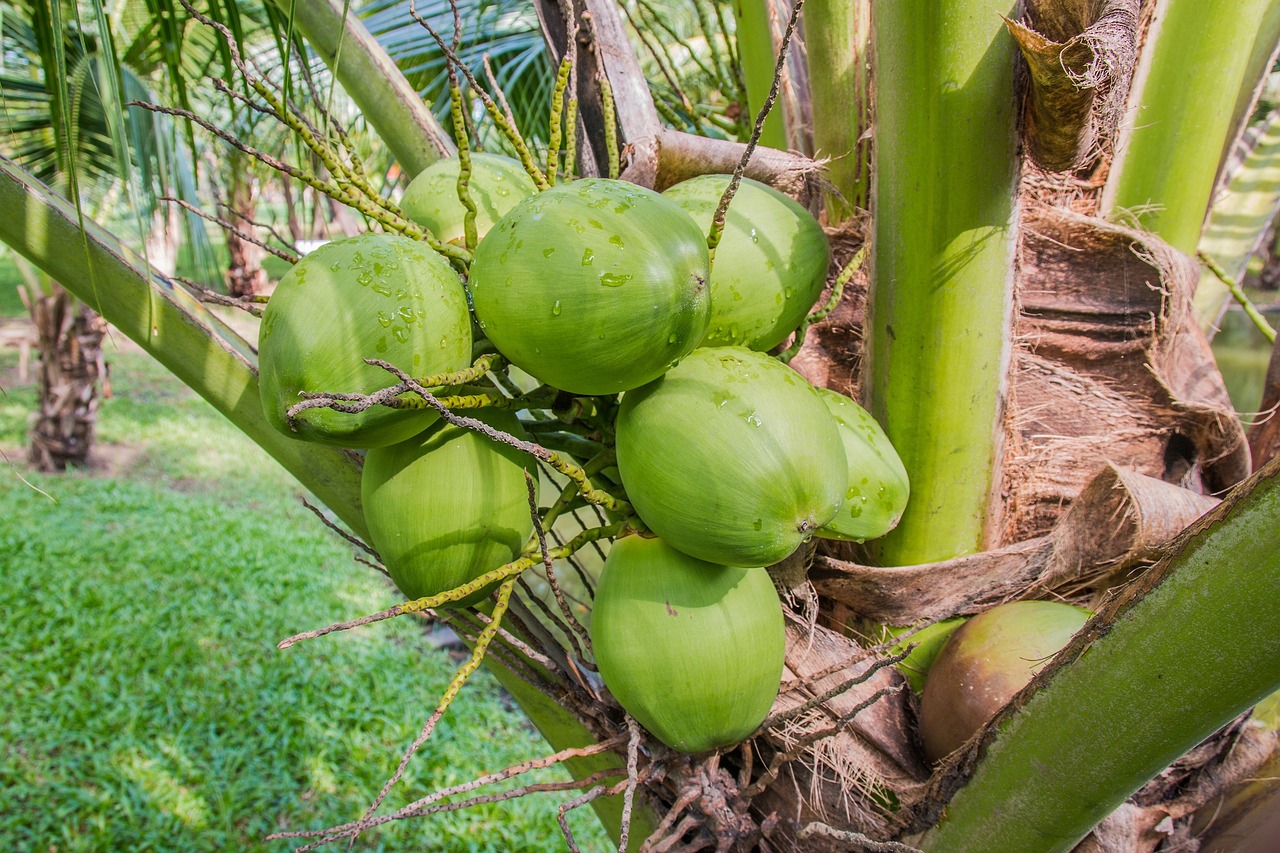
- The coconut fruit is a large drupe
- Covered by a fibrous outer husk
- A hard inner shell encloses the seed
- Contains coconut water and kernel
Fruit development takes several months from flowering to maturity.
Root System
- Fibrous root system
- Lacks a deep taproot
- Spreads widely to provide stability
This root structure helps the coconut plant survive in sandy coastal soils.
Native Habitat and Distribution
The coconut plant is believed to have originated in tropical coastal regions, where it thrives in warm, humid climates. Its buoyant fruits have allowed natural dispersal across oceans, contributing to its wide distribution.
Today, coconut plants are cultivated extensively in:
- Asia
- Africa
- Pacific islands
- Central and South America
Climate Requirements
- Tropical climate
- Ideal temperature range: 25°C–35°C
- Sensitive to frost
- Requires high humidity
Soil Requirements
- Well-drained sandy or loamy soil
- Tolerates saline conditions
- Performs poorly in waterlogged soil
Types and Varieties of Coconut
Coconut varieties are broadly classified based on growth habit and fruit characteristics.
Common types include:
- Tall coconut varieties
- Dwarf coconut varieties
- Hybrid cultivars
Variety selection depends on climatic conditions and the intended cultivation purpose.
Uses and Importance of the Coconut Plant
Edible Uses
Coconut fruits provide:
- Coconut water
- Coconut kernel (meat)
- Coconut milk
These components are widely used in culinary preparations across tropical regions.
Agricultural and Commercial Uses
Coconut plants are valued for:
- Oil extraction
- Fiber production from husk
- Various household and commercial products
Many parts of the plant are utilized in different industries.
Cultural and Traditional Importance
The coconut plant holds cultural significance in many regions, often associated with traditions, ceremonies, and daily life. Its presence is deeply integrated into tropical lifestyles.
How to Grow a Coconut Plant
Propagation
Coconut plants are propagated through:
- Seeds (whole coconuts)
Vegetative propagation is not commonly practiced for coconut palms.
Planting Location
- Open area with full sunlight
- Space for tall growth
- Protection from prolonged cold
Sunlight Requirement
- Requires full sunlight throughout the day
- Shaded conditions hinder growth
Planting Coconut
Best Time to Plant
- Warm seasons with adequate moisture
- Avoid cooler months
Planting Steps
- Select a mature, healthy coconut seed
- Prepare a well-drained planting pit
- Place the seed at the appropriate depth
- Water regularly after planting
Germination may take several weeks to months.
Care and Maintenance of the Coconut Plant
Watering
- Requires regular watering, especially in dry periods
- Mature plants tolerate short dry spells
- Consistent moisture supports healthy growth
Fertilization
- Responds well to balanced fertilizers
- Organic manure improves soil condition
- Nutrient deficiencies affect yield
Mulching
- Helps conserve soil moisture
- Improves soil structure
- Reduces weed competition
General Maintenance
- Removal of old, dry leaves
- Monitoring for pests and diseases
Recommended Products
Disclosure: As an Amazon Associate, PlantsInfo may earn from qualifying purchases.
🌱 Plant Care Essentials
The following tools can help with pruning, plant health, soil management, and fruit garden maintenance.

Neem Oil for Plant Care
Natural plant protection against aphids, whiteflies, mites, and other common garden pests.

Fungicide for Root Care
Helps suppress soil-borne fungal diseases and supports healthier root systems.

Spray Bottle for Plants
Ideal for applying foliar sprays, neem oil solutions, and liquid plant treatments.

Rubber Hand Gloves
Protects hands during pruning, planting, soil preparation, and garden maintenance.
Common Problems and Issues
Coconut plants may experience:
- Nutrient deficiencies
- Pest infestations
- Reduced growth in poor soil
Proper management minimizes these issues.
Flowering, Fruiting, and Harvesting
Flowering
- Occurs throughout the year
- Influenced by climate and nutrition
Fruiting
- Fruits take several months to mature
- Yield improves as the plant matures
Harvesting
- Harvesting time depends on the intended use
- Mature coconuts are collected when fully developed
Lifespan and Growth Cycle
The coconut plant is a long-lived perennial palm capable of producing fruits for many decades. With favorable conditions, coconut palms can remain productive for over 60 years.
Environmental Benefits
- Stabilizes sandy coastal soils
- Provides shade and habitat
- Supports coastal ecosystems
Conclusion
The coconut plant (Cocos nucifera) is a resilient and versatile palm valued for its wide range of uses, adaptability to tropical climates, and long productive lifespan. Its ability to thrive in coastal environments, combined with its cultural and practical importance, makes it one of the most significant plants in tropical agriculture. With proper planting, regular watering, and suitable growing conditions, coconut plants can remain productive and visually striking for many decades.
Frequently Asked Questions (FAQs) About the Coconut Plant
Is the coconut plant a tree or a palm?
The coconut plant is a palm, not a true tree. It belongs to the Arecaceae family and has a single, unbranched stem.
How long does a coconut plant take to produce fruit?
Coconut plants generally begin producing fruits after 6 to 10 years, depending on the variety and growing conditions.
Is the coconut plant perennial?
Yes, the coconut plant is a perennial palm and can live and produce fruits for several decades.
Can coconut plants be grown at home?
Coconut plants can be grown at home in tropical climates with sufficient space. Dwarf varieties are more suitable for smaller areas.
How much sunlight does a coconut plant need?
Coconut plants require full sunlight throughout the day for healthy growth and fruit production.
How often should coconut plants be watered?
Coconut plants need regular watering, especially during dry periods. Consistent moisture supports growth, but waterlogging should be avoided.
What type of soil is best for coconut plants?
Coconut plants grow best in well-drained sandy or loamy soil. They also tolerate saline soils commonly found in coastal areas.
Can coconut plants tolerate cold weather?
No, coconut plants are sensitive to cold and frost. They grow best in warm, tropical climates.
How tall can a coconut plant grow?
Coconut plants can grow up to 20–30 meters in height under favorable conditions.
How long can a coconut plant live?
With proper care and a suitable climate, coconut plants can live and remain productive for 50–60 years or more.
Plants Info is a comprehensive plant knowledge platform where you can explore detailed information, growing guides, and care tips for fruit trees, medicinal plants, and tropical species. Visit the Plants Info homepage to discover well-structured plant database entries designed for gardeners and plant enthusiasts.