Introduction
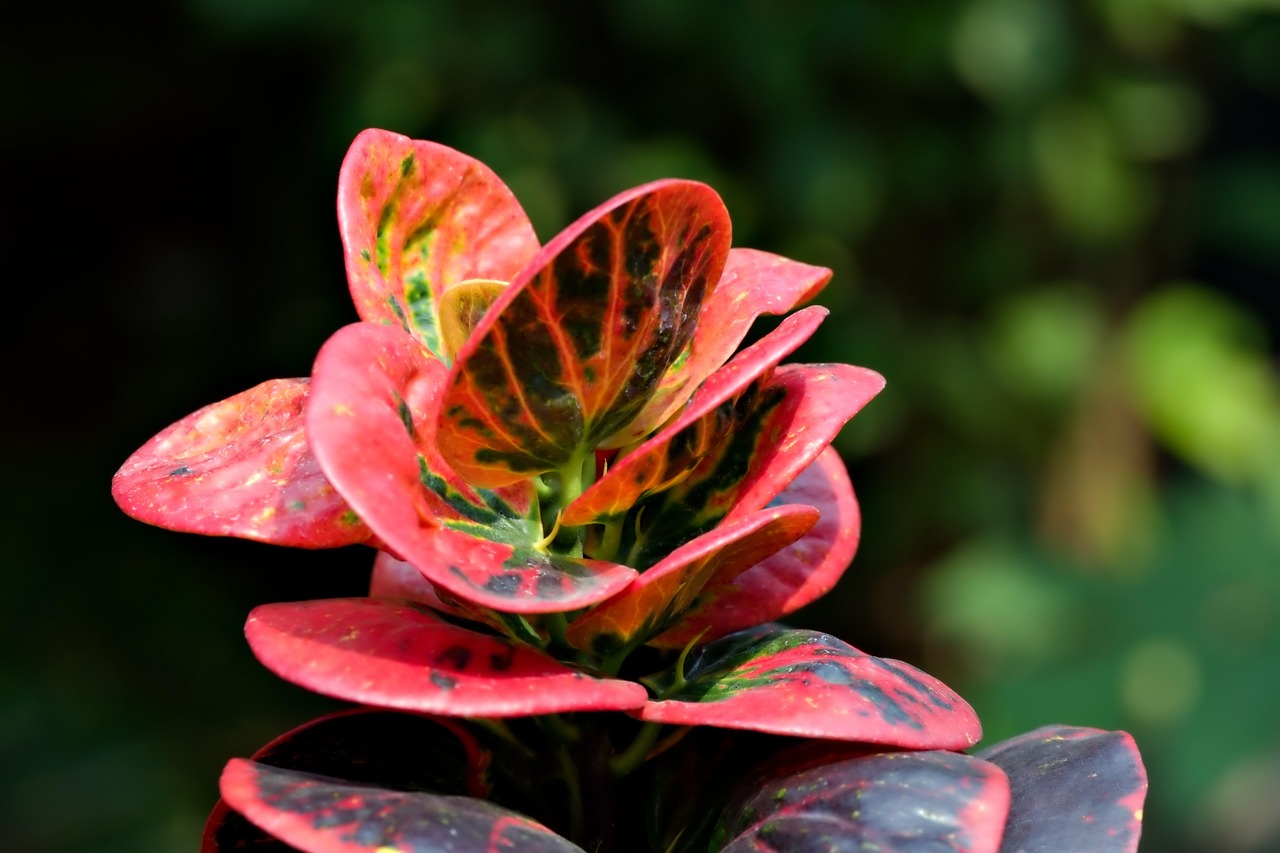
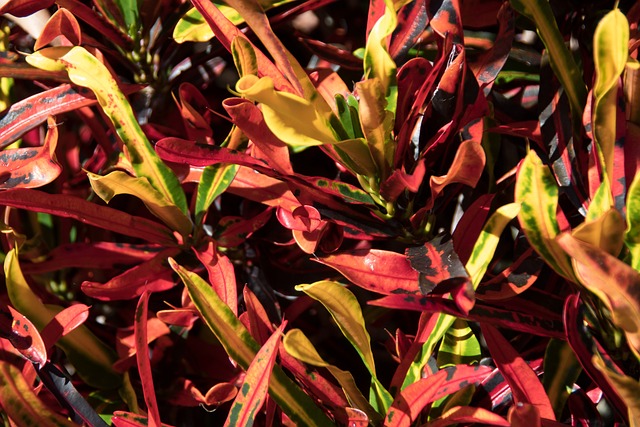
The croton plant is a visually distinctive ornamental plant best known for its vividly colored and variably shaped foliage. Botanically identified as Codiaeum variegatum, it belongs to the spurge family and is native to tropical regions of Southeast Asia and the western Pacific. The plant is widely recognized for the dramatic patterns and color combinations displayed in its leaves.
Classification
- Plant Type
- Shrub
- Lifecycle
- Perennial
- Leaf Habit
- Evergreen
- Native Region
- Asia
- Plant Family
- Euphorbiaceae
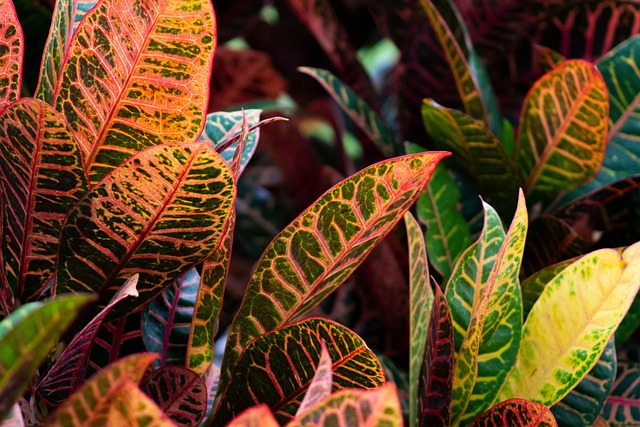
Within botanical and horticultural classification, the croton plant is notable for its high degree of natural and cultivated variation. Leaf color may include shades of green, yellow, red, orange, purple, and black, often appearing together in mottled, veined, or blotched patterns. This variability has led to the identification of numerous cultivars and forms based primarily on foliage characteristics.
Culturally, the croton plant has been associated with ornamental landscaping and indoor decorative use in tropical and subtropical regions. Its striking appearance has made it a common subject in botanical collections, public gardens, and plant reference materials, where it is valued primarily for its visual diversity rather than floral display.
Quick Plant Information
| Attribute | Details |
|---|---|
| Common Name(s) | Croton plant, Garden croton |
| Scientific Name | Codiaeum variegatum |
| Family | Euphorbiaceae |
| Plant Type | Woody ornamental plant |
| Lifespan | Perennial |
| Growth Habit / Growth Form | Upright shrub |
| Native Range | Southeast Asia and western Pacific islands |
| Climate Adaptation / Habitat Type | Tropical and subtropical regions |
| Leaf Type | Simple, leathery leaves |
| Flower Color(s) | Cream to pale yellow |
| Fruit Type | Capsule |
| Evergreen / Deciduous | Evergreen |
Botanical Description
The croton plant is an evergreen shrub with a woody stem structure that becomes more pronounced as the plant matures. Stems are generally erect and branched, supporting dense foliage throughout much of the plant’s height. Young stems are often green, gradually becoming firmer and slightly woody with age.
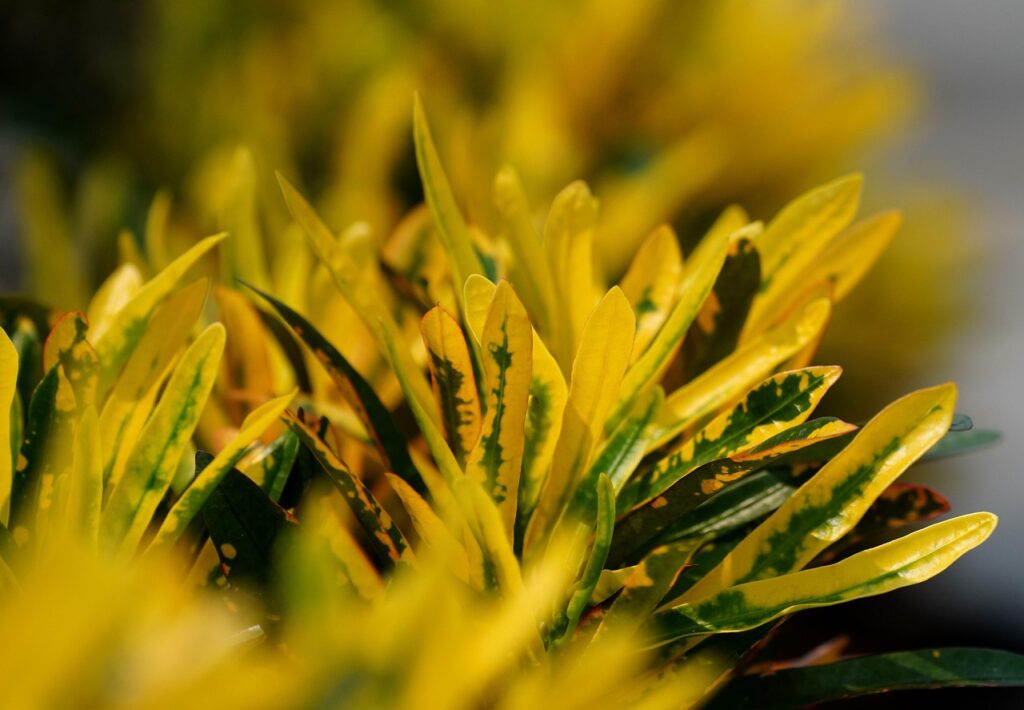
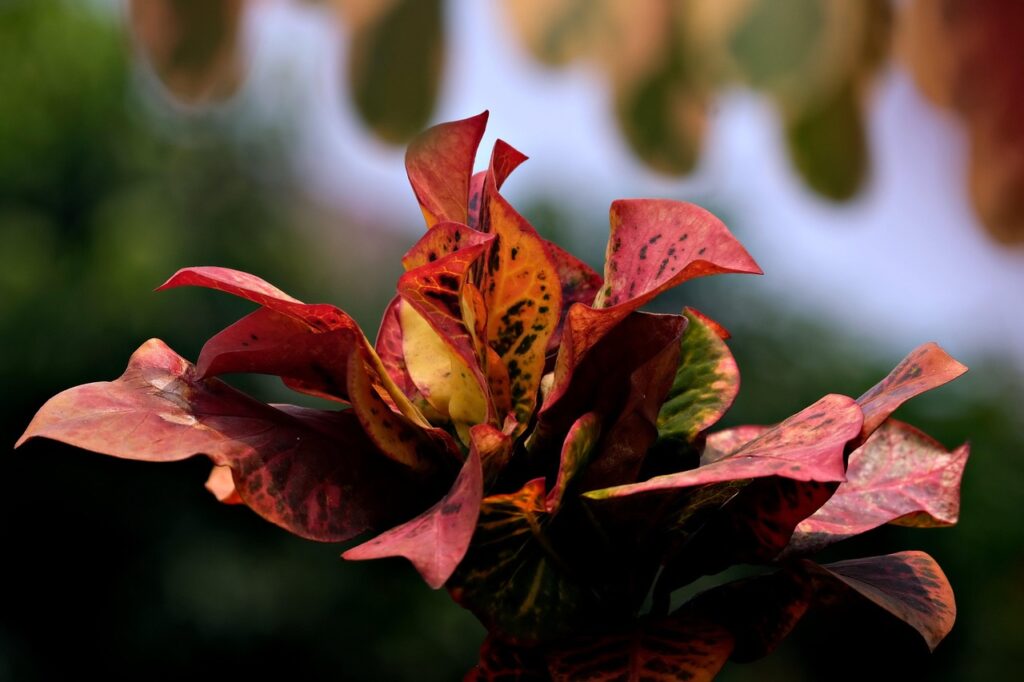
Leaves are the most prominent and defining feature of the croton plant. They are simple, leathery, and glossy, with a wide range of shapes, including ovate, lanceolate, lobed, twisted, or narrow and strap-like forms. Leaf margins may be smooth, deeply lobed, or spiraled. Coloration is highly variable and may change as leaves mature, often transitioning from predominantly green to multicolored patterns.
Flowers are relatively small and inconspicuous compared to the foliage. They are borne on elongated inflorescences and are typically separated by sex, with male and female flowers appearing on the same plant. The flowers are pale yellow to cream in color and lack large petals, contributing little to the plant’s overall visual impact.
The fruit is a small, three-lobed capsule containing seeds. Fruits are not commonly observed in cultivated specimens and are visually minor compared to the plant’s foliage. The root system consists of a network of fibrous roots that anchor the plant and support its upright growth habit.
Plant Classification & Growth Habit
The croton plant is classified as a perennial evergreen shrub within the Euphorbiaceae family. It maintains foliage year-round in suitable climates, contributing to its consistent visual presence in landscapes and collections.
From a growth-form perspective, croton exhibits an upright, bushy habit, typically forming a dense shrub with multiple branches. Its growth pattern is primarily vertical with lateral branching, resulting in a compact to moderately spreading form. The plant’s classification is based on its woody structure, persistent foliage, and reproductive characteristics rather than its ornamental use.
Common Types / Varieties / General Classifications
Croton plants are widely known for their extensive range of cultivars, which are primarily distinguished by leaf shape, size, and coloration. Common high-level groupings include:
- Broad-leaf crotons: Featuring wide, oval, or paddle-shaped leaves
- Narrow-leaf crotons: Characterized by long, slender, or strap-like foliage
- Lobed-leaf crotons: Displaying deeply cut or oak-like leaf forms
- Curled or spiral-leaf crotons: Leaves twisted or spiraled along the midrib
- Multicolored crotons: Exhibiting strong contrasts of yellow, red, orange, and green
These classifications are descriptive and reflect morphological diversity rather than comparative value or preference.
Native Range & Distribution
The native range of Codiaeum variegatum includes tropical areas of Southeast Asia, Indonesia, Malaysia, Papua New Guinea, and parts of the western Pacific islands. In these regions, the plant occurs naturally in warm, humid environments, often as part of lowland vegetation.
Beyond its native habitat, the croton plant has been widely introduced to other tropical and subtropical regions around the world. It is commonly found in cultivated landscapes, botanical gardens, and indoor plant collections. In some areas, it exists only under managed conditions, while in others, it may persist in cultivated outdoor settings.
Cultural, Culinary, or Traditional Context
Historically, the croton plant has been associated with ornamental and symbolic roles rather than culinary or agricultural use. In parts of Southeast Asia and the Pacific, croton plants have been used traditionally in decorative plantings around homes and communal spaces.
Certain cultures have attributed symbolic meanings to the plant’s bold coloration, associating it with vitality or status. In modern contexts, croton plants are primarily valued for aesthetic and decorative purposes and are commonly referenced in design-oriented plant collections and horticultural records.
Interesting Facts / Did You Know
- The genus name Codiaeum is derived from a Greek word historically associated with similar plants.
- Croton leaves often change color as they mature, resulting in multiple color stages on a single plant.
- Although flowers are present, croton plants are cultivated mainly for their foliage rather than their blooms.
- The Euphorbiaceae family includes a wide range of plants with diverse forms, from shrubs to trees.
FAQs
Is the croton plant a tree or a shrub?
The croton plant is botanically classified as a shrub, though it may develop a woody stem with age.
Do all croton plants have the same leaf shape?
No. Croton plants display extensive variation in leaf shape, size, and coloration across different cultivars.
Is croton the same as the wild croton species?
No. The ornamental croton plant refers specifically to Codiaeum variegatum, which is distinct from other plants sometimes referred to as croton in different genera.
Recommended Products
Disclosure: As an Amazon Associate, PlantsInfo may earn from qualifying purchases.
🌱 Plant Care Essentials
The following tools can help with pruning, plant health, soil management, and fruit garden maintenance.

Neem Oil for Plant Care
Natural plant protection against aphids, whiteflies, mites, and other common garden pests.

Fungicide for Root Care
Helps suppress soil-borne fungal diseases and supports healthier root systems.

Spray Bottle for Plants
Ideal for applying foliar sprays, neem oil solutions, and liquid plant treatments.

Rubber Hand Gloves
Protects hands during pruning, planting, soil preparation, and garden maintenance.
Conclusion
The croton plant (Codiaeum variegatum) is a distinctive evergreen shrub recognized for its highly variable and colorful foliage. Its broad range of leaf shapes and pigmentation patterns sets it apart within ornamental plant classification.
Native to tropical regions of Southeast Asia and the Pacific, the croton plant has achieved global recognition as a decorative species. Its botanical characteristics, cultural associations, and morphological diversity make it a notable subject within plant reference databases and botanical studies.
The Plants Info resource presents structured plant database entries intended for educational reference, offering consistent and factual information on plant species, botanical traits, and classification.