Introduction
The Custard Apple plant is a small to medium-sized fruit-bearing tree known for its distinctive segmented fruit and soft, creamy pulp. Botanically identified as Annona squamosa, it belongs to the Annonaceae family and is widely recognized across tropical and subtropical regions. The plant has long been associated with traditional food systems due to its edible fruit, while also holding relevance in regional medicinal and agroforestry contexts.
Classification
- Plant Type
- Tree
- Lifecycle
- Perennial
- Leaf Habit
- Deciduous
- Native Region
- North America, South America
- Plant Family
- Annonaceae
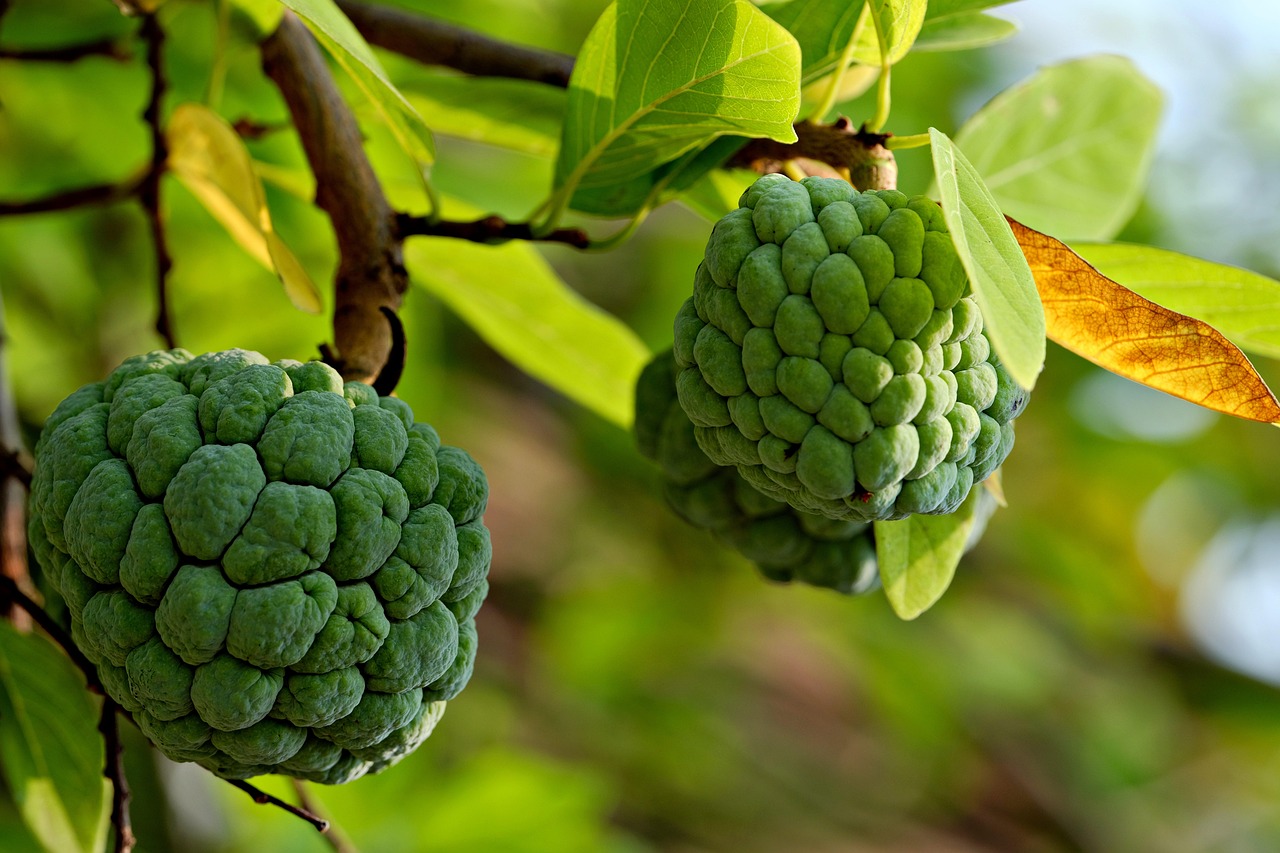
Characterized by its spreading canopy, simple deciduous leaves, and aromatic flowers, the Custard Apple plant displays a combination of ornamental and productive traits. The fruit’s unique appearance, marked by knobby or scale-like segments, distinguishes it from many other tropical fruits. Over time, the species has become naturalized in several parts of the world, contributing to its broad geographic presence and cultural familiarity.
Quick Plant Information
| Attribute | Details |
|---|---|
| Common Names | Custard Apple, Sugar Apple, Sweetsop |
| Scientific Name | Annona squamosa |
| Family | Annonaceae |
| Plant Type | Fruit tree |
| Lifespan | Perennial |
| Native Region | Tropical Americas |
| Growth Habit | Small tree or large shrub |
| Average Height | 3–8 m |
| Leaf Characteristics | Simple, oblong, light to dark green |
| Flower Color | Greenish-yellow |
| Sunlight Requirement | Full sun |
| Water Requirement | Moderate |
| Soil Type | Well-drained, sandy to loamy soil |
| Toxicity | Seeds considered toxic if ingested |
Botanical Characteristics
The Custard Apple plant exhibits a branching structure with a rounded to spreading crown. The trunk is typically short, with irregularly spreading branches that may droop slightly as they mature. The bark is light brown to grayish in color and relatively thin, reflecting the plant’s non-woody fruit tree nature compared to larger tropical trees.
Leaves are simple, alternately arranged, and oblong to lance-shaped, with smooth margins and a slightly leathery texture. They are deciduous in many regions, shedding during dry or cooler periods. When crushed, the leaves emit a mild aromatic scent, a characteristic common within the Annonaceae family.
Flowers are borne singly or in small clusters along branches. They are composed of fleshy petals with a greenish-yellow hue and are known for their subtle fragrance. The fruit is a syncarp, formed by the fusion of multiple carpels, resulting in a rounded or heart-shaped structure with distinct polygonal segments.
Native Habitat and Distribution
Annona squamosa is native to the tropical regions of Central and South America, where it evolved under warm climates with distinct wet and dry seasons. In its native habitat, the plant is commonly found in open woodlands, forest margins, and semi-arid tropical zones.
Through human cultivation and trade, the Custard Apple plant has been widely introduced to Asia, Africa, and parts of Australia. It is now commonly grown in countries such as India, Thailand, the Philippines, and several African nations. The plant demonstrates adaptability to varied tropical environments, particularly in regions with well-defined seasonal rainfall.
Its widespread distribution reflects both its agricultural value and its ability to establish in diverse ecological settings without becoming highly invasive.
Common Varieties or Types
Several regional forms and cultivars of Custard Apple exist, primarily differentiated by fruit size, sweetness, and surface texture. While Annona squamosa itself is the most commonly recognized species, local selections have been developed to suit regional preferences and environmental conditions.
Some cultivated types exhibit smoother fruit segments, while others retain prominently raised scales. Variations in pulp color, seed count, and aroma are also observed among different cultivars. These differences are typically the result of long-term selection rather than formal hybridization programs.
Related species within the Annona genus, such as Annona cherimola and Annona reticulata, are sometimes collectively referred to as custard apples in a broader sense, though they remain botanically distinct.
Uses and Importance
The Custard Apple plant is primarily valued for its edible fruit, which is consumed fresh and recognized for its soft, custard-like texture and sweet flavor. The pulp is traditionally associated with desserts and seasonal fruit consumption in many cultures.
Beyond dietary use, various parts of the plant have been referenced in traditional systems for their perceived functional properties. Leaves, bark, and seeds have historically appeared in ethnobotanical records, though such uses vary significantly by region.
From an agricultural perspective, the plant contributes to diversified fruit cultivation systems, especially in small-scale orchards and mixed farming landscapes. Its moderate size allows integration into home gardens and agroforestry settings without extensive spatial requirements.
Growth Behavior and Care
The Custard Apple plant demonstrates moderate growth, with active vegetative development occurring during warm seasons. New shoots and leaves emerge in response to favorable moisture and temperature conditions, while growth may slow during dry or cooler periods.
The plant’s branching habit allows it to form a broad canopy that supports fruit development. Leaf shedding is a natural response to seasonal changes and is typically followed by renewed foliage growth. The root system is relatively shallow but well-spread, supporting stability and nutrient uptake.
Fruit production is influenced by the plant’s flowering cycle and environmental conditions. Under suitable climates, the tree exhibits consistent seasonal productivity once established.
Lifecycle, Flowering, and Harvesting (Observational)
As a perennial species, the Custard Apple plant follows a recurring annual growth cycle rather than a fixed lifespan. Vegetative growth, flowering, fruiting, and dormancy phases are generally aligned with seasonal climatic patterns.
Flowering typically occurs during warmer months, with fruit development following successful pollination. Fruits mature over several weeks, gradually increasing in size and developing their characteristic segmented appearance.
Observations from cultivated environments indicate that fruit maturity is often associated with a slight softening of the outer surface and a change in coloration. Once mature, fruits naturally detach or are manually collected in agricultural settings.
Environmental or Ecological Value
The Custard Apple plant contributes to local ecosystems by providing food resources for insects and small animals. Its flowers attract various pollinators, while the fruit may serve as a food source for birds and mammals in some regions.
The tree’s canopy offers partial shade and habitat structure, supporting biodiversity in mixed planting systems. Its adaptability to marginal soils also makes it suitable for inclusion in land-use systems aimed at ecological resilience and soil stabilization.
While primarily cultivated for fruit, the plant’s ecological interactions underscore its broader role within tropical agro-ecosystems.
Epilogue
The Custard Apple plant (Annona squamosa) represents a distinctive tropical fruit tree with long-standing agricultural and cultural relevance. Its recognizable fruit, moderate growth habit, and adaptability to diverse tropical environments have supported its widespread cultivation beyond its native range.
Through its botanical features, seasonal growth patterns, and ecological interactions, the plant holds a stable position within fruit tree databases and tropical plant references. Its continued presence in cultivated landscapes reflects both its functional value and its enduring association with traditional food systems.
Frequently Asked Questions (FAQs)
Is the Custard Apple plant a tree or a shrub?
The plant is commonly described as a small tree, though it may also appear shrub-like depending on pruning practices and environmental conditions.
Does the Custard Apple plant lose its leaves?
In many regions, the plant is deciduous and sheds its leaves during dry or cooler seasons.
Are Custard Apple seeds edible?
The seeds are generally considered toxic if ingested and are not consumed.
Is Custard Apple the same as Cherimoya?
Custard Apple (Annona squamosa) and Cherimoya (Annona cherimola) belong to the same genus but are distinct species.
What gives Custard Apple its creamy texture?
The fruit pulp’s soft texture results from its cellular structure and natural sugar composition.
PlantsInfo serves as a structured knowledge platform offering detailed plant database entries across fruit plants, medicinal species, herbs, and ornamental trees. Reference pages available through PlantsInfo provide standardized botanical descriptions, ecological context, and observational growth information to support plant identification and academic reference needs.