Introduction
Geranium is a genus of flowering plants commonly known as geraniums or cranesbills, belonging to the family Geraniaceae. The genus comprises a wide range of species distributed across temperate regions of the world, particularly in Europe, Asia, Africa, and North America. Geranium plants are recognized for their distinctive flowers, palmately lobed leaves, and characteristic fruit structure that resembles the bill of a crane.
Classification
- Plant Type
- Herb
- Leaf Habit
- Deciduous
- Native Region
- Africa, Asia, Europe, North America
- Plant Family
- Geraniaceae
Botanically, geraniums hold significance due to their morphological diversity and adaptability to varied environments. The genus has been extensively studied in plant taxonomy and ecology, as its members occupy habitats ranging from grasslands and woodlands to mountainous regions. Geranium species contribute to plant biodiversity and play roles in natural ecosystems through ground coverage and seasonal flowering.
Culturally, the name “geranium” has been widely adopted in horticultural language, though it is often confused with plants of the genus Pelargonium. Despite this common confusion, true geraniums maintain a distinct botanical identity and are valued for their ornamental presence in natural landscapes and cultivated settings.
Quick Plant Information
| Attribute | Details |
|---|---|
| Common Name(s) | Geranium, Cranesbill |
| Scientific Name | Geranium spp. |
| Family | Temperate regions, grasslands, and woodlands |
| Plant Type | Flowering plant |
| Lifespan | Annual, biennial, or perennial (species-dependent) |
| Growth Habit / Growth Form | Herbaceous, spreading to upright |
| Native Range | Europe, Asia, Africa, North America |
| Climate Adaptation / Habitat Type | Temperate regions, grasslands, woodlands |
| Leaf Type | Palmately lobed |
| Flower Color(s) | Pink, purple, blue, white |
| Fruit Type | Schizocarp |
| Evergreen / Deciduous | Mostly deciduous |
Botanical Description
Geranium plants exhibit herbaceous stems that may be erect, trailing, or spreading, depending on the species. The stems are typically soft and green, sometimes tinged with red, and may be covered with fine hairs. Internodes vary in length, contributing to the plant’s overall form and branching pattern.
The leaves of geranium plants are one of their most identifiable features. They are usually palmately lobed or deeply divided, with veins radiating from a central point. Leaf margins may be smooth, toothed, or slightly scalloped. Leaf surfaces can be smooth or lightly hairy, and foliage color ranges from bright green to gray-green, occasionally with seasonal color variation.
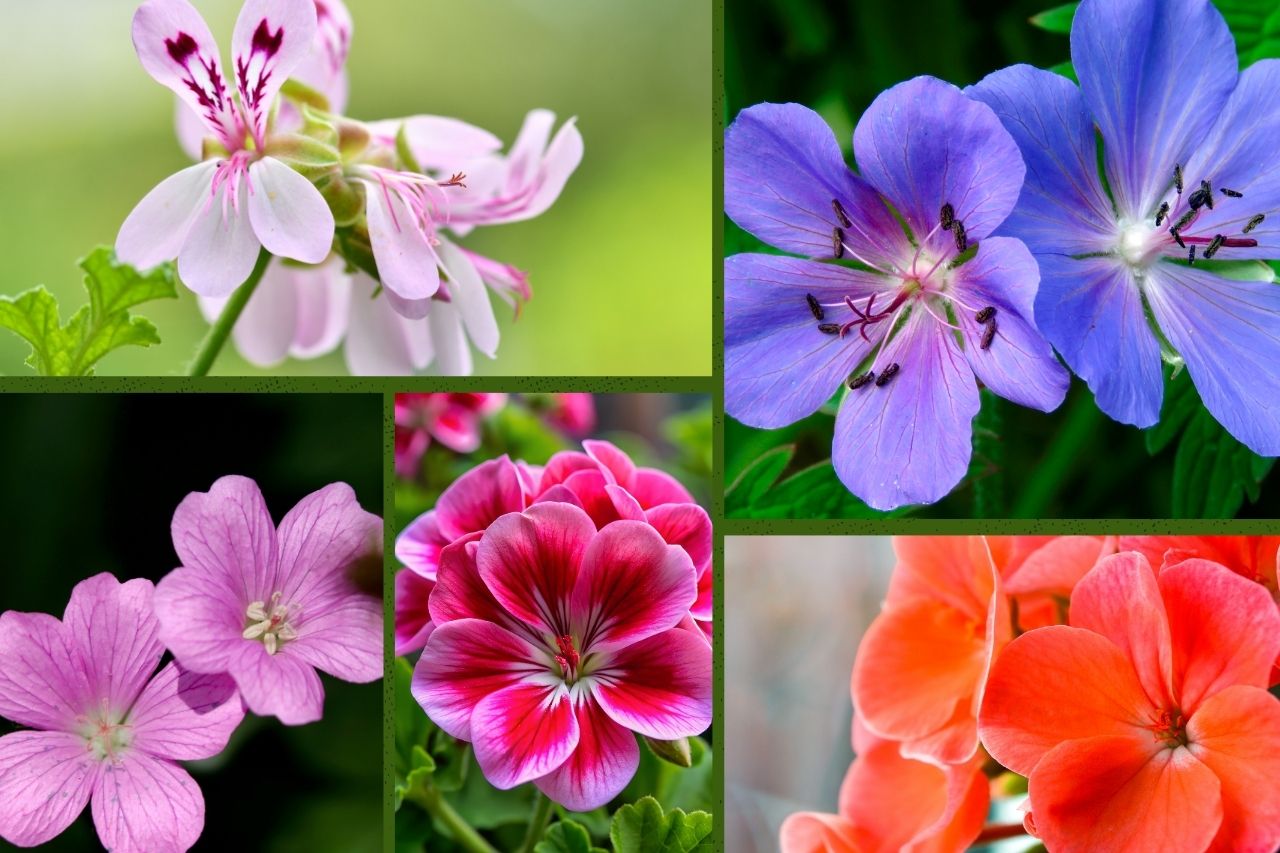
Geranium flowers are typically borne singly or in small clusters at the ends of stems. Each flower generally consists of five symmetrical petals arranged in a radial pattern. Petal coloration varies widely across species, including shades of pink, violet, blue, lavender, and white, often accented with darker veins. The flowers contain both male and female reproductive structures and are notable for their balanced, open form.
The fruit of a geranium plant is a distinctive, elongated structure known as a schizocarp. As it matures, it splits into individual segments, each containing a single seed. The extended, beak-like shape of the fruit gives rise to the common name “cranesbill.” Root systems are typically fibrous or shallowly spreading, providing anchorage and nutrient absorption without forming woody tissue.
Plant Classification & Growth Habit
Geraniums are classified as herbaceous flowering plants within the family Geraniaceae. The genus includes annual, biennial, and perennial species, reflecting a wide range of life cycles. Most commonly encountered species are perennial in nature, returning year after year under suitable conditions.
In terms of growth habit, geranium plants display a variety of forms. Some species grow in compact, mound-like shapes, while others spread outward to form low ground-covering mats. Upright species may reach moderate heights, whereas creeping or trailing species remain closer to the ground. This variability contributes to the genus’s broad ecological distribution and visual diversity.
Common Types / Varieties / General Classifications
Geranium species are often grouped based on growth form, habitat, or flower characteristics. Common high-level classifications include:
- Hardy Geraniums (Cranesbills): Perennial species adapted to temperate climates, often found in naturalized settings.
- Meadow Geraniums: Species commonly associated with open grasslands and meadows.
- Woodland Geraniums: Shade-tolerant species native to forested environments.
- Alpine Geraniums: Low-growing species adapted to mountainous or rocky regions.
These groupings reflect ecological and morphological differences rather than horticultural ranking or preference.
Native Range & Distribution
The native range of the geranium genus spans multiple continents, with a strong presence in Europe and Asia. Several species are indigenous to North America, particularly in temperate woodland and meadow ecosystems. Africa also hosts native geranium species, especially in southern regions with mild climates.
Geranium plants are typically associated with temperate climate zones, where seasonal temperature variation influences their growth cycles. They occur naturally in habitats such as open fields, forest edges, riverbanks, and upland slopes. Over time, some species have expanded beyond their original ranges through natural dispersal and human-mediated movement, becoming established in new regions while retaining their core botanical traits.
Cultural, Culinary, or Traditional Context
Historically, geraniums have been noted in botanical literature dating back to classical antiquity. Early herbalists and naturalists documented the plants for their distinctive fruit shape and floral symmetry. The genus name Geranium is derived from the Greek word geranos, meaning crane, in reference to the shape of the seed pod.
In cultural contexts, geraniums have often been associated with ornamental planting in gardens and landscapes, particularly in Europe during the expansion of botanical gardens. Their visual appeal and adaptability led to their inclusion in both formal and informal garden designs. In some regions, wild geranium species have been referenced in folklore and local traditions, primarily as familiar components of the natural landscape.
While geraniums are sometimes mentioned in historical culinary or household records, such references are generally anecdotal and region-specific, reflecting traditional knowledge rather than widespread usage.
Interesting Facts / Did You Know
- The distinctive seed pod of geranium plants actively disperses seeds by springing open when mature.
- The term “cranesbill” directly describes the elongated shape of the fruiting structure.
- Geranium flowers are typically actinomorphic, meaning they exhibit radial symmetry.
- The genus includes hundreds of species with significant variation in size and form.
- Geraniums are often confused with pelargoniums, though they belong to separate genera within the same family.
FAQs
Is geranium the same as pelargonium?
No. Although commonly grouped in everyday language, geraniums and pelargoniums are botanically distinct genera within the Geraniaceae family.
Why are geraniums called cranesbills?
The name refers to the long, beak-like fruit that resembles the bill of a crane.
Are all geraniums perennial plants?
No. The genus includes annual, biennial, and perennial species, depending on the specific type.
Where are geraniums naturally found?
They are native to temperate regions across Europe, Asia, Africa, and North America.
Conclusion
Geranium plants represent a diverse and widely distributed genus of flowering plants known for their distinctive leaves, symmetrical flowers, and unique fruit structures. Their adaptability to various habitats and climates has contributed to their presence across multiple continents and ecosystems.
From a botanical perspective, geraniums are notable for their morphological variation and clear taxonomic characteristics. Culturally and historically, they have been recognized as familiar and visually prominent plants within both natural and cultivated landscapes.
The Plants Info platform presents structured, reference-focused information on a wide range of plant species, including geraniums. Its plant database is designed to support botanical learning and general knowledge through clear, factual, and organized plant profiles.