Introduction to the Jackfruit Plant
The jackfruit plant is a large, tropical fruit-bearing tree known for producing one of the biggest edible fruits in the plant kingdom. Scientifically known as Artocarpus heterophyllus, the jackfruit belongs to the Moraceae family, which also includes figs and mulberries. The plant is widely cultivated in tropical regions for its nutritious fruits, timber value, and adaptability to warm climates.
Classification
Jackfruit plants are valued for their long lifespan, dense canopy, and ability to produce fruits directly from the trunk and large branches, a phenomenon known as cauliflory. Due to its versatility and high yield, the jackfruit plant is commonly grown in home gardens, orchards, and agroforestry systems. Its fruits, leaves, and wood are used in various traditional, culinary, and practical applications.
Quick Plant Information
| Attribute | Details |
|---|---|
| Common Names | Jackfruit |
| Scientific Name | Artocarpus heterophyllus |
| Family | Moraceae |
| Plant Type | Fruit-bearing tree |
| Lifespan | Perennial |
| Native Region | Indian subcontinent |
| Growth Habit | Large evergreen tree |
| Average Height | 10–20 meters |
| Leaf Characteristics | Large, glossy, dark green |
| Flower Color | Greenish |
| Sunlight Requirement | Full sunlight |
| Water Requirement | Moderate |
| Soil Type | Well-drained loamy soil |
| Toxicity | Non-toxic |
Botanical Characteristics of the Jackfruit Plant
Growth Habit
The jackfruit plant grows as a large evergreen tree with a straight trunk and a broad, spreading canopy. It develops a strong central stem and numerous branches that support heavy fruit loads.
Height and Spread
- Average height ranges from 10 to 20 meters
- Canopy spread is wide and dense
- Growth rate is moderate to fast in warm climates
The size of the tree makes it suitable for spacious gardens and orchards.
Trunk and Bark
- Trunk is thick and sturdy
- Bark is rough and grayish-brown
- Exudes a milky latex when cut
The latex is a characteristic feature of many plants in the Moraceae family.
Leaves
- Large, leathery, and glossy
- Dark green in color
- Simple and oval in shape
- Remain evergreen in warm climates
Healthy foliage supports continuous growth and fruit development.
Flowers
Jackfruit plants produce separate male and female flowers on the same tree.
- Male flowers are small and cylindrical
- Female flowers are larger and oval
- Flowers are greenish in color
Pollination is primarily carried out by insects and wind.
Fruits
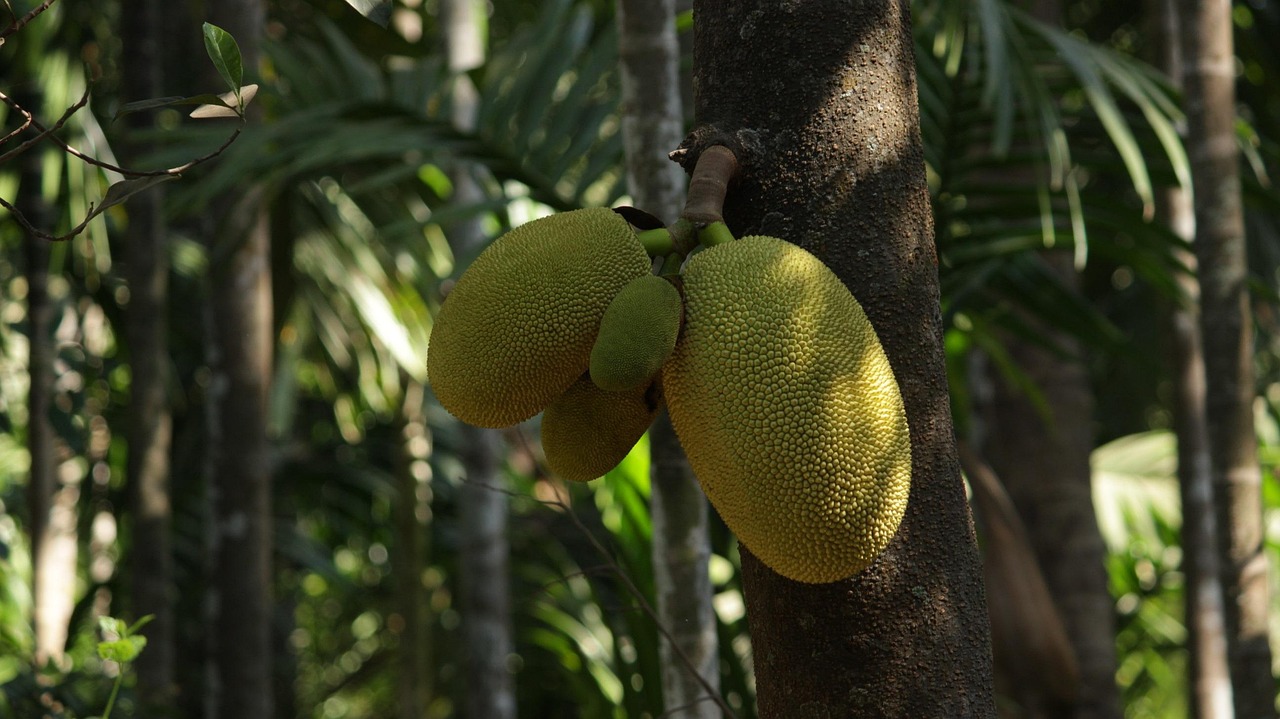
- Large, oblong to oval fruits
- Covered with spiky green outer skin
- Fruits grow on the trunk and major branches
- Each fruit contains numerous edible bulbs
Jackfruit fruits are among the largest tree-borne fruits in the world.
Root System
- Strong and extensive root system
- Anchors the large tree effectively
- Sensitive to prolonged waterlogging
Native Habitat and Distribution
The jackfruit plant is native to the Indian subcontinent, where it grows naturally in tropical forests. From its native range, cultivation spread to Southeast Asia and other tropical regions.
Today, jackfruit plants are widely grown in:
- South and Southeast Asia
- Africa
- Central America
- Tropical regions worldwide
Climate Requirements
- Tropical to subtropical climate
- Ideal temperature range: 24°C–35°C
- Sensitive to frost and cold winds
Soil Requirements
- Well-drained, fertile loamy soil
- Rich in organic matter
- Slightly acidic to neutral pH
Common Varieties of Jackfruit
Jackfruit varieties vary in fruit texture, sweetness, and size.
Common classifications include:
- Soft-flesh varieties
- Firm-flesh varieties
- Early-bearing and late-bearing types
Variety selection depends on regional preferences and intended use.
Uses and Importance of the Jackfruit Plant
Edible Uses
Jackfruit fruits are used in various stages:
- Unripe fruits used as vegetables
- Ripe fruits are consumed fresh
- Seeds cooked or roasted
The versatility of the fruit contributes to its popularity.
Nutritional and Dietary Importance
Jackfruit is widely valued as:
- A source of dietary fiber
- A carbohydrate-rich food
- A plant-based food option in many diets
Timber and Practical Uses
Jackfruit wood is:
- Durable and termite-resistant
- Used for furniture and construction
- Traditionally valued for craftsmanship
Cultural and Traditional Importance
In many regions, jackfruit trees are planted near homes and temples. The plant holds cultural significance in local traditions and seasonal festivals.
How to Grow a Jackfruit Plant
Propagation Methods
Jackfruit plants are propagated through:
- Seeds
- Grafting
Vegetative propagation ensures early fruiting and uniform quality.
Planting Location
- Open area with full sunlight
- Space for canopy expansion
- Protection from strong winds
Sunlight Requirement
- Requires full sunlight for optimal growth and fruiting
Planting Jackfruit
Best Time to Plant
- Beginning of the warm or rainy season
- Moist soil supports root establishment
Planting Steps
- Prepare a deep planting pit
- Mix the soil with organic compost
- Place the plant carefully
- Water thoroughly after planting
Care and Maintenance of Jackfruit Plant
Watering
- Regular watering during the early years
- Moderate watering once established
- Avoid prolonged water stagnation
Fertilization
- Responds well to organic manure
- Balanced fertilization improves fruit yield
Pruning
- Pruning helps manage tree size
- Removes dead or overcrowded branches
- Improves air circulation
Mulching
- Conserves soil moisture
- Improves soil structure
Recommended Products
Disclosure: As an Amazon Associate, PlantsInfo may earn from qualifying purchases.
🌱 Plant Care Essentials
The following tools can help with pruning, plant health, soil management, and fruit garden maintenance.

Neem Oil for Plant Care
Natural plant protection against aphids, whiteflies, mites, and other common garden pests.

Fungicide for Root Care
Helps suppress soil-borne fungal diseases and supports healthier root systems.

Spray Bottle for Plants
Ideal for applying foliar sprays, neem oil solutions, and liquid plant treatments.

Rubber Hand Gloves
Protects hands during pruning, planting, soil preparation, and garden maintenance.
Common Problems and Issues
Jackfruit plants may experience:
- Fruit drops due to stress
- Pest infestations
- Root issues in poorly drained soil
Consistent care reduces most problems.
Flowering, Fruiting, and Harvesting
Flowering
- Occurs during warm seasons
- Influenced by plant age and nutrition
Fruiting
- Fruits take several months to mature
- Mature trees produce multiple fruits per season
Harvesting
- Fruits are harvested when fully developed
- Harvest timing depends on intended use
Lifespan and Growth Cycle
The jackfruit plant is a long-lived perennial tree capable of producing fruits for several decades. With proper care, it can remain productive for 50 years or more.
Environmental Benefits
- Provides shade and habitat
- Suitable for agroforestry systems
- Enhances biodiversity
Conclusion
The jackfruit plant (Artocarpus heterophyllus) is a robust and productive tropical tree valued for its large fruits, long lifespan, and adaptability. Its ability to produce edible fruits, provide shade, and contribute to traditional and modern uses makes it an important plant in tropical agriculture. With adequate space, full sunlight, and proper care, jackfruit plants can thrive and remain productive for many decades.
Frequently Asked Questions (FAQs) About the Jackfruit Plant
Is the jackfruit plant a tree or a shrub?
The jackfruit plant is a large evergreen tree. It grows tall with a broad canopy and is not considered a shrub.
How long does a jackfruit plant take to bear fruit?
Jackfruit plants typically begin producing fruit within 3 to 5 years when grown from grafted plants. Seed-grown plants may take longer.
Is the jackfruit plant perennial?
Yes, the jackfruit plant is a perennial tree and can live and produce fruits for several decades under suitable conditions.
Can jackfruit plants be grown at home?
Yes, jackfruit plants can be grown at home in tropical and subtropical regions, provided there is enough space for the tree’s size and canopy.
How much sunlight does a jackfruit plant need?
Jackfruit plants require full sunlight for healthy growth and fruit production. Shaded conditions may reduce yield.
How often should jackfruit plants be watered?
Regular watering is important during early growth. Once established, jackfruit plants need moderate watering, avoiding waterlogged soil.
What type of soil is best for jackfruit plants?
Jackfruit plants grow best in well-drained, fertile loamy soil rich in organic matter.
Why do jackfruit fruits grow on the trunk?
Jackfruit fruits grow on the trunk and large branches due to cauliflory, a natural growth feature of the plant.
Can jackfruit plants tolerate cold weather?
Jackfruit plants are sensitive to cold and frost and grow best in warm, tropical climates.
How long can a jackfruit plant live?
With proper care and a suitable climate, jackfruit plants can live and remain productive for 50 years or more.
Plants Info is a structured plant knowledge platform where you can explore detailed plant information, growing guides, and care tips for fruit trees, medicinal plants, and tropical species. Visit the Plants Info homepage to discover well-researched plant database entries designed for gardeners and plant enthusiasts.