Introduction
The Lantana plant, scientifically known as Lantana camara, is a flowering shrub widely recognized for its vibrant clusters of small, multicolored blooms. It belongs to the Verbena family and is notable for its adaptability across tropical and subtropical regions. Originally native to the Americas, Lantana has become naturalized in many parts of the world.
Classification
- Plant Type
- Shrub
- Lifecycle
- Perennial
- Leaf Habit
- Evergreen
- Native Region
- South America
- Plant Family
- Verbenaceae
This plant is often observed in landscapes, open fields, coastal regions, and disturbed habitats. Due to its hardy nature and dense growth habit, it has established itself in diverse ecological settings. In several regions, it is regarded as an ornamental species, while in others it is considered invasive due to its ability to spread extensively.
Lantana camara is particularly recognized for its changing flower colors, textured foliage, and extended blooming period, which contribute to its visual prominence in natural and cultivated environments.
Quick Plant Information
| Field | Information |
|---|---|
| Common Name(s) | Tropical, Subtropical, and Semi-arid Regions |
| Scientific Name | Lantana camara |
| Family | Verbenaceae |
| Plant Type | Flowering Shrub |
| Lifespan | Perennial |
| Growth Habit / Growth Form | Bushy, Spreading, Woody Shrub |
| Native Range | Central and South America |
| Climate Adaptation / Habitat Type | Tropical, Subtropical, Semi-arid Regions |
| Leaf Type | Broadleaf |
| Flower Color(s) | Yellow, Orange, Red, Pink, Purple, White (often multicolored) |
| Fruit Type | Drupe |
| Evergreen / Deciduous | Evergreen in warm climates |
Botanical Description
Stem
Lantana camara develops woody, branching stems that may grow upright or spread outward depending on environmental conditions. The stems are typically square in cross-section when young and may bear small, recurved prickles. As the plant matures, the stems become more rigid and woody.
Leaves
The leaves are simple, ovate to elliptical in shape, and arranged oppositely along the stem. They have serrated margins and a rough, textured surface due to the presence of fine hairs. The foliage emits a distinct aroma when crushed. Leaf coloration is generally medium to dark green.
Flowers
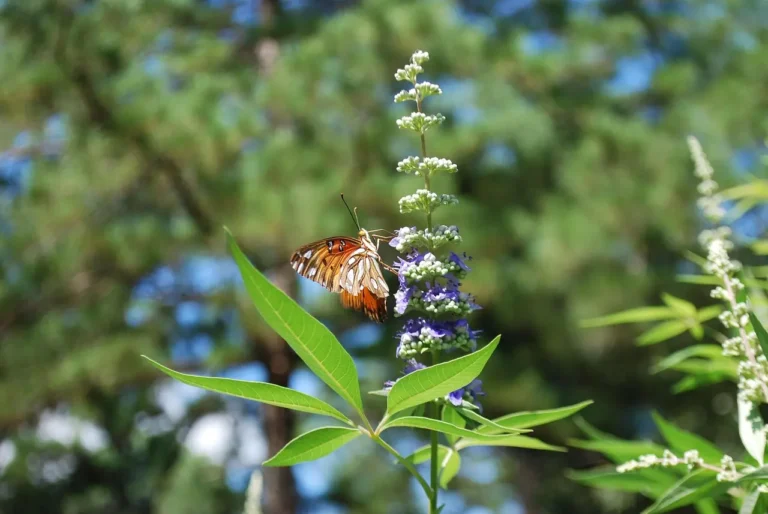
The flowers are small and tubular, grouped into dense, rounded clusters known as umbels. Each cluster consists of numerous individual florets. One of the defining characteristics of Lantana camara is the gradual color transformation of its flowers, often shifting from yellow to orange, pink, or red as they mature. This results in multicolored flower heads on a single plant.
The flowering period may extend across much of the year in warm climates.
Fruits
The fruit is a small, fleshy drupe that appears green when immature and turns dark purple to black upon ripening. Each fruit typically contains one or two seeds.
Roots
Lantana possesses a fibrous root system that supports its spreading growth habit. In established plants, the root system may become extensive and contribute to the plant’s resilience in varied environments.
Plant Classification & Growth Habit
Lantana camara is classified as a perennial flowering shrub within the Verbenaceae family. It exhibits a bushy and often sprawling growth pattern, forming dense thickets under favorable conditions. In some environments, it may behave as a scrambling shrub, extending over adjacent vegetation.
The plant maintains evergreen foliage in frost-free regions, while in cooler climates it may experience seasonal dieback. Its structural form ranges from compact and rounded to loosely spreading, depending on local environmental factors.
Due to its rapid growth and seed dispersal capacity, Lantana camara has been categorized as an invasive species in several countries outside its native range.
Common Types / Varieties / General Classifications
Numerous cultivars and hybrid forms of Lantana camara exist, primarily distinguished by flower coloration and growth form. General classifications include:
- Multicolored Forms – Display flower clusters with two or more contrasting colors.
- Single-Color Varieties – Produce uniform yellow, white, pink, or purple blooms.
- Trailing Types – Exhibit a more spreading or ground-covering growth habit.
- Compact Dwarf Forms – Characterized by reduced height and denser branching.
In addition to Lantana camara, other species within the Lantana genus are sometimes cultivated, though L. Camara remains the most widely recognized.
Native Range & Distribution
Lantana camara is native to tropical regions of Central and South America. Over time, it has been introduced to parts of Africa, Asia, Australia, and the Pacific Islands. Today, it occurs widely across tropical and subtropical climates worldwide.
The plant is commonly found in open woodlands, grasslands, coastal areas, roadsides, and disturbed sites. In several countries, it has adapted successfully to dry slopes and degraded land, contributing to its widespread naturalization.
In regions where it is non-native, Lantana camara is often monitored due to its competitive growth and impact on local ecosystems.
Cultural, Culinary, or Traditional Context
Historically, Lantana camara has been cultivated as an ornamental plant due to its vibrant and long-lasting flowers. Its colorful appearance has made it a recognizable feature in gardens and public landscapes in many countries.
In certain traditional practices, various parts of the plant have been utilized for non-culinary purposes, including as natural dyes and in folk traditions. However, it is also widely documented that parts of the plant, particularly the unripe berries and foliage, contain compounds that may be toxic to livestock and some animals.
Economically, Lantana camara has played a dual role as both a decorative species and, in some regions, a management concern due to its invasive characteristics.
Interesting Facts / Did You Know
- Lantana flowers often change color as they age, which may attract pollinators at different stages of bloom.
- The plant’s strong scent is released when its leaves are crushed.
- In some tropical regions, Lantana camara forms dense thickets that alter local plant communities.
- The genus Lantana includes more than 150 species of flowering plants.
- The berries of Lantana camara are edible to certain bird species, which contributes to seed dispersal.
FAQs
Is Lantana camara a tree or a shrub?
Lantana camara is classified as a woody shrub. It may grow densely and reach a substantial size but does not develop the single trunk structure typical of trees.
Are all Lantana plants the same species?
No. While Lantana camara is the most commonly known species, the genus Lantana includes multiple species and hybrids.
Why do Lantana flowers change color?
The color change occurs as the individual florets mature. This characteristic is a natural feature of the species and varies among cultivars.
Is Lantana camara considered invasive?
In several regions outside its native range, Lantana camara is classified as invasive due to its ability to spread and outcompete native vegetation.
Recommended Products
Disclosure: As an Amazon Associate, PlantsInfo may earn from qualifying purchases.
🌱 Plant Care Essentials
The following tools can help with pruning, plant health, soil management, and fruit garden maintenance.

Neem Oil for Plant Care
Natural plant protection against aphids, whiteflies, mites, and other common garden pests.

Fungicide for Root Care
Helps suppress soil-borne fungal diseases and supports healthier root systems.

Spray Bottle for Plants
Ideal for applying foliar sprays, neem oil solutions, and liquid plant treatments.

Rubber Hand Gloves
Protects hands during pruning, planting, soil preparation, and garden maintenance.
Conclusion
The Lantana plant (Lantana camara) is a perennial flowering shrub known for its vividly colored flower clusters and adaptable growth habit. Native to the Americas, it has become widely distributed across tropical and subtropical regions worldwide. Its botanical features, including textured foliage, multicolored blooms, and dense branching structure, distinguish it within the Verbenaceae family.
While valued for its ornamental appeal, Lantana camara also holds ecological significance due to its capacity for naturalization and environmental impact. Its prominence across continents underscores its adaptability and botanical importance.
For structured botanical references and detailed plant profiles, the Plants Info platform provides an organized plant database designed for learning and informational purposes.