Introduction
Lucky Bamboo is a popular ornamental plant widely recognized for its slender green stalks, minimal foliage, and strong cultural symbolism. Despite its common name, Lucky Bamboo is not a true bamboo but belongs to the genus Dracaena. The plant is frequently associated with principles of harmony, balance, and positive energy, particularly within East Asian cultural traditions. Its sculptural appearance and adaptability to indoor environments have contributed to its widespread presence in homes, offices, and decorative interiors.
Classification
- Plant Type
- Shrub
- Lifecycle
- Perennial
- Leaf Habit
- Evergreen
- Native Region
- Africa
- Plant Family
- Asparagaceae
Botanically identified as Dracaena sanderiana, Lucky Bamboo is valued primarily for its aesthetic form rather than for its flowering or seasonal change. The plant is commonly arranged in water-filled containers or grown in soil-based media, often shaped into spirals, braids, or tiered groupings. Its enduring visual appeal and symbolic associations have positioned Lucky Bamboo as a distinctive subject within ornamental plant databases.
Quick Plant Information
| Attribute | Details |
|---|---|
| Common Names | Lucky Bamboo, Ribbon Plant, Friendship Bamboo |
| Scientific Name | Dracaena sanderiana |
| Family | Asparagaceae |
| Plant Type | Ornamental foliage plant |
| Lifespan | Perennial |
| Native Region | Central Africa |
| Growth Habit | Upright, cane-forming |
| Average Height | 30–90 cm (indoors) |
| Leaf Characteristics | Narrow, lance-shaped, glossy green |
| Flower Color | Rarely flowers indoors; white |
| Sunlight Requirement | Bright, indirect light |
| Water Requirement | Moderate |
| Soil Type | Well-drained potting medium or water |
| Toxicity | Toxic to pets |
Botanical Characteristics
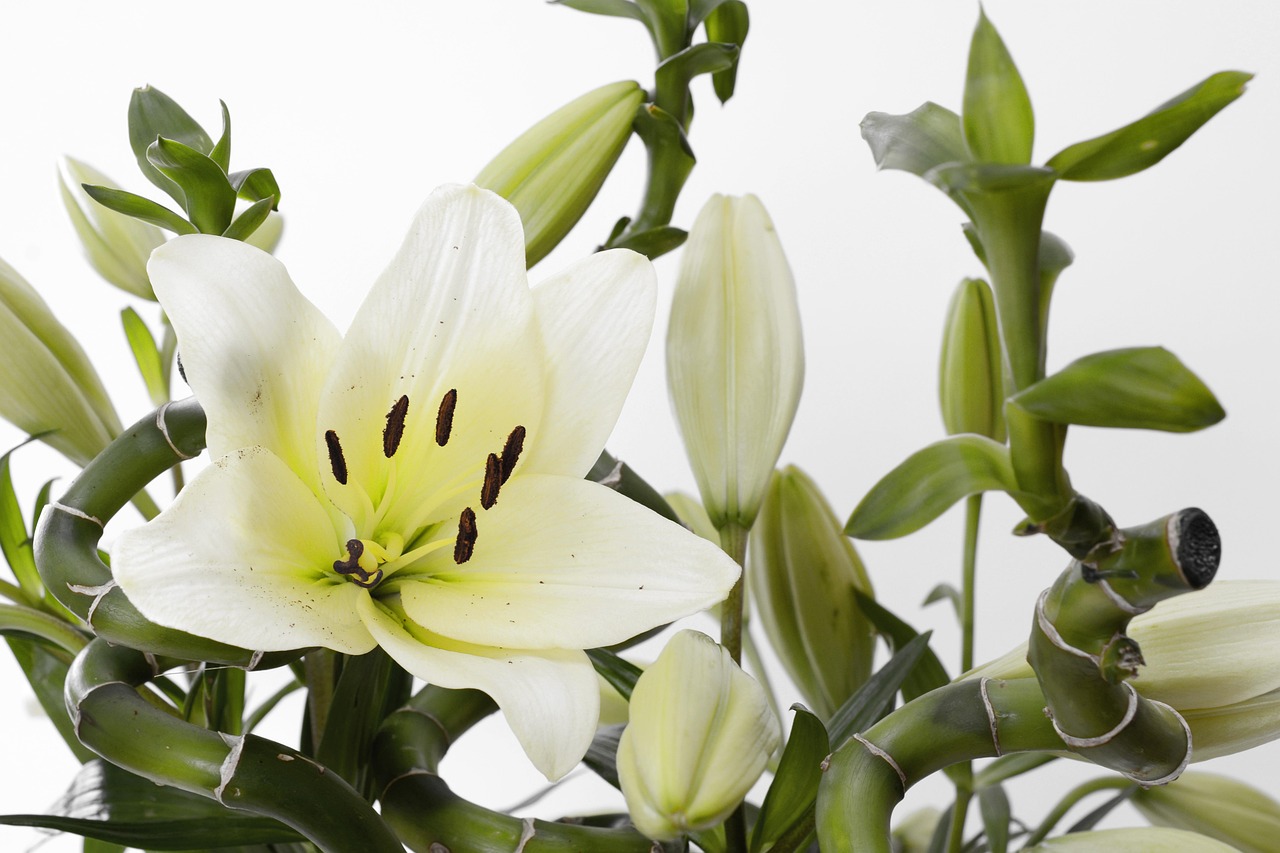
Lucky Bamboo is a compact, evergreen plant characterized by smooth, segmented stems known as canes. These canes resemble bamboo culms in appearance but lack the structural nodes and woody composition of true bamboo species. The stems are typically green and flexible when young, gradually becoming firmer with maturity.
Leaves emerge from nodes along the upper portions of the canes and display a lanceolate shape with a smooth, glossy surface. Foliage coloration ranges from medium to deep green, sometimes with lighter striping in certain cultivated forms. The plant’s root system is fibrous and relatively shallow, supporting both soil-based and hydroponic growth conditions.
Flowering is uncommon in indoor environments. When it occurs, the flowers are small, pale, and not considered a defining ornamental feature. As a result, Lucky Bamboo is primarily categorized as a foliage plant rather than a flowering species.
Native Habitat and Distribution
Dracaena sanderiana is native to tropical regions of Central Africa, where it grows under forest canopies with filtered sunlight and consistent humidity. In its natural habitat, the plant develops as part of understory vegetation, benefiting from indirect light and stable moisture availability.
Through global trade and cultivation, Lucky Bamboo has been introduced far beyond its native range. It is now commonly distributed across Asia, Europe, and the Americas as an indoor ornamental plant. The species has not widely naturalized outdoors, as its growth is closely tied to controlled environments and stable temperatures.
The plant’s global popularity is largely attributed to its adaptability to indoor conditions and its cultural significance rather than ecological expansion.
Common Varieties or Types
Several cultivated forms of Lucky Bamboo are recognized based on stem shape, arrangement, and foliage variation. These distinctions are primarily horticultural rather than taxonomic.
Commonly observed forms include straight-stemmed arrangements, spiral-shaped canes, braided stalk groupings, and multi-tiered compositions. Some varieties exhibit variegated leaves with pale green or yellow striping, adding visual contrast to traditional green forms.
These variations are typically produced through controlled training and selective propagation, emphasizing aesthetic presentation rather than genetic differentiation.
Uses and Importance
Lucky Bamboo holds significance primarily as an ornamental and symbolic plant. It is widely used in interior decoration due to its clean lines, compact form, and compatibility with modern and traditional design settings. The plant is frequently displayed in water-filled glass containers, ceramic pots, or decorative arrangements.
Culturally, Lucky Bamboo is associated with concepts of prosperity, balance, and harmony, particularly within Feng Shui traditions. Specific numbers of stalks and arrangement styles are often symbolically interpreted, contributing to its continued demand in ceremonial and gifting contexts.
Beyond its decorative role, Lucky Bamboo also contributes to indoor plant collections as a low-maintenance foliage specimen valued for longevity and visual consistency.
Growth Behavior and Care (Descriptive)
Lucky Bamboo exhibits slow to moderate growth under indoor conditions. New shoots typically emerge from nodes along existing canes, contributing to gradual vertical or lateral expansion. Growth remains relatively compact compared to other Dracaena species.
The plant demonstrates adaptability to both water-based and soil-based cultivation systems. Leaves may periodically shed as part of natural aging, with new foliage replacing older growth. Structural shaping, such as spirals, is achieved through controlled light exposure during early development rather than inherent growth patterns.
Overall growth behavior remains stable when environmental conditions align with the plant’s native understory preferences.
Lifecycle, Flowering, and Harvesting
As a perennial species, Lucky Bamboo maintains year-round foliage under suitable indoor conditions. Its lifecycle is characterized by continuous vegetative growth rather than seasonal dormancy.
Flowering is rare in cultivated indoor environments and is not a primary feature of the plant’s lifecycle. When flowers do appear, they are small, pale, and short-lived.
The plant is not harvested in a traditional agricultural sense. Instead, individual stems or groupings may be divided or replaced for ornamental or commercial purposes.
Environmental or Ecological Value
In indoor environments, Lucky Bamboo contributes to visual greenery and interior plant diversity. While not a significant ecological species in outdoor ecosystems, it plays a role in enhancing indoor plant collections and promoting awareness of tropical foliage plants.
The species does not serve as a major pollinator resource or wildlife habitat due to its limited flowering and indoor cultivation. Its ecological relevance is therefore primarily aesthetic and cultural rather than environmental.
Recommended Products
Disclosure: As an Amazon Associate, PlantsInfo may earn from qualifying purchases.
🌱 Plant Care Essentials
The following tools can help with pruning, plant health, soil management, and fruit garden maintenance.

Neem Oil for Plant Care
Natural plant protection against aphids, whiteflies, mites, and other common garden pests.

Fungicide for Root Care
Helps suppress soil-borne fungal diseases and supports healthier root systems.

Spray Bottle for Plants
Ideal for applying foliar sprays, neem oil solutions, and liquid plant treatments.

Rubber Hand Gloves
Protects hands during pruning, planting, soil preparation, and garden maintenance.
Conclusion
Lucky Bamboo is a distinctive ornamental plant valued for its elegant form, cultural symbolism, and adaptability to indoor settings. Although commonly mistaken for true bamboo, its botanical identity within the Dracaena genus defines its growth behavior, foliage structure, and environmental preferences.
With origins in tropical Africa and widespread global cultivation, Lucky Bamboo remains a prominent example of how botanical characteristics and cultural interpretation can intersect within ornamental plant use. Its enduring popularity reflects both its visual simplicity and its symbolic associations.
Frequently Asked Questions (FAQs)
Is Lucky Bamboo a true bamboo plant?
Lucky Bamboo is not a true bamboo. It belongs to the genus Dracaena and differs botanically from bamboo species in structure and classification.
Can Lucky Bamboo grow in water permanently?
The plant is commonly maintained in water for extended periods, particularly in decorative arrangements, due to its adaptable root system.
Does Lucky Bamboo flower indoors?
Flowering is rare in indoor conditions and is not a defining characteristic of the plant.
Is Lucky Bamboo safe for pets?
Lucky Bamboo is considered toxic to cats and dogs if ingested.
What is the typical lifespan of Lucky Bamboo?
As a perennial plant, Lucky Bamboo can persist for several years under stable indoor conditions.
Plants Info serves as a centralized knowledge platform featuring detailed reference entries on ornamental plants, herbs, medicinal species, and indoor foliage plants. The Lucky Bamboo profile forms part of a broader plant database designed to document botanical characteristics, growth behavior, and cultural relevance across diverse plant species in a structured and neutral format.