Introduction
The Monstera deliciosa plant is a tropical flowering species widely recognized for its large, perforated leaves and distinctive climbing growth form. Scientifically classified as Monstera deliciosa, it belongs to the arum family and is native to the tropical forests of the Americas. The plant is notable for its dramatic foliage, which has contributed to its prominence in botanical collections and cultural imagery.
Classification
- Plant Type
- Vine
- Lifecycle
- Perennial
- Leaf Habit
- Evergreen
- Native Region
- North America
- Plant Family
- Araceae
In natural ecosystems, Monstera deliciosa forms part of the understory vegetation in humid forests, where it interacts with surrounding trees and plant life. Its growth habit and leaf morphology reflect adaptations associated with tropical forest environments, making it a subject of interest in botanical and ecological studies.
Beyond its ecological role, Monstera deliciosa has become globally familiar through its presence in cultivated settings and visual media. Its recognizable leaf shape has been widely reproduced in art, design, and decorative contexts, reinforcing its status as one of the most identifiable tropical plant species.
Quick Plant Information
| Attribute | Details |
|---|---|
| Common Name(s) | Monstera, Swiss Cheese Plant |
| Scientific Name | Monstera deliciosa |
| Family | Araceae |
| Plant Type | Tropical foliage plant |
| Lifespan | Perennial |
| Growth Habit / Growth Form | Climbing, spreading evergreen vine |
| Native Range | Southern Mexico to Central America |
| Climate Adaptation / Habitat Type | Tropical rainforest |
| Leaf Type | Large, lobed, fenestrated leaves |
| Flower Color(s) | Cream to pale white |
| Fruit Type | Fleshy composite fruit |
| Evergreen / Deciduous | Evergreen |
Botanical Description
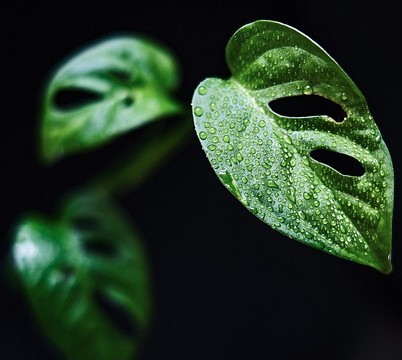
Monstera deliciosa develops long, thick stems that support its climbing and spreading nature. The stems are herbaceous but sturdy, often producing nodes from which leaves, aerial roots, and inflorescences emerge. As the plant matures, the stems may extend horizontally or vertically, depending on surrounding structures.
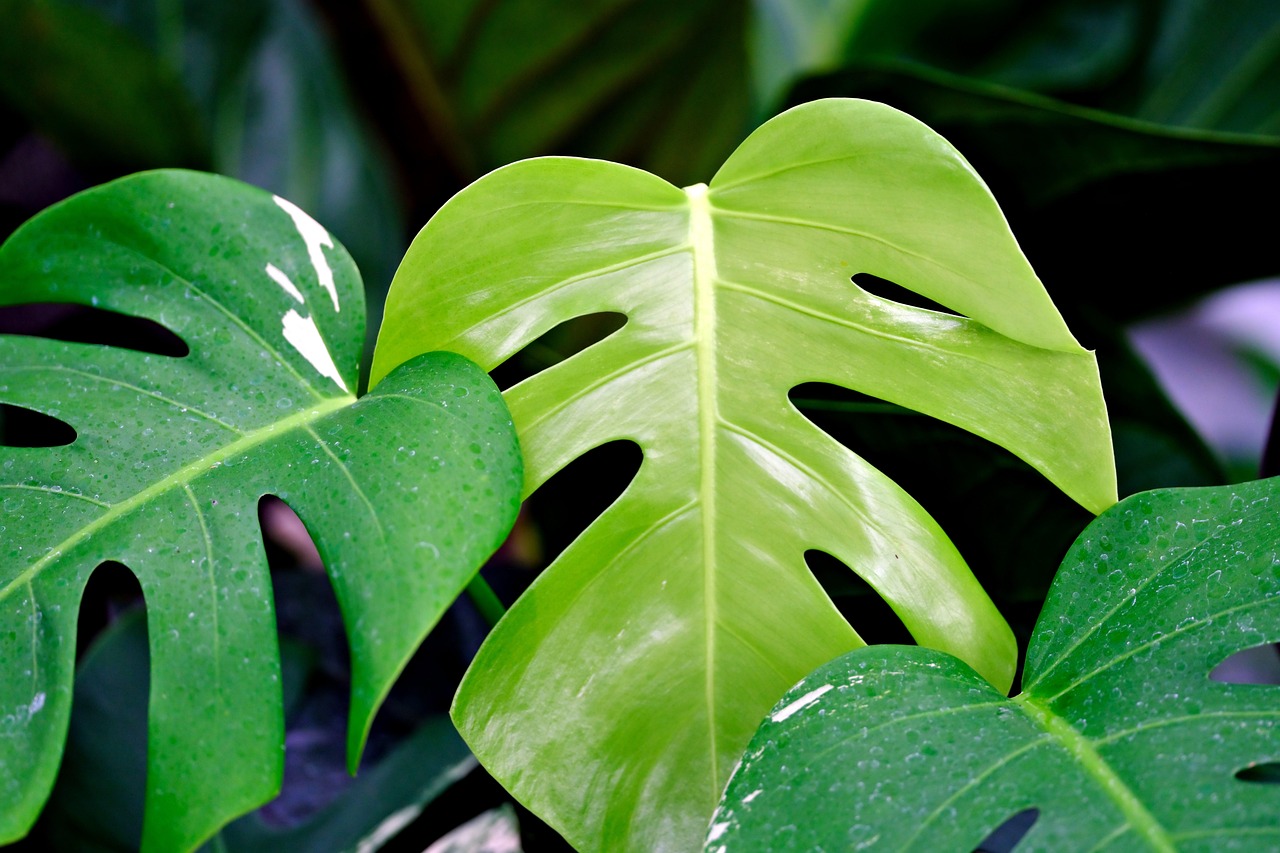
The leaves are the most visually distinctive feature of the plant. They are large, glossy, and heart-shaped when young, gradually developing deep lobes and natural perforations known as fenestrations as they mature. Leaf size can increase significantly with age, and the surface is typically a deep green with a leathery texture. Each leaf is attached to the stem by a robust petiole that allows flexibility and movement.
Monstera deliciosa produces inflorescences characteristic of the arum family. The flowers are arranged on a spadix surrounded by a pale spathe. Individually, the flowers are small and densely packed, lacking showy petals. Following pollination, the spadix develops into a fleshy, elongated fruit composed of multiple fused berries.
The plant forms prominent aerial roots that extend from stem nodes. These roots contribute to anchoring and structural support and are a defining feature of the species’ overall appearance. Subterranean roots also develop, forming a fibrous system that supports nutrient uptake and stability.
Plant Classification & Growth Habit
Monstera deliciosa is classified as a perennial, evergreen, herbaceous vine. It does not develop woody tissue in the manner of shrubs or trees but instead relies on its climbing habit and aerial roots to ascend surrounding vegetation in natural environments.
The plant exhibits a climbing and spreading growth pattern, often beginning as a ground-level plant before extending upward. This classification places it among tropical climbing aroids, a group characterized by large leaves, aerial roots, and specialized inflorescences.
Common Types / Varieties / General Classifications
Within the species Monstera deliciosa, plants are generally discussed in terms of observable leaf patterns and growth forms rather than formal botanical varieties. These distinctions are descriptive and based on appearance.
- Juvenile Form
Features smaller, solid leaves without perforations. - Mature Form
Displays large leaves with deep splits and fenestrations. - Variegated Forms
Characterized by irregular light-colored patterns on the leaves, resulting from genetic variation.
These classifications describe visual differences without implying hierarchy or preference.
Native Range & Distribution
Monstera deliciosa is native to the tropical regions of southern Mexico and Central America. In these areas, it naturally occurs in humid forests where it grows in association with trees and dense vegetation.
Through cultivation and human movement, the species has been introduced to many tropical and subtropical regions worldwide. It is now commonly encountered in botanical gardens and cultivated landscapes far beyond its original range, though its natural distribution remains centered in the Americas.
Cultural, Culinary, or Traditional Context
Historically, Monstera deliciosa has been recognized in its native regions for its distinctive fruit, which has been documented in local traditions. The fruit’s unusual structure and development have contributed to the plant’s species name, deliciosa, though references are primarily descriptive rather than prescriptive.
Culturally, the plant has gained widespread recognition in modern times due to its visual appeal. Its large, perforated leaves have become a recurring motif in design, illustration, and decorative arts. This symbolic presence has elevated the plant beyond its botanical identity into a broader cultural icon associated with tropical imagery.
Economically, Monstera deliciosa has played a role in horticultural trade and botanical study. Its striking morphology has made it a commonly referenced species in discussions of tropical foliage plants.
Interesting Facts / Did You Know
- The natural holes in Monstera leaves are known as fenestrations.
- Monstera deliciosa belongs to the same plant family as philodendrons and peace lilies.
- The plant’s aerial roots can grow several feet in length.
- Leaf shape changes significantly as the plant matures, making juvenile and adult forms appear quite different.
FAQs
Why do Monstera leaves have holes?
The perforations, called fenestrations, are a natural characteristic that develops as the leaves mature.
Is Monstera deliciosa a tree or a vine?
It is classified as a climbing vine rather than a tree.
Does Monstera deliciosa produce flowers?
Yes, it produces inflorescences consisting of a spadix and spathe, typical of the arum family.
Recommended Products
Disclosure: As an Amazon Associate, PlantsInfo may earn from qualifying purchases.
🌱 Plant Care Essentials
The following tools can help with pruning, plant health, soil management, and fruit garden maintenance.

Neem Oil for Plant Care
Natural plant protection against aphids, whiteflies, mites, and other common garden pests.

Fungicide for Root Care
Helps suppress soil-borne fungal diseases and supports healthier root systems.

Spray Bottle for Plants
Ideal for applying foliar sprays, neem oil solutions, and liquid plant treatments.

Rubber Hand Gloves
Protects hands during pruning, planting, soil preparation, and garden maintenance.
Conclusion
Monstera deliciosa is a tropical perennial plant distinguished by its large, fenestrated leaves and climbing growth habit. As a member of the Araceae family, it exhibits characteristic features such as aerial roots and spadix-based flowering structures.
Native to Central America and now widely recognized across the world, the plant remains notable for both its botanical traits and its cultural visibility. Its combination of ecological adaptation and visual distinctiveness has secured its place as one of the most recognizable tropical plant species.
Plants Info offers a structured plant database focused on clear, factual plant profiles, providing reference-oriented information on a wide range of species for educational and learning purposes.