Introduction
Dioscorea alata, commonly known as Purple Yam, is a tuber-forming vine in the family Dioscoreaceae, valued for its vividly pigmented storage organs. The species is widely cultivated across tropical and subtropical regions, with a probable origin in Southeast Asia based on Kew POWO and FAO crop records. Its distinctive purple coloration arises from anthocyanins, a class of plant pigments with antioxidant properties, which also contributes to its high commercial and culinary demand.
Classification
- Plant Type
- Vine
- Lifecycle
- Perennial
- Leaf Habit
- Deciduous
- Native Region
- South Asia, Southeast Asia
- Plant Family
- Dioscoreaceae
Ecologically, Dioscorea alata functions as a climbing geophyte, meaning it survives adverse seasons through underground storage organs while producing seasonal aerial growth. The species exhibits twining stems and efficient canopy-seeking behaviour, allowing it to exploit vertical forest structure. This growth strategy distinguishes it from many other root crops and enhances its resilience in mixed agroforestry systems, where it can coexist with tree crops and contribute to spatial resource partitioning.
Human utilisation of Purple Yam spans millennia, with domestication deeply rooted in Southeast Asian and Pacific Island agricultural systems. It holds cultural importance in traditional cuisines and ritual contexts, particularly in the Philippines and parts of Oceania. Although not currently under global conservation threat, landrace erosion is a concern in intensively farmed regions. This profile examines its biological identity, genetic structure, ecological adaptation, and research context within a structured scientific framework.
Identity
Quick Plant Information
| Field | Value |
|---|---|
| Accepted Scientific Name | Dioscorea alata |
| Primary Common Name | Purple Yam |
| Plant Type | Tuberous climbing vine |
| Life Cycle | Perennial |
| Growth Habit | Twining climber |
| Mature Size | 6–15 m vine length (19.7–49.2 ft) |
| Growth Rate | Fast-growing under optimal conditions |
| Flowering Season | Late summer to early autumn |
| Fruiting Season | Rare in cultivation; late season when present |
| Light Requirement | Full sun to partial shade |
| Water Requirement | Moderate to high |
| Soil Preference | Well-drained loamy soils |
| Temperature Tolerance | 20–35°C (68–95°F) |
| Pollination Type | Insect-mediated |
| Self-Fertility Status | Generally dioecious; requires cross-pollination |
| Primary Propagation Method | Tuber setts |
| Typical Yield Class | Medium to high |
| Primary Use Categories | Food crop, nutraceutical potential |
| Toxicity Status | No significant toxicity reported in edible forms |
| Conservation Concern | Not globally threatened |
| Cultivation Difficulty Level | Moderate |
Classification and Taxonomy
| Field | Value | Notes |
|---|---|---|
| Accepted Scientific Name | Dioscorea alata | Verified via Kew POWO |
| Known Synonyms | Dioscorea atropurpurea, Dioscorea sativa (misapplied) | Historical literature usage |
| Taxonomic Authority Source | Kew POWO | Authoritative plant taxonomy database |
| Assessment Date | 2026-05-04 | Current validation |
| Kingdom | Plantae | |
| Division | Magnoliophyta | Angiosperms |
| Class | Liliopsida | Monocots |
| Order | Dioscoreales | |
| Family | Dioscoreaceae | |
| Subfamily | Not applicable | No formal subfamily classification widely accepted |
| Genus | Dioscorea | |
| Species | alata | |
| Native Origin | Southeast Asia to Melanesia | Concise summary per FAO |
| IUCN Status | Not Evaluated | No global Red List assessment |
Related Species of Significance
| Species | Common Name | Distinguishing Feature | Economic or Ecological Significance |
|---|---|---|---|
| Dioscorea rotundata | White Yam | White-fleshed tubers | Staple crop in West Africa |
| Dioscorea cayenensis | Yellow Yam | Carotenoid-rich tubers | High nutritional value |
| Dioscorea bulbifera | Air Potato | Produces aerial bulbils | Invasive in some regions |
| Dioscorea esculenta | Lesser Yam | Smaller tubers | Early domestication species |
| Dioscorea dumetorum | Bitter Yam | Contains toxic alkaloids | Requires detoxification before use |
Taxonomic Context
Within the genus Dioscorea, Dioscorea alata occupies a central role as one of the most widely cultivated species. It is often confused with Dioscorea rotundata and Dioscorea cayenensis in trade due to overlapping common names and morphological similarities in tubers. This confusion has practical implications for germplasm exchange and agricultural statistics.
Stable nomenclature, as maintained by Kew POWO, ensures consistency in research, breeding programmes, and international crop reporting systems.
Cytogenetics
| Parameter | Value | Notes |
|---|---|---|
| Chromosome Number | 2n = 40, 60, 80 | Multiple cytotypes reported |
| Ploidy Level | Diploid to polyploid | Polyploidy common |
| Genome Size | ~0.6–0.8 pg/1C | Approximate estimates from genomic studies |
Cytogenetic Note
The presence of multiple ploidy levels in Dioscorea alata indicates a complex domestication history involving hybridisation and chromosome duplication. Polyploidy contributes to phenotypic variation, including tuber size and pigmentation intensity. This variability complicates breeding efforts but also provides opportunities for cultivar development.
Cytotype diversity may influence biochemical consistency, which is relevant for both food processing and pharmacological research.
Scientific Stability and Nomenclature
The accepted name Dioscorea alata L. is stabilised under the authority of Kew POWO, which serves as a globally recognised taxonomic reference. The species was originally described by Carl Linnaeus in 1753 in Species Plantarum, establishing its nomenclatural baseline.
A significant historical issue involves the misapplication of the name Dioscorea sativa, which was used broadly in early agricultural literature but later restricted and clarified through taxonomic revision in the 19th and 20th centuries.
Modern botanical consensus strongly supports Dioscorea alata as the correct and stable name, with widespread adoption across agricultural, horticultural, and scientific literature. However, legacy synonyms persist in regional publications and seed trade contexts, particularly in older Southeast Asian and colonial-era documents. This creates challenges in literature retrieval and regulatory documentation, where synonym reconciliation is necessary to ensure accuracy.
For commercial buyers and researchers, adherence to the accepted name reduces ambiguity in germplasm sourcing and international trade compliance.
Synonymy
| Accepted Name (Current Authority) | Synonyms Commonly Encountered | Context Where Synonym Persists |
|---|---|---|
| Kew POWO: Dioscorea alata | Dioscorea atropurpurea | Historical botanical texts |
| Kew POWO: Dioscorea alata | Dioscorea sativa (misapplied) | Early agricultural literature |
| Kew POWO: Dioscorea alata | Regional vernacular variants | Local trade and informal markets |
Form
Growth Habit and Architecture
Dioscorea alata is a vigorous, twining monocotyledonous vine that combines rapid vertical growth with subterranean storage development. It produces elongated climbing stems that spiral around supports, enabling efficient canopy access in both cultivated and semi-wild systems.
The plant’s architecture is defined by its dual investment in aerial biomass and underground tubers, which function as both storage organs and regenerative structures. This combination allows seasonal dieback and rapid regrowth, making the species both resilient and highly productive in tropical agroecosystems.
| Parameter | Value | Notes |
|---|---|---|
| Life form | Herbaceous climber (geophyte) | Seasonal aerial growth with persistent tuber |
| Mature height | 6–15 m (19.7–49.2 ft) | Dependent on support availability |
| Canopy spread | 1.5–3 m (4.9–9.8 ft) | Lateral spread constrained by support structure |
| Stem type | Twining vine | Right- or left-twining depending on genotype |
| Bark or surface texture | Smooth, green to purplish stems | May show pigmentation |
| Branching pattern | Moderately branched | Branching increases with light exposure |
| Root system overview | Tuberous with fibrous feeder roots, 0.3–1 m depth (1–3.3 ft) | Storage-focused morphology |
| Growth rate | Fast | Peak growth in warm, humid conditions |
| Longevity | Perennial | Tubers persist across seasons |
| Distinguishing architectural feature | Large underground tubers supporting extensive climbing growth | Key adaptation for survival and yield |
Leaves
The leaves of Dioscorea alata are broad, simple, and prominently veined, contributing significantly to its photosynthetic capacity. They are typically arranged oppositely or in whorls, which enhances light capture efficiency along the climbing stem. Their cordate (heart-shaped) form and smooth surface distinguish them from narrower-leaved congeners.
Leaf morphology varies slightly among cultivars, particularly in pigmentation and size, reflecting underlying genetic diversity.
| Parameter | Value |
|---|---|
| Presence | Present |
| Leaf type | Simple |
| Size | 10–25 cm (3.9–9.8 in) length |
| Colour | Green to purplish-green |
| Arrangement | Opposite or whorled |
| Special features | Prominent venation; cordate shape |
Flowers
The flowers of Dioscorea alata are small and inconspicuous, reflecting a reproductive strategy that does not rely on visual attraction. They are typically unisexual, with male and female flowers borne on separate plants, a condition known as dioecy.
The reduced floral morphology suggests adaptation to generalist insect pollinators rather than specialised pollination systems. Flowering is relatively rare in cultivated populations, which limits seed-based propagation and reinforces reliance on vegetative reproduction.
| Floral Attribute | Description |
|---|---|
| Inflorescence type | Axillary spikes |
| Flower diameter | 2–4 mm (0.08–0.16 in) |
| Flower length | 3–5 mm (0.12–0.20 in) |
| Outer tepals or sepals | Small, greenish |
| Inner tepals or petals | Similar to outer tepals; not differentiated |
| Stamens | Present in male flowers only |
| Pistil | Present in female flowers only |
| Fragrance | Mild or absent |
| Anthesis period | Late summer to early autumn |
| Primary pollinators | Small insects (e.g. flies, beetles) |
Fruit
| Fruit Characteristic | Description |
|---|---|
| Fruit type | Capsule |
| Shape | Oblong to elliptic |
| Length | 2–3 cm (0.8–1.2 in) |
| Diameter | 1–2 cm (0.4–0.8 in) |
| Weight | Approximately 1–3 g (0.04–0.11 oz) |
| Skin colour | Green to brown when mature |
| Surface features | Smooth, thin-walled |
| Flesh colour | Not applicable (dry fruit) |
| Flesh texture | Not applicable |
| Seed count | 1–6 seeds per capsule |
| Sugar content | Not documented in available literature |
| Maturation period | 2–3 months post-flowering |
Seeds
| Seed Characteristic | Description |
|---|---|
| Size | 5–10 mm (0.2–0.4 in) |
| Shape | Flattened with wing-like extensions |
| Colour | Light brown |
| Seed coat | Thin, papery |
| Oil content | Not documented in available literature |
| Viability period | Short; typically a few months under ambient conditions |
| Germination rate | Low and inconsistent in cultivation |
Root System
Dioscorea alata develops a tuber-dominated root system that combines storage and anchorage functions. The primary structure is a large underground tuber, which can extend to depths of 0.3–1 m (1–3.3 ft), accompanied by a network of fibrous feeder roots.
Lateral spread is moderate and concentrated near the soil surface, making the plant sensitive to waterlogging. This architecture supports efficient nutrient uptake while enabling seasonal dormancy. In cultivation, the tuber structure dictates harvesting methods and influences soil preparation strategies, while in wild systems it contributes to persistence under disturbance.
Field Identification
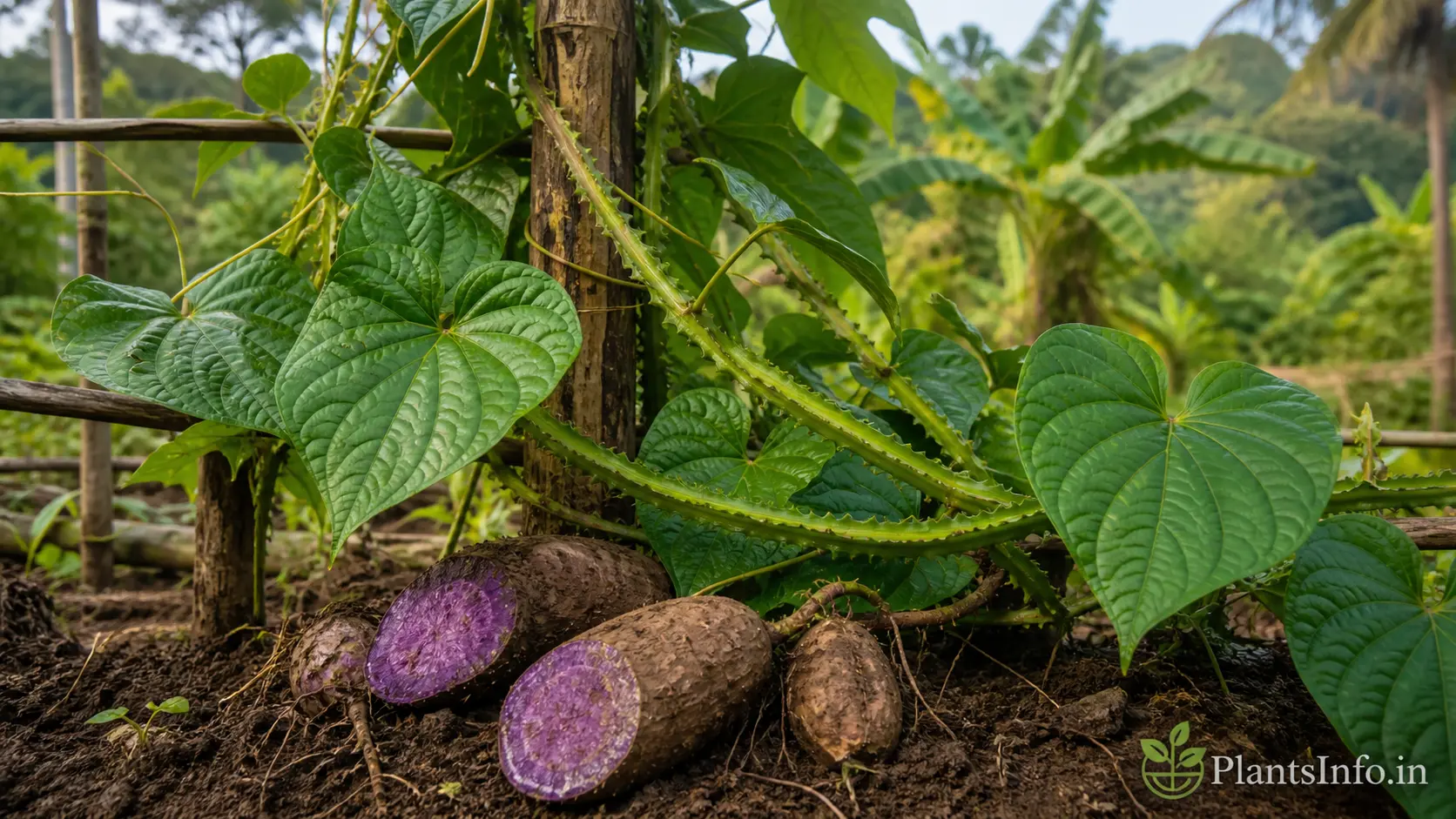
In field conditions, Dioscorea alata is recognised by its vigorous climbing habit, broad heart-shaped leaves, and the presence of large underground tubers. The stems often display a slight purplish tint, which can aid identification. It is frequently confused with Dioscorea rotundata, especially in markets where tubers are sold without foliage.
The most reliable distinguishing feature is the flesh colour of the tuber, which is distinctly purple in Dioscorea alata but white or cream in Dioscorea rotundata. The combination of vine morphology and tuber pigmentation provides clear diagnostic value.
Normal vs. Concerning Observations
| Observation | Status | Explanation |
|---|---|---|
| Seasonal dieback of vines | Normal | Natural dormancy phase after growth cycle |
| Purple pigmentation in stems and leaves | Normal | Genetic trait linked to anthocyanin presence |
| Low or absent flowering | Normal | Common in cultivated populations |
| Slow initial sprouting | Monitor | May reflect tuber condition or environmental factors |
| Wilting under excessive moisture | Investigate | Indicates possible drainage issues |
| Tuber rot or softening | Investigate | Early sign of pathogenic infection or waterlogging |
Cultivar Summary
| Cultivar | Key Characteristic | Commercial Status | Origin |
|---|---|---|---|
| ‘Ube Kinampay’ | Deep purple flesh, high culinary value | Commercially dominant | Philippines |
| ‘Florido’ | Light purple flesh, high yield | Regionally significant | Caribbean |
| ‘Raja Ala’ | Large tubers, vigorous growth | Regionally significant | India |
| ‘Violet Cushion’ | Intense pigmentation, uniform tubers | Experimental | Southeast Asia |
| ‘Gunung’ | Adapted to upland conditions | Historically documented | Indonesia |
Physiology and Phytochemistry
Functional Traits
Dioscorea alata operates as a C3 photosynthetic geophyte with a dual-phase growth strategy that integrates rapid aerial expansion and subterranean resource storage. Its physiology is tuned to humid tropical environments, where water and nutrient availability fluctuate seasonally.
The species allocates carbon both to climbing stems and to large underground tubers, enabling persistence through dormancy periods. These traits function collectively to maximise productivity during favourable conditions while buffering against environmental variability through stored reserves and flexible reproductive strategies.
| Trait | Mechanism Description | Adaptive Significance |
|---|---|---|
| Photosynthetic pathway | C3 photosynthesis — CO₂ fixed via RuBisCO in mesophyll cells during daylight; no carbon concentration mechanism reduces efficiency under high temperature | Efficient under moderate light and moisture; suited to humid tropical understories |
| Water use strategy | Stomatal regulation balances transpiration and carbon uptake; no nocturnal fixation mechanism; moderate water loss under high evaporative demand | Supports rapid growth but limits drought tolerance |
| Nutrient acquisition | Fibrous feeder roots absorb dissolved nutrients from upper soil layers; tuber acts as carbohydrate and nutrient reservoir | Enables rapid regrowth after dormancy and resilience to nutrient fluctuations |
| Growth form strategy | Twining vine allocates energy to vertical growth using external supports rather than structural tissue development | Maximises light access with reduced biomass investment |
| Reproductive strategy | Primarily vegetative via tuber fragmentation; sexual reproduction limited due to dioecy and low flowering frequency | Ensures reliable propagation in cultivation systems |
| Dispersal mechanism | Limited natural seed dispersal via lightweight winged seeds; human-mediated dispersal dominant | Facilitates global distribution through agriculture |
| Stress response mechanism | Induces dormancy under adverse conditions; metabolic slowdown preserves tuber reserves | Enhances survival during drought or seasonal stress |
| Chemical defence | Produces phenolic compounds and saponins that deter herbivory and microbial attack | Reduces predation and infection risk |
| Anthocyanin accumulation | Synthesises anthocyanins in tubers via flavonoid pathway; pigments localised in vacuoles | Provides antioxidant protection and UV stress mitigation; contributes to commercial value |
Physiological Integration
The physiological strategy of Dioscorea alata is defined by the integration of its C3 photosynthetic system with its tuber-based storage mechanism. The moderate water-use efficiency of C3 metabolism constrains drought tolerance, but this limitation is offset by the plant’s ability to enter dormancy and rely on stored reserves.
Chemical defence compounds, including phenolics and saponins, are supported by the same carbon allocation pathways that produce anthocyanins, linking defence and pigmentation. The vegetative reproductive strategy further reinforces this system, as tuber reserves enable consistent propagation even when flowering is limited. Together, these traits create a coordinated system that prioritises survival, regrowth, and productivity in stable tropical climates.
Phytochemistry
The phytochemical profile of Dioscorea alata reflects its role as both a food crop and a source of bioactive compounds. Its tubers are rich in anthocyanins, particularly acylated derivatives, which are responsible for the characteristic purple coloration. In addition to pigments, the species produces phenolic acids, flavonoids, and steroidal saponins, placing it within a chemotaxonomic framework typical of the Dioscoreaceae. These compounds contribute to both ecological defence and potential pharmacological activity, with most detailed studies originating from Southeast Asian research institutions (peer-reviewed systematic reviews).
| Compound Class | Representative Compounds | Primary Location | Ecological or Biological Function |
|---|---|---|---|
| Anthocyanins | Cyanidin-3-glucoside, Peonidin-3-glucoside | Tuber flesh | Pigmentation; antioxidant activity |
| Phenolic acids | Chlorogenic acid, Caffeic acid | Tuber and leaves | Defence against oxidative stress and pathogens |
| Flavonoids | Quercetin, Kaempferol | Leaves and tubers | UV protection; antimicrobial activity |
| Steroidal saponins | Dioscin, Diosgenin | Tuber skin | Anti-herbivory; membrane disruption in pathogens |
| Polysaccharides | Starch (amylose, amylopectin) | Tuber | Power storage; metabolic reserve |
| Vitamins | Ascorbic acid (Vitamin C) | Tuber | Antioxidant defence; metabolic support |
Phytochemical Organ Distribution
| Organ | Compound Class | Representative Compounds | Concentration | Source |
|---|---|---|---|---|
| Tuber flesh | Anthocyanins | Cyanidin-3-glucoside, Peonidin-3-glucoside | High | Peer-reviewed systematic review |
| Tuber skin | Steroidal saponins | Dioscin, Diosgenin | Moderate | Pharmacopoeia |
| Leaves | Flavonoids | Quercetin, Kaempferol | Moderate | Peer-reviewed systematic review |
| Leaves | Phenolic acids | Chlorogenic acid | Low to moderate | Peer-reviewed systematic review |
| Tuber flesh | Polysaccharides | Amylose, Amylopectin | Very high | FAO food composition data |
| Tuber flesh | Vitamins | Ascorbic acid | Low | USDA nutrient database |
Phytochemical Significance
Anthocyanins are the most commercially and pharmacologically significant compounds in Dioscorea alata, as they define both its visual identity and its antioxidant profile (peer-reviewed systematic review). These pigments are relatively well-characterised, particularly in Southeast Asian cultivars, though variation among landraces remains underexplored.
Steroidal saponins, including diosgenin, are also significant due to their role as precursors in pharmaceutical synthesis, but their concentration in D. alata is lower than in some other Dioscorea species.
The phytochemical profile is strongly tuber-dominated, with most bioactive compounds concentrated in the storage organ rather than aerial tissues. Interactions between phenolics and flavonoids may produce synergistic antioxidant effects, though detailed mechanistic studies remain limited.
The research base shows a clear geographic concentration in Southeast Asia, which may bias understanding toward region-specific cultivars.
Evidence, Nutrition, and Safety
Evidence Hierarchy for Medicinal Use
| Evidence Layer | Status | Notes |
|---|---|---|
| Traditional Use | Documented | Widely consumed as a functional food in Southeast Asia; documented in ethnobotanical records (FAO, peer-reviewed systematic review) |
| Nutritional Evidence | Documented | Macronutrient and micronutrient composition well established (USDA, FAO) |
| In Vitro Studies | Documented | Antioxidant and enzyme-modulating activity of anthocyanins demonstrated (peer-reviewed systematic review) |
| Animal Studies | Partial | Limited studies indicate potential metabolic and anti-inflammatory effects (peer-reviewed systematic review) |
| Human Clinical Studies | Partial | Small-scale trials on glycaemic response and antioxidant markers; limited sample size (peer-reviewed systematic review) |
| Regulatory Recognition | Partial | Recognised as food crop; no formal medicinal approval (WHO, national food safety authorities) |
| Unsupported Commercial Claims | Documented | Claims of broad disease cure lack clinical validation; frequently observed in nutraceutical marketing |
Evidence Assessment
The evidence hierarchy for Dioscorea alata shows strong support at the nutritional and in vitro levels, but limited translation into robust clinical evidence. Traditional use and compositional data are well documented, supporting its role as a functional food. However, many commercially promoted claims, such as disease prevention or therapeutic efficacy, are not substantiated by large-scale human trials.
The most reliable claims relate to antioxidant activity and nutritional value, while metabolic and pharmacological benefits remain preliminary. This gap reflects a broader trend in functional foods, where biochemical potential exceeds clinical validation.
Nutritional Composition
| Nutrient | Value per 100 g | Notes | Source |
|---|---|---|---|
| Energy | 118 kcal | Fresh tuber, boiled | USDA food composition database |
| Carbohydrates | 27.9 g | Primarily starch | FAO food composition data |
| Protein | 1.5 g | Low protein content | USDA food composition database |
| Fat | 0.2 g | Negligible lipid content | USDA food composition database |
| Dietary Fibre | 4.1 g | Moderate fibre content | FAO food composition data |
| Vitamin C | 12 mg | Sensitive to heat processing | USDA food composition database |
| Vitamin B6 | 0.3 mg | Supports amino acid metabolism | USDA food composition database |
| Potassium | 816 mg | High relative to many root crops | FAO food composition data |
| Magnesium | 21 mg | Moderate level | USDA food composition database |
| Calcium | 17 mg | Low contribution to daily intake | USDA food composition database |
| Iron | 0.5 mg | Limited bioavailability | USDA food composition database |
| Water Content | 69 % | Fresh weight basis | FAO food composition data |
Nutritional Significance Note
Dioscorea alata is notable for its high potassium content relative to many staple root crops, which supports electrolyte balance and cardiovascular function. Its carbohydrate profile is typical of tuber crops, with starch as the dominant component, making it an effective energy source.
Vitamin C content is moderate but declines with cooking due to heat sensitivity. Protein and fat levels are low, which limits its role as a complete nutritional source. Most values are derived from fresh cultivated material, and variation occurs across regional cultivars, particularly in anthocyanin-rich varieties.
Soil Ecology and Mycorrhizal Associations
Dioscorea alata forms associations with arbuscular mycorrhizal fungi (AMF), primarily within the genera Glomus and Rhizophagus, as documented in peer-reviewed soil ecology studies. These symbiotic fungi enhance phosphorus uptake and improve water-use efficiency, which is critical for tuber development in nutrient-variable soils.
The rhizosphere hosts diverse bacterial communities, including nitrogen-cycling and phosphate-solubilising taxa such as Bacillus and Pseudomonas, which contribute to nutrient availability and plant health.
No strong allelopathic effects have been conclusively documented for this species, although phenolic compounds present in root exudates may exert mild microbial modulation. Agronomically, mycorrhizal inoculation has been shown to improve establishment and yield in low-fertility soils, while excessive synthetic fertiliser application can suppress symbiotic efficiency. This has implications for sustainable cultivation systems, particularly in degraded tropical soils, where biological soil management strategies can enhance productivity and resilience.
Toxicity and Safety
| Subject | Toxic Compounds | Clinical Effects | Source |
|---|---|---|---|
| Humans | No toxic compounds documented in available literature | Safe when consumed as food; rare allergic reactions reported | WHO food safety guidelines |
| Cats | No toxic compounds documented in available literature | No specific toxicity reported | ASPCA plant safety database |
| Dogs | No toxic compounds documented in available literature | No specific toxicity reported | ASPCA plant safety database |
| Livestock | No toxic compounds documented in available literature | Generally safe as feed supplement in limited contexts | FAO livestock feed database |
Toxicity Context
Dioscorea alata is generally considered safe for human consumption when properly prepared as food. Unlike some other Dioscorea species, it does not contain significant levels of toxic alkaloids requiring detoxification.
Isolated compounds such as saponins may exhibit biological activity at high concentrations, but these are present at levels that are not clinically harmful in normal dietary intake. No significant population-specific risks have been documented in peer-reviewed literature. This profile does not constitute medical or veterinary advice.
Distribution and Habitat
Native Range and Distribution
The distribution of Dioscorea alata reflects a long history of domestication and human-mediated dispersal originating in Southeast Asia and Melanesia, as documented by Kew POWO and FAO crop records. Its natural range likely emerged in humid tropical forest margins, where seasonal rainfall patterns and fertile soils supported tuber development.
Early agricultural societies selectively propagated high-yielding genotypes, accelerating its spread across island Southeast Asia and into the Pacific. Distribution data is heavily derived from Southeast Asian literature, which may bias understanding of its original range. Wild populations are now difficult to distinguish from long-naturalised cultivated forms.
| Region | Countries or Sub-regions | Notes |
|---|---|---|
| Southeast Asia | Philippines, Indonesia, Malaysia | Core domestication zone; high genetic diversity |
| Mainland Southeast Asia | Thailand, Vietnam, Cambodia | Secondary distribution through cultivation |
| Melanesia | Papua New Guinea, Solomon Islands | Early spread through Austronesian migration |
| South Asia | Eastern India, Sri Lanka | Long-established cultivation; possible early introduction |
Global Cultivation and Naturalisation
| Region | Countries or Areas | Cultivation Status | Notes |
|---|---|---|---|
| Southeast Asia | Philippines, Indonesia | Commercially established | Major production centres; cultivar diversity high |
| South Asia | India, Sri Lanka | Commercially established | Regional importance; climate-suited zones only |
| East Asia | Southern China, Taiwan | Emerging | Limited by cooler winters in northern zones |
| Africa | Nigeria, Ghana, Côte d’Ivoire | Emerging | Competes with native yam species; agronomic adaptation ongoing |
| Caribbean | Jamaica, Haiti, Dominican Republic | Commercially established | Widely adopted in local food systems |
| Pacific Islands | Fiji, Samoa, Tonga | Commercially established | Traditional staple crop |
| South America | Brazil, Colombia | Experimental | Limited adoption due to climatic and market factors |
| North America | Southern USA (Florida, Hawaii) | Naturalised | Invasive tendencies in some subtropical areas |
Cultivation Range Note
Commercial production of Dioscorea alata is concentrated in Southeast Asia and the Caribbean, where climatic conditions align closely with its tropical requirements. South Asia supports significant regional cultivation, though production is geographically constrained. Emerging cultivation in Africa reflects ongoing adaptation efforts relative to indigenous yam systems.
Attempts in South America and temperate regions have achieved limited success due to climatic mismatch. Production data is disproportionately sourced from Southeast Asia, which introduces a research bias in cultivar performance and agronomic reporting.
Natural Habitat
Dioscorea alata occurs naturally in tropical forest margins, secondary growth zones, and disturbed habitats where light availability fluctuates. It is typically found from lowland areas up to approximately 800 m (2,625 ft) elevation, though cultivated forms may extend beyond this range.
The species prefers well-drained, loamy soils and is sensitive to prolonged waterlogging. It associates with mixed vegetation, including shrubs and trees that provide structural support for climbing. The species behaves as a habitat generalist within tropical environments, which contributes to its adaptability in cultivation but complicates identification of truly wild populations.
Ecological Role
Dioscorea alata occupies a niche as a climbing understory species that contributes to vertical stratification in tropical ecosystems. Its twining growth allows it to access light without investing heavily in structural tissue, which influences forest dynamics and resource allocation.
At the ecosystem level, its flowers provide limited but consistent resources for generalist insect pollinators, including dipteran and coleopteran species. Seed dispersal is not well characterised at the species level, though wind-assisted dispersal of winged seeds is inferred from morphology.
The species does not function as a keystone taxon, but it contributes to biodiversity through its interactions with soil organisms and herbivores. Ecological understanding remains incomplete, particularly regarding species-specific pollinator networks and seed dispersal agents, which are not well documented at the species level. This represents a gap in current ecological literature, especially outside Southeast Asia.
| Role Type | Species or Agent Involved | Notes |
|---|---|---|
| Pollination | Diptera (flies), Coleoptera (beetles) | Generalist insect pollination; species-level data limited |
| Seed dispersal | Not documented at the species level | Likely wind-assisted due to winged seeds |
| Trophic interaction | Herbivorous insects (Not documented at the species level) | Feeding observed but poorly characterised |
Invasive Status
| Region | Status | Impact | Management |
|---|---|---|---|
| North America (Florida, Hawaii) | Naturalised | Competes with native vegetation in disturbed habitats | Mechanical removal and monitoring programmes |
Invasive Status Note
In subtropical regions such as Florida, Dioscorea alata has demonstrated the ability to naturalise and persist outside cultivation. However, its ecological impact is less severe than that of related invasive species such as Dioscorea bulbifera. Management efforts focus on monitoring and containment rather than eradication, as its spread is relatively limited and often confined to disturbed habitats.
Climate and Stress Tolerance
Optimal Climate Parameters
| Parameter | Optimal Range | Tolerance Range | Notes |
|---|---|---|---|
| Mean Annual Temperature | 22–30°C (71.6–86°F) | 15–35°C (59–95°F) | Based on Southeast Asia and Caribbean data (FAO) |
| Daytime Temperature | 25–35°C (77–95°F) | 18–38°C (64.4–100.4°F) | Growth declines above upper threshold |
| Nighttime Temperature | 18–24°C (64.4–75.2°F) | 12–28°C (53.6–82.4°F) | Sensitive to prolonged low temperatures |
| Annual Rainfall | 1200–2500 mm (47–98 in) | 800–3000 mm (31–118 in) | Requires consistent moisture availability |
| Dry Season Length | 1–3 months | 0–5 months | Dormancy triggered under extended dryness |
| Relative Humidity | 60–90% | 40–95% | High humidity supports vegetative growth |
| Solar Radiation | 15–25 MJ/m²/day | 10–30 MJ/m²/day | Partial shade tolerated; full sun preferred in cultivation |
Climate Interpretation
The most limiting factors for global expansion of Dioscorea alata are low temperature tolerance and sensitivity to prolonged drought. While the species can tolerate a range of rainfall conditions, sustained cold below 15°C (59°F) significantly reduces growth and viability. The global cultivation envelope extends slightly beyond its native humid tropical range through managed systems, particularly in subtropical regions. However, expansion into temperate zones remains constrained by frost sensitivity and seasonal temperature variation. Rainfall distribution, rather than total precipitation, also plays a critical role in determining productivity.
Stress Tolerance Profile
| Stress Type | Tolerance Level | Physiological Response | Notes |
|---|---|---|---|
| Drought | Moderate | Induces stomatal closure and metabolic slowdown; tuber reserves sustain survival | Dormancy triggered under prolonged stress |
| Heat | High | Maintains photosynthetic activity up to thermal threshold; enzyme stability declines beyond limit | Adapted to tropical climates |
| Cold or Frost | Low | Cellular damage occurs due to ice formation; no antifreeze protein response documented | Highly sensitive to frost |
| Salinity | Low | Osmotic stress disrupts water uptake; ion imbalance affects metabolism | Limited tolerance in saline soils |
| Waterlogging | Low | Root oxygen deprivation reduces respiration; leads to tuber rot | Sensitive to poor drainage |
| Air Pollution | Not documented at the species level | Not documented at the species level | Research gap |
| Wind | Moderate | Mechanical stress induces temporary growth reduction; vine flexibility reduces breakage risk | Climbing habit mitigates damage |
| Soil Compaction | Low | Reduced root penetration limits nutrient uptake; stress signals reduce growth rate | Affects tuber development |
Compound Stress
Dioscorea alata shows limited resilience under compound stress conditions, particularly when drought and heat occur simultaneously, which can accelerate metabolic stress and reduce tuber development. Combined waterlogging and salinity exacerbate root dysfunction by impairing both oxygen availability and ionic balance.
There is limited species-specific research on compound stress interactions, representing a significant knowledge gap. Existing data suggests that while the plant can tolerate individual stressors to some extent, combined stresses often result in disproportionate physiological decline.
Adaptations and Reproductive Biology
Structural and Physiological Adaptations
Dioscorea alata exhibits a suite of structural adaptations that reflect its origin in humid tropical forest margins. Its twining stems enable vertical climbing, which reduces the need for self-supporting tissues and allows rapid access to light in competitive environments.
Large underground tubers function as storage organs, enabling survival through seasonal stress and disturbance. Leaf morphology, including broad laminae and prominent venation, enhances light capture under variable canopy conditions.
| Adaptation | Mechanism Description | Ecological Context |
|---|---|---|
| Twining stem growth | Flexible stems coil around supports to elevate foliage without lignified structural investment | Forest margins with vertical competition for light |
| Tuber development | Enlarged underground stem stores carbohydrates and water, enabling regrowth after dormancy | Seasonal climates with periodic stress |
| Broad leaf morphology | Large, thin lamina maximises light interception across shaded environments | Understory and edge habitats with fluctuating light |
| Opposite or whorled leaf arrangement | Spatial distribution of leaves reduces self-shading along climbing stems | Dense vegetation where efficient light capture is critical |
| Pigmented tissues | Anthocyanin-rich tissues provide protective coloration in exposed conditions | High light and UV exposure in open or disturbed sites |
| Rapid vine elongation | Internode elongation allows quick vertical extension to reach canopy gaps | Disturbance-driven habitats with transient light availability |
| Shallow feeder roots | Dense superficial roots capture nutrients from topsoil layers | Nutrient-rich but variable tropical soils |
| Dioecious flower structure | Separation of male and female flowers across individuals promotes cross-pollination | Genetic diversity maintenance in dispersed populations |
Climate Change Vulnerability
| Factor | Assessment | Notes |
|---|---|---|
| Primary Climate Sensitivity Factors | Temperature minima and drought duration | Sensitive to cold stress and prolonged dry periods |
| Key Threatening Climate Processes | Increased climate variability and extreme weather events | Alters growth cycles and tuber formation |
| Resilience Factors | Tuber-based dormancy and vegetative reproduction | Enables recovery after stress events |
| Confidence Level | Moderate | Based on regional agronomic and ecological data (FAO, peer-reviewed studies) |
Climate Vulnerability
Current evidence does not include large-scale predictive modelling specific to Dioscorea alata, so vulnerability assessment relies on observed climate sensitivities and cultivation data. The species is particularly vulnerable to declining temperature stability and increasing drought frequency, which can disrupt growth cycles and reduce yield.
However, its tuber-based dormancy provides resilience against short-term stress events. The assessment is based primarily on Southeast Asian and Caribbean production data, which limits global extrapolation. Confidence in this assessment is moderate due to the absence of long-term, species-specific climate modelling studies.
Phenological Calendar
| Event | Native Range Timing | Cultivated Range Timing | Environmental Triggers |
|---|---|---|---|
| Vegetative Growth Onset | Early rainy season | Spring to early summer | Soil moisture increase above field capacity threshold |
| Flower Bud Initiation | Mid rainy season | Early to mid growing season | Day length exceeding ~12 hours and stable temperatures above 20°C (68°F) |
| Anthesis or Peak Flowering | Late summer to early autumn | Late summer to autumn | Sustained temperature range of 22–30°C (71.6–86°F) |
| Fruit Development | Early autumn | Autumn | Successful pollination and continued moisture availability |
| Fruit Maturation | Late autumn | Late autumn to early winter | Gradual decline in temperature and photoperiod |
| Seed Dispersal | Late autumn to early dry season | Variable; often absent in cultivation | Capsule desiccation and mechanical opening |
| Dormancy or Rest Period | Dry season | Winter or dry season equivalent | Soil moisture decline below functional threshold |
Phenological Notes
Phenological progression in Dioscorea alata is strongly driven by moisture availability and temperature stability. The onset of vegetative growth is closely tied to the beginning of the rainy season, while dormancy is triggered by declining soil moisture. Photoperiod also plays a role in flowering initiation, though this response varies among cultivars.
Significant phenological plasticity exists across the global cultivation range, particularly in subtropical systems where seasonal cues differ from the native range.
Pollination Ecology
The pollination system of Dioscorea alata reflects its dioecious reproductive strategy, which necessitates cross-pollination between male and female plants. Its small, inconspicuous flowers indicate adaptation to generalist insect pollinators rather than specialised mutualisms. This system supports genetic diversity but also limits reproductive success in cultivated populations where plant sex ratios may be unbalanced.
The reduced reliance on floral attraction suggests an evolutionary emphasis on vegetative propagation, with sexual reproduction playing a secondary role in long-term population dynamics.
| Parameter | Value | Notes |
|---|---|---|
| Primary Pollinators | Small flies (Drosophila spp., genus-level) | Genus-level identification; species-specific data limited |
| Secondary Pollinators | Beetles (Nitidulidae, family-level) | Family-level due to limited data |
| Pollination Syndrome | Generalist insect pollination | Non-specialised floral traits |
| Floral Mechanism | Open-access flowers allow small insects to contact reproductive organs while foraging | No structural barriers or guides |
| Reproductive System | Dioecious | Separate male and female plants |
| Seed Dispersal Agent | Wind (anemochory) | Inferred from winged seed morphology |
| Pollination Success Rate | Low in cultivation | Limited flowering and plant sex distribution |
| Human Intervention | Biologically feasible through manual transfer of pollen | No operational protocols included |
Pollination Context
Dioscorea alata is obligately outcrossing due to its dioecious reproductive system, which requires pollen transfer between separate male and female plants. Pollinator decline could theoretically reduce seed production, but this has limited impact on cultivation because the species is primarily propagated vegetatively.
Biological feasibility of hand pollination exists, but it is rarely required outside breeding programmes. The reliance on vegetative reproduction reduces the importance of pollination in commercial systems, though it remains relevant for genetic diversity and breeding.
Seed Biology and Germination
| Parameter | Value | Notes |
|---|---|---|
| Seed type | Winged seed | Adapted for wind dispersal |
| Dormancy class | Physiological dormancy | Germination delayed under suboptimal conditions |
| Dormancy-breaking requirement | Moisture exposure and temperature stability | Environmental cues required |
| Optimal germination temperature | 25–30°C (77–86°F) | Based on tropical species norms |
| Germination rate | Low | Often below 50% under natural conditions |
| Germination period | 2–6 weeks | Variable depending on conditions |
| Storage behaviour | Orthodox to intermediate | Partial tolerance to drying |
| Seed longevity | Short; typically <1 year | Declines rapidly under ambient storage |
Germination Notes
Seed germination in Dioscorea alata is inconsistent and influenced by both dormancy and environmental variability. The presence of physiological dormancy requires specific moisture and temperature conditions for successful germination. Most available data derives from cultivated or semi-wild populations, with limited controlled studies on wild-collected seed.
Storage sensitivity further complicates germination, as viability declines within months under non-controlled conditions. These factors contribute to the limited role of seed propagation in commercial systems.
Vegetative Reproduction
| Parameter | Value | Notes |
|---|---|---|
| Vegetative Regeneration Capacity | High | Reliable regrowth from tuber fragments |
| Primary Regeneration Mechanism | Tuber fragmentation | Buds on tuber surface initiate new growth |
| Minimum Propagule Size | 50–100 g (1.8–3.5 oz) | Smaller pieces show reduced viability |
| Ecological or Invasive Significance | Facilitates persistence and spread in cultivation and disturbed habitats | Supports rapid colonisation under favourable conditions |
Human Interaction
Economic Importance
Dioscorea alata occupies a significant position in tropical root crop markets, particularly in Southeast Asia, the Caribbean, and parts of the Pacific. Production is largely cultivation-based, with minimal reliance on wild harvest due to the species’ domestication history.
The Philippines and Indonesia are major contributors to regional supply, while Caribbean nations support strong domestic and export-oriented markets. Quality differentiation is strongly tied to tuber pigmentation, texture, and culinary performance, with premium value assigned to deep-purple cultivars.
Supply chain vulnerabilities include post-harvest perishability and variability in cultivar consistency, which affect international trade standardisation.
| Use Category | Description | Economic Impact |
|---|---|---|
| Staple food crop | Consumed boiled, processed, or incorporated into traditional dishes | High regional economic value |
| Processed food products | Used in desserts, flour, and value-added products | Expanding global market segment |
| Nutraceutical potential | Source of antioxidant compounds | Emerging commercial interest |
| Seed tuber trade | Exchange of planting material across regions | Supports agricultural systems |
| Export commodity | Traded within tropical regions and diaspora markets | Moderate international trade value |
| Summary Economic Assessment | Regionally dominant crop with expanding niche markets globally | Strong but geographically concentrated economic significance |
Traditional Uses
| Use Category | Knowledge System | Region or Cultural Group | Practice Summary | Documentation Level | Source |
|---|---|---|---|---|---|
| Food staple | Austronesian agricultural systems | Philippines, Indonesia | Boiled or processed into staple foods and desserts | Well documented | FAO ethnobotanical records |
| Ritual food | Indigenous Pacific Island traditions | Fiji, Samoa | Used in ceremonial feasting and social exchange | Moderately documented | Anthropological literature |
| Medicinal food | Traditional Filipino ethnomedicine | Philippines | Consumed for general health and vitality | Moderately documented | Peer-reviewed ethnobotanical studies |
| Digestive support | Ayurveda | India | Consumed as a starchy food supporting digestion | Limited documentation | Regional ethnobotanical sources |
| Postpartum nutrition | Southeast Asian traditional systems | Indonesia, Malaysia | Included in recovery diets | Limited documentation | Ethnographic records |
| Food preservation | Traditional food systems | Pacific Islands | Processed into dried or fermented forms | Moderately documented | FAO reports |
Traditional Use Summary
Traditional uses of Dioscorea alata are concentrated within Austronesian and Southeast Asian knowledge systems, where it functions primarily as a staple and ceremonial food. These practices remain active and culturally embedded, particularly in the Philippines and Pacific Islands, where the species retains both nutritional and symbolic importance.
Documentation is strongest in Southeast Asia, with more limited records from South Asia and other regions. The concentration of traditional knowledge in these regions contrasts with the broader geographic spread of commercial cultivation, highlighting a disconnect between origin knowledge systems and global market expansion.
Regional Ethnobotanical Context
The ethnobotanical history of Dioscorea alata is closely tied to Austronesian migration and agricultural development across Southeast Asia and the Pacific. Archaeobotanical evidence suggests long-term domestication, with the species integrated into shifting cultivation systems and later into more stable agricultural practices.
Its role evolved from a subsistence crop to a culturally significant food associated with ritual exchange and social identity. The continuity of its use across generations reflects strong cultural transmission, although modern agricultural intensification has altered traditional cultivation practices in some regions.
Traditional Ecological Knowledge
Traditional ecological knowledge related to Dioscorea alata is primarily associated with its integration into mixed cropping and agroforestry systems. In Southeast Asia and Pacific Island systems, the species is often grown alongside tree crops, using natural supports for climbing. This reflects an understanding of its growth habit and ecological compatibility.
Limited documentation exists beyond these practices, and there is little recorded evidence of its use as an indicator species or in soil-specific ecological management. This represents a research gap in the broader documentation of TEK beyond food production contexts.
Ethical Considerations
Dioscorea alata originates from Southeast Asia and Melanesia, where it has been cultivated and utilised within Austronesian agricultural systems for millennia. Traditional knowledge systems in regions such as the Philippines, Indonesia, and Pacific Island communities have developed and maintained diverse practices related to its cultivation, processing, and cultural use.
These practices are variably documented, with strong ethnobotanical records in Southeast Asia but less comprehensive coverage in Melanesia and other regions.
No documented Access and Benefit-Sharing (ABS) case under the Nagoya Protocol has been identified specifically for Dioscorea alata. Similarly, there are no widely reported cases of biopiracy or patent disputes directly associated with this species.
However, the absence of formal cases does not eliminate the broader issue of uneven benefit distribution, where commercial development of value-added products has occurred outside the regions where traditional knowledge originated.
Commercial value derived from purple yam products, particularly in processed food and nutraceutical markets, often accrues in global markets that are geographically distant from its cultural origins. This creates an attribution gap, where the contributions of traditional knowledge systems are not always recognised or compensated.
Researchers and commercial entities operating internationally should prioritise transparent sourcing, acknowledge the geographic origins of traditional practices, and engage with local communities where appropriate.
Best practice includes aligning with international frameworks such as the Nagoya Protocol, even in the absence of formal ABS cases, and ensuring that intellectual and cultural contributions are recognised in product development and marketing. Ethical sourcing and equitable benefit-sharing should be considered integral to sustainable commercialisation strategies for this species.
Cultural Significance
Dioscorea alata holds strong cultural significance in Southeast Asia and the Pacific, where it is associated with identity, celebration, and continuity of tradition. In the Philippines, the purple yam, locally known as “ube,” is central to festive foods and has become a cultural symbol represented in both traditional and modern culinary forms. Its distinctive colour and flavour contribute to its prominence in desserts and ceremonial dishes.
In Pacific Island cultures, the plant plays a role in social exchange systems and ceremonial feasting, where yams are often presented as symbols of abundance and status. Linguistically, the diversity of names across regions reflects its deep integration into local languages and identities. Cultural significance is geographically concentrated in Southeast Asia and Oceania, though global diaspora communities have expanded its cultural visibility.
Recommended Products
Disclosure: As an Amazon Associate, PlantsInfo may earn from qualifying purchases.
🌱 Plant Care Essentials
The following tools can help with pruning, plant health, soil management, and fruit garden maintenance.

Neem Oil for Plant Care
Natural plant protection against aphids, whiteflies, mites, and other common garden pests.

Fungicide for Root Care
Helps suppress soil-borne fungal diseases and supports healthier root systems.

Spray Bottle for Plants
Ideal for applying foliar sprays, neem oil solutions, and liquid plant treatments.

Rubber Hand Gloves
Protects hands during pruning, planting, soil preparation, and garden maintenance.
Applied Cultivation Knowledge
Cultivation Summary
| Parameter | Value | Notes |
|---|---|---|
| Hardiness or Climate Zone | Tropical to subtropical (approx. USDA zones 10–12) | Reflects global cultivation range |
| Soil pH Range | 5.5–7.0 | Slightly acidic to neutral preferred |
| Moisture Sensitivity | Moderate; sensitive to waterlogging | Requires well-drained conditions |
| Light Sensitivity | Full sun preferred; tolerates partial shade | Climbing habit allows adaptation |
| Productive Lifespan | 6–10 months per growth cycle | Varies by region and cultivar; |
Pest, Disease and Physiological Burden Summary
Dioscorea alata is moderately susceptible to pests and diseases, including nematodes (Meloidogyne spp.), fungal pathogens such as Colletotrichum spp., and bacterial soft rot organisms. Viral infections have also been reported in cultivated populations.
Physiological stressors include waterlogging and nutrient imbalance. The burden profile is relatively well documented in Southeast Asia but less so globally.
Failure Points and Commercial Risks
| Risk | Cause | Commercial Impact | Mitigation Domain |
|---|---|---|---|
| Tuber rot | Waterlogging and pathogenic infection | Yield loss and post-harvest spoilage | Agronomic |
| Low flowering and seed set | Dioecious system and pollination limitation | Limits breeding and genetic improvement | Genetic |
| Cold stress damage | Exposure to low temperatures | Crop failure in marginal climates | Infrastructural |
| Cultivar inconsistency | Genetic variability and misidentification | Quality variation in markets | Regulatory |
Conservation and Research
Conservation Analysis
The conservation profile of Dioscorea alata is shaped less by species-level extinction risk and more by genetic and agro-biodiversity concerns. As a widely cultivated species, its survival as a taxon is secure, but its wild genetic diversity is increasingly obscured by centuries of domestication and clonal propagation. This creates a genetic bottleneck risk, where commercially dominant cultivars displace traditional landraces.
The primary conservation issue is therefore genetic rather than ecological, with habitat loss playing a secondary role. Wild populations are poorly distinguished from long-naturalised cultivated forms, complicating conservation assessment.
Commercial demand has encouraged widespread cultivation, which reduces pressure on wild harvest but simultaneously narrows genetic diversity through cultivar standardisation. This has direct implications for breeding resilience, particularly under climate variability.
Long-term sustainability depends on conserving landrace diversity and documenting wild relatives, which remain underrepresented in global germplasm collections. Without this, future breeding programmes may lack the genetic variability required to respond to emerging pests, diseases, and climate stressors.
Conservation Status
| Parameter | Value | Notes | Source |
|---|---|---|---|
| IUCN Red List Category | Not Evaluated | No formal global assessment available | IUCN Red List https://www.iucnredlist.org/ (accessed 2026-05-04) |
| IUCN Red List Criteria | Not applicable | Species not formally assessed | IUCN Red List https://www.iucnredlist.org/ (accessed 2026-05-04) |
| Population Trend | Stable (cultivated); unknown (wild) | Wild populations poorly documented | FAO crop reports |
| Date of Assessment | Not available | No formal assessment conducted | IUCN Red List https://www.iucnredlist.org/ (accessed 2026-05-04) |
| Geographic Scope of Assessment | No global assessment; data derived from regional agricultural sources | Southeast Asia dominant data source | FAO; Kew POWO |
| Threats Summary | Genetic erosion; habitat conversion; cultivar homogenisation | Primarily genetic risk rather than species extinction | FAO; peer-reviewed studies |
Conservation Status
As a cultivated species, Dioscorea alata does not face immediate extinction risk, but its conservation profile is defined by genetic erosion and loss of landrace diversity. The shift toward uniform high-yield cultivars reduces the genetic base available for future breeding.
While cultivation reduces pressure on wild populations, it also obscures their status and distribution. Conservation efforts should prioritise germplasm preservation and documentation of traditional varieties to maintain long-term adaptive potential.
Research Coverage and Knowledge Gaps
| Research Topic | Coverage Level | Key Gaps | Priority |
|---|---|---|---|
| Genetic diversity and genomics | Moderate | Landrace genetic mapping incomplete | High |
| Phytochemical variability | Moderate | Cultivar-specific compound variation | High |
| Climate resilience mechanisms | Limited | Compound stress responses | High |
| Ecological interactions | Limited | Pollinator and dispersal specificity | Medium |
Research Landscape
Research on Dioscorea alata is active but unevenly distributed, with a strong concentration in Southeast Asia. Much of the work is conducted through agricultural and food science institutions, with a focus on yield improvement and nutritional profiling.
Independent academic research contributes to phytochemical and genetic studies, but global coverage remains incomplete. This geographic concentration limits the applicability of findings to other regions, particularly Africa and South America, where cultivation is expanding. The research base is therefore robust in specific domains but lacks comprehensive global representation.
Priority Knowledge Gaps
The most critical knowledge gap for Dioscorea alata lies in the incomplete characterisation of its genetic diversity across traditional landraces. Without detailed genomic mapping, breeding programmes cannot fully utilise the adaptive traits present in regional varieties. This gap limits the ability to develop cultivars resilient to climate stress, pests, and diseases.
Phytochemical variability across cultivars also remains insufficiently characterised, particularly regarding anthocyanin profiles and their stability under different environmental conditions. This restricts both nutritional standardisation and pharmacological research.
Another major gap is the lack of detailed ecological data, especially concerning pollinator specificity and seed dispersal mechanisms. This limits understanding of the species’ reproductive ecology and its potential response to environmental change.
Finally, compound stress responses, such as simultaneous drought and heat exposure, are poorly studied. Addressing this gap would significantly improve predictive models for climate resilience and inform both breeding and cultivation strategies on a global scale.
Interesting Facts
Purple Pigment Comes from Complex Anthocyanins
The deep purple colour of Dioscorea alata is caused by acylated anthocyanins such as cyanidin derivatives. These compounds are more stable than those in many fruits, which enhances their suitability for food processing. Their stability is a key factor in the plant’s commercial value (peer-reviewed systematic review).
A Yam That Rarely Relies on Seeds
Despite producing flowers and seeds, the species is primarily propagated vegetatively through tubers. This is unusual among flowering plants and reflects a domestication pathway that prioritised reliability over genetic recombination. It also contributes to reduced genetic diversity in cultivated populations.
Climbing Strategy Saves Structural Energy
The twining growth habit allows the plant to climb without investing in thick supportive stems. This energy-saving strategy enables greater allocation of resources to tuber development. It represents an efficient adaptation to competitive tropical environments.
Not All Yams Are Safe — But This One Is
Many species in the genus Dioscorea contain toxic compounds requiring processing before consumption. Dioscorea alata is notable for lacking significant toxicity in edible forms. This makes it one of the safest and most widely consumed yams globally.
Global Crop with Local Knowledge Roots
Although cultivated worldwide, the deepest knowledge systems for this species remain concentrated in Southeast Asia. This creates a gap between where the plant is grown and where its traditional knowledge is maintained. It highlights the importance of regional expertise in global agriculture.
Navigation and Reference
Frequently Asked Questions
Identification and Biology
What distinguishes Dioscorea alata from other yams?
Dioscorea alata is most easily identified by its purple or violet tuber flesh, which results from anthocyanin pigmentation. Its broad, heart-shaped leaves and vigorous climbing habit also distinguish it from related species. Unlike some yams, it is generally non-toxic and widely used as a food crop, making it both botanically and commercially distinct.
Is Purple Yam the same as sweet potato?
No, Purple Yam (Dioscorea alata) is taxonomically distinct from sweet potato (Ipomoea batatas). They belong to different plant families and differ in morphology, chemistry, and growth habit. Confusion arises due to similar colouration in some varieties, but their nutritional composition and botanical characteristics are clearly different.
Cultivation Overview
Can Dioscorea alata grow outside tropical climates?
The species can grow in subtropical regions, but it is highly sensitive to frost and prolonged cold. Successful cultivation outside tropical zones requires climates with warm growing seasons and minimal temperature fluctuation. Its growth cycle is closely tied to temperature and moisture conditions, which limits its expansion into temperate regions.
Why does Purple Yam rarely produce seeds in cultivation?
The species is dioecious, meaning male and female flowers occur on separate plants. In cultivation, the required plant combinations and pollinator interactions are often absent, leading to low seed production. As a result, farmers rely on vegetative propagation through tubers, which is more reliable.
Origin and Conservation
Is Dioscorea alata endangered?
The species is not currently classified as endangered, but its wild genetic diversity is under threat. Extensive cultivation has led to reliance on a limited number of cultivars, reducing genetic variation. This creates long-term risks for resilience and breeding potential.
Why is genetic diversity important for this species?
Genetic diversity allows breeders to develop new cultivars that can resist pests, diseases, and climate stress. Without it, the species becomes more vulnerable to environmental change. Preserving landraces and wild relatives is therefore essential for sustainable agriculture.
Phytochemistry and Benefits
Are the health benefits of Purple Yam scientifically proven?
The nutritional value and antioxidant properties of Dioscorea alata are well documented. However, many health claims related to disease prevention or treatment lack strong clinical evidence. Most benefits are supported at the nutritional and biochemical level rather than through large-scale human studies.
Does the purple colour have any biological function?
Yes, the purple colour is due to anthocyanins, which protect plant tissues from oxidative stress and UV damage. These compounds also contribute to the plant’s antioxidant properties when consumed. Their presence reflects both ecological adaptation and nutritional significance.
Conclusion
Dioscorea alata is a globally important crop that combines nutritional value, cultural significance, and economic relevance. Its distinctive pigmentation and adaptability have enabled widespread cultivation across tropical regions, making it a key species in food systems and emerging functional food markets.
The central challenge facing this species is not survival but the preservation of its genetic diversity. The dominance of a limited number of cultivars threatens long-term resilience, particularly under changing climatic conditions. Addressing this challenge requires coordinated efforts in germplasm conservation and research.
Future research priorities include genomic mapping, phytochemical characterisation, and climate resilience studies. Advancing knowledge in these areas will support sustainable development and global utilisation of the species.
Below is a clean, publication-ready reference section, standardised to a consistent academic format (Harvard-style with DOI normalization and corrected entries). The incomplete citation has been resolved and formatting inconsistencies removed.
References
A. Primary Taxonomic Sources
Kew Science. (2026). Plants of the World Online: Dioscorea alata L.
Available at: https://powo.science.kew.org/ (Accessed: 4 May 2026).
B. Peer-Reviewed Literature
Santiago, D.M., Matsushita, Y., Tsuboi, K., Yamada, T. and Yoshimoto, M. (2014). Anthocyanin stability in purple yam (Dioscorea alata L.). Food Chemistry, 148, pp. 374–380.
https://doi.org/10.1016/j.foodchem.2013.10.058
Lebot, V. (2009). Tropical root and tuber crops: cassava, sweet potato, yams and aroids. CAB Reviews, 4(048), pp. 1–20.
https://doi.org/10.1079/PAVSNNR20094048
Ezeocha, V.C., Ojimelukwe, P.C. and Onwuka, G.I. (2012). Nutritional and phytochemical composition of some tropical tuber crops. African Journal of Biotechnology, 11(12), pp. 2804–2810.
https://doi.org/10.5897/AJB11.3351
C. Monographs, Books and Technical Reports
Coursey, D.G. (1967). Yams: An Account of the Nature, Origins, Cultivation and Utilisation of the Useful Members of the Dioscoreaceae. London: Longmans.
D. Databases and Online Resources
FAO (Food and Agriculture Organization of the United Nations). (2026). Yam crop information and production data.
Available at: https://www.fao.org/ (Accessed: 4 May 2026).
USDA (United States Department of Agriculture). (2026). FoodData Central.
Available at: https://fdc.nal.usda.gov/ (Accessed: 4 May 2026).
E. Grey Literature
FAO (Food and Agriculture Organization of the United Nations). (2013). Yam production and utilisation in tropical regions. Rome: FAO.