Introduction
The weeping fig, scientifically known as Ficus benjamina, is a broadleaf evergreen tree belonging to the fig genus within the mulberry family. It is widely recognized for its graceful, arching branches and dense foliage composed of small, glossy leaves. Native to parts of Asia and Australia, the species has become globally familiar through its extensive use as an ornamental and landscape tree.
Classification
Botanically, Ficus benjamina represents a typical member of the genus Ficus, a large and diverse group of plants that includes trees, shrubs, and vines. The species demonstrates several defining characteristics of the genus, including milky latex sap, fig-type fruits, and a close ecological relationship with specialized pollinating wasps, though this interaction occurs primarily in its native range.
Beyond its structural features, the weeping fig holds cultural and environmental significance in many regions. It is frequently planted in urban settings, public spaces, and gardens, where its form and adaptability have contributed to its prominence as a recognizable tree species.
Quick Plant Information
| Attribute | Details |
|---|---|
| Common Name(s) | Weeping Fig, Benjamin Fig |
| Scientific Name | Ficus benjamina |
| Family | Moraceae |
| Plant Type | Broadleaf evergreen tree |
| Lifespan | Perennial |
| Growth Habit / Growth Form | Upright tree with arching, drooping branches |
| Native Range | South and Southeast Asia, northern Australia |
| Climate Adaptation / Habitat Type | Tropical to subtropical regions |
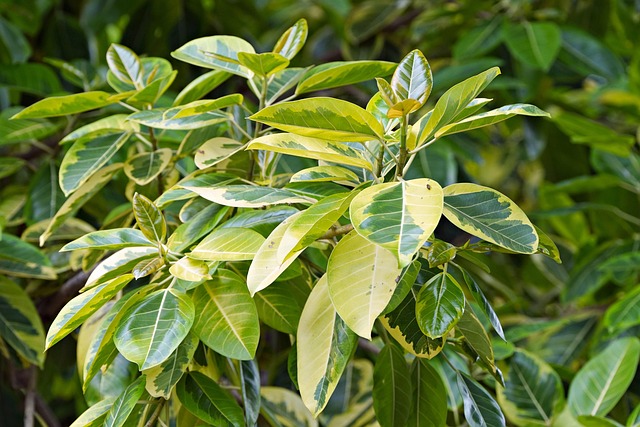
| Leaf Type | Simple, glossy, ovate leaves |
| Flower Color(s) | Inconspicuous (internal fig flowers) |
| Fruit Type | Syconium (fig) |
| Evergreen / Deciduous | Evergreen |

Botanical Description
The weeping fig typically develops a slender trunk that may become more robust with age, often featuring smooth, light gray to pale brown bark. In mature specimens, the trunk may produce aerial roots under certain environmental conditions, contributing to a buttressed or spreading base.
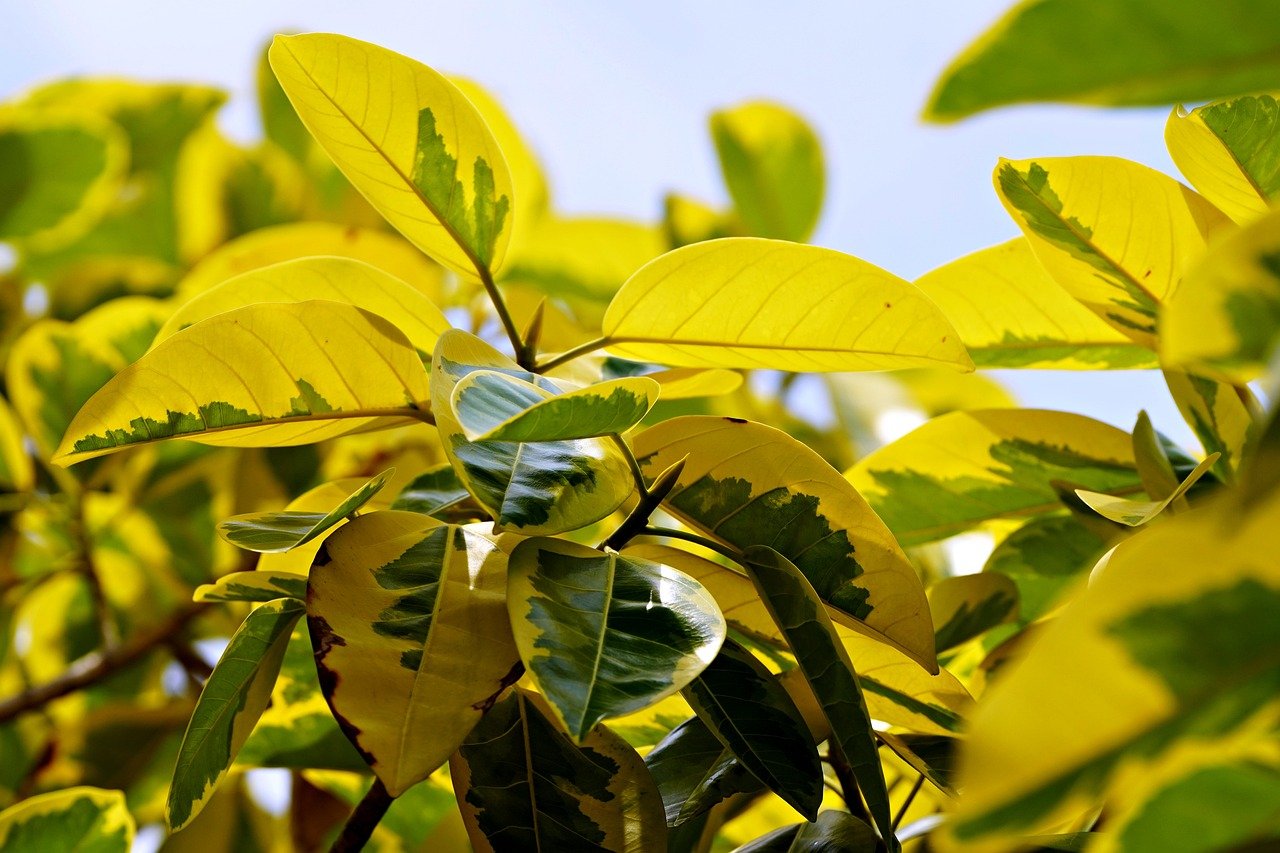
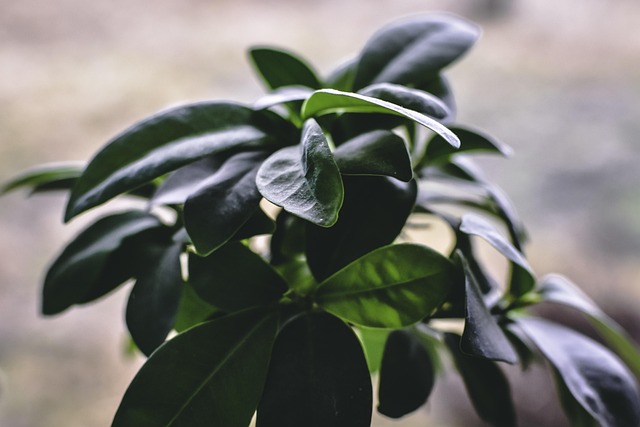
Leaves are simple, alternately arranged, and ovate to elliptic in shape, usually measuring several centimeters in length. They possess a pointed tip and smooth margins, with a leathery texture and a glossy surface. Leaf coloration is generally medium to dark green, though variegated forms display patterns of cream or pale yellow along the margins or centers.
Flowers of Ficus benjamina are not externally visible, as they develop inside a specialized enclosed structure known as a syconium. This structure later matures into the fig fruit. The fruits are small, rounded to slightly oval, and typically red to orange when mature, though they are rarely observed outside the species’ natural pollination range.
The root system is extensive and spreading, characteristic of many fig species. Roots may grow close to the soil surface and extend laterally, providing stability to the tree and supporting its upright form.
Plant Classification & Growth Habit
Ficus benjamina is classified as a perennial evergreen tree within the Moraceae family. It maintains year-round foliage and does not undergo seasonal leaf drop under stable climatic conditions. The species exhibits a woody growth structure, distinguishing it from herbaceous members of the fig genus.
The growth habit is upright with a dense canopy formed by slender branches that arch outward and downward, creating the characteristic “weeping” appearance. This pendulous branching pattern contributes significantly to the plant’s ornamental identity and visual recognition.
Within the genus Ficus, Ficus benjamina is categorized among tree-form figs rather than climbers or shrubs. Its overall growth pattern emphasizes canopy development and branch flexibility rather than vertical trunk dominance alone.
Common Types / Varieties / General Classifications
Several forms of Ficus benjamina are recognized based on leaf color, size, and growth characteristics. These distinctions are commonly used in horticultural and botanical references.
- Green-leaved Forms
Characterized by uniformly green, glossy foliage and a classic weeping branch structure. - Variegated Forms
Display leaves with cream, yellow, or light green variegation, creating a contrasting appearance. - Compact or Dwarf Forms
Identified by smaller leaves and denser branching patterns, maintaining a reduced overall stature.
These classifications reflect observable morphological differences rather than taxonomic separation.
Native Range & Distribution
Ficus benjamina is native to a broad region encompassing South Asia, Southeast Asia, and parts of northern Australia. In its native habitats, it commonly occurs in tropical forests, riverine areas, and open woodlands, where warm temperatures and seasonal rainfall patterns prevail.
Through human activity, the species has been introduced to many regions outside its native range, including parts of the Americas, Africa, and island ecosystems. In some tropical and subtropical areas, it has become naturalized, growing beyond cultivated settings.
Its global distribution today reflects its long-standing association with human settlement, landscape use, and botanical exchange across continents.
Cultural, Culinary, or Traditional Context
In several Asian cultures, fig trees, including Ficus benjamina, have been associated with symbolic meanings related to longevity, shelter, and resilience. While not as prominently featured in religious traditions as some other fig species, it has nonetheless been planted near dwellings and communal spaces.
Historically, the weeping fig has also played a role in regional economies as a shade tree and ornamental planting. Its visual appeal and adaptability have led to its widespread use in streetscapes, courtyards, and public gardens.
Unlike some members of the fig genus, Ficus benjamina is not widely known for culinary applications, and its significance is primarily aesthetic and environmental rather than dietary.
Interesting Facts / Did You Know
- Ficus benjamina belongs to a genus containing more than 800 species worldwide.
- The fig fruit of this species develops only when pollinated by a specific species of fig wasp in its native range.
- The drooping branch structure helps distinguish the weeping fig from other ornamental fig trees.
- Latex sap is present in the stems and leaves, a common feature of the Moraceae family.
- In suitable environments, the tree can develop aerial roots that later thicken into supportive structures.
FAQs
Is the weeping fig a tree or a shrub?
The weeping fig is botanically classified as a tree, though it may appear shrub-like in certain cultivated forms.
Does Ficus benjamina produce flowers?
Yes, but the flowers are internal and develop inside the fig structure, making them not visible externally.
Is the weeping fig evergreen?
Yes, it is an evergreen species that retains its leaves year-round under stable climatic conditions.
Is Ficus benjamina related to edible figs?
Yes, it belongs to the same genus as the edible fig species, though it is not commonly associated with food use.
Recommended Products
Disclosure: As an Amazon Associate, PlantsInfo may earn from qualifying purchases.
🌱 Plant Care Essentials
The following tools can help with pruning, plant health, soil management, and fruit garden maintenance.

Neem Oil for Plant Care
Natural plant protection against aphids, whiteflies, mites, and other common garden pests.

Fungicide for Root Care
Helps suppress soil-borne fungal diseases and supports healthier root systems.

Spray Bottle for Plants
Ideal for applying foliar sprays, neem oil solutions, and liquid plant treatments.

Rubber Hand Gloves
Protects hands during pruning, planting, soil preparation, and garden maintenance.
Conclusion
Ficus benjamina, commonly known as the weeping fig, is a distinctive evergreen tree recognized for its arching branches and glossy foliage. Its classification within the diverse fig genus highlights key botanical features such as enclosed flowers, fig fruits, and latex-producing tissues.
With origins in Asia and Australia and a broad global distribution today, the weeping fig stands as a notable example of a plant species shaped by both natural ecology and human cultivation. Its structural elegance and adaptability continue to make it a prominent subject in botanical references.
The Plants Info platform maintains a structured plant database that documents Ficus benjamina alongside many other plant species, offering neutral, reference-focused information intended solely for learning and educational purposes.