Introduction
The Oleander plant is a well-known evergreen flowering shrub recognized for its dense foliage and showy, clustered blooms. Botanically classified as Nerium oleander, it belongs to the dogbane family and has been cultivated and observed across many regions for centuries. Oleander is notable for its resilience in a range of environmental settings and its long-standing presence in ornamental landscapes.
Classification
- Plant Type
- Shrub
- Lifecycle
- Perennial
- Leaf Habit
- Evergreen
- Native Region
- Asia
- Plant Family
- Apocynaceae
From a botanical perspective, oleander is valued for its distinctive leaf structure, tubular flowers, and woody growth habit. Its visual prominence has made it a frequent subject in botanical literature, landscape history, and regional plant studies, particularly in areas influenced by Mediterranean climates.
Beyond its physical traits, oleander holds cultural and historical significance in various societies, where it has appeared in art, architecture, and written records. Its widespread distribution today reflects both natural adaptation and long-term human-mediated movement across continents.
Quick Plant Information
| Attribute | Details |
|---|---|
| Common Name(s) | Oleander, Common Oleander |
| Scientific Name | Nerium oleander |
| Family | Apocynaceae |
| Plant Type | Flowering shrub |
| Lifespan | Perennial |
| Growth Habit / Growth Form | Upright, multi-stemmed, woody shrub |
| Native Range | Mediterranean Basin, parts of Southwest Asia |
| Climate Adaptation / Habitat Type | Subtropical to warm temperate regions |
| Leaf Type | Simple, leathery |
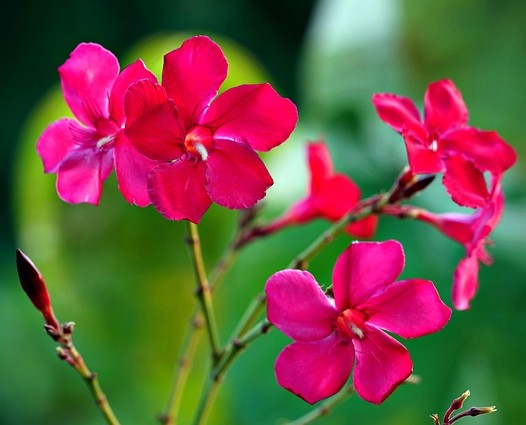
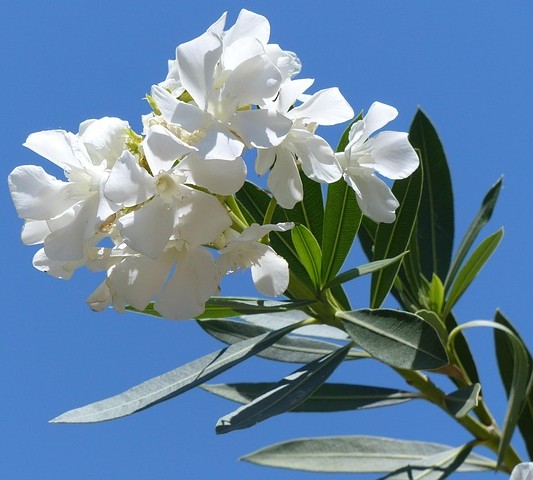
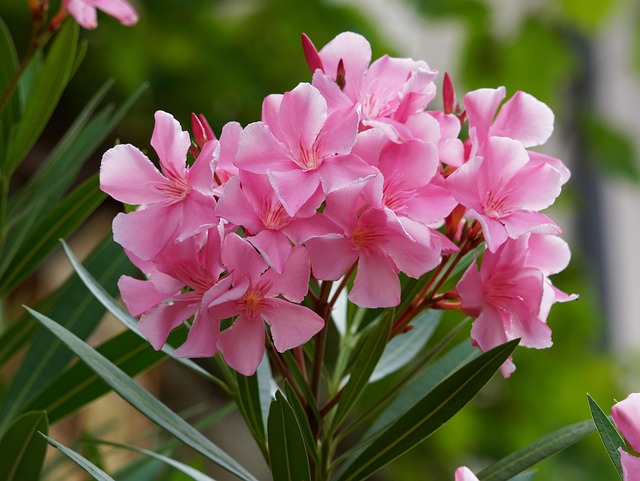
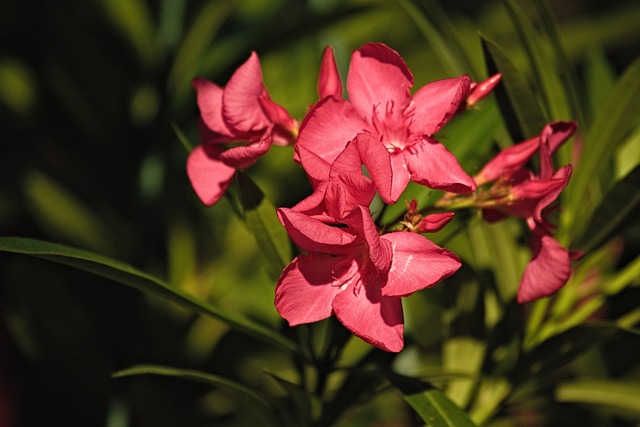
| Flower Color(s) | White, pink, red, yellow |
| Fruit Type | Follicle |
| Evergreen / Deciduous | Evergreen |
Botanical Description
Oleander is a woody evergreen shrub that can reach substantial heights and widths under natural conditions. The plant typically forms multiple stems from the base, contributing to its dense and bushy appearance.
The stems are erect and covered with grayish to brown bark as they mature. Younger branches tend to be smoother and greener, gradually becoming woody with age. The branching structure often results in a rounded or slightly irregular canopy.
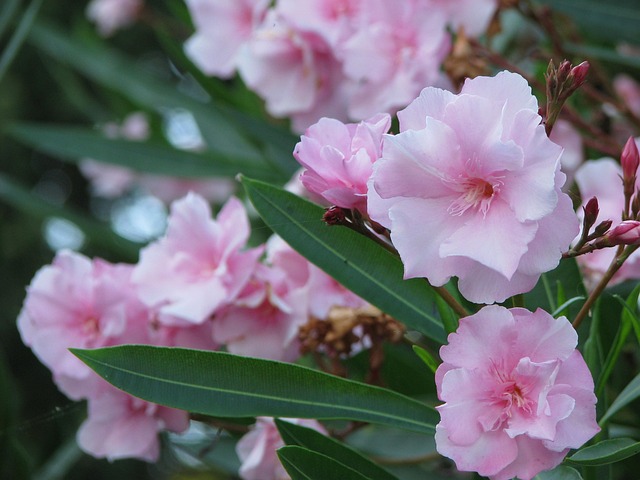
Leaves are arranged primarily in opposite pairs or in whorls of three along the stems. Each leaf is elongated and lance-shaped, with a leathery texture and a smooth, glossy surface. The leaf margins are entire, and a prominent central vein runs lengthwise, contributing to the leaf’s rigid structure.
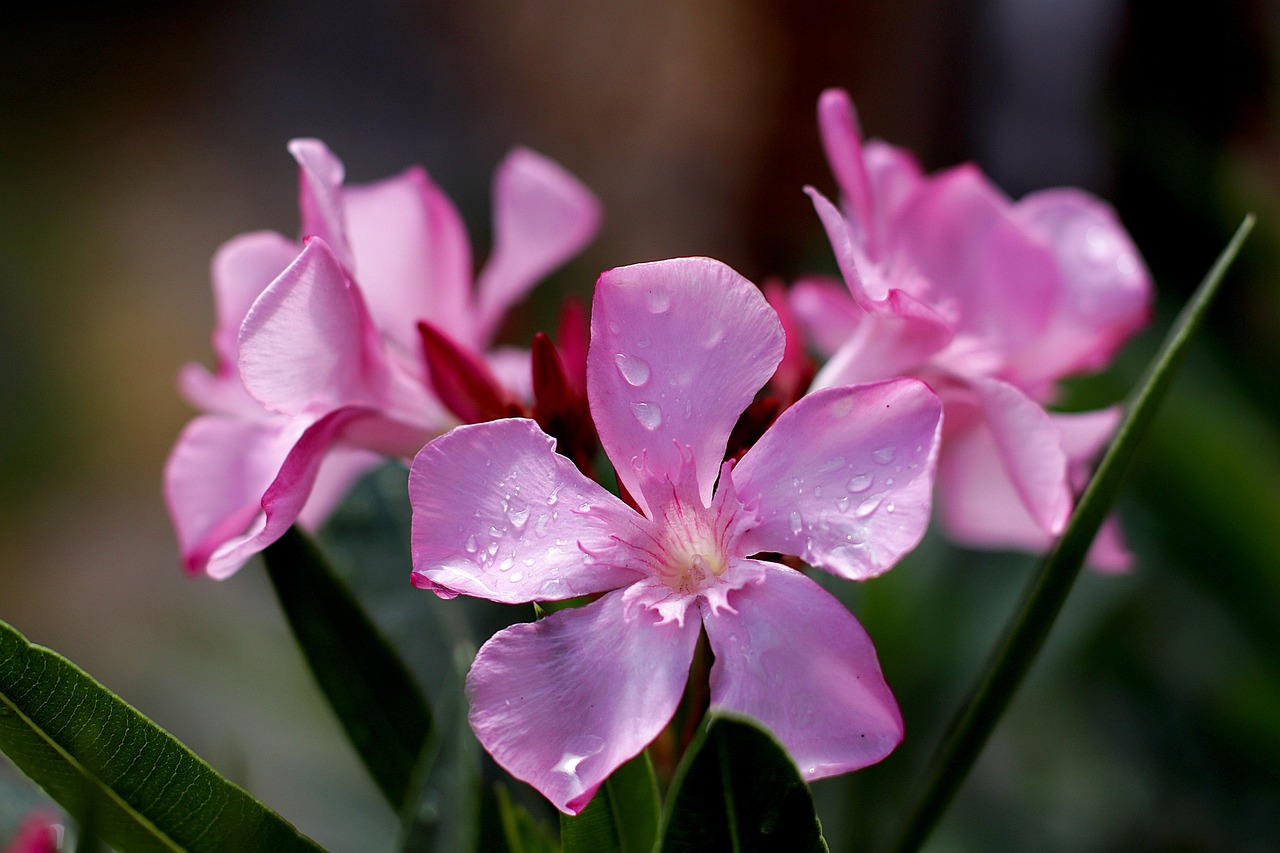
Flowers are borne in terminal clusters and are among the most recognizable features of the oleander plant. Each flower is tubular at the base with five spreading lobes, often displaying overlapping petals. Flower coloration varies widely among cultivated and natural forms, ranging from white and pale pink to deep red and yellow. The blooms are typically fragrant, though intensity varies.
The fruit of oleander is a narrow, elongated follicle that develops in pairs. When mature, these pods split open to release numerous small seeds, each equipped with silky hairs that aid in wind dispersal. The root system is fibrous and spreading, anchoring the shrub and supporting its upright growth.
Plant Classification & Growth Habit
Oleander is classified as a woody evergreen shrub within the Apocynaceae family. As a perennial plant, it maintains foliage throughout the year in suitable climates and exhibits continuous structural presence rather than seasonal dieback.
In terms of growth habit, oleander typically displays an upright to rounded form with multiple basal stems. The shrub’s growth pattern supports dense foliage from ground level upward, creating a solid visual mass. This form has contributed to its frequent classification as both a shrub and, in some contexts, a small tree when trained to a single trunk.
Botanically, oleander is considered a dicotyledonous flowering plant, producing conspicuous flowers and enclosed seeds. Its structural characteristics place it among long-lived ornamental shrubs with strong architectural presence.
Common Types / Varieties / General Classifications
Oleander is commonly grouped based on flower characteristics and growth form rather than formal subspecies. General classifications include:
- Single-flowered forms – Featuring one layer of petals with a simple floral structure
- Double-flowered forms – Exhibiting multiple layers of petals, creating a fuller appearance
- Color-based groupings – White, pink, red, salmon, and yellow flowering types
- Compact forms – Naturally smaller shrubs with denser branching
- Large-growing forms – Taller and broader shrubs with more open branching
These groupings are used descriptively in botanical and horticultural references to distinguish visual and structural differences.
Native Range & Distribution
Oleander is native to the Mediterranean Basin, extending into parts of the Middle East and Southwest Asia. In its native range, it has historically been associated with riverbanks, seasonal watercourses, and open valleys where moisture is periodically available.
Over time, oleander has been introduced to many regions with compatible climates, including parts of Southern Europe, North Africa, the Americas, Australia, and South Asia. Today, it is widely naturalized in warm temperate and subtropical zones, where it persists in both cultivated and semi-wild settings.
Its global distribution reflects a combination of natural adaptability and centuries of human transport. In many regions, oleander has become a familiar component of urban, rural, and roadside vegetation.
Cultural, Culinary, or Traditional Context
Historically, oleander has held symbolic and decorative value in various cultures. In ancient Mediterranean societies, the plant was often referenced in poetry and art, where its evergreen nature and abundant flowers symbolized endurance and continuity.
Architectural records indicate that oleander was commonly planted in courtyards and along pathways in classical and Islamic-era gardens, valued for its visual density and long flowering period. The plant has also appeared in traditional motifs and regional landscaping styles across Southern Europe and North Africa.
While oleander has been present in traditional practices and folklore, references are primarily cultural and ornamental rather than culinary. Its long-standing association with human settlements underscores its role as a historically significant landscape plant.
Interesting Facts / Did You Know
- Oleander is one of the few flowering shrubs frequently depicted in ancient Mediterranean art and mosaics.
- The genus Nerium contains very few species, making oleander botanically distinctive within its family.
- Oleander flowers are structurally adapted to attract specific pollinating insects.
- The plant’s evergreen foliage allows it to maintain visual presence throughout the year.
- Oleander has been recorded in botanical texts dating back to classical antiquity.
FAQs
Is oleander a shrub or a tree?
Oleander is botanically classified as a shrub, though it may appear tree-like when trained with a single main stem.
Are oleander and desert rose the same plant?
No. Oleander (Nerium oleander) and desert rose (Adenium species) belong to the same family but are distinct genera.
Does oleander lose its leaves seasonally?
Oleander is evergreen, retaining its leaves year-round in suitable climates.
Is oleander native to Europe?
Oleander is native to parts of Southern Europe within the Mediterranean Basin, as well as regions of Southwest Asia.
Recommended Products
Disclosure: As an Amazon Associate, PlantsInfo may earn from qualifying purchases.
🌱 Plant Care Essentials
The following tools can help with pruning, plant health, soil management, and fruit garden maintenance.

Neem Oil for Plant Care
Natural plant protection against aphids, whiteflies, mites, and other common garden pests.

Fungicide for Root Care
Helps suppress soil-borne fungal diseases and supports healthier root systems.

Spray Bottle for Plants
Ideal for applying foliar sprays, neem oil solutions, and liquid plant treatments.

Rubber Hand Gloves
Protects hands during pruning, planting, soil preparation, and garden maintenance.
Conclusion
The oleander plant (Nerium oleander) is a long-lived evergreen shrub distinguished by its leathery leaves, tubular flowers, and dense growth habit. Its botanical characteristics and adaptability have supported a wide geographic distribution beyond its Mediterranean origins.
Culturally and historically, oleander has maintained a strong presence in art, architecture, and landscape traditions. Its enduring visibility across regions highlights its significance as a recognizable and studied flowering shrub within global plant records.
The Plants Info resource presents oleander alongside a wide range of documented plant species within a structured plant database, offering descriptive botanical information intended for general learning and reference purposes.