Introduction
The peace lily plant is a widely cultivated indoor plant admired for its elegant white blooms, glossy green foliage, and ability to adapt well to indoor environments. Scientifically known as Spathiphyllum, the peace lily belongs to the Araceae family, which also includes other popular indoor plants such as philodendrons and anthuriums. Despite its common name, the peace lily is not a true lily but is named for the lily-like appearance of its flowers.
Classification
- Plant Type
- Herb
- Lifecycle
- Perennial
- Leaf Habit
- Evergreen
- Native Region
- North America, South America
- Plant Family
- Araceae
Peace lilies are valued for their refined appearance, compact growth habit, and relatively low maintenance requirements. They are commonly grown in homes, offices, hotels, and commercial interiors, where they add greenery and a calming visual presence. Due to their tolerance for lower light conditions and their long-lasting flowers, peace lilies are often recommended for beginner plant enthusiasts as well as experienced indoor gardeners.
Quick Plant Information
| Attribute | Details |
|---|---|
| Common Names | Peace Lily |
| Scientific Name | Spathiphyllum spp. |
| Family | Araceae |
| Plant Type | Indoor flowering plant |
| Lifespan | Perennial |
| Native Region | Tropical regions of Central and South America |
| Growth Habit | Clump-forming herb |
| Average Height | 30–90 cm |
| Leaf Characteristics | Large, glossy, dark green |
| Flower Color | White |
| Sunlight Requirement | Low to bright indirect light |
| Water Requirement | Moderate |
| Soil Type | Well-drained loamy soil |
| Toxicity | Toxic if ingested |
Botanical Characteristics of the Peace Lily Plant
Growth Habit
The peace lily grows as a clump-forming perennial, with leaves emerging directly from the base rather than along a stem. Over time, the plant forms dense clumps that can be divided for propagation.
Height and Spread
- Average height ranges from 30 to 90 cm, depending on the variety
- Spread increases gradually as the plant matures
- Growth rate is moderate
The compact size of peace lilies makes them suitable for tabletops, floor planters, and office desks.
Leaves
- Large, lance-shaped leaves
- Glossy surface with prominent veins
- Dark green in color
- Smooth margins
The lush foliage contributes significantly to the ornamental appeal of the plant.
Flowers
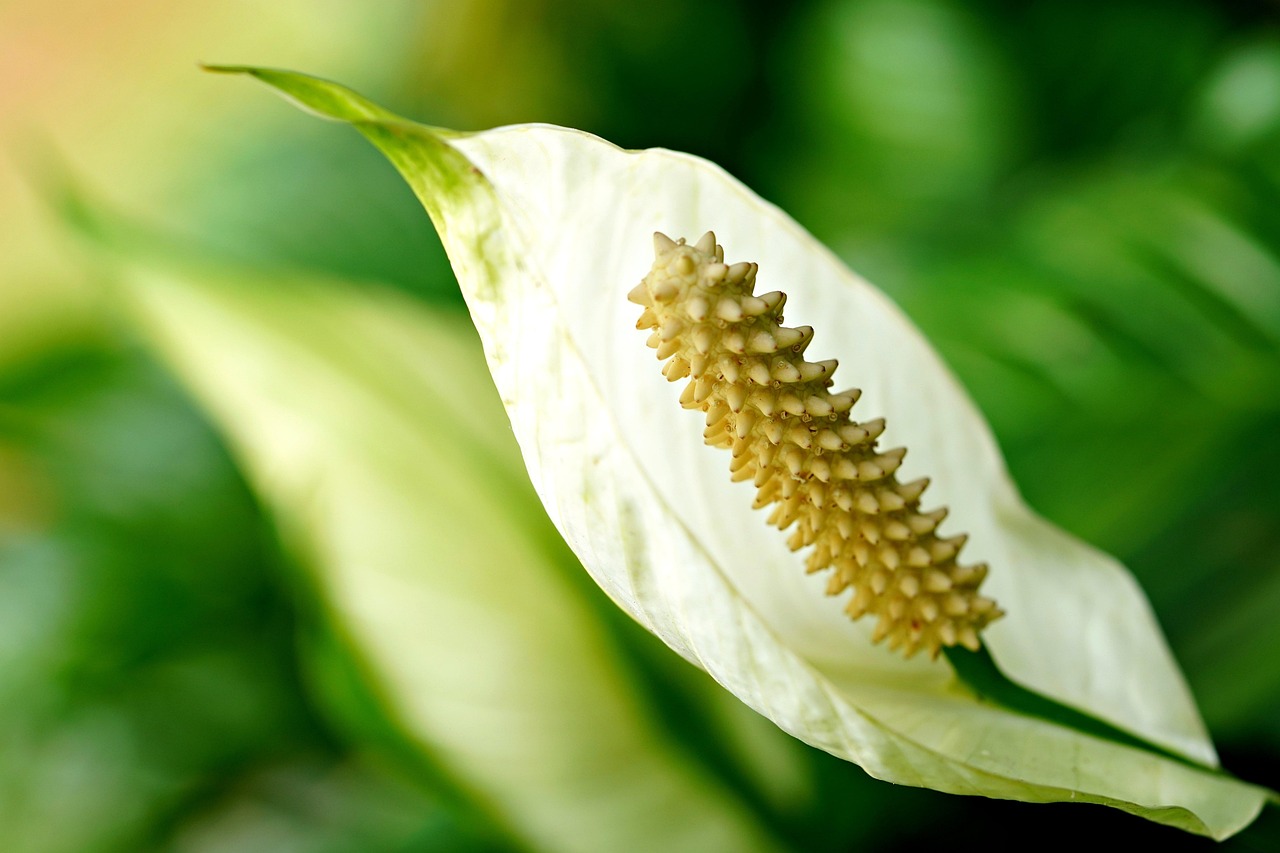
Peace lily flowers consist of:
- A central spadix containing tiny flowers
- A surrounding white spathe that resembles a petal
The white spathe often lasts for several weeks and gradually turns green as it ages.
Root System
- Fibrous root system
- Moderately shallow
- Sensitive to waterlogging
Healthy roots are essential for consistent flowering and foliage growth.
Native Habitat and Distribution
Peace lilies are native to tropical rainforests of Central and South America, where they grow on forest floors under the canopy of taller plants. In their natural habitat, they receive filtered sunlight and consistent moisture.
Today, peace lilies are cultivated worldwide as indoor plants and are rarely grown outdoors except in warm tropical climates.
Climate Requirements
- Warm temperatures preferred
- Ideal range: 18°C–30°C
- Sensitive to cold and frost
Soil Requirements
- Well-drained soil rich in organic matter
- Slightly acidic to neutral pH
- Retains moisture without becoming waterlogged
Common Types and Varieties of Peace Lily
Several species and cultivars of peace lily are commonly grown indoors.
Popular types include:
- Compact varieties for small spaces
- Larger varieties with broader leaves
- Cultivars bred for enhanced flowering
Variety selection depends on available space and decorative preference.
Uses and Importance of the Peace Lily Plant
Ornamental Uses
Peace lilies are primarily grown for:
- Indoor decoration
- Office and commercial interiors
- Creating calm, green indoor environments
Their white flowers contrast beautifully with dark green foliage.
Indoor Gardening Importance
Peace lilies are favored in indoor gardening due to:
- Tolerance of low light
- Manageable size
- Long-lasting blooms
They are often included in indoor plant collections for visual balance.
How to Grow Peace Lily Plant
Propagation Methods
Peace lilies are commonly propagated through:
- Division of mature clumps
Seed propagation is rare and not commonly practiced for home growing.
Planting Location
- Indoors near windows with filtered light
- Areas with stable temperatures
- Avoid direct sunlight
Light Requirement
- Prefers low to bright indirect light
- Direct sunlight may scorch leaves
- Low light reduces flowering but maintains foliage
Planting Peace Lily
Best Time to Plant
- Spring or early summer
- Warm conditions encourage root growth
Planting Steps
- Choose a pot with drainage holes
- Use a well-draining potting mix
- Plant at the same depth as the root ball
- Water thoroughly after planting
Care and Maintenance of Peace Lily Plant
Watering
- Water when topsoil feels slightly dry
- Avoid letting soil dry out completely
- Overwatering may cause root rot
Fertilization
- Light feeding during growing season
- Balanced liquid fertilizer recommended
- Excess fertilizer may damage roots
Repotting
- Repot every 1–2 years
- Use a slightly larger container
- Refresh soil during repotting
Pruning and Grooming
- Remove spent flowers
- Trim yellow or damaged leaves
- Clean leaves to remove dust
Recommended Products
Disclosure: As an Amazon Associate, PlantsInfo may earn from qualifying purchases.
🌱 Plant Care Essentials
The following tools can help with pruning, plant health, soil management, and fruit garden maintenance.

Neem Oil for Plant Care
Natural plant protection against aphids, whiteflies, mites, and other common garden pests.

Fungicide for Root Care
Helps suppress soil-borne fungal diseases and supports healthier root systems.

Spray Bottle for Plants
Ideal for applying foliar sprays, neem oil solutions, and liquid plant treatments.

Rubber Hand Gloves
Protects hands during pruning, planting, soil preparation, and garden maintenance.
Common Problems and Issues
Peace lilies may experience:
- Drooping leaves due to lack of water
- Brown leaf tips from low humidity
- Reduced flowering in low light
Most issues can be corrected by adjusting care routines.
Flowering Pattern and Blooming Cycle
Flowering Characteristics
- Flowers typically appear during warmer months
- Bloom duration lasts several weeks
Factors Affecting Flowering
- Light availability
- Nutrient levels
- Plant maturity
Healthy plants flower more consistently.
Lifespan and Growth Cycle
Peace lilies are long-lived perennials that can thrive indoors for many years. With proper care, they continue producing foliage and flowers over extended periods.
Environmental and Indoor Benefits
- Enhances indoor aesthetics
- Suitable for low-light environments
- Contributes to indoor greenery
Conclusion
The peace lily plant (Spathiphyllum spp.) is an elegant and adaptable indoor flowering plant valued for its glossy foliage and graceful white blooms. Its ability to thrive in indirect light and its moderate care requirements make it a popular choice for homes and offices. With appropriate watering, suitable light, and periodic maintenance, peace lilies can remain healthy and visually appealing for many years.
Plants Info is a structured plant knowledge platform where you can explore detailed plant information, growing guides, and care tips for indoor, flowering, and ornamental plants. Visit the Plants Info homepage to discover well-researched plant database entries designed for plant enthusiasts and home gardeners.