Introduction
The Lily plant is a widely recognized flowering plant known for its prominent blooms, upright growth habit, and long-standing cultural and botanical significance. Belonging to the genus Lilium, lilies are herbaceous perennial plants valued primarily for their large, often fragrant flowers and structural elegance. They are commonly cultivated as ornamental plants in gardens, landscapes, and floral arrangements across temperate regions of the world.
Classification
Lilies are distinct from other plants commonly referred to as “lilies,” such as water lilies or calla lilies, which belong to different botanical families. True lilies are characterized by their bulb-based growth, narrow leaves, and showy flowers borne on erect stems. Their visual prominence and symbolic associations have contributed to their enduring presence in horticulture, art, and cultural traditions.
Quick Plant Information
| Attribute | Details |
|---|---|
| Common Names | Lily, True Lily |
| Scientific Name | Lilium spp. |
| Family | Liliaceae |
| Plant Type | Flowering herbaceous plant |
| Lifespan | Perennial |
| Native Region | Northern Hemisphere (Asia, Europe, North America) |
| Growth Habit | Upright, clump-forming |
| Average Height | 60–180 cm |
| Leaf Characteristics | Narrow to lance-shaped, smooth, arranged alternately or in whorls |
| Flower Color | White, yellow, orange, pink, red, purple (varies by species) |
| Sunlight Requirement | Full sun to partial shade |
| Water Requirement | Moderate |
| Soil Type | Well-drained, fertile soil |
| Toxicity | Toxic to cats; generally non-toxic to humans |
Botanical Characteristics
Lily plants grow from scaly, non-tunicate bulbs composed of overlapping fleshy scales. These bulbs serve as storage organs, enabling the plant to survive dormant periods and regenerate annually. From the bulb emerges a single, unbranched flowering stem that supports leaves and terminal blooms.
Leaves are typically linear to lance-shaped with smooth margins and a glossy to matte surface. Depending on the species, leaves may be arranged alternately along the stem or in distinct whorls. The foliage is generally green and contributes to the plant’s vertical, architectural appearance.
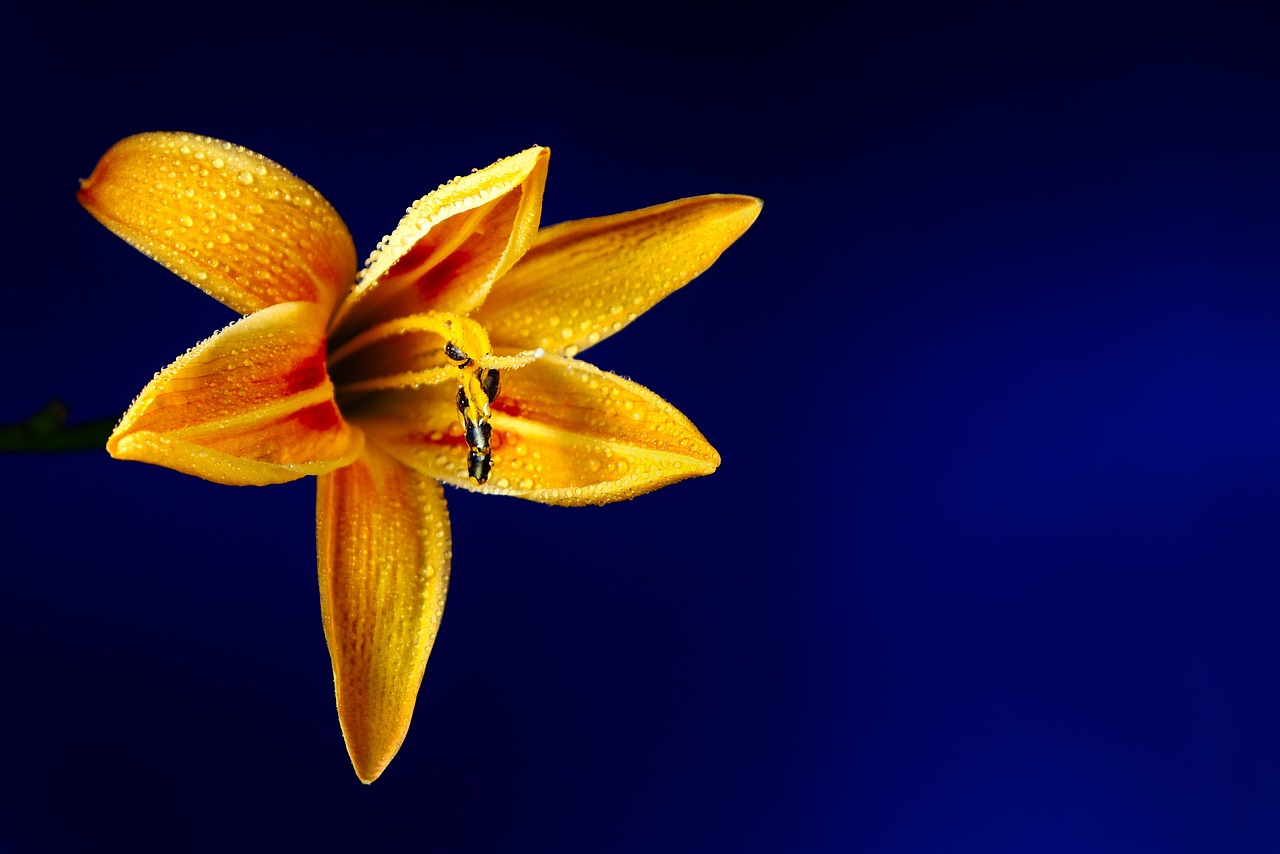
The flowers are the most distinctive feature of lilies. They are usually large, symmetrical, and composed of six petal-like tepals that may be recurved, trumpet-shaped, bowl-shaped, or flat. Prominent stamens with elongated filaments and pollen-bearing anthers are a defining trait. Flowering typically occurs once per growing season, with blooms lasting several days to weeks.
Native Habitat and Distribution
True lilies are native to temperate regions of the Northern Hemisphere, with the greatest species diversity found in Asia, particularly East Asia. They naturally occur in a wide range of habitats, including woodlands, grasslands, mountain slopes, and forest edges.
Different species have adapted to varied ecological conditions, from cool alpine environments to warmer lowland regions. This adaptability has supported their widespread introduction into cultivation across Europe, North America, and other temperate zones.
Through horticultural selection and hybridization, lilies are now grown well beyond their original native ranges, primarily as ornamental plants rather than naturalized species.
Common Varieties or Types
The genus Lilium includes numerous species and hybrid groups, each with distinct floral forms and growth characteristics. Commonly recognized groups include:
- Asiatic lilies, known for early flowering and vivid colors
- Oriental lilies, noted for their large, fragrant blooms
- Trumpet lilies, characterized by elongated, trumpet-shaped flowers
- Martagon lilies, featuring downward-facing, recurved flowers
These groups reflect differences in bloom shape, fragrance intensity, flowering period, and plant stature. Hybrid lilies derived from crossbreeding have further expanded the diversity available in ornamental cultivation.
Uses and Importance
Lilies are primarily valued for their ornamental significance. Their striking flowers make them prominent features in gardens, public landscapes, and floral displays. The long stems and large blooms are especially favored in cut-flower arrangements.
Beyond horticulture, lilies hold symbolic importance in many cultures, often associated with purity, renewal, devotion, and remembrance. They have appeared frequently in art, literature, and ceremonial contexts across different civilizations.
In some traditional systems, certain lily species have been historically referenced for cultural or symbolic uses, though their modern relevance is largely aesthetic rather than functional.
Growth Behavior and Care
Lily plants exhibit a seasonal growth pattern driven by their perennial bulbs. Vegetative growth typically begins with the emergence of shoots, followed by rapid stem elongation and leaf development. The plant directs much of its energy toward flower production during the active growing phase.
After flowering, foliage remains functional for a period, contributing to nutrient storage within the bulb. As the season progresses, above-ground parts gradually decline, and the plant enters dormancy. This cycle allows lilies to persist for multiple years under stable environmental conditions.
The upright stems and concentrated flowering habit give lilies a strong vertical presence within plant communities or cultivated landscapes.
Lifecycle / Flowering / Harvesting
Lilies follow a perennial lifecycle centered on annual regeneration from underground bulbs. Each growing season typically produces a single flowering stem per bulb, though mature clumps may support multiple stems.
Flowering time varies by species and hybrid group, ranging from late spring to mid-summer. Individual flowers open sequentially along the stem, extending the visual display period.
After flowering, seed production may occur if pollination takes place, though many cultivated lilies are propagated vegetatively in horticultural contexts. Dormancy follows the senescence of foliage, allowing the bulb to rest until the next growth cycle.
Environmental or Ecological Value
In natural and semi-natural settings, lilies contribute to plant diversity and seasonal floral availability. Their flowers may attract pollinating insects, particularly bees and butterflies, depending on species and bloom structure.
The presence of lilies in managed landscapes adds structural and visual diversity, supporting aesthetically balanced planting compositions. While not typically dominant ecological species, they play a complementary role within broader plant communities.
Recommended Products
Disclosure: As an Amazon Associate, PlantsInfo may earn from qualifying purchases.
🌱 Plant Care Essentials
The following tools can help with pruning, plant health, soil management, and fruit garden maintenance.

Neem Oil for Plant Care
Natural plant protection against aphids, whiteflies, mites, and other common garden pests.

Fungicide for Root Care
Helps suppress soil-borne fungal diseases and supports healthier root systems.

Spray Bottle for Plants
Ideal for applying foliar sprays, neem oil solutions, and liquid plant treatments.

Rubber Hand Gloves
Protects hands during pruning, planting, soil preparation, and garden maintenance.
Conclusion
The Lily plant represents a distinctive group of perennial flowering plants defined by their bulb-based growth, prominent blooms, and long-standing ornamental value. With a wide range of species and hybrids, lilies display considerable diversity in form, color, and flowering behavior.
Their adaptability to various temperate environments, combined with strong cultural associations, has ensured their continued prominence in horticulture and botanical reference collections. As true lilies of the genus Lilium, they remain a foundational subject in the study and appreciation of flowering ornamental plants.
Frequently Asked Questions (FAQs)
Is the lily plant a perennial?
Yes, true lilies are perennial plants that regrow each year from underground bulbs.
Are all plants called lilies true lilies?
No, only plants belonging to the genus Lilium are considered true lilies. Other plants with “lily” in their common name may belong to different families.
Do lilies have a fragrance?
Fragrance varies by species and hybrid group; some lilies are strongly scented, while others have little to no scent.
Are lilies toxic to pets?
Many lily species are highly toxic to cats, while they are generally not toxic to humans.
Where are lilies originally native?
Lilies are native to temperate regions of the Northern Hemisphere, particularly Asia, Europe, and North America.
Plants Info serves as a structured knowledge platform documenting a wide range of plant species, including ornamental, medicinal, and culinary plants. Reference entries such as the Lily plant profile contribute to a broader understanding of plant characteristics, botanical diversity, and ecological roles within a centralized plant database.