Introduction
Parlor Palm, scientifically known as Chamaedorea elegans, is a small, slow-growing palm species widely recognized for its compact size and finely textured foliage. Native to the tropical forests of Central America, it is among the most commonly cultivated indoor palms worldwide. The species belongs to the Arecaceae family and represents one of the most accessible palm types adapted to interior environments.
Classification
- Plant Type
- Palm
- Lifecycle
- Perennial
- Leaf Habit
- Evergreen
- Native Region
- North America
- Plant Family
- Arecaceae
Historically, Parlor Palm gained prominence during the Victorian era, when palms became symbols of refinement and prosperity in European and North American homes. Its manageable stature and graceful fronds contributed to its widespread popularity in domestic and public interior spaces. Today, it remains an important ornamental palm in residential, commercial, and botanical collections.
Quick Plant Information
| Field | Information |
|---|---|
| Common Name(s) | Parlor Palm, Neanthe Bella Palm |
| Scientific Name | Chamaedorea elegans |
| Family | Arecaceae |
| Plant Type | Palm |
| Lifespan | Perennial |
| Growth Habit / Growth Form | Clumping, upright, slender stems |
| Native Range | Southern Mexico and Guatemala |
| Climate Adaptation / Habitat Type | Tropical rainforest understory |
| Leaf Type | Pinnate, evergreen |
| Flower Color(s) | Pale yellow |
| Fruit Type | Small drupe |
| Evergreen / Deciduous | Evergreen |
Botanical Description
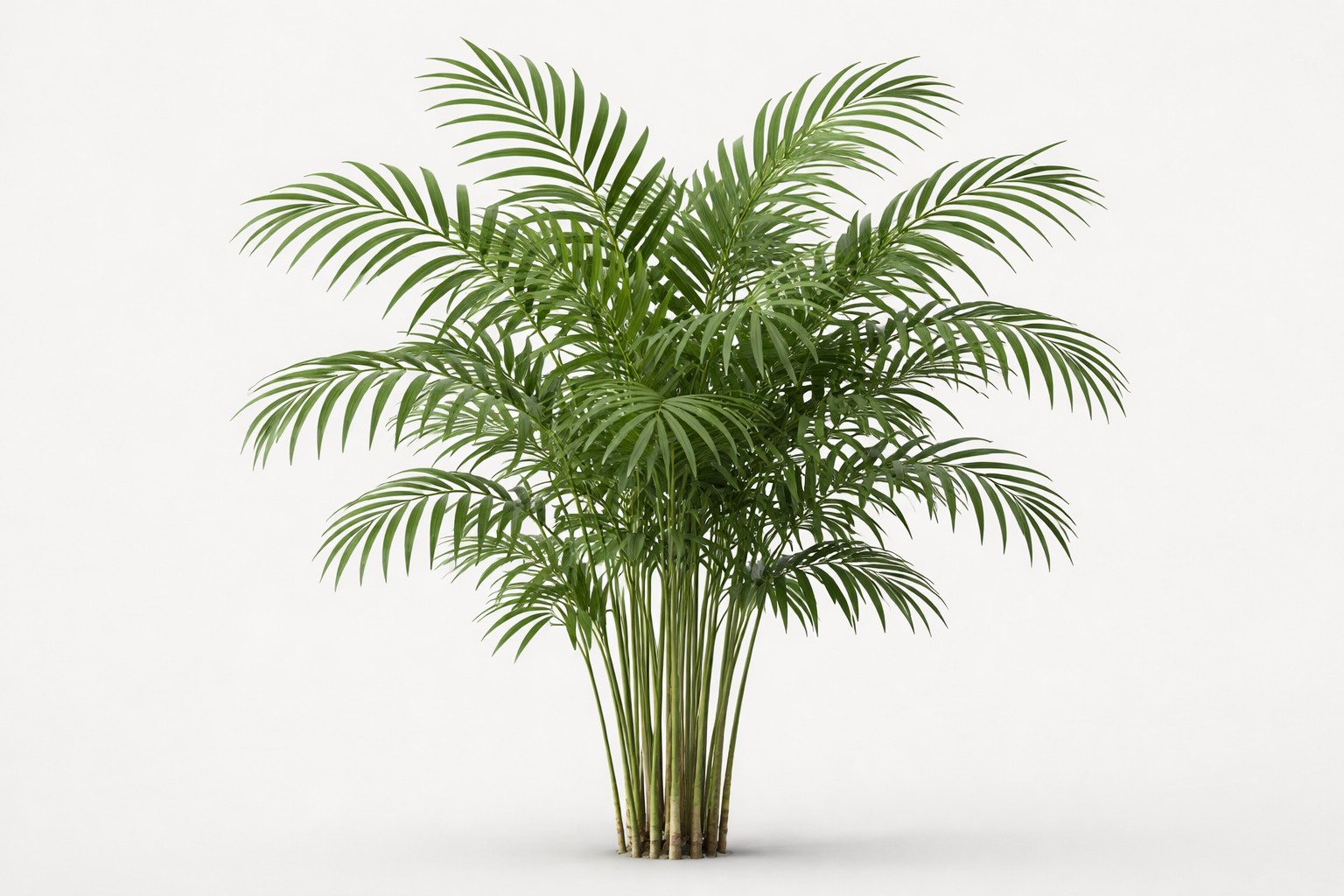
Chamaedorea elegans is a compact palm characterized by slender, reed-like stems that arise from a clumping base. Individual stems are thin, green, and segmented with visible leaf scars that mark previous growth. Over time, multiple stems form dense clusters, contributing to its full appearance.
The leaves are pinnate and arching, composed of numerous narrow, lance-shaped leaflets arranged along a central rachis. The leaflets are soft-textured and typically medium to dark green. Fronds are finely divided and symmetrical, giving the plant a delicate, feathery aesthetic. Each frond emerges from a sheath at the top of the stem.
Flowers are small and pale yellow, arranged in branched inflorescences that arise from the base of the leaves. The species is dioecious, meaning male and female flowers occur on separate plants. Following pollination, female plants may produce small, spherical drupes that mature from green to dark purple or black.
The root system is fibrous and relatively compact, consistent with many understory palm species. Roots primarily serve anchorage and nutrient absorption functions typical of monocotyledonous plants.
Plant Classification & Growth Habit
Parlor Palm is classified as a tropical palm within the Arecaceae family. It is a monocotyledonous flowering plant in the genus Chamaedorea, which contains numerous small- to medium-sized palm species native to the Americas.
Botanically, it is categorized as:
- Palm (family Arecaceae)
- Evergreen perennial
- Clumping understory species
- Non-woody monocot with fibrous stems
Unlike tree-form palms with a single trunk, Chamaedorea elegans produces multiple slender stems from its base, forming a clustered growth pattern. Its upright but compact structure reflects its adaptation to forest understory environments, where filtered light and vertical competition shape growth habits.
Common Types / Varieties / General Classifications
While Chamaedorea elegans is a single species, it is often classified in the horticultural trade under different names or forms:
- Neanthe Bella Palm – A commercial name frequently used in ornamental plant markets.
- Compact forms – Selected for particularly short internodes and dense foliage.
- Multi-stemmed arrangements – Often grouped in cultivation to create fuller visual forms.
Within the broader genus Chamaedorea, related ornamental species include:
- Chamaedorea seifrizii (Bamboo Palm)
- Chamaedorea cataractarum (Cat Palm)
- Chamaedorea metallica (Metallic Palm)
These related species differ in leaf structure, height, and overall growth habit.
Native Range & Distribution
Chamaedorea elegans is native to southern Mexico and Guatemala. In its natural habitat, it occurs primarily in lowland and foothill tropical rainforests. It grows as an understory species beneath taller canopy trees, where it occupies shaded forest floors.
The species is adapted to humid tropical climates characterized by stable temperatures and seasonal rainfall patterns. Within its native range, it contributes to the layered vegetation structure typical of tropical forests.
Due to its ornamental appeal and adaptability to interior environments, Parlor Palm is now cultivated globally. It is commonly found in homes, offices, conservatories, and botanical institutions across temperate and tropical regions alike. Despite widespread cultivation, wild populations remain centered in Central America.
Cultural, Culinary, or Traditional Context
Parlor Palm became especially popular in Europe and North America during the 19th century. During the Victorian period, palms symbolized exoticism and social status, often displayed prominently in “parlors,” the formal sitting rooms of homes. Its association with elegance led to the common name “Parlor Palm.”
In their native regions, members of the genus Chamaedorea have been traditionally used for various purposes, including harvesting foliage for ornamental arrangements. Some related species are cultivated for decorative fronds used in the floral industry.
Economically, Chamaedorea elegans represents one of the most commercially significant small palm species in the ornamental plant trade. It is mass-produced in nurseries around the world and remains a standard feature in interior landscaping.
Interesting Facts / Did You Know
- Chamaedorea elegans is one of the most widely sold indoor palm species globally.
- The genus name Chamaedorea derives from Greek roots meaning “on the ground” and “gift,” referencing its low-growing nature.
- The species is dioecious, meaning individual plants are either male or female.
- Parlor Palm has been cultivated as an ornamental plant for more than 150 years.
- Its compact size distinguishes it from many large, canopy-forming palm species.
FAQs
Is Parlor Palm a true palm?
Yes. Chamaedorea elegans belongs to the Arecaceae family, which includes true palms.
Is Parlor Palm the same as Bamboo Palm?
No. Bamboo Palm typically refers to Chamaedorea seifrizii, a related but distinct species within the same genus.
Does Parlor Palm produce flowers?
Yes. It produces small, pale yellow flowers on branched inflorescences. Male and female flowers occur on separate plants.
Is Parlor Palm a tree?
Botanically, it is classified as a palm rather than a woody tree. It does not form a traditional trunk like many tree species.
Recommended Products
Disclosure: As an Amazon Associate, PlantsInfo may earn from qualifying purchases.
🌱 Plant Care Essentials
The following tools can help with pruning, plant health, soil management, and fruit garden maintenance.

Neem Oil for Plant Care
Natural plant protection against aphids, whiteflies, mites, and other common garden pests.

Fungicide for Root Care
Helps suppress soil-borne fungal diseases and supports healthier root systems.

Spray Bottle for Plants
Ideal for applying foliar sprays, neem oil solutions, and liquid plant treatments.

Rubber Hand Gloves
Protects hands during pruning, planting, soil preparation, and garden maintenance.
Conclusion
Parlor Palm (Chamaedorea elegans) is a compact, clumping palm species native to Central American tropical forests. Characterized by slender stems and finely divided pinnate fronds, it represents one of the most recognized ornamental palms worldwide. Its historical association with Victorian interiors and its global distribution in cultivated settings contribute to its enduring prominence.
As an evergreen perennial palm within the Arecaceae family, it exemplifies the structural and botanical traits typical of understory palm species. Its modest size and refined foliage continue to distinguish it among ornamental palms.
Plants Info provides structured, reference-focused plant profiles designed for learning and botanical understanding. Its plant database presents consistent, descriptive entries suitable for educational and informational use.