Introduction
The Gardenia plant, scientifically known as Gardenia jasminoides, is a flowering evergreen shrub widely recognized for its glossy foliage and fragrant white blossoms. Belonging to the coffee family (Rubiaceae), it is native to parts of East Asia and has become a prominent ornamental species in subtropical and tropical regions around the world.
Classification
Gardenia holds botanical significance for its distinctive floral structure and ecological role within warm-climate habitats. Culturally, it has long been associated with symbolism in art, literature, and traditional ceremonies, particularly in East Asian societies. Its presence in ornamental landscapes and botanical collections has contributed to its global recognition.
Quick Plant Information
| Field | Information |
|---|---|
| Common Name(s) | Gardenia, Cape Jasmine |
| Scientific Name | Gardenia jasminoides |
| Family | Rubiaceae |
| Plant Type | Flowering shrub |
| Lifespan | Perennial |
| Growth Habit / Growth Form | Upright, bushy, compact to spreading shrub |
| Native Range | China, Taiwan, Japan, and parts of Southeast Asia |
| Climate Adaptation / Habitat Type | Subtropical and tropical regions |
| Leaf Type | Broadleaf, simple |
| Flower Color(s) | White to creamy white |
| Fruit Type | Berry |
| Evergreen / Deciduous | Evergreen |
Botanical Description
Stem
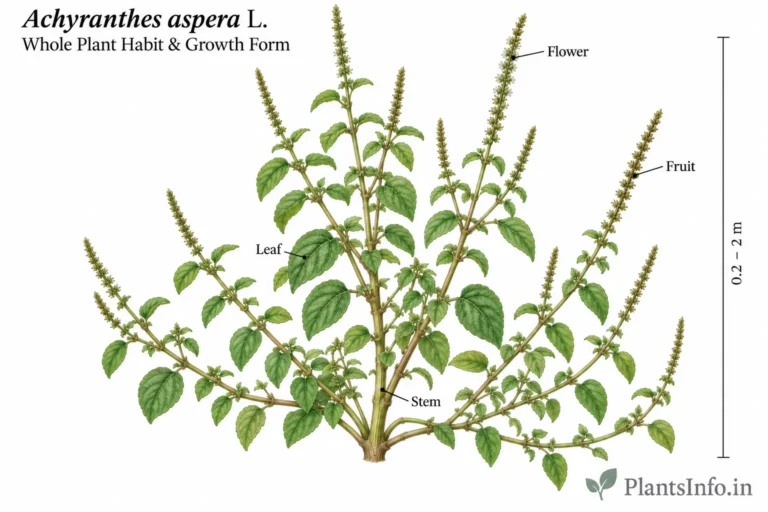
Gardenia plants develop woody stems that gradually mature from green and flexible in younger growth to more rigid and brown in older branches. The shrub typically forms multiple stems emerging from the base, contributing to its dense and rounded growth form.
Leaves
The leaves are simple, opposite or occasionally whorled, and elliptical to oblong in shape. They exhibit a smooth, leathery texture with a glossy dark green surface. Leaf margins are entire, and the venation is clearly defined, with a prominent central midrib. The evergreen foliage provides year-round structure.
Flowers
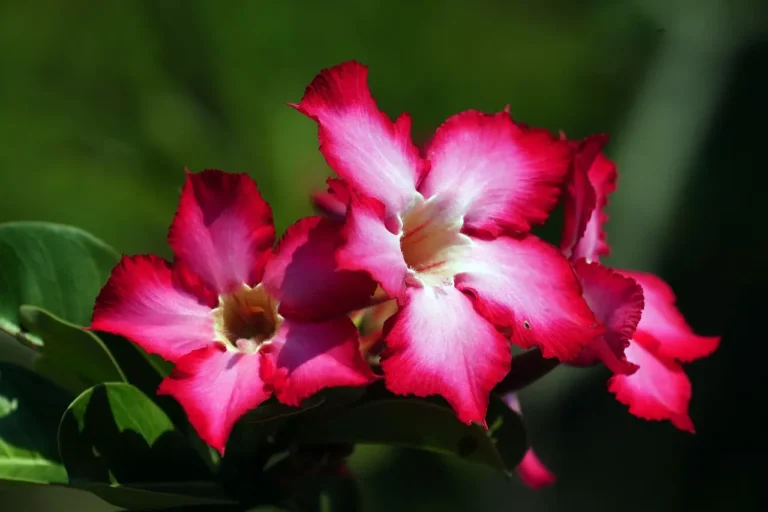
Gardenia flowers are solitary or appear in small clusters at the ends of branches. The blooms are characterized by their waxy texture and symmetrical form, usually consisting of five to twelve overlapping petals arranged in a spiral pattern. Flower size varies depending on cultivar, but blossoms are generally large and conspicuous. The color ranges from bright white to creamy tones, often deepening slightly as the flower ages.
Fruits
The fruit is an oval to ellipsoid berry that develops after pollination. It is green when immature and gradually turns yellow to orange as it matures. The fruit contains numerous small seeds embedded within a fleshy pulp. In natural habitats, the fruit contributes to seed dispersal by wildlife.
Roots
Gardenia plants possess a fibrous root system typical of many woody shrubs. The roots spread moderately within the upper soil layers, supporting the plant’s upright and bushy form.
Plant Classification & Growth Habit
Gardenia jasminoides is classified as a perennial evergreen shrub within the Rubiaceae family. This family includes a wide range of flowering plants, including economically important genera such as Coffea.
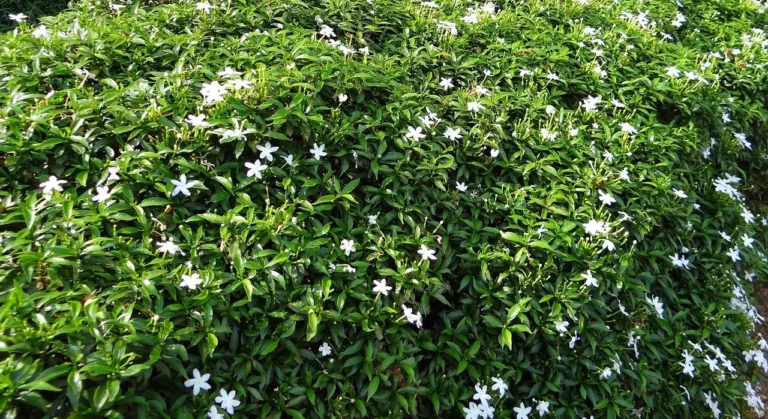
As a shrub, Gardenia typically exhibits a compact, rounded growth habit. It may range in size from low-growing forms to larger, more expansive shrubs, depending on genetic variation. The plant maintains foliage throughout the year in suitable climates, contributing to its categorization as evergreen.
Growth patterns are generally dense and branching, producing a structured yet natural form. The plant is not a vine or climber and does not exhibit bulbous or herbaceous annual characteristics.
Common Types / Varieties / General Classifications
Gardenia jasminoides includes numerous cultivated varieties that differ in flower form, plant size, and blooming characteristics. Common classifications include:
- Single-flowered types – Featuring five to seven petals with a more open floral structure
- Double-flowered types – Exhibiting multiple-layered petals with a fuller appearance
- Dwarf forms – Compact shrubs with reduced height and spread
- Large-flowered varieties – Known for especially prominent blossoms
Cultivar diversity has contributed to the plant’s widespread ornamental presence in botanical collections and designed landscapes.
Native Range & Distribution
Gardenia jasminoides originates from East Asia, particularly China, Taiwan, Japan, and parts of Southeast Asia. Within its native habitat, it occurs in warm temperate to subtropical regions.
Over time, Gardenia has been introduced to many other parts of the world, including North America, Europe, Australia, and various tropical islands. It is commonly cultivated in regions with mild winters and humid summers.
In natural settings, Gardenia species are often found in forest margins, open woodlands, and areas with moderate rainfall. The plant’s distribution reflects adaptation to climates that do not experience prolonged freezing conditions.
Cultural, Culinary, or Traditional Context
Gardenia flowers have long held symbolic meaning in various cultures. In East Asia, they are associated with purity, grace, and refinement. The plant frequently appears in traditional art and literature.
Historically, the fruit of Gardenia jasminoides has been used as a natural yellow dye in parts of China and Japan. The pigments extracted from the fruit have been applied in textiles and food coloring practices.
In ornamental horticulture, Gardenia became particularly popular in Europe and North America during the 18th and 19th centuries. The common name “Cape Jasmine” reflects early trade routes rather than its true geographic origin.
Interesting Facts / Did You Know
- The genus Gardenia was named in honor of Scottish-American botanist Alexander Garden.
- Gardenia belongs to the same plant family as coffee (Coffea species).
- The fragrance of Gardenia flowers has inspired numerous perfumes and aromatic products.
- Some species within the genus produce fruits traditionally used as natural colorants.
- Gardenia flowers often deepen in cream coloration as they mature.
FAQs
Is Gardenia the same as Jasmine?
No. Although sometimes called “Cape Jasmine,” Gardenia jasminoides is not part of the jasmine genus (Jasminum). The similarity lies primarily in floral fragrance.
Is Gardenia a tree or a shrub?
Gardenia is classified as a woody evergreen shrub, not a tree.
Does Gardenia produce fruit?
Yes. After pollination, Gardenia produces a berry-type fruit containing numerous seeds.
Why is it called Cape Jasmine?
The name “Cape Jasmine” originated from historical trade associations and does not indicate that the plant is native to the Cape region of South Africa.
Recommended Products
Disclosure: As an Amazon Associate, PlantsInfo may earn from qualifying purchases.
🌱 Plant Care Essentials
The following tools can help with pruning, plant health, soil management, and fruit garden maintenance.

Neem Oil for Plant Care
Natural plant protection against aphids, whiteflies, mites, and other common garden pests.

Fungicide for Root Care
Helps suppress soil-borne fungal diseases and supports healthier root systems.

Spray Bottle for Plants
Ideal for applying foliar sprays, neem oil solutions, and liquid plant treatments.

Rubber Hand Gloves
Protects hands during pruning, planting, soil preparation, and garden maintenance.
Conclusion
Gardenia jasminoides is an evergreen flowering shrub native to East Asia and widely recognized for its glossy foliage and fragrant white blossoms. As a member of the Rubiaceae family, it shares botanical ties with economically significant species such as coffee. Its structured growth habit, distinctive flowers, and historical cultural symbolism have contributed to its lasting global presence.
The plant remains notable for its ornamental value, traditional dye applications, and longstanding role in horticultural history.
Plants Info provides structured plant database entries designed for educational reference and botanical understanding. The platform organizes plant species into clear, consistent profiles to support learning and long-term reference use.