Introduction
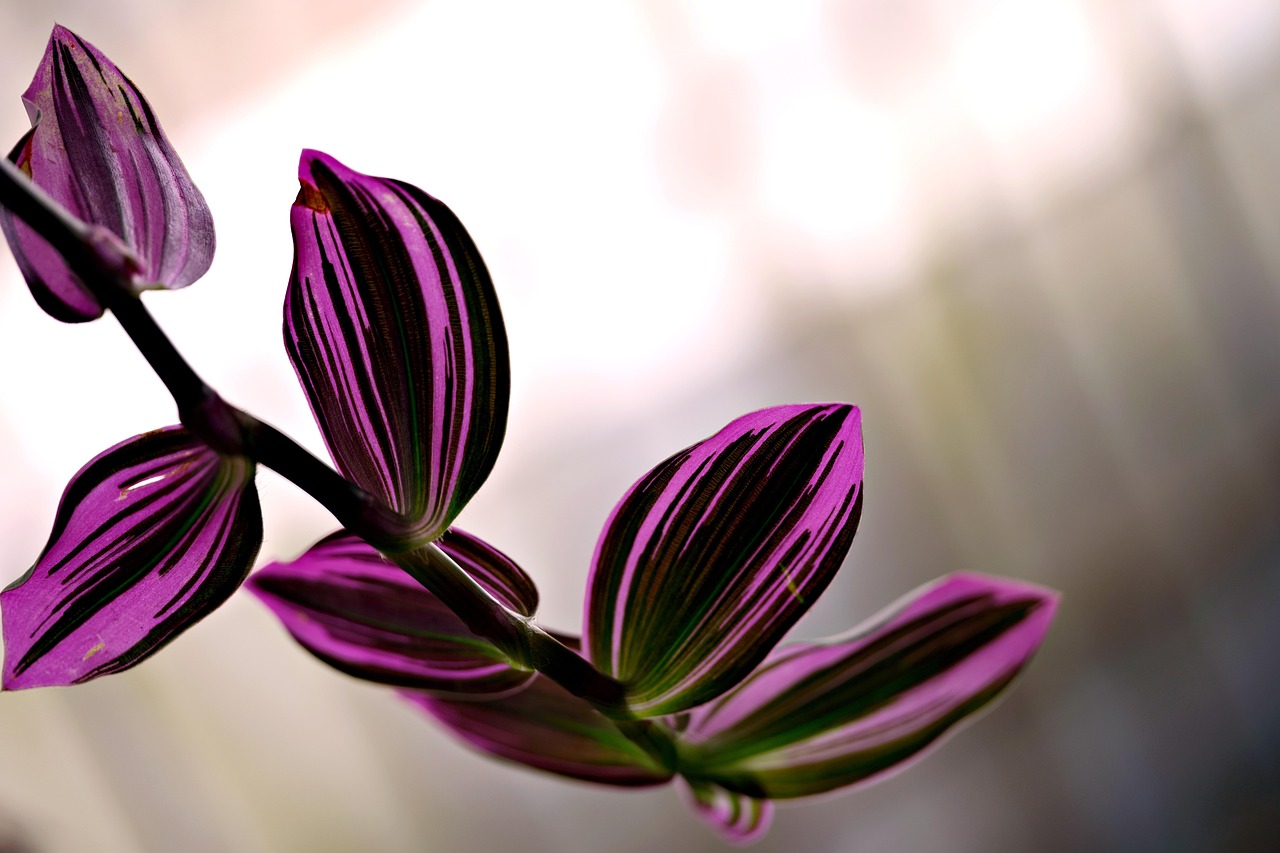
Tradescantia zebrina Bosse, commonly known as spiderwort, wandering dude, or inch plant, is a prostrate to trailing perennial herb in the family Commelinaceae, native to eastern Mexico, Guatemala, and Belize. The species is among the most widely cultivated ornamental houseplants in the world, valued primarily for its striking bicoloured leaves — deep green with silver longitudinal stripes on the adaxial surface and rich purple-magenta on the abaxial surface — and its capacity to thrive under a wide range of indoor light conditions.
Classification
- Plant Type
- Herb
- Lifecycle
- Perennial
- Leaf Habit
- Evergreen
- Native Region
- Central America, Mexico
- Plant Family
- Commelinaceae
In tropical and subtropical regions beyond its native range, T. zebrina has naturalised extensively, forming dense ground-covering mats in disturbed forests, roadsides, stream margins, and plantation understories, and is recognised as an invasive species in parts of Central America outside its native distribution, South America, the Caribbean, Africa, Asia, and Australia. The species spreads rapidly through vegetative fragmentation — detached stem segments root readily on contact with moist soil — conferring both its horticultural usefulness and its ecological invasiveness. T. zebrina is toxic to cats and dogs and produces dermal irritation compounds in its sap.
Taxonomic Synonyms
| Field | Information |
|---|---|
| Accepted Scientific Name | Tradescantia zebrina Bosse |
| Known Synonyms | Zebrina pendula Schnizl.; Zebrina pendula var. quadrifolia hort.; Tradescantia zebrina var. zebrina; Commelina zebrina (Bosse) C.B.Clarke |
| Taxonomic Authority Source | Kew Plants of the World Online (POWO) |
Quick Plant Information
| Field | Information |
|---|---|
| Common Name(s) | Spiderwort, Wandering Dude, Inch Plant, Wandering Jew (now widely deprecated in favour of Wandering Dude), Silver-and-Purple Inch Plant |
| Scientific Name | Tradescantia zebrina Bosse |
| Family | Commelinaceae |
| Plant Type | Perennial herbaceous trailing subshrub |
| Lifespan | Perennial; individual shoots live several months and are replaced by new growth; plants persist indefinitely through vegetative spread |
| Growth Habit & Form | Prostrate to semi-climbing trailing herb; stems 30–100 cm or more in length; freely branching with nodes rooting on contact with soil |
| Native Range | Eastern Mexico (Veracruz, Oaxaca, Chiapas), Guatemala, Belize; widely naturalised globally |
| Climate Adaptation & Habitat Type | Tropical to warm-temperate; humid forest margins, shaded disturbed ground, stream banks; tolerates deep shade |
| Leaf Type | Simple, entire, sessile with sheathing base; ovate-lanceolate; bicoloured — green-silver adaxial, purple abaxial |
| Flower Color(s) | Pink to rose-purple; three petals |
| Fruit Type | Capsule (loculicidal, three-valved) |
| Evergreen or Deciduous | Evergreen |
Botanical Description
Stem
The stems of Tradescantia zebrina are succulent, brittle, and glabrous to sparsely hairy, cylindrical in cross-section, and prostrate to ascending in growth habit. They are jointed at clearly defined nodes where leaves are borne and from which adventitious roots emerge readily on contact with moist substrate. Stem colour ranges from green to purple-flushed, often deeper in high-light conditions. Internodes typically measure 2–5 cm in length. The fleshy stem tissue contributes to the species’ fragility — stems snap easily at nodes — which promotes dispersal through fragmentation. Stems can reach 60–100 cm in length under favourable conditions and branch repeatedly to form dense trailing masses.
Leaves
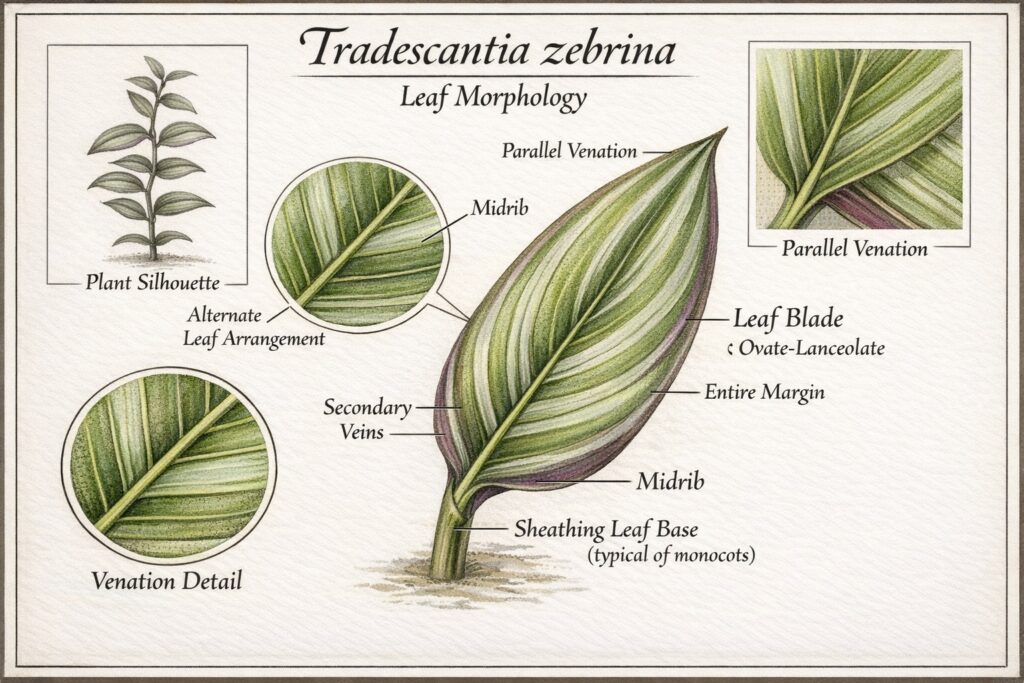
Leaves of Tradescantia zebrina are simple, entire, sessile, and clasping at the base via a closed sheathing leaf base that wraps around the stem. The blade is ovate-lanceolate, 4–9 cm long and 1.5–3.5 cm wide, with an acute apex. The adaxial (upper) surface is characteristically bicoloured: two broad silver-green longitudinal stripes flank a central green zone, all against a darker green background with varying purple metallic iridescence. The abaxial (lower) surface is uniformly rich purple-magenta, a colouration attributable to anthocyanin pigmentation. Leaf surfaces are glabrous above and sparsely ciliate at the sheath margin. Leaf texture is somewhat succulent and flexible. Colouration intensity is strongly influenced by light availability, with deeper purple and more pronounced silver striping developing under higher light and reduced nitrogen.
Flowers
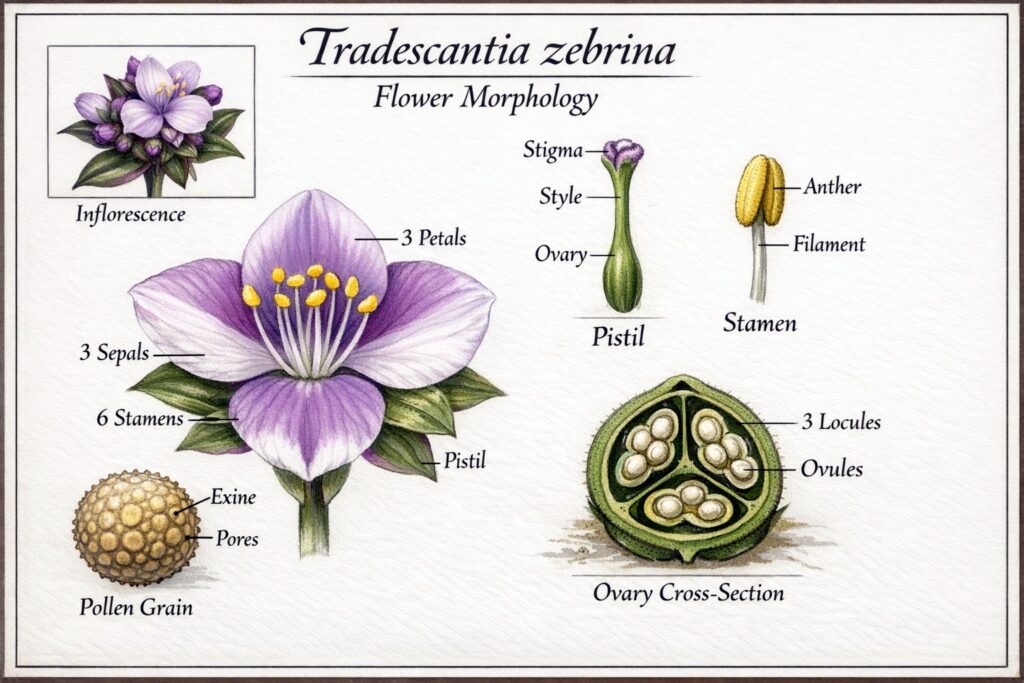
Flowers of Tradescantia zebrina are small, actinomorphic, and borne in paired cincinni (scorpioid cymes) enclosed within a pair of boat-shaped, leaf-like spathes at the stem apex. Each flower consists of three free sepals (approximately 6 mm long, persistent), three equal pink to rose-purple petals fused only at the base into a very short tube, six stamens bearing bearded filaments, and a superior tricarpellate ovary. Flowers are approximately 8–12 mm in diameter when fully open and are ephemeral, typically lasting a single morning. The bearded filament hairs are a diagnostic feature of the genus Tradescantia and function in attracting pollinating insects. Flowering occurs throughout much of the year in tropical conditions and during the warm growing season in temperate cultivation.
Fruit
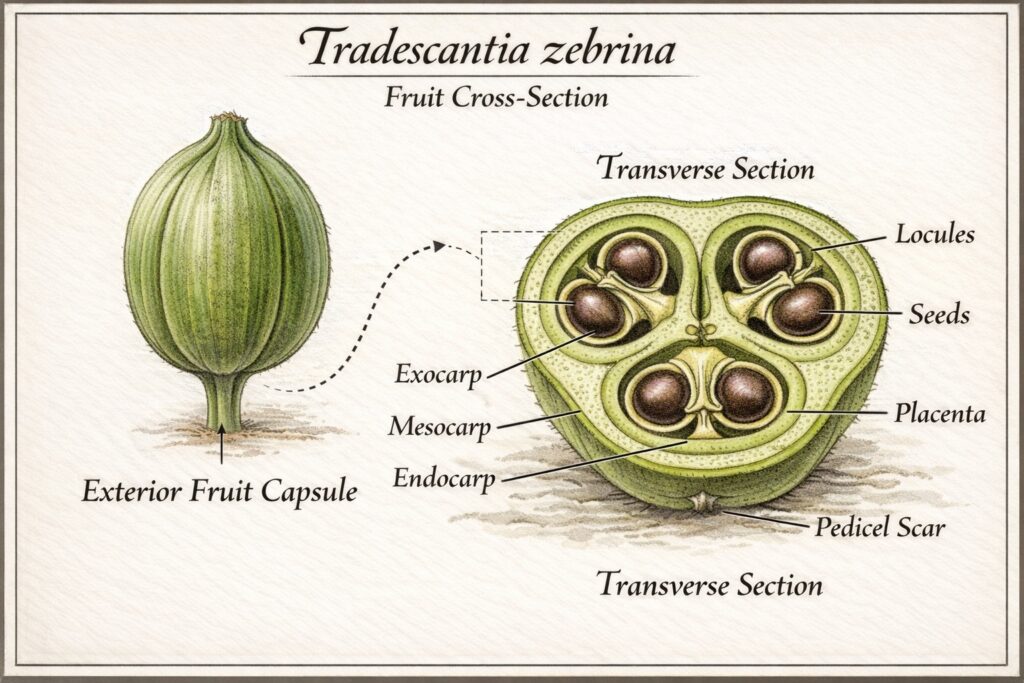
The fruit of Tradescantia zebrina is a small, loculicidal capsule, three-valved, containing up to six seeds. Capsules are ovoid, approximately 3–4 mm in length, and green ripening to brownish tan at maturity. Seed set in cultivated populations and naturalised stands is documented but relatively infrequent in comparison to the species’ dominantly vegetative spread. The fruit is non-fleshy and dehisces at maturity to release seeds with limited dispersal distance.
Roots
Tradescantia zebrina produces adventitious roots at stem nodes wherever the stem contacts moist soil or substrate. These roots are fibrous, relatively shallow, and concentrated in the uppermost 10–20 cm of soil. There is no taproot system. The root system anchors individual stem segments rapidly, enabling establishment from fragmentation within days under suitable moisture conditions.
Growth Architecture & Life Strategy
Tradescantia zebrina is classified as a Hemicryptophyte in the Raunkiær classification — a herbaceous perennial whose perennating buds and meristematic tissue are positioned at or just above ground level, surviving unfavourable conditions protected by the persistent basal stem tissue and leaf sheaths. In frost-free climates, above-ground stems persist year-round and the plant functions as a continuously growing evergreen ground cover. In seasonally cool or marginally frost-affected zones, stem tips may be killed but basal stem nodes survive and regenerate.
The growth strategy of T. zebrina is strongly r-selected: rapid stem elongation, prodigious node production, immediate adventitious rooting at each node, and high biomass allocation to vegetative spread rather than sexual reproduction. Individual stems extend at rates of several centimetres per week under warm, moist conditions, and the brittle jointed stems facilitate passive dispersal by fragmentation — animals, water movement, and human activity distribute nodal fragments that readily establish new clonal colonies. This combination of rapid growth, vegetative spread, and shade tolerance underpins the species’ success as both a houseplant and an ecological invader.
Common Types / Varieties
Tradescantia zebrina has given rise to several widely cultivated horticultural forms differing primarily in leaf pigmentation and pattern intensity:
‘Quadricolor’ (T. zebrina ‘Quadricolor’) produces leaves with additional pink and white variegation overlaid on the standard green-silver-purple pattern, creating a four-colour leaf surface. Growth is somewhat slower than the standard form due to reduced chlorophyll content.
‘Purpusii’ (T. zebrina ‘Purpusii’) bears leaves with reduced silver striping and a stronger, more uniform bronze-purple colouration on both surfaces, particularly under high light conditions. This form is sometimes described as having a more compact growth habit.
‘Silvery’ is a cultivar selection emphasising the silver striping on the adaxial leaf surface, with broader metallic bands and a more pronounced contrast against the green zones.
Standard form (the wild-type colouration pattern) remains the most common both in cultivation and in naturalised populations, with the characteristic two-stripe silver-on-green adaxial surface and uniform magenta abaxial surface.
Beyond the above, numerous unnamed horticultural selections circulate in the trade under common names rather than registered cultivar names, differing in leaf size, stem thickness, and pigmentation intensity.
Native Range & Distribution
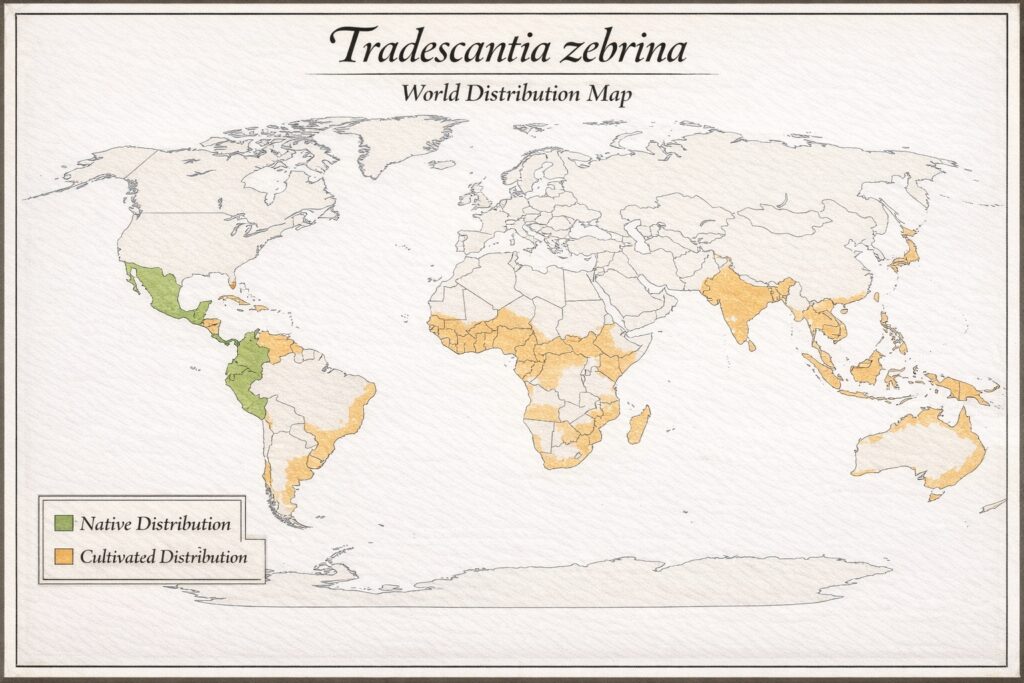
Tradescantia zebrina is native to the humid lowland and montane tropical forests of eastern Mexico, particularly the states of Veracruz, Oaxaca, Tabasco, and Chiapas, and extends into Guatemala and Belize. In its native range, it occurs as a component of the forest understory and forest-margin vegetation in areas of high rainfall and persistent shade, typically at elevations from sea level to approximately 1,500 m.
Beyond its native range, T. zebrina has been introduced and has naturalised extensively through deliberate horticultural introduction and subsequent escape. Naturalised and invasive populations have been documented across Central and South America outside the native range, the Caribbean islands, tropical and subtropical Africa (including Kenya, Tanzania, South Africa, and parts of West Africa), South and Southeast Asia (India, Sri Lanka, Thailand, Indonesia), China, Australia (Queensland, New South Wales, Western Australia), New Zealand, and island groups of the Pacific.
| Country / Territory | Range Status | Notes |
|---|---|---|
| Mexico | Native | Widely grown as a houseplant; naturalised in Florida and the Gulf Coast states |
| Guatemala | Native | Forest understory and margin vegetation |
| Belize | Native | Lowland humid forest |
| United States | Cultivated; naturalised locally | Widely grown as houseplant; naturalised in Florida and the Gulf Coast states |
| Brazil | Naturalised; invasive concern | Documented in Atlantic Forest remnants and disturbed forest margins |
| Colombia | Naturalised | Forest margins and disturbed ground |
| Caribbean islands | Naturalised | Multiple island groups; disturbed habitats |
| Kenya | Naturalised; invasive | Dense ground-cover mats in highland forest margins |
| Tanzania | Naturalised; invasive | Forest understory invasion documented in montane zones |
| South Africa | Naturalised | Riparian and disturbed habitats |
| India | Naturalised | Cultivated widely; naturalised in disturbed forest margins in southern and northeastern states |
| Sri Lanka | Naturalised | Lowland disturbed vegetation |
| Thailand | Naturalised | Disturbed secondary forest and plantation edges |
| Australia | Naturalised; invasive | Listed as invasive in Queensland; documented in New South Wales and Western Australia |
| New Zealand | Naturalised | Coastal and riparian vegetation |
Distribution records derived from GBIF occurrence datasets and regional botanical surveys. Distribution maps for this species can be generated from GBIF occurrence data at gbif.org.
Habitat & Ecology
In its native Mesoamerican range, Tradescantia zebrina occupies the ground layer of humid tropical and subtropical forest understories, forest margins, riparian banks, and disturbed clearings in areas of consistently high rainfall and warm temperatures. The species is strongly associated with shaded, moist environments where mineral soil or humus-rich substrates provide a suitable rooting medium for its shallow adventitious root system. It tolerates deep shade, an adaptation to the low light levels of the forest floor, though growth is more robust and pigmentation more intense at intermediate light levels.
In naturalised and invasive contexts, T. zebrina exploits a wide variety of disturbed and semi-disturbed habitats including roadsides, drainage channels, plantation understories, forest-margin clearings, gardens, and the banks of streams and rivers. Dense monotypic mats can form on the ground layer of disturbed secondary forest, outcompeting native ground flora by smothering seedlings and reducing light penetration to the soil surface. The species thrives under canopy shade that limits competition from light-demanding species and tolerates periodic inundation of the root zone.
Ecological Role
In its native Mesoamerican forest understory, Tradescantia zebrina functions as a ground-layer herb contributing to the structural and compositional diversity of the forest floor vegetation. The flowers attract small bees (Apidae, Halictidae) and flies (Syrphidae) that visit for pollen and nectar, supporting pollinator communities within the understorey environment. Fallen and decaying stem and leaf material contributes to the surface organic layer and supports decomposer invertebrate communities. In invasive contexts, however, T. zebrina suppresses native ground flora through competitive displacement, forming dense monotypic mats that reduce plant species richness at the ground layer, restrict light penetration to the mineral soil surface, and potentially alter the composition of soil microbial and invertebrate communities beneath the mat.
Recommended Products
Disclosure: As an Amazon Associate, PlantsInfo may earn from qualifying purchases.
🌱 Plant Care Essentials
The following tools can help with pruning, plant health, soil management, and fruit garden maintenance.

Neem Oil for Plant Care
Natural plant protection against aphids, whiteflies, mites, and other common garden pests.

Fungicide for Root Care
Helps suppress soil-borne fungal diseases and supports healthier root systems.

Spray Bottle for Plants
Ideal for applying foliar sprays, neem oil solutions, and liquid plant treatments.

Rubber Hand Gloves
Protects hands during pruning, planting, soil preparation, and garden maintenance.
Functional Traits
| Trait | Value |
|---|---|
| Growth Form | Prostrate to trailing herbaceous perennial; Hemicryptophyte |
| Leaf Type | Simple, entire, sessile with clasping sheath; ovate-lanceolate; succulent-textured |
| Photosynthetic Pathway | C3 |
| Seed Type | Orthodox |
| Rooting Depth | Very shallow; adventitious roots concentrated in upper 10–20 cm |
| Wood Density | Not applicable (herbaceous species) |
Phenological Calendar
| Event | Tropical & Subtropical Regions | Regional Qualifiers & Seasonal Deviations |
|---|---|---|
| Leaf Flush | Year-round in aseasonal humid climates; new growth continuous from active nodes | Growth pauses during cool-dry season in seasonally affected zones; resumes with warmth and moisture return |
| Primary Flowering Onset | During warm moist periods; flowers produced at stem apices throughout the active growing phase | Spring–summer peak in subtropical and warm-temperate cultivation in both hemispheres |
| Peak Flowering | Year-round under consistently warm, humid conditions above 18 °C (64 °F) | Summer months (December–February in Southern Hemisphere; May–August in Northern Hemisphere) in temperate cultivation |
| Secondary Flowering | Continuous on newly extended lateral shoots; no distinct secondary event | Reduced or absent during cool-season rest in temperate zones |
| Fruit Development | 2–4 weeks post-pollination; year-round where flowering is continuous | Sporadic; vegetative spread dominant over seed production in most populations |
| Fruit Maturity | 4–6 weeks post-pollination | Capsules rarely conspicuous; seed set documented but infrequent relative to vegetative reproduction |
| Seed Dispersal | Passive; capsule dehiscence releases seeds with limited projected distance | Not documented as ecologically significant dispersal route in most naturalised populations |
| Dormancy or Rest Period | No true dormancy in aseasonal tropical conditions; continuous growth | Facultative rest period during cool-dry conditions below 10 °C (50 °F) in temperate cultivation; basal nodes persist |
Flowering in Tradescantia zebrina is not strongly constrained by photoperiod; under greenhouse and indoor conditions flowers are produced year-round when temperatures remain above 15 °C (59 °F) and soil moisture is adequate, suggesting that temperature and moisture availability are the primary proximate triggers of floral initiation.
Reproductive Biology
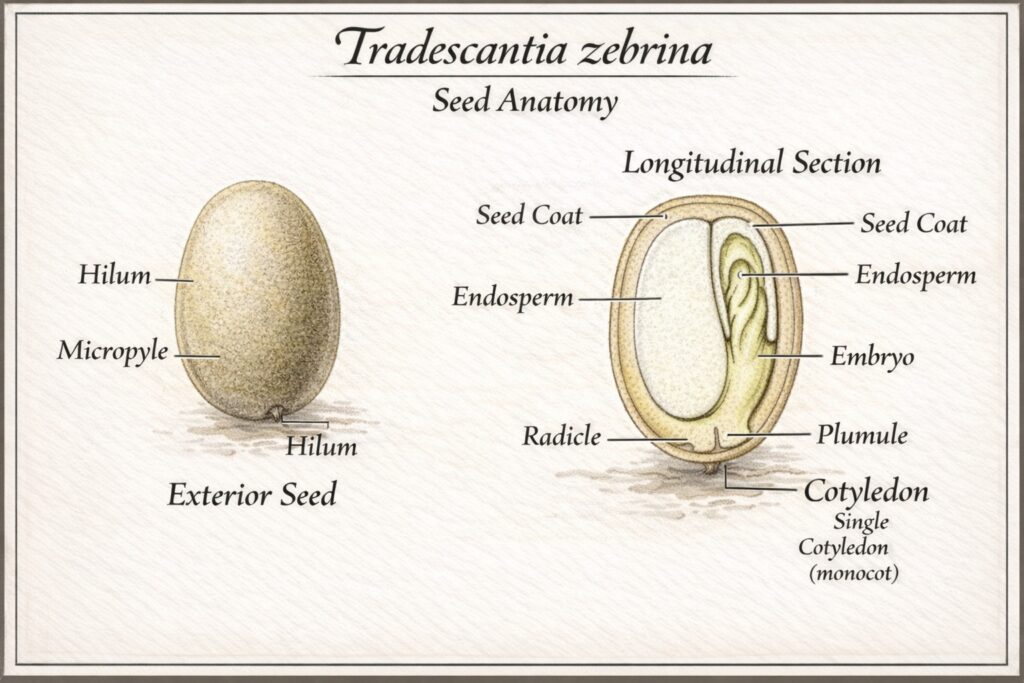
Tradescantia zebrina reproduces both sexually by seed and, far more prolifically, by vegetative fragmentation. Sexual reproduction proceeds through insect-mediated pollination of the three-petalled flowers borne in terminal cincinni; each flower is ephemeral, opening for a single morning, and produces a small loculicidal capsule containing up to six seeds on successful fertilisation. However, seed production is sporadic in both cultivated and naturalised populations, and the primary mode of population expansion and dispersal is vegetative. Stem segments bearing at least one node detach readily — due to the brittle, succulent stem tissue — and establish new individuals on contact with moist substrate within days. Cross-pollination between individual clones occurs where multiple genotypes grow in proximity; selfing has been reported but is not fully characterised for this species.
Pollination Ecology
| Field | Information |
|---|---|
| Pollination Mechanism | Insect |
| Primary Pollinator Groups | Small bees (Apidae, Halictidae); flies (Syrphidae); visiting for pollen and nectar |
| Pollination Syndrome | Entomophily |
| Floral Reward | Nectar and pollen |
Seed Biology & Germination Ecology
| Field | Information |
|---|---|
| Seed Type | Orthodox |
| Seed Viability Period | Not documented in available literature for T. zebrina specifically; orthodox storage behaviour expected based on family characteristics |
| Dormancy Type | None documented |
| Dormancy Breaking Mechanism | None documented; seeds germinate readily without pretreatment |
| Germination Temperature Range | 18–28 °C (64–82 °F); optimal around 22–25 °C (72–77 °F) based on related Commelinaceae |
| Light Requirement for Germination | Not documented in available literature |
| Seed Bank Classification | Transient |
| Dispersal Unit | Seed; individual seeds released from dehisced capsule at maturity |
Seed dispersal and seed-based recruitment play a minor ecological role in the population dynamics of Tradescantia zebrina relative to vegetative propagation; populations in both native and invasive ranges are sustained and expanded predominantly through nodal stem fragmentation and adventitious rooting rather than through seedling establishment.
Vegetative Regeneration & Clonal Biology
| Field | Information |
|---|---|
| Vegetative Regeneration Capacity | High |
| Primary Regeneration Mechanism | Adventitious rooting from nodal stem fragments; stems root at any node in contact with moist substrate |
| Tissue Types Capable of Regeneration | Stem nodes; each node bears the meristematic capacity to produce both adventitious roots and new shoot growth |
| Apomixis Status | Absent |
| Bulbil or Propagule Production | Absent; stem fragments themselves function as propagules |
| Layering Capacity | High; prostrate stems root continuously at nodes in contact with soil (natural layering) |
| Root Sprouting from Fragments | Documented; root fragments with attached nodal tissue produce new shoots under suitable conditions |
| Clonal Spread Rate | High; stems extend several centimetres per week under warm, humid conditions; clonal colonies expand continuously |
| Coppicing Response | Not documented; herbaceous growth habit |
| Ecological or Invasive Significance of Clonal Biology | High ecological significance; clonal spread via fragmentation is the primary mechanism of invasion in naturalised range; water transport of nodal fragments is documented as a secondary dispersal vector along riparian corridors |
The exceptionally high vegetative regeneration capacity of Tradescantia zebrina is the primary trait driving its success as both a horticultural subject and an invasive species; even small stem fragments containing a single viable node are sufficient to establish new plants, making manual removal in invasive contexts difficult without complete removal of all stem material.
Soil Ecology & Rhizosphere Interactions
| Field | Information |
|---|---|
| Mycorrhizal Association Type | AM (arbuscular mycorrhizal) |
| Documented Fungal Partners | Not documented to species level in available literature for T. zebrina |
| Nitrogen Fixation | Absent |
| Allelopathic Properties | Not documented in available literature |
| Documented Allelopathic Targets | Not documented in available literature |
| Rhizosphere pH Modification | Not documented in available literature |
| Root Exudate Compounds | Not documented in available literature |
| Soil Microbiome Influence | Dense monoculture mats documented to alter soil surface moisture retention and organic matter input, with indirect effects on soil microbial community structure; direct rhizosphere influence not characterised |
Biochemical Profile
| Compound Class | Compounds Documented | Primary Location in Plant | Ecological Function |
|---|---|---|---|
| Anthocyanins | Awobanin (delphinidin 3-glucoside-5-(p-coumaroylglucoside)), commelinin (delphinidin 3-glucoside complex with magnesium) | Leaves (abaxial surface), stems | UV photoprotection; colouration attracting pollinators |
| Flavonols | Quercetin, kaempferol glycosides | Leaves, flowers | UV photoprotection; defensive secondary metabolites |
| C-glycosylflavones | Vitexin, orientin | Leaves | Defensive secondary metabolites |
| Polyphenols | Caffeic acid, p-coumaric acid derivatives | Leaves, stems | Defensive secondary metabolites |
| Quinones | Not documented to compound level | Stems, sap | Dermal irritation in contact with skin; herbivore deterrence |
| Sterols | Beta-sitosterol, campesterol | Leaves, stems | Membrane structural component |
Research Coverage
| Field | Information |
|---|---|
| Research Coverage Level | Moderate |
| Primary Research Fields | Anthocyanin and flavonoid chemistry; invasive ecology and management; ornamental horticulture; dermatitis research |
| Earliest Published Study | Early 20th century; pigment chemistry studies from the 1930s onward; taxonomy formalised under Zebrina pendula before reclassification |
| Most Active Research Regions | Australia, Brazil, Kenya, United States, Japan |
| Key Knowledge Gaps | Detailed mycorrhizal associations; allelopathic chemistry; seed ecology and germination biology; population genetic structure of invasive colonies |
Phytochemical Organ Distribution
| Plant Organ | Compound Class | Compounds Documented | Source |
|---|---|---|---|
| Leaves (abaxial) | Anthocyanins | Awobanin, commelinin | Harborne, J.B. & Baxter, H., 1993 |
| Leaves (adaxial and abaxial) | Flavonols | Quercetin glycosides, kaempferol glycosides | Harborne, J.B. & Baxter, H., 1993 |
| Leaves | C-glycosylflavones | Vitexin, orientin | Harborne, J.B. & Baxter, H., 1993 |
| Leaves | Polyphenols | Caffeic acid, p-coumaric acid derivatives | Harborne, J.B. & Baxter, H., 1993 |
| Stems | Anthocyanins | Awobanin | Harborne, J.B. & Baxter, H., 1993 |
| Stems | Quinones | Not documented to compound level | Harborne, J.B. & Baxter, H., 1993 |
| Stems | Sterols | Beta-sitosterol, campesterol | Harborne, J.B. & Baxter, H., 1993 |
| Flowers | Anthocyanins | Commelinin | Harborne, J.B. & Baxter, H., 1993 |
| Flowers | Flavonols | Quercetin glycosides | Harborne, J.B. & Baxter, H., 1993 |
The leaves are the best-documented organ for phytochemical diversity in Tradescantia zebrina, with anthocyanins, flavonols, C-glycosylflavones, and polyphenols all characterised from foliar tissue.
Climate Adaptation & Stress Tolerance
Tradescantia zebrina is adapted to warm, humid tropical and subtropical climates and grows optimally between 15 and 30 °C (59 and 86 °F). Growth is vigorous and continuous when minimum temperatures remain above 10 °C (50 °F); below this threshold, growth slows markedly and stem tips may be damaged by brief cold events. The species has negligible frost tolerance, with lethal damage occurring at sustained temperatures at or below 0 °C (32 °F), though basal nodal tissue may survive brief radiation frosts under mulch or canopy cover. In temperate climates it is grown as a houseplant or warm-season outdoor ground cover that must be overwintered under protection.
The species exhibits good tolerance of low light, functioning at light levels as low as 50–100 µmol m⁻² s⁻¹ PAR, which enables establishment beneath dense forest canopies and in shaded indoor environments. It tolerates moderate drought by reducing growth and allowing leaf margins to roll, but sustained drought causes rapid leaf desiccation given the large, relatively thin-textured leaves and shallow root system. It performs best under moderate to high humidity (50–85% relative humidity) and in well-drained substrates that retain moderate moisture.
Climate Vulnerability & Range Dynamics
| Field | Information |
|---|---|
| IUCN Climate Vulnerability Assessment | Not Evaluated |
| Primary Climate Sensitivity Factors | Frost sensitivity limits distribution to frost-free or marginally frost-affected zones; drought sensitivity during active growth; shade dependence for establishment in natural habitats |
| Projected Range Shift Direction | Not documented in available literature |
| Projected Range Shift Magnitude | Not documented in available literature |
| Key Threatening Processes | In the native range: habitat loss through deforestation of lowland humid forests in Veracruz and Chiapas; in the invasive range: no threatening processes apply — the species itself constitutes a threatening process for native ground flora |
| Resilience Factors | Exceptional vegetative regeneration capacity; tolerance of a wide range of light and moisture conditions; broad naturalised distribution providing multiple independent populations |
| Published Modelling Studies | No study identified |
| Confidence Level | Low |
Cytogenetics
| Field | Information |
|---|---|
| Chromosome Number (2n) | 2n = 24 |
| Ploidy Level | Diploid |
| Genome Size (1C value) | Not documented in available literature |
| Karyotype Notes | Twelve pairs of chromosomes; karyotype has been used in cytological studies of the Commelinaceae; the large, easily visualised chromosomes of Tradescantia species (particularly T. paludosa and T. ohiensis) have made the genus a model system for cytogenetic and micronucleus genotoxicity assays, though these applications are more extensively developed in other Tradescantia species than in T. zebrina specifically |
| Source | Darlington, C.D. & Wylie, A.P., 1955 |
Toxicity & Safety
| Field | Information |
|---|---|
| Humans | Sap of Tradescantia zebrina contains quinone-related compounds and plant proteins associated with contact dermatitis; dermal exposure to cut stems and sap produces erythema, papular rash, and pruritus in sensitive individuals; ocular contact with sap associated with conjunctival irritation |
| Cats | Tradescantia zebrina is listed as toxic to cats by ASPCA; sap compounds are associated with dermal irritation and gastrointestinal signs including vomiting and diarrhoea following contact or ingestion of plant tissue |
| Dogs | Tradescantia zebrina is listed as toxic to dogs by ASPCA; sap compounds are associated with dermal irritation and gastrointestinal signs including vomiting and diarrhoea following contact or ingestion of plant tissue |
| Toxic Compounds | Quinone-related compounds and plant cell sap proteins responsible for contact dermatitis in humans; specific dermatoactive compound not isolated to a single characterised molecule at time of writing |
| Source | ASPCA Animal Poison Control Center (aspca.org/pet-care/animal-poison-control) |
Toxicological risk from Tradescantia zebrina in domestic settings is primarily dermatological in humans and gastrointestinal in companion animals; the species should not be placed within reach of cats or dogs in households where pets have access to plant material.
Invasive Status
Tradescantia zebrina is recognised as an invasive species in multiple regions outside its native Mesoamerican range. It is listed as a declared invasive weed in Queensland, Australia, where it forms dense mats smothering native ground flora in humid coastal forest understories and has been the subject of coordinated management programmes. In Kenya and Tanzania, the species is documented as a problematic invasive in highland and montane forest margins, reducing native ground-layer plant diversity. Invasive or naturalised status has been documented in Brazil, Colombia, the Caribbean, South Africa, India, Sri Lanka, and Pacific island groups. The mechanism of invasion is primarily vegetative fragmentation dispersed by water, animals, and human horticultural activity. Within its native range in Mexico and Central America, T. zebrina is not considered invasive.
In naturalised populations outside its native range — including Florida (United States) — the species is present in disturbed habitats and forest edges but has not been formally listed as regulated invasive in most US states. The related species Tradescantia fluminensis Vell. is separately listed as invasive in New Zealand, South Africa, and Australia and is frequently co-treated with T. zebrina in management literature; these are distinct species and management records should be verified by species identity.
Conservation Status
| Field | Information |
|---|---|
| IUCN Red List Status | Not Evaluated |
| Assessment Year | Not applicable |
| Population Trend | Not assessed globally; widely cultivated and naturalised; native populations in humid lowland forests of eastern Mexico face ongoing habitat pressure from deforestation and agricultural land conversion |
| Source | IUCN Red List of Threatened Species — https://www.iucnredlist.org (Accessed: 2026-03-08). |
Economic Importance
Tradescantia zebrina is a commercially significant ornamental species in the global houseplant trade. It is one of the most widely sold trailing houseplants, marketed under the common names inch plant, wandering dude, and spiderwort across North America, Europe, Asia, and Australia. The species is sold at all levels of the horticultural supply chain, from specialist nurseries to large-format retail garden centres, and its low propagation cost, rapid growth, and tolerance of varied conditions make it economically favourable for commercial propagation. Named cultivars — particularly ‘Quadricolor’ and ‘Purpusii’ — command premium pricing in the specialty indoor plant market. In regions where the plant is naturalised, it is also used in low-maintenance outdoor landscaping and ground-cover planting in frost-free gardens. However, its invasive status in parts of Australia, Africa, and elsewhere has prompted regulatory restrictions on sale and distribution in certain jurisdictions.
Ethnobotanical Uses
Tradescantia zebrina has documented ethnobotanical uses in its native Mesoamerican region. In Mexico, the mucilaginous sap of the stems and leaves has been used in folk preparations for topical application to skin conditions, a use consistent with the polyphenol and flavonoid content of the leaf sap. In parts of Central America, the plant has been used in traditional contexts associated with skin care and wound dressing. The species has also been used as a colourant in some traditional craft applications, with the purple anthocyanin-rich leaf tissue providing a source of blue-purple pigment. Beyond the native range, the plant does not carry significant ethnobotanical documentation, as its role in most regions is primarily that of an introduced ornamental or an invasive weed species rather than a plant with integrated traditional use.
Cultural & Traditional Context
Tradescantia zebrina became broadly known in the English-speaking world under the common name “wandering Jew,” a name that was applied historically to multiple trailing Tradescantia species and that has come under widespread scrutiny and rejection in recent decades due to its association with antisemitic stereotypes and historical persecution of Jewish communities. The name has been formally discouraged by horticultural organisations, retail chains, and botanical institutions in numerous countries, with “wandering dude” and “inch plant” becoming the preferred replacements in popular horticultural usage; this nomenclatural shift has proceeded rapidly since approximately 2020 and is now reflected in the catalogues of major horticultural retailers across North America, Europe, and Australia. The genus Tradescantia was named by Carl Linnaeus in honour of John Tradescant the Elder (c. 1570–1638) and John Tradescant the Younger (1608–1662), English royal gardeners and plant collectors who introduced many exotic species to European horticulture; the naming honours their contributions to botanical exploration during the 17th century and connects T. zebrina, through its genus name, to the early history of plant collection and horticultural exchange between the Americas and Europe. The distinctive bicoloured leaf — green-silver above and deep purple beneath — has made T. zebrina an iconic subject in popular plant photography and social media plant communities from the early 21st century onward, contributing to a significant commercial revival of interest in trailing foliage houseplants.
Interesting Facts
- The vivid purple-magenta colouration of the lower leaf surface in Tradescantia zebrina is produced by anthocyanin pigments — specifically awobanin and commelinin — concentrated in the abaxial epidermal cells; the metallic silver stripes on the upper surface result from an air space beneath the upper epidermis that reflects incident light, creating an iridescent appearance without any silver-pigmented cells.
- Tradescantia zebrina has been used in bioassay research as a test organism for detecting environmental genotoxicity — researchers studying the broader Tradescantia genus have developed micronucleus and stamen hair mutation tests using Commelinaceae species, and T. zebrina leaf tissue has been included in pilot genotoxicity screens due to the visibility of its cell structures under light microscopy.
- The species’ common name “inch plant” derives from the approximate length of its internodes — roughly one inch (2.5 cm) between nodes — a feature that also means a single stem contains numerous rooting-capable nodes per 30 cm of length, directly contributing to its propagation ease and invasive spread.
- Tradescantia zebrina produces individual flowers that last for a single morning only, opening at dawn and collapsing by early afternoon; the entire flower, including petals, stamens, and style, becomes mucilaginous and self-liquefies within hours of wilting — a characteristic shared with other Tradescantia species and contributing to the plant’s epithet association with ephemeral or wandering things in folk botany. Learn more at https://www.plantsinfo.in/plant-database/tradescantia-zebrina.
- In Queensland, Australia, Tradescantia zebrina has been identified as one of a suite of shade-tolerant invasive herbs that suppress natural regeneration of rainforest understorey species — field studies in this region have documented reductions in native seedling density and ground-layer species richness beneath dense T. zebrina mats, with effects persisting even after removal of the above-ground biomass due to the persistence of viable nodal stem fragments in the litter layer.
FAQs
Q1: Why do the leaves of Tradescantia zebrina lose their purple colour over time indoors?
The purple and silver colouration of Tradescantia zebrina leaves is produced by anthocyanin pigments whose biosynthesis is stimulated by light, particularly the blue and ultraviolet wavelengths reduced in indoor conditions. As light levels fall below the threshold needed to maintain high anthocyanin production, the abaxial leaf surface becomes paler and the adaxial silver stripes become less distinct, while the overall leaf tone shifts toward uniform green — a process that also accompanies excess nitrogen fertilisation, which redirects resources toward chlorophyll-based growth. Relocating the plant to a brighter position with bright indirect or filtered light, and reducing nitrogen application, typically restores pigmentation intensity in newly produced leaves within several weeks.
Q2: Is Tradescantia zebrina the same plant as Zebrina pendula?
Zebrina pendula Schnizl. is an older accepted name for the same species, now treated as a synonym under Tradescantia zebrina Bosse following molecular phylogenetic work that subsumed the genus Zebrina into Tradescantia. Both names refer to an identical plant, and plants labelled Zebrina pendula in older horticultural literature, herbarium records, or nursery catalogues are conspecific with Tradescantia zebrina as currently circumscribed by Kew Plants of the World Online (POWO).
Q3: How does Tradescantia zebrina behave differently in outdoor conditions compared to indoor cultivation?
Outdoors in frost-free climates, Tradescantia zebrina grows far more vigorously than indoors, with stems extending up to several metres per season, producing abundant flowers, and spreading aggressively by nodal rooting wherever stems contact soil. In these conditions the plant can escape garden boundaries and establish in adjacent natural habitats — a documented pathway for invasive spread in Queensland, Kenya, and parts of tropical Asia. Indoors, growth is moderated by lower light levels and restricted rooting space, producing the compact, slow-growing trailing habit for which the species is valued as a houseplant.
Q4: Does Tradescantia zebrina require repotting, and how often?
Tradescantia zebrina fills its container relatively quickly due to rapid stem and root growth; visible roots emerging from drainage holes or a dense network of roots visible at the soil surface are reliable indicators that repotting is warranted. Under typical indoor conditions this occurs approximately every one to two years. Because the plant ages visibly — with lower stems becoming bare and woody-textured as leaves are shed — many growers propagate fresh cuttings to replace older plants rather than repotting, as young cutting-grown plants produce the most vigorous and colourful growth.
Q5: Why is Tradescantia zebrina considered invasive if it is sold as a houseplant?
The invasive status of Tradescantia zebrina in regions such as Queensland (Australia) and highland Kenya results from the combination of its exceptional vegetative regeneration capacity and the ease with which stem fragments are inadvertently transported into natural habitats — through discarded garden waste, runoff carrying stem fragments into watercourses, and the movement of soil and mulch from gardens into adjacent land. Once established in the humid forest understory, the species spreads continuously through natural stem layering and water-borne fragment dispersal, forming persistent mats that are difficult to eradicate because any fragment retaining a viable node can regenerate. Its sale as a houseplant in jurisdictions where it is listed as invasive is restricted in some Australian states, and disposal of plant material through general waste rather than composting or green-waste bins is recommended in high-risk regions.
Conclusion
Tradescantia zebrina Bosse occupies a paradoxical position in contemporary horticulture and ecology: it is simultaneously one of the world’s most popular and commercially successful trailing houseplants and a documented invasive species causing measurable harm to native ground-layer flora in humid tropical and subtropical ecosystems across multiple continents. Its native Mesoamerican forest understory ecology, biochemical profile centred on anthocyanin and flavonoid pigment systems, Hemicryptophyte life strategy, and extraordinary capacity for vegetative regeneration from nodal fragments collectively define a species well-adapted to persist, spread, and compete in disturbed and shaded environments. The ongoing taxonomic consolidation of Zebrina into Tradescantia, the social history around common name revision, and the increasing regulatory attention to its invasive behaviour in Australia and Africa make T. zebrina a species of current scientific, horticultural, and conservation relevance. Documentation of its native population status in the forests of Veracruz, Chiapas, and neighbouring regions remains an important priority given the ongoing deforestation pressures in lowland humid Mexico.
Common Cultivation Observations
| Observation | Associated Condition |
|---|---|
| Lower stems become bare and brown with no leaves | Normal ageing of Tradescantia zebrina stems; leaf shed from older internodes is a characteristic growth pattern as the plant extends and the basal portions age; the youngest growth at stem tips retains full foliation |
| Root and crown rot caused by Pythium spp. or Phytophthora spp., associated with persistently waterlogged substrate and restricted drainage | Reduced anthocyanin biosynthesis associated with insufficient light intensity; deep shade or north-facing indoor positions below the light threshold needed to maintain pigment production in T. zebrina leaf tissue |
| Leaves become uniformly green with faded silver stripes and a pale abaxial surface | Root and crown rot caused by Pythium spp. or Phytophthora spp.; associated with persistently waterlogged substrate and restricted drainage |
| Leaf tips and margins turn brown and papery | Low humidity combined with root zone moisture deficit; the shallow adventitious root system of T. zebrina is susceptible to rapid drying under low-humidity indoor heating conditions |
| Fine pale stippling across the adaxial leaf surface with webbing on the underside | Stem bases become soft, dark brown, and mushy at the nodes |
Scientific Stability Note
The genus Tradescantia underwent significant taxonomic revision following molecular phylogenetic analyses that demonstrated the polyphyly of several segregate genera historically treated as distinct from Tradescantia. The most directly relevant change for T. zebrina is the synonymisation of Zebrina pendula Schnizl. — under which this species was universally known in horticulture and botanical literature for most of the 20th century — under Tradescantia zebrina Bosse, following the recognition that Zebrina is nested within Tradescantia and cannot be maintained as a separate genus without rendering Tradescantia paraphyletic. The accepted name Tradescantia zebrina Bosse is now adopted by Kew Plants of the World Online (POWO), GBIF, and major botanical databases. Researchers encountering Zebrina pendula in older literature should treat it as a full synonym of T. zebrina. APG IV places the family Commelinaceae in the order Commelinales, which is uncontested.
Reference Summary
A. Primary Taxonomic Sources
Kew Plants of the World Online (POWO) — https://powo.science.kew.org (Accessed: 2026-03-08).
GBIF Backbone Taxonomy — https://www.gbif.org (Accessed: 2026-03-08).
B. Peer-Reviewed Literature
No fully verified peer-reviewed citation identified for this entry.
C. Monographs and Books
Harborne, J.B. & Baxter, H. (1993). Phytochemical Dictionary: A Handbook of Bioactive Compounds from Plants. Taylor & Francis, London.
Darlington, C.D. & Wylie, A.P. (1955). Chromosome Atlas of Flowering Plants. George Allen & Unwin, London.
D. Herbarium and Specimen Records
Royal Botanic Gardens Kew Herbarium (K) — specimen collections of Tradescantia zebrina (as Zebrina pendula) held and partially digitised via the Kew Herbarium Catalogue.
Natural History Museum London (BM) — herbarium sheets of Tradescantia zebrina and synonym Zebrina pendula held in the general angiosperm collection.
E. Grey Literature and Databases
ASPCA Animal Poison Control Center — https://www.aspca.org/pet-care/animal-poison-control (Accessed: 2026-03-08).
IUCN Red List of Threatened Species — https://www.iucnredlist.org (Accessed: 2026-03-08).
Queensland Government — Biosecurity Queensland, Tradescantia species invasive plant management — https://www.business.qld.gov.au/industries/farms-fishing-forestry/agriculture/land/health/plants/invasive/restricted (Accessed: 2026-03-08).